
New Communication Formats for
Effective Science Communication
- Two Case Studies -
Gensei Ishimura
PR Chief/Specially Appointed Associate Professor
Earth-Life Science Institute (ELSI),Tokyo Institute of Technology
This work was supported by JSPS KAKENHI Grant Number 16K01001
2018/11/19
Inaugural Asia-Pacific Science Communication Conference 2018
Two Case Studies
1. Development of new format of scientific
articles with multiple-levels of accuracy-
readability trade-offs
2. Development of the new movie format to
introduce researchers by making use of
structured interview method
Two Case Studies
1. Development of new format of scientific
articles with multiple-levels of accuracy-
readability trade-offs
2. Development of the new movie format to
introduce researchers by making use of
structured interview method
Background
Problem:
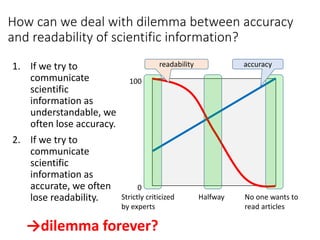
How can we deal with dilemma between
accuracy and readability of scientific
information in the area of PR, communication,
or education?
How can we deal with dilemma between accuracy
and readability of scientific information?
1. If we try to
communicate
scientific
information as
understandable, we
often lose accuracy.
2. If we try to
communicate
scientific
information as
accurate, we often
lose readability.
readability accuracy
0
100
No one wants to
read articles
HalfwayStrictly criticized
by experts
→dilemma forever?
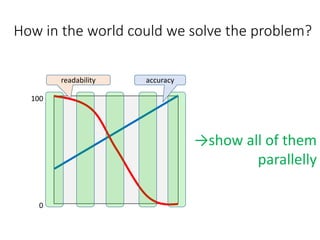
How in the world could we solve the problem?
→show all of them
parallelly
0
100
readability accuracy
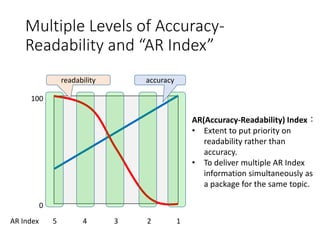
Multiple Levels of Accuracy-
Readability and “AR Index”
AR(Accuracy-Readability) Index:
• Extent to put priority on
readability rather than
accuracy.
• To deliver multiple AR Index
information simultaneously as
a package for the same topic.
AR Index 5 4 3 2 1
0
100
readability accuracy
0
100
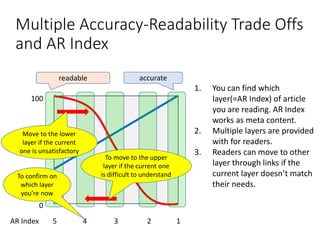
Multiple Accuracy-Readability Trade Offs
and AR Index
1. You can find which
layer(=AR Index) of article
you are reading. AR Index
works as meta content.
2. Multiple layers are provided
with for readers.
3. Readers can move to other
layer through links if the
current layer doesn’t match
their needs.
Move to the lower
layer if the current
one is unsatisfactory
To move to the upper
layer if the current one
is difficult to understandTo confirm on
which layer
you’re now
readable accurate
AR Index 5 4 3 2 1
Case
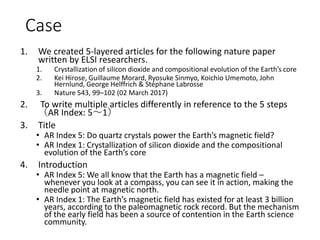
1. We created 5-layered articles for the following nature paper
written by ELSI researchers.
1. Crystallization of silicon dioxide and compositional evolution of the Earth’s core
2. Kei Hirose, Guillaume Morard, Ryosuke Sinmyo, Koichio Umemoto, John
Hernlund, George Helffrich & Stéphane Labrosse
3. Nature 543, 99–102 (02 March 2017)
2. To write multiple articles differently in reference to the 5 steps
(AR Index: 5~1)
3. Title
• AR Index 5: Do quartz crystals power the Earth’s magnetic field?
• AR Index 1: Crystallization of silicon dioxide and the compositional
evolution of the Earth’s core
4. Introduction
• AR Index 5: We all know that the Earth has a magnetic field –
whenever you look at a compass, you can see it in action, making the
needle point at magnetic north.
• AR Index 1: The Earth’s magnetic field has existed for at least 3 billion
years, according to the paleomagnetic rock record. But the mechanism
of the early field has been a source of contention in the Earth science
community.
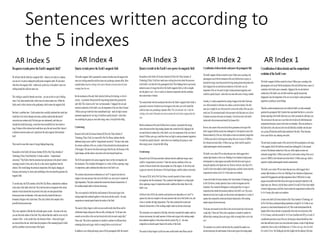
Sentences written according to
the 5 indexes
DoquartzcrystalspowertheEarth’smagneticfield?
WeallknowthattheEarthhasamagneticfield–wheneveryoulookatacompass,
youcanseeitinaction,makingtheneedlepointatmagneticnorth.Wealsoknow
whatdrivesthemagneticfield–moltenrock,mostlyiron,intheplanet’soutercore
swirlingaroundthesolidironinnercore.
Thisswirlingiscausedbythermalconvection–youcanseethisinapotofboiling
water.Cool,densematerialsinks,whilewarm,lessdensematterrises.Withinthe
Earth,resultiswhatisknownasthegeodynamo,whichcreatesthemagneticfield.
Butthere’saproblemhere–Earthscientistshavecarefullycalculatedhowmuchheat
wouldhavetobelostbythermalconvection,andtheyrealizedthatthiskindof
convectioncancontinueonlyiftheheatgoesoutcontinuously,andwhenyou
calculatetheinitialheatenergy,itmusthavebeenincrediblyhottohavelastedso
long.Evidenceofthisextremeheatwouldshowupintherockrecord.Butitdoesn’t,
sothermalconvectionalonecan’texplainhowtheearlymagneticfieldsustained
itself.
Theremustbesomeothersourceofenergyhelpingthingsalong.
ResearchersattheEarth-LifeScienceInstitute(ELSI)oftheTokyoInstituteof
Technology(TokyoTech)thinkthey’vefoundasolution–“compositional
convection.”Theybelievethattheenormousheatandpressureintheplanet’sinterior
encouragecrystalstoform,andastheydosotheyremoveingredientsfromthe
solution.Thiswouldchangethechemicalcompositionoftheliquid,changingits
buoyancyandcausingittochurn,andcontributingtothemovementthatgeneratesthe
magneticfield.
Totestthisidea,theELSIscientists,ledbyProf.KeiHirose,simulatedtheconditions
atthecenteroftheEarthintheirlab.Theytooktinydust-sizefragmentswithvarious
amountsofeachelementthatwaspresentintheearlycoreandsqueezedthem
betweenprecision-cutdiamonds.Atthesametimetheyheatedthedustupto
thousandsofdegreeswithalaserbeam.Then,theylookedatthesampleswitha
powerfulelectronmicroscope.
Theyweresurprisedtofindthattheyhadmadequartzcrystals–thesameastheones
youcanfindatthesurfaceoftheEarth.Theyrealizedthatthiscouldbeanewwayfor
currentstoflow–asthecrystalsform,theelementsinthem–siliconandoxygen–
areremovedfromthemix,whichaltersthepropertiesoftheremainingliquid.Itshifts
andthiscontributestothemovementoftheliquid.
QuartzcrystalspowertheEarth’smagneticfield
TheEarth’smagneticfieldisgeneratedbycurrentsofmolteniron-richmagmainthe
outercoreswirlingaroundthesolidironinnercore,producingadynamoeffect.Most
scientistsbelievethattheswirlingistheresultofthermalconvectiondrivenbyheat
escapingfromthecore.
Butthemechanismoftheearlyfield,whentheEarthwasfirstforming,isabitofa
mystery–inparticularwhatpoweredthelong-runningdynamothatgeneratedthe
earlyfield.Thisisknownasthe“newcoreheatparadox.”Judgingbythesizeand
electricalconductivityoftheEarth’score,thetemperatureofthecorewhenitformed
3billionyearsagowouldhavebeenextraordinarilyhigh–muchtoohightosustain
permanentmagnetismforverylong.Itwouldhavequicklydecayed–unlessthere
wassomethingelsegoingon,someotherenergysource,tokeeptheballrolling.
Crystalenergy
ResearchattheEarth­LifeScienceInstitute(ELSI)attheTokyoInstituteof
Technology(TokyoTech),byateamledbyProf.KeiHirose,indicatesthatthis
additionalenergysourcecouldbe“compositionalconvection.”Theideaisthat,under
theextremeconditionsofthecore,crystalsofsilicondioxideformandprecipitateout
ofthemagma.Thisremovesthesiliconandoxygenfromthemix,thebuoyancyofthe
liquidchanges,andthisinducesconvectionasthemorebuoyantliquidrises.
TheELSIteamreportedinthesciencemagazineNatureontheirinvestigationsinto
thismechanism.Theyexaminedwhathappenstoavarietyofalloys,spanningarange
ofcompositions,underconditionsthatmimicthoseintheEarth’score.
Thescientistsusedprecision-cutdiamondasan“anvil”tosqueezetinydust­size
samplestothesamepressuresthatexistattheEarth'score,andalasertosimulatethe
hightemperatures.Theythenexaminedthetexturalandchemicalcharacteristicsof
theresultingsamplesunderanelectronmicroscope.
Theyweresurprisedtofindthatthesmallamountsofsiliconandoxygeninthe
startingsamplehadcombinedtogethertoformsilicondioxidecrystals­­thesame
compositionasmineralquartzfoundatthesurfaceoftheEarth.
ThesearchofalloysbegantoyieldevenmoreusefulresultswhenHiroseandhis
collaboratorsbeganmixingmorethanonealloy,includingiron.“Inthepast,most
researchonironalloysinthecorehasfocusedonlyontheironandasinglealloy,”
Hirosesaid.“Butintheseexperimentswedecidedtocombinetwodifferentalloys
containingsiliconandoxygen,whichwestronglybelieveexistinthecore.”
Inadditiontocorecoolingandenergysourcesforthegeomagneticfield,theresearch
QuartzcrystalsintheEarth’scorepoweritsmagneticfield
ResearchersattheEarth­LifeScienceInstitute(ELSI)attheTokyoInstituteof
Technology(TokyoTech)havemadesomeexcitingdiscoveriesabouttheprocesses
intheEarth’scorethatdrivethegeomagneticfield.Theirfindingshintatapreviously
unknownsourceofenergythatdrivestheEarth'smagneticfield,aswellasinsights
intotheplanet’score–howitcooled,itschemicalcompositionandtheconditions
thatexistedwhenitformed.
TheresearchdealtwiththemechanismthatdrivestheEarth’smagneticfield,whichis
generatedascurrentsofmolteniron-richmagmaintheoutercoreswirlaroundthe
solidironinnercore,producingadynamoeffect.Theconventionalviewisthatthe
swirlingistheresultofthermalconvectioncurrentsdrivenbyheatescapingfromthe
core.
Butthemechanismoftheearlyfieldhasbeenamystery,inparticulartheenergy
sourcethatpoweredthelong-runningdynamothatcreatedthefield.Judgingbythe
sizeandelectricalconductivityoftheEarth’score,thetemperatureofthecorewhenit
formed3billion yearsago,wouldhavebeentoohightosustainpermanent magnetism
Itwouldhavequicklydecayed–unlesstherewassomethingelsegoingon,some
otherenergysource,tokeeptheballrolling.
Crystalenergy
ResearchbytheELSIteamandothersindicatesthatthisadditionalenergysource
couldbe“compositionalconvection.”Undertheextremeconditionsofthecore,
crystalsofsilicondioxideformandprecipitateoutofthemagma.Asthesiliconand
oxygenareremoved,thebuoyancyoftheliquidchanges,andthisinducesconvection.
TheteamatELSI,ledbyProf.KeiHirose,recentlyreportedinNatureontheir
investigationsintothismechanism.Theyexaminedwhathappenstocoolingliquid
alloysspanningarangeofcompositionsunderconditionsthatmimicthoseinthe
Earth’score.
AtHirose'slabatELSI,thescientistsusedprecision-cutdiamondsasan“anvil”to
squeezetinydust­sizesamplestothesamepressuresthatexistattheEarth'score,and
alasertosimulatethehightemperatures.Theythenexaminedthetexturaland
chemicalcharacteristicsoftheresultingsamplesunderanelectronmicroscope.
Theresearchersweresurprisedtofindthat,whentheyexaminedthesamplesunderan
electronmicroscope,thesmallamountsofsiliconandoxygeninthestartingsample
hadcombinedtogethertoformsilicondioxidecrystals(Fig.2)­­thesame
compositionasmineralquartzfoundatthesurfaceoftheEarth.
ThesearchofalloysbegantoyieldevenmoreusefulresultswhenHiroseandhis
Crystallizationofsilicondioxidecouldpowerthegeomagneticfield
TheEarth’smagneticfieldhasexistedforatleast3billionyears,accordingtothe
paleomagneticrecord.Butthemechanismoftheearlyfieldhasbeenamystery,in
particulartheenergysourcethatpoweredt1helong-runningdynamothatproducesthe
field.JudgingbythesizeandelectricalconductivityoftheEarth’score,the
temperatureofthecorewasmuchtoohightosustainpermanentmagnetism,andit
wouldhavequicklydecayed–unlesstherewassomeothersourceofenergyavailable
Currently,itiswidelyacceptedthattheswirlingofmagmaintheEarth’sfluidouter
core,whichsurroundsitssolidinnercore,inducesaconvectivedynamo.Thesolid
innercoreisroughlythesizeofthemoonbutisashotasthesurfaceofthesun,andis
mostlyiron.Theconventionalmodelisthatmovementinthefluidoutercoreisdriven
bythermalconvectionattheinnercoreboundary.CoriolisforcesduetotheEarth’s
rotationaddtothemovementandintensifythedynamoeffect.
However,thisscenariooftheconvectivelydrivengeodynamoastheoriginofthe
Earth’smagneticfieldhasrecentlybeenchallengedby(1)theupwardrevisionofthe
thermalconductivityofthecore,whichimpliesaninner-corenucleationyoungerthan
1.4billionyearsand(2)atotallong-termcoolingofthecoreinexcessof1,000Kto
drivethermalconvectionbefore1.4billionyearsago,whichwouldberequiredto
explainpalaeomagneticintensitymeasurements.
TheEarth’scoreisabout10%lessdensethanpureiron,whichsuggeststhatit
containslightelementsaswellasiron.Modelingofcoreformationathighpressure
andtemperatureinadeepmagmaoceanpredictsthatbothsiliconandoxygenare
amongtheimpuritiesintheliquidoutercore.However,untilnow,onlyalloysofFe-
SiandFe-Ohavebeenstudiedindetailathighpressures,andlittleisknownaboutthe
compositionalevolutionofanFe–Si–Oalloyundercoreconditions.
AteamattheEarth-LifeScienceInstituteoftheTokyoInstituteofTechnology,led
byProf.KeiHirose,recentlyreportedinNatureontheirinvestigationsintothis
mechanism.Theyexaminedwhathappenstocoolingliquidalloysinarangeof
compositionsthatsimulatethepresumedconditionsintheEarth’score.Theyuseda
diamondanvilandalasertoapplycore-likepressuresandtemperaturestoavarietyof
samples,thenexaminedthetexturalandchemicalcharacteristicsoftheresulting
samplesusinganelectronmicroscope.
“Inthepast,mostresearchonironalloysinthecorehasfocusedonlyontheironand
asinglealloy,”Hirosesaid."Butintheseexperimentswedecidedtocombinetwo
differentalloyscontainingsiliconandoxygen,whichwestronglybelieveexistinthe
core."
Theresearcherswereexcitedtofindthatwhentheyexaminedthesamplesinan
electronmicroscope,thesmallamountsofsiliconandoxygeninthestartingsample
Crystallizationofsilicondioxideandthecompositional
evolutionoftheEarth’score
TheEarth’smagneticfieldhasexistedforatleast3billionyears,accordingtothe
paleomagneticrockrecord.Butthemechanismoftheearlyfieldhasbeenasourceof
contentionintheEarthsciencecommunity.Judgingbythesizeandelectrical
conductivityoftheEarth'score,thefieldwouldhavequicklydecayedand
disappeared,sincethetemperatureofthecorewastoohightosustainpermanent
magnetism,accordingtorecentfindings.
Therefore,anothermechanismmustexistwithintheEarth'scorethatcontinually
generatesthegeomagneticfield.Scientistshavespeculatedthatthereisaconvective
dynamooperatingintheEarth'sfluidoutercore,whichsurroundsitssolidinnercore.
Theconvectionintheoutercoreisnowbelievedtobedrivenbyboththermaland
compositionalbuoyancysourcesattheinnercoreboundary.Theseareproducedas
theEarthslowlycoolsandironintheiron-richfluidalloysolidifiesontotheinner
core,givingofflatentheatandthelightconstituentofthealloy.Thesebuoyancy
forcescausefluidtorise,inducingconvection.
Thispreviouslyacceptedscenariooftheconvectivelydrivengeodynamoastheorigin
ofthemagneticfieldoftheEarthhasrecentlybeenchallengedby(1)theupward
revisionofthethermalconductivityofthecore,whichimpliesaninner-core
nucleationyoungerthan1.4billionyearsand(2)atotalsecularcoolingofthecorein
excessof1,000Ktodrivethermalconvectionbefore1.4billionyearsago,whichis
requiredtoexplainpalaeomagneticintensitymeasurements.
TheEarth’scoreisabout10%lessdensethanpureiron,whichsuggeststhatit
containslightelementsaswellasiron.Modelingofcoreformationathighpressure
(around40–60gigapascals)andhightemperature(about3,500kelvin)inadeep
magmaoceanpredictsthatbothsiliconandoxygenareamongtheimpuritiesinthe
liquidoutercore.However,onlythebinarysystemsFe-SiandFe-Ohavebeenstudied
indetailathighpressures,andlittleisknownaboutthecompositionalevolutionofthe
Fe–Si–Oternaryalloyundercoreconditions.
AteamattheEarth-LifeScienceInstituteoftheTokyoInstituteofTechnology,led
byProf.KeiHirose,performedmeltingexperimentsonliquidFe–Si–Oalloyatcore
pressuresinalaser-heateddiamond-anvilcell.Theirresultsdemonstratedthatthe
liquidusfieldofsilicondioxideisunexpectedlywideattheiron-richportionofthe
Fe–Si–Oternary,suchthataninitialFe–Si–OcorecrystallizesintoSiO2asitcools.If
crystallizationproceedsontopofthecore,thebuoyancyreleasedshouldhavebeen
morethansufficienttopowercoreconvectionandadynamo,inspiteofhighthermal
conductivity,fromasearlyastheHadeaneon,4.5billionyearsago,whentheEarth
firststartedtoform.Thefindingalsoprovidesinsightsintothemakeupoftheinner
AR Index 5 AR Index 4 AR Index 3 AR Index 2 AR Index 1
Sentences written according to
the 5 indexes (web contents)
• Here.
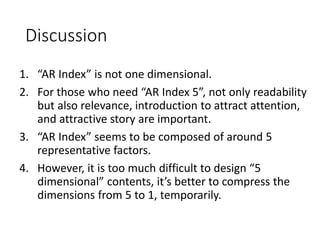
Discussion
1. “AR Index” is not one dimensional.
2. For those who need “AR Index 5”, not only readability
but also relevance, introduction to attract attention,
and attractive story are important.
3. “AR Index” seems to be composed of around 5
representative factors.
4. However, it is too much difficult to design “5
dimensional” contents, it’s better to compress the
dimensions from 5 to 1, temporarily.
Two Case Studies
1. Development of new format of scientific
articles with multiple-levels of accuracy-
readability trade-offs
2. Development of the new movie format to
introduce researchers by making use of
structured interview method
Two Case Studies
1. Development of new format of scientific
articles with multiple-levels of accuracy-
readability trade-offs
2. Development of the new movie format to
introduce researchers by making use of
structured interview method
Purpose of the Project
1. In ELSI(our institute), research activities in
extremely diverse topics are executed by
variety of researchers.
2. You might find some difficulty in
understanding relationship among those
researches and research activities.
Goal: To communicate with the public effectively
relationships among different researchers in ELSI, among
their achievements, and also relationship between them
and other activities outside ELSI.
To focus on a method “interview
movies”
1. Can we communicate our activities by
making use of “interview movies”
effectively?
2. Long interviews are unpopular today,
especially on the web.
3. However, too short movies cannot tell
anything sufficiently.
Development of the New Movie Format to
Introduce Researchers by Making Use of
Structured Interview Method
1. Interviews with researchers were done using the
same list of questions.
2. The duration of one answer is, in principle, 1 minute
at the longest.
3. Questions are designed to make audience find any
kind of connections among answers by different
interviewees.
4. Audience can see many movies in any order, with
any context freely.
List of Questions
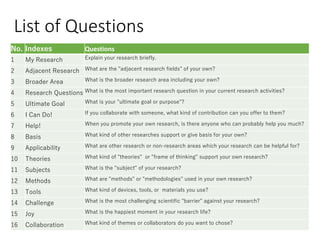
No. Indexes Questions
1 My Research Explain your research briefly.
2 Adjacent Research What are the "adjacent research fields" of your own?
3 Broader Area What is the broader research area including your own?
4 Research Questions What is the most important research question in your current research activities?
5 Ultimate Goal What is your "ultimate goal or purpose"?
6 I Can Do! If you collaborate with someone, what kind of contribution can you offer to them?
7 Help! When you promote your own research, is there anyone who can probably help you much?
8 Basis What kind of other researches support or give basis for your own?
9 Applicability What are other research or non-research areas which your research can be helpful for?
10 Theories What kind of "theories" or "frame of thinking" support your own research?
11 Subjects What is the "subject" of your research?
12 Methods What are "methods" or "methodologies" used in your own research?
13 Tools What kind of devices, tools, or materials you use?
14 Challenge What is the most challenging scientific "barrier" against your research?
15 Joy What is the happiest moment in your research life?
16 Collaboration What kind of themes or collaborators do you want to chose?
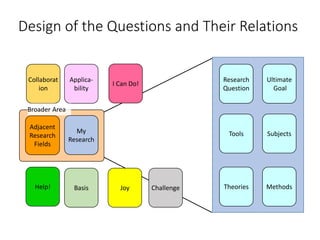
Design of the Questions and Their Relations
My
Research
Adjacent
Research
Fields
Basis
Applica-
bility
Joy
Collaborat
ion
Help!
I Can Do!
Broader Area
Research
Question
Tools
Challenge Theories Methods
Subjects
Ultimate
Goal
My
Research
Adjacent
Research
Fields
Basis
Applica-
bility
Joy
Collaborat
ion
Help!
I Can Do!
Broader Area
Research
Question
Tools
Challenge Theories Methods
Subjects
Ultimate
Goal
My
Research
Adjacent
Research
Fields
Basis
Applica-
bility
Joy
Collaborat
ion
Help!
I Can Do!
Broader Area
Research
Question
Tools
Challenge Theories Methods
Subjects
Ultimate
Goal
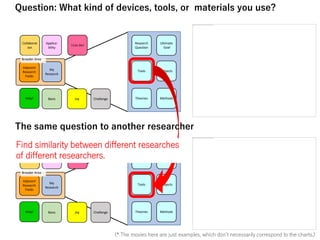
Question: What kind of devices, tools, or materials you use?
(* The movies here are just examples, which don’t necessarily correspond to the charts.)
リレーションシップ ID rId4 のイメージ パーツがファイルにありませんでした。
The same question to another researcher
Find similarity between different researches
of different researchers.
My
Research
Adjacent
Research
Fields
Basis
Applica-
bility
Joy
Collaborat
ion
Help!
I Can Do!
Broader Area
Research
Question
Tools
Challenge Theories Methods
Subjects
Ultimate
Goal
My
Research
Adjacent
Research
Fields
Basis
Applica-
bility
Joy
Collaborat
ion
Help!
I Can Do!
Broader Area
Research
Question
Tools
Challenge Theories Methods
Subjects
Ultimate
Goal
リレーションシップ ID rId4 のイメージ パーツがファイルにありませんでした。
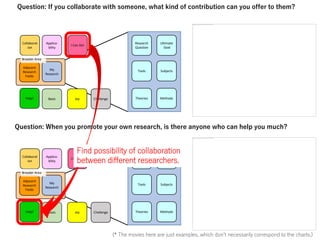
(* The movies here are just examples, which don’t necessarily correspond to the charts.)
Find possibility of collaboration
between different researchers.
Question: If you collaborate with someone, what kind of contribution can you offer to them?
Question: When you promote your own research, is there anyone who can help you much?
リレーションシップ ID rId4 のイメージ パーツがファイルにありませんでした。
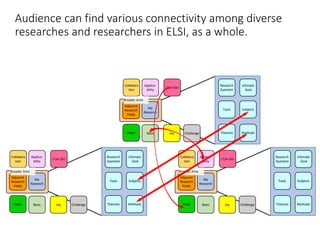
Audience can find various connectivity among diverse
researches and researchers in ELSI, as a whole.
My
Research
Adjacent
Research
Fields
Basis
Applica-
bility
Joy
Collabora
tion
Help!
I Can Do!
Broader Area
Research
Question
Tools
Challenge Theories Methods
Subjects
Ultimate
Goal
My
Research
Adjacent
Research
Fields
Basis
Applica-
bility
Joy
Collabora
tion
Help!
I Can Do!
Broader Area
Research
Question
Tools
Challenge Theories Methods
Subjects
Ultimate
Goal
My
Research
Adjacent
Research
Fields
Basis
Applica-
bility
Joy
Collabora
tion
Help!
I Can Do!
Broader Area
Research
Question
Tools
Challenge Theories Methods
Subjects
Ultimate
Goal
Movie Samples
• Here.
New Communication Formats for
Effective Science Communication
- Two Case Studies -
1. Development of new format of scientific
articles with multiple-levels of accuracy-
readability trade-offs
2. Development of the new movie format to
introduce researchers by making use of
structured interview method

New Communication Formats for Effective Science Communication

  • 1.
    New Communication Formatsfor Effective Science Communication - Two Case Studies - Gensei Ishimura PR Chief/Specially Appointed Associate Professor Earth-Life Science Institute (ELSI),Tokyo Institute of Technology This work was supported by JSPS KAKENHI Grant Number 16K01001 2018/11/19 Inaugural Asia-Pacific Science Communication Conference 2018
  • 2.
    Two Case Studies 1.Development of new format of scientific articles with multiple-levels of accuracy- readability trade-offs 2. Development of the new movie format to introduce researchers by making use of structured interview method
  • 3.
    Two Case Studies 1.Development of new format of scientific articles with multiple-levels of accuracy- readability trade-offs 2. Development of the new movie format to introduce researchers by making use of structured interview method
  • 4.
    Background Problem: How can wedeal with dilemma between accuracy and readability of scientific information in the area of PR, communication, or education?
  • 5.
    How can wedeal with dilemma between accuracy and readability of scientific information? 1. If we try to communicate scientific information as understandable, we often lose accuracy. 2. If we try to communicate scientific information as accurate, we often lose readability. readability accuracy 0 100 No one wants to read articles HalfwayStrictly criticized by experts →dilemma forever?
  • 6.
    How in theworld could we solve the problem? →show all of them parallelly 0 100 readability accuracy
  • 7.
    Multiple Levels ofAccuracy- Readability and “AR Index” AR(Accuracy-Readability) Index: • Extent to put priority on readability rather than accuracy. • To deliver multiple AR Index information simultaneously as a package for the same topic. AR Index 5 4 3 2 1 0 100 readability accuracy
  • 8.
    0 100 Multiple Accuracy-Readability TradeOffs and AR Index 1. You can find which layer(=AR Index) of article you are reading. AR Index works as meta content. 2. Multiple layers are provided with for readers. 3. Readers can move to other layer through links if the current layer doesn’t match their needs. Move to the lower layer if the current one is unsatisfactory To move to the upper layer if the current one is difficult to understandTo confirm on which layer you’re now readable accurate AR Index 5 4 3 2 1
  • 9.
    Case 1. We created5-layered articles for the following nature paper written by ELSI researchers. 1. Crystallization of silicon dioxide and compositional evolution of the Earth’s core 2. Kei Hirose, Guillaume Morard, Ryosuke Sinmyo, Koichio Umemoto, John Hernlund, George Helffrich & Stéphane Labrosse 3. Nature 543, 99–102 (02 March 2017) 2. To write multiple articles differently in reference to the 5 steps (AR Index: 5~1) 3. Title • AR Index 5: Do quartz crystals power the Earth’s magnetic field? • AR Index 1: Crystallization of silicon dioxide and the compositional evolution of the Earth’s core 4. Introduction • AR Index 5: We all know that the Earth has a magnetic field – whenever you look at a compass, you can see it in action, making the needle point at magnetic north. • AR Index 1: The Earth’s magnetic field has existed for at least 3 billion years, according to the paleomagnetic rock record. But the mechanism of the early field has been a source of contention in the Earth science community.
  • 10.
    Sentences written accordingto the 5 indexes DoquartzcrystalspowertheEarth’smagneticfield? WeallknowthattheEarthhasamagneticfield–wheneveryoulookatacompass, youcanseeitinaction,makingtheneedlepointatmagneticnorth.Wealsoknow whatdrivesthemagneticfield–moltenrock,mostlyiron,intheplanet’soutercore swirlingaroundthesolidironinnercore. Thisswirlingiscausedbythermalconvection–youcanseethisinapotofboiling water.Cool,densematerialsinks,whilewarm,lessdensematterrises.Withinthe Earth,resultiswhatisknownasthegeodynamo,whichcreatesthemagneticfield. Butthere’saproblemhere–Earthscientistshavecarefullycalculatedhowmuchheat wouldhavetobelostbythermalconvection,andtheyrealizedthatthiskindof convectioncancontinueonlyiftheheatgoesoutcontinuously,andwhenyou calculatetheinitialheatenergy,itmusthavebeenincrediblyhottohavelastedso long.Evidenceofthisextremeheatwouldshowupintherockrecord.Butitdoesn’t, sothermalconvectionalonecan’texplainhowtheearlymagneticfieldsustained itself. Theremustbesomeothersourceofenergyhelpingthingsalong. ResearchersattheEarth-LifeScienceInstitute(ELSI)oftheTokyoInstituteof Technology(TokyoTech)thinkthey’vefoundasolution–“compositional convection.”Theybelievethattheenormousheatandpressureintheplanet’sinterior encouragecrystalstoform,andastheydosotheyremoveingredientsfromthe solution.Thiswouldchangethechemicalcompositionoftheliquid,changingits buoyancyandcausingittochurn,andcontributingtothemovementthatgeneratesthe magneticfield. Totestthisidea,theELSIscientists,ledbyProf.KeiHirose,simulatedtheconditions atthecenteroftheEarthintheirlab.Theytooktinydust-sizefragmentswithvarious amountsofeachelementthatwaspresentintheearlycoreandsqueezedthem betweenprecision-cutdiamonds.Atthesametimetheyheatedthedustupto thousandsofdegreeswithalaserbeam.Then,theylookedatthesampleswitha powerfulelectronmicroscope. Theyweresurprisedtofindthattheyhadmadequartzcrystals–thesameastheones youcanfindatthesurfaceoftheEarth.Theyrealizedthatthiscouldbeanewwayfor currentstoflow–asthecrystalsform,theelementsinthem–siliconandoxygen– areremovedfromthemix,whichaltersthepropertiesoftheremainingliquid.Itshifts andthiscontributestothemovementoftheliquid. QuartzcrystalspowertheEarth’smagneticfield TheEarth’smagneticfieldisgeneratedbycurrentsofmolteniron-richmagmainthe outercoreswirlingaroundthesolidironinnercore,producingadynamoeffect.Most scientistsbelievethattheswirlingistheresultofthermalconvectiondrivenbyheat escapingfromthecore. Butthemechanismoftheearlyfield,whentheEarthwasfirstforming,isabitofa mystery–inparticularwhatpoweredthelong-runningdynamothatgeneratedthe earlyfield.Thisisknownasthe“newcoreheatparadox.”Judgingbythesizeand electricalconductivityoftheEarth’score,thetemperatureofthecorewhenitformed 3billionyearsagowouldhavebeenextraordinarilyhigh–muchtoohightosustain permanentmagnetismforverylong.Itwouldhavequicklydecayed–unlessthere wassomethingelsegoingon,someotherenergysource,tokeeptheballrolling. Crystalenergy ResearchattheEarth­LifeScienceInstitute(ELSI)attheTokyoInstituteof Technology(TokyoTech),byateamledbyProf.KeiHirose,indicatesthatthis additionalenergysourcecouldbe“compositionalconvection.”Theideaisthat,under theextremeconditionsofthecore,crystalsofsilicondioxideformandprecipitateout ofthemagma.Thisremovesthesiliconandoxygenfromthemix,thebuoyancyofthe liquidchanges,andthisinducesconvectionasthemorebuoyantliquidrises. TheELSIteamreportedinthesciencemagazineNatureontheirinvestigationsinto thismechanism.Theyexaminedwhathappenstoavarietyofalloys,spanningarange ofcompositions,underconditionsthatmimicthoseintheEarth’score. Thescientistsusedprecision-cutdiamondasan“anvil”tosqueezetinydust­size samplestothesamepressuresthatexistattheEarth'score,andalasertosimulatethe hightemperatures.Theythenexaminedthetexturalandchemicalcharacteristicsof theresultingsamplesunderanelectronmicroscope. Theyweresurprisedtofindthatthesmallamountsofsiliconandoxygeninthe startingsamplehadcombinedtogethertoformsilicondioxidecrystals­­thesame compositionasmineralquartzfoundatthesurfaceoftheEarth. ThesearchofalloysbegantoyieldevenmoreusefulresultswhenHiroseandhis collaboratorsbeganmixingmorethanonealloy,includingiron.“Inthepast,most researchonironalloysinthecorehasfocusedonlyontheironandasinglealloy,” Hirosesaid.“Butintheseexperimentswedecidedtocombinetwodifferentalloys containingsiliconandoxygen,whichwestronglybelieveexistinthecore.” Inadditiontocorecoolingandenergysourcesforthegeomagneticfield,theresearch QuartzcrystalsintheEarth’scorepoweritsmagneticfield ResearchersattheEarth­LifeScienceInstitute(ELSI)attheTokyoInstituteof Technology(TokyoTech)havemadesomeexcitingdiscoveriesabouttheprocesses intheEarth’scorethatdrivethegeomagneticfield.Theirfindingshintatapreviously unknownsourceofenergythatdrivestheEarth'smagneticfield,aswellasinsights intotheplanet’score–howitcooled,itschemicalcompositionandtheconditions thatexistedwhenitformed. TheresearchdealtwiththemechanismthatdrivestheEarth’smagneticfield,whichis generatedascurrentsofmolteniron-richmagmaintheoutercoreswirlaroundthe solidironinnercore,producingadynamoeffect.Theconventionalviewisthatthe swirlingistheresultofthermalconvectioncurrentsdrivenbyheatescapingfromthe core. Butthemechanismoftheearlyfieldhasbeenamystery,inparticulartheenergy sourcethatpoweredthelong-runningdynamothatcreatedthefield.Judgingbythe sizeandelectricalconductivityoftheEarth’score,thetemperatureofthecorewhenit formed3billion yearsago,wouldhavebeentoohightosustainpermanent magnetism Itwouldhavequicklydecayed–unlesstherewassomethingelsegoingon,some otherenergysource,tokeeptheballrolling. Crystalenergy ResearchbytheELSIteamandothersindicatesthatthisadditionalenergysource couldbe“compositionalconvection.”Undertheextremeconditionsofthecore, crystalsofsilicondioxideformandprecipitateoutofthemagma.Asthesiliconand oxygenareremoved,thebuoyancyoftheliquidchanges,andthisinducesconvection. TheteamatELSI,ledbyProf.KeiHirose,recentlyreportedinNatureontheir investigationsintothismechanism.Theyexaminedwhathappenstocoolingliquid alloysspanningarangeofcompositionsunderconditionsthatmimicthoseinthe Earth’score. AtHirose'slabatELSI,thescientistsusedprecision-cutdiamondsasan“anvil”to squeezetinydust­sizesamplestothesamepressuresthatexistattheEarth'score,and alasertosimulatethehightemperatures.Theythenexaminedthetexturaland chemicalcharacteristicsoftheresultingsamplesunderanelectronmicroscope. Theresearchersweresurprisedtofindthat,whentheyexaminedthesamplesunderan electronmicroscope,thesmallamountsofsiliconandoxygeninthestartingsample hadcombinedtogethertoformsilicondioxidecrystals(Fig.2)­­thesame compositionasmineralquartzfoundatthesurfaceoftheEarth. ThesearchofalloysbegantoyieldevenmoreusefulresultswhenHiroseandhis Crystallizationofsilicondioxidecouldpowerthegeomagneticfield TheEarth’smagneticfieldhasexistedforatleast3billionyears,accordingtothe paleomagneticrecord.Butthemechanismoftheearlyfieldhasbeenamystery,in particulartheenergysourcethatpoweredt1helong-runningdynamothatproducesthe field.JudgingbythesizeandelectricalconductivityoftheEarth’score,the temperatureofthecorewasmuchtoohightosustainpermanentmagnetism,andit wouldhavequicklydecayed–unlesstherewassomeothersourceofenergyavailable Currently,itiswidelyacceptedthattheswirlingofmagmaintheEarth’sfluidouter core,whichsurroundsitssolidinnercore,inducesaconvectivedynamo.Thesolid innercoreisroughlythesizeofthemoonbutisashotasthesurfaceofthesun,andis mostlyiron.Theconventionalmodelisthatmovementinthefluidoutercoreisdriven bythermalconvectionattheinnercoreboundary.CoriolisforcesduetotheEarth’s rotationaddtothemovementandintensifythedynamoeffect. However,thisscenariooftheconvectivelydrivengeodynamoastheoriginofthe Earth’smagneticfieldhasrecentlybeenchallengedby(1)theupwardrevisionofthe thermalconductivityofthecore,whichimpliesaninner-corenucleationyoungerthan 1.4billionyearsand(2)atotallong-termcoolingofthecoreinexcessof1,000Kto drivethermalconvectionbefore1.4billionyearsago,whichwouldberequiredto explainpalaeomagneticintensitymeasurements. TheEarth’scoreisabout10%lessdensethanpureiron,whichsuggeststhatit containslightelementsaswellasiron.Modelingofcoreformationathighpressure andtemperatureinadeepmagmaoceanpredictsthatbothsiliconandoxygenare amongtheimpuritiesintheliquidoutercore.However,untilnow,onlyalloysofFe- SiandFe-Ohavebeenstudiedindetailathighpressures,andlittleisknownaboutthe compositionalevolutionofanFe–Si–Oalloyundercoreconditions. AteamattheEarth-LifeScienceInstituteoftheTokyoInstituteofTechnology,led byProf.KeiHirose,recentlyreportedinNatureontheirinvestigationsintothis mechanism.Theyexaminedwhathappenstocoolingliquidalloysinarangeof compositionsthatsimulatethepresumedconditionsintheEarth’score.Theyuseda diamondanvilandalasertoapplycore-likepressuresandtemperaturestoavarietyof samples,thenexaminedthetexturalandchemicalcharacteristicsoftheresulting samplesusinganelectronmicroscope. “Inthepast,mostresearchonironalloysinthecorehasfocusedonlyontheironand asinglealloy,”Hirosesaid."Butintheseexperimentswedecidedtocombinetwo differentalloyscontainingsiliconandoxygen,whichwestronglybelieveexistinthe core." Theresearcherswereexcitedtofindthatwhentheyexaminedthesamplesinan electronmicroscope,thesmallamountsofsiliconandoxygeninthestartingsample Crystallizationofsilicondioxideandthecompositional evolutionoftheEarth’score TheEarth’smagneticfieldhasexistedforatleast3billionyears,accordingtothe paleomagneticrockrecord.Butthemechanismoftheearlyfieldhasbeenasourceof contentionintheEarthsciencecommunity.Judgingbythesizeandelectrical conductivityoftheEarth'score,thefieldwouldhavequicklydecayedand disappeared,sincethetemperatureofthecorewastoohightosustainpermanent magnetism,accordingtorecentfindings. Therefore,anothermechanismmustexistwithintheEarth'scorethatcontinually generatesthegeomagneticfield.Scientistshavespeculatedthatthereisaconvective dynamooperatingintheEarth'sfluidoutercore,whichsurroundsitssolidinnercore. Theconvectionintheoutercoreisnowbelievedtobedrivenbyboththermaland compositionalbuoyancysourcesattheinnercoreboundary.Theseareproducedas theEarthslowlycoolsandironintheiron-richfluidalloysolidifiesontotheinner core,givingofflatentheatandthelightconstituentofthealloy.Thesebuoyancy forcescausefluidtorise,inducingconvection. Thispreviouslyacceptedscenariooftheconvectivelydrivengeodynamoastheorigin ofthemagneticfieldoftheEarthhasrecentlybeenchallengedby(1)theupward revisionofthethermalconductivityofthecore,whichimpliesaninner-core nucleationyoungerthan1.4billionyearsand(2)atotalsecularcoolingofthecorein excessof1,000Ktodrivethermalconvectionbefore1.4billionyearsago,whichis requiredtoexplainpalaeomagneticintensitymeasurements. TheEarth’scoreisabout10%lessdensethanpureiron,whichsuggeststhatit containslightelementsaswellasiron.Modelingofcoreformationathighpressure (around40–60gigapascals)andhightemperature(about3,500kelvin)inadeep magmaoceanpredictsthatbothsiliconandoxygenareamongtheimpuritiesinthe liquidoutercore.However,onlythebinarysystemsFe-SiandFe-Ohavebeenstudied indetailathighpressures,andlittleisknownaboutthecompositionalevolutionofthe Fe–Si–Oternaryalloyundercoreconditions. AteamattheEarth-LifeScienceInstituteoftheTokyoInstituteofTechnology,led byProf.KeiHirose,performedmeltingexperimentsonliquidFe–Si–Oalloyatcore pressuresinalaser-heateddiamond-anvilcell.Theirresultsdemonstratedthatthe liquidusfieldofsilicondioxideisunexpectedlywideattheiron-richportionofthe Fe–Si–Oternary,suchthataninitialFe–Si–OcorecrystallizesintoSiO2asitcools.If crystallizationproceedsontopofthecore,thebuoyancyreleasedshouldhavebeen morethansufficienttopowercoreconvectionandadynamo,inspiteofhighthermal conductivity,fromasearlyastheHadeaneon,4.5billionyearsago,whentheEarth firststartedtoform.Thefindingalsoprovidesinsightsintothemakeupoftheinner AR Index 5 AR Index 4 AR Index 3 AR Index 2 AR Index 1
  • 11.
    Sentences written accordingto the 5 indexes (web contents) • Here.
  • 12.
    Discussion 1. “AR Index”is not one dimensional. 2. For those who need “AR Index 5”, not only readability but also relevance, introduction to attract attention, and attractive story are important. 3. “AR Index” seems to be composed of around 5 representative factors. 4. However, it is too much difficult to design “5 dimensional” contents, it’s better to compress the dimensions from 5 to 1, temporarily.
  • 13.
    Two Case Studies 1.Development of new format of scientific articles with multiple-levels of accuracy- readability trade-offs 2. Development of the new movie format to introduce researchers by making use of structured interview method
  • 14.
    Two Case Studies 1.Development of new format of scientific articles with multiple-levels of accuracy- readability trade-offs 2. Development of the new movie format to introduce researchers by making use of structured interview method
  • 15.
    Purpose of theProject 1. In ELSI(our institute), research activities in extremely diverse topics are executed by variety of researchers. 2. You might find some difficulty in understanding relationship among those researches and research activities. Goal: To communicate with the public effectively relationships among different researchers in ELSI, among their achievements, and also relationship between them and other activities outside ELSI.
  • 16.
    To focus ona method “interview movies” 1. Can we communicate our activities by making use of “interview movies” effectively? 2. Long interviews are unpopular today, especially on the web. 3. However, too short movies cannot tell anything sufficiently.
  • 17.
    Development of theNew Movie Format to Introduce Researchers by Making Use of Structured Interview Method 1. Interviews with researchers were done using the same list of questions. 2. The duration of one answer is, in principle, 1 minute at the longest. 3. Questions are designed to make audience find any kind of connections among answers by different interviewees. 4. Audience can see many movies in any order, with any context freely.
  • 18.
    List of Questions No.Indexes Questions 1 My Research Explain your research briefly. 2 Adjacent Research What are the "adjacent research fields" of your own? 3 Broader Area What is the broader research area including your own? 4 Research Questions What is the most important research question in your current research activities? 5 Ultimate Goal What is your "ultimate goal or purpose"? 6 I Can Do! If you collaborate with someone, what kind of contribution can you offer to them? 7 Help! When you promote your own research, is there anyone who can probably help you much? 8 Basis What kind of other researches support or give basis for your own? 9 Applicability What are other research or non-research areas which your research can be helpful for? 10 Theories What kind of "theories" or "frame of thinking" support your own research? 11 Subjects What is the "subject" of your research? 12 Methods What are "methods" or "methodologies" used in your own research? 13 Tools What kind of devices, tools, or materials you use? 14 Challenge What is the most challenging scientific "barrier" against your research? 15 Joy What is the happiest moment in your research life? 16 Collaboration What kind of themes or collaborators do you want to chose?
  • 19.
    Design of theQuestions and Their Relations My Research Adjacent Research Fields Basis Applica- bility Joy Collaborat ion Help! I Can Do! Broader Area Research Question Tools Challenge Theories Methods Subjects Ultimate Goal
  • 20.
    My Research Adjacent Research Fields Basis Applica- bility Joy Collaborat ion Help! I Can Do! BroaderArea Research Question Tools Challenge Theories Methods Subjects Ultimate Goal My Research Adjacent Research Fields Basis Applica- bility Joy Collaborat ion Help! I Can Do! Broader Area Research Question Tools Challenge Theories Methods Subjects Ultimate Goal Question: What kind of devices, tools, or materials you use? (* The movies here are just examples, which don’t necessarily correspond to the charts.) リレーションシップ ID rId4 のイメージ パーツがファイルにありませんでした。 リレーションシップ ID rId4 のイメージ パーツがファイルにありませんでした。 The same question to another researcher Find similarity between different researches of different researchers.
  • 21.
    My Research Adjacent Research Fields Basis Applica- bility Joy Collaborat ion Help! I Can Do! BroaderArea Research Question Tools Challenge Theories Methods Subjects Ultimate Goal My Research Adjacent Research Fields Basis Applica- bility Joy Collaborat ion Help! I Can Do! Broader Area Research Question Tools Challenge Theories Methods Subjects Ultimate Goal リレーションシップ ID rId4 のイメージ パーツがファイルにありませんでした。 (* The movies here are just examples, which don’t necessarily correspond to the charts.) Find possibility of collaboration between different researchers. Question: If you collaborate with someone, what kind of contribution can you offer to them? Question: When you promote your own research, is there anyone who can help you much? リレーションシップ ID rId4 のイメージ パーツがファイルにありませんでした。
  • 22.
    Audience can findvarious connectivity among diverse researches and researchers in ELSI, as a whole. My Research Adjacent Research Fields Basis Applica- bility Joy Collabora tion Help! I Can Do! Broader Area Research Question Tools Challenge Theories Methods Subjects Ultimate Goal My Research Adjacent Research Fields Basis Applica- bility Joy Collabora tion Help! I Can Do! Broader Area Research Question Tools Challenge Theories Methods Subjects Ultimate Goal My Research Adjacent Research Fields Basis Applica- bility Joy Collabora tion Help! I Can Do! Broader Area Research Question Tools Challenge Theories Methods Subjects Ultimate Goal
  • 23.
  • 24.
    New Communication Formatsfor Effective Science Communication - Two Case Studies - 1. Development of new format of scientific articles with multiple-levels of accuracy- readability trade-offs 2. Development of the new movie format to introduce researchers by making use of structured interview method