TURP(Transurethral
resection of the prostate)
What is TURP?
TURP stands for (Transurethral resection of the prostate) is a surgical procedure
done to alleviate symptoms caused by an enlarged prostate as a result of benign
prostatic hyperplasia (BPH) or to treat complications associated with blocked
urine flow. The procedure involves removing a portion of the prostate via the
urethra. TURP is used most often for non-cancerous blockage, but may also be
used in some cases of prostate cancer. It can be performed on men of any age
suffering from urinary outflow obstruction caused by an enlarged prostate.
Outcomes for this procedure are overwhelmingly positive, and the surgery is
minimally invasive.
TURP is used most often for non-cancerous blockage, but may also be used in
some cases of prostate cancer. It can be performed on men of any age suffering
from urinary outflow obstruction caused by an enlarged prostate
Patient has to undergo blood and urine tests, tissue biopsy, chest X-ray, and ECG
(Electrocardiogram), if you are above 60. Consulting with a doctor in regard to any
symptoms is crucial to make sure; if TURP is right for the patient. Usually the patient
has to stop eating and drinking 6-8 hours before surgery and it is important to
inform your surgeon if you are taking any anti-coagulant medication.
Please inform your surgeon if you are taking any anti-coagulant medication (e.g.
Warfarin, Clopidogrel, Pradexa or Aspirin).You may be required to stop this up to 10
days before surgery.
Before the Procedure
How it is performed?
How It Is Performed?
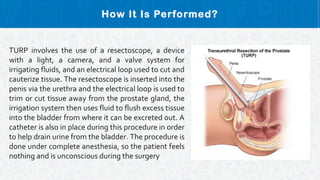
TURP involves the use of a resectoscope, a device
with a light, a camera, and a valve system for
irrigating fluids, and an electrical loop used to cut and
cauterize tissue. The resectoscope is inserted into the
penis via the urethra and the electrical loop is used to
trim or cut tissue away from the prostate gland, the
irrigation system then uses fluid to flush excess tissue
into the bladder from where it can be excreted out. A
catheter is also in place during this procedure in order
to help drain urine from the bladder. The procedure is
done under complete anesthesia, so the patient feels
nothing and is unconscious during the surgery
Recovery
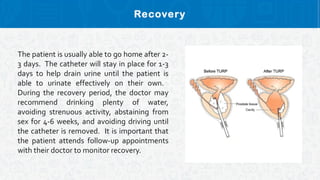
The patient is usually able to go home after 2-
3 days. The catheter will stay in place for 1-3
days to help drain urine until the patient is
able to urinate effectively on their own.
During the recovery period, the doctor may
recommend drinking plenty of water,
avoiding strenuous activity, abstaining from
sex for 4-6 weeks, and avoiding driving until
the catheter is removed. It is important that
the patient attends follow-up appointments
with their doctor to monitor recovery.
Potential Risks
Some risks of TURP include blood in the urine, difficulty in urinating for a few days
after the procedure, lingering pain, urinary tract infection, general bleeding, Erectile
dysfunction, Dry orgasm and abnormal ejaculation.
+1-844-LYFBOAT
www.lyfboat.com
www.facebook.com/lyfboat
www.twitter.com/lyfboat
Know More About Transurethral Resection of the prostate
Visit us at :
https://www.lyfboat.com/procedures/transurethral-resection-of-the-prostate-turp/

Turp

  • 1.
  • 2.
    What is TURP? TURP standsfor (Transurethral resection of the prostate) is a surgical procedure done to alleviate symptoms caused by an enlarged prostate as a result of benign prostatic hyperplasia (BPH) or to treat complications associated with blocked urine flow. The procedure involves removing a portion of the prostate via the urethra. TURP is used most often for non-cancerous blockage, but may also be used in some cases of prostate cancer. It can be performed on men of any age suffering from urinary outflow obstruction caused by an enlarged prostate. Outcomes for this procedure are overwhelmingly positive, and the surgery is minimally invasive. TURP is used most often for non-cancerous blockage, but may also be used in some cases of prostate cancer. It can be performed on men of any age suffering from urinary outflow obstruction caused by an enlarged prostate
  • 3.
    Patient has toundergo blood and urine tests, tissue biopsy, chest X-ray, and ECG (Electrocardiogram), if you are above 60. Consulting with a doctor in regard to any symptoms is crucial to make sure; if TURP is right for the patient. Usually the patient has to stop eating and drinking 6-8 hours before surgery and it is important to inform your surgeon if you are taking any anti-coagulant medication. Please inform your surgeon if you are taking any anti-coagulant medication (e.g. Warfarin, Clopidogrel, Pradexa or Aspirin).You may be required to stop this up to 10 days before surgery. Before the Procedure
  • 4.
    How it isperformed?
  • 5.
    How It IsPerformed? TURP involves the use of a resectoscope, a device with a light, a camera, and a valve system for irrigating fluids, and an electrical loop used to cut and cauterize tissue. The resectoscope is inserted into the penis via the urethra and the electrical loop is used to trim or cut tissue away from the prostate gland, the irrigation system then uses fluid to flush excess tissue into the bladder from where it can be excreted out. A catheter is also in place during this procedure in order to help drain urine from the bladder. The procedure is done under complete anesthesia, so the patient feels nothing and is unconscious during the surgery
  • 6.
    Recovery The patient isusually able to go home after 2- 3 days. The catheter will stay in place for 1-3 days to help drain urine until the patient is able to urinate effectively on their own. During the recovery period, the doctor may recommend drinking plenty of water, avoiding strenuous activity, abstaining from sex for 4-6 weeks, and avoiding driving until the catheter is removed. It is important that the patient attends follow-up appointments with their doctor to monitor recovery.
  • 7.
    Potential Risks Some risksof TURP include blood in the urine, difficulty in urinating for a few days after the procedure, lingering pain, urinary tract infection, general bleeding, Erectile dysfunction, Dry orgasm and abnormal ejaculation.
  • 8.
    +1-844-LYFBOAT www.lyfboat.com www.facebook.com/lyfboat www.twitter.com/lyfboat Know More AboutTransurethral Resection of the prostate Visit us at : https://www.lyfboat.com/procedures/transurethral-resection-of-the-prostate-turp/