PATHOGENESIS OF TUBERCULOSIS
Dr. Saket Kumar
TUBERCULOSIS (TB)
Is the most prevalent communicable infectious disease on
earth and remains out of control in many developing nations
It is a chronic specific inflammatory infectious disease caused
by Mycobacterium tuberculosis in humans
Usually attacks the lungs but it can also affect any parts of the
body
Pathogenesis of Tuberculosis
Introduction Etiology Epidemiology Pathophysiology Clinical features Diagnosis Treatment
TUBERCULOSIS (TB)
Coinfection with HIV
o Accelerates the progression of both diseases
o Requiring rapid diagnosis and treatment of both diseases
Tuberculosis can produce atypical signs and symptoms in
infants, the elderly, and immunocompromised hosts
and it can progress rapidly in these patients
Pathogenesis of Tuberculosis
Introduction Etiology Epidemiology Pathophysiology Clinical features Diagnosis Treatment
Mycobacterium tuberculosis
It presents either as latent TB infection (LTBI) or as progressive
active disease.
The latter typically causes progressive destruction of the lungs, leading
to death in most patients who do not receive treatment
Common cause other than tuberculosis includes:
o
o
M. avium intracellulare, M. scrofulaceum
M. ulcerans, M. fortuitum, etc.
ETIOLOGY
Pathogenesis of Tuberculosis
Introduction Etiology Epidemiology Pathophysiology Clinical features Diagnosis Treatment
EPIDEMIOLOGY
Roughly one of every three people on earth is infected by
M. tuberculosis
The distribution is very uneven, with the highest incidences
found in southern Asia and sub-Saharan Africa
In the United States, about 13 million people have LTBI,
evidenced by a positive skin test [purified protein derivative
(PPD)] but no signs or symptoms of disease
Pathogenesis of Tuberculosis
Introduction Etiology Epidemiology Pathophysiology Clinical features Diagnosis Treatment
EPIDEMIOLOGY
Every year approximately 1.7 million people develop TB
Tuberculosis (TB) kills about 2 million people each year
With the spread of AIDS, tuberculosis continues to lay waste to
large populations
The emergence of drug resistant organism threatens to make this
disease once again incurable
Pathogenesis of Tuberculosis
Introduction Etiology Epidemiology Pathophysiology Clinical features Diagnosis Treatment
RISK FACTORS OF TUBERCULOSIS
Low socioeconomic status
Crowded living conditions
Diseases that weakens immune system like HIV
Person on immunosuppresants like steroid
Health care workers
Migration from a country with a high number of cases
Alcoholism
Recent Tubercular infection (within last 2 years)
Pathogenesis of Tuberculosis
Introduction Etiology Epidemiology Pathophysiology Clinical features Diagnosis Treatment
COINFECTION WITH HUMAN
IMMUNODEFICIENCY VIRUS (HIV)
HIV is the most important risk factor for active TB, because
the immune deficit prevents patients from containing the initial
infection
Roughly 10% of US TB patients are coinfected with HIV, and
roughly 20% of TB patients ages 25 to 44 years are coinfected
with HIV
Pathogenesis of Tuberculosis
Introduction Etiology Epidemiology Pathophysiology Clinical features Diagnosis Treatment
Pulmonary TB (85% of all TB cases)
Extra-pulmonary sites
•
•
•
•
•
•
Lymph node
Genito-urinary tract
Bones & Joints
Meninges
Intestine
Skin
SITES INVOLVED
Pathogenesis of Tuberculosis
Introduction Etiology Epidemiology Pathophysiology Clinical features Diagnosis Treatment
Kidney
Brain
Bone
Larynx
Lymph
node
Lung
Spine
CHARECTERISTICS OF M. TUBERCULOSIS
Rod shaped,
0.2-0.5 µ in D, 2-4 µ in L
Mycolic acid present in its
cell wall, makes it acid fast
It resists decolourization
with acid & alcohol
Aerobic and non motile
It multiplies slowly, can remain dormant for decades
Pathogenesis of Tuberculosis
Introduction Etiology Epidemiology Pathophysiology Clinical features Diagnosis Treatment
Person-to-person through the
air by a person with active TB
disease of the lungs
Less frequently transmitted by:
Ingestion of M. bovis
found in unpasteurized milk
Inoculation (in skin tuberculosis)
Transplacental route (rare route)
How is TB Transmitted?
Pathogenesis of Tuberculosis
Introduction Etiology Epidemiology Pathophysiology Clinical features Diagnosis Treatment
Droplet nuclei
containig tubercle
baccilli
Tubercle bacilli
multiply in the alveoli
Pathogenesis of Tuberculosis
Introduction Etiology Epidemiology Pathophysiology Clinical features Diagnosis Treatment
PRIMARY TUBERCULOSIS
Primary Infection
The progression to clinical disease in a previously unexposed,
immunocompetent person depends on three factors:
(1) The number of M. tuberculosis organisms inhaled
(2) Infecting dose and the virulence of these organisms
(3) The development of anti-mycobacterial cell-mediated
immunity
Immunity to M. tuberculosis is primarily mediated by TH1 cells,
which stimulate macrophages to kill the bacteria
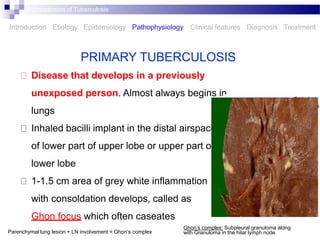
with Granuloma in the hilar lymph node
Parenchymal lung lesion + LN involvement = Ghon’s complex
Pathogenesis of Tuberculosis
Introduction Etiology Epidemiology Pathophysiology Clinical features Diagnosis Treatment
PRIMARY TUBERCULOSIS
Disease that develops in a previously
unexposed person. Almost always begins in
lungs
Inhaled bacilli implant in the distal airspaces
of lower part of upper lobe or upper part of
lower lobe
1-1.5 cm area of grey white inflammation
with consoldation develops, called as
Ghon focus which often caseates
Ghon’s complex: Subpleural granuloma along
with Granuloma in the hilar lymph node
Parenchymal lung lesion + LN involvement = Ghon’s complex
Pathogenesis of Tuberculosis
Introduction Etiology Epidemiology Pathophysiology Clinical features Diagnosis Treatment
PRIMARY TUBERCULOSIS
Disease that develops in a previously
unexposed person. Almost always begins in
lungs
Inhaled bacilli implant in the distal airspaces
of lower part of upper lobe or upper part of
lower lobe
1-1.5 cm area of grey white inflammation
with consoldation develops, called as
Ghon focus which often caseates
Ghon’s complex: Subpleural granuloma along
Introduction Etiology Epidemiology Pathophysiology Clinical features Diagnosis Treatment
1. M. tuberculosis enters macrophages by endocytosis mediated by several macrophage receptors:
mannose receptors bind lipoarabinomannan, a glycolipid in the bacterial cell wall
2. Inside the macrophage, M. tuberculosis replicates within the phagosome by blocking phaglysosome formation
• Inhibition of Ca2+ signals
and blocking recruitment
• Assembly of the proteins
which mediate
phagosome-lysosome
fusion
Pathogenesis of Tuberculosis
Introduction Etiology Epidemiology Pathophysiology Clinical features Diagnosis Treatment
1. About 3 weeks after infection, a TH1 response against M. tuberculosis is mounted that activates
macrophages to become bactericidal.
2.
H
Differentiation of T 1 cells depends on the presence of IL-12, which is produced by antigen presenting cells
3. Mature TH1 cells, both in
lymph nodes and lung, produce
IFN-γ. IFN-γ is the critical
mediator which drives
macrophages to become
competent to contain the M.
tuberculosis infection.
Pathogenesis of Tuberculosis
PRIMARY TUBERCULOSIS
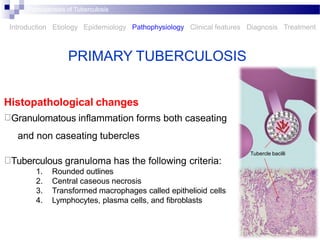
Histopathological changes
Granulomatous inflammation forms both caseating
and non caseating tubercles
Tuberculous granuloma has the following criteria:
1. Rounded outlines
2. Central caseous necrosis
3. Transformed macrophages called epithelioid cells
4. Lymphocytes, plasma cells, and fibroblasts
Pathogenesis of Tuberculosis
Introduction Etiology Epidemiology Pathophysiology Clinical features Diagnosis Treatment
Tubercle bacilli
PRIMARY TUBERCULOSIS
Well-defined granulomas . They have rounded outlines. The center contains
several Langhans giant cells. Granulomas are composed of transformed
macrophages called epithelioid cells along with lymphocytes, plasma cells, and
fibroblasts. The localized, small appearance of these granulomas suggests that
the immune response is fairly good
Introduction Etiology Epidemiology Pathophysiology Clinical features Diagnosis Treatment
Collar of
lymphocytes,
plasma cells
Central
caseated
necrosis
Giant multinucleated
cells (langhans type
Agrregation
of epithliod
cells
PRIMARY TUBERCULOSIS
Occasionally, even in immunocompetent
individuals, tubercular granulomas might
not show central caseation
In immunosuppressed individuals, tuberculosis may
not elicit a granulomatous response ("nonreactive
tuberculosis"); instead, sheets of foamy histiocytes are
seen, packed with mycobacteria that are demonstrable
with acid-fast stains
Introduction Etiology Epidemiology Pathophysiology Clinical features Diagnosis Treatment
Healing by fibrosis and calcification
Ghons complex after undergoing progressive
fibrosis produces radiologically detectable
calcification called as Ranke complex
FATE OF PRIMARY TUBERCULOSIS
No progression
Progressive primary tuberculosis
Primary miliary tuberculosis
Dissemination to organs like liver, spleen, kidney, ..etc.
Pathogenesis of Tuberculosis
Introduction Etiology Epidemiology Pathophysiology Clinical features Diagnosis Treatment
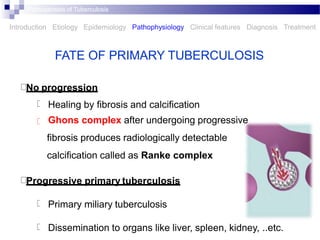
Tubercle bacilli escape
and multiply
Pathogenesis of Tuberculosis
Introduction Etiology Epidemiology Pathophysiology Clinical features Diagnosis Treatment
SECONDARY PULMONARY TUBERCULOSIS
The upper parts of both lungs Showed:
• Gray-white areas of caseation
• Multiple areas of softening and cavitation
Introduction Etiology Epidemiology Pathophysiology Clinical features Diagnosis Treatment
Pathogenesis of Tuberculosis
Tuberculous caseous pneumonia
Fibrocaseous tuberculosis
Miliary tuberculosis
FATE OF SEC. PULMONARY TUBERCULOSIS
The lesion may heal with fibrous scarring and calcification
The lesions may coalesce together to form large area of
tuberculous pneumonia and produce progressive secondary
pulmonary tuberculosis producing pulmonary & extra pulmonary
lesions:
Pathogenesis of Tuberculosis
Introduction Etiology Epidemiology Pathophysiology Clinical features Diagnosis Treatment
MILIARY TUBERCULOSIS
Extensive infection via hematogenous spread
In lung: lesions are either microscopic or small, visible foci (2mm) of
yellow white consolidation scattered through out lung parenchyma
Miliary pulmonary disease can cause pleural effusion, tuberculous
empyema or obliterative fibrous pleuritis.
Extra pulmonary miliary tuberculosis is most prominent in the
liver, spleen, bone marrow, adrenals, meninges, kidneys, fallopian
tubes and epididymis but can involve any organ
Pathogenesis of Tuberculosis
Introduction Etiology Epidemiology Pathophysiology Clinical features Diagnosis Treatment
MILIARY TUBERCULOSIS
Miliary tuberculosis of the spleen
The cut surface shows numerous gray-white granulomas
Introduction Etiology Epidemiology Pathophysiology Clinical features Diagnosis Treatment
Pathogenesis of Tuberculosis
Intestinal tuberculosis
Meninges (Tuberculous meningitis)
Kidneys (Renal tuberculosis)
Adrenals (Addison disease)
Bones (Osteomyelitis)
Vertebrae (Pott disease)
Fallopian tubes (Salpingitis)
EXTRA PULMONARY TUBERCULOSIS
In tissues or organs seeded hematogenously
Commonly involved organs include:
Pathogenesis of Tuberculosis
Introduction Etiology Epidemiology Pathophysiology Clinical features Diagnosis Treatment
Pathogenesis of Tuberculosis
Introduction Etiology Epidemiology Pathophysiology Clinical features Diagnosis Treatment
Influence of HIV Infection on Pathogenesis
HIV infection is the most important risk factor for active TB.
As CD4+ lymphocytes multiply in response to the
mycobacterial infection, HIV multiplies within these cells and
selectively destroys them, gradually eliminating the TB-
fighting lymphocytes
HIV-infected patients infected with TB are at a substantially higher
risk of early mortality compared with HIV-negative TB patients
Most clinicians elect to begin TB treatment first. A reasonable time to
begin HIV treatment is after 2 months of TB treatment
CLINICAL Findings
Introduction Etiology Epidemiology Pathophysiology Clinical features Diagnosis Treatment
Pathogenesis of Tuberculosis
CLINICAL PRESENTATION OF TUBERCULOSIS
Signs and Symptoms
Patients typically present with weight loss, fatigue, a productive
cough, fever, and night sweats
Laboratory Tests
Moderate elevations in the white blood cell (WBC) count
with a lymphocyte predominance
Pathogenesis of Tuberculosis
Introduction Etiology Epidemiology Pathophysiology Clinical features Diagnosis Treatment
CLINICAL PRESENTATION OF TUBERCULOSIS
Chest Radiograph:
Patchy or nodular infiltrates in the apical areas of the upper lobes
or the superior segment of the lower lobes
Cavitation that may show air-fluid levels as the
infection progresses
CT scan: To diagnose TB that has spread throughout the body
(miliary TB) and to detect lung cavities caused by TB
MRI: This test looks for TB in the brain or the spine
Pathogenesis of Tuberculosis
Introduction Etiology Epidemiology Pathophysiology Clinical features Diagnosis Treatment
Chest radiographs in pulmonary tuberculosis
Pathogenesis of Tuberculosis
Introduction Etiology Epidemiology Pathophysiology Clinical features Diagnosis Treatment
A. Infiltrates in left lung
B. Ghon’s complex (Primary tuberculosis)
C. Bilateral advanced pulmonary tuberculosis and cavitation in apical area of right lung
A B C
INTESTINAL TUBERCULOSIS
Occurs in three forms
1.Primary intestinal tuberculosis : Used to occur by ingestion of
unpasteurised cow’s milk infected with Mycobacterium bovis. But now a
days most cases are due to M. tuberculosis.
Most commonly ileocaecal region is involved.
Subsequently, mesentric lymph nodes are affected which show typical
tuberculous granulomatous inflammatory reaction with caseation
necrosis
Tuberculosis
Introduction Etiology Epidemiology Pathophysiology
INTESTINAL TUBERCULOSIS
2. Secondary intestinal tuberculosis:
Swallowing of sputum in patients with active pulmonary tuberculosis
may cause secondary intestinal tuberculosis.
Most commonly in the terminal ileum and rarely in the colon.
Histologically: tubercles will be present.
Mucosa and submocosa show ulceration and the muscularis may be
replaced by variable degree of tuberculosis.
3.Hyperplastic intestinal tuberculosis : The caecum and ascending
colon are thick walled with mucosal ulceration. Histologically: caseating
tubercles will be present.
Tuberculosis
Introduction Etiology Epidemiology Pathophysiology
INTESTINAL TUBERCULOSIS
2. Secondary intestinal tuberculosis:
Swallowing of sputum in patients with active pulmonary tuberculosis
may cause secondary intestinal tuberculosis.
Most commonly in the terminal ileum and rarely in the colon.
Histologically: tubercles will be present.
Mucosa and submocosa show ulceration and the muscularis may be
replaced by variable degree of tuberculosis.
3.Hyperplastic intestinal tuberculosis : The caecum and ascending
colon are thick walled with mucosal ulceration. Histologically: caseating
tubercles will be present.
Tuberculosis
Introduction Etiology Epidemiology Pathophysiology
Diagnosis Treatment
Negative TST* or
IGRA** result
Infected
with M.
tuberculosis
No developed
LTBI or TB
No Infection
Positive TST or
IGRA result
Normal chest
radiograph
No symptoms
Has LTBI
Develop symptoms later
No active infection
symptoms
abnormal chest
radiograph
Positive culture
May be infectious
Has TB Disease
Pathogenesis of Tuberculosis
Introduction Etiology Epidemiology Pathophysiology Clinical features
People Exposed to M. tuberculosis
* TST (Tuberculin skin test)
* IGRA (Interferon-Gamma
Release Assays)
DIAGNOSIS
SKIN TESTING
Infection with M. tuberculosis typically leads to the development
of delayed hypersensitivity to M. tuberculosis antigens, which can
be detected by the tuberculin (Mantoux) test
About 2 to 4 weeks after infection, intracutaneous injection of
purified protein derivative of M. tuberculosis (PPD) induces a
visible and palpable induration that peaks in 48 to 72 hours
Pathogenesis of Tuberculosis
Introduction Etiology Epidemiology Pathophysiology Clinical features Diagnosis Treatment
DIAGNOSIS
A positive tuberculin test result signifies cell-mediated
hypersensitivity to tubercular antigens. It does not differentiate
between infection and disease
False-negative reactions may be produced by certain viral infections,
sarcoidosis, malnutrition, immunosuppression
False-positive reactions may also result from infection by atypical
mycobacteria
Pathogenesis of Tuberculosis
Introduction Etiology Epidemiology Pathophysiology Clinical features Diagnosis Treatment
DIAGNOSIS
Sputum examination
Are essential to confirm TB Best collected in morning before any
meal
Sputum examination on 3 days, increase chances of detection
Sputum can be collected from laryngeal swab or bronchial washing In
small children, gastric lavage can be examined.
Smear should be prepared from thick dirty part of sputum & stained
with Ziehl-Neelson technique
Pathogenesis of Tuberculosis
Introduction Etiology Epidemiology Pathophysiology Clinical features Diagnosis Treatment

tuberculosis (2).pptx

  • 1.
  • 2.
    TUBERCULOSIS (TB) Is themost prevalent communicable infectious disease on earth and remains out of control in many developing nations It is a chronic specific inflammatory infectious disease caused by Mycobacterium tuberculosis in humans Usually attacks the lungs but it can also affect any parts of the body Pathogenesis of Tuberculosis Introduction Etiology Epidemiology Pathophysiology Clinical features Diagnosis Treatment
  • 3.
    TUBERCULOSIS (TB) Coinfection withHIV o Accelerates the progression of both diseases o Requiring rapid diagnosis and treatment of both diseases Tuberculosis can produce atypical signs and symptoms in infants, the elderly, and immunocompromised hosts and it can progress rapidly in these patients Pathogenesis of Tuberculosis Introduction Etiology Epidemiology Pathophysiology Clinical features Diagnosis Treatment
  • 4.
    Mycobacterium tuberculosis It presentseither as latent TB infection (LTBI) or as progressive active disease. The latter typically causes progressive destruction of the lungs, leading to death in most patients who do not receive treatment Common cause other than tuberculosis includes: o o M. avium intracellulare, M. scrofulaceum M. ulcerans, M. fortuitum, etc. ETIOLOGY Pathogenesis of Tuberculosis Introduction Etiology Epidemiology Pathophysiology Clinical features Diagnosis Treatment
  • 5.
    EPIDEMIOLOGY Roughly one ofevery three people on earth is infected by M. tuberculosis The distribution is very uneven, with the highest incidences found in southern Asia and sub-Saharan Africa In the United States, about 13 million people have LTBI, evidenced by a positive skin test [purified protein derivative (PPD)] but no signs or symptoms of disease Pathogenesis of Tuberculosis Introduction Etiology Epidemiology Pathophysiology Clinical features Diagnosis Treatment
  • 6.
    EPIDEMIOLOGY Every year approximately1.7 million people develop TB Tuberculosis (TB) kills about 2 million people each year With the spread of AIDS, tuberculosis continues to lay waste to large populations The emergence of drug resistant organism threatens to make this disease once again incurable Pathogenesis of Tuberculosis Introduction Etiology Epidemiology Pathophysiology Clinical features Diagnosis Treatment
  • 7.
    RISK FACTORS OFTUBERCULOSIS Low socioeconomic status Crowded living conditions Diseases that weakens immune system like HIV Person on immunosuppresants like steroid Health care workers Migration from a country with a high number of cases Alcoholism Recent Tubercular infection (within last 2 years) Pathogenesis of Tuberculosis Introduction Etiology Epidemiology Pathophysiology Clinical features Diagnosis Treatment
  • 8.
    COINFECTION WITH HUMAN IMMUNODEFICIENCYVIRUS (HIV) HIV is the most important risk factor for active TB, because the immune deficit prevents patients from containing the initial infection Roughly 10% of US TB patients are coinfected with HIV, and roughly 20% of TB patients ages 25 to 44 years are coinfected with HIV Pathogenesis of Tuberculosis Introduction Etiology Epidemiology Pathophysiology Clinical features Diagnosis Treatment
  • 9.
    Pulmonary TB (85%of all TB cases) Extra-pulmonary sites • • • • • • Lymph node Genito-urinary tract Bones & Joints Meninges Intestine Skin SITES INVOLVED Pathogenesis of Tuberculosis Introduction Etiology Epidemiology Pathophysiology Clinical features Diagnosis Treatment Kidney Brain Bone Larynx Lymph node Lung Spine
  • 10.
    CHARECTERISTICS OF M.TUBERCULOSIS Rod shaped, 0.2-0.5 µ in D, 2-4 µ in L Mycolic acid present in its cell wall, makes it acid fast It resists decolourization with acid & alcohol Aerobic and non motile It multiplies slowly, can remain dormant for decades Pathogenesis of Tuberculosis Introduction Etiology Epidemiology Pathophysiology Clinical features Diagnosis Treatment
  • 11.
    Person-to-person through the airby a person with active TB disease of the lungs Less frequently transmitted by: Ingestion of M. bovis found in unpasteurized milk Inoculation (in skin tuberculosis) Transplacental route (rare route) How is TB Transmitted? Pathogenesis of Tuberculosis Introduction Etiology Epidemiology Pathophysiology Clinical features Diagnosis Treatment Droplet nuclei containig tubercle baccilli Tubercle bacilli multiply in the alveoli
  • 12.
    Pathogenesis of Tuberculosis IntroductionEtiology Epidemiology Pathophysiology Clinical features Diagnosis Treatment PRIMARY TUBERCULOSIS Primary Infection The progression to clinical disease in a previously unexposed, immunocompetent person depends on three factors: (1) The number of M. tuberculosis organisms inhaled (2) Infecting dose and the virulence of these organisms (3) The development of anti-mycobacterial cell-mediated immunity Immunity to M. tuberculosis is primarily mediated by TH1 cells, which stimulate macrophages to kill the bacteria
  • 13.
    with Granuloma inthe hilar lymph node Parenchymal lung lesion + LN involvement = Ghon’s complex Pathogenesis of Tuberculosis Introduction Etiology Epidemiology Pathophysiology Clinical features Diagnosis Treatment PRIMARY TUBERCULOSIS Disease that develops in a previously unexposed person. Almost always begins in lungs Inhaled bacilli implant in the distal airspaces of lower part of upper lobe or upper part of lower lobe 1-1.5 cm area of grey white inflammation with consoldation develops, called as Ghon focus which often caseates Ghon’s complex: Subpleural granuloma along
  • 14.
    with Granuloma inthe hilar lymph node Parenchymal lung lesion + LN involvement = Ghon’s complex Pathogenesis of Tuberculosis Introduction Etiology Epidemiology Pathophysiology Clinical features Diagnosis Treatment PRIMARY TUBERCULOSIS Disease that develops in a previously unexposed person. Almost always begins in lungs Inhaled bacilli implant in the distal airspaces of lower part of upper lobe or upper part of lower lobe 1-1.5 cm area of grey white inflammation with consoldation develops, called as Ghon focus which often caseates Ghon’s complex: Subpleural granuloma along
  • 15.
    Introduction Etiology EpidemiologyPathophysiology Clinical features Diagnosis Treatment 1. M. tuberculosis enters macrophages by endocytosis mediated by several macrophage receptors: mannose receptors bind lipoarabinomannan, a glycolipid in the bacterial cell wall 2. Inside the macrophage, M. tuberculosis replicates within the phagosome by blocking phaglysosome formation • Inhibition of Ca2+ signals and blocking recruitment • Assembly of the proteins which mediate phagosome-lysosome fusion Pathogenesis of Tuberculosis
  • 16.
    Introduction Etiology EpidemiologyPathophysiology Clinical features Diagnosis Treatment 1. About 3 weeks after infection, a TH1 response against M. tuberculosis is mounted that activates macrophages to become bactericidal. 2. H Differentiation of T 1 cells depends on the presence of IL-12, which is produced by antigen presenting cells 3. Mature TH1 cells, both in lymph nodes and lung, produce IFN-γ. IFN-γ is the critical mediator which drives macrophages to become competent to contain the M. tuberculosis infection. Pathogenesis of Tuberculosis
  • 17.
    PRIMARY TUBERCULOSIS Histopathological changes Granulomatousinflammation forms both caseating and non caseating tubercles Tuberculous granuloma has the following criteria: 1. Rounded outlines 2. Central caseous necrosis 3. Transformed macrophages called epithelioid cells 4. Lymphocytes, plasma cells, and fibroblasts Pathogenesis of Tuberculosis Introduction Etiology Epidemiology Pathophysiology Clinical features Diagnosis Treatment Tubercle bacilli
  • 18.
    PRIMARY TUBERCULOSIS Well-defined granulomas. They have rounded outlines. The center contains several Langhans giant cells. Granulomas are composed of transformed macrophages called epithelioid cells along with lymphocytes, plasma cells, and fibroblasts. The localized, small appearance of these granulomas suggests that the immune response is fairly good Introduction Etiology Epidemiology Pathophysiology Clinical features Diagnosis Treatment Collar of lymphocytes, plasma cells Central caseated necrosis Giant multinucleated cells (langhans type Agrregation of epithliod cells
  • 19.
    PRIMARY TUBERCULOSIS Occasionally, evenin immunocompetent individuals, tubercular granulomas might not show central caseation In immunosuppressed individuals, tuberculosis may not elicit a granulomatous response ("nonreactive tuberculosis"); instead, sheets of foamy histiocytes are seen, packed with mycobacteria that are demonstrable with acid-fast stains Introduction Etiology Epidemiology Pathophysiology Clinical features Diagnosis Treatment
  • 20.
    Healing by fibrosisand calcification Ghons complex after undergoing progressive fibrosis produces radiologically detectable calcification called as Ranke complex FATE OF PRIMARY TUBERCULOSIS No progression Progressive primary tuberculosis Primary miliary tuberculosis Dissemination to organs like liver, spleen, kidney, ..etc. Pathogenesis of Tuberculosis Introduction Etiology Epidemiology Pathophysiology Clinical features Diagnosis Treatment Tubercle bacilli escape and multiply
  • 21.
    Pathogenesis of Tuberculosis IntroductionEtiology Epidemiology Pathophysiology Clinical features Diagnosis Treatment
  • 22.
    SECONDARY PULMONARY TUBERCULOSIS Theupper parts of both lungs Showed: • Gray-white areas of caseation • Multiple areas of softening and cavitation Introduction Etiology Epidemiology Pathophysiology Clinical features Diagnosis Treatment Pathogenesis of Tuberculosis
  • 23.
    Tuberculous caseous pneumonia Fibrocaseoustuberculosis Miliary tuberculosis FATE OF SEC. PULMONARY TUBERCULOSIS The lesion may heal with fibrous scarring and calcification The lesions may coalesce together to form large area of tuberculous pneumonia and produce progressive secondary pulmonary tuberculosis producing pulmonary & extra pulmonary lesions: Pathogenesis of Tuberculosis Introduction Etiology Epidemiology Pathophysiology Clinical features Diagnosis Treatment
  • 24.
    MILIARY TUBERCULOSIS Extensive infectionvia hematogenous spread In lung: lesions are either microscopic or small, visible foci (2mm) of yellow white consolidation scattered through out lung parenchyma Miliary pulmonary disease can cause pleural effusion, tuberculous empyema or obliterative fibrous pleuritis. Extra pulmonary miliary tuberculosis is most prominent in the liver, spleen, bone marrow, adrenals, meninges, kidneys, fallopian tubes and epididymis but can involve any organ Pathogenesis of Tuberculosis Introduction Etiology Epidemiology Pathophysiology Clinical features Diagnosis Treatment
  • 25.
    MILIARY TUBERCULOSIS Miliary tuberculosisof the spleen The cut surface shows numerous gray-white granulomas Introduction Etiology Epidemiology Pathophysiology Clinical features Diagnosis Treatment Pathogenesis of Tuberculosis
  • 26.
    Intestinal tuberculosis Meninges (Tuberculousmeningitis) Kidneys (Renal tuberculosis) Adrenals (Addison disease) Bones (Osteomyelitis) Vertebrae (Pott disease) Fallopian tubes (Salpingitis) EXTRA PULMONARY TUBERCULOSIS In tissues or organs seeded hematogenously Commonly involved organs include: Pathogenesis of Tuberculosis Introduction Etiology Epidemiology Pathophysiology Clinical features Diagnosis Treatment
  • 27.
    Pathogenesis of Tuberculosis IntroductionEtiology Epidemiology Pathophysiology Clinical features Diagnosis Treatment Influence of HIV Infection on Pathogenesis HIV infection is the most important risk factor for active TB. As CD4+ lymphocytes multiply in response to the mycobacterial infection, HIV multiplies within these cells and selectively destroys them, gradually eliminating the TB- fighting lymphocytes HIV-infected patients infected with TB are at a substantially higher risk of early mortality compared with HIV-negative TB patients Most clinicians elect to begin TB treatment first. A reasonable time to begin HIV treatment is after 2 months of TB treatment
  • 28.
    CLINICAL Findings Introduction EtiologyEpidemiology Pathophysiology Clinical features Diagnosis Treatment Pathogenesis of Tuberculosis
  • 29.
    CLINICAL PRESENTATION OFTUBERCULOSIS Signs and Symptoms Patients typically present with weight loss, fatigue, a productive cough, fever, and night sweats Laboratory Tests Moderate elevations in the white blood cell (WBC) count with a lymphocyte predominance Pathogenesis of Tuberculosis Introduction Etiology Epidemiology Pathophysiology Clinical features Diagnosis Treatment
  • 30.
    CLINICAL PRESENTATION OFTUBERCULOSIS Chest Radiograph: Patchy or nodular infiltrates in the apical areas of the upper lobes or the superior segment of the lower lobes Cavitation that may show air-fluid levels as the infection progresses CT scan: To diagnose TB that has spread throughout the body (miliary TB) and to detect lung cavities caused by TB MRI: This test looks for TB in the brain or the spine Pathogenesis of Tuberculosis Introduction Etiology Epidemiology Pathophysiology Clinical features Diagnosis Treatment
  • 31.
    Chest radiographs inpulmonary tuberculosis Pathogenesis of Tuberculosis Introduction Etiology Epidemiology Pathophysiology Clinical features Diagnosis Treatment A. Infiltrates in left lung B. Ghon’s complex (Primary tuberculosis) C. Bilateral advanced pulmonary tuberculosis and cavitation in apical area of right lung A B C
  • 32.
    INTESTINAL TUBERCULOSIS Occurs inthree forms 1.Primary intestinal tuberculosis : Used to occur by ingestion of unpasteurised cow’s milk infected with Mycobacterium bovis. But now a days most cases are due to M. tuberculosis. Most commonly ileocaecal region is involved. Subsequently, mesentric lymph nodes are affected which show typical tuberculous granulomatous inflammatory reaction with caseation necrosis Tuberculosis Introduction Etiology Epidemiology Pathophysiology
  • 33.
    INTESTINAL TUBERCULOSIS 2. Secondaryintestinal tuberculosis: Swallowing of sputum in patients with active pulmonary tuberculosis may cause secondary intestinal tuberculosis. Most commonly in the terminal ileum and rarely in the colon. Histologically: tubercles will be present. Mucosa and submocosa show ulceration and the muscularis may be replaced by variable degree of tuberculosis. 3.Hyperplastic intestinal tuberculosis : The caecum and ascending colon are thick walled with mucosal ulceration. Histologically: caseating tubercles will be present. Tuberculosis Introduction Etiology Epidemiology Pathophysiology
  • 34.
    INTESTINAL TUBERCULOSIS 2. Secondaryintestinal tuberculosis: Swallowing of sputum in patients with active pulmonary tuberculosis may cause secondary intestinal tuberculosis. Most commonly in the terminal ileum and rarely in the colon. Histologically: tubercles will be present. Mucosa and submocosa show ulceration and the muscularis may be replaced by variable degree of tuberculosis. 3.Hyperplastic intestinal tuberculosis : The caecum and ascending colon are thick walled with mucosal ulceration. Histologically: caseating tubercles will be present. Tuberculosis Introduction Etiology Epidemiology Pathophysiology
  • 35.
    Diagnosis Treatment Negative TST*or IGRA** result Infected with M. tuberculosis No developed LTBI or TB No Infection Positive TST or IGRA result Normal chest radiograph No symptoms Has LTBI Develop symptoms later No active infection symptoms abnormal chest radiograph Positive culture May be infectious Has TB Disease Pathogenesis of Tuberculosis Introduction Etiology Epidemiology Pathophysiology Clinical features People Exposed to M. tuberculosis * TST (Tuberculin skin test) * IGRA (Interferon-Gamma Release Assays)
  • 36.
    DIAGNOSIS SKIN TESTING Infection withM. tuberculosis typically leads to the development of delayed hypersensitivity to M. tuberculosis antigens, which can be detected by the tuberculin (Mantoux) test About 2 to 4 weeks after infection, intracutaneous injection of purified protein derivative of M. tuberculosis (PPD) induces a visible and palpable induration that peaks in 48 to 72 hours Pathogenesis of Tuberculosis Introduction Etiology Epidemiology Pathophysiology Clinical features Diagnosis Treatment
  • 37.
    DIAGNOSIS A positive tuberculintest result signifies cell-mediated hypersensitivity to tubercular antigens. It does not differentiate between infection and disease False-negative reactions may be produced by certain viral infections, sarcoidosis, malnutrition, immunosuppression False-positive reactions may also result from infection by atypical mycobacteria Pathogenesis of Tuberculosis Introduction Etiology Epidemiology Pathophysiology Clinical features Diagnosis Treatment
  • 38.
    DIAGNOSIS Sputum examination Are essentialto confirm TB Best collected in morning before any meal Sputum examination on 3 days, increase chances of detection Sputum can be collected from laryngeal swab or bronchial washing In small children, gastric lavage can be examined. Smear should be prepared from thick dirty part of sputum & stained with Ziehl-Neelson technique Pathogenesis of Tuberculosis Introduction Etiology Epidemiology Pathophysiology Clinical features Diagnosis Treatment