Downloaded 26 times



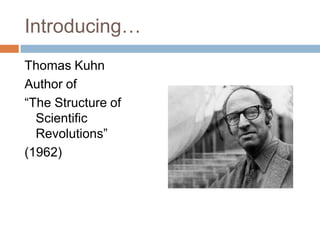
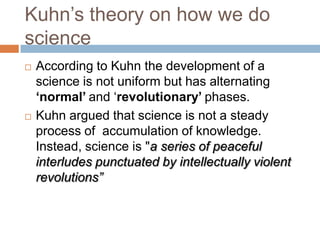

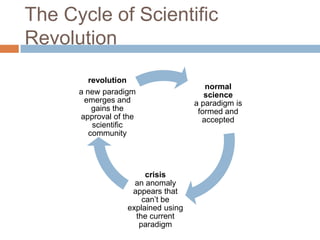


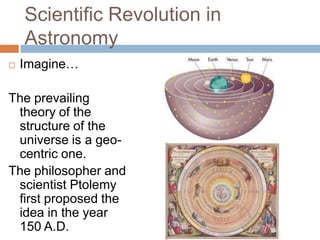
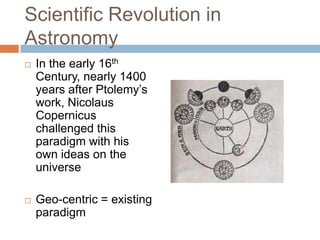
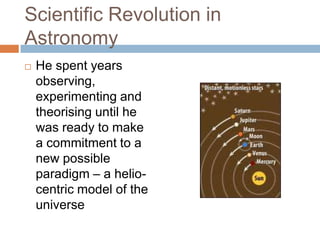
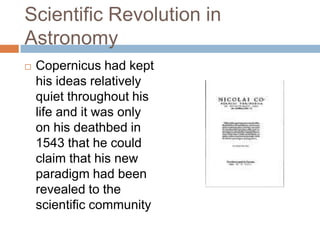
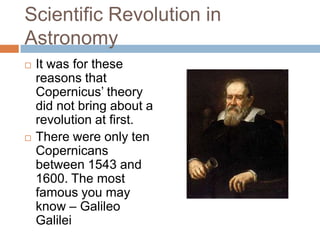
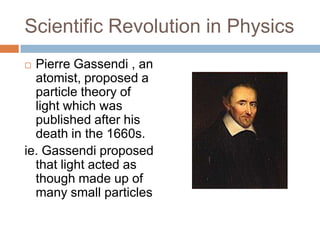
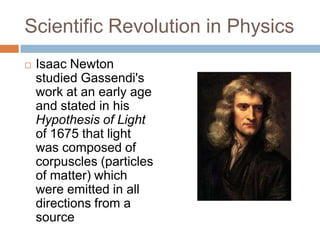
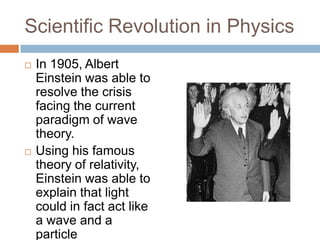
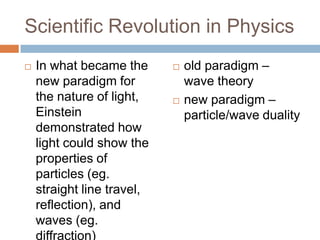







1. Thomas Kuhn's theory describes how science progresses through periods of "normal science" guided by accepted paradigms, and revolutionary shifts triggered by anomalies that cannot be explained by existing paradigms. 2. Two examples of scientific revolutions are Copernicus proposing the heliocentric solar system, challenging the geocentric paradigm, and the emergence of the wave theory of light replacing the particle theory paradigm. 3. Scientific revolutions occur when enough anomalies accumulate against an existing paradigm, triggering a period of crisis until a new paradigm is accepted that can better explain the accumulating anomalies.


