1
LAB 2 PRESENTATION
SUBMITTED TO:
DR. MALIK BADSHAH
SUBMITTED BY:
Group 3
Nazia Shah (003)
Hareem Zahra (009)
Tehreem Naqvi (013)
Maryam Anwer (018)
Tayyaba Zaheer (025)
Marina Fazal (026)
Kiran Shakeel (033)
M.Sc 2, Department of Microbiology, QAU, Islamabad
2
BIOCHEMICAL TEST
Biochemical tests are the tests used for the identification of bacterial
species based on the differences in the biochemical activities of
different bacteria.
TRIPLE SUGAR IRON (TSI) TEST:
 The microbiological test used to identify the bacterial species on
the basis of their ability to ferment sugars, to produce hydrogen
sulfide and other by products.
 Differentiate between enteric bacteria like Salmonella, E.coli and
Shigella.
3
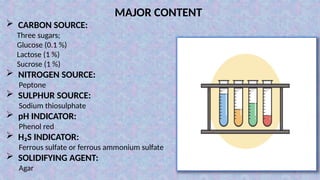
MAJOR CONTENT
 CARBON SOURCE:
Three sugars;
Glucose (0.1 %)
Lactose (1 %)
Sucrose (1 %)
 NITROGEN SOURCE:
Peptone
 SULPHUR SOURCE:
Sodium thiosulphate
 pH INDICATOR:
Phenol red
 H₂S INDICATOR:
Ferrous sulfate or ferrous ammonium sulfate
 SOLIDIFYING AGENT:
Agar
4
PRINCIPLE
 Carbohydrates fermentation gives acid and CO₂, which decreases
pH.
 Utilization of peptones results in alkalization of medium due to NH₃.
 Sodium thiosulfate is reduced by some bacteria to H₂S, which will
react with ferric ions in medium to produce black ppt.
 Phenol red is red in alkaline medium and turns yellow in acidic pH.
 Gas production is indicated by the splitting of agar to the top.
5
PROCEDURE
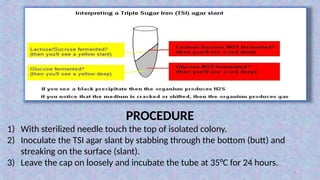
1) With sterilized needle touch the top of isolated colony.
2) Inoculate the TSI agar slant by stabbing through the bottom (butt) and
streaking on the surface (slant).
3) Leave the cap on loosely and incubate the tube at 35°C for 24 hours.
6
RESULTS AND INTERPRETATION
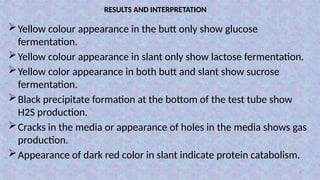
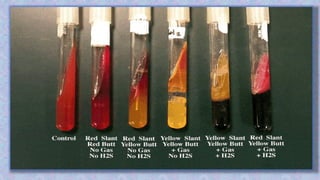
Yellow colour appearance in the butt only show glucose
fermentation.
Yellow colour appearance in slant only show lactose fermentation.
Yellow color appearance in both butt and slant show sucrose
fermentation.
Black precipitate formation at the bottom of the test tube show
H2S production.
Cracks in the media or appearance of holes in the media shows gas
production.
Appearance of dark red color in slant indicate protein catabolism.
7
8

Triple Sugar Iron Biochemical Tests.pptx

  • 1.
    1 LAB 2 PRESENTATION SUBMITTEDTO: DR. MALIK BADSHAH SUBMITTED BY: Group 3 Nazia Shah (003) Hareem Zahra (009) Tehreem Naqvi (013) Maryam Anwer (018) Tayyaba Zaheer (025) Marina Fazal (026) Kiran Shakeel (033) M.Sc 2, Department of Microbiology, QAU, Islamabad
  • 2.
    2 BIOCHEMICAL TEST Biochemical testsare the tests used for the identification of bacterial species based on the differences in the biochemical activities of different bacteria. TRIPLE SUGAR IRON (TSI) TEST:  The microbiological test used to identify the bacterial species on the basis of their ability to ferment sugars, to produce hydrogen sulfide and other by products.  Differentiate between enteric bacteria like Salmonella, E.coli and Shigella.
  • 3.
    3 MAJOR CONTENT  CARBONSOURCE: Three sugars; Glucose (0.1 %) Lactose (1 %) Sucrose (1 %)  NITROGEN SOURCE: Peptone  SULPHUR SOURCE: Sodium thiosulphate  pH INDICATOR: Phenol red  H₂S INDICATOR: Ferrous sulfate or ferrous ammonium sulfate  SOLIDIFYING AGENT: Agar
  • 4.
    4 PRINCIPLE  Carbohydrates fermentationgives acid and CO₂, which decreases pH.  Utilization of peptones results in alkalization of medium due to NH₃.  Sodium thiosulfate is reduced by some bacteria to H₂S, which will react with ferric ions in medium to produce black ppt.  Phenol red is red in alkaline medium and turns yellow in acidic pH.  Gas production is indicated by the splitting of agar to the top.
  • 5.
    5 PROCEDURE 1) With sterilizedneedle touch the top of isolated colony. 2) Inoculate the TSI agar slant by stabbing through the bottom (butt) and streaking on the surface (slant). 3) Leave the cap on loosely and incubate the tube at 35°C for 24 hours.
  • 6.
    6 RESULTS AND INTERPRETATION Yellowcolour appearance in the butt only show glucose fermentation. Yellow colour appearance in slant only show lactose fermentation. Yellow color appearance in both butt and slant show sucrose fermentation. Black precipitate formation at the bottom of the test tube show H2S production. Cracks in the media or appearance of holes in the media shows gas production. Appearance of dark red color in slant indicate protein catabolism.
  • 7.
  • 8.