 The process of systematically visiting all 
the nodes in a tree and performing some 
computation at each node in the tree is 
called a tree traversal.
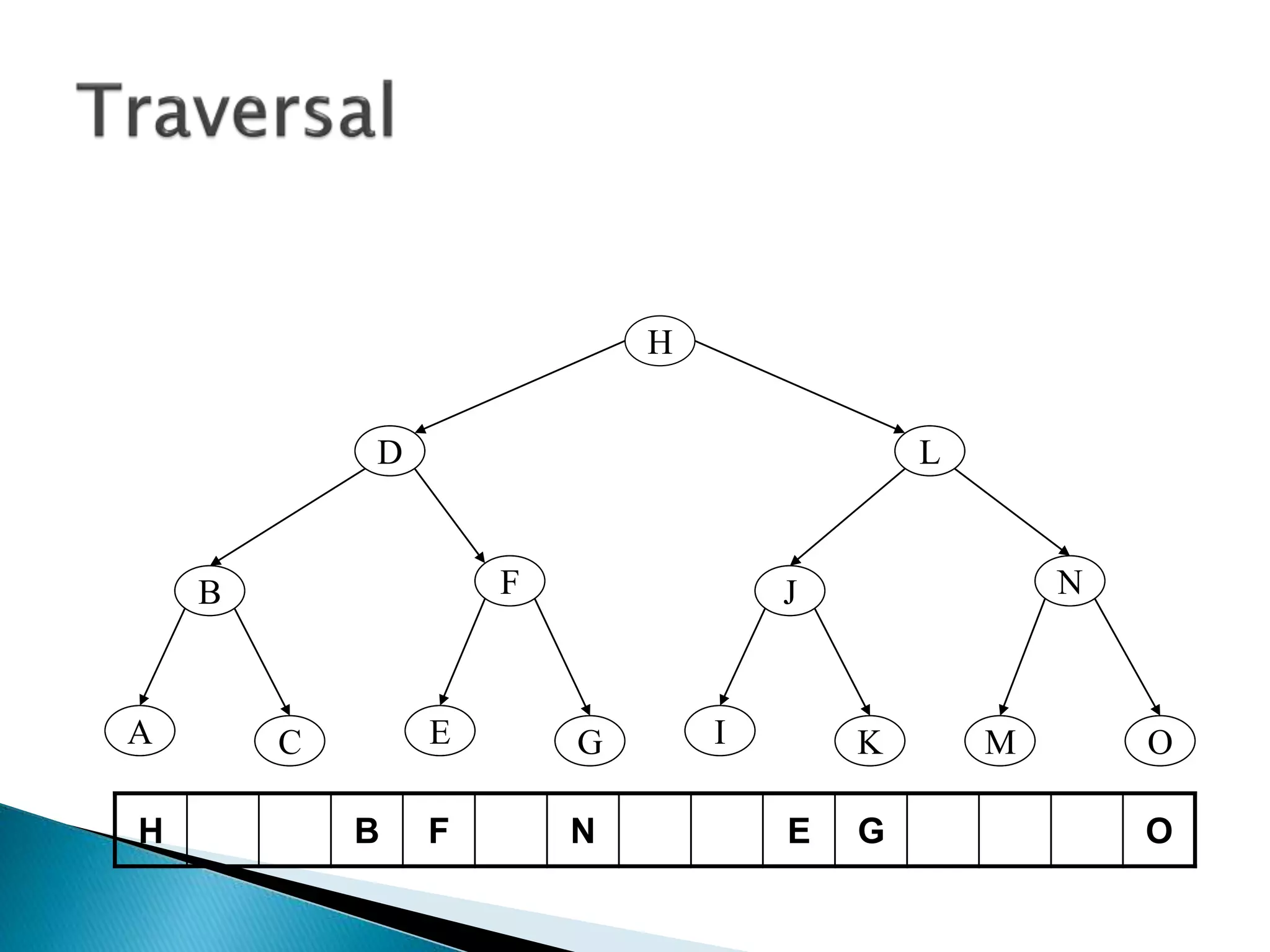
H 
D 
B 
N 
L 
F J 
A C E G I K M O 
H B F N E G O
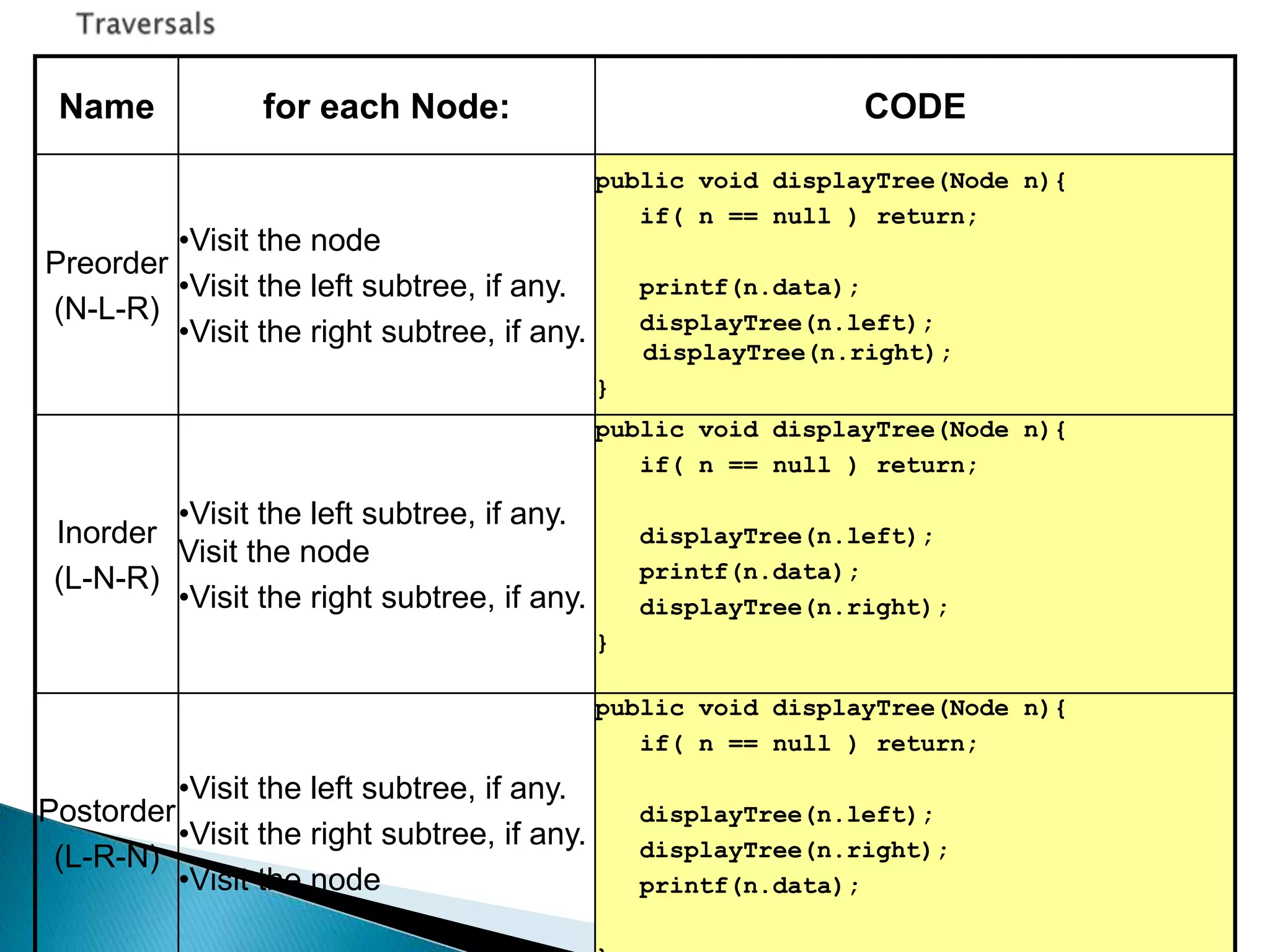
Name for each Node: CODE 
public void displayTree(Node n){ 
if( n == null ) return; 
printf(n.data); 
displayTree(n.left); 
displayTree(n.right); 
} 
•Visit the node 
•Visit the left subtree, if any. 
•Visit the right subtree, if any. 
Preorder 
(N-L-R) 
public void displayTree(Node n){ 
if( n == null ) return; 
displayTree(n.left); 
printf(n.data); 
displayTree(n.right); 
} 
•Visit the left subtree, if any. 
Visit the node 
•Visit the right subtree, if any. 
Inorder 
(L-N-R) 
public void displayTree(Node n){ 
if( n == null ) return; 
displayTree(n.left); 
displayTree(n.right); 
printf(n.data); 
} 
•Visit the left subtree, if any. 
•Visit the right subtree, if any. 
•Visit the node 
Postorder 
(L-R-N)
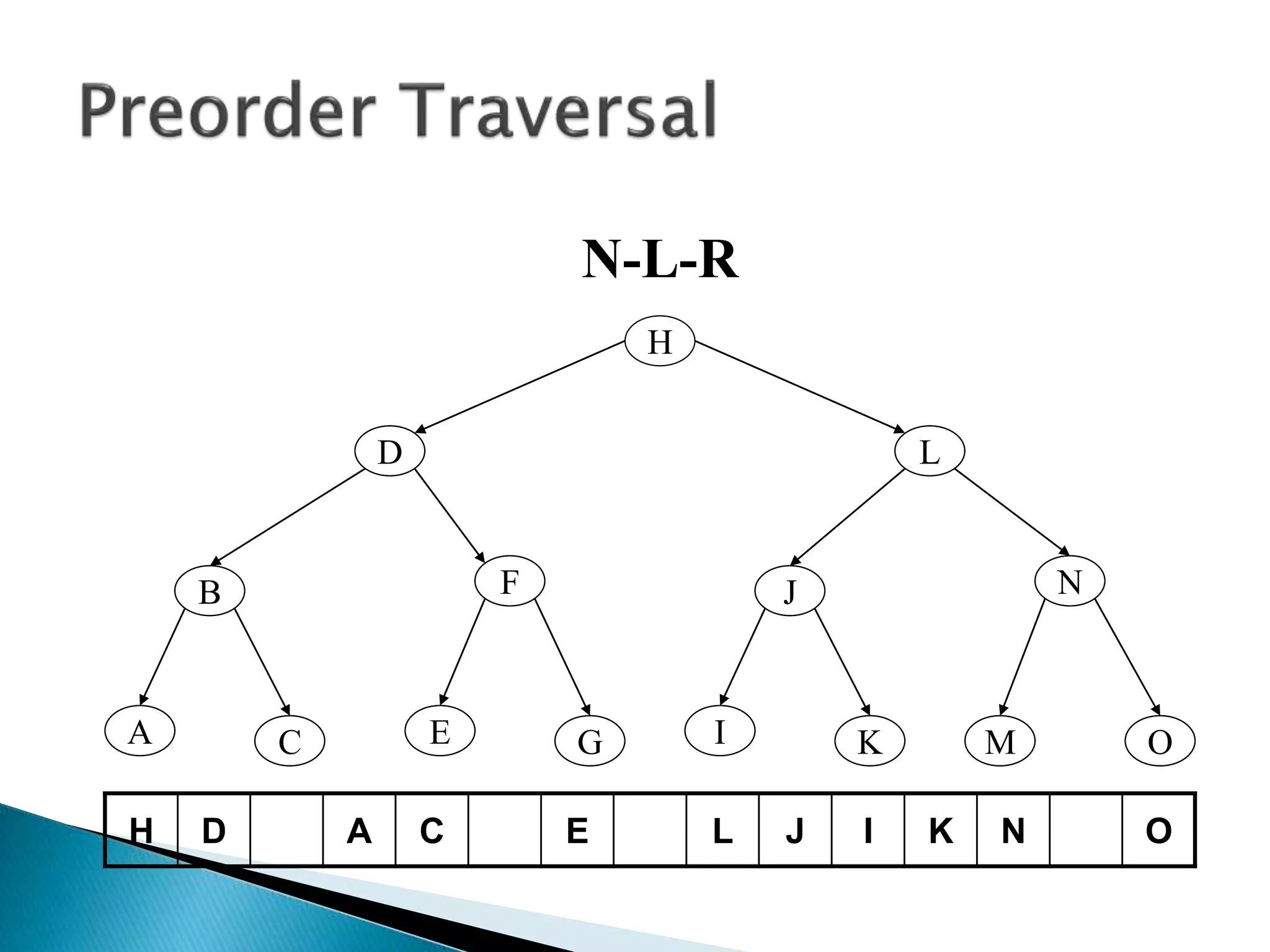
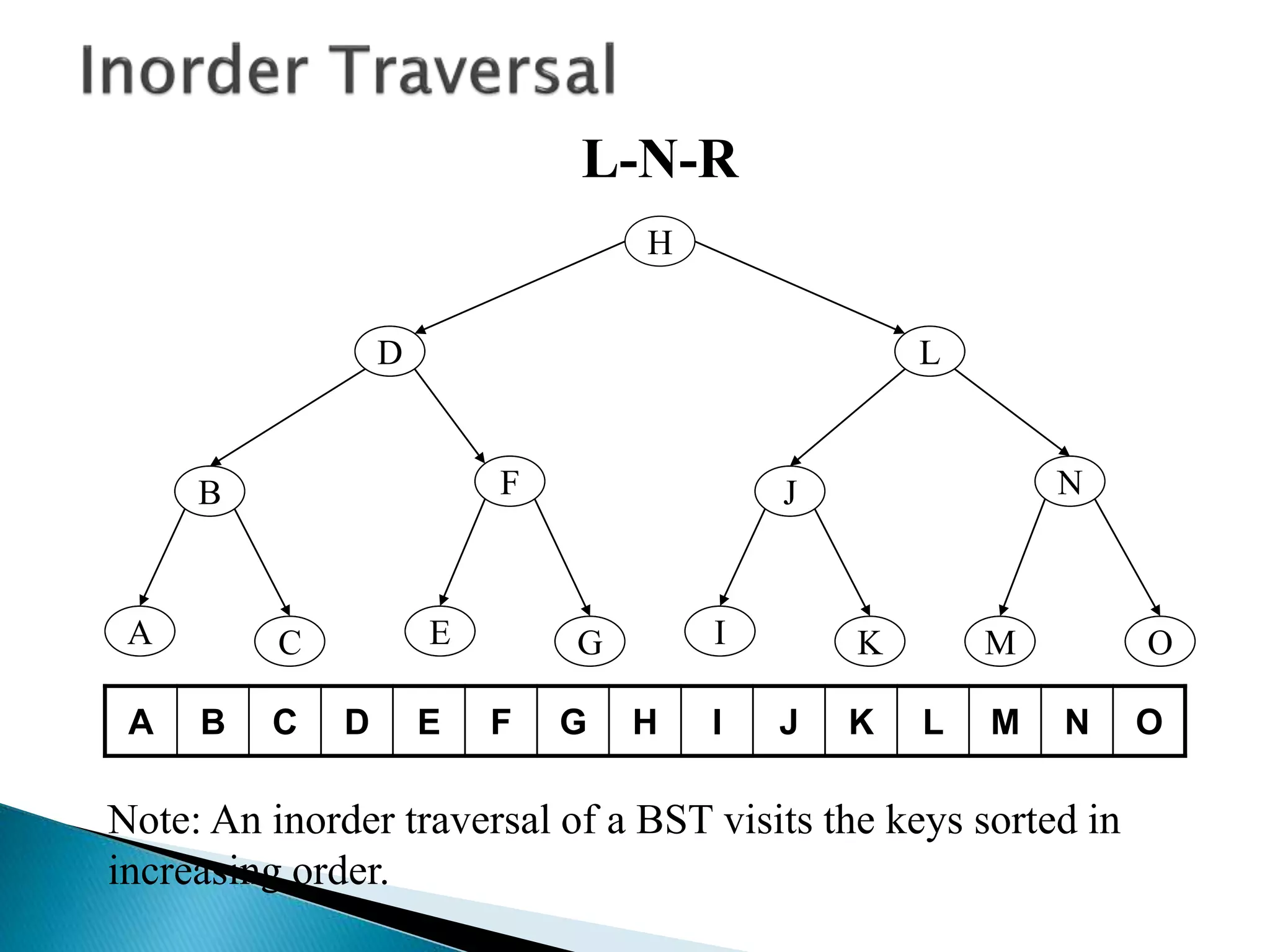
N-L-R 
H 
D 
B 
N 
L 
F J 
A C E G I K M O 
H D A C E L J I K N O
L-N-R 
H 
D 
B 
N 
L 
F J 
A C E G I K M O 
A B C D E F G H I J K L M N O 
Note: An inorder traversal of a BST visits the keys sorted in 
increasing order.
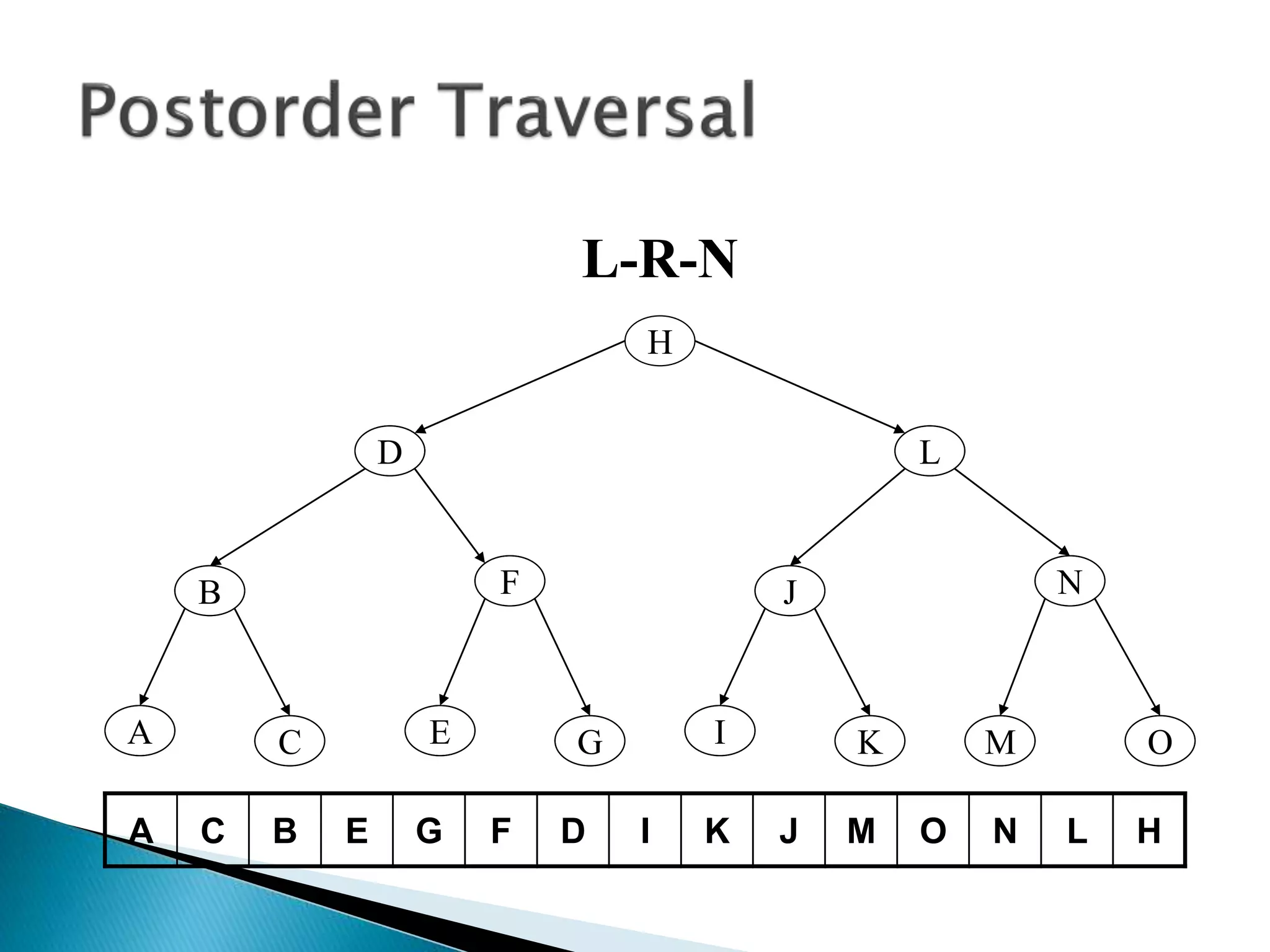
L-R-N 
H 
D 
B 
N 
L 
F J 
A C E G I K M O 
A C B E G F D I K J M O N L H
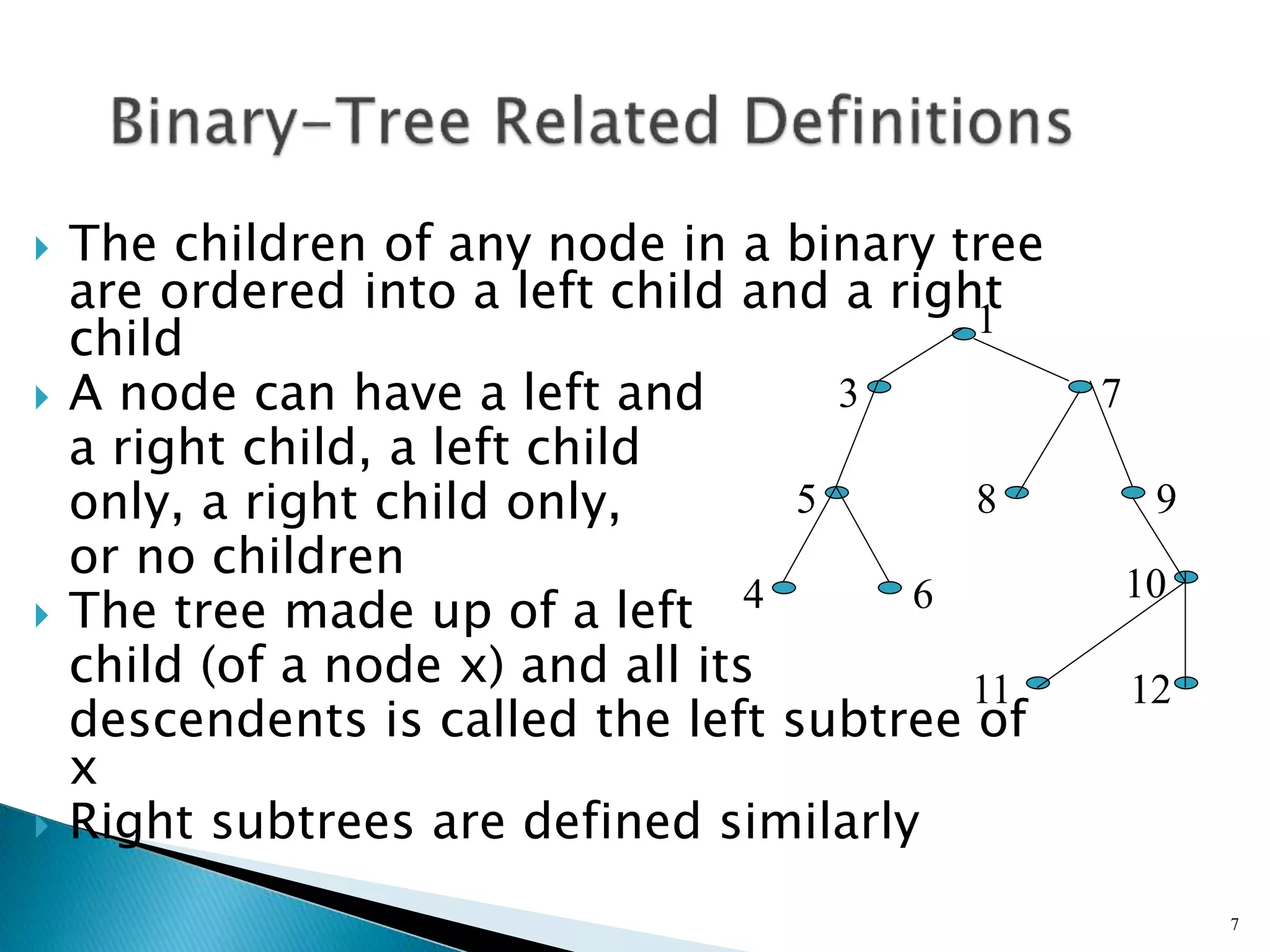
 The children of any node in a binary tree 
are ordered into a left child and a right 
child 
 A node can have a left and 
a right child, a left child 
only, a right child only, 
or no children 
 The tree made up of a left 
child (of a node x) and all its 
descendents is called the left subtree of 
x 
 Right subtrees are defined similarly 
7 
8 9 
10 
1 
3 
11 
5 
4 6 
7 
12
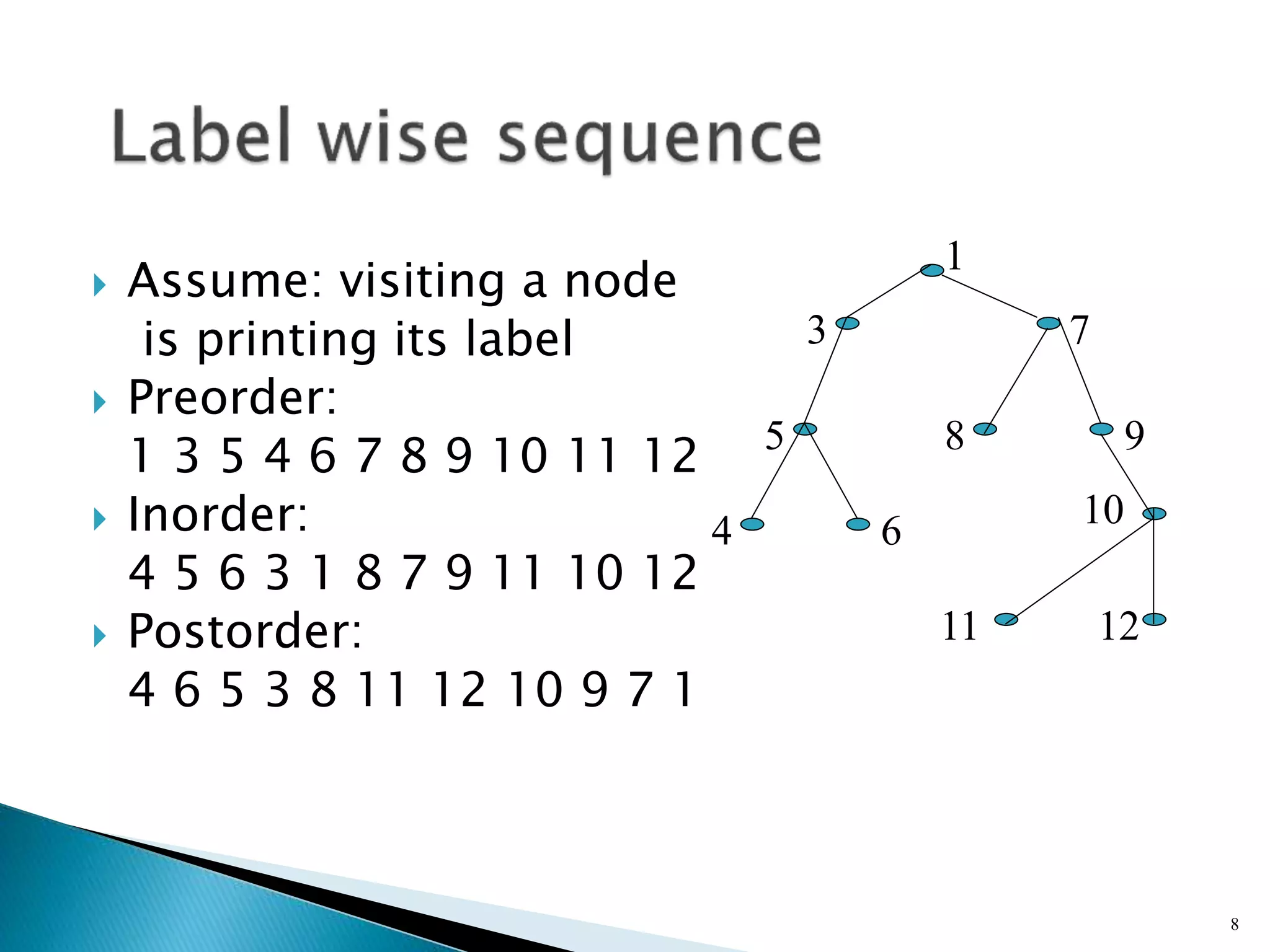
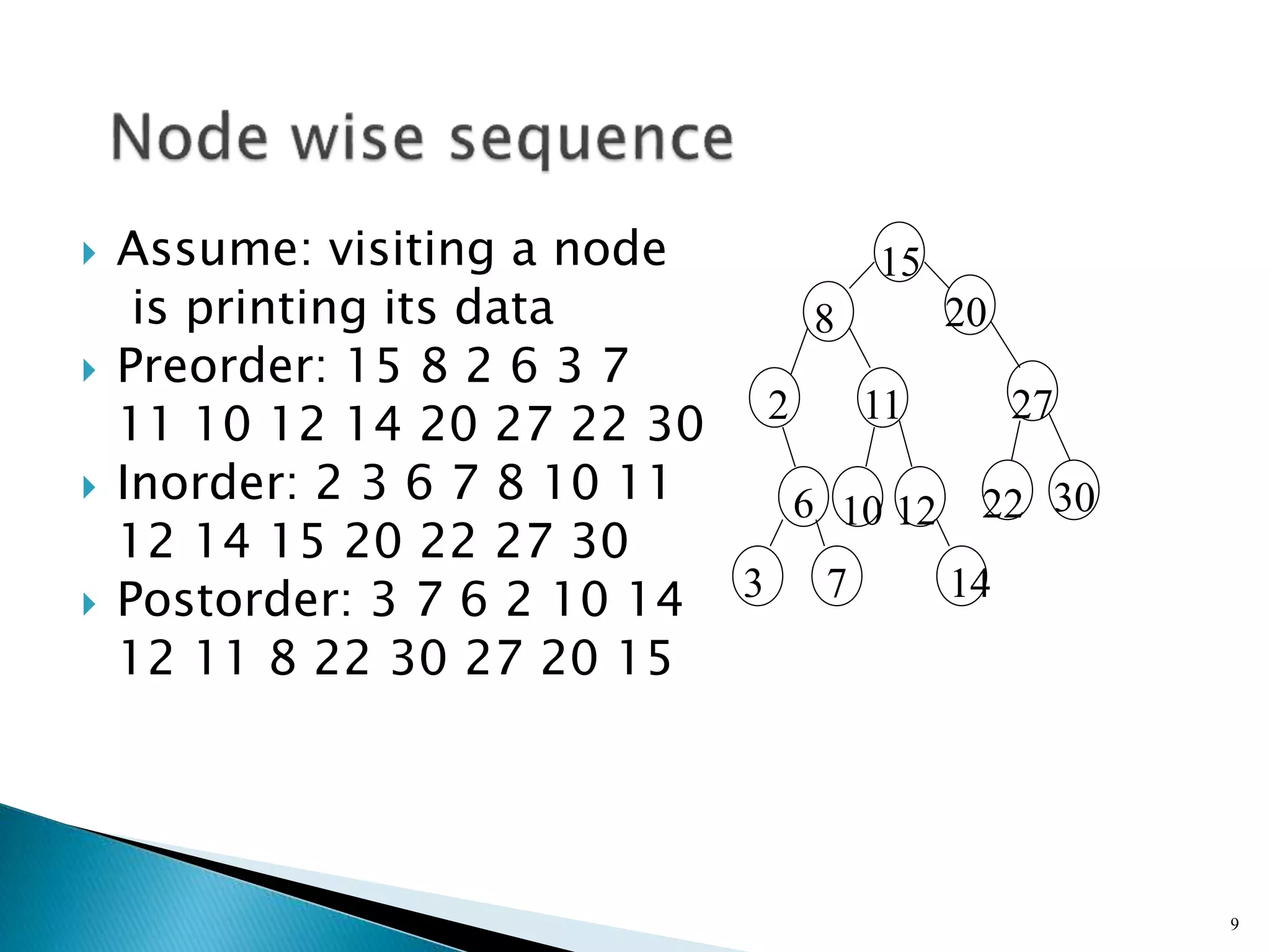
 Assume: visiting a node 
is printing its label 
 Preorder: 
1 3 5 4 6 7 8 9 10 11 12 
 Inorder: 
4 5 6 3 1 8 7 9 11 10 12 
 Postorder: 
4 6 5 3 8 11 12 10 9 7 1 
8 
1 
3 
8 9 
11 
5 
4 6 
7 
10 
12
 Assume: visiting a node 
is printing its data 
 Preorder: 15 8 2 6 3 7 
11 10 12 14 20 27 22 30 
 Inorder: 2 3 6 7 8 10 11 
12 14 15 20 22 27 30 
 Postorder: 3 7 6 2 10 14 
12 11 8 22 30 27 20 15 
9 
6 
15 
8 
2 
3 7 
11 
10 
14 
12 
20 
27 
22 30
 Observe the output of the inorder 
traversal of the BST example two slides 
earlier 
 It is sorted 
 This is no coincidence 
 As a general rule, if you output the keys 
(data) of the nodes of a BST using inorder 
traversal, the data comes out sorted in 
increasing order 
10

Traversals | Data Structures

  • 1.
     The processof systematically visiting all the nodes in a tree and performing some computation at each node in the tree is called a tree traversal.
  • 2.
    H D B N L F J A C E G I K M O H B F N E G O
  • 3.
    Name for eachNode: CODE public void displayTree(Node n){ if( n == null ) return; printf(n.data); displayTree(n.left); displayTree(n.right); } •Visit the node •Visit the left subtree, if any. •Visit the right subtree, if any. Preorder (N-L-R) public void displayTree(Node n){ if( n == null ) return; displayTree(n.left); printf(n.data); displayTree(n.right); } •Visit the left subtree, if any. Visit the node •Visit the right subtree, if any. Inorder (L-N-R) public void displayTree(Node n){ if( n == null ) return; displayTree(n.left); displayTree(n.right); printf(n.data); } •Visit the left subtree, if any. •Visit the right subtree, if any. •Visit the node Postorder (L-R-N)
  • 4.
    N-L-R H D B N L F J A C E G I K M O H D A C E L J I K N O
  • 5.
    L-N-R H D B N L F J A C E G I K M O A B C D E F G H I J K L M N O Note: An inorder traversal of a BST visits the keys sorted in increasing order.
  • 6.
    L-R-N H D B N L F J A C E G I K M O A C B E G F D I K J M O N L H
  • 7.
     The childrenof any node in a binary tree are ordered into a left child and a right child  A node can have a left and a right child, a left child only, a right child only, or no children  The tree made up of a left child (of a node x) and all its descendents is called the left subtree of x  Right subtrees are defined similarly 7 8 9 10 1 3 11 5 4 6 7 12
  • 8.
     Assume: visitinga node is printing its label  Preorder: 1 3 5 4 6 7 8 9 10 11 12  Inorder: 4 5 6 3 1 8 7 9 11 10 12  Postorder: 4 6 5 3 8 11 12 10 9 7 1 8 1 3 8 9 11 5 4 6 7 10 12
  • 9.
     Assume: visitinga node is printing its data  Preorder: 15 8 2 6 3 7 11 10 12 14 20 27 22 30  Inorder: 2 3 6 7 8 10 11 12 14 15 20 22 27 30  Postorder: 3 7 6 2 10 14 12 11 8 22 30 27 20 15 9 6 15 8 2 3 7 11 10 14 12 20 27 22 30
  • 10.
     Observe theoutput of the inorder traversal of the BST example two slides earlier  It is sorted  This is no coincidence  As a general rule, if you output the keys (data) of the nodes of a BST using inorder traversal, the data comes out sorted in increasing order 10