
Transparency in measures
                       
   of scientific impact
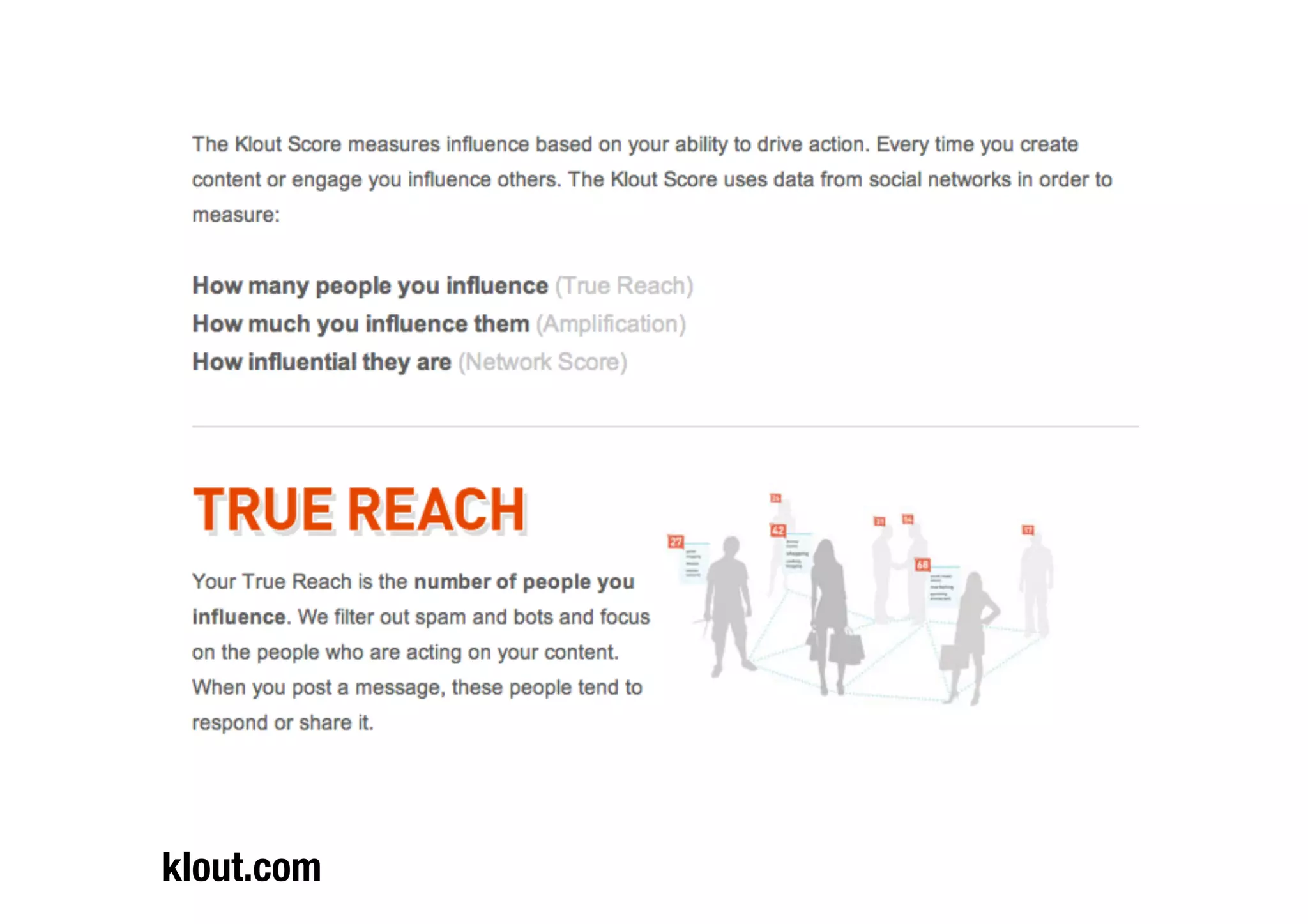
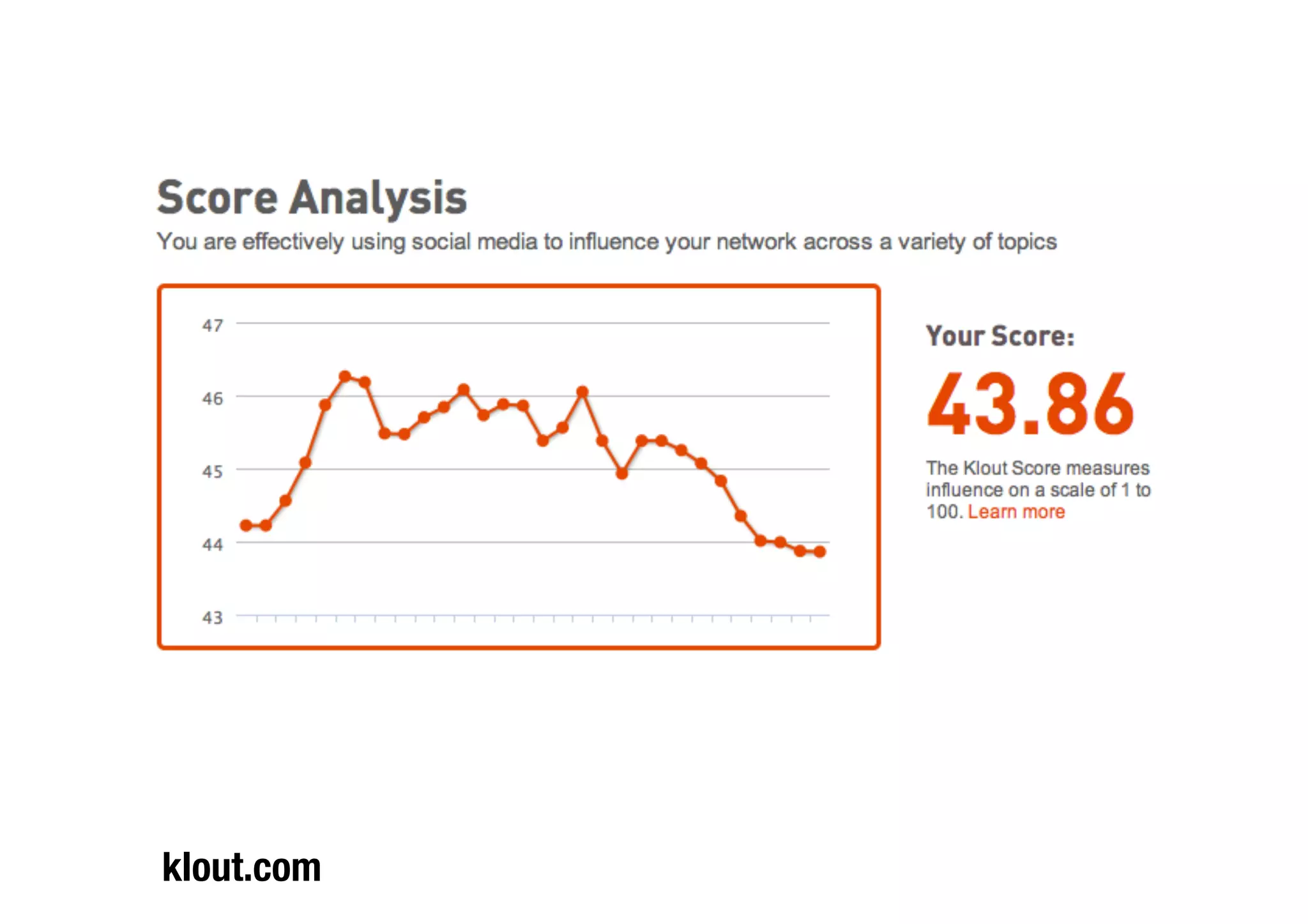
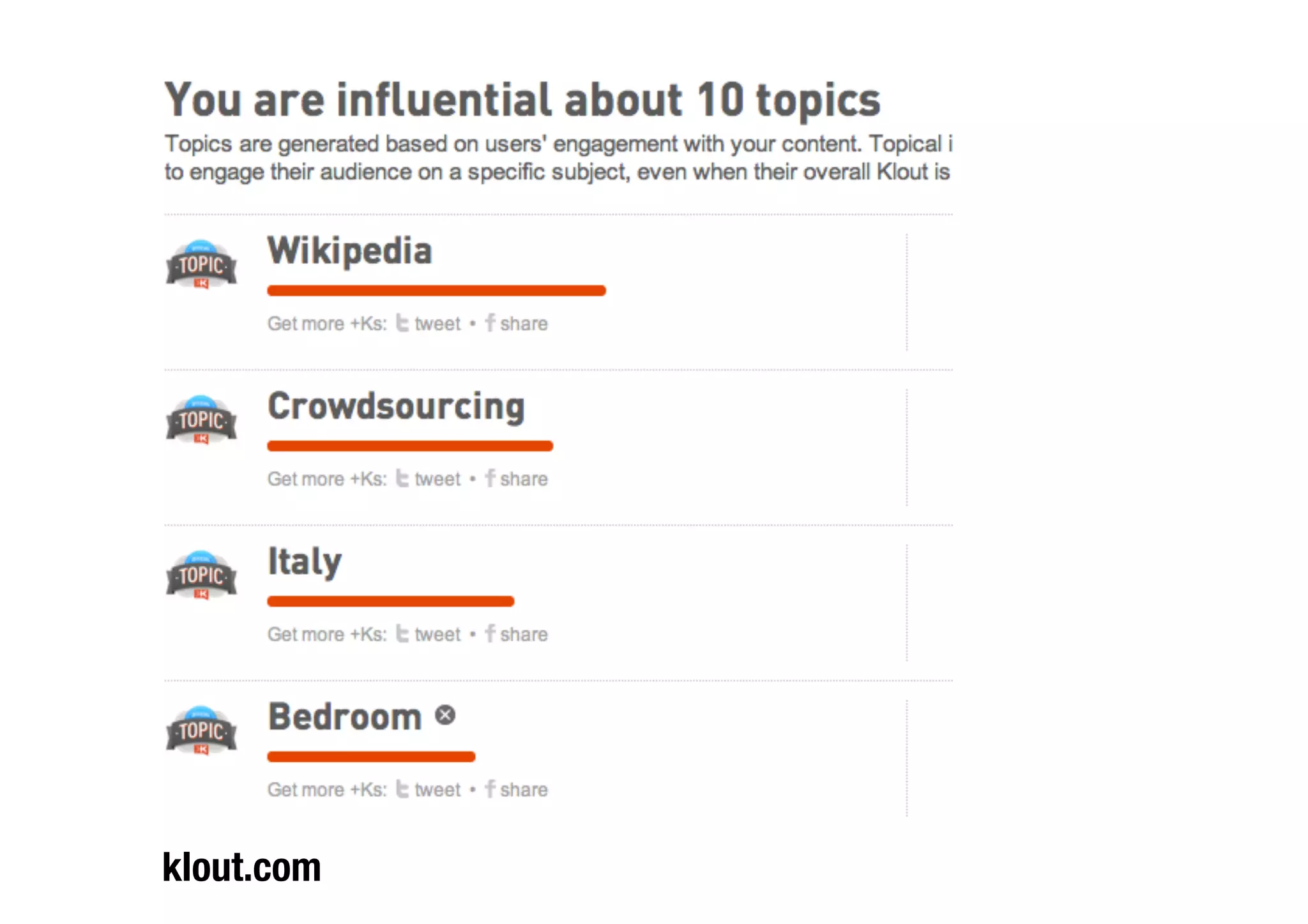
What do impact metrics measure?
klout.com
klout.com
klout.com
klout.com
Metric opacity


            Metric disconnected from what it measures


            Metric consumer can:
            •  Make metric-based inferences
            •  Compare item score over time
            •  Rank other items by the same metrics
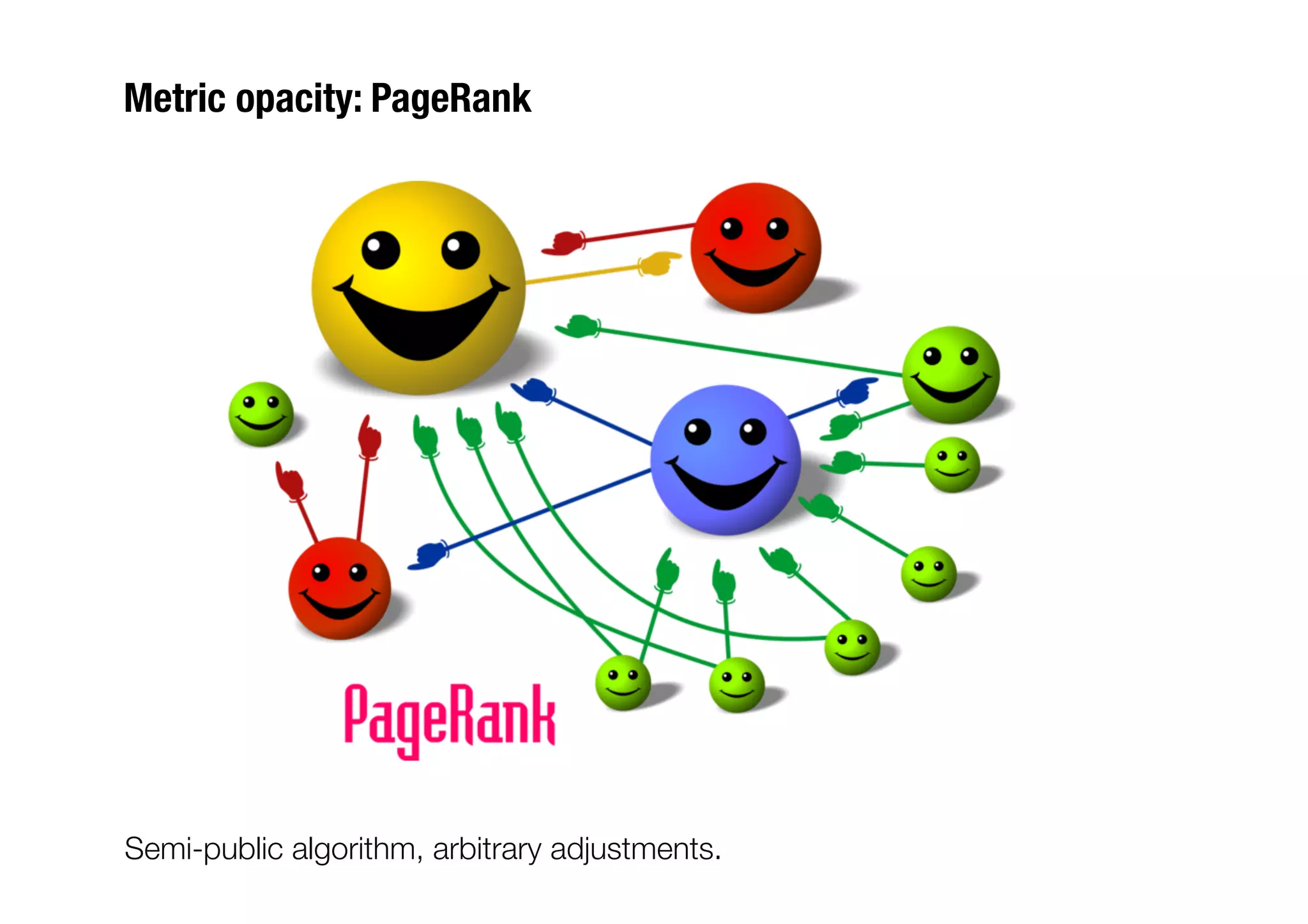
Metric opacity: PageRank


Semi-public algorithm, arbitrary adjustments.
Metric opacity: PageRank


The 2002 Google vs Scientology case [1]
     
ad-hoc adjustment of rankings to comply with DMCA


SEO: reverse-engineering PageRank


The Google dance [2] 
     
short-term fluctuation in PageRank
     
SEO strategies to control it


[1] McCullagh (2002). Google Yanks Anti-Church Sites, Wired 

http://www.wired.com/politics/law/news/2002/03/51233


[2] MetaMend. What is the Google Dance?

http://www.metamend.com/google-dance.html
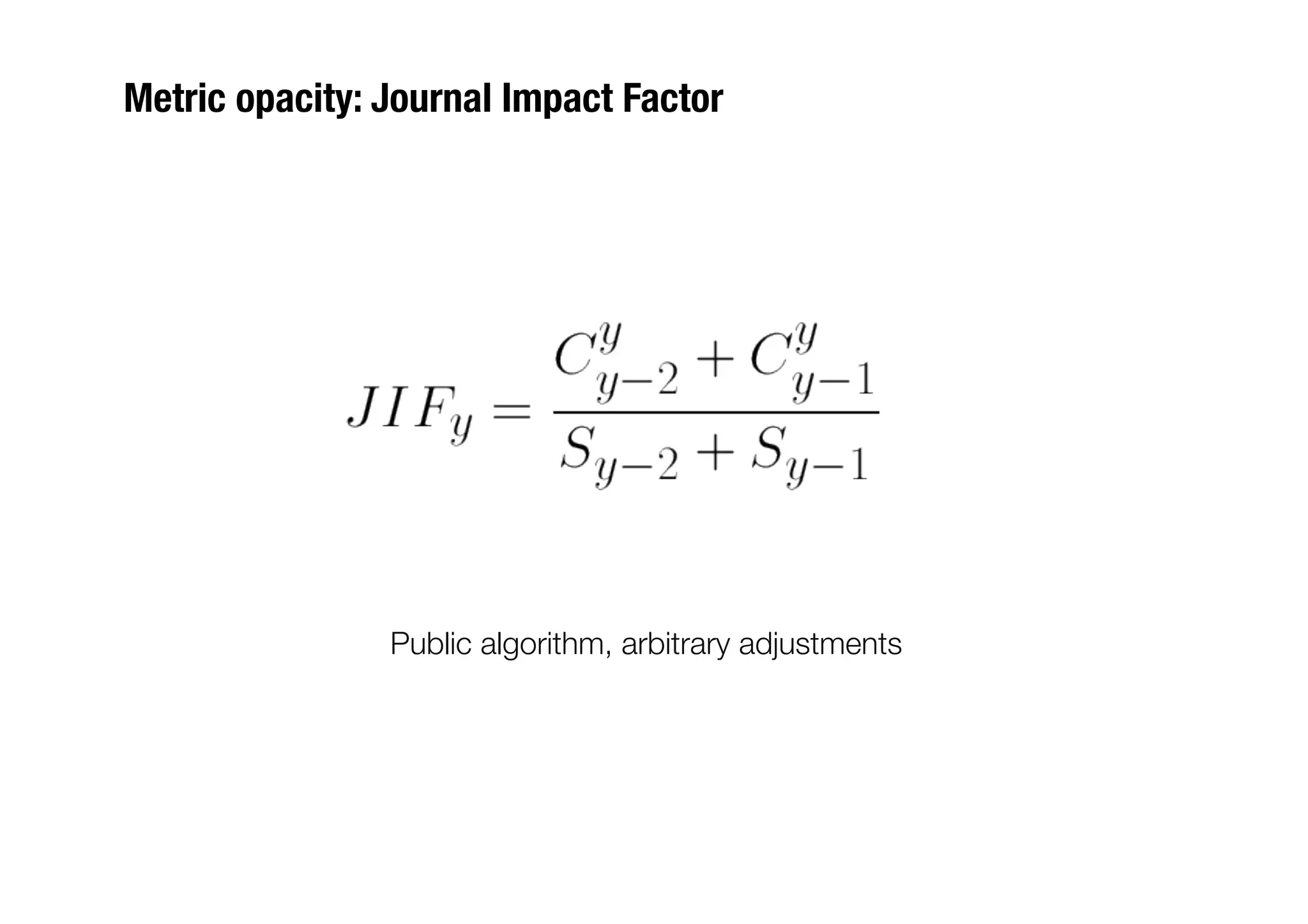
Metric opacity: Journal Impact Factor


Public algorithm, arbitrary adjustments
Metric opacity: Journal Impact Factor


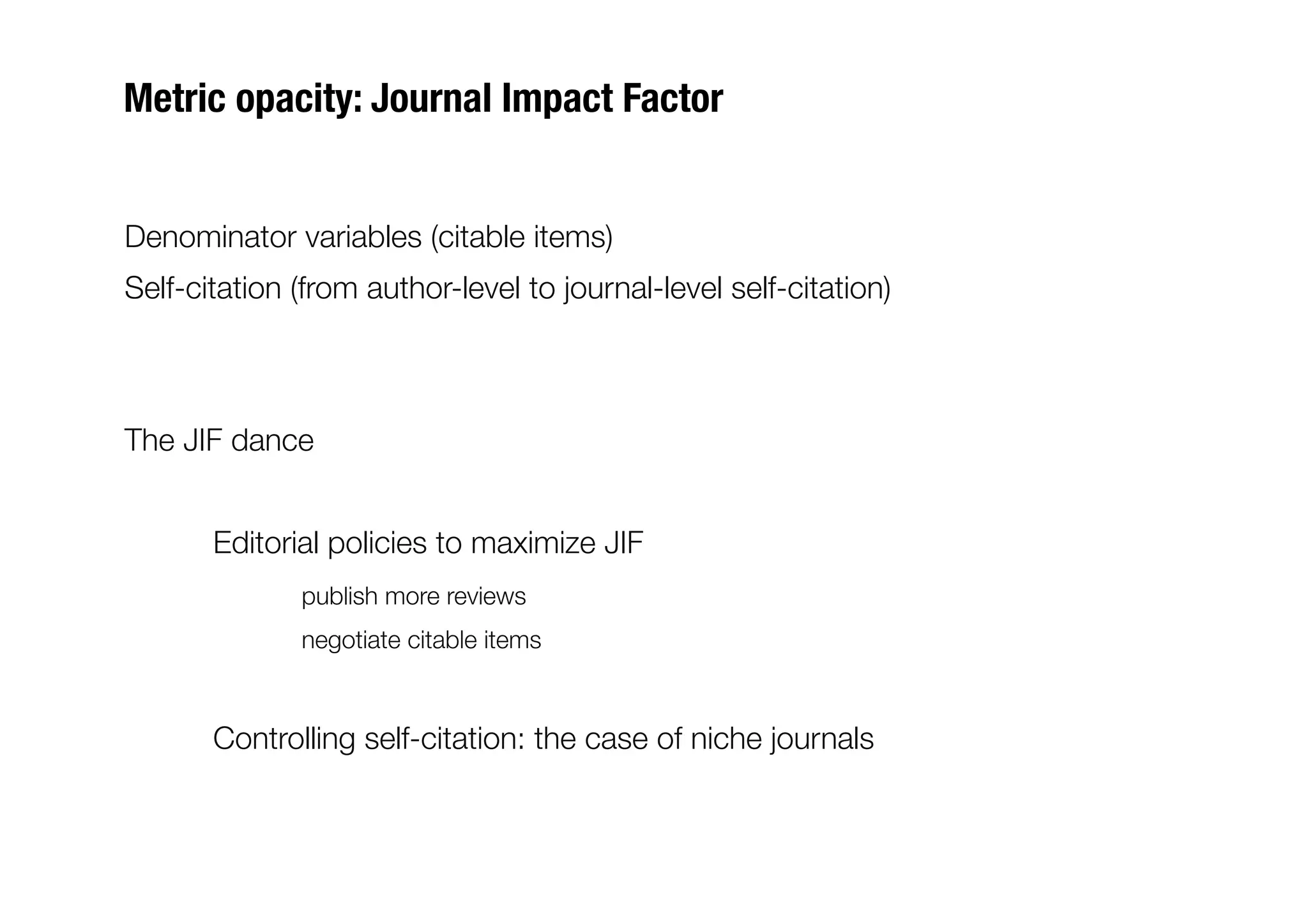
Denominator variables (citable items)
Self-citation (from author-level to journal-level self-citation)


The JIF dance


Editorial policies to maximize JIF
      
       
publish more reviews
      
       
negotiate citable items


Controlling self-citation: the case of niche journals
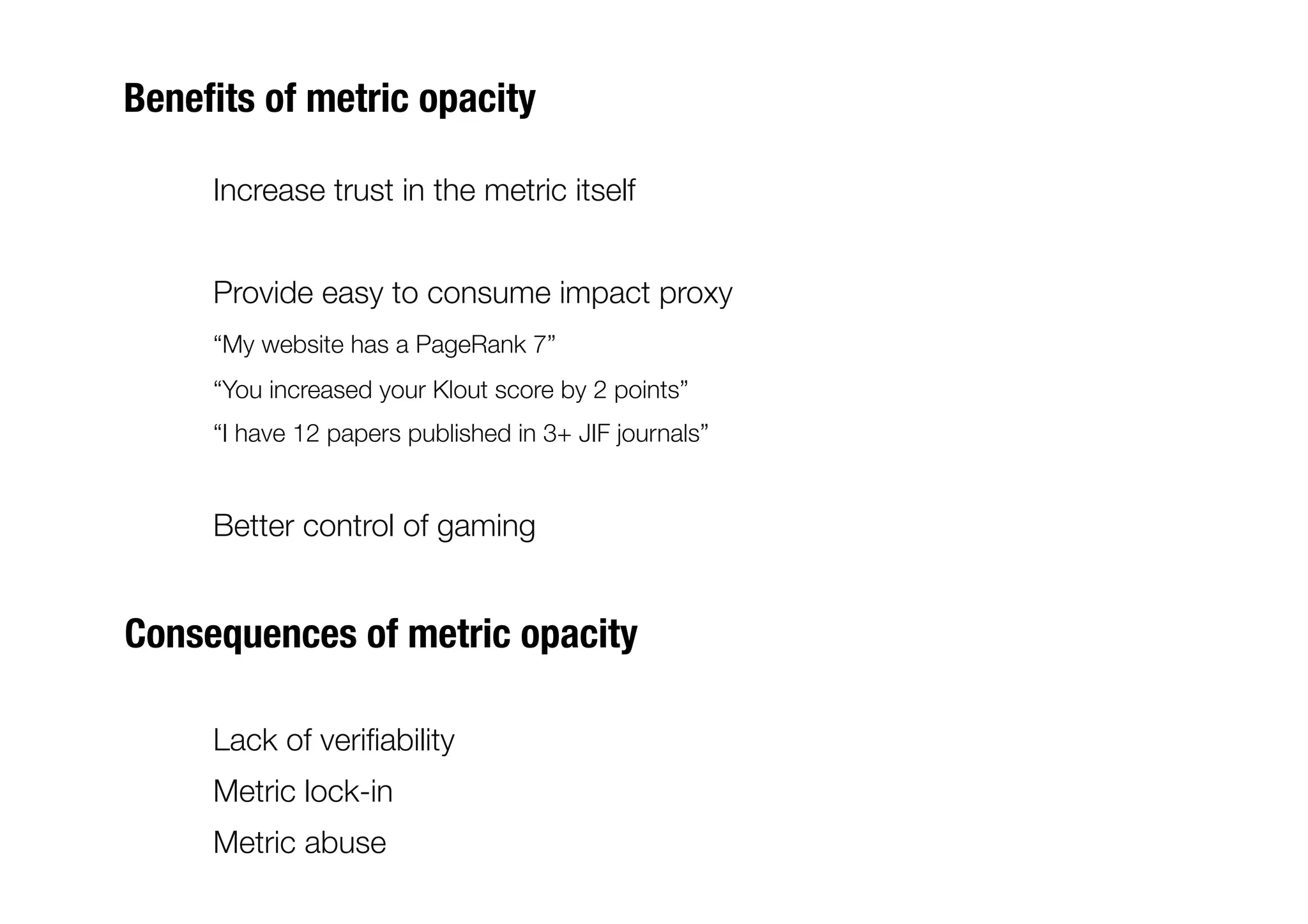
Benefits of metric opacity

    
Increase trust in the metric itself


Provide easy to consume impact proxy
    
“My website has a PageRank 7”
     
“You increased your Klout score by 2 points”
     
“I have 12 papers published in 3+ JIF journals”


Better control of gaming


Consequences of metric opacity

    
Lack of verifiability 
    
Metric lock-in
    
Metric abuse
Metric transparency: altmetrics


Alternative measures of the impact of scientific artifacts (papers, datasets,
slides) based on large-scale online data [3]


Provide transparent, verifiable impact indicators linked to data sources
      
Provide real-time, multidimensional, semantically rich impact indicators
      
Disclose areas of impact invisible to traditional bibliometrics and usage factors
      
Track references and reuse of scholarly contents inside and outside academia


[3] Priem, Taraborelli, Roth, Neylon (2010). The altmetrics manifesto, 

http://altmetrics.org/manifesto
Metric transparency: altmetrics


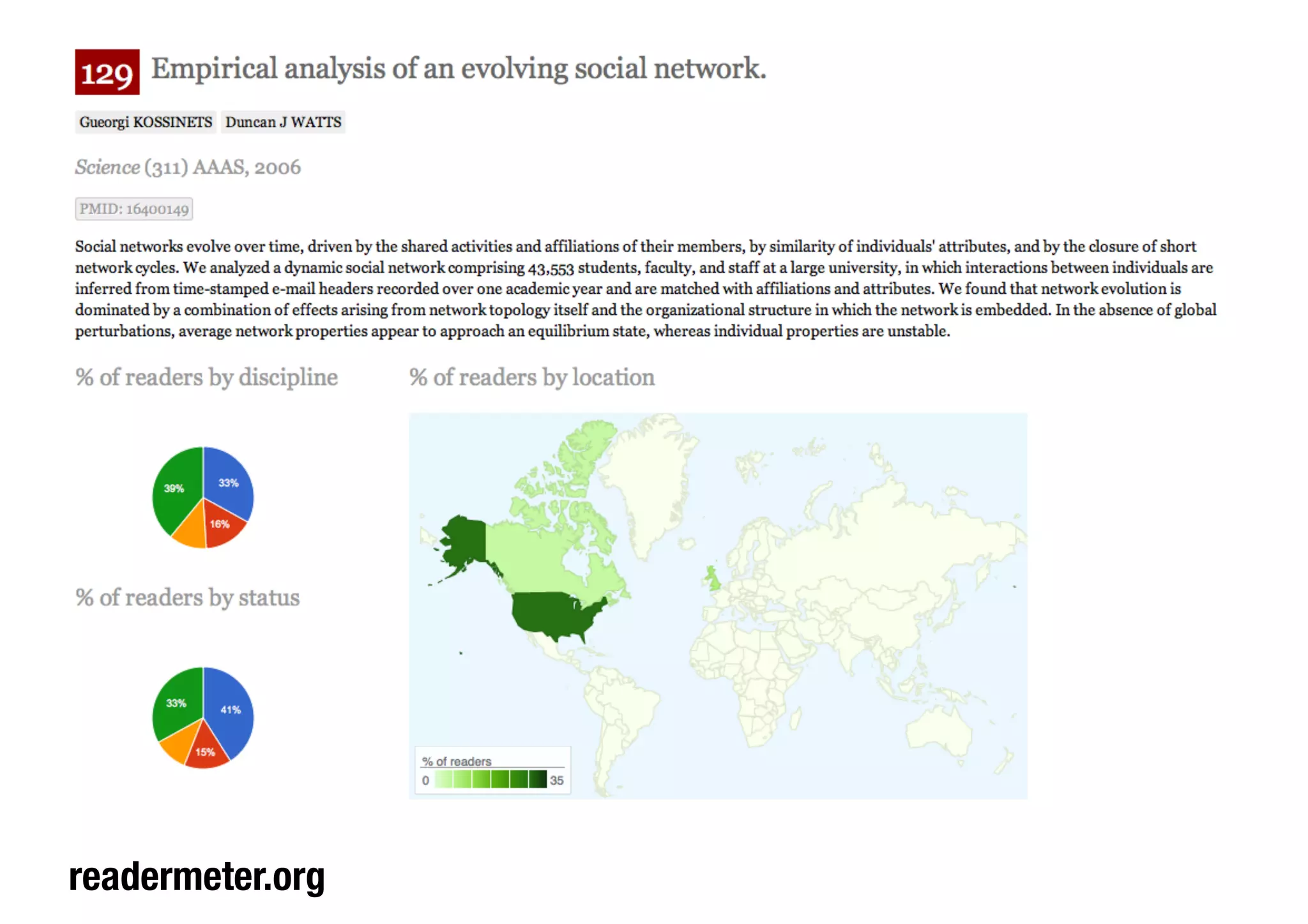
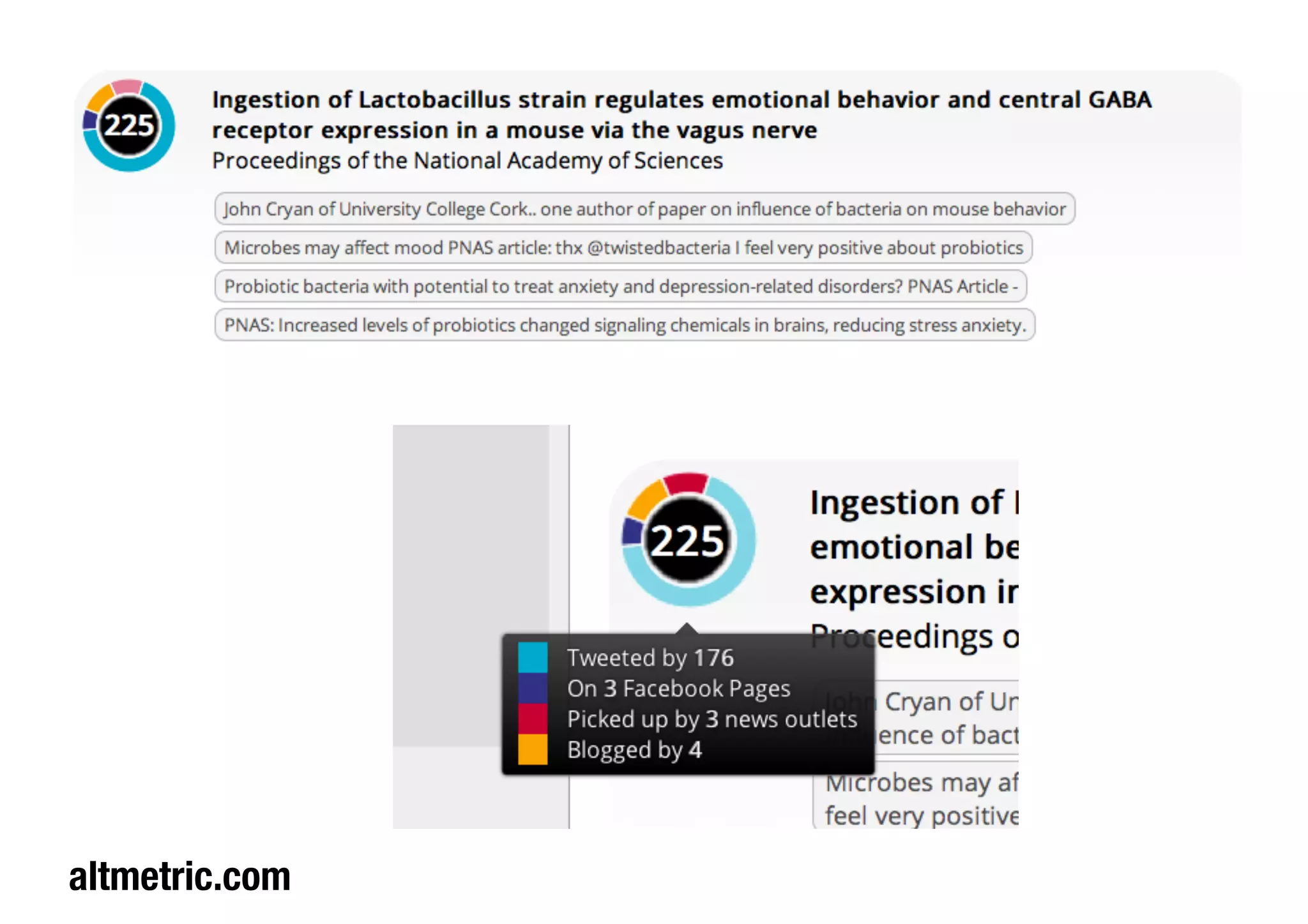
altmetrics services


                   readermeter.org
    citedin.org


                   total-impact.org
   altmetric.com
readermeter.org
altmetric.com
Metric transparency: altmetrics


How to validate altmetrics-based impact? [4]


Using altmetrics to redefine impact
      
      
extra-academic usage (industry, education)
      
      
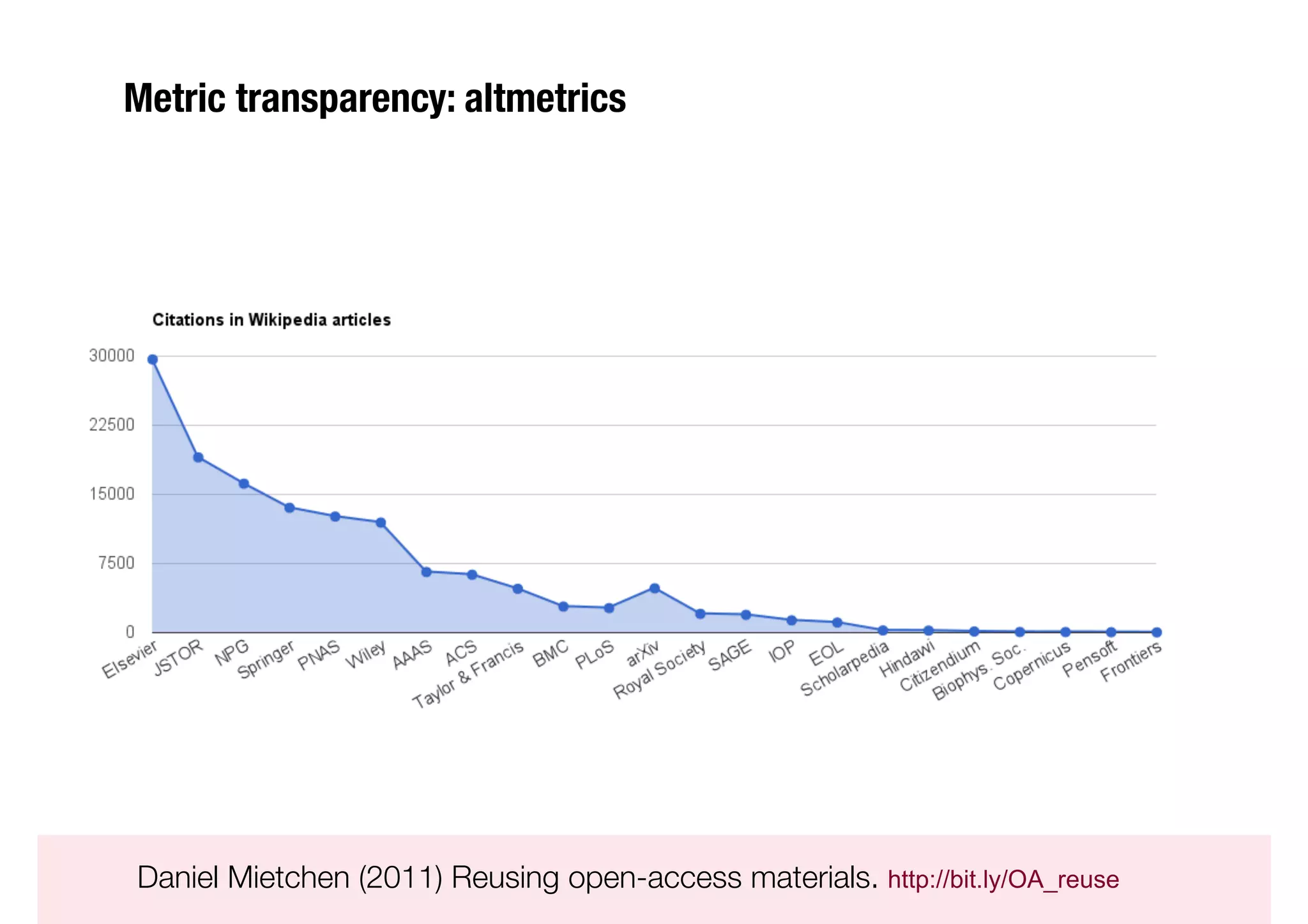
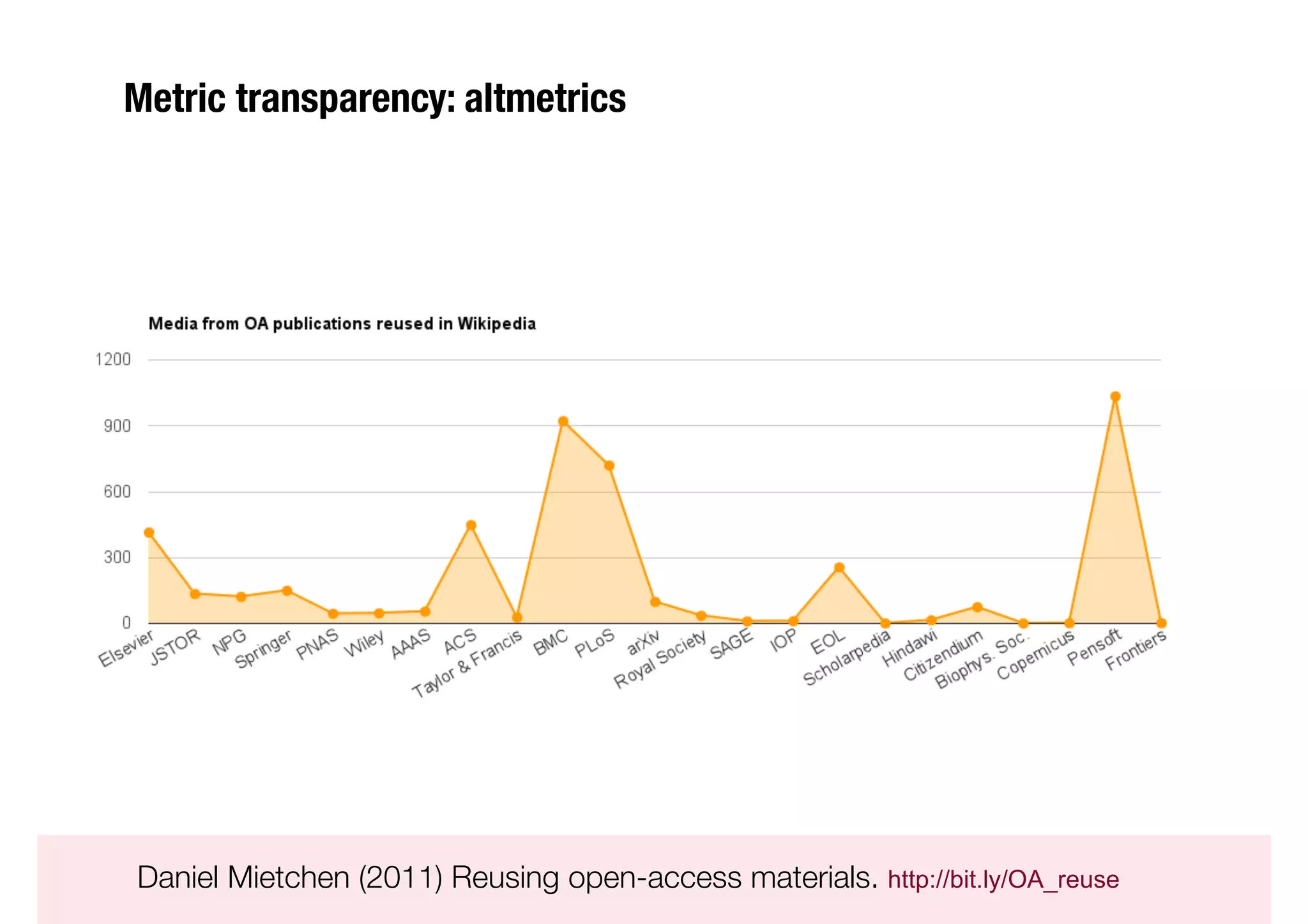
reuse of open scholarly contents [5]


[4] Priem et al. (2011). Evaluating altmetrics, in preparation


[5] Neylon (2011) Re-use as Impact. ACM WebSci ’11 Altmetrics Workshop

http://altmetrics.org/workshop2011/neylon-v0/
Metric transparency: altmetrics


Daniel Mietchen (2011) Reusing open-access materials. http://bit.ly/OA_reuse
Metric transparency: altmetrics


Daniel Mietchen (2011) Reusing open-access materials. http://bit.ly/OA_reuse
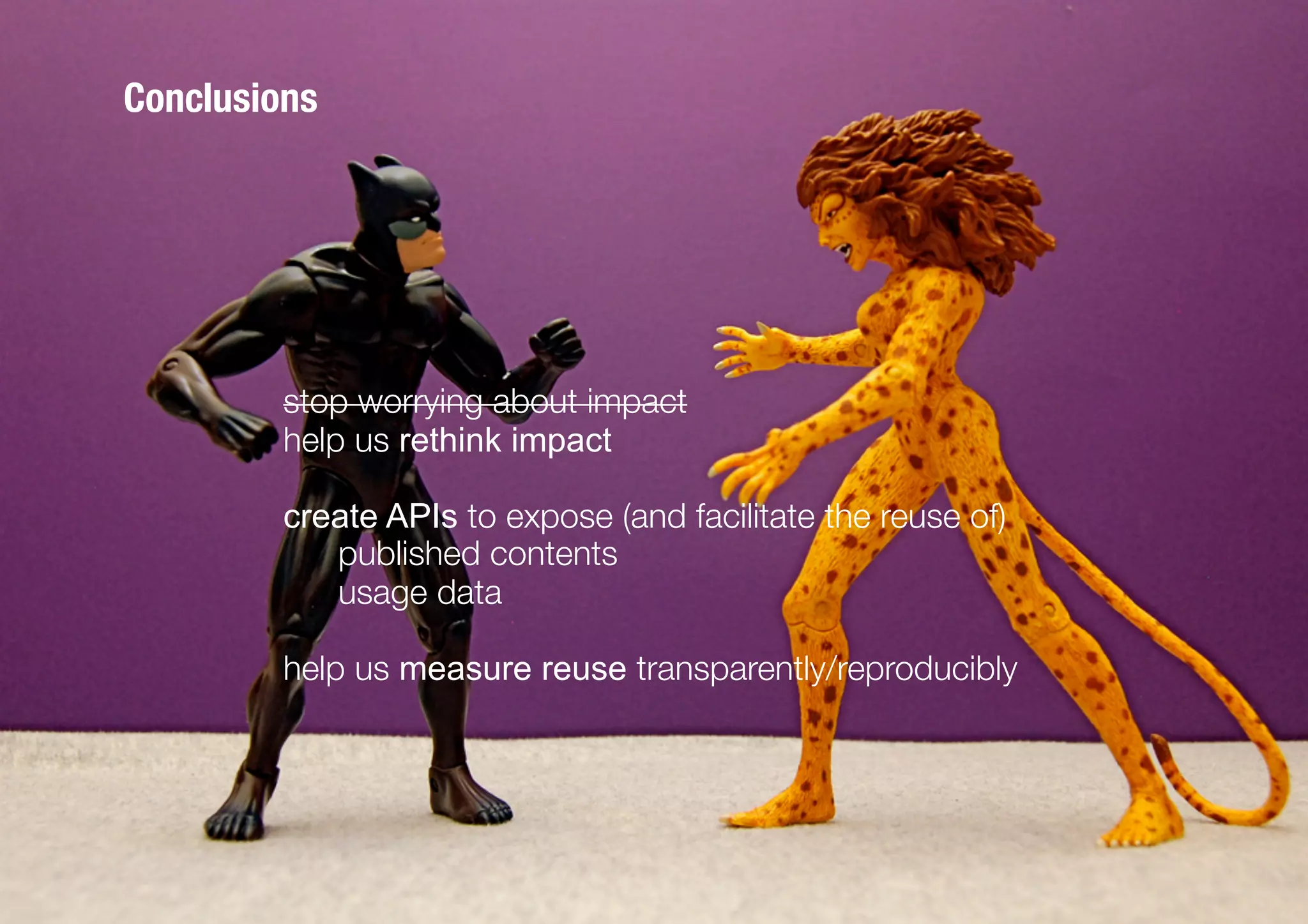
Conclusions


         stop worrying about impact
         help us rethink impact

         create APIs to expose (and facilitate the reuse of)
            
published contents
            
usage data

         help us measure reuse transparently/reproducibly
Thanks


Credits

VTVM 12 volts DC: CC-BY-NC image by 3D King 
Wildcat vs. Cheetah: CC-BY image by JD Hancock


Dario Taraborelli. Transparency in measures of scientific impact 


"http://nitens.org/docs/slides/coasp11.pdf"


"dtaraborelli@wikimedia.org "
"@ReaderMeter"

Transparency in measures of scientific impact

  • 1.
    Transparency in measures of scientific impact
  • 2.
    What do impactmetrics measure?
  • 3.
  • 4.
  • 5.
  • 6.
  • 7.
    Metric opacity Metric disconnected from what it measures Metric consumer can: •  Make metric-based inferences •  Compare item score over time •  Rank other items by the same metrics
  • 8.
    Metric opacity: PageRank Semi-publicalgorithm, arbitrary adjustments.
  • 9.
    Metric opacity: PageRank The2002 Google vs Scientology case [1] ad-hoc adjustment of rankings to comply with DMCA SEO: reverse-engineering PageRank The Google dance [2] short-term fluctuation in PageRank SEO strategies to control it [1] McCullagh (2002). Google Yanks Anti-Church Sites, Wired http://www.wired.com/politics/law/news/2002/03/51233 [2] MetaMend. What is the Google Dance? http://www.metamend.com/google-dance.html
  • 10.
    Metric opacity: JournalImpact Factor Public algorithm, arbitrary adjustments
  • 11.
    Metric opacity: JournalImpact Factor Denominator variables (citable items) Self-citation (from author-level to journal-level self-citation) The JIF dance Editorial policies to maximize JIF publish more reviews negotiate citable items Controlling self-citation: the case of niche journals
  • 12.
    Benefits of metricopacity Increase trust in the metric itself Provide easy to consume impact proxy “My website has a PageRank 7” “You increased your Klout score by 2 points” “I have 12 papers published in 3+ JIF journals” Better control of gaming Consequences of metric opacity Lack of verifiability Metric lock-in Metric abuse
  • 13.
    Metric transparency: altmetrics Alternativemeasures of the impact of scientific artifacts (papers, datasets, slides) based on large-scale online data [3] Provide transparent, verifiable impact indicators linked to data sources Provide real-time, multidimensional, semantically rich impact indicators Disclose areas of impact invisible to traditional bibliometrics and usage factors Track references and reuse of scholarly contents inside and outside academia [3] Priem, Taraborelli, Roth, Neylon (2010). The altmetrics manifesto, http://altmetrics.org/manifesto
  • 14.
    Metric transparency: altmetrics altmetricsservices readermeter.org citedin.org total-impact.org altmetric.com
  • 15.
  • 16.
  • 17.
    Metric transparency: altmetrics How to validate altmetrics-based impact? [4] Using altmetrics to redefine impact extra-academic usage (industry, education) reuse of open scholarly contents [5] [4] Priem et al. (2011). Evaluating altmetrics, in preparation [5] Neylon (2011) Re-use as Impact. ACM WebSci ’11 Altmetrics Workshop http://altmetrics.org/workshop2011/neylon-v0/
  • 18.
    Metric transparency: altmetrics DanielMietchen (2011) Reusing open-access materials. http://bit.ly/OA_reuse
  • 19.
    Metric transparency: altmetrics DanielMietchen (2011) Reusing open-access materials. http://bit.ly/OA_reuse
  • 20.
    Conclusions stop worrying about impact help us rethink impact create APIs to expose (and facilitate the reuse of) published contents usage data help us measure reuse transparently/reproducibly
  • 21.
    Thanks Credits VTVM 12 voltsDC: CC-BY-NC image by 3D King Wildcat vs. Cheetah: CC-BY image by JD Hancock Dario Taraborelli. Transparency in measures of scientific impact "http://nitens.org/docs/slides/coasp11.pdf" "dtaraborelli@wikimedia.org " "@ReaderMeter"