BHARATHIDASAN UNIVERSITY
TIRUCHIRAPPALLI-620 024
DEPARTMENT Of MARINE BIOTECHNOLOGY
SEMINAR ON MOLECULAR BIOLOGY
AND MICROBIAL GENETICS
By
Sukumar Ranjith
M.Sc.,Marine Biotechnology
Translational control
 Translational control plays an essential role
in the regulation of gene expression.
 Protein synthesis is an indispensable process
in the pathway of gene expression, and is a
key component in its control. Regulation of
translation plays a prominent role in most
processes in the cell.
 The synthesis rate of a protein in general is
proportional to the concentration and
translational efficiency of its mRNA.
Translational control
Ribosome binding ,
Codon usage ,
Antisense RNA
Ribosome binding
Translational controlled by the
ribosome binding is defined as the
ribosomal protein binding to the mRNA
leads to a selective reduction in
translation.
For example,
Hox mRNA translation
Codon usage
 Codon frequencies and tRNA abundances
tRNAs translate codons into amino acids
during protein synthesis. Every organism
has multiple tRNA species that read the
codons for the same amino acid (tRNA
isoacceptors).
 The codons also plays a vital role in
tranlational control.
Codon usage
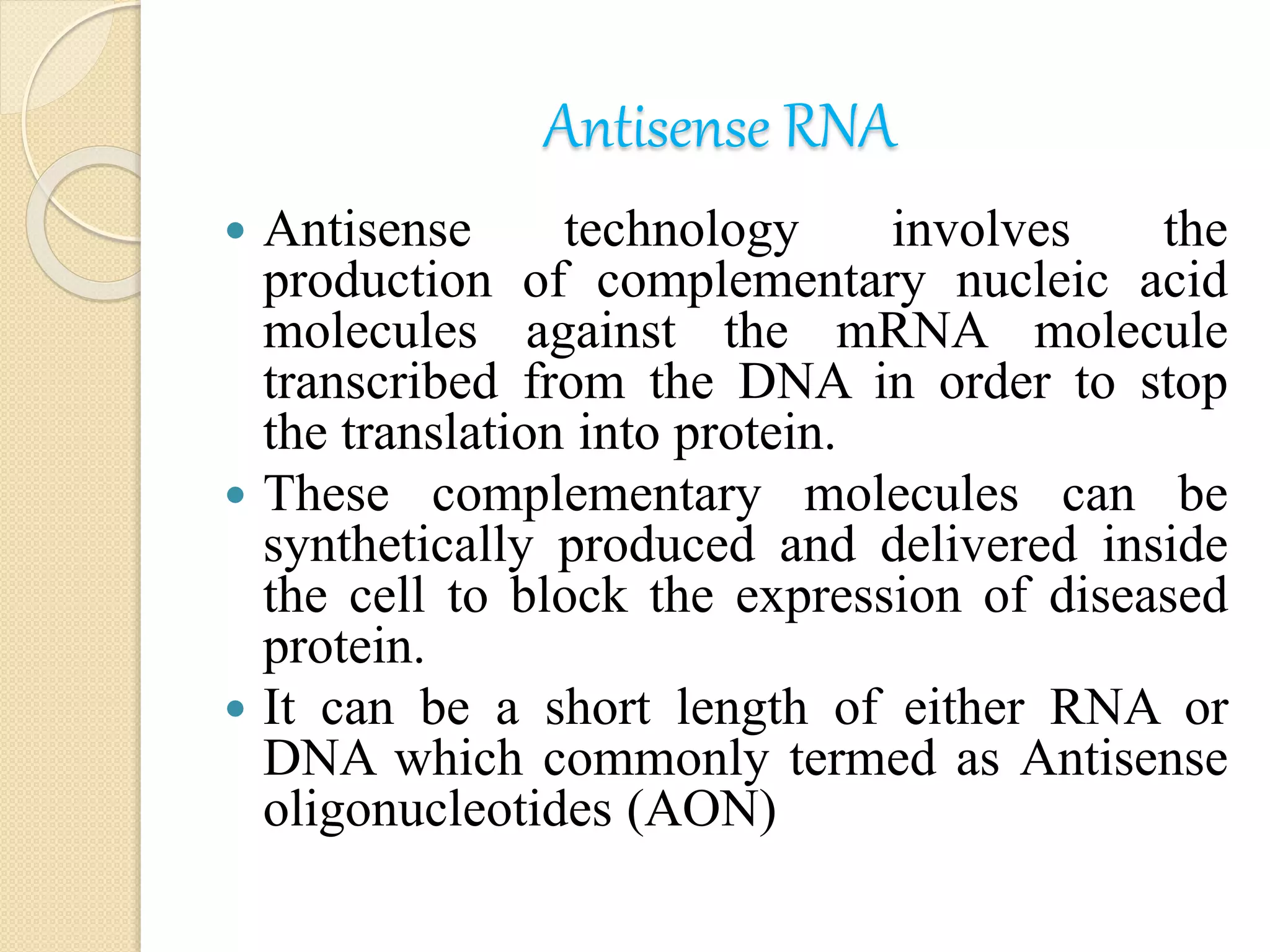
Antisense RNA
 Antisense technology involves the
production of complementary nucleic acid
molecules against the mRNA molecule
transcribed from the DNA in order to stop
the translation into protein.
 These complementary molecules can be
synthetically produced and delivered inside
the cell to block the expression of diseased
protein.
 It can be a short length of either RNA or
DNA which commonly termed as Antisense
oligonucleotides (AON)
Cont’
This phenomenon is still not well understood but
the current hypothesis about this is following-:
 blocking RNA splicing,
 accelerate the degradation process of the RNA and it
also prevents the introns from splicing
 preventing the migration of mRNA from nucleolus to
cytoplasm
 stopping the translation of diseased protein, and
If complementary DNA molecule is used there may be a
formation of triplex in DNA template.
Anti sense RNA
Translational control

Translational control

  • 1.
    BHARATHIDASAN UNIVERSITY TIRUCHIRAPPALLI-620 024 DEPARTMENTOf MARINE BIOTECHNOLOGY SEMINAR ON MOLECULAR BIOLOGY AND MICROBIAL GENETICS By Sukumar Ranjith M.Sc.,Marine Biotechnology
  • 2.
  • 3.
    Translational control  Translationalcontrol plays an essential role in the regulation of gene expression.  Protein synthesis is an indispensable process in the pathway of gene expression, and is a key component in its control. Regulation of translation plays a prominent role in most processes in the cell.  The synthesis rate of a protein in general is proportional to the concentration and translational efficiency of its mRNA.
  • 4.
    Translational control Ribosome binding, Codon usage , Antisense RNA
  • 5.
    Ribosome binding Translational controlledby the ribosome binding is defined as the ribosomal protein binding to the mRNA leads to a selective reduction in translation. For example, Hox mRNA translation
  • 7.
    Codon usage  Codonfrequencies and tRNA abundances tRNAs translate codons into amino acids during protein synthesis. Every organism has multiple tRNA species that read the codons for the same amino acid (tRNA isoacceptors).  The codons also plays a vital role in tranlational control.
  • 8.
  • 9.
    Antisense RNA  Antisensetechnology involves the production of complementary nucleic acid molecules against the mRNA molecule transcribed from the DNA in order to stop the translation into protein.  These complementary molecules can be synthetically produced and delivered inside the cell to block the expression of diseased protein.  It can be a short length of either RNA or DNA which commonly termed as Antisense oligonucleotides (AON)
  • 10.
    Cont’ This phenomenon isstill not well understood but the current hypothesis about this is following-:  blocking RNA splicing,  accelerate the degradation process of the RNA and it also prevents the introns from splicing  preventing the migration of mRNA from nucleolus to cytoplasm  stopping the translation of diseased protein, and If complementary DNA molecule is used there may be a formation of triplex in DNA template.
  • 11.