Transgenic silkworms
Dr. M. Sonia Angeline
Associate Professor
KJC
• Silkworms are living things that were repeatedly modified over the
thousands of years of silk cultivation to produce bigger cocoons for
greater yields of silk thread.
• Silkworms gained the ability to generate a large amount of bulk silk
protein in short period.
• Developing a transgenic silkworm technology that enables us to produce
large amounts of recombinant protein in cocoons.
• “Silk Renaissance” is by establishing an innovative protein production
technology created through the fusion of classical silk culture technology
and state-of-the-art transgenic silkworm technology.
Protein Production Business using Transgenic Silkworms
Introduction
Transgenic silkworms are silkworms that have been genetically modified to produce silk with different
properties:
Recombinant proteins
•Transgenic silkworms can produce large amounts of recombinant proteins in their cocoons. For example,
the PDGF-21 strain of transgenic silkworms can produce 0.3 kg of recombinant PDGF-BB protein per
year.
Spider silk-like fibers
•Transgenic silkworms can spin spider silk-like fibers with a combination of stress and strain that's similar to
native spider dragline silk. The silk is six times tougher than Kevlar, which is used in bulletproof vests.
Fluorescent silk
•Transgenic silkworms can produce fluorescent silk that glows red or orange in the dark. When a larva is
illuminated with blue light, its abdominal area glows because the fluorescent protein is being made inside its
body.
Ultrafine silk
•Transgenic silkworms can produce ultrafine silk that's very soft.
Feature of the Protein Production
Technology
1.Producing Bulk Protein at Reasonable Prices
• Transgenic silkworms in which DNA for producing the targeted protein is inserted in the
chromosome.
• The targeted protein is expressed in the silk gland, which is the tissue that synthesizes
silk protein.
• This production system enables us to create large amounts of the targeted protein at a
reasonable price by utilizing this explosive ability to synthesize silk protein.
• The gene introduced in the silkworms is stable and passed on to the next generation,
making it easy to scale up production by breeding more silkworms.
Feature of the Protein Production
Technology
Simple Purification
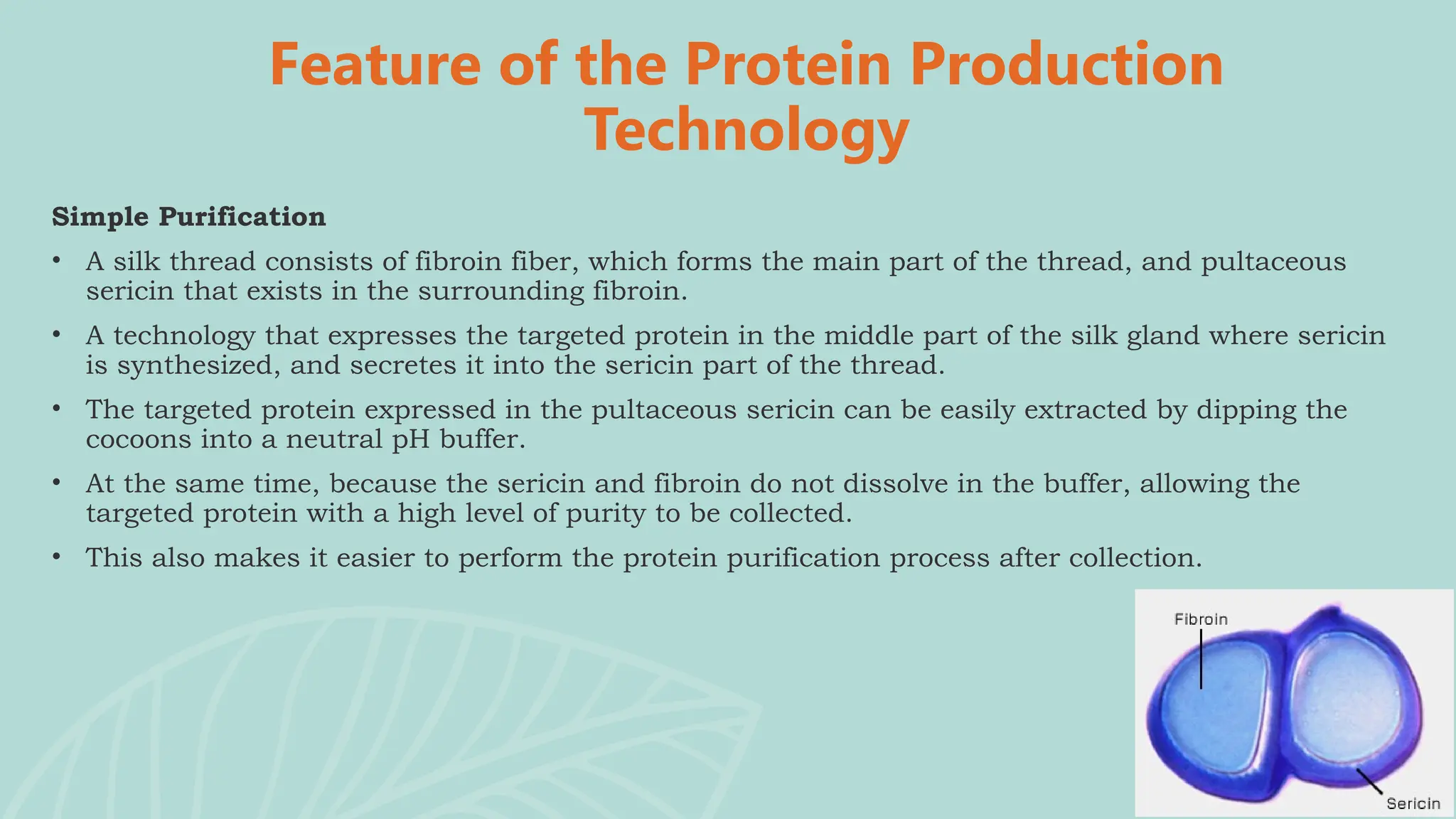
• A silk thread consists of fibroin fiber, which forms the main part of the thread, and pultaceous
sericin that exists in the surrounding fibroin.
• A technology that expresses the targeted protein in the middle part of the silk gland where sericin
is synthesized, and secretes it into the sericin part of the thread.
• The targeted protein expressed in the pultaceous sericin can be easily extracted by dipping the
cocoons into a neutral pH buffer.
• At the same time, because the sericin and fibroin do not dissolve in the buffer, allowing the
targeted protein with a high level of purity to be collected.
• This also makes it easier to perform the protein purification process after collection.
3.Potential for Post-Translation Modification and Multimer Formation
• Unlike microorganisms such as E. coli and yeast, a silkworm is a highly advanced eukaryote that
can synthesize a protein with post-translational modifications such as glycosilation and disulfide
bond formation.
• It also supports the synthesis of a multimeric protein with a large molecular weight, and consists
of a number of subunits because the silk gland, which is an expressive part of the targeted
protein, is the specific organ for synthesizing high molecular silk protein.
Feature of the Protein Production Technology
Various Protein Production Business
using Transgenic Silkworms
1.Manufacturing of Antibodies used for Research Reagents and Diagnostic
Products
• High-quality monoclonal antibodies are produced using transgenic silkworms.
• The antibodies produced from transgenic silkworms is used in ELISA assay kits,
and is supplied as materials to diagnostic products makers.
• Silkworms are not subject to animal protection, and offer the best alternative to
production systems that use the ascites of mice.
2.Human Collagen for Cosmetic Materials
• Human type I collagen α1 chain produced by transgenic silkworms “Neosilk-
Human Collagen I”, and commercialized for use as a moisturizer in cosmetic
products.
• It has also been used in Neosilk Cosmetic and sold as a material.
• Because this collagen is human-based, there is minimal risk of allergic
reactions, making it very safe for the human body.
3.Development of Proteins for Use in Drugs
Transgenic silkworm-based technology for producing proteins that can be used
in human drugs, antibody drugs, vaccines, and fibrinogen.
4.Production of Other Proteins
Transgenic silkworms is suitable for producing high molecular weight proteins
that consist of multiple subunits.

Transgenic silkworms- Importance and applications

  • 1.
    Transgenic silkworms Dr. M.Sonia Angeline Associate Professor KJC
  • 2.
    • Silkworms areliving things that were repeatedly modified over the thousands of years of silk cultivation to produce bigger cocoons for greater yields of silk thread. • Silkworms gained the ability to generate a large amount of bulk silk protein in short period. • Developing a transgenic silkworm technology that enables us to produce large amounts of recombinant protein in cocoons. • “Silk Renaissance” is by establishing an innovative protein production technology created through the fusion of classical silk culture technology and state-of-the-art transgenic silkworm technology. Protein Production Business using Transgenic Silkworms
  • 3.
    Introduction Transgenic silkworms aresilkworms that have been genetically modified to produce silk with different properties: Recombinant proteins •Transgenic silkworms can produce large amounts of recombinant proteins in their cocoons. For example, the PDGF-21 strain of transgenic silkworms can produce 0.3 kg of recombinant PDGF-BB protein per year. Spider silk-like fibers •Transgenic silkworms can spin spider silk-like fibers with a combination of stress and strain that's similar to native spider dragline silk. The silk is six times tougher than Kevlar, which is used in bulletproof vests. Fluorescent silk •Transgenic silkworms can produce fluorescent silk that glows red or orange in the dark. When a larva is illuminated with blue light, its abdominal area glows because the fluorescent protein is being made inside its body. Ultrafine silk •Transgenic silkworms can produce ultrafine silk that's very soft.
  • 4.
    Feature of theProtein Production Technology 1.Producing Bulk Protein at Reasonable Prices • Transgenic silkworms in which DNA for producing the targeted protein is inserted in the chromosome. • The targeted protein is expressed in the silk gland, which is the tissue that synthesizes silk protein. • This production system enables us to create large amounts of the targeted protein at a reasonable price by utilizing this explosive ability to synthesize silk protein. • The gene introduced in the silkworms is stable and passed on to the next generation, making it easy to scale up production by breeding more silkworms.
  • 5.
    Feature of theProtein Production Technology Simple Purification • A silk thread consists of fibroin fiber, which forms the main part of the thread, and pultaceous sericin that exists in the surrounding fibroin. • A technology that expresses the targeted protein in the middle part of the silk gland where sericin is synthesized, and secretes it into the sericin part of the thread. • The targeted protein expressed in the pultaceous sericin can be easily extracted by dipping the cocoons into a neutral pH buffer. • At the same time, because the sericin and fibroin do not dissolve in the buffer, allowing the targeted protein with a high level of purity to be collected. • This also makes it easier to perform the protein purification process after collection.
  • 6.
    3.Potential for Post-TranslationModification and Multimer Formation • Unlike microorganisms such as E. coli and yeast, a silkworm is a highly advanced eukaryote that can synthesize a protein with post-translational modifications such as glycosilation and disulfide bond formation. • It also supports the synthesis of a multimeric protein with a large molecular weight, and consists of a number of subunits because the silk gland, which is an expressive part of the targeted protein, is the specific organ for synthesizing high molecular silk protein. Feature of the Protein Production Technology
  • 7.
    Various Protein ProductionBusiness using Transgenic Silkworms 1.Manufacturing of Antibodies used for Research Reagents and Diagnostic Products • High-quality monoclonal antibodies are produced using transgenic silkworms. • The antibodies produced from transgenic silkworms is used in ELISA assay kits, and is supplied as materials to diagnostic products makers. • Silkworms are not subject to animal protection, and offer the best alternative to production systems that use the ascites of mice. 2.Human Collagen for Cosmetic Materials • Human type I collagen α1 chain produced by transgenic silkworms “Neosilk- Human Collagen I”, and commercialized for use as a moisturizer in cosmetic products. • It has also been used in Neosilk Cosmetic and sold as a material. • Because this collagen is human-based, there is minimal risk of allergic reactions, making it very safe for the human body.
  • 8.
    3.Development of Proteinsfor Use in Drugs Transgenic silkworm-based technology for producing proteins that can be used in human drugs, antibody drugs, vaccines, and fibrinogen. 4.Production of Other Proteins Transgenic silkworms is suitable for producing high molecular weight proteins that consist of multiple subunits.