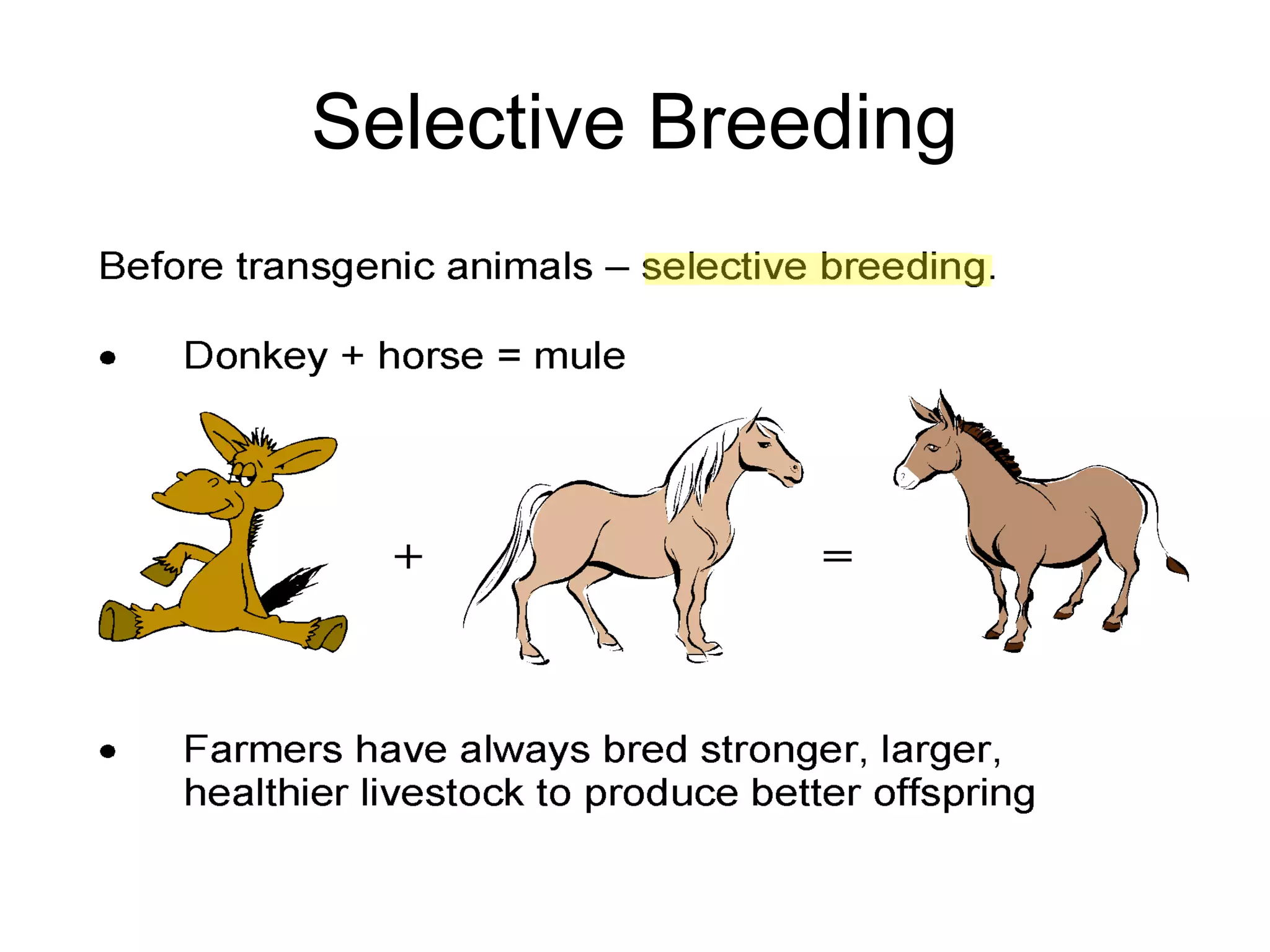
Selective Breeding
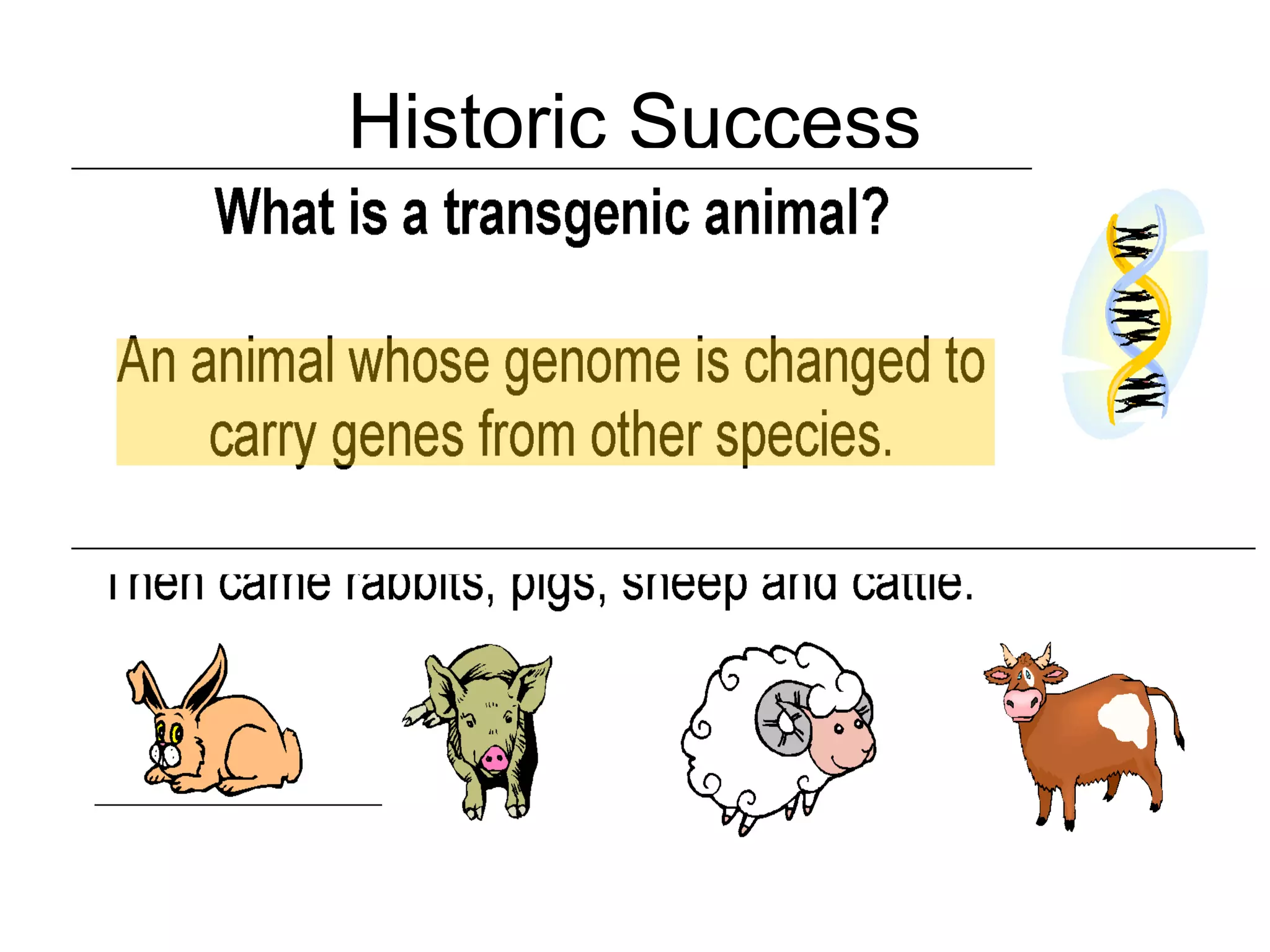
Historic Success
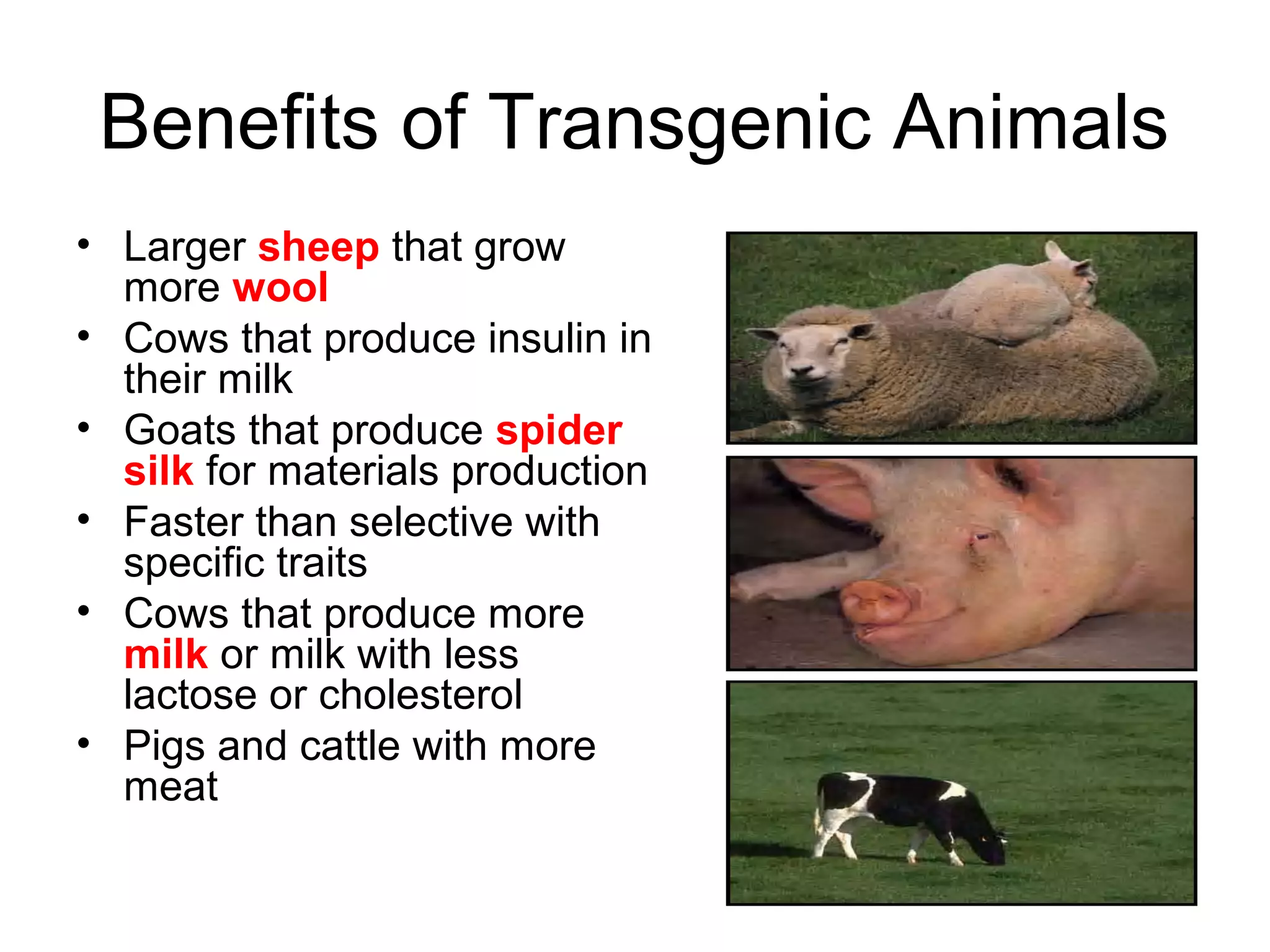
Benefits of Transgenic Animals
• Larger sheep that grow
more wool
• Cows that produce insulin in
their milk
• Goats that produce spider
silk for materials production
• Faster than selective with
specific traits
• Cows that produce more
milk or milk with less
lactose or cholesterol
• Pigs and cattle with more
meat
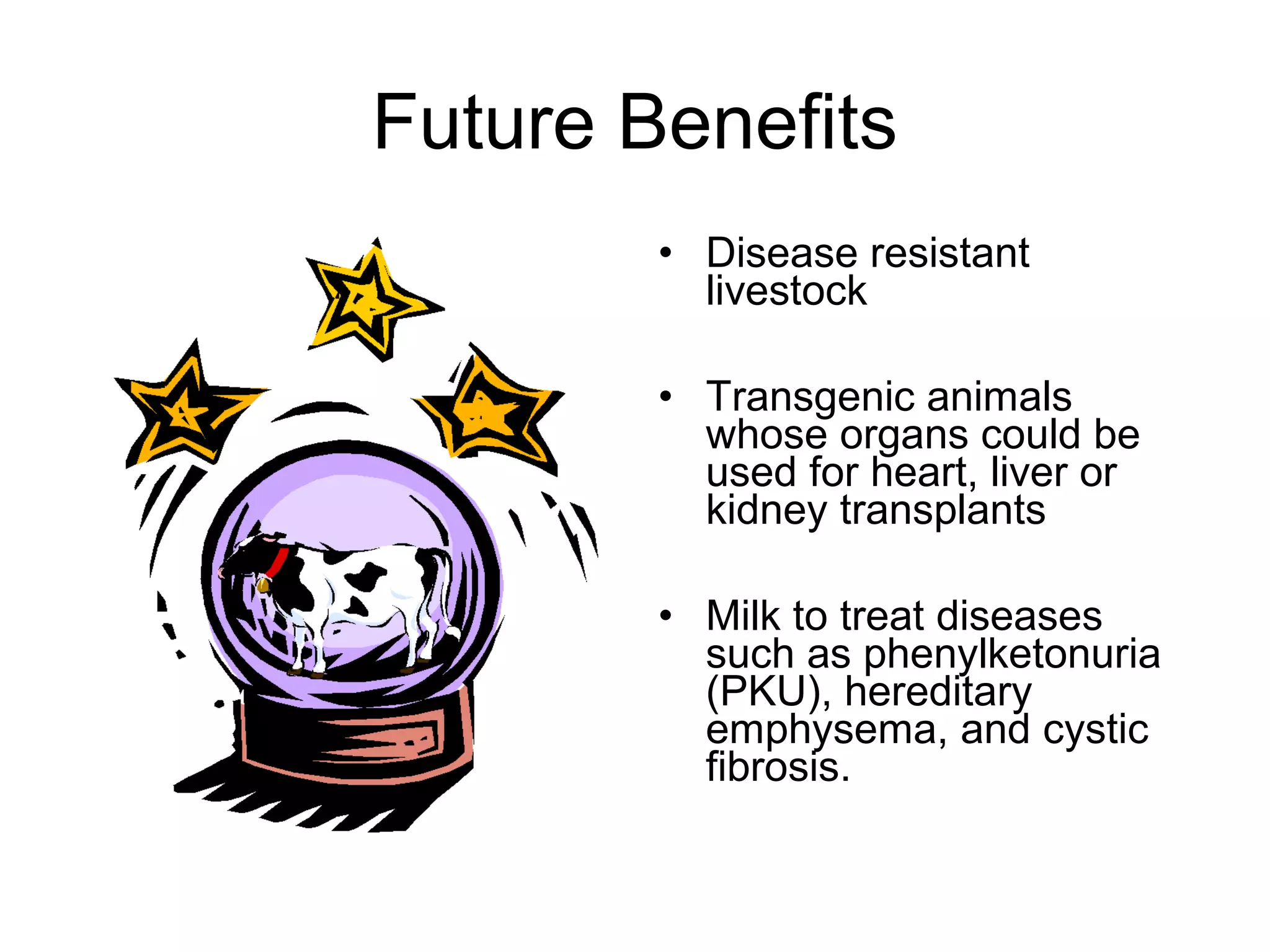
Future Benefits
• Disease resistant
livestock
• Transgenic animals
whose organs could be
used for heart, liver or
kidney transplants
• Milk to treat diseases
such as phenylketonuria
(PKU), hereditary
emphysema, and cystic
fibrosis.
Herman Becomes a Father
• Herman, the transgenic bull who carries the human
gene for lactoferrin, became the father of at least
eight calves in 1994, and each one inherited the gene
for lactoferrin production.
• Lactoferrin is an iron-containing protein that is
essential for infant growth. Since cow's milk doesn't
contain lactoferrin, infants must be fed from other
sources that are rich in iron - formula or mother's milk.
• With the successful breeding of Herman and his
progeny, however, a new source of nutritious milk
may become available.
• This scientific advancement could have far- reaching
effects for children in developing nations.
• Herman was genetically engineered in a laboratory
at the early embryo stage.
• Scientists microinjected cells with the gene coding for
lactoferrin. The scientists then cultured the cells in
vitro to embryo stage and transferred them to
recipient cattle.
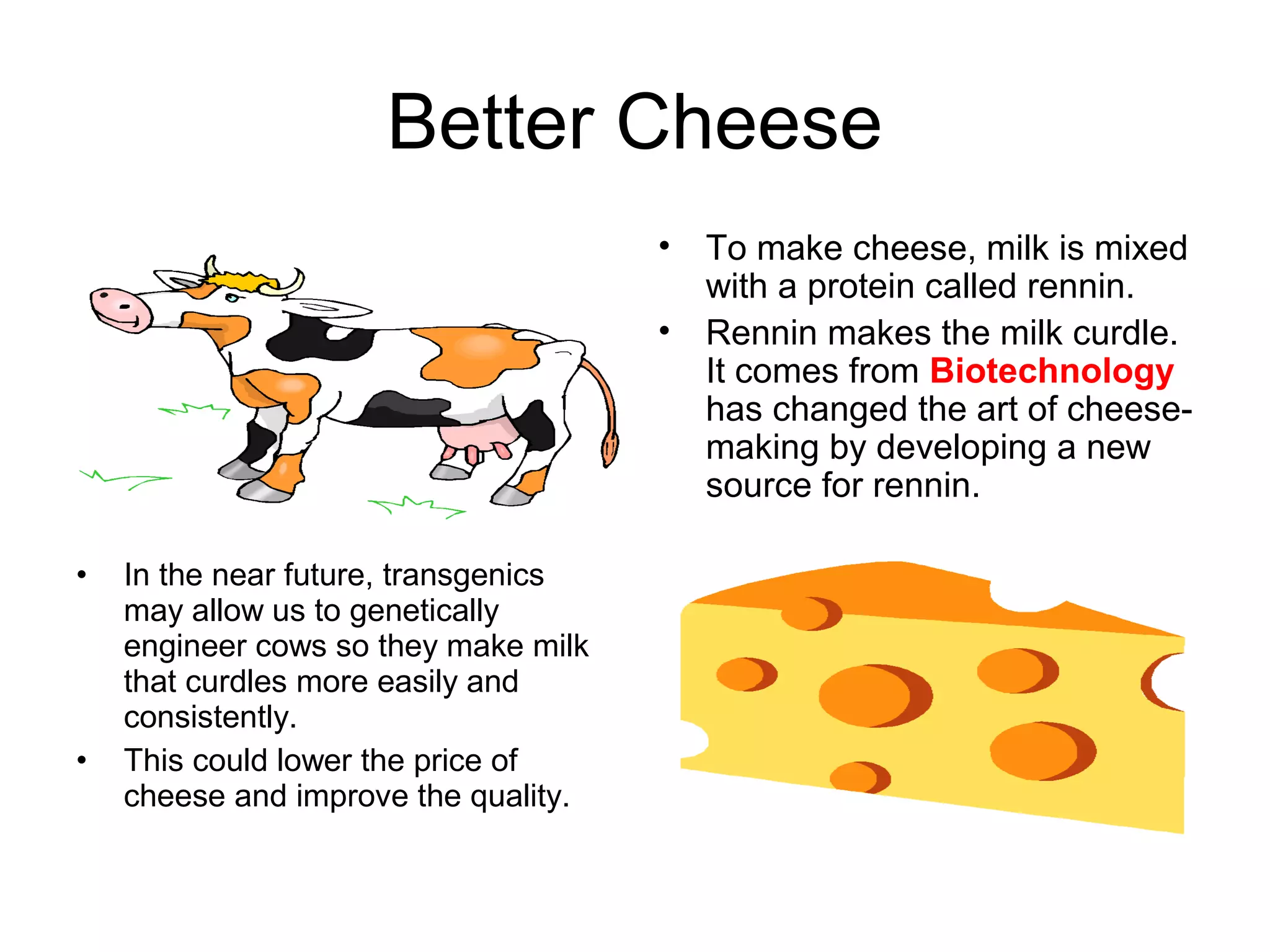
Better Cheese
• To make cheese, milk is mixed
with a protein called rennin.
• Rennin makes the milk curdle.
It comes from Biotechnology
has changed the art of cheese-
making by developing a new
source for rennin.
• In the near future, transgenics
may allow us to genetically
engineer cows so they make milk
that curdles more easily and
consistently.
• This could lower the price of
cheese and improve the quality.
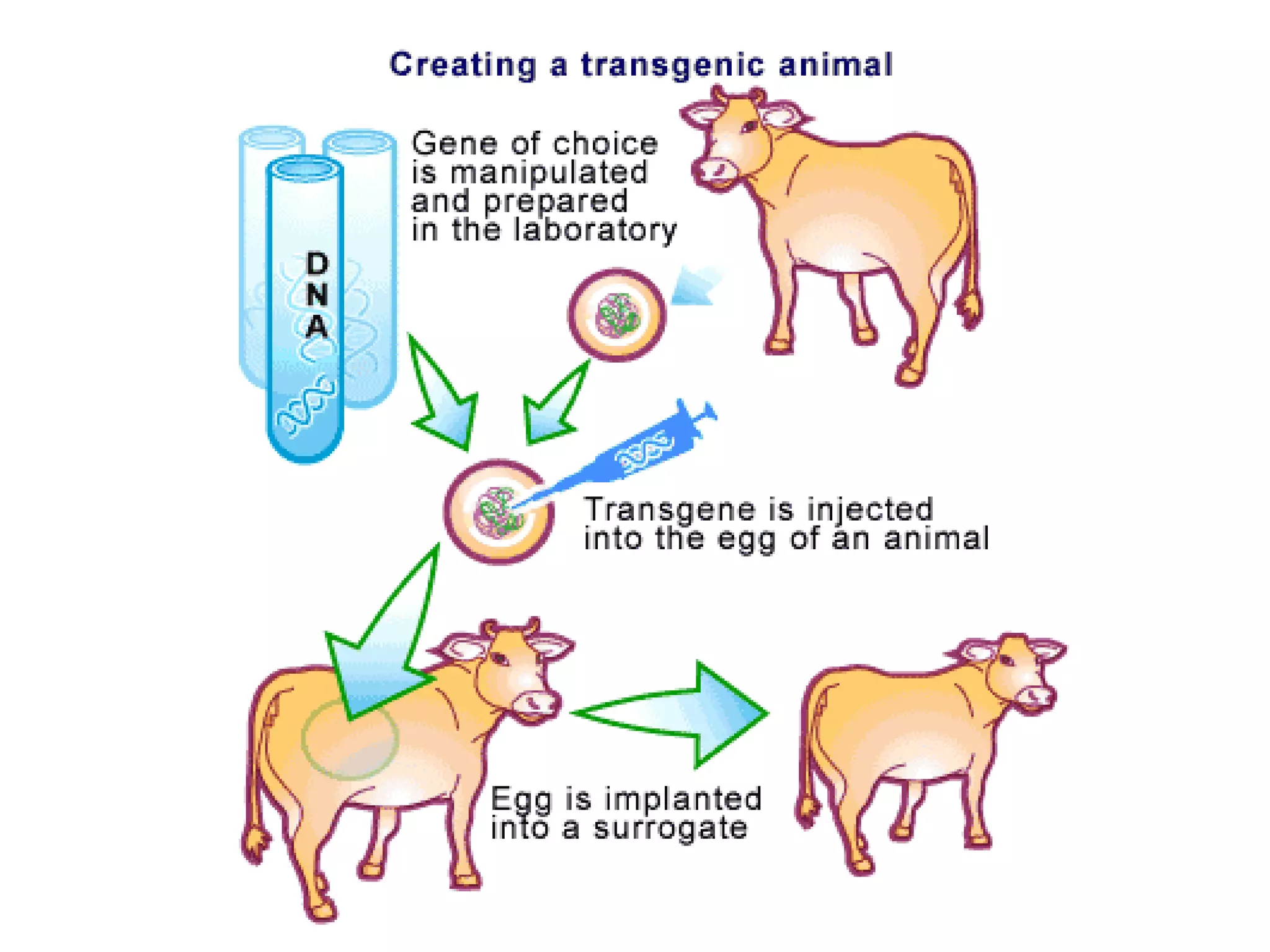
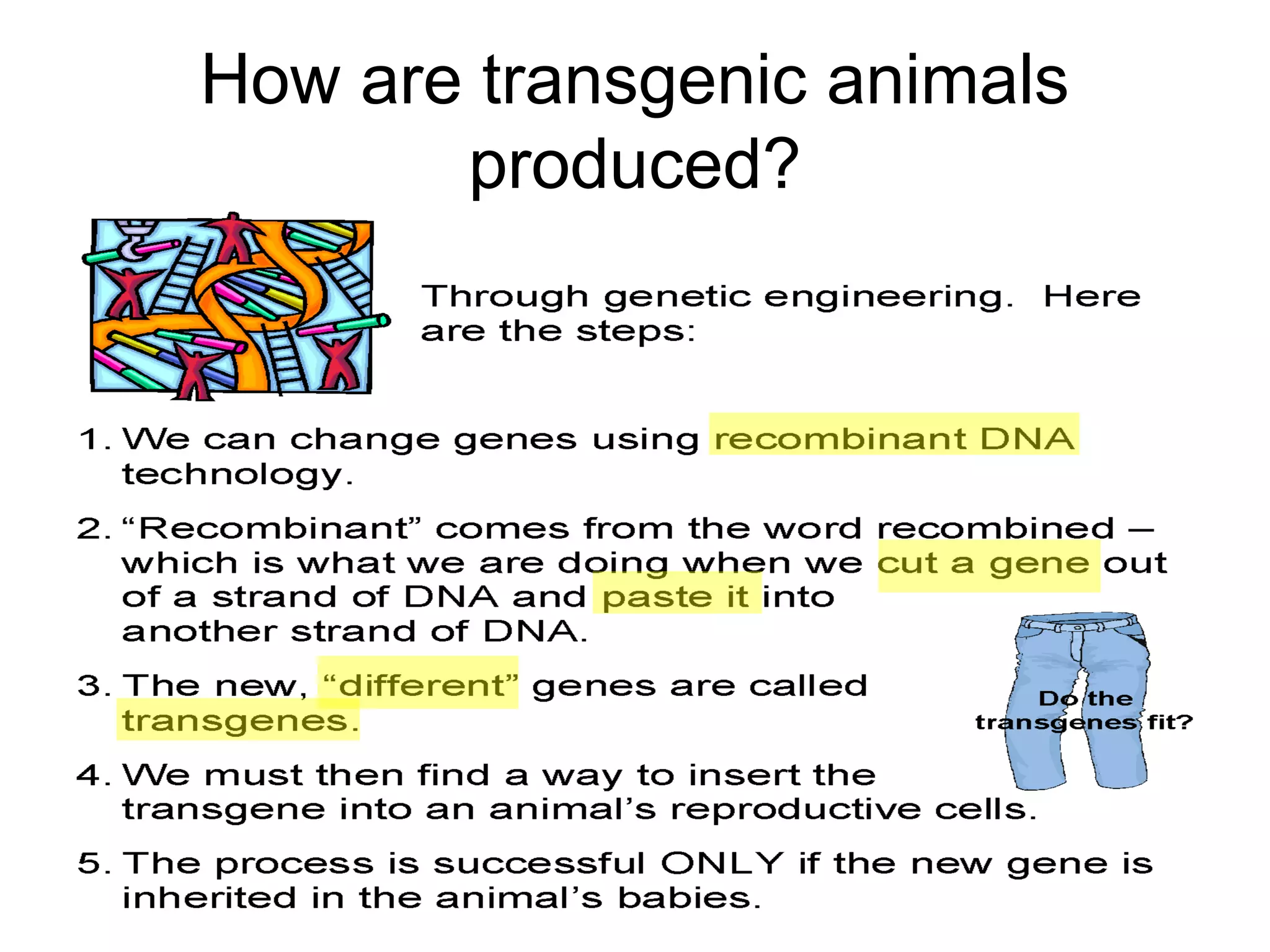
How are transgenic animals
produced?
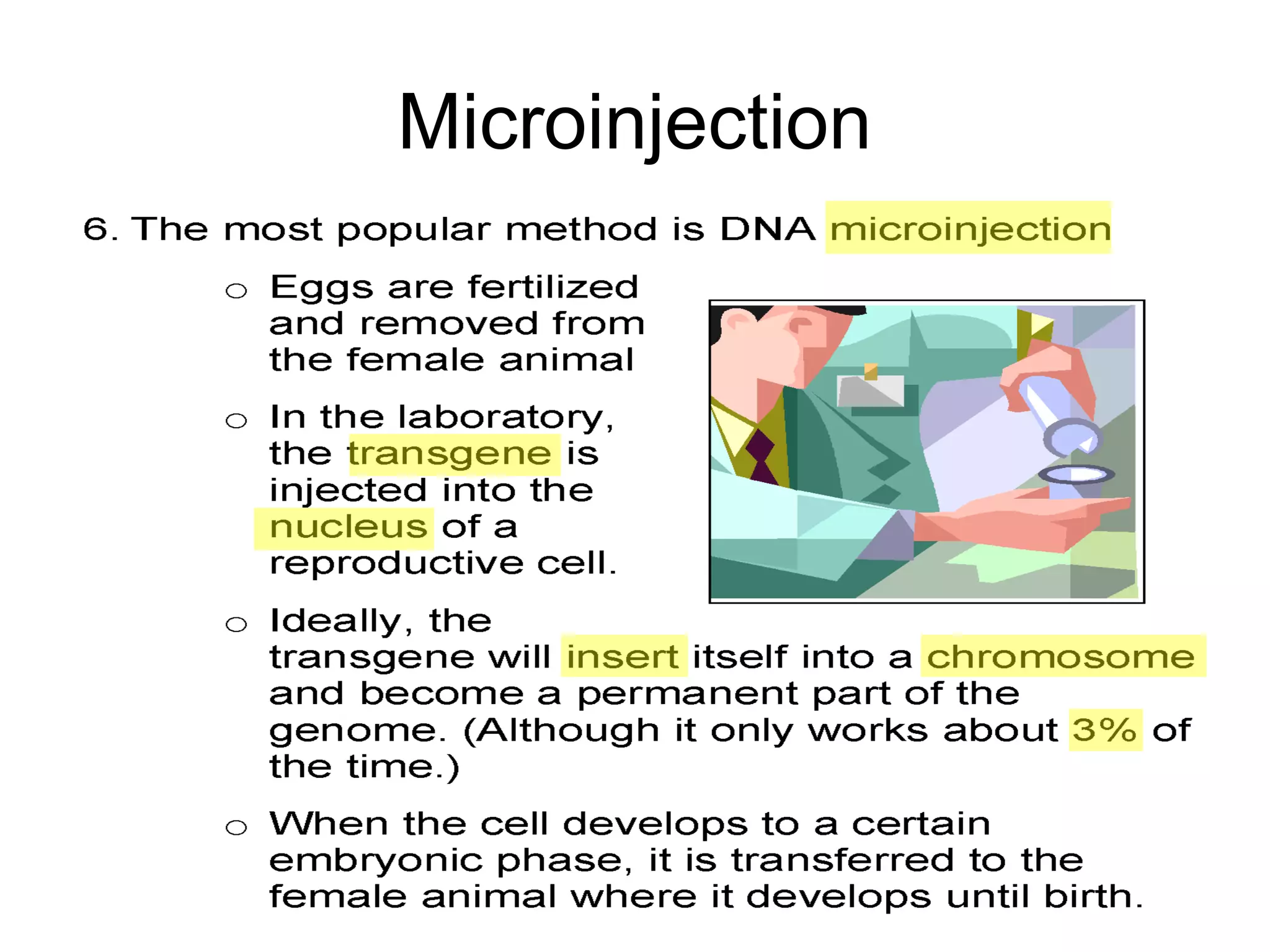
Microinjection
The Final Step
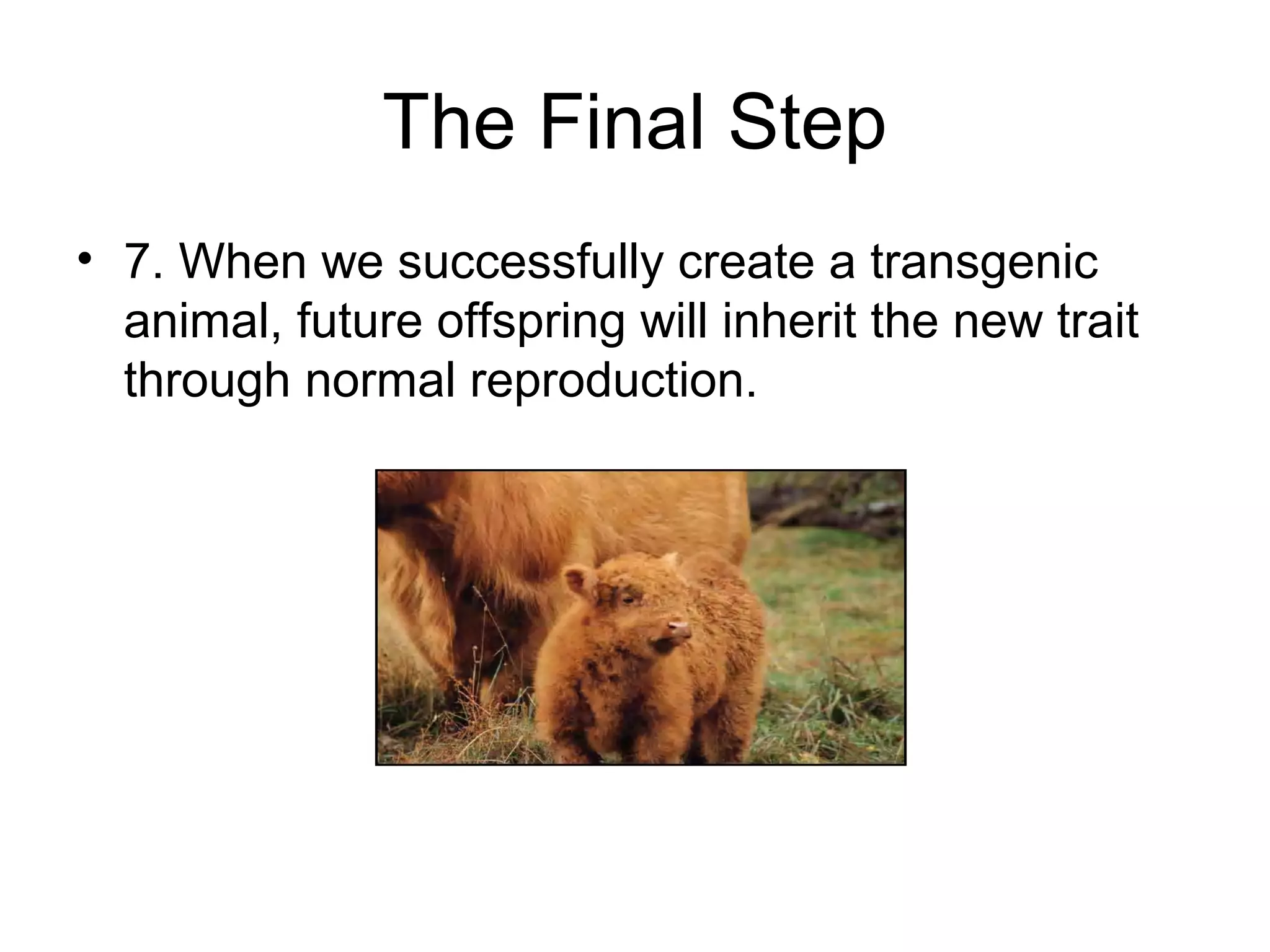
• 7. When we successfully create a transgenic
animal, future offspring will inherit the new trait
through normal reproduction.

Transgenic notes (3)

  • 2.
  • 3.
  • 4.
    Benefits of TransgenicAnimals • Larger sheep that grow more wool • Cows that produce insulin in their milk • Goats that produce spider silk for materials production • Faster than selective with specific traits • Cows that produce more milk or milk with less lactose or cholesterol • Pigs and cattle with more meat
  • 5.
    Future Benefits • Diseaseresistant livestock • Transgenic animals whose organs could be used for heart, liver or kidney transplants • Milk to treat diseases such as phenylketonuria (PKU), hereditary emphysema, and cystic fibrosis.
  • 7.
    Herman Becomes aFather • Herman, the transgenic bull who carries the human gene for lactoferrin, became the father of at least eight calves in 1994, and each one inherited the gene for lactoferrin production. • Lactoferrin is an iron-containing protein that is essential for infant growth. Since cow's milk doesn't contain lactoferrin, infants must be fed from other sources that are rich in iron - formula or mother's milk. • With the successful breeding of Herman and his progeny, however, a new source of nutritious milk may become available. • This scientific advancement could have far- reaching effects for children in developing nations. • Herman was genetically engineered in a laboratory at the early embryo stage. • Scientists microinjected cells with the gene coding for lactoferrin. The scientists then cultured the cells in vitro to embryo stage and transferred them to recipient cattle.
  • 9.
    Better Cheese • Tomake cheese, milk is mixed with a protein called rennin. • Rennin makes the milk curdle. It comes from Biotechnology has changed the art of cheese- making by developing a new source for rennin. • In the near future, transgenics may allow us to genetically engineer cows so they make milk that curdles more easily and consistently. • This could lower the price of cheese and improve the quality.
  • 10.
    How are transgenicanimals produced?
  • 11.
  • 12.
    The Final Step •7. When we successfully create a transgenic animal, future offspring will inherit the new trait through normal reproduction.