TRANSFORMER
PROTECTION
B Y
K R I S H N A M O O RT H Y M
E L E C T R I C A L E N G N I E E R
CONTENT
• Types of fault in transformer
• Transformer protection methods
• Video links
TYPES OF FAULT IN TRANSFORMER
• Internal faults
1.Short circuit faults
2.Incipent faults
• External faults
TRANSFORMER PROTECTION METHODS
• Percentage differential protection
• Protection against magnetizing inrush current
• Buchholz relay
• Over heating protection
• Over fluxing protection
PERCENTAGE DIFFERENTIAL
PROTECTION
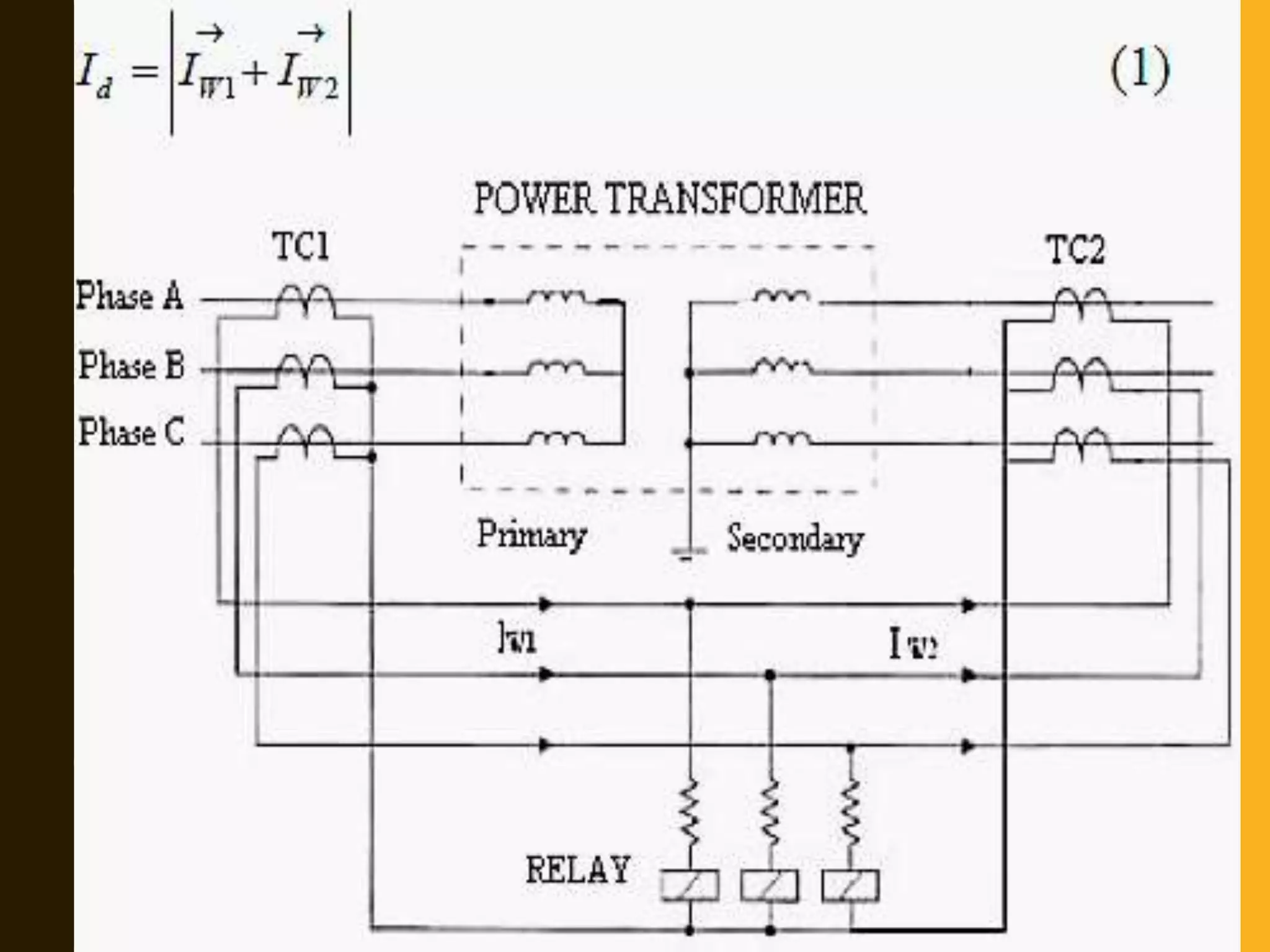
• Rating of transformer should be 5MVA &above
• Current entering and leaving end has been marked as +ve and
–ve respectively.
• Under normal condition operating current flowing opposition to
normal current.
• Under fault condition operating current and normal current are
same.
• It cause the operation of the relay.
BUCHHOLZ RELAY
• Whenever there will be a minor internal fault in the transformer
such the insulating transformer oil will be decomposed in
different hydrocarbon gases, CO2 and CO.
• By collecting the accumulated gases from the gas release
pockets on the top of the relay and by analyzing them one can
predict the type of fault in the transformer.
• Fall of oil level means lowering the position of the float and
thereby tilting the mercury switch.
• . The contacts of this mercury switch are closed and an alarm
circuit energized.
• More severe types of faults, such as short circuit between
phases or to earth and faults in the tap changing equipment, are
accompanied by a surge of oil which strikes the baffle plate and
causes the mercury switch of the lower element to close.
• This switch energized the trip circuit of the circuit breaker
associated with the transformer and immediately isolate the
faulty transformer.
PROTECTION AGAINST MAGNETIZING
INRUSH CURRENT
• What is Inrush current ?
• Second harmonics diverted in to restraining coil.
• When it exceeds 15% of fundamental current leads relay to
operate. The minimum operating time is about 2 cycles.
• To remove dc offset harmonics an instantaneous over current
relay is also incorporated with harmonic restrained scheme.
• Alternative method is harmonic blocking scheme. A separate
blocking relay whose contact is series with biased differential
relay.
OVER FLUXING PROTECTION
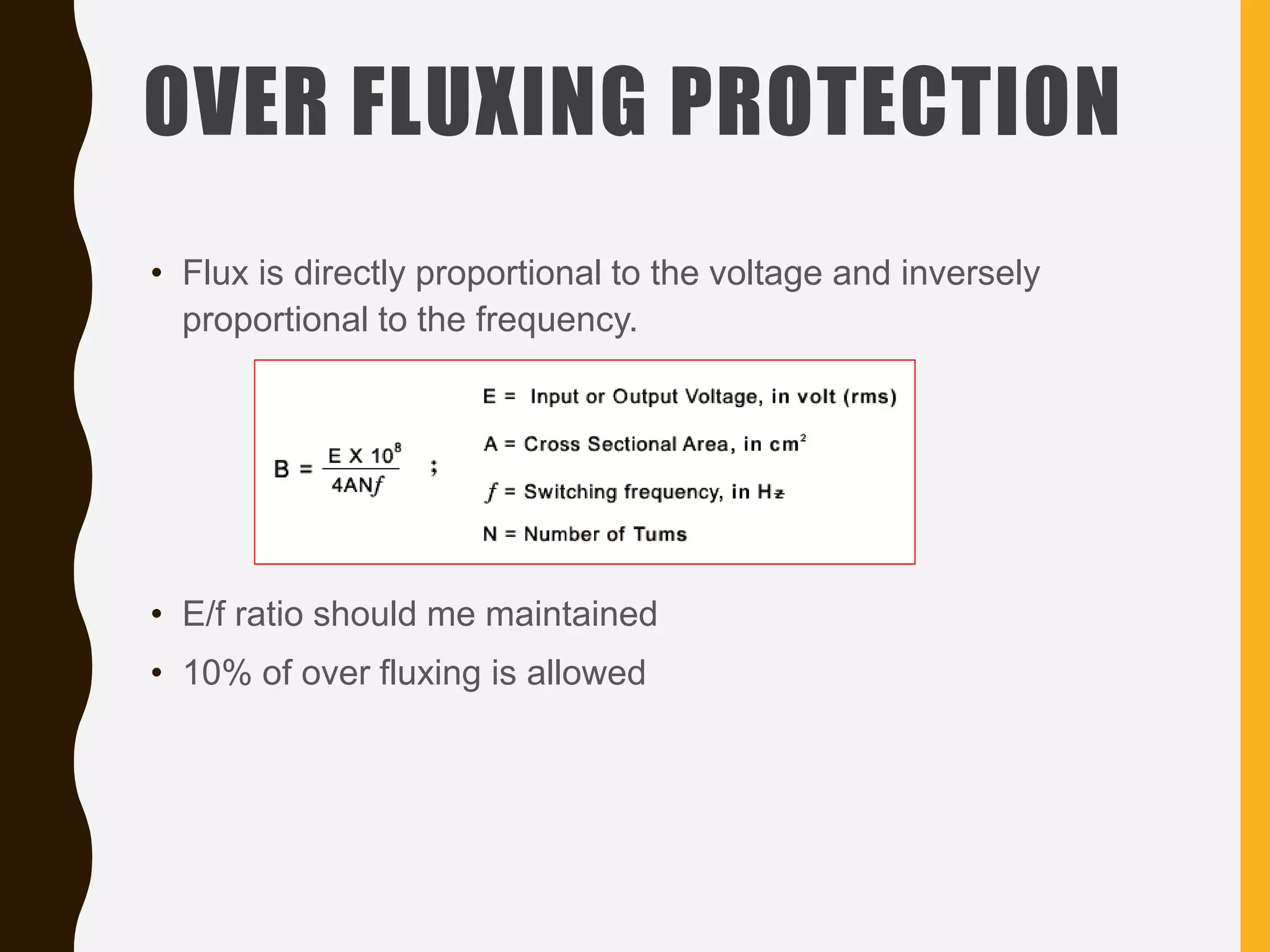
• Flux is directly proportional to the voltage and inversely
proportional to the frequency.
• E/f ratio should me maintained
• 10% of over fluxing is allowed
OVER HEATING PROTECTION
• Load is proportional to temperature
• Permissible temperature is 95 degree Celsius and this is
measured by thermal image technique.
• CT on secondary wdg power the small heater. The temperature
sensing device and heater placed in a small pocket.
• Silicon resistor or silistor also used.
• The voltage across the silistor have a static control over cooling
pumps and fans.
VIDEO LINKS
• Buchholz relay - https://youtu.be/qhl5ZEKegXc
• Transformer inrush current basics-
https://youtu.be/kn9QOF5d-Sw

transformer protection

  • 1.
    TRANSFORMER PROTECTION B Y K RI S H N A M O O RT H Y M E L E C T R I C A L E N G N I E E R
  • 2.
    CONTENT • Types offault in transformer • Transformer protection methods • Video links
  • 3.
    TYPES OF FAULTIN TRANSFORMER • Internal faults 1.Short circuit faults 2.Incipent faults • External faults
  • 4.
    TRANSFORMER PROTECTION METHODS •Percentage differential protection • Protection against magnetizing inrush current • Buchholz relay • Over heating protection • Over fluxing protection
  • 5.
    PERCENTAGE DIFFERENTIAL PROTECTION • Ratingof transformer should be 5MVA &above • Current entering and leaving end has been marked as +ve and –ve respectively. • Under normal condition operating current flowing opposition to normal current. • Under fault condition operating current and normal current are same. • It cause the operation of the relay.
  • 7.
    BUCHHOLZ RELAY • Wheneverthere will be a minor internal fault in the transformer such the insulating transformer oil will be decomposed in different hydrocarbon gases, CO2 and CO. • By collecting the accumulated gases from the gas release pockets on the top of the relay and by analyzing them one can predict the type of fault in the transformer. • Fall of oil level means lowering the position of the float and thereby tilting the mercury switch.
  • 8.
    • . Thecontacts of this mercury switch are closed and an alarm circuit energized. • More severe types of faults, such as short circuit between phases or to earth and faults in the tap changing equipment, are accompanied by a surge of oil which strikes the baffle plate and causes the mercury switch of the lower element to close. • This switch energized the trip circuit of the circuit breaker associated with the transformer and immediately isolate the faulty transformer.
  • 10.
    PROTECTION AGAINST MAGNETIZING INRUSHCURRENT • What is Inrush current ? • Second harmonics diverted in to restraining coil. • When it exceeds 15% of fundamental current leads relay to operate. The minimum operating time is about 2 cycles. • To remove dc offset harmonics an instantaneous over current relay is also incorporated with harmonic restrained scheme. • Alternative method is harmonic blocking scheme. A separate blocking relay whose contact is series with biased differential relay.
  • 11.
    OVER FLUXING PROTECTION •Flux is directly proportional to the voltage and inversely proportional to the frequency. • E/f ratio should me maintained • 10% of over fluxing is allowed
  • 12.
    OVER HEATING PROTECTION •Load is proportional to temperature • Permissible temperature is 95 degree Celsius and this is measured by thermal image technique. • CT on secondary wdg power the small heater. The temperature sensing device and heater placed in a small pocket. • Silicon resistor or silistor also used. • The voltage across the silistor have a static control over cooling pumps and fans.
  • 13.
    VIDEO LINKS • Buchholzrelay - https://youtu.be/qhl5ZEKegXc • Transformer inrush current basics- https://youtu.be/kn9QOF5d-Sw