SHAKTI KUMAR SINGH
VOCATIONAL TRAINING REPORT
PRESENTED BY
BHEL HEEP PLANT, HARIDWAR
INTRODUCTION
Heavy Electrical Equipment Plant, BHEL, HARIDWAR has divided into following blocks:-
 Block 1 In block one turbo generator, generator, exciter motors (A.C&D.C) are
manufactured & assembled.
 In block two large size fabricated assembliescomponent for power equipment are
manufactured & assembled.
 In block -3 steam turbine, hydro turbines, and gas turbines, turbines blade are
manufactured & assembled.
 Block 4 In block 4 winding for turbo generator, hydro generator, insulation of A.C &
D.C motors insulating component for turbo generator, hydro generator motors are
manufactured & assembled
 Block 5 In block -5 fabricated parts of steam turbine water box, hydro turbine turbines
parts are manufactured & assembled.
 BLOCK-6: Fabrication Shop & Die Shop.
 BLOCK-7: Carpentry & Heat Treatment Shop.
 BLOCK-8: Heat Exchanger Shop.
TURBINS
 HYDRO TURBINES
BASICALLY TURBINES ARE OF TWO TYPES
1. Low Pressure Turbines(LP TURBINES).
2. Intermediate Pressure turbines(IP TURBINES).
3. High Pressure Turbines(HP TURBINES)
STEAM TURBINES.
BLOCK-3(my block)
HMS (Heavy Machine Shop).
Assembly Section.
Turbine Section.
Blade Section.
BLOCK 3 LAY-OUT
T
STEAM TURBINES
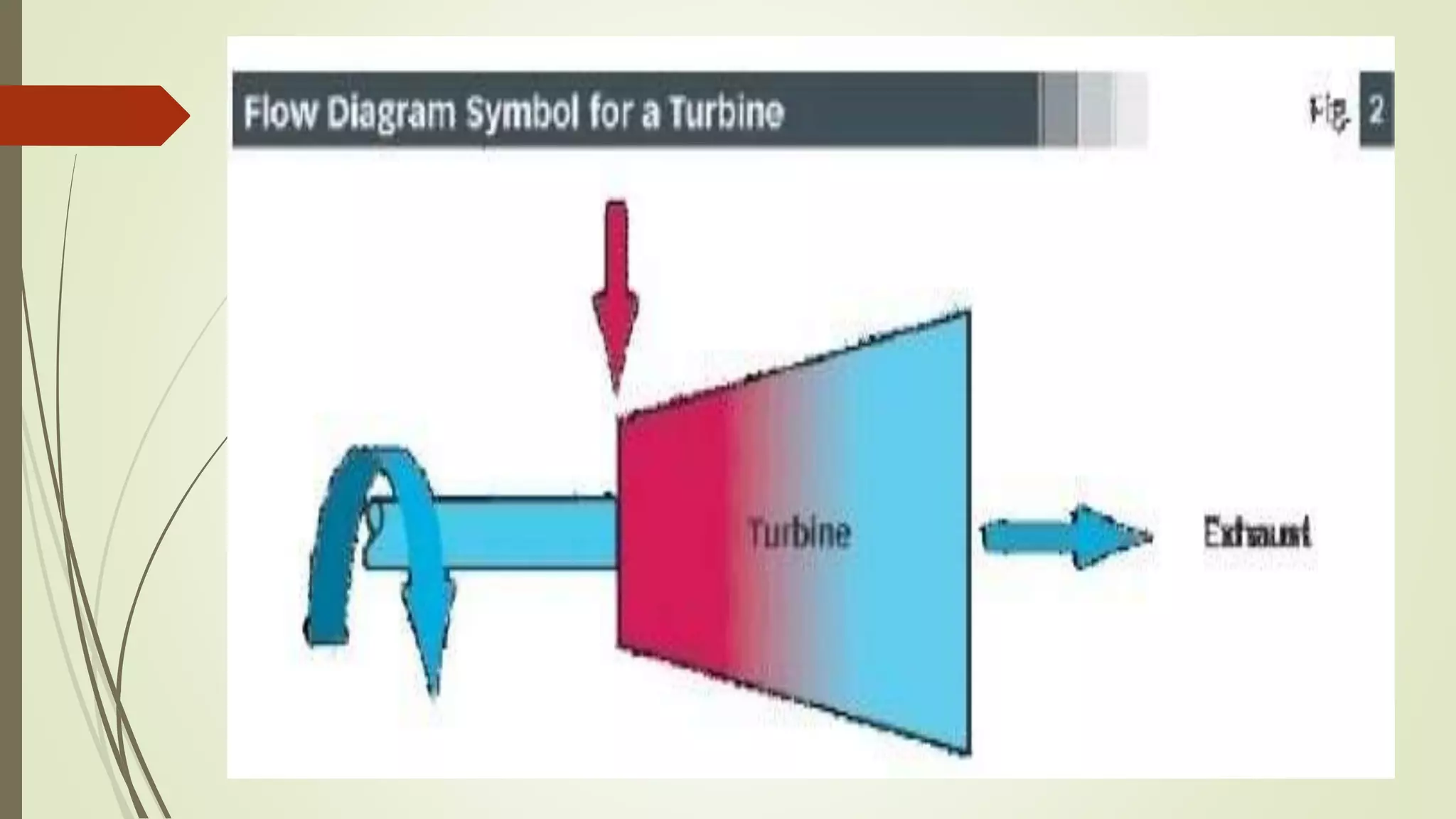
 A turbine is a device that converts chemical energy into
mechanical energy, specifically when a rotor of multiple
blades or vanes is driven by the movement of a fluid or
gas.
 the case of a steam turbine, the pressure and flow of
newly condensed steam rapidly turns the rotor. This
movement is possible because the water to steam
conversion results in a rapidly expanding gas.
 As the turbine’s rotor turns, the rotating shaft can work to
accomplish numerous applications, often electricity
generation.
IMPULSE TURBINE :
The principle of the impulse steam turbine consists of a casing containing
stationary steam nozzles and a rotor with moving or rotating buckets.
The steam passes through the stationary nozzles and is directed at high
velocity against rotor buckets causing the rotor to rotate at high speed.
The following events take place in the nozzles :
1.The steam pressure decreases.
2.The enthalpy of the steam decreases.
3.The steam velocity increases.
4.The volume of the steam increases.
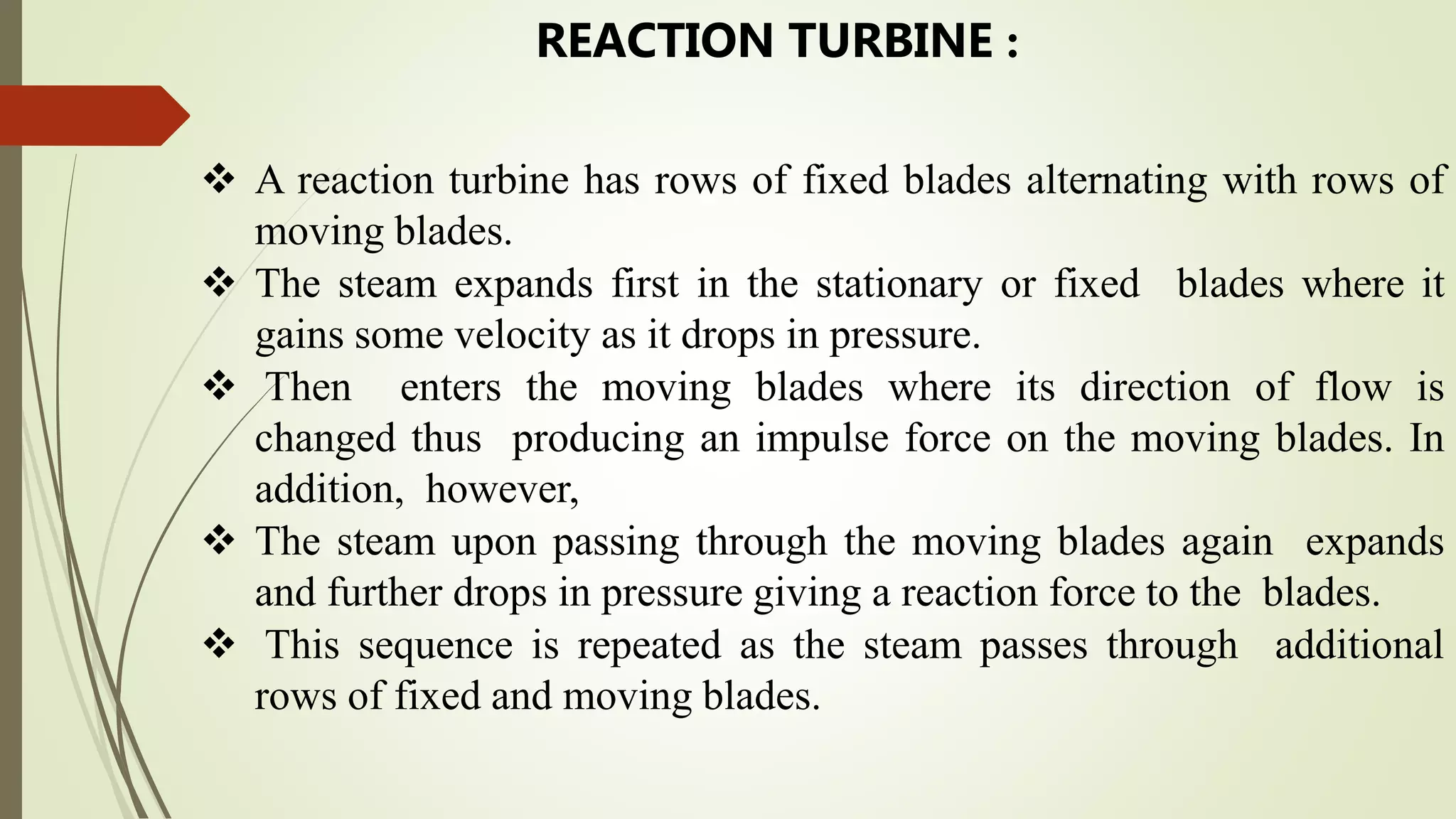
REACTION TURBINE :
 A reaction turbine has rows of fixed blades alternating with rows of
moving blades.
 The steam expands first in the stationary or fixed blades where it
gains some velocity as it drops in pressure.
 Then enters the moving blades where its direction of flow is
changed thus producing an impulse force on the moving blades. In
addition, however,
 The steam upon passing through the moving blades again expands
and further drops in pressure giving a reaction force to the blades.
 This sequence is repeated as the steam passes through additional
rows of fixed and moving blades.
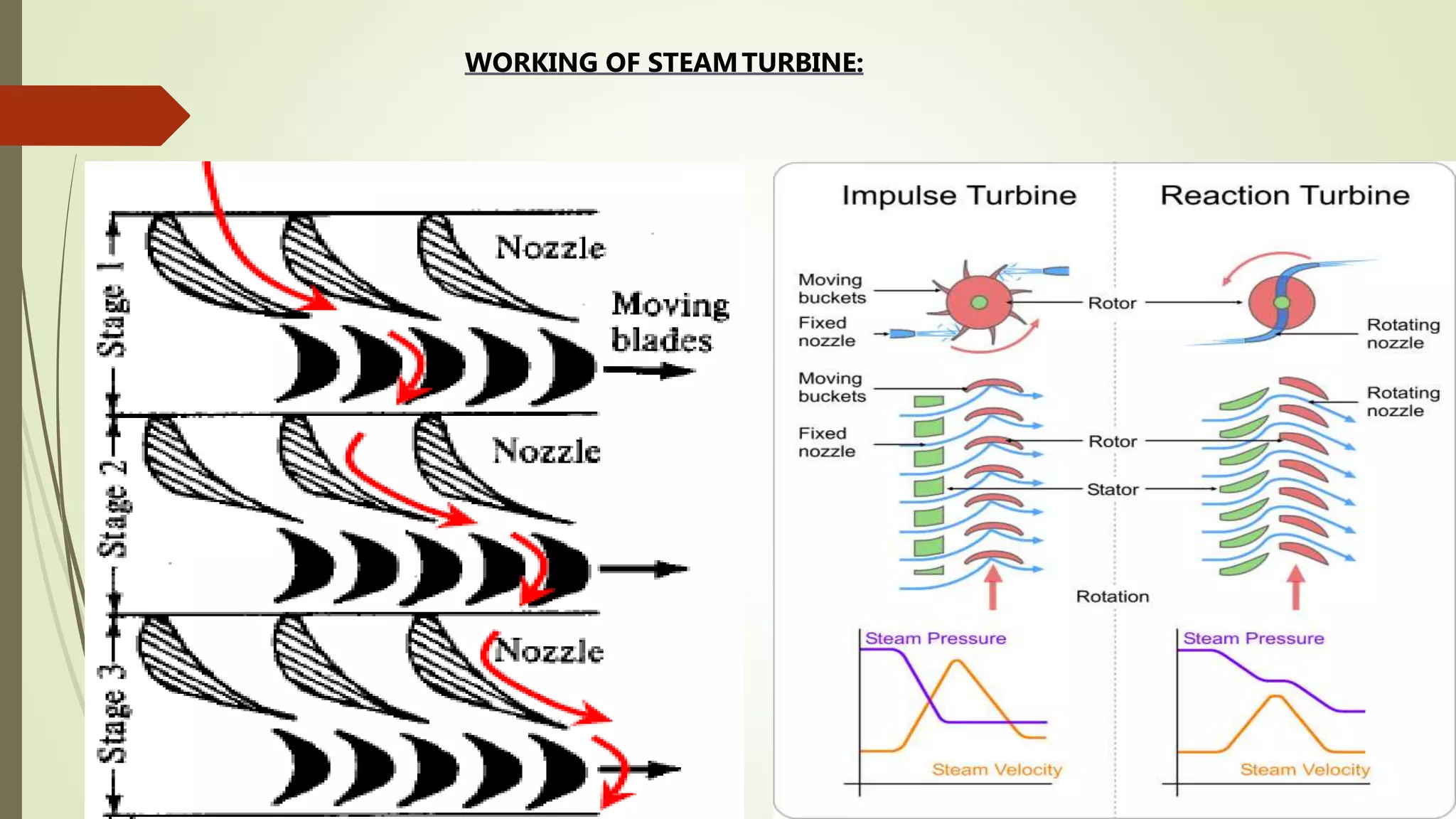
WORKING OF STEAM TURBINE:
Impulse Turbine:-
 steam is expanded only in nozzles. Blade passage of
constant cross-section area.
Reaction Turbine:-
 Pressure drop in fixed & moving blade. Blade passage of
varying cross-section area.
WORKING OF STEAMTURBINE:
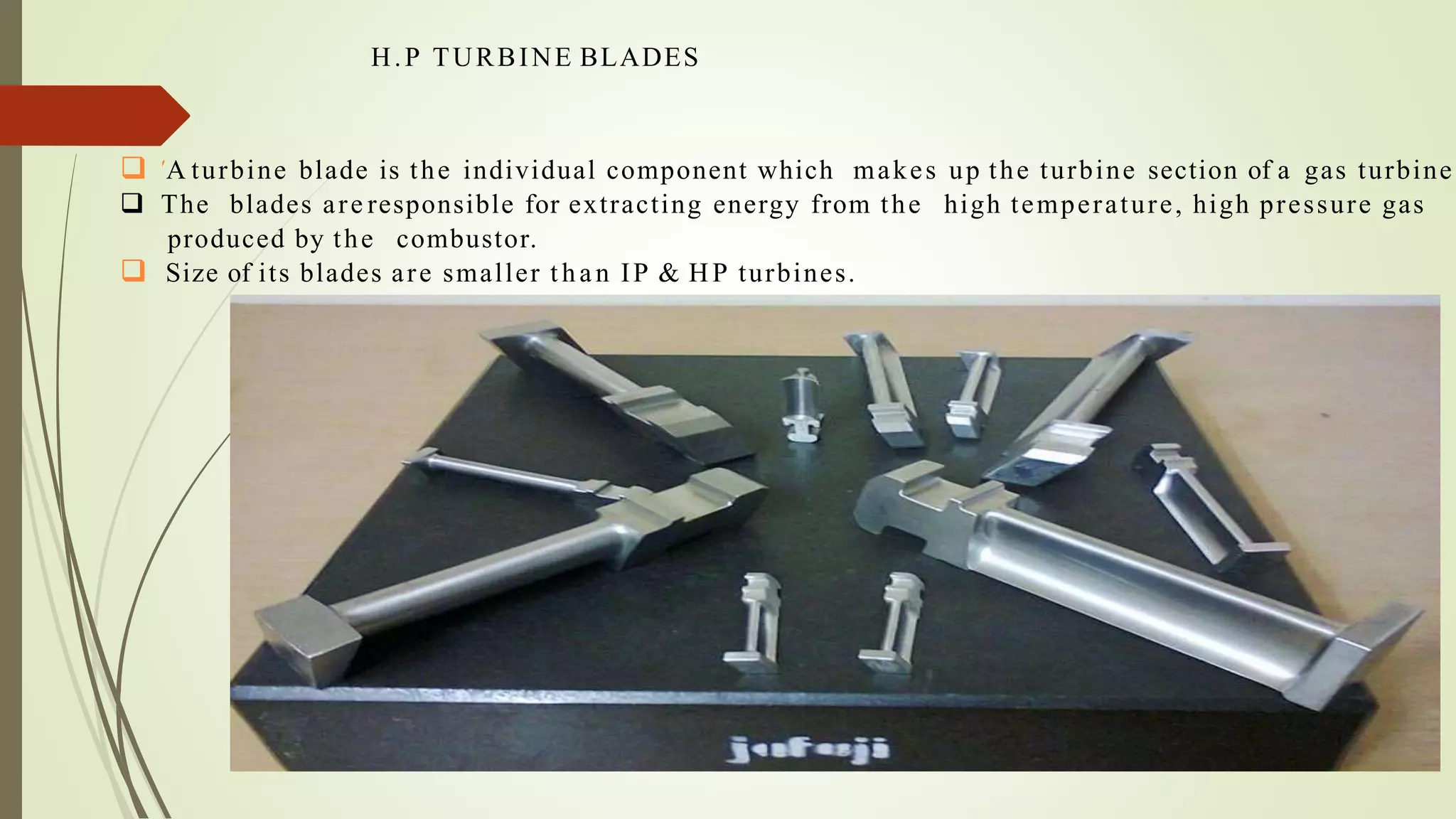
H.P TURBINE BLADES
 A turbine blade is the individual component which makes up the turbine section of a gas turbine.
 The blades are responsible for extracting energy from the high temperature, high pressure gas
produced by the combustor.
 Size of its blades are smaller than IP & HP turbines.
LOW PRESSURE TURBINE BLADE
Titanium alloys offer high strength to intermediate temperatures at
a density almost half that of steel and nickel- based
superalloys. As a result, they have been adopted widely in the fan
and compressor stages of the gas turbine for both disc and blade
applications..
 LP blade is larger thanHP & IP.
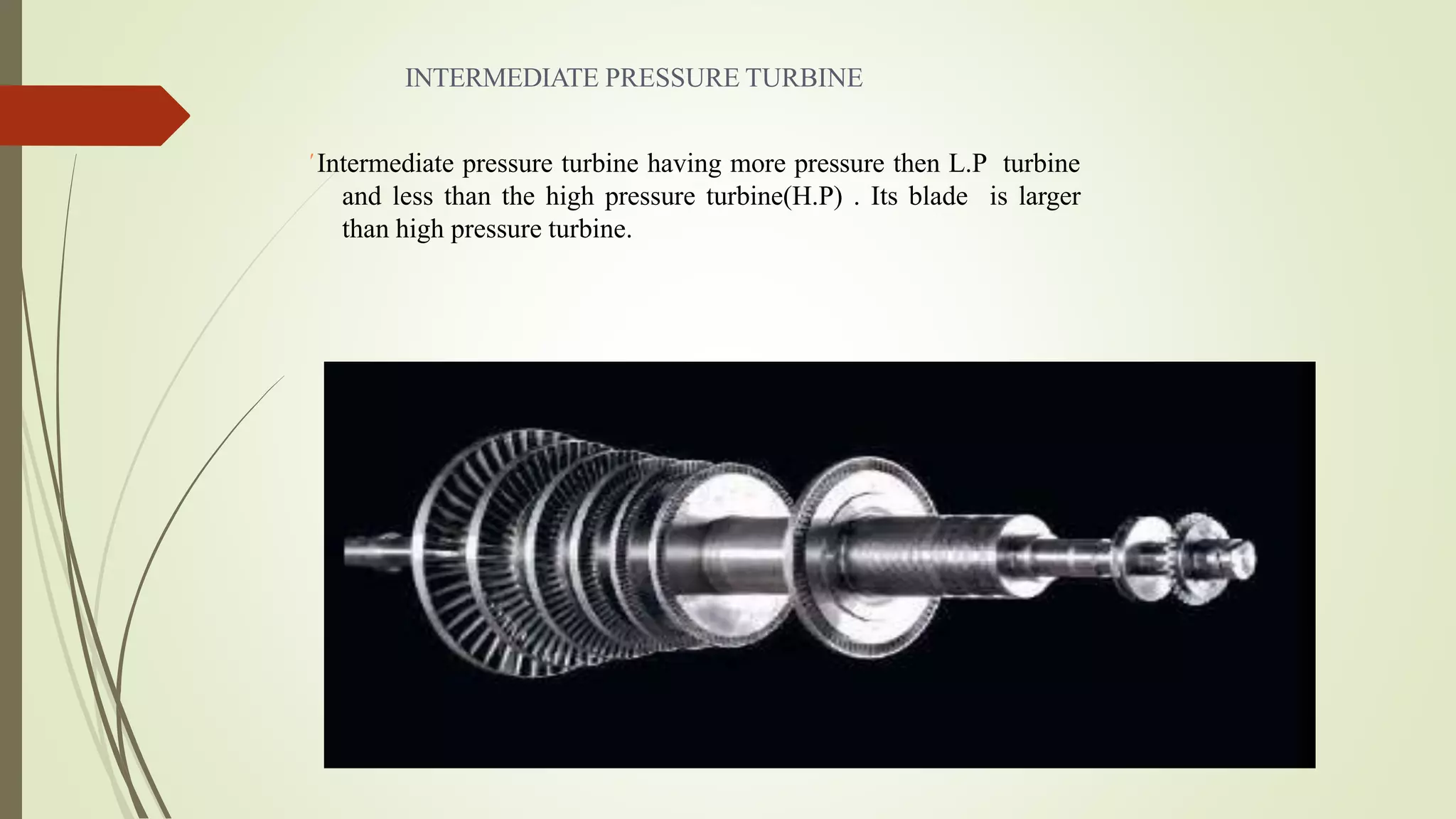
INTERMEDIATE PRESSURE TURBINE
Intermediate pressure turbine having more pressure then L.P turbine
and less than the high pressure turbine(H.P) . Its blade is larger
than high pressure turbine.
BLADE OF INTERMEDIATE PRESSURE TURBINE
The size of blades of I.P steam turbine is larger than
H.P steam turbine , but smaller than L.P steam turbine.
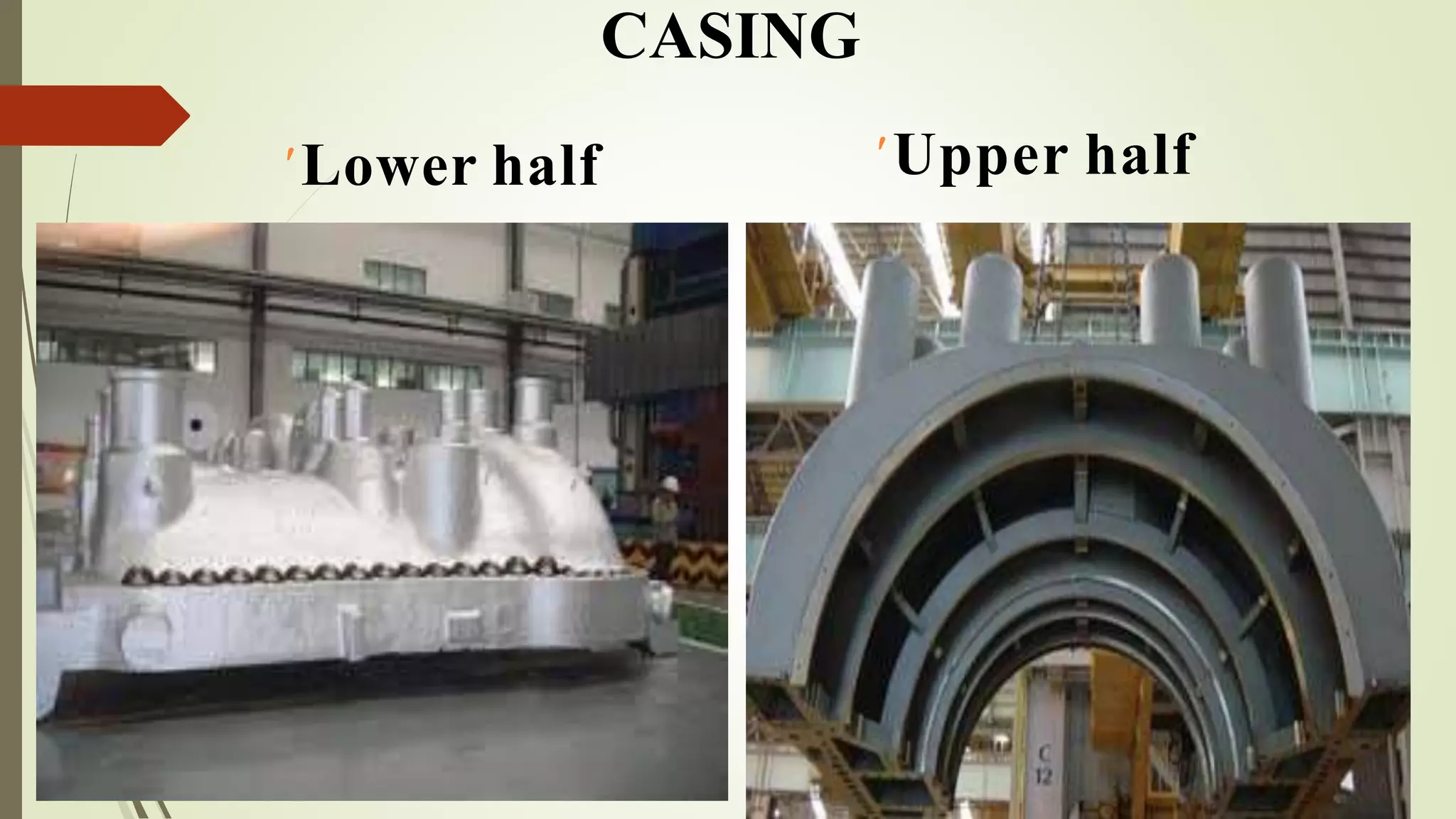
CASING
Lower half Upper half
GAS TURBINE:
Gas turbine have been used for electricity generation.
The gas turbine obtains its power by utilizing the energy of burnt gases &
air which are at high Pressure and Temperature.
CONCLUSION:-
1. BHEL is the largest engineering and manufacturing enterprise in
India .
2. BHEL is a major contributor of equipment and systems to industries.
3. At the all, till now BHEL is best in supply and manufacturing
products.
4. Summer Training gives the idea of ‘general awareness in
steam turbine manufacturing’, & its process.
5. Its provides practical idea to manufacturing several
components of turbine.
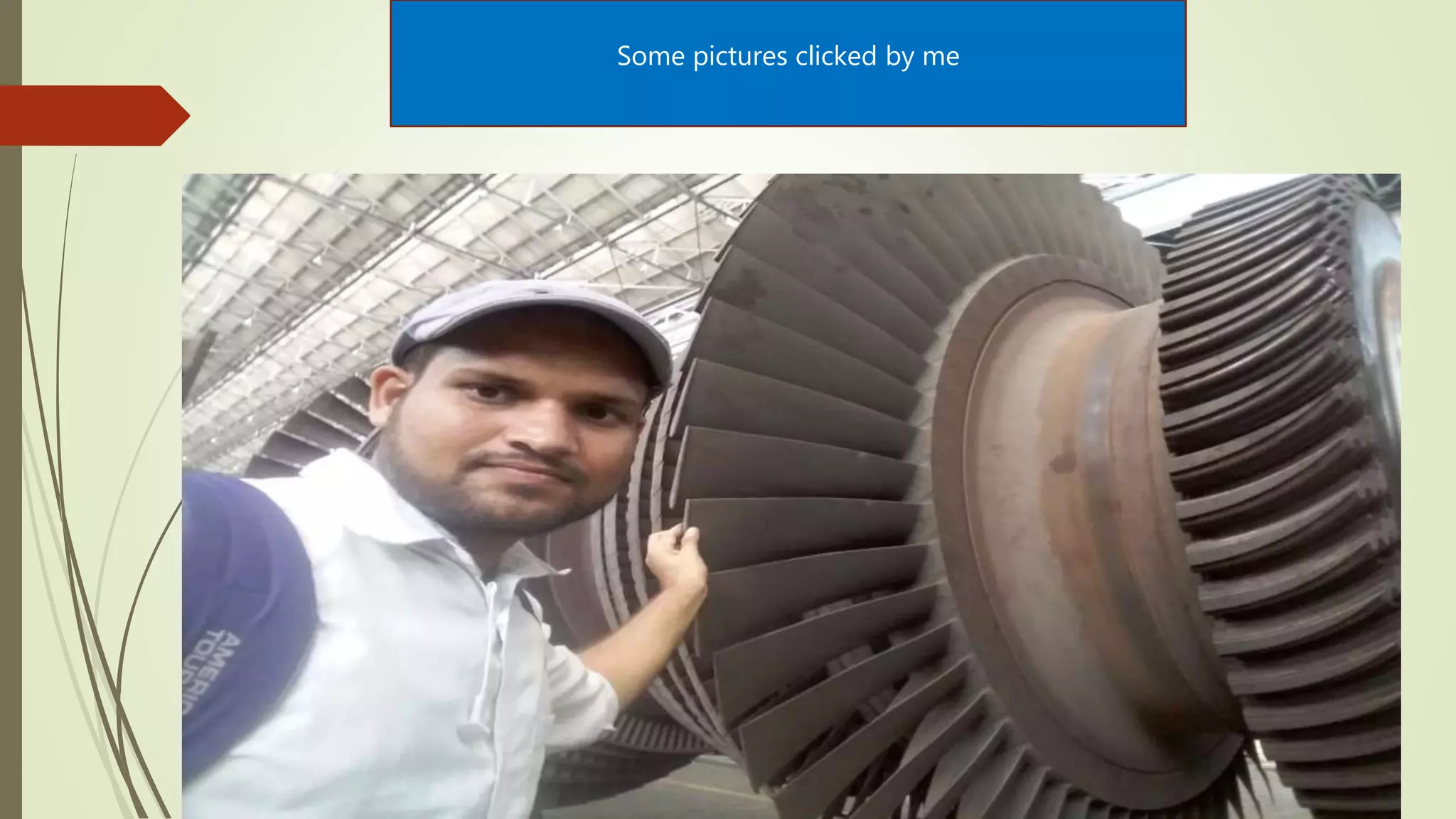
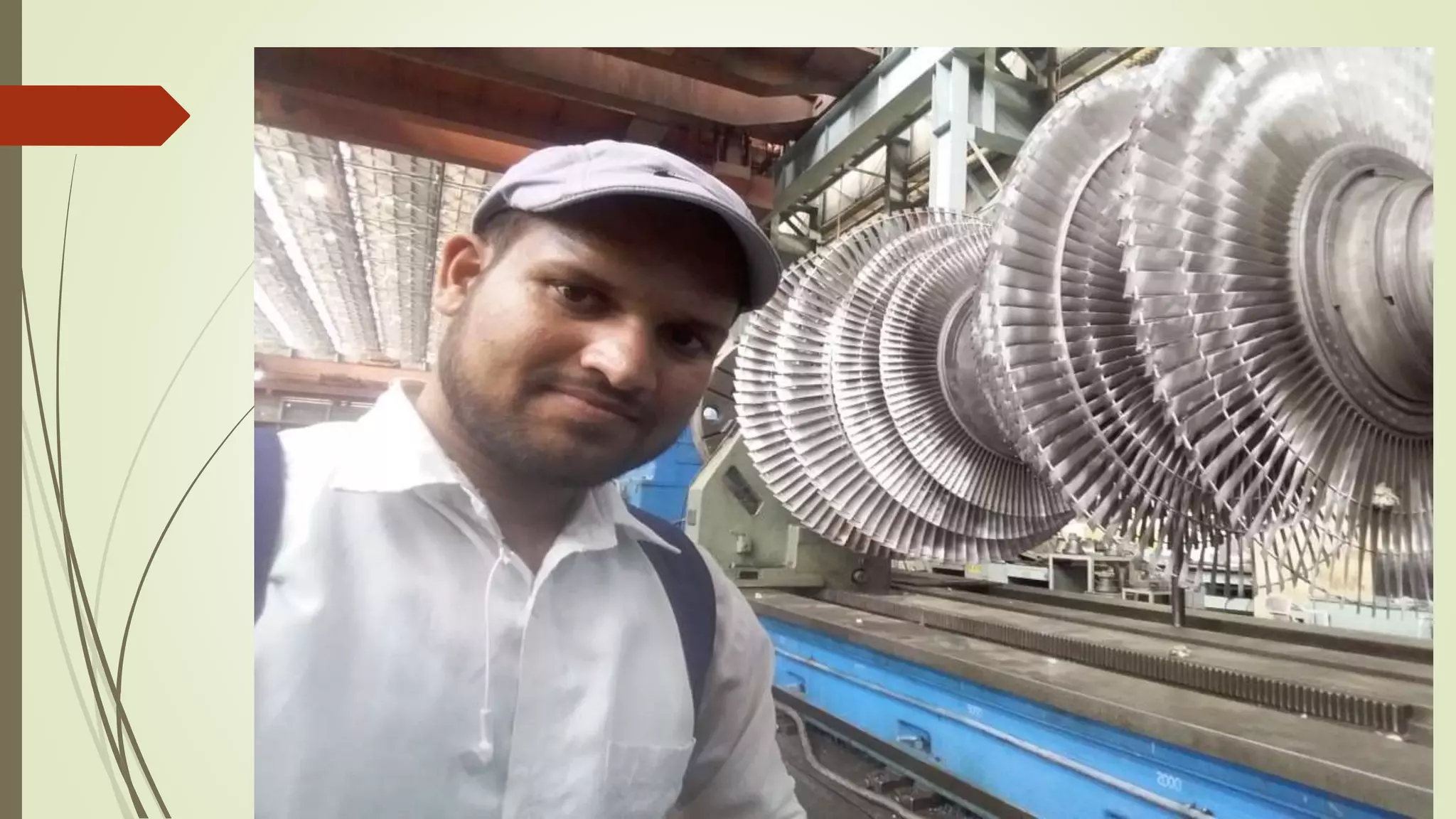
Some pictures clicked by me
हर की पौडी
Mussoorie
Our small group
@ BHEL tour
Thank You

BHEL training ppt

  • 1.
    SHAKTI KUMAR SINGH VOCATIONALTRAINING REPORT PRESENTED BY
  • 3.
  • 4.
    INTRODUCTION Heavy Electrical EquipmentPlant, BHEL, HARIDWAR has divided into following blocks:-  Block 1 In block one turbo generator, generator, exciter motors (A.C&D.C) are manufactured & assembled.  In block two large size fabricated assembliescomponent for power equipment are manufactured & assembled.  In block -3 steam turbine, hydro turbines, and gas turbines, turbines blade are manufactured & assembled.  Block 4 In block 4 winding for turbo generator, hydro generator, insulation of A.C & D.C motors insulating component for turbo generator, hydro generator motors are manufactured & assembled  Block 5 In block -5 fabricated parts of steam turbine water box, hydro turbine turbines parts are manufactured & assembled.  BLOCK-6: Fabrication Shop & Die Shop.  BLOCK-7: Carpentry & Heat Treatment Shop.  BLOCK-8: Heat Exchanger Shop.
  • 5.
    TURBINS  HYDRO TURBINES BASICALLYTURBINES ARE OF TWO TYPES 1. Low Pressure Turbines(LP TURBINES). 2. Intermediate Pressure turbines(IP TURBINES). 3. High Pressure Turbines(HP TURBINES) STEAM TURBINES.
  • 6.
    BLOCK-3(my block) HMS (HeavyMachine Shop). Assembly Section. Turbine Section. Blade Section.
  • 7.
  • 8.
    STEAM TURBINES  Aturbine is a device that converts chemical energy into mechanical energy, specifically when a rotor of multiple blades or vanes is driven by the movement of a fluid or gas.  the case of a steam turbine, the pressure and flow of newly condensed steam rapidly turns the rotor. This movement is possible because the water to steam conversion results in a rapidly expanding gas.  As the turbine’s rotor turns, the rotating shaft can work to accomplish numerous applications, often electricity generation.
  • 10.
    IMPULSE TURBINE : Theprinciple of the impulse steam turbine consists of a casing containing stationary steam nozzles and a rotor with moving or rotating buckets. The steam passes through the stationary nozzles and is directed at high velocity against rotor buckets causing the rotor to rotate at high speed. The following events take place in the nozzles : 1.The steam pressure decreases. 2.The enthalpy of the steam decreases. 3.The steam velocity increases. 4.The volume of the steam increases.
  • 11.
    REACTION TURBINE : A reaction turbine has rows of fixed blades alternating with rows of moving blades.  The steam expands first in the stationary or fixed blades where it gains some velocity as it drops in pressure.  Then enters the moving blades where its direction of flow is changed thus producing an impulse force on the moving blades. In addition, however,  The steam upon passing through the moving blades again expands and further drops in pressure giving a reaction force to the blades.  This sequence is repeated as the steam passes through additional rows of fixed and moving blades.
  • 12.
    WORKING OF STEAMTURBINE: Impulse Turbine:-  steam is expanded only in nozzles. Blade passage of constant cross-section area. Reaction Turbine:-  Pressure drop in fixed & moving blade. Blade passage of varying cross-section area.
  • 13.
  • 14.
    H.P TURBINE BLADES A turbine blade is the individual component which makes up the turbine section of a gas turbine.  The blades are responsible for extracting energy from the high temperature, high pressure gas produced by the combustor.  Size of its blades are smaller than IP & HP turbines.
  • 15.
    LOW PRESSURE TURBINEBLADE Titanium alloys offer high strength to intermediate temperatures at a density almost half that of steel and nickel- based superalloys. As a result, they have been adopted widely in the fan and compressor stages of the gas turbine for both disc and blade applications..  LP blade is larger thanHP & IP.
  • 16.
    INTERMEDIATE PRESSURE TURBINE Intermediatepressure turbine having more pressure then L.P turbine and less than the high pressure turbine(H.P) . Its blade is larger than high pressure turbine.
  • 17.
    BLADE OF INTERMEDIATEPRESSURE TURBINE The size of blades of I.P steam turbine is larger than H.P steam turbine , but smaller than L.P steam turbine.
  • 18.
  • 20.
    GAS TURBINE: Gas turbinehave been used for electricity generation. The gas turbine obtains its power by utilizing the energy of burnt gases & air which are at high Pressure and Temperature.
  • 21.
    CONCLUSION:- 1. BHEL isthe largest engineering and manufacturing enterprise in India . 2. BHEL is a major contributor of equipment and systems to industries. 3. At the all, till now BHEL is best in supply and manufacturing products. 4. Summer Training gives the idea of ‘general awareness in steam turbine manufacturing’, & its process. 5. Its provides practical idea to manufacturing several components of turbine.
  • 22.
  • 27.
  • 28.
  • 31.
  • 32.