Traits Approach to
Leadership
Prepared By: Najeebullah Aman
Instructor: Dr.M.Yousuf Saleem
Outlines
Leadership Theories
The Great Man Theory
Trait Theory
Major Traits for Leadership
Big Five Personality Model
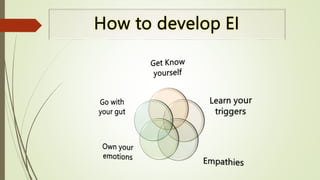
Emotional Intelligence
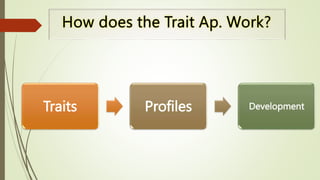
How does Trait Approach Works?
Strength and Criticism
Leadership Theories
Leadership theories are schools of thought
brought forward to explain how and why
certain Individuals become leaders.
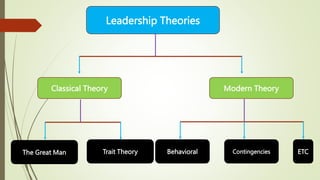
Leadership Theories
Classical Theory Modern Theory
The Great Man Trait Theory Behavioral Contingencies ETC
The Great Man Theory
Founder: Thomas Carlyle
Year 1840s
The success of Leader is affiliated with
the traits that they were born with, every
leader is born with the necessary traits
and attributes that cause them to lead
effectively .
Characteristics of The Great Man
Charismatic
Order to Chaos
Born with the right Traits
Highlights of Great Man Theory
Leaders are born not made
These leaders come out when need arises
Focused on Man only as leader
Leaders have Certain Qualities
Leaders Qualities can’t be taught
Leaders are gifts of Allah
Leadership Qualities and affection are Independent
Criticism
It has no scientific basis
Leadership is no independent
Modern leaders and theorist reject because
leaders can be made
Trait Theory
Def. Effective leaders possess a similar set of traits
or characteristics that differentiate leaders from non
leader.
Or. Theories that Consider personality, Social,
Physical or intellectual traits to differentiate leaders
from non leaders.
What is Trait?
Def. Are relatively Stable Characteristics such
as abilities, psychological motives or
consistent patterns of behavior
Or. Characteristics of an individual that
reflect cognitive, Emotional or behavioral
tendencies.
Theorist That Contributes in Trait
Theory
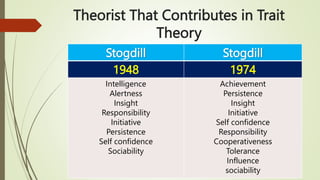
Stogdill Stogdill
1948 1974
Intelligence
Alertness
Insight
Responsibility
Initiative
Persistence
Self confidence
Sociability
Achievement
Persistence
Insight
Initiative
Self confidence
Responsibility
Cooperativeness
Tolerance
Influence
sociability
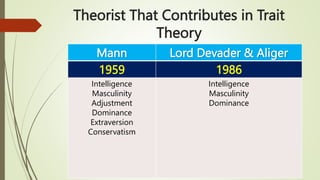
Theorist That Contributes in Trait
Theory
Mann Lord Devader & Aliger
1959 1986
Intelligence
Masculinity
Adjustment
Dominance
Extraversion
Conservatism
Intelligence
Masculinity
Dominance
Theorist That Contributes in Trait
Theory
Kirkpatrick and
Locke
Zaccaro, Kemp and
Bader
1991 2004
Drive
Motivation
Integrity
Confidence
Cognitive ability
Task knowledge
Cognitive abilities
Extraversion
Conscientiousnes
s
Emotional
stability
Openness
Motivation
Social-
intelligence
Self monitoring
Emotional-
Intelligence
Problem solving
Agreeableness
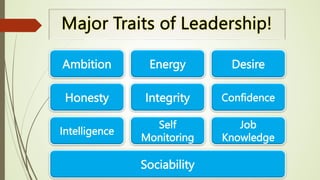
Ambition Energy Desire
Honesty Integrity Confidence
Intelligence
Self
Monitoring
Job
Knowledge
Sociability
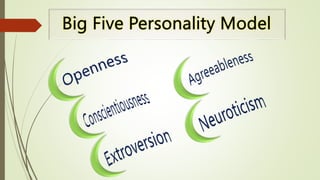
OCEAN Model
Five Factor Model
By Lewis Goldberg
Def. A characteristic way of how you
thinking, Feeling and Behaving.
Open to experience Close to experience
Try out new things Don’t want to do
Creative Less creative
Curious Less curious
Think out of the box Conservatism
Imaginative Dogmatic
Flexible attitude No flexibility
Conscious Unconscious
Set goal Careless
Make plan Disorganized
Organized Irresponsible
Persistent
Careful
Responsible
systematic
Extrovert Introvert
Talkative Quiet
Sociable Reserved
Outgoing Shy
Lively Silent
Active Reliable
Assertive Calm
Optimist Rigid
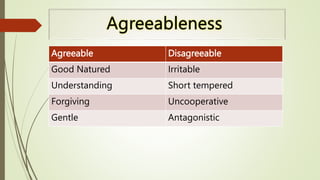
Agreeable Disagreeable
Good Natured Irritable
Understanding Short tempered
Forgiving Uncooperative
Gentle Antagonistic
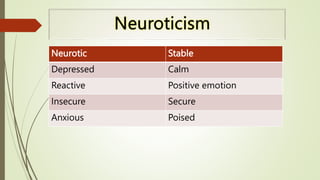
Neurotic Stable
Depressed Calm
Reactive Positive emotion
Insecure Secure
Anxious Poised
• Ability to Perceive and Manage
Emotions in yourself and others.
• People who are more able to
manage their own and others
emotions will be more effective
leaders.
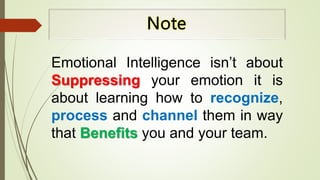
Emotional Intelligence isn’t about
Suppressing your emotion it is
about learning how to recognize,
process and channel them in way
that Benefits you and your team.
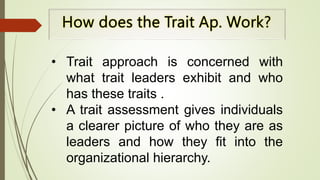
• Trait approach is concerned with
what trait leaders exhibit and who
has these traits .
• A trait assessment gives individuals
a clearer picture of who they are as
leaders and how they fit into the
organizational hierarchy.
Traits Profiles Development
• Credible
• Highlights Role of Leadership
• Provides benchmarks
• No definite list of leadership traits
• Doesn’t take into account situational
Effects
• Research often fails to look at traits in
relationship to leadership outcomes
• It always difficult to measure a trait in an
individual
• Limited usefulness for training and
development

Traits theory Approach.pptx

  • 1.
    Traits Approach to Leadership PreparedBy: Najeebullah Aman Instructor: Dr.M.Yousuf Saleem
  • 2.
    Outlines Leadership Theories The GreatMan Theory Trait Theory Major Traits for Leadership Big Five Personality Model Emotional Intelligence How does Trait Approach Works? Strength and Criticism
  • 3.
    Leadership Theories Leadership theoriesare schools of thought brought forward to explain how and why certain Individuals become leaders.
  • 4.
    Leadership Theories Classical TheoryModern Theory The Great Man Trait Theory Behavioral Contingencies ETC
  • 5.
    The Great ManTheory Founder: Thomas Carlyle Year 1840s The success of Leader is affiliated with the traits that they were born with, every leader is born with the necessary traits and attributes that cause them to lead effectively .
  • 6.
    Characteristics of TheGreat Man Charismatic Order to Chaos Born with the right Traits
  • 7.
    Highlights of GreatMan Theory Leaders are born not made These leaders come out when need arises Focused on Man only as leader Leaders have Certain Qualities Leaders Qualities can’t be taught Leaders are gifts of Allah Leadership Qualities and affection are Independent
  • 8.
    Criticism It has noscientific basis Leadership is no independent Modern leaders and theorist reject because leaders can be made
  • 9.
    Trait Theory Def. Effectiveleaders possess a similar set of traits or characteristics that differentiate leaders from non leader. Or. Theories that Consider personality, Social, Physical or intellectual traits to differentiate leaders from non leaders.
  • 10.
    What is Trait? Def.Are relatively Stable Characteristics such as abilities, psychological motives or consistent patterns of behavior Or. Characteristics of an individual that reflect cognitive, Emotional or behavioral tendencies.
  • 11.
    Theorist That Contributesin Trait Theory Stogdill Stogdill 1948 1974 Intelligence Alertness Insight Responsibility Initiative Persistence Self confidence Sociability Achievement Persistence Insight Initiative Self confidence Responsibility Cooperativeness Tolerance Influence sociability
  • 12.
    Theorist That Contributesin Trait Theory Mann Lord Devader & Aliger 1959 1986 Intelligence Masculinity Adjustment Dominance Extraversion Conservatism Intelligence Masculinity Dominance
  • 13.
    Theorist That Contributesin Trait Theory Kirkpatrick and Locke Zaccaro, Kemp and Bader 1991 2004 Drive Motivation Integrity Confidence Cognitive ability Task knowledge Cognitive abilities Extraversion Conscientiousnes s Emotional stability Openness Motivation Social- intelligence Self monitoring Emotional- Intelligence Problem solving Agreeableness
  • 14.
    Ambition Energy Desire HonestyIntegrity Confidence Intelligence Self Monitoring Job Knowledge Sociability
  • 16.
    OCEAN Model Five FactorModel By Lewis Goldberg Def. A characteristic way of how you thinking, Feeling and Behaving.
  • 18.
    Open to experienceClose to experience Try out new things Don’t want to do Creative Less creative Curious Less curious Think out of the box Conservatism Imaginative Dogmatic Flexible attitude No flexibility
  • 19.
    Conscious Unconscious Set goalCareless Make plan Disorganized Organized Irresponsible Persistent Careful Responsible systematic
  • 20.
    Extrovert Introvert Talkative Quiet SociableReserved Outgoing Shy Lively Silent Active Reliable Assertive Calm Optimist Rigid
  • 21.
    Agreeable Disagreeable Good NaturedIrritable Understanding Short tempered Forgiving Uncooperative Gentle Antagonistic
  • 22.
    Neurotic Stable Depressed Calm ReactivePositive emotion Insecure Secure Anxious Poised
  • 23.
    • Ability toPerceive and Manage Emotions in yourself and others. • People who are more able to manage their own and others emotions will be more effective leaders.
  • 25.
    Emotional Intelligence isn’tabout Suppressing your emotion it is about learning how to recognize, process and channel them in way that Benefits you and your team.
  • 26.
    • Trait approachis concerned with what trait leaders exhibit and who has these traits . • A trait assessment gives individuals a clearer picture of who they are as leaders and how they fit into the organizational hierarchy.
  • 27.
  • 28.
    • Credible • HighlightsRole of Leadership • Provides benchmarks
  • 29.
    • No definitelist of leadership traits • Doesn’t take into account situational Effects • Research often fails to look at traits in relationship to leadership outcomes • It always difficult to measure a trait in an individual • Limited usefulness for training and development