Training Quantitative Scientists for
Biomedical Science Through the
BD2K Initiative
Philip E. Bourne, PhD
Associate Director for Data Science, OBDS
&
Michelle Dunn, PhD
Training, Outreach & Diversity Coordinator, OBDS
National Institutes of Health
AAAS February 16 2015
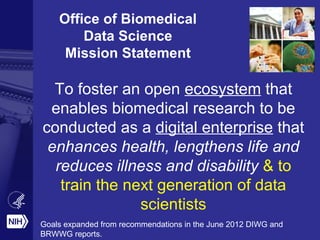
Office of Biomedical
Data Science
Mission Statement
To foster an open ecosystem that
enables biomedical research to be
conducted as a digital enterprise that
enhances health, lengthens life and
reduces illness and disability & to
train the next generation of data
scientists
Goals expanded from recommendations in the June 2012 DIWG and
BRWWG reports.
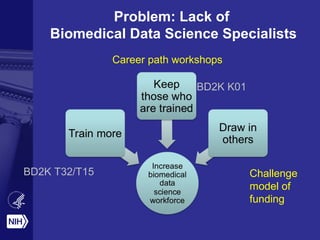
Problem: Lack of
Biomedical Data Science Specialists
BD2K T32/T15
BD2K K01
Career path workshops
Challenge
model of
funding
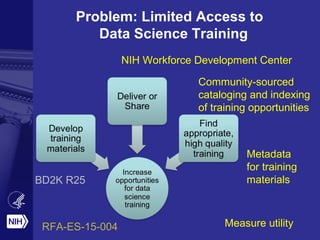
Problem: Limited Access to
Data Science Training
BD2K R25
Metadata
for training
materials
Community-sourced
cataloging and indexing
of training opportunities
Measure utility
NIH Workforce Development Center
RFA-ES-15-004
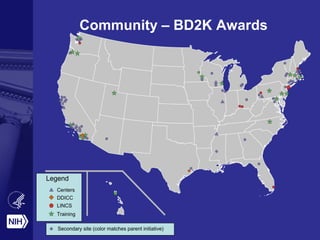
Community – BD2K Awards
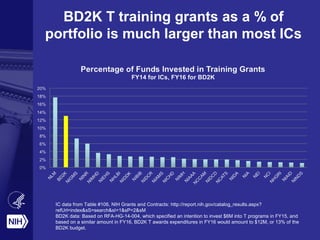
BD2K T training grants as a % of
portfolio is much larger than most ICs
IC data from Table #106, NIH Grants and Contracts: http://report.nih.gov/catalog_results.aspx?
refUrl=index&sS=search&sI=1&sP=2&sM
BD2K data: Based on RFA-HG-14-004, which specified an intention to invest $6M into T programs in FY15, and
based on a similar amount in FY16, BD2K T awards expenditures in FY16 would amount to $12M, or 13% of the
BD2K budget.
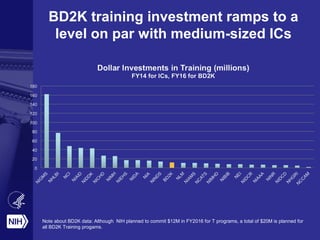
BD2K training investment ramps to a
level on par with medium-sized ICs
Note about BD2K data: Although NIH planned to commit $12M in FY2016 for T programs, a total of $20M is planned for
all BD2K Training progams.
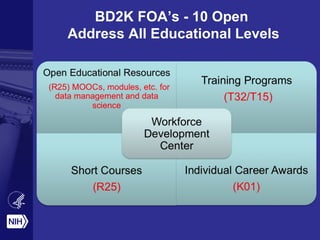
BD2K FOA’s - 10 Open
Address All Educational Levels
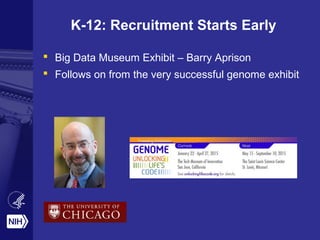
K-12: Recruitment Starts Early
 Big Data Museum Exhibit – Barry Aprison
 Follows on from the very successful genome exhibit
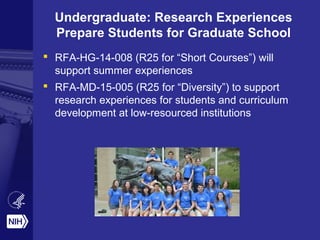
Undergraduate: Research Experiences
Prepare Students for Graduate School
 RFA-HG-14-008 (R25 for “Short Courses”) will
support summer experiences
 RFA-MD-15-005 (R25 for “Diversity”) to support
research experiences for students and curriculum
development at low-resourced institutions
Graduate: Training Program
Applications Are Being Solicited
 RFA-HG-14-004 for new T32 programs
 RFA-HG-14-005 for supplements to existing T32
programs
 RFA-HG-14-006 for supplements to existing T15
programs
We would like to see more applications
Clinicians, Postdocs and Beyond
 RFA-HG-14-007 (K01) for support of individuals to
gain skills and knowledge needed to develop new
methods and tools for Big Data
Workforce
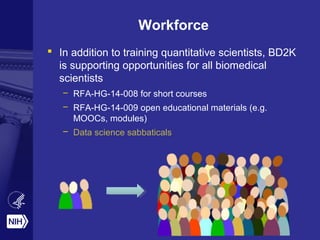
 In addition to training quantitative scientists, BD2K
is supporting opportunities for all biomedical
scientists
– RFA-HG-14-008 for short courses
– RFA-HG-14-009 open educational materials (e.g.
MOOCs, modules)
– Data science sabbaticals
NIHNIH……
Turning Discovery Into HealthTurning Discovery Into Health
philip.bourne@nih.gov
michelle.dunn@nih.gov

Training Quantitative Scientists for Biomedical Science Through the BD2K Initiative

  • 1.
    Training Quantitative Scientistsfor Biomedical Science Through the BD2K Initiative Philip E. Bourne, PhD Associate Director for Data Science, OBDS & Michelle Dunn, PhD Training, Outreach & Diversity Coordinator, OBDS National Institutes of Health AAAS February 16 2015
  • 2.
    Office of Biomedical DataScience Mission Statement To foster an open ecosystem that enables biomedical research to be conducted as a digital enterprise that enhances health, lengthens life and reduces illness and disability & to train the next generation of data scientists Goals expanded from recommendations in the June 2012 DIWG and BRWWG reports.
  • 3.
    Problem: Lack of BiomedicalData Science Specialists BD2K T32/T15 BD2K K01 Career path workshops Challenge model of funding
  • 4.
    Problem: Limited Accessto Data Science Training BD2K R25 Metadata for training materials Community-sourced cataloging and indexing of training opportunities Measure utility NIH Workforce Development Center RFA-ES-15-004
  • 5.
  • 6.
    BD2K T traininggrants as a % of portfolio is much larger than most ICs IC data from Table #106, NIH Grants and Contracts: http://report.nih.gov/catalog_results.aspx? refUrl=index&sS=search&sI=1&sP=2&sM BD2K data: Based on RFA-HG-14-004, which specified an intention to invest $6M into T programs in FY15, and based on a similar amount in FY16, BD2K T awards expenditures in FY16 would amount to $12M, or 13% of the BD2K budget.
  • 7.
    BD2K training investmentramps to a level on par with medium-sized ICs Note about BD2K data: Although NIH planned to commit $12M in FY2016 for T programs, a total of $20M is planned for all BD2K Training progams.
  • 8.
    BD2K FOA’s -10 Open Address All Educational Levels
  • 9.
    K-12: Recruitment StartsEarly  Big Data Museum Exhibit – Barry Aprison  Follows on from the very successful genome exhibit
  • 10.
    Undergraduate: Research Experiences PrepareStudents for Graduate School  RFA-HG-14-008 (R25 for “Short Courses”) will support summer experiences  RFA-MD-15-005 (R25 for “Diversity”) to support research experiences for students and curriculum development at low-resourced institutions
  • 11.
    Graduate: Training Program ApplicationsAre Being Solicited  RFA-HG-14-004 for new T32 programs  RFA-HG-14-005 for supplements to existing T32 programs  RFA-HG-14-006 for supplements to existing T15 programs We would like to see more applications
  • 12.
    Clinicians, Postdocs andBeyond  RFA-HG-14-007 (K01) for support of individuals to gain skills and knowledge needed to develop new methods and tools for Big Data
  • 13.
    Workforce  In additionto training quantitative scientists, BD2K is supporting opportunities for all biomedical scientists – RFA-HG-14-008 for short courses – RFA-HG-14-009 open educational materials (e.g. MOOCs, modules) – Data science sabbaticals
  • 14.
    NIHNIH…… Turning Discovery IntoHealthTurning Discovery Into Health philip.bourne@nih.gov michelle.dunn@nih.gov

Editor's Notes

  • #4 Green: already done Yellow: under consideration
  • #5 Green: already done Yellow: under consideration
  • #7 Based on RFA-HG-14-004, which specified an intention to invest $6M into T programs in FY15 and an intention to invest the same amount in FY16, BD2K T awards expenditures in FY16 amount to $12M, or 13% of the BD2K budget. This far outweighs most ICs. With the exception of NLM, the ICs spend less than 8% of their extramural budget on T training grants. BD2K is investing in more training than just the T programs shown here. There are also K’s, R25s. Total BD2K Training investments will ramp to about 20% of portfolio;
  • #8 In absolute terms, the BD2K investment in training, which ramps to about $12M for T grants ($20M overall for training), is about the same as medium-sized ICs.
  • #9 Although there are 10 FOAs overall, there appear to be only 6 listed here because the upper left and upper right quadrants each contain 3 similar FOAs. Addressing all levels is important in order to recruit, train, and retain quantitative/computational scientists.
  • #10 BD2K provided “seed money” to plan for a traveling museum exhibit on Big Data in the Biomedical Sciences, headed up by Barry Aprison at the Univ of Chicago.
  • #11 Image is of Pitt’s SIBS (Summer Institute in Biostat) program; this particular program is funded by NHLBI, but any similar program could come into the BD2K Short Course RFA. Image from Pitt website; not cleared for posting yet, but email has been sent to Pitt to ask.
  • #12 We would like to see more applications; response disappointingly low; set aside $6M in FY15 but didn’t receive as many applications as we would have liked Image of CSR loading dock back when applications were on paper.
  • #13 Images from NCI online library
  • #14 All of the previous initiatives focused on recruiting or training of quantitative scientists; in addition, we need training in quantitative sciences for all biomedical scientists. Image: public domain from http://www.clker.com/clipart-smaller-crowd-rdc-color.html#