Your Science Needs You
{More Than Ever Before}
BF Francis Ouellette
Montréal
francis.ouellette@gmail.com
bffo.bsky.social
Philip E. Bourne
Stephenson Founding Dean,
School of Data Science,
University of Virginia
peb6a@virginia.edu
“It was the best of times, it
was the worst of times, it
was the age of wisdom, it
was the age of foolishness,
it was the epoch of belief, it
was the epoch of
incredulity, it was the
season of Light, it was the
season of Darkness, it was
the spring of hope, it was
the winter of despair ….
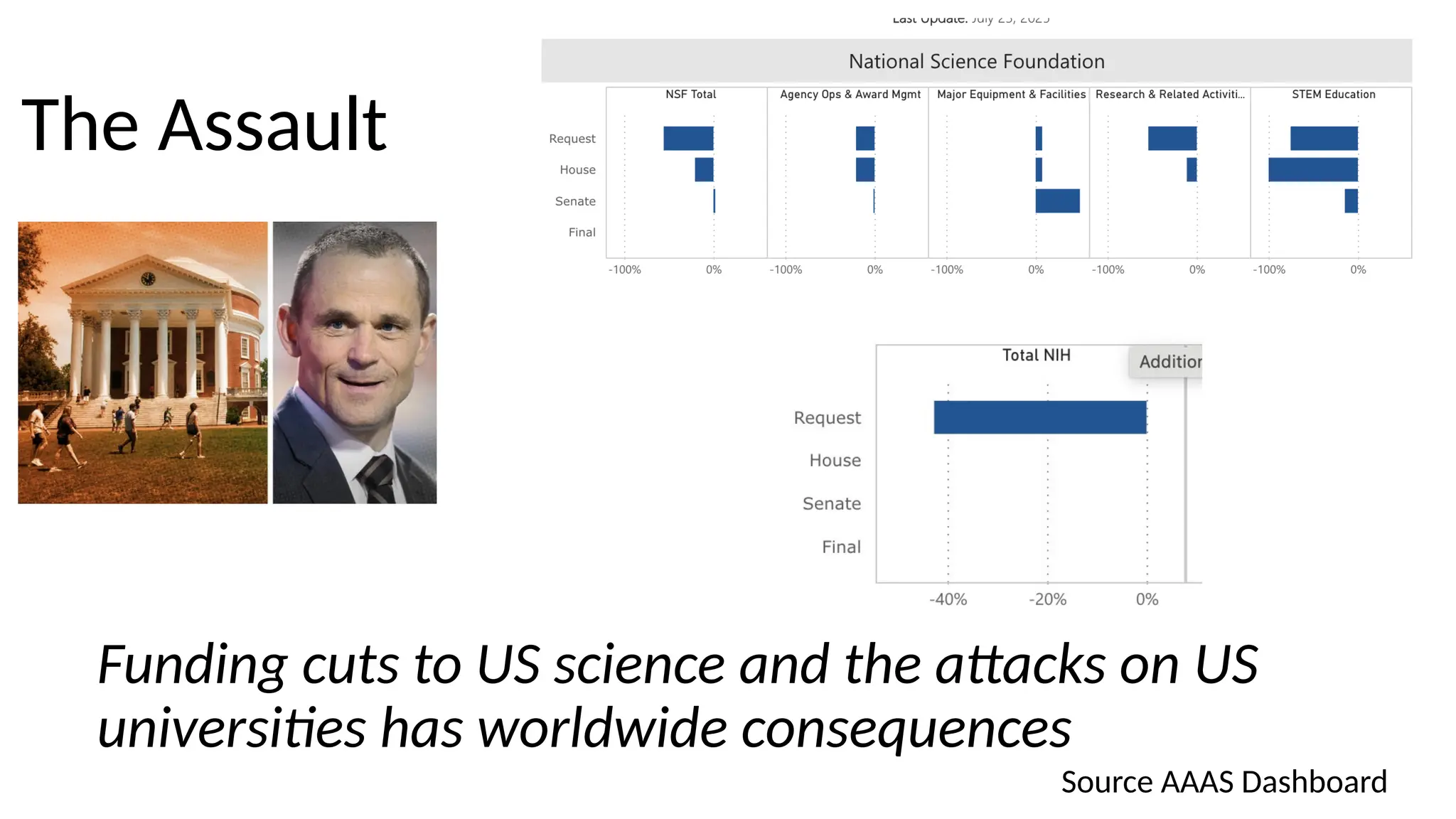
The Assault
Funding cuts to US science and the attacks on US
universities has worldwide consequences
Source AAAS Dashboard
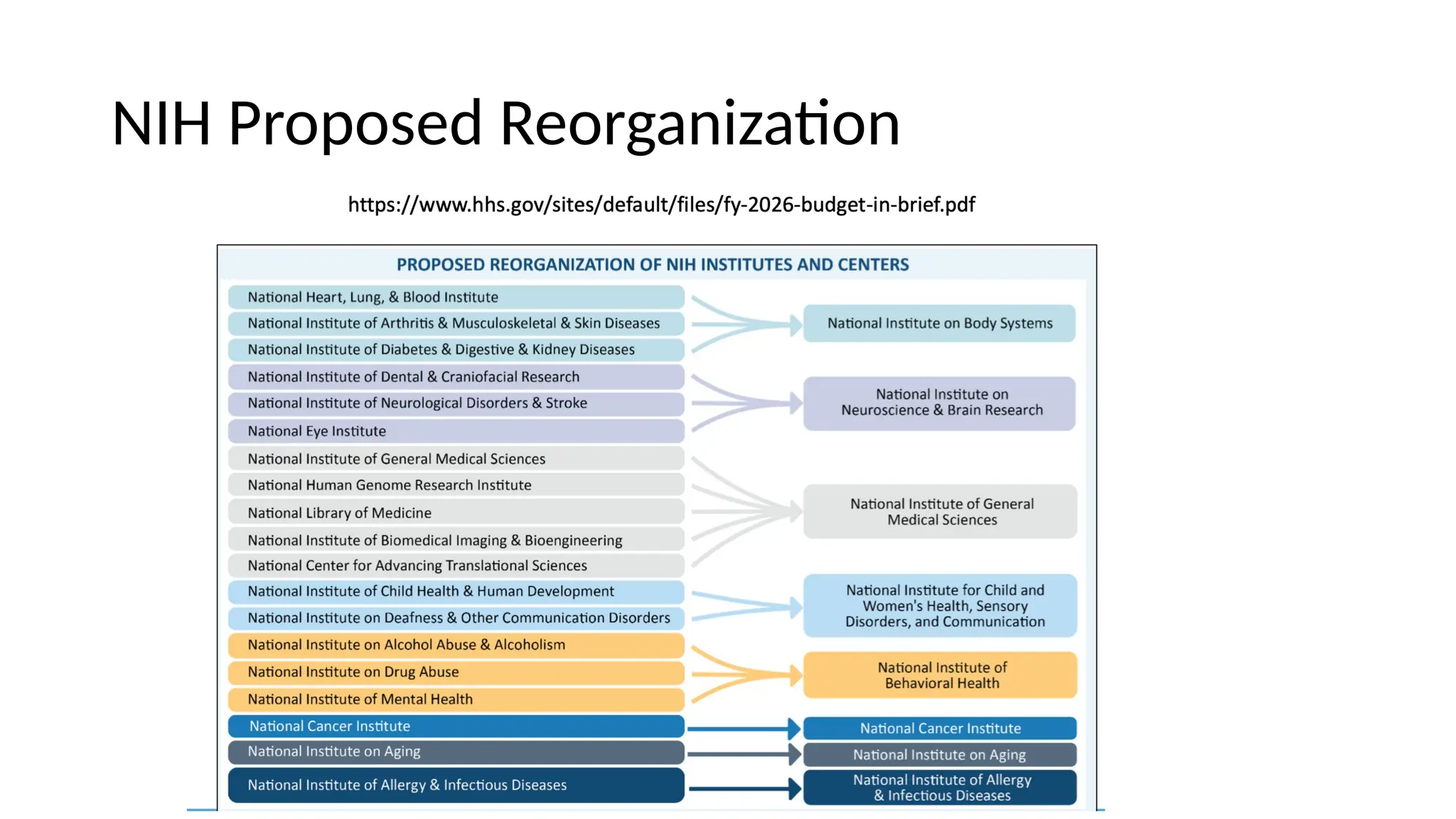
NIH Proposed Reorganization
A Tale of Two Futures
• Worst of Times
• 40%+ NIH/NSF budget cut for FY26
with global trickle down
• Public perception of science is low
• The biomedical data and methods
ecosystem appears unsustainable
• Academic freedom is under attack
• Scientists are leaving the field
• Potential scientists are having
second thoughts
• Best of Times
• Non-US support of science is
stepping up
• New funding programs are
emerging*
• Non-US institutions are repatriating
and recruiting great scientists
• Scientists are responding to the
moment
• AI and other technologies are
accelerating scientific discovery
*https://www.whitehouse.gov/wp-content/uploads/
2025/07/Americas-AI-Action-Plan.pdf
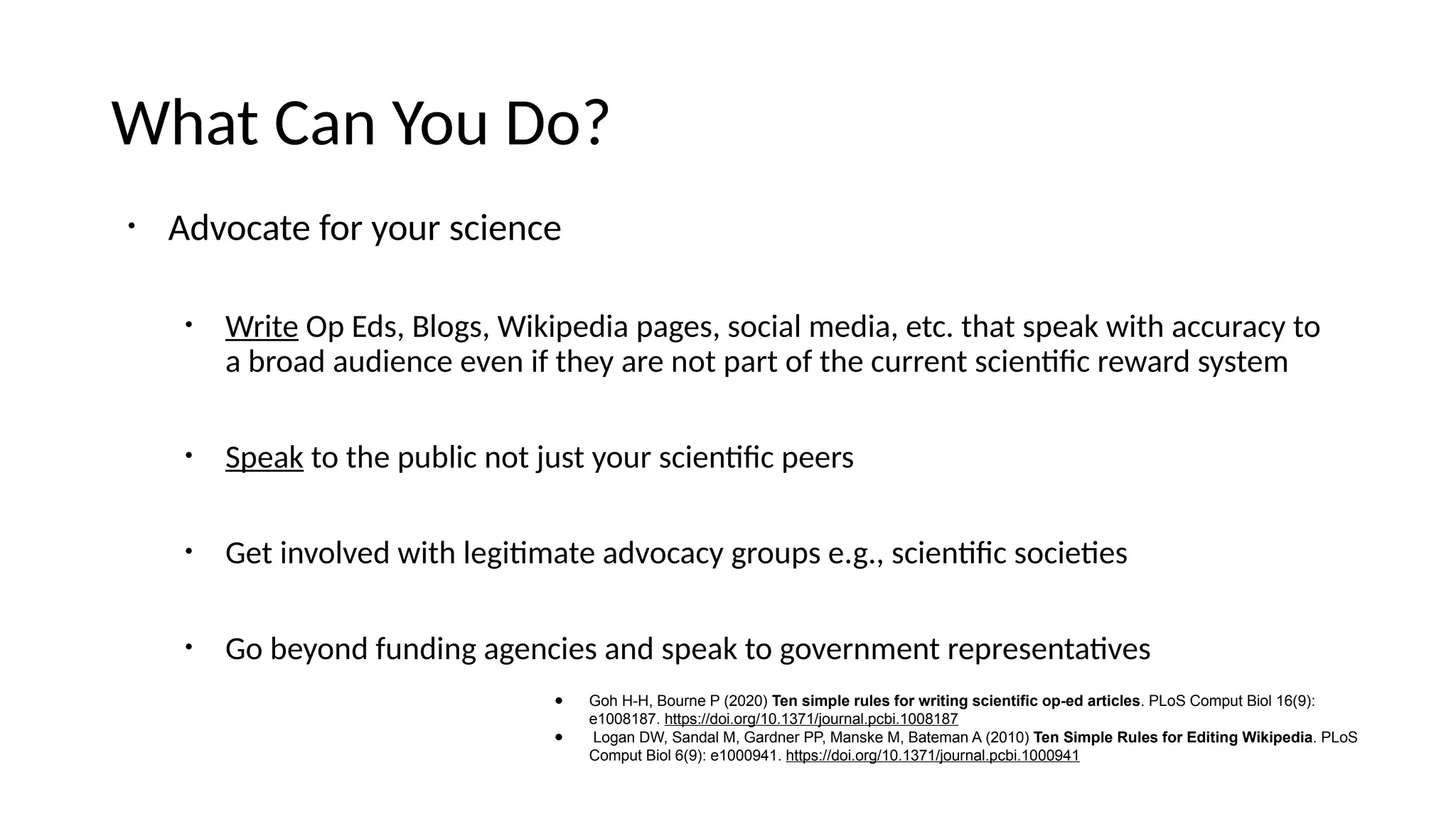
What Can You Do?
• Advocate for your science
• Write Op Eds, Blogs, Wikipedia pages, social media, etc. that speak with accuracy to
a broad audience even if they are not part of the current scientific reward system
• Speak to the public not just your scientific peers
• Get involved with legitimate advocacy groups e.g., scientific societies
• Go beyond funding agencies and speak to government representatives
● Goh H-H, Bourne P (2020) Ten simple rules for writing scientific op-ed articles. PLoS Comput Biol 16(9):
e1008187. https://doi.org/10.1371/journal.pcbi.1008187
● Logan DW, Sandal M, Gardner PP, Manske M, Bateman A (2010) Ten Simple Rules for Editing Wikipedia. PLoS
Comput Biol 6(9): e1000941. https://doi.org/10.1371/journal.pcbi.1000941
ISCB Statement of Neutrality
https://www.iscb.org/iscb-policy-statements/iscb-statement-of-neutrality
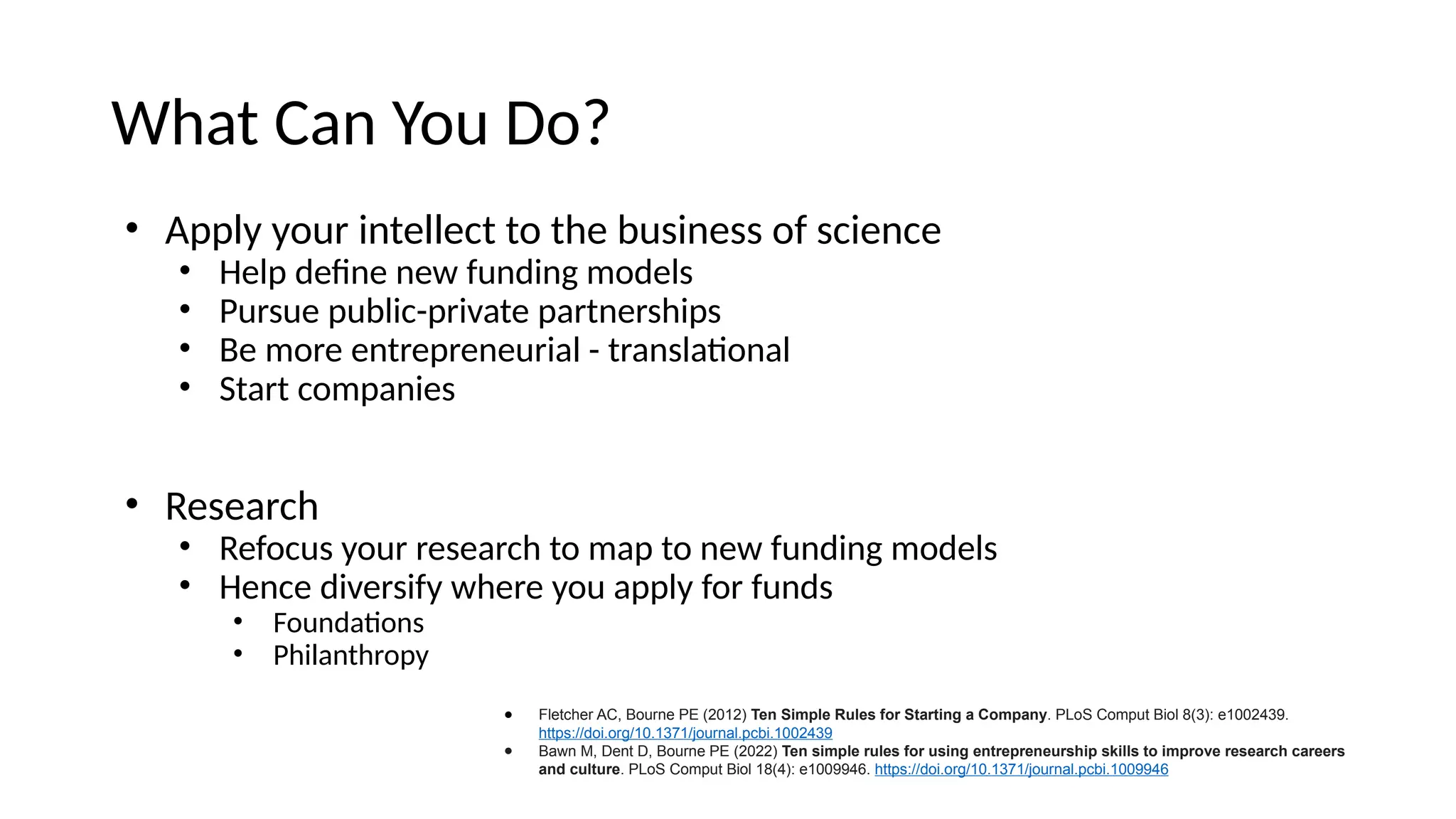
What Can You Do?
• Apply your intellect to the business of science
• Help define new funding models
• Pursue public-private partnerships
• Be more entrepreneurial - translational
• Start companies
• Research
• Refocus your research to map to new funding models
• Hence diversify where you apply for funds
• Foundations
• Philanthropy
● Fletcher AC, Bourne PE (2012) Ten Simple Rules for Starting a Company. PLoS Comput Biol 8(3): e1002439.
https://doi.org/10.1371/journal.pcbi.1002439
● Bawn M, Dent D, Bourne PE (2022) Ten simple rules for using entrepreneurship skills to improve research careers
and culture. PLoS Comput Biol 18(4): e1009946. https://doi.org/10.1371/journal.pcbi.1009946
Your thoughts?

Your Science Needs You - More Than Ever Before

  • 1.
    Your Science NeedsYou {More Than Ever Before} BF Francis Ouellette Montréal francis.ouellette@gmail.com bffo.bsky.social Philip E. Bourne Stephenson Founding Dean, School of Data Science, University of Virginia peb6a@virginia.edu
  • 2.
    “It was thebest of times, it was the worst of times, it was the age of wisdom, it was the age of foolishness, it was the epoch of belief, it was the epoch of incredulity, it was the season of Light, it was the season of Darkness, it was the spring of hope, it was the winter of despair ….
  • 3.
    The Assault Funding cutsto US science and the attacks on US universities has worldwide consequences Source AAAS Dashboard
  • 4.
  • 5.
    A Tale ofTwo Futures • Worst of Times • 40%+ NIH/NSF budget cut for FY26 with global trickle down • Public perception of science is low • The biomedical data and methods ecosystem appears unsustainable • Academic freedom is under attack • Scientists are leaving the field • Potential scientists are having second thoughts • Best of Times • Non-US support of science is stepping up • New funding programs are emerging* • Non-US institutions are repatriating and recruiting great scientists • Scientists are responding to the moment • AI and other technologies are accelerating scientific discovery *https://www.whitehouse.gov/wp-content/uploads/ 2025/07/Americas-AI-Action-Plan.pdf
  • 6.
    What Can YouDo? • Advocate for your science • Write Op Eds, Blogs, Wikipedia pages, social media, etc. that speak with accuracy to a broad audience even if they are not part of the current scientific reward system • Speak to the public not just your scientific peers • Get involved with legitimate advocacy groups e.g., scientific societies • Go beyond funding agencies and speak to government representatives ● Goh H-H, Bourne P (2020) Ten simple rules for writing scientific op-ed articles. PLoS Comput Biol 16(9): e1008187. https://doi.org/10.1371/journal.pcbi.1008187 ● Logan DW, Sandal M, Gardner PP, Manske M, Bateman A (2010) Ten Simple Rules for Editing Wikipedia. PLoS Comput Biol 6(9): e1000941. https://doi.org/10.1371/journal.pcbi.1000941
  • 7.
    ISCB Statement ofNeutrality https://www.iscb.org/iscb-policy-statements/iscb-statement-of-neutrality
  • 8.
    What Can YouDo? • Apply your intellect to the business of science • Help define new funding models • Pursue public-private partnerships • Be more entrepreneurial - translational • Start companies • Research • Refocus your research to map to new funding models • Hence diversify where you apply for funds • Foundations • Philanthropy ● Fletcher AC, Bourne PE (2012) Ten Simple Rules for Starting a Company. PLoS Comput Biol 8(3): e1002439. https://doi.org/10.1371/journal.pcbi.1002439 ● Bawn M, Dent D, Bourne PE (2022) Ten simple rules for using entrepreneurship skills to improve research careers and culture. PLoS Comput Biol 18(4): e1009946. https://doi.org/10.1371/journal.pcbi.1009946

  • 9.