TRAINING REPORT
AT
COACH CARE COMPLEX
NORTH WESTERN RAILWAY JAIPUR
Submitted By
Prateek Jain(11375)
Sohanlal Swami(11352)
Pradeep Kumar Meena(11339)
CONTENTS
 Air brake system
 Classification
 Single pipe air brake system
 Twin pipe air brake system
 Limitation of Single pipe air brake system
 Testing methods of air brake system
 Maintenance of air brake system
 suggestions
INTRODUCTION
 Brake: A brake is a device by means of which
artificial frictional resistance is applied to a moving
machine member, in order to retard or stop the
motion of a machine.
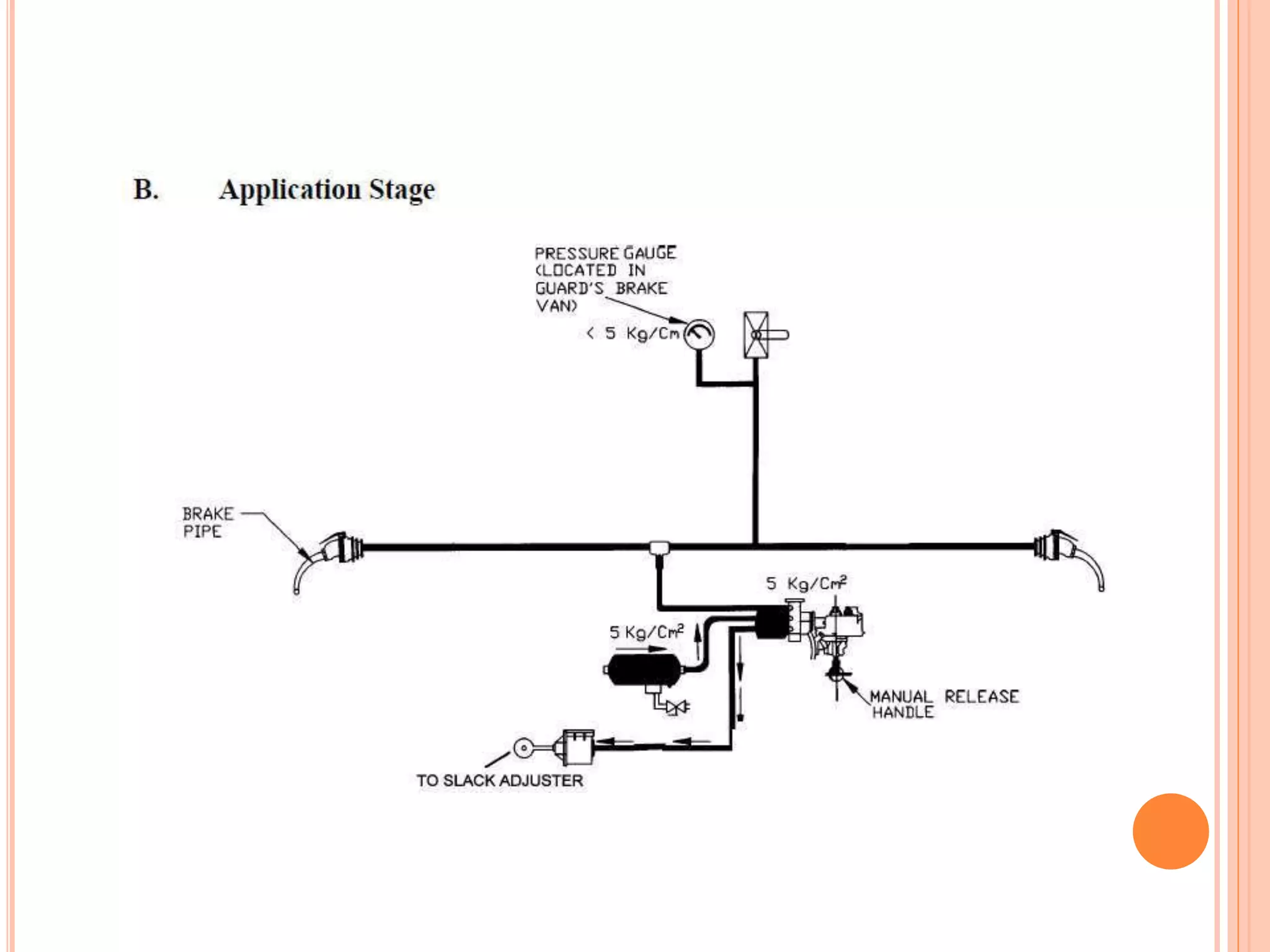
 Air Brake System: Brakes applied with the help of
air are called Air Brakes and the system actuated to
apply this phenomenon is known as Air Brake
System.
CLASSIFICATION
On the basis of type of release, air brake system is
classified as:
 Direct release air brake system
 Graduated release air brake system
Types of Graduated release air brake system
 Single pipe and
 Twin pipe
DIRECT RELEASE SYSTEM
Air released immediately in single pass, as soon as
releasing of brakes is initiated.
Eg: freight trains
GRADUATE RELEASE SYSTEM
Brake cylinder pressure can be reduced gradually in
steps in proportion to the increase in brake pipe
pressure.
Eg: passenger trains
SINGLE PIPE AIR BRAKE SYSTEM
 There is only one pipe called brake pipe running
from loco to the brake van in order to get continuity
of air for the application & release of brakes.
MAIN COMPONENTS OF SINGLE PIPE AIR BRAKE SYSTEM
 Distributor valve
 Auxiliary reservoir(100 Litres)
 Control reservoir
 Brake cylinder (355mm diameter)
 Brake pipe (32mm dia).
TWIN PIPE AIR BRAKE SYSTEM
 Here along with brake pipe,feed pipe also used from
loco to the brake van in order to get continuity of air for
the application & release of brakes.
COMPONENTS OF TWIN PIPE AIR BRAKE SYSTEM
 Distributor valve
 Auxiliary reservoir(100 Litres)
 Control reservoir
 Brake cylinder (355mm diameter)
 Brake pipe (32mm dia)
 Feed pipe(32 mm dia)
LIMITATIONS OF SINGLE PIPE AIR
BRAKE SYSTEM
 If the brake pipe pressure is too low due to an excessive no.
of brake applications,an emergency application will not
produce a large enough volume of air flow to trip the triple
valves, leaving the engineer with no means to stop the train.
 If the brakes are applied before recharging has been
completed, a larger brake pipe reduction will be required in
order to achieve the desired amount of braking effort.
 Two pipe system is better than single pipe air brake system
because this additional enhancement adds the main reservoir
pipe, which is continuously charged with air directly from the
locomotive’s main reservoir.
 This arrangement help to reduce the pressure loss problems
and also reduces the time required for the brakes to
release,since the brake pipe only has to recharge itself.
TESTING OF AIR BRAKE SYSTEM
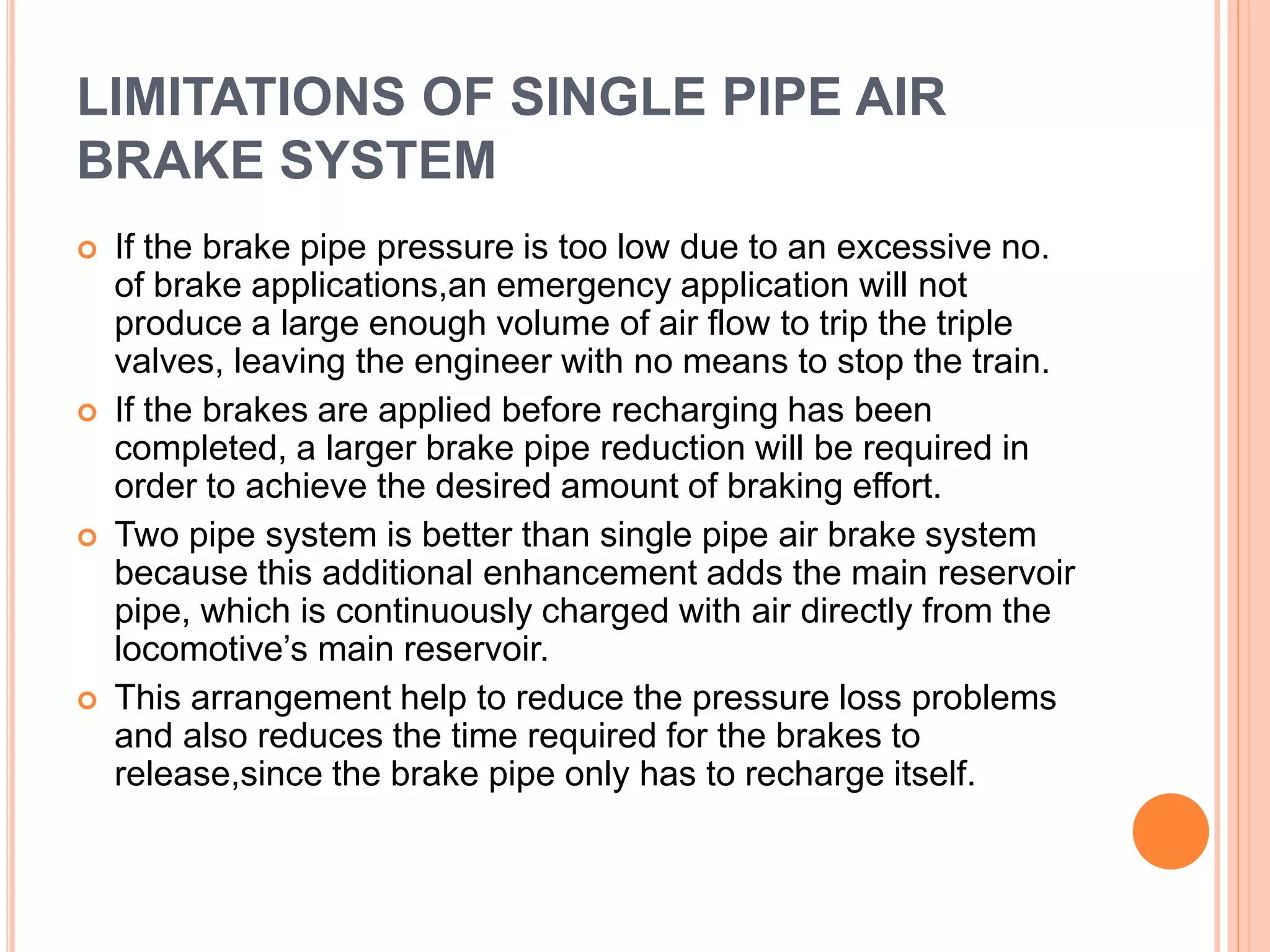
 Single wagon test : Single Wagon Test is performed, by
using a portable device called ‘Test Rig’. This test rig provides
all facilities similar to a driver’s brake valve. The source of
compressed air for conducting the test is through a
compressor installed in depots and workshops for conducting
various tests without the need of a locomotive.
 Rake Test: A rake consisting of 56 wagons can be
tested with this rig. This rig may be used for testing
the train in yard before attaching the engine.
MAINTENANCE OF AIR BRAKE SYSTEM
Separation Of Coach & Bogie: After brake testing if
bogie needs repair like filling of oil or changing of brake
shoe,brake cylinder etc. then bogie is separated from the
coach by lifting through a crane.
JAMALPUR JACKS
 It is high capacity synchronised electrically
operated lifting jacks.
 Lifting coach from one side at a time.
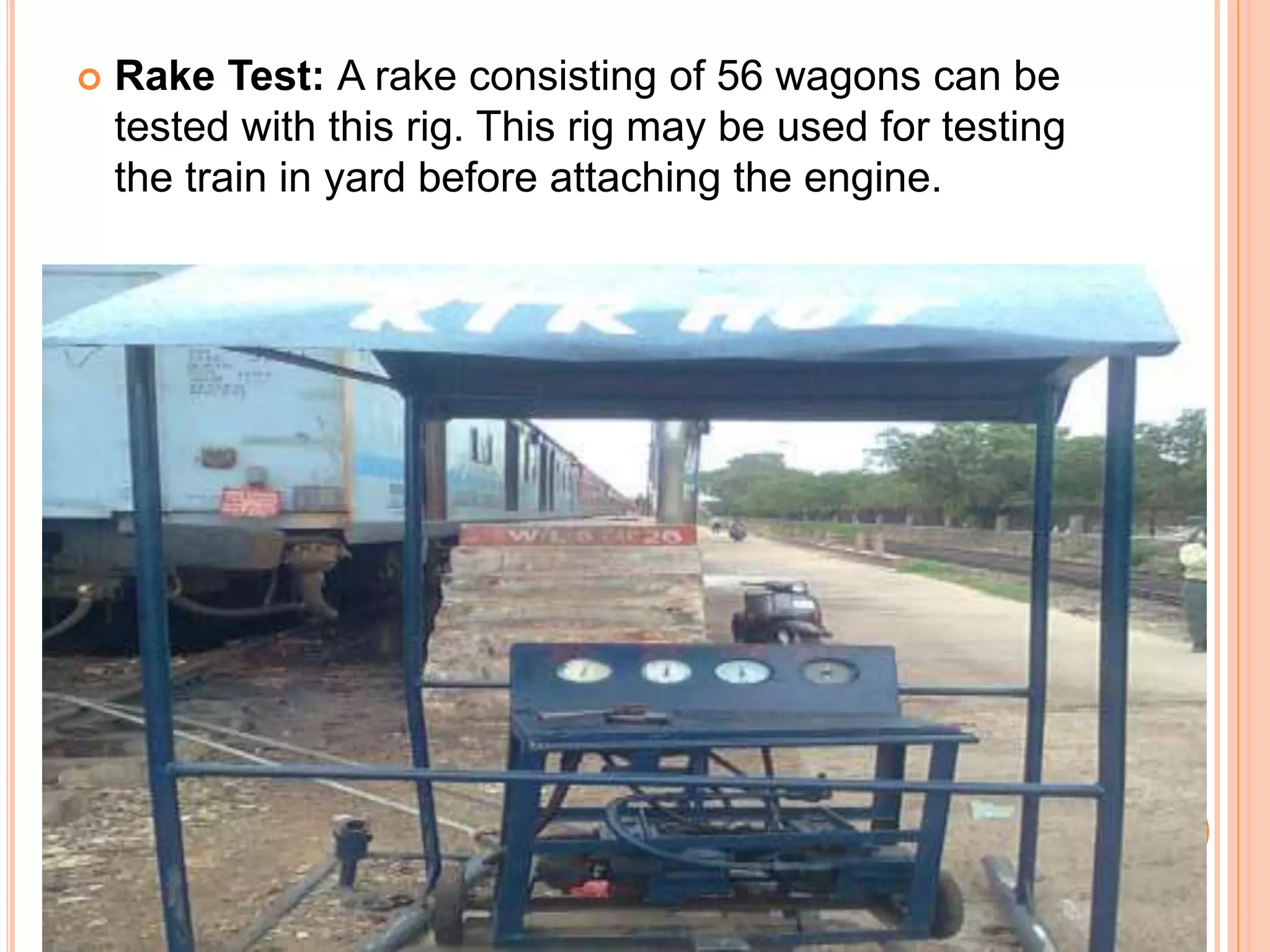
RAIL TRAVELLING CRANE
Have two crane hooks
 Main hook(35 ton capacity)
 Auxilary hook(5 ton capacity)
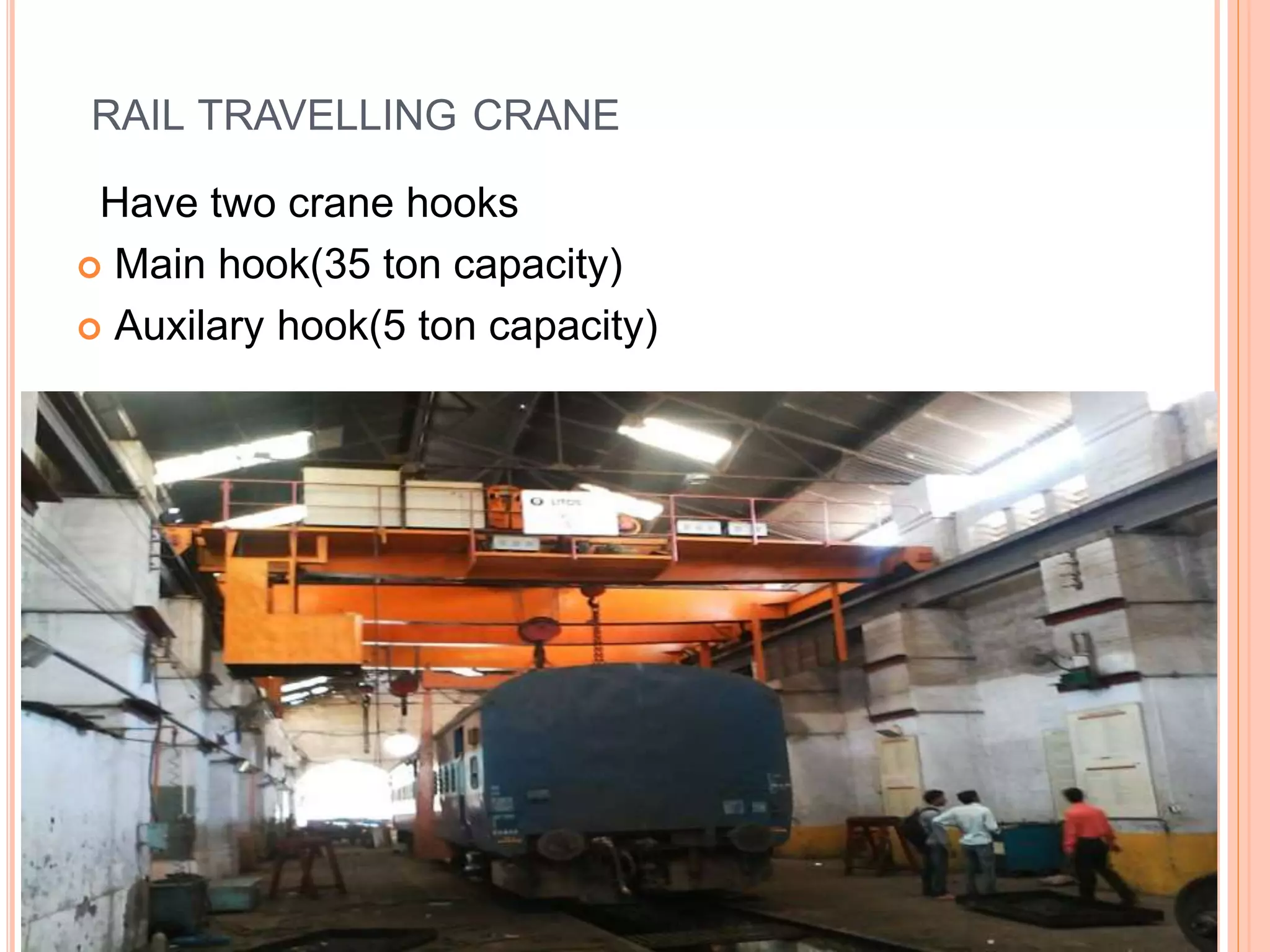
BRAKE MAINTAINANCE
Brakes are the most important part of a train. The
maintenance of brakes consists of change of brake blocks,
adjust stroke length, change of brake cylinder, leakage in
brake system etc.
SAFE TO RUN
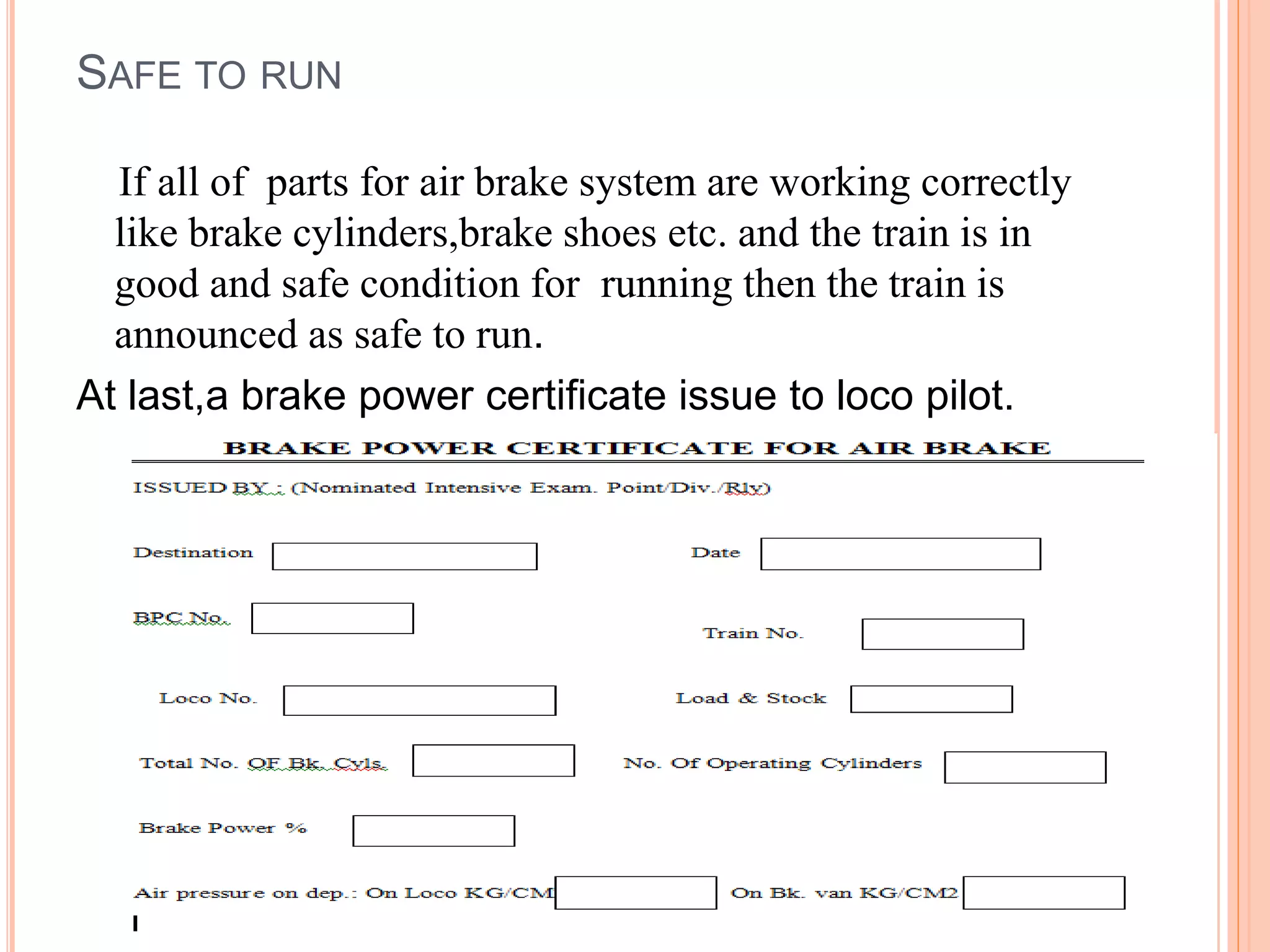
If all of parts for air brake system are working correctly
like brake cylinders,brake shoes etc. and the train is in
good and safe condition for running then the train is
announced as safe to run.
At last,a brake power certificate issue to loco pilot.
SUGGESTIONS
 Shunting should be done earlier then the working time so
as to reduce the idle time.
 Coach should be lifted from both sides during separation
of bogie to avoid damage to centre pivot.
 The brake blocks should replaced on bogies as a
set.
Coach Care Complex,NWR Jaipur

Coach Care Complex,NWR Jaipur

  • 1.
    TRAINING REPORT AT COACH CARECOMPLEX NORTH WESTERN RAILWAY JAIPUR Submitted By Prateek Jain(11375) Sohanlal Swami(11352) Pradeep Kumar Meena(11339)
  • 2.
    CONTENTS  Air brakesystem  Classification  Single pipe air brake system  Twin pipe air brake system  Limitation of Single pipe air brake system  Testing methods of air brake system  Maintenance of air brake system  suggestions
  • 3.
    INTRODUCTION  Brake: Abrake is a device by means of which artificial frictional resistance is applied to a moving machine member, in order to retard or stop the motion of a machine.  Air Brake System: Brakes applied with the help of air are called Air Brakes and the system actuated to apply this phenomenon is known as Air Brake System.
  • 4.
    CLASSIFICATION On the basisof type of release, air brake system is classified as:  Direct release air brake system  Graduated release air brake system Types of Graduated release air brake system  Single pipe and  Twin pipe
  • 5.
    DIRECT RELEASE SYSTEM Airreleased immediately in single pass, as soon as releasing of brakes is initiated. Eg: freight trains GRADUATE RELEASE SYSTEM Brake cylinder pressure can be reduced gradually in steps in proportion to the increase in brake pipe pressure. Eg: passenger trains
  • 6.
    SINGLE PIPE AIRBRAKE SYSTEM  There is only one pipe called brake pipe running from loco to the brake van in order to get continuity of air for the application & release of brakes. MAIN COMPONENTS OF SINGLE PIPE AIR BRAKE SYSTEM  Distributor valve  Auxiliary reservoir(100 Litres)  Control reservoir  Brake cylinder (355mm diameter)  Brake pipe (32mm dia).
  • 8.
    TWIN PIPE AIRBRAKE SYSTEM  Here along with brake pipe,feed pipe also used from loco to the brake van in order to get continuity of air for the application & release of brakes. COMPONENTS OF TWIN PIPE AIR BRAKE SYSTEM  Distributor valve  Auxiliary reservoir(100 Litres)  Control reservoir  Brake cylinder (355mm diameter)  Brake pipe (32mm dia)  Feed pipe(32 mm dia)
  • 12.
    LIMITATIONS OF SINGLEPIPE AIR BRAKE SYSTEM  If the brake pipe pressure is too low due to an excessive no. of brake applications,an emergency application will not produce a large enough volume of air flow to trip the triple valves, leaving the engineer with no means to stop the train.  If the brakes are applied before recharging has been completed, a larger brake pipe reduction will be required in order to achieve the desired amount of braking effort.  Two pipe system is better than single pipe air brake system because this additional enhancement adds the main reservoir pipe, which is continuously charged with air directly from the locomotive’s main reservoir.  This arrangement help to reduce the pressure loss problems and also reduces the time required for the brakes to release,since the brake pipe only has to recharge itself.
  • 13.
    TESTING OF AIRBRAKE SYSTEM  Single wagon test : Single Wagon Test is performed, by using a portable device called ‘Test Rig’. This test rig provides all facilities similar to a driver’s brake valve. The source of compressed air for conducting the test is through a compressor installed in depots and workshops for conducting various tests without the need of a locomotive.
  • 14.
     Rake Test:A rake consisting of 56 wagons can be tested with this rig. This rig may be used for testing the train in yard before attaching the engine.
  • 15.
    MAINTENANCE OF AIRBRAKE SYSTEM Separation Of Coach & Bogie: After brake testing if bogie needs repair like filling of oil or changing of brake shoe,brake cylinder etc. then bogie is separated from the coach by lifting through a crane.
  • 16.
    JAMALPUR JACKS  Itis high capacity synchronised electrically operated lifting jacks.  Lifting coach from one side at a time.
  • 17.
    RAIL TRAVELLING CRANE Havetwo crane hooks  Main hook(35 ton capacity)  Auxilary hook(5 ton capacity)
  • 18.
    BRAKE MAINTAINANCE Brakes arethe most important part of a train. The maintenance of brakes consists of change of brake blocks, adjust stroke length, change of brake cylinder, leakage in brake system etc.
  • 19.
    SAFE TO RUN Ifall of parts for air brake system are working correctly like brake cylinders,brake shoes etc. and the train is in good and safe condition for running then the train is announced as safe to run. At last,a brake power certificate issue to loco pilot.
  • 20.
    SUGGESTIONS  Shunting shouldbe done earlier then the working time so as to reduce the idle time.  Coach should be lifted from both sides during separation of bogie to avoid damage to centre pivot.  The brake blocks should replaced on bogies as a set.