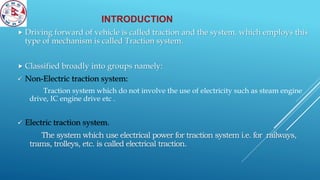
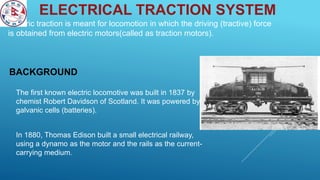
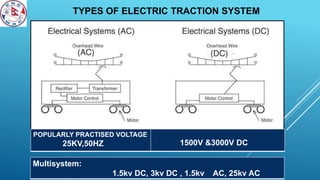
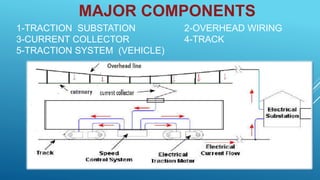
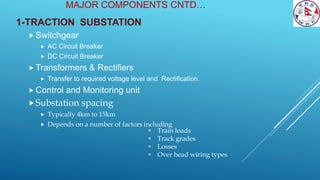
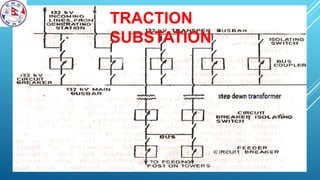
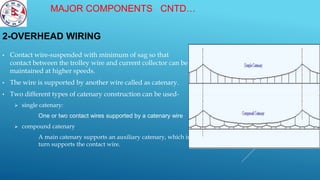
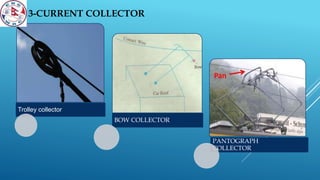
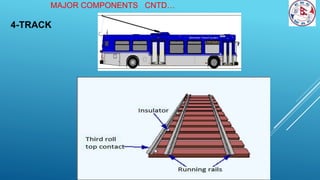
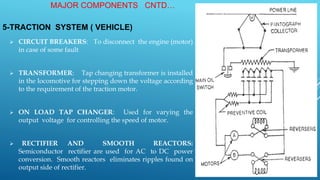
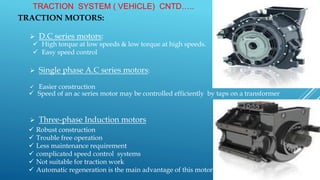
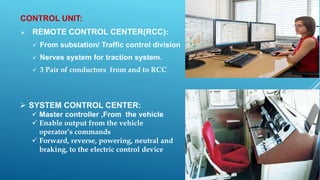
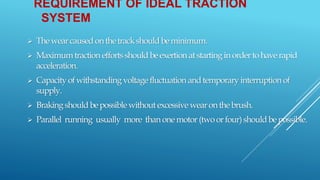
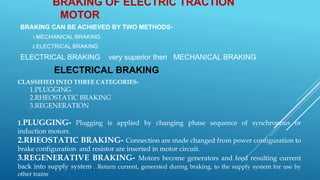
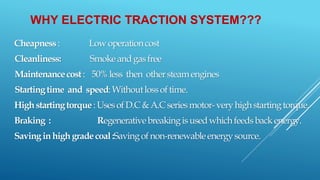
Electric traction systems use electrical power to provide traction for railways, trams, and trolleys. The key components of an electric traction system include traction substations that transform and rectify power, overhead wiring to transmit current, pantographs or trolley poles on vehicles to collect current, track to complete the circuit, and traction motors on vehicles powered by the collected current. Electric traction systems offer advantages over other systems like steam engines in terms of lower operating costs, lack of smoke and gas emissions, lower maintenance costs, faster starting and acceleration due to high starting torque of DC and AC series motors used, and regenerative braking that feeds energy back into the system.


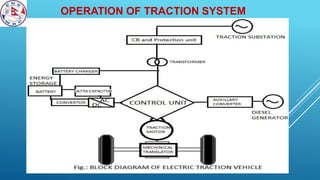
![[1] Traction transformer
[3] Traction control
[5] Traction motor
[7] Auxiliary converter
[9] Energy storage
[2] Traction convertor
[4] Control and Monitoring System
[6] Diesel engine generator
[8] Battery charger](https://image.slidesharecdn.com/electrictractionsystemfinalupload-160721102430/85/Electric-traction-system-final-upload-17-320.jpg)



![electrictraction-160911144155_(1)[1] - Read-Only.pptx](https://cdn.slidesharecdn.com/ss_thumbnails/electrictraction-16091114415511-read-only-240822030054-36f9e857-thumbnail.jpg?width=640&height=640&fit=bounds)
![electrictraction-160911144155_(1)[1] - Read-Only.pptx](https://cdn.slidesharecdn.com/ss_thumbnails/electrictraction-16091114415511-read-only-240823135626-a5a6a2cb-thumbnail.jpg?width=640&height=640&fit=bounds)


