Attention
open – line
&
Workshop staff
Be vigilant for wheel defects
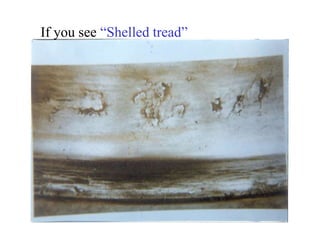
If you see “Shelled tread”
Shelled tread
• Check for ---- Pieces of metal breaking out
of tread surface in between thermal checks
around the rim. Generally, “Chain sliding”
marks will also be visible.
• Action should be taken ---- Carry out tyre
turning at the earliest opportunity.
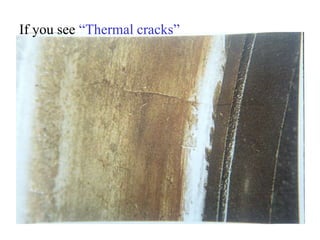
If you see “Thermal cracks”
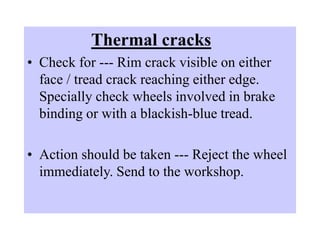
Thermal cracks
• Check for --- Rim crack visible on either
face / tread crack reaching either edge.
Specially check wheels involved in brake
binding or with a blackish-blue tread.
• Action should be taken --- Reject the wheel
immediately. Send to the workshop.
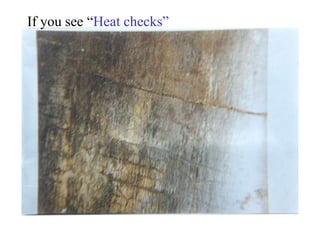
If you see “Heat checks”
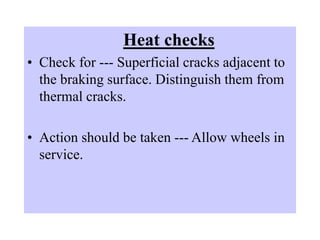
Heat checks
• Check for --- Superficial cracks adjacent to
the braking surface. Distinguish them from
thermal cracks.
• Action should be taken --- Allow wheels in
service.
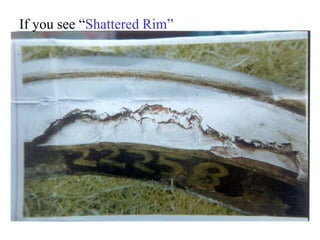
If you see “Shattered Rim”
Shattered Rim
• Check for --- Fractures on tread.
• Action should be taken --- Reject wheel
immediately. Send to the workshop.
* Check for --- Localized pitting / flaking and
no other rejectable defects.
* Action should be taken --- Allow wheels in
service. Keep under surveillance.
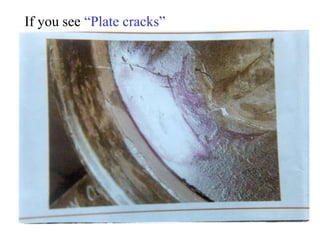
If you see “Plate cracks”
Plate cracks
• Check for ---
Crack of any length on plate
or hub.
• Action should be taken ---
Reject wheel immediately. Send to the
workshop.
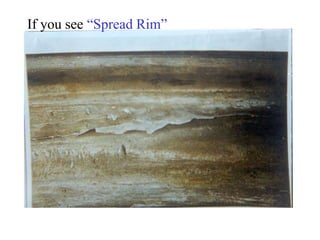
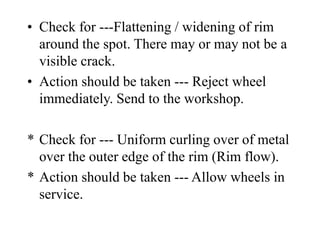
If you see “Spread Rim”
• Check for ---Flattening / widening of rim
around the spot. There may or may not be a
visible crack.
• Action should be taken --- Reject wheel
immediately. Send to the workshop.
* Check for --- Uniform curling over of metal
over the outer edge of the rim (Rim flow).
* Action should be taken --- Allow wheels in
service.
• If you see “ Loose assembly”
• Check for --- Loose fitting on axle hub or
bent axle.
• Action should be taken --- Reject the wheel
immediately. Send to the workshop.
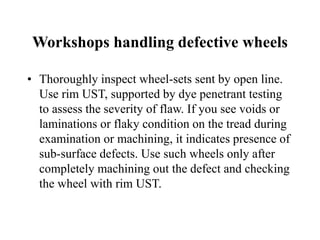
Workshops handling defective wheels
• Thoroughly inspect wheel-sets sent by open line.
Use rim UST, supported by dye penetrant testing
to assess the severity of flaw. If you see voids or
laminations or flaky condition on the tread during
examination or machining, it indicates presence of
sub-surface defects. Use such wheels only after
completely machining out the defect and checking
the wheel with rim UST.
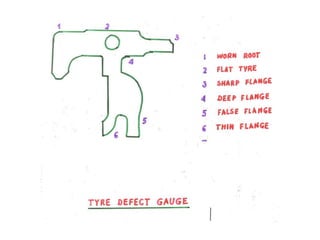
Wheel deep flange or Hollow tyre
• Constant wear on the tread of wheel with
brake blocks.
• Harder material of brake blocks and rails.
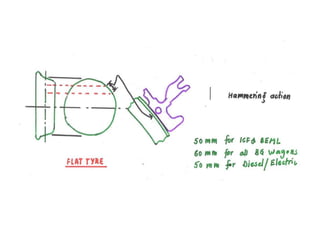
Wheel flat places on tread
• Brake binding.
• Skidding of wheels.
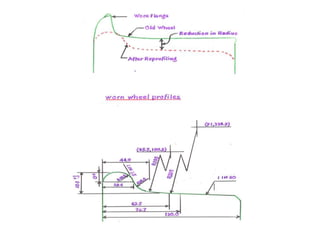
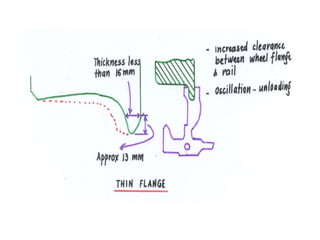
Wheel thin flange
• Negotiation in the curves.
• Side thrusts on flanges.
• Snaking effects.
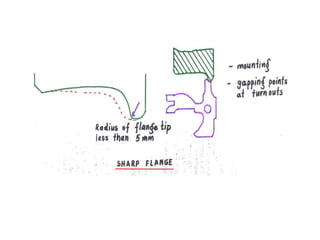
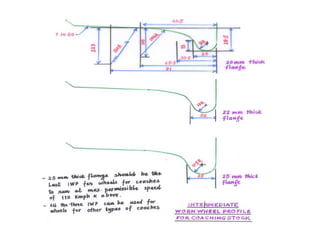
Wheel sharp flange
• Continuously negotiation on curves.
• Snaking effect of wheels.
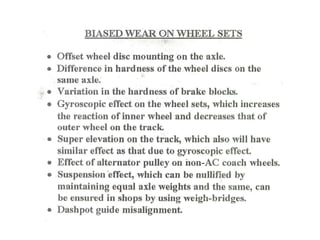
• Biased wear on wheel flanges which can be
attributed to difference in dia of wheels on
the same axle.
Radius at the root of wheel flange
too small / less root radius (LRR)
• Maximum wear on curves.
• By snaking effects of the wheels in motion.
wheel defects.ppt
wheel defects.ppt
wheel defects.ppt

wheel defects.ppt

  • 1.
    Attention open – line & Workshopstaff Be vigilant for wheel defects
  • 2.
    If you see“Shelled tread”
  • 3.
    Shelled tread • Checkfor ---- Pieces of metal breaking out of tread surface in between thermal checks around the rim. Generally, “Chain sliding” marks will also be visible. • Action should be taken ---- Carry out tyre turning at the earliest opportunity.
  • 4.
    If you see“Thermal cracks”
  • 5.
    Thermal cracks • Checkfor --- Rim crack visible on either face / tread crack reaching either edge. Specially check wheels involved in brake binding or with a blackish-blue tread. • Action should be taken --- Reject the wheel immediately. Send to the workshop.
  • 6.
    If you see“Heat checks”
  • 7.
    Heat checks • Checkfor --- Superficial cracks adjacent to the braking surface. Distinguish them from thermal cracks. • Action should be taken --- Allow wheels in service.
  • 8.
    If you see“Shattered Rim”
  • 9.
    Shattered Rim • Checkfor --- Fractures on tread. • Action should be taken --- Reject wheel immediately. Send to the workshop. * Check for --- Localized pitting / flaking and no other rejectable defects. * Action should be taken --- Allow wheels in service. Keep under surveillance.
  • 10.
    If you see“Plate cracks”
  • 11.
    Plate cracks • Checkfor --- Crack of any length on plate or hub. • Action should be taken --- Reject wheel immediately. Send to the workshop.
  • 12.
    If you see“Spread Rim”
  • 13.
    • Check for---Flattening / widening of rim around the spot. There may or may not be a visible crack. • Action should be taken --- Reject wheel immediately. Send to the workshop. * Check for --- Uniform curling over of metal over the outer edge of the rim (Rim flow). * Action should be taken --- Allow wheels in service.
  • 14.
    • If yousee “ Loose assembly” • Check for --- Loose fitting on axle hub or bent axle. • Action should be taken --- Reject the wheel immediately. Send to the workshop.
  • 15.
    Workshops handling defectivewheels • Thoroughly inspect wheel-sets sent by open line. Use rim UST, supported by dye penetrant testing to assess the severity of flaw. If you see voids or laminations or flaky condition on the tread during examination or machining, it indicates presence of sub-surface defects. Use such wheels only after completely machining out the defect and checking the wheel with rim UST.
  • 20.
    Wheel deep flangeor Hollow tyre • Constant wear on the tread of wheel with brake blocks. • Harder material of brake blocks and rails.
  • 23.
    Wheel flat placeson tread • Brake binding. • Skidding of wheels.
  • 25.
    Wheel thin flange •Negotiation in the curves. • Side thrusts on flanges. • Snaking effects.
  • 27.
    Wheel sharp flange •Continuously negotiation on curves. • Snaking effect of wheels. • Biased wear on wheel flanges which can be attributed to difference in dia of wheels on the same axle.
  • 29.
    Radius at theroot of wheel flange too small / less root radius (LRR) • Maximum wear on curves. • By snaking effects of the wheels in motion.