GOOD MANUFACTURING
PRACTICES
Training about our Process and Product control

Forming & Packing.
GOOD
MANUFACTURIN
G PRACTICES

Why we should follow GMP ?
 Because we are related to Food Industry.
 How to use GMP in our Process ?
 Do the work what have been trained to you and
Don’t do the work which is not trained to you.
 Do Good work and Avoid Bad work.
 Follow HACCP.


FORMING & PACKING

2
GOOD
MANUFACTURIN
G PRACTICES

What is HACCP ?
 HACCP is a method by which we identify
Hazardous areas in our process and we keep
track on them so that if there is any deviation in
the process we take necessary actions to control
the process and the product.




Can you explain in detail ?

FORMING & PACKING

3
GOOD
MANUFACTURIN
G PRACTICES

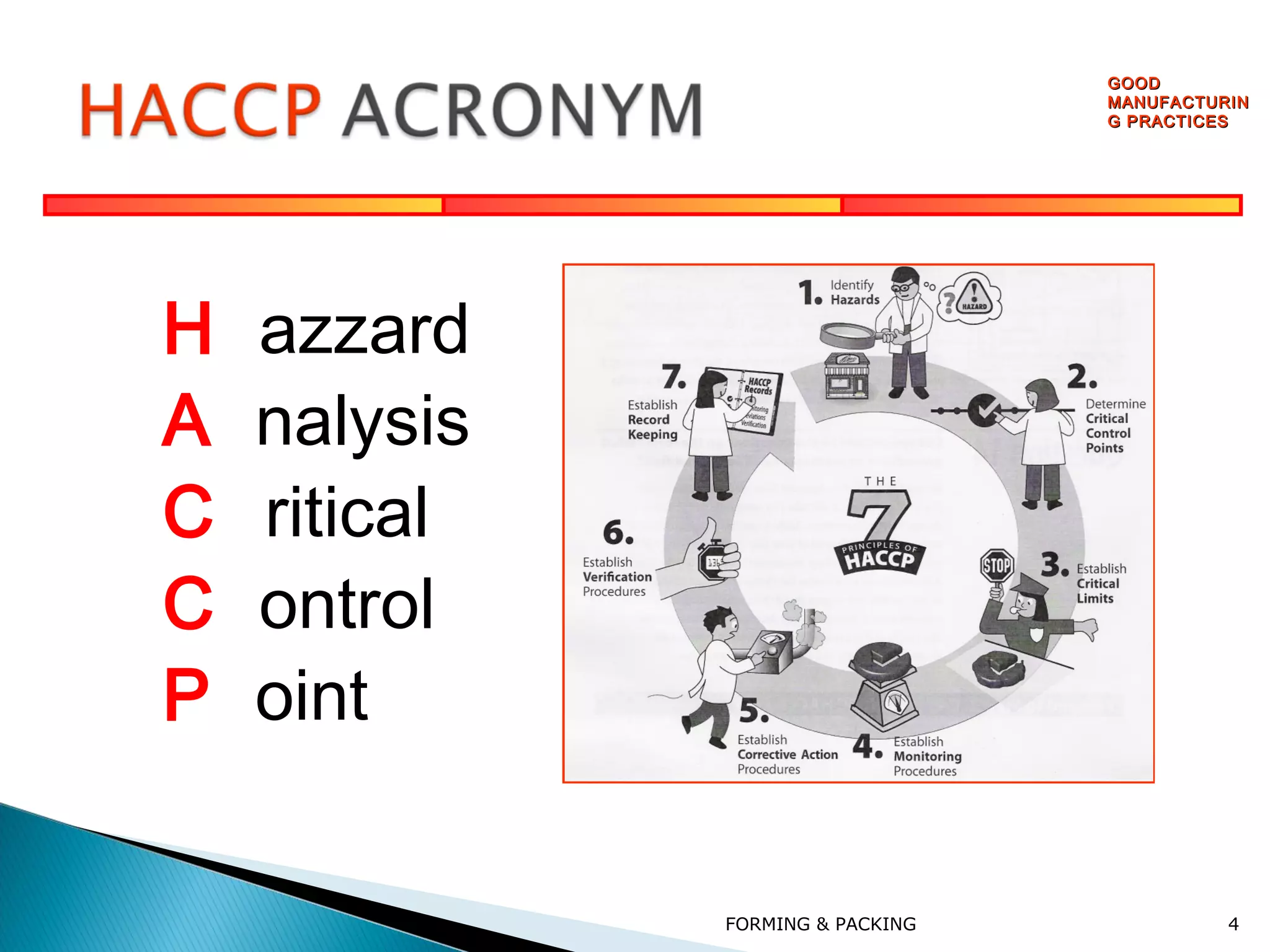
H
A
C
C
P

azzard
nalysis
ritical
ontrol
oint
FORMING & PACKING

4
GOOD
MANUFACTURIN
G PRACTICES



HACCP was developed in the 1960’s when NASA
asked Pillsbury to design and manufacture the first food
for space flights



The growing concern about food safety from public
health authorities, the Food Industry and consumers
world wide has been the major force in the introduction
of the HACCP system. Today HACCP is accepted
internationally as a useful tool for adapting traditional
inspection methods to a modern, science based, food
safety system.
HACCP has become the globally
recognized method to ensure food safety

FORMING & PACKING

5
GOOD
MANUFACTURIN
G PRACTICES





HACCP is a systematic, preventative approach to food safety.
It aims to prevent biological, chemical and physical hazards,
instead of relying on finished product inspection. HACCP is used in
the food industry to identify potential food safety hazards, so that
key actions, known as Critical Control Points (CCPs) can be used to
reduce or eliminate the identified hazards.

With HACCP the food processor systematically:
◦ Identifies potential food safety hazards (Hazard Analysis).
◦ Determines the key steps in their operation where the hazards
can be prevented, eliminated or reduced to an acceptable level.
(The key steps are known as Critical Control Points or CCPs)

FORMING & PACKING

6
GOOD
MANUFACTURIN
G PRACTICES



Good Manufacturing Practices (GMPs)



Standard Operating Procedures (SOPs)

FORMING & PACKING

7
GOOD
MANUFACTURIN
G PRACTICES

1.

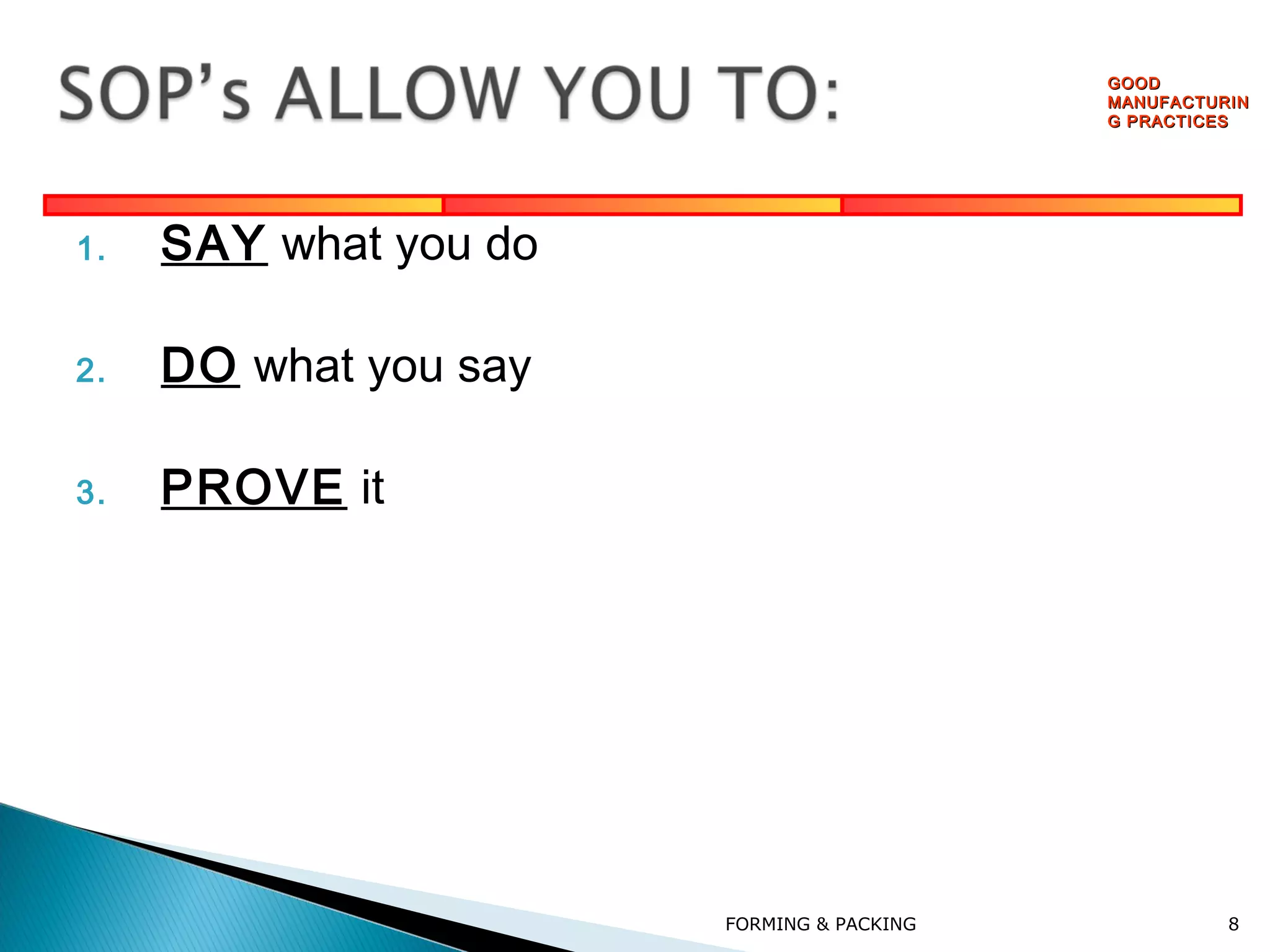
SAY what you do

2.

DO what you say

3.

PROVE it

FORMING & PACKING

8
GOOD
MANUFACTURIN
G PRACTICES



A CCP is a key step where hazards can be
prevented, eliminated or reduced to an
acceptable level.

FORMING & PACKING

9
GOOD
MANUFACTURIN
G PRACTICES

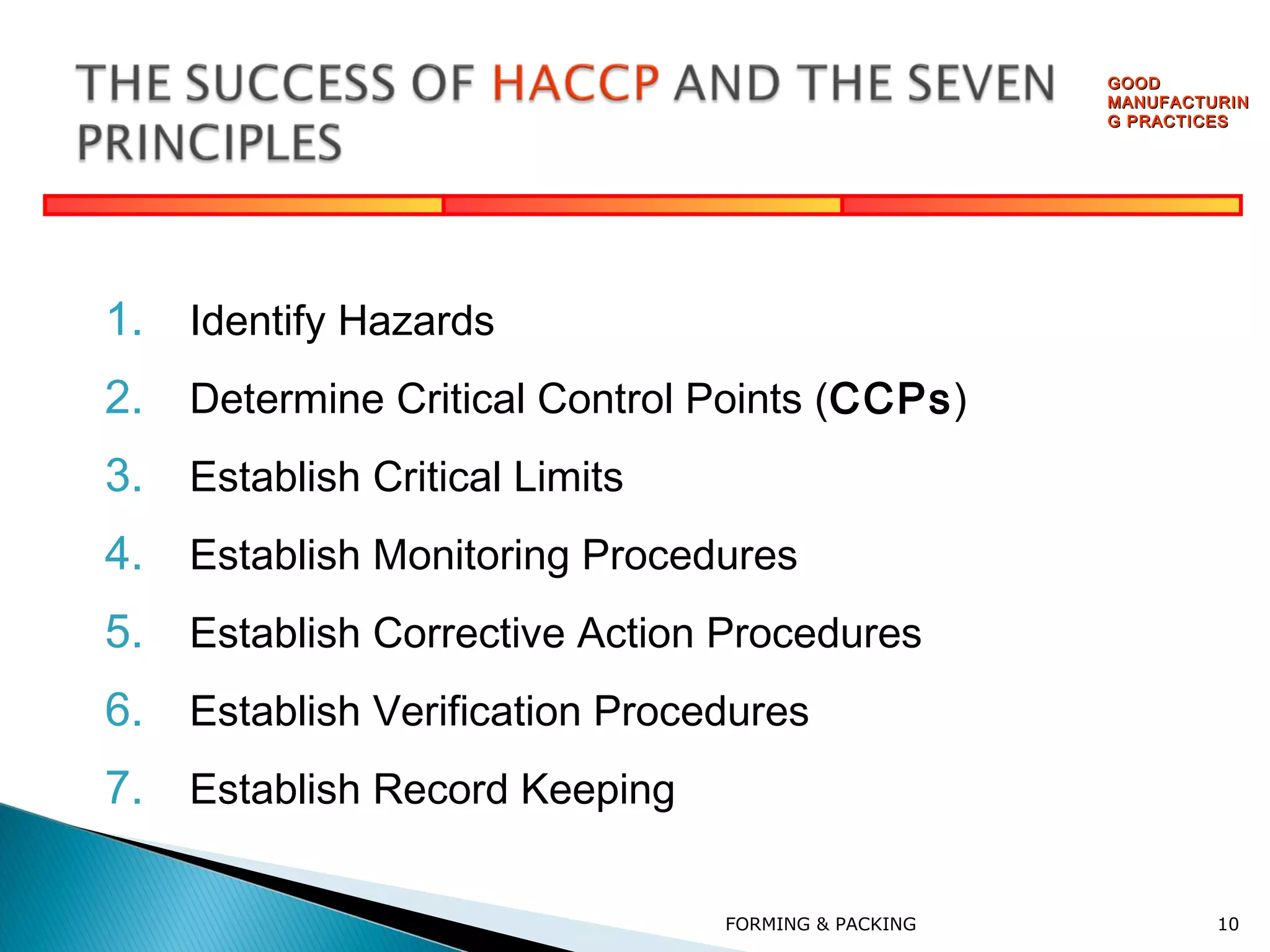
1. Identify Hazards
2. Determine Critical Control Points (CCPs)
3. Establish Critical Limits
4. Establish Monitoring Procedures
5. Establish Corrective Action Procedures
6. Establish Verification Procedures
7. Establish Record Keeping
FORMING & PACKING

10
GOOD
MANUFACTURIN
G PRACTICES



We use HACCP in our Manufacturing process and
we have already established critical control points
in our process there are 10 CCP in our process



Kindly view the enclosed Diagram of our Glass
Manufacturing process.

FORMING & PACKING

11
GOOD
MANUFACTURIN
G PRACTICES

A. Premises (including water supply)
B. Transportation, Receiving and Storage
C. Equipment Design, Installation and Maintenance
D. Personnel Training
E. Sanitation & Pest Control
F. Recall

FORMING & PACKING

12
GOOD
MANUFACTURIN
G PRACTICES

FORMING & PACKING

13
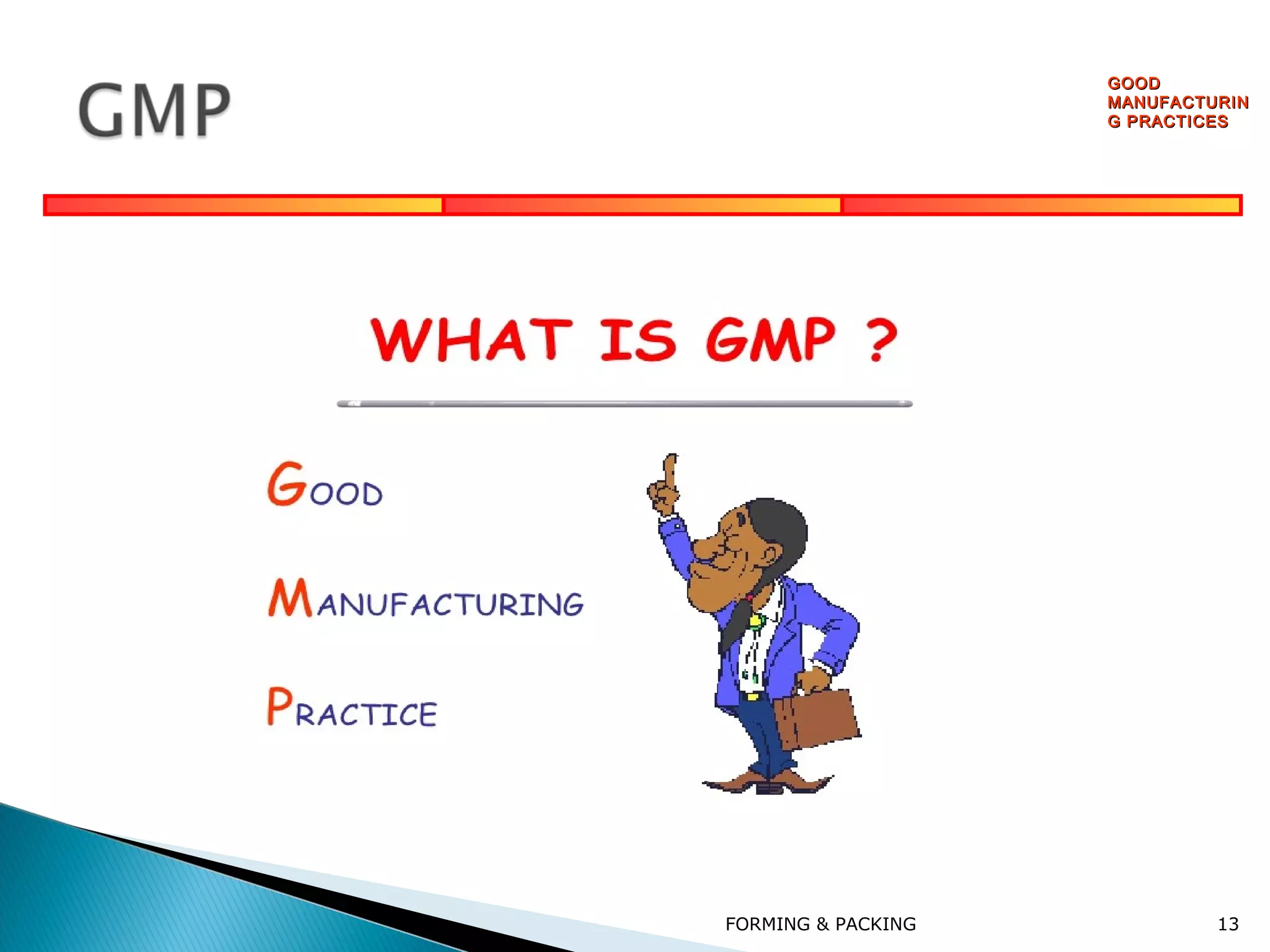
GOOD
MANUFACTURIN
G PRACTICES



You can control many of the potential hazards in a
processing plant by using a standard set of
principles and hygienic practices for the
manufacturing and handling of wares. These standard
principles and practices are called
Good
Manufacturing Practices (GMPs)

FORMING & PACKING

14
GOOD
MANUFACTURIN
G PRACTICES



Preventative measures to ensure food safety



Based on practical experience over a long
period of time



The foundation on which to build a HACCP
program

FORMING & PACKING

15
GOOD
MANUFACTURIN
G PRACTICES



The purpose and frequency of doing a task



Who will do the task



A description of the procedure to be performed



What paperwork is to be completed (documentation)



The method by which you show that task is satisfactorily
completed



And the corrective actions to be taken of the task is
performed incorrectly

FORMING & PACKING

16
GOOD
MANUFACTURIN
G PRACTICES



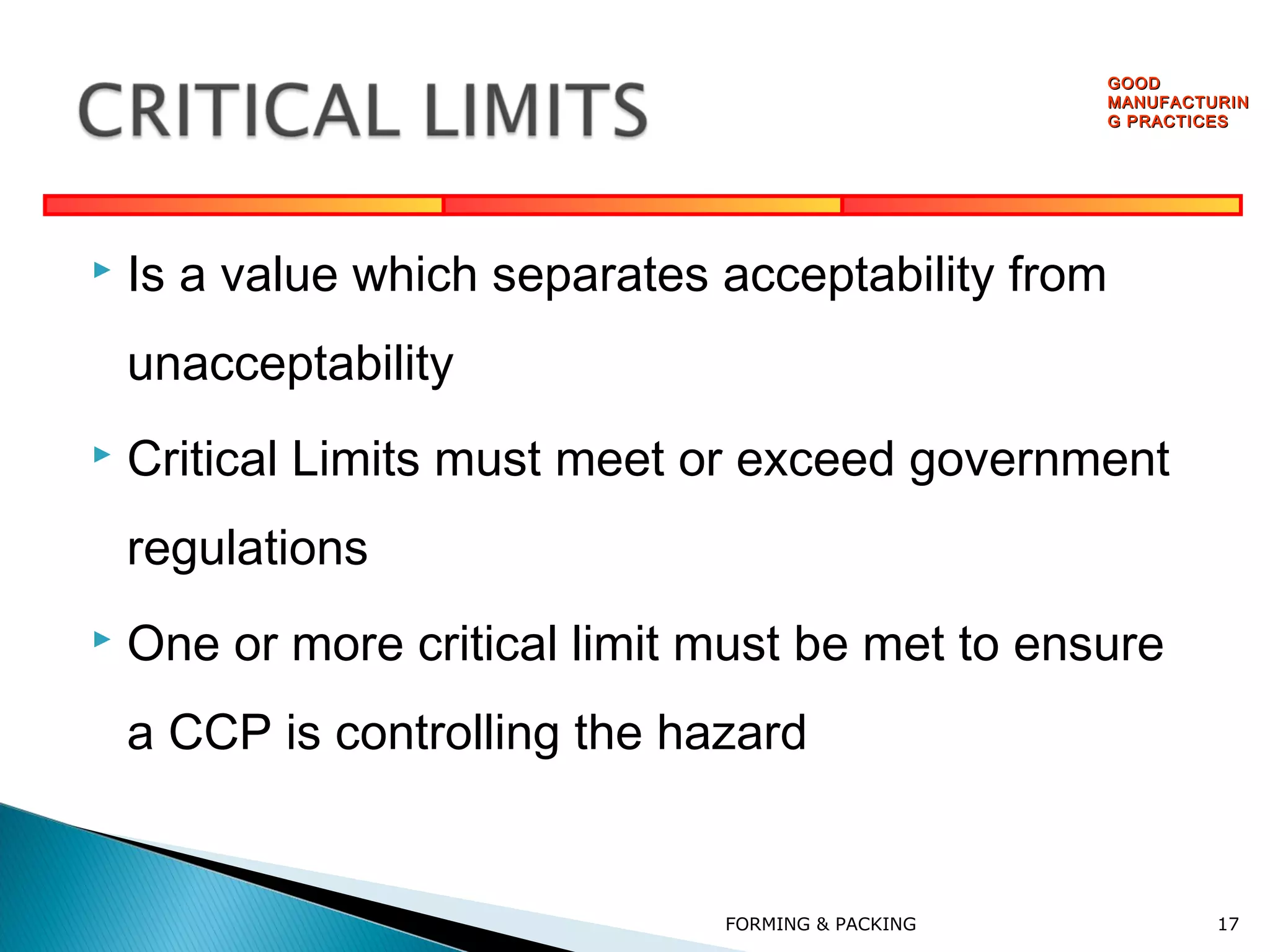
Is a value which separates acceptability from
unacceptability



Critical Limits must meet or exceed government
regulations



One or more critical limit must be met to ensure
a CCP is controlling the hazard

FORMING & PACKING

17
GOOD
MANUFACTURIN
G PRACTICES



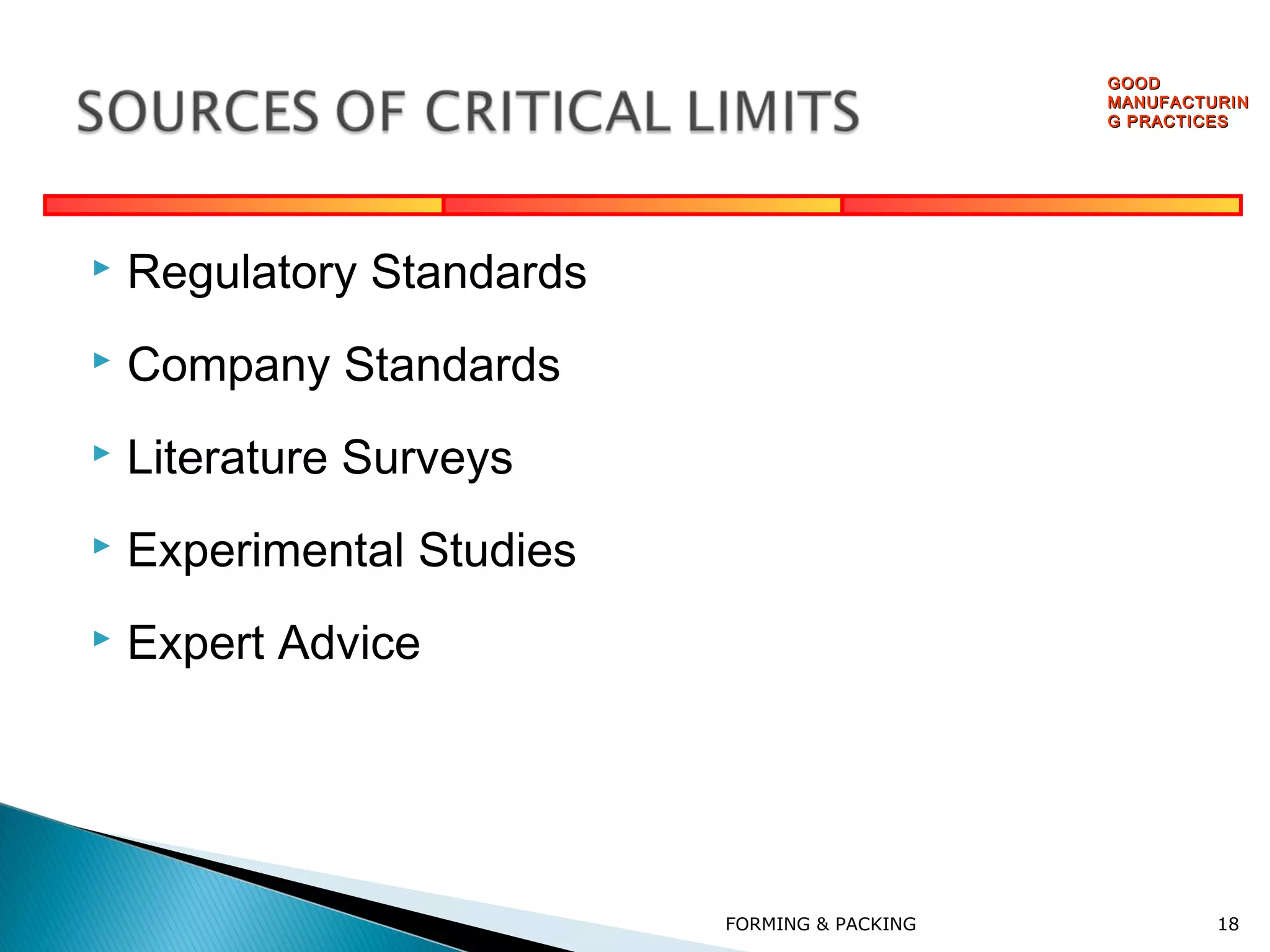
Regulatory Standards



Company Standards



Literature Surveys



Experimental Studies



Expert Advice

FORMING & PACKING

18

Training gmp slideshow

  • 1.
    GOOD MANUFACTURING PRACTICES Training aboutour Process and Product control Forming & Packing.
  • 2.
    GOOD MANUFACTURIN G PRACTICES Why weshould follow GMP ?  Because we are related to Food Industry.  How to use GMP in our Process ?  Do the work what have been trained to you and Don’t do the work which is not trained to you.  Do Good work and Avoid Bad work.  Follow HACCP.  FORMING & PACKING 2
  • 3.
    GOOD MANUFACTURIN G PRACTICES What isHACCP ?  HACCP is a method by which we identify Hazardous areas in our process and we keep track on them so that if there is any deviation in the process we take necessary actions to control the process and the product.   Can you explain in detail ? FORMING & PACKING 3
  • 4.
  • 5.
    GOOD MANUFACTURIN G PRACTICES  HACCP wasdeveloped in the 1960’s when NASA asked Pillsbury to design and manufacture the first food for space flights  The growing concern about food safety from public health authorities, the Food Industry and consumers world wide has been the major force in the introduction of the HACCP system. Today HACCP is accepted internationally as a useful tool for adapting traditional inspection methods to a modern, science based, food safety system. HACCP has become the globally recognized method to ensure food safety FORMING & PACKING 5
  • 6.
    GOOD MANUFACTURIN G PRACTICES   HACCP isa systematic, preventative approach to food safety. It aims to prevent biological, chemical and physical hazards, instead of relying on finished product inspection. HACCP is used in the food industry to identify potential food safety hazards, so that key actions, known as Critical Control Points (CCPs) can be used to reduce or eliminate the identified hazards. With HACCP the food processor systematically: ◦ Identifies potential food safety hazards (Hazard Analysis). ◦ Determines the key steps in their operation where the hazards can be prevented, eliminated or reduced to an acceptable level. (The key steps are known as Critical Control Points or CCPs) FORMING & PACKING 6
  • 7.
    GOOD MANUFACTURIN G PRACTICES  Good ManufacturingPractices (GMPs)  Standard Operating Procedures (SOPs) FORMING & PACKING 7
  • 8.
    GOOD MANUFACTURIN G PRACTICES 1. SAY whatyou do 2. DO what you say 3. PROVE it FORMING & PACKING 8
  • 9.
    GOOD MANUFACTURIN G PRACTICES  A CCPis a key step where hazards can be prevented, eliminated or reduced to an acceptable level. FORMING & PACKING 9
  • 10.
    GOOD MANUFACTURIN G PRACTICES 1. IdentifyHazards 2. Determine Critical Control Points (CCPs) 3. Establish Critical Limits 4. Establish Monitoring Procedures 5. Establish Corrective Action Procedures 6. Establish Verification Procedures 7. Establish Record Keeping FORMING & PACKING 10
  • 11.
    GOOD MANUFACTURIN G PRACTICES  We useHACCP in our Manufacturing process and we have already established critical control points in our process there are 10 CCP in our process  Kindly view the enclosed Diagram of our Glass Manufacturing process. FORMING & PACKING 11
  • 12.
    GOOD MANUFACTURIN G PRACTICES A. Premises(including water supply) B. Transportation, Receiving and Storage C. Equipment Design, Installation and Maintenance D. Personnel Training E. Sanitation & Pest Control F. Recall FORMING & PACKING 12
  • 13.
  • 14.
    GOOD MANUFACTURIN G PRACTICES  You cancontrol many of the potential hazards in a processing plant by using a standard set of principles and hygienic practices for the manufacturing and handling of wares. These standard principles and practices are called Good Manufacturing Practices (GMPs) FORMING & PACKING 14
  • 15.
    GOOD MANUFACTURIN G PRACTICES  Preventative measuresto ensure food safety  Based on practical experience over a long period of time  The foundation on which to build a HACCP program FORMING & PACKING 15
  • 16.
    GOOD MANUFACTURIN G PRACTICES  The purposeand frequency of doing a task  Who will do the task  A description of the procedure to be performed  What paperwork is to be completed (documentation)  The method by which you show that task is satisfactorily completed  And the corrective actions to be taken of the task is performed incorrectly FORMING & PACKING 16
  • 17.
    GOOD MANUFACTURIN G PRACTICES  Is avalue which separates acceptability from unacceptability  Critical Limits must meet or exceed government regulations  One or more critical limit must be met to ensure a CCP is controlling the hazard FORMING & PACKING 17
  • 18.
    GOOD MANUFACTURIN G PRACTICES  Regulatory Standards  CompanyStandards  Literature Surveys  Experimental Studies  Expert Advice FORMING & PACKING 18