Training and 
Development
“If you think training 
is expensive,try 
ignorance.”
Training is expensive. Without 
training it is more expensive 
Nehru
TRAINING 
A learning experience in that it seeks a 
relatively permanent change in an 
individual that will improve his/ her ability 
to perform on the job. It involves changing 
of 
 Skills 
 Attitude 
Knowledge
TRAINING 
“Training is the act of increasing the 
knowledge and skills an employee for a 
doing particular job” 
“ Training is job oriented, it bridges the 
gap between what the employee has what 
the job demands ”
DEVELOPMENT 
More future oriented and more concerned 
with education than is training. 
Management Development activities 
attempt to instill sound reasoning processes 
to enhance one’s ability to understand and 
interpret knowledge. 
It focuses on the personal growth & on 
Analytical 
Conceptual 
Human 
Skills
T & D 
Increases job skills-specific 
skills 
Short term 
perspective 
Job centered 
The role of a trainer 
is very important 
It shapes attitude – 
overall growth 
Long term 
perspective 
Career Centered 
Internally motivated 
for self development
EMPLOYEE TRAINING 
WHY-To 
improve the skills and knowledge of the 
employees to perform the assigned task.
EMPLOYEE TRAINING 
WHEN – 
New Hires 
Change of Job (Job Rotation, Promotion) 
Change to Job (New Technologies) 
Performance Deficiencies detected
TRAINING OBJECTIVES 
Build a common understanding of 
the organisation's purpose. 
Show management's commitment and loyalty 
to employees 
Develop people so they can increase 
their responsibilities and contribute to the 
organisation in new ways.
WHAT IS DEVELOPMENT 
Development is a process of preparing 
employees for future position and improve 
their personal skills to handle the critical 
situations in an organisation.
EMPLOYEE DEVELOPMENT 
WHY-To 
assist employee to sharpen their personal 
skills to handle the crucial situations in 
organisation.
THE TRAINING PROCESS 
1. Conduct Training Need Analysis 
2. Develop Training Objectives 
3. Design & Select Training Methods 
4. Implement Training 
5. Evaluate Training 
6. Measure Training Results
THE TRAINING PROCESS 
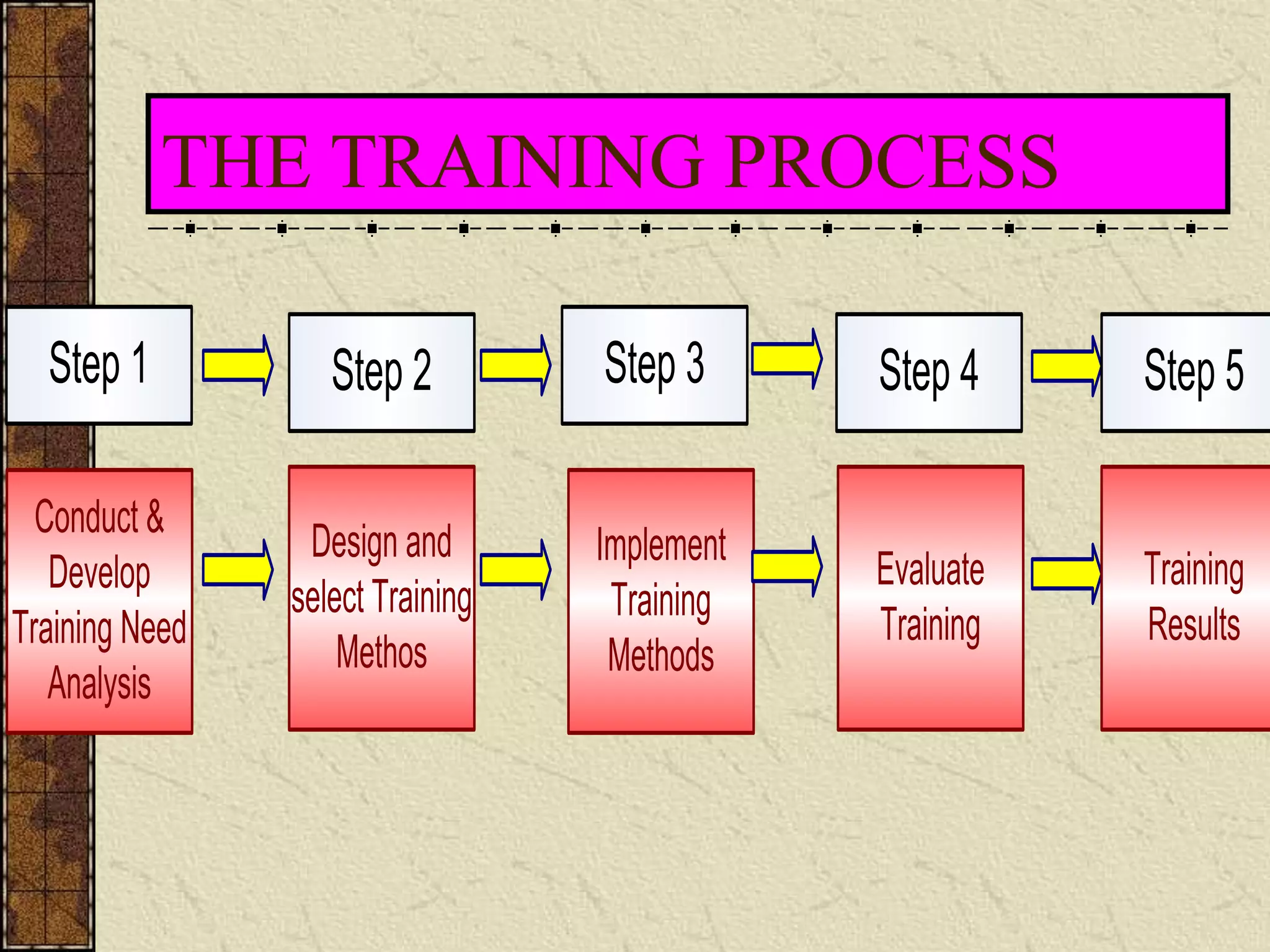
Step 1 
Conduct & 
Develop 
Training Need 
Analysis 
Step 2 
Design and 
select Training 
Methos 
Step 3 
Implement 
Training 
Methods 
Step 4 
Evaluate 
Training 
Step 5 
Training 
Results
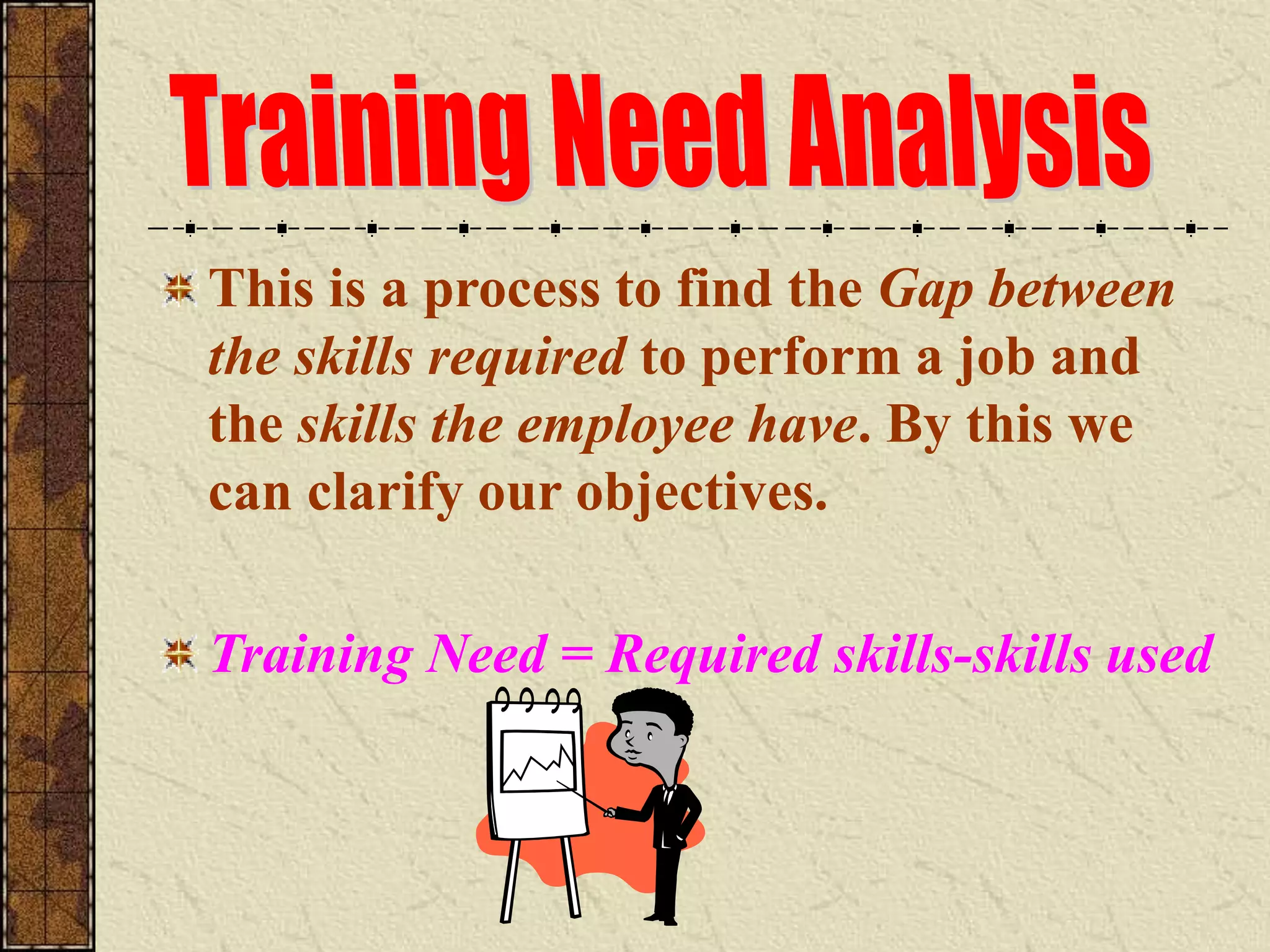
This is a process to find the Gap between 
the skills required to perform a job and 
the skills the employee have. By this we 
can clarify our objectives. 
Training Need = Required skills-skills used
10 - 16 
Assessing Training and 
Development Needs 
Needs analysis 
The assessment of the organization’s job-related needs 
and the capabilities of the current workforce 
The manager must carefully assess the company’s: 
Strategy 
Resources available for training 
General philosophy regarding training and development 
Decision must be made about training employees 
for current jobs versus for future jobs
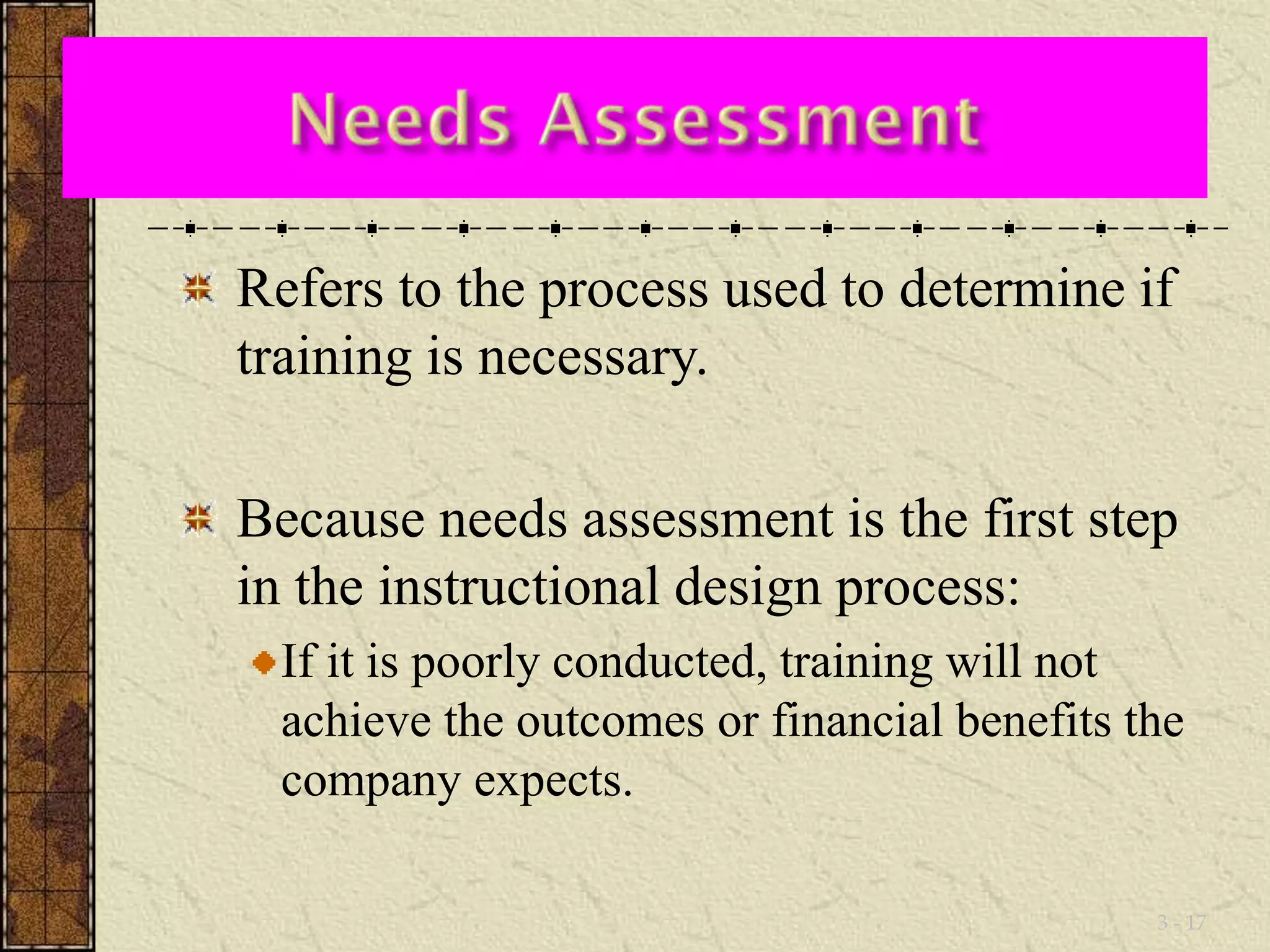
Refers to the process used to determine if 
training is necessary. 
Because needs assessment is the first step 
in the instructional design process: 
If it is poorly conducted, training will not 
achieve the outcomes or financial benefits the 
company expects. 
3 - 17
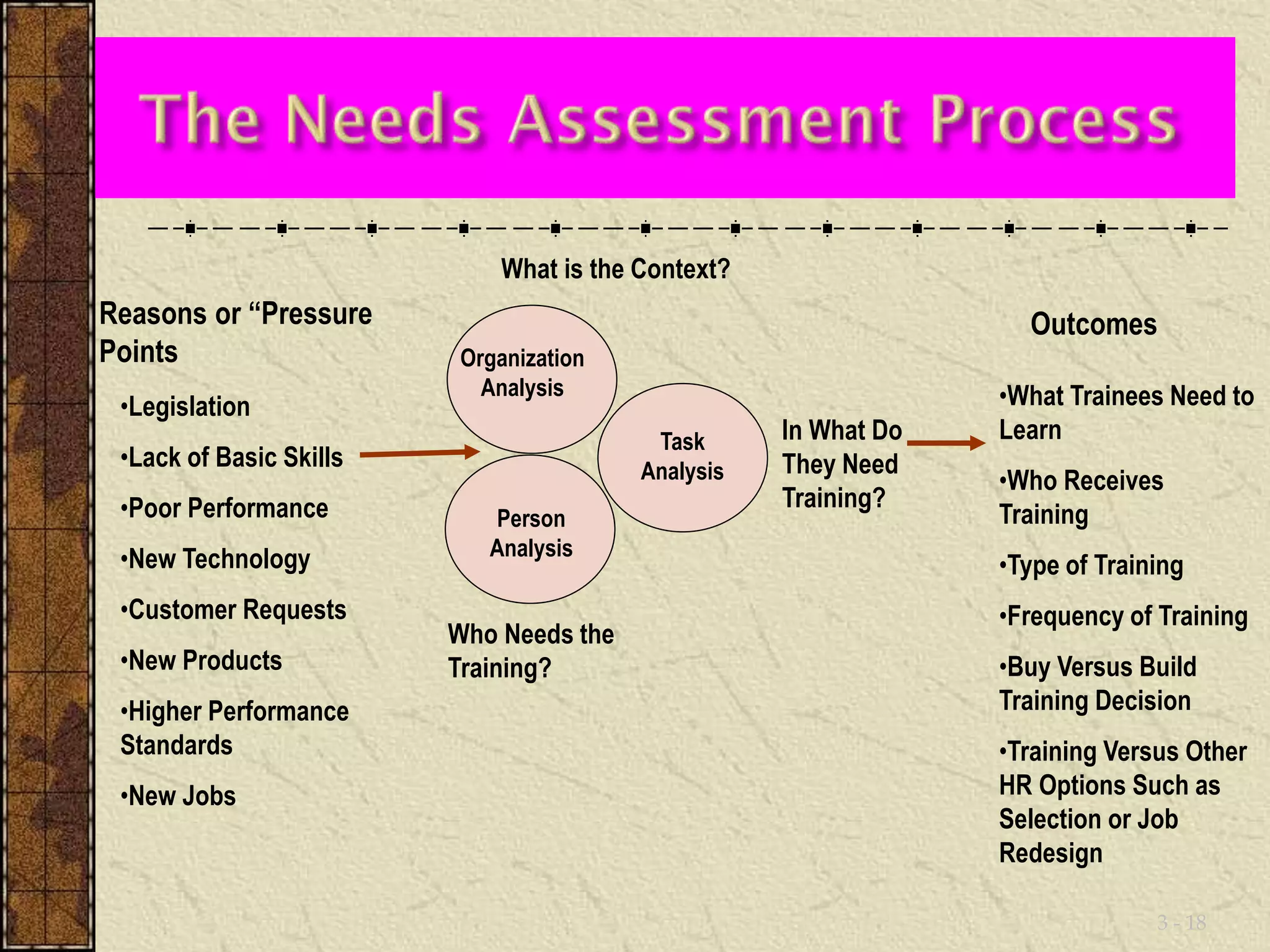
3 - 18 
Reasons or “Pressure 
Points 
Outcomes 
What is the Context? 
•Legislation 
•Lack of Basic Skills 
•Poor Performance 
•New Technology 
•Customer Requests 
•New Products 
•Higher Performance 
Standards 
•New Jobs 
•What Trainees Need to 
Learn 
•Who Receives 
Training 
•Type of Training 
•Frequency of Training 
•Buy Versus Build 
Training Decision 
•Training Versus Other 
HR Options Such as 
Selection or Job 
Redesign 
Who Needs the 
Training? 
In What Do 
They Need 
Training? 
Organization 
Analysis 
Task 
Analysis 
Person 
Analysis
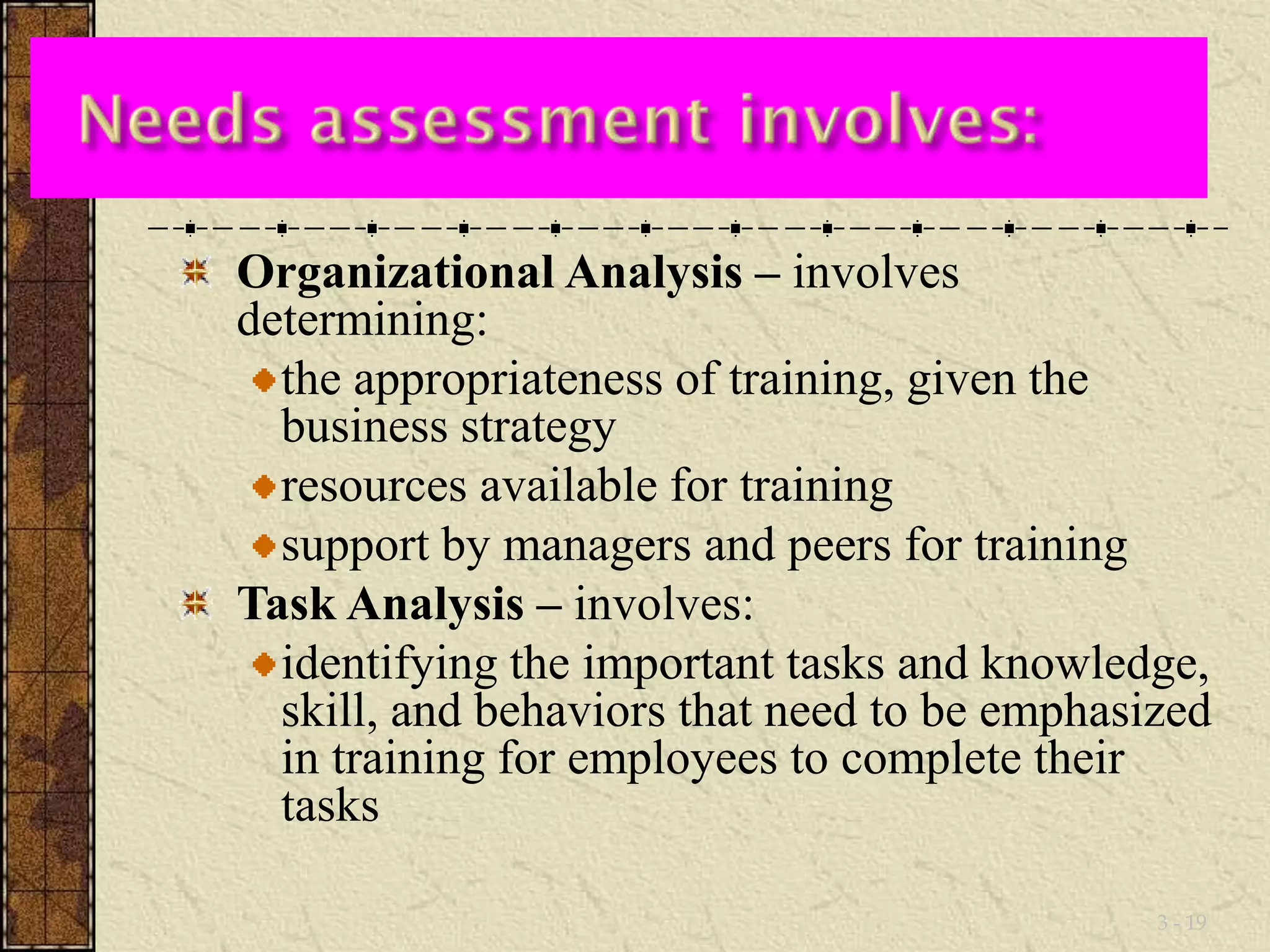
Organizational Analysis – involves 
determining: 
the appropriateness of training, given the 
business strategy 
resources available for training 
support by managers and peers for training 
Task Analysis – involves: 
identifying the important tasks and knowledge, 
skill, and behaviors that need to be emphasized 
in training for employees to complete their 
tasks 
3 - 19
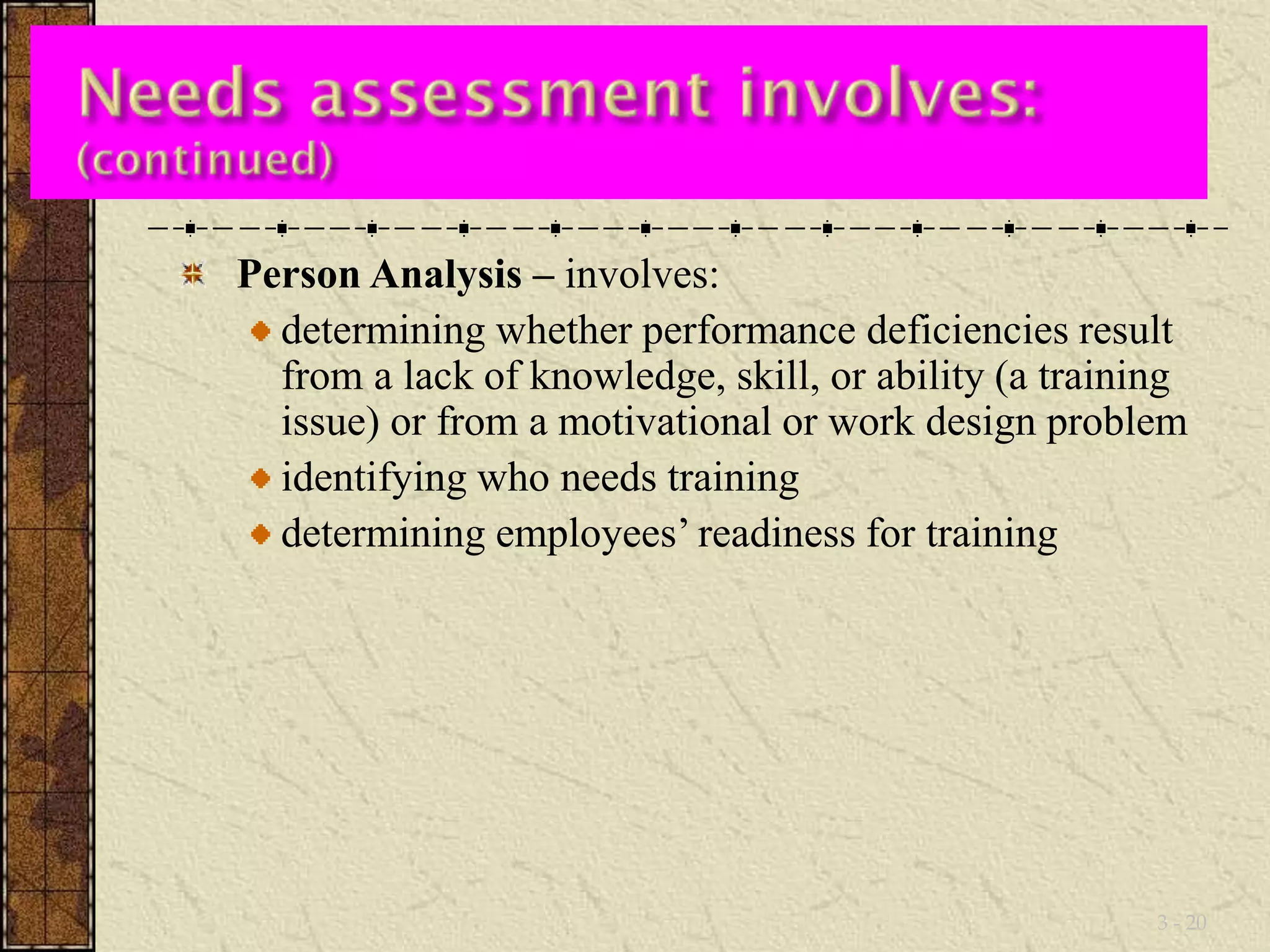
Person Analysis – involves: 
determining whether performance deficiencies result 
from a lack of knowledge, skill, or ability (a training 
issue) or from a motivational or work design problem 
identifying who needs training 
determining employees’ readiness for training 
3 - 20
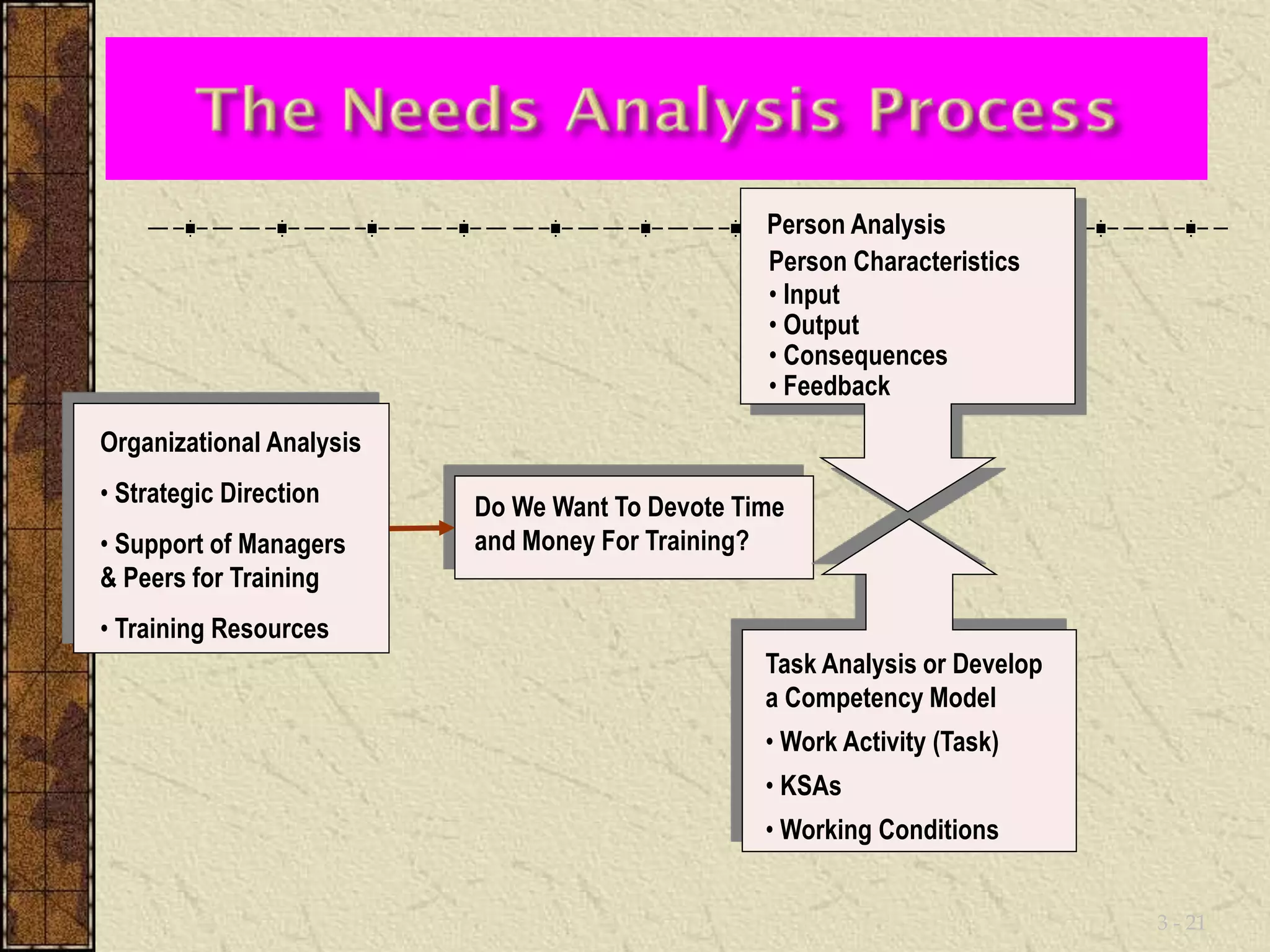
3 - 21 
Person Analysis 
Person Characteristics 
• Input 
• Output 
• Consequences 
• Feedback 
Do We Want To Devote Time 
and Money For Training? 
Task Analysis or Develop 
a Competency Model 
• Work Activity (Task) 
• KSAs 
• Working Conditions 
Organizational Analysis 
• Strategic Direction 
• Support of Managers 
& Peers for Training 
• Training Resources
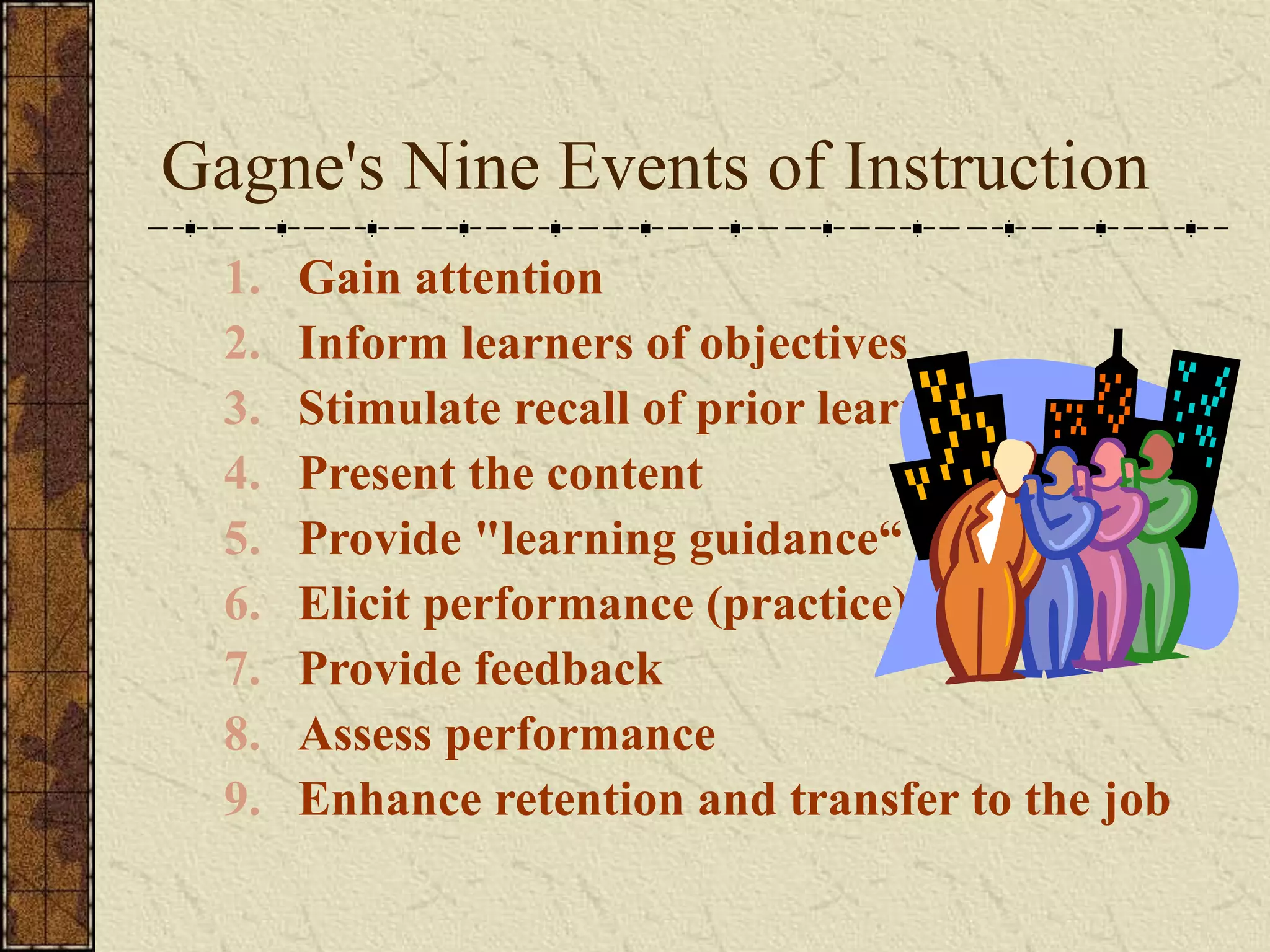
Gagne's Nine Events of Instruction 
1. Gain attention 
2. Inform learners of objectives 
3. Stimulate recall of prior learning 
4. Present the content 
5. Provide "learning guidance“ 
6. Elicit performance (practice) 
7. Provide feedback 
8. Assess performance 
9. Enhance retention and transfer to the job
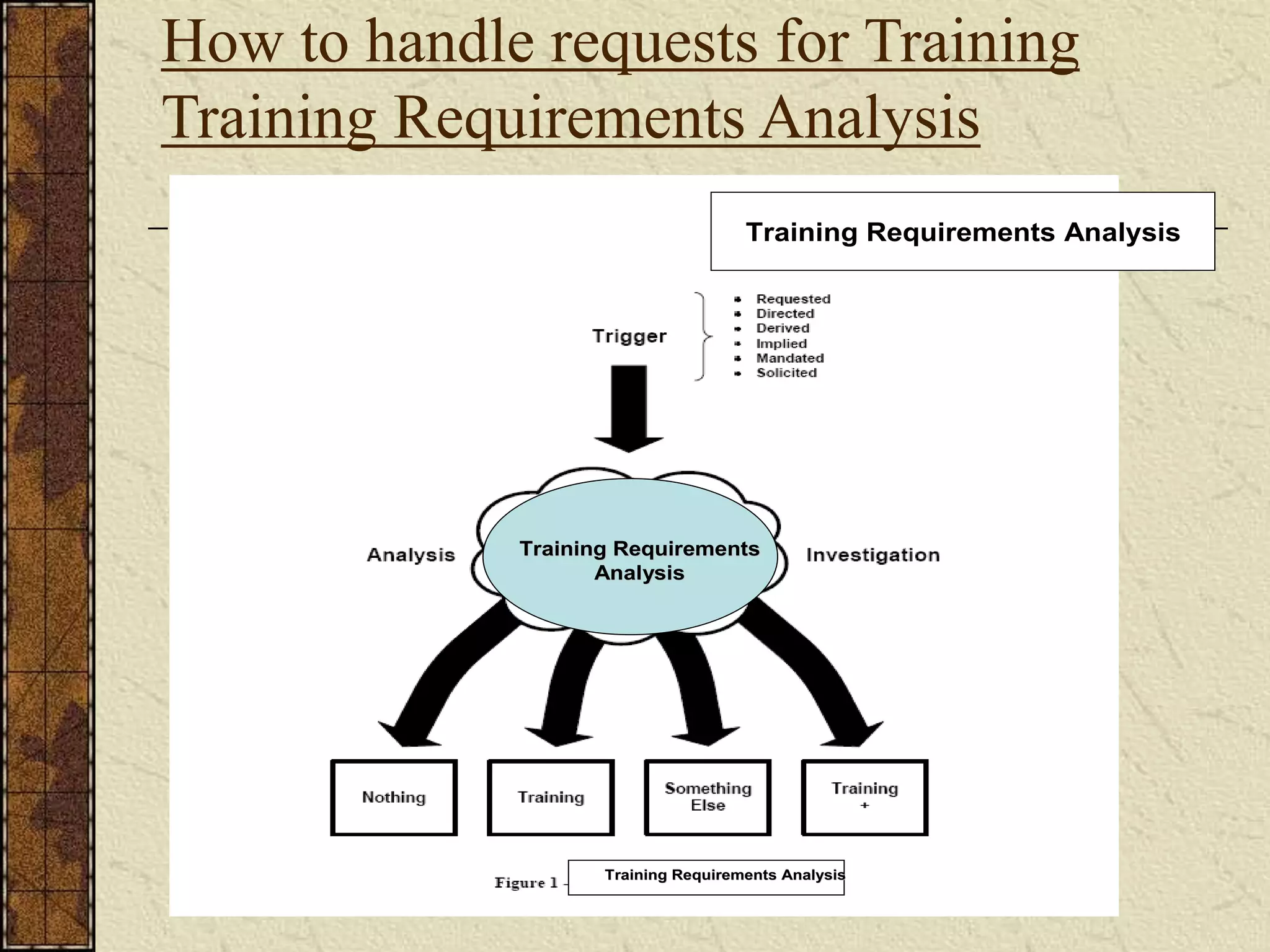
How to handle requests for Training 
Training Requirements Analysis 
Traiiniing Requiirements 
Analysis 
Traiiniing Requiirements Anallysiis
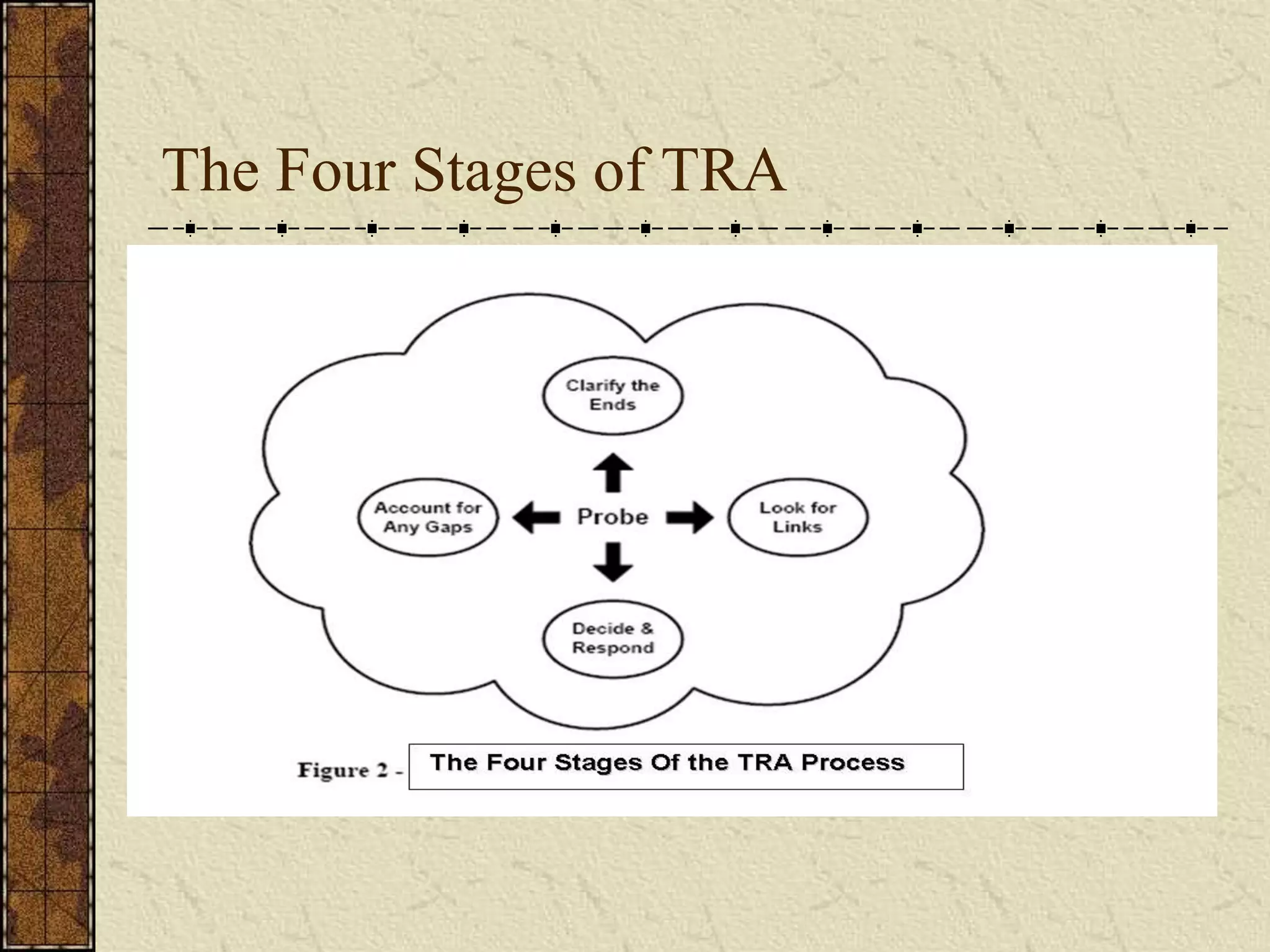
The Four Stages of TRA
Output 
Standard to judge successful performers 
Consequences 
Positive consequences/incentives to perform 
Few negative consequences to perform 
Feedback 
Frequent and specific feedback about how the 
job is performed 
3 - 25
If employees lack the knowledge and skill 
to perform and the other factors are 
satisfactory, training is needed. 
If employees have the knowledge and skill 
to perform but input, output, 
consequences, or feedback are inadequate, 
training may not be the best solution. 
3 - 26
What Training Can Do 
Training CAN accomplish many things. 
1. It can help people learn the new skills that are 
required to meet new expectations, both formal and 
informal 
2. Training can help people accept the challenge of their 
evolving jobs. 
3. Build a common understanding of the organization's 
purpose. 
4. Show management's commitment and loyalty 
to employees 
5. Develop people so they can increase 
their responsibilities and contribute to the 
organization in new ways.
What Training Cannot Do 
Training cannot do many things. Training, on its own, 
cannot change ineffective employees into effective 
ones. It is unlikely to address ALL the causes of poor 
performance. Limited training also will not turn a 
poor supervisor or manager into an effective one, 
unless it is coupled with ongoing coaching from above. 
Training will not erase problems that occur because of 
poor structuring of work, mismatching of work with 
the person, unclear authorities and responsibilities or 
other organizationally related issues.
Thank you for attending 
Wish you success

Training and development

  • 1.
  • 2.
    “If you thinktraining is expensive,try ignorance.”
  • 3.
    Training is expensive.Without training it is more expensive Nehru
  • 4.
    TRAINING A learningexperience in that it seeks a relatively permanent change in an individual that will improve his/ her ability to perform on the job. It involves changing of  Skills  Attitude Knowledge
  • 5.
    TRAINING “Training isthe act of increasing the knowledge and skills an employee for a doing particular job” “ Training is job oriented, it bridges the gap between what the employee has what the job demands ”
  • 6.
    DEVELOPMENT More futureoriented and more concerned with education than is training. Management Development activities attempt to instill sound reasoning processes to enhance one’s ability to understand and interpret knowledge. It focuses on the personal growth & on Analytical Conceptual Human Skills
  • 7.
    T & D Increases job skills-specific skills Short term perspective Job centered The role of a trainer is very important It shapes attitude – overall growth Long term perspective Career Centered Internally motivated for self development
  • 8.
    EMPLOYEE TRAINING WHY-To improve the skills and knowledge of the employees to perform the assigned task.
  • 9.
    EMPLOYEE TRAINING WHEN– New Hires Change of Job (Job Rotation, Promotion) Change to Job (New Technologies) Performance Deficiencies detected
  • 10.
    TRAINING OBJECTIVES Builda common understanding of the organisation's purpose. Show management's commitment and loyalty to employees Develop people so they can increase their responsibilities and contribute to the organisation in new ways.
  • 11.
    WHAT IS DEVELOPMENT Development is a process of preparing employees for future position and improve their personal skills to handle the critical situations in an organisation.
  • 12.
    EMPLOYEE DEVELOPMENT WHY-To assist employee to sharpen their personal skills to handle the crucial situations in organisation.
  • 13.
    THE TRAINING PROCESS 1. Conduct Training Need Analysis 2. Develop Training Objectives 3. Design & Select Training Methods 4. Implement Training 5. Evaluate Training 6. Measure Training Results
  • 14.
    THE TRAINING PROCESS Step 1 Conduct & Develop Training Need Analysis Step 2 Design and select Training Methos Step 3 Implement Training Methods Step 4 Evaluate Training Step 5 Training Results
  • 15.
    This is aprocess to find the Gap between the skills required to perform a job and the skills the employee have. By this we can clarify our objectives. Training Need = Required skills-skills used
  • 16.
    10 - 16 Assessing Training and Development Needs Needs analysis The assessment of the organization’s job-related needs and the capabilities of the current workforce The manager must carefully assess the company’s: Strategy Resources available for training General philosophy regarding training and development Decision must be made about training employees for current jobs versus for future jobs
  • 17.
    Refers to theprocess used to determine if training is necessary. Because needs assessment is the first step in the instructional design process: If it is poorly conducted, training will not achieve the outcomes or financial benefits the company expects. 3 - 17
  • 18.
    3 - 18 Reasons or “Pressure Points Outcomes What is the Context? •Legislation •Lack of Basic Skills •Poor Performance •New Technology •Customer Requests •New Products •Higher Performance Standards •New Jobs •What Trainees Need to Learn •Who Receives Training •Type of Training •Frequency of Training •Buy Versus Build Training Decision •Training Versus Other HR Options Such as Selection or Job Redesign Who Needs the Training? In What Do They Need Training? Organization Analysis Task Analysis Person Analysis
  • 19.
    Organizational Analysis –involves determining: the appropriateness of training, given the business strategy resources available for training support by managers and peers for training Task Analysis – involves: identifying the important tasks and knowledge, skill, and behaviors that need to be emphasized in training for employees to complete their tasks 3 - 19
  • 20.
    Person Analysis –involves: determining whether performance deficiencies result from a lack of knowledge, skill, or ability (a training issue) or from a motivational or work design problem identifying who needs training determining employees’ readiness for training 3 - 20
  • 21.
    3 - 21 Person Analysis Person Characteristics • Input • Output • Consequences • Feedback Do We Want To Devote Time and Money For Training? Task Analysis or Develop a Competency Model • Work Activity (Task) • KSAs • Working Conditions Organizational Analysis • Strategic Direction • Support of Managers & Peers for Training • Training Resources
  • 22.
    Gagne's Nine Eventsof Instruction 1. Gain attention 2. Inform learners of objectives 3. Stimulate recall of prior learning 4. Present the content 5. Provide "learning guidance“ 6. Elicit performance (practice) 7. Provide feedback 8. Assess performance 9. Enhance retention and transfer to the job
  • 23.
    How to handlerequests for Training Training Requirements Analysis Training Requirements Analysis Training Requirements Analysis Traiiniing Requiirements Analysis Traiiniing Requiirements Anallysiis
  • 24.
  • 25.
    Output Standard tojudge successful performers Consequences Positive consequences/incentives to perform Few negative consequences to perform Feedback Frequent and specific feedback about how the job is performed 3 - 25
  • 26.
    If employees lackthe knowledge and skill to perform and the other factors are satisfactory, training is needed. If employees have the knowledge and skill to perform but input, output, consequences, or feedback are inadequate, training may not be the best solution. 3 - 26
  • 27.
    What Training CanDo Training CAN accomplish many things. 1. It can help people learn the new skills that are required to meet new expectations, both formal and informal 2. Training can help people accept the challenge of their evolving jobs. 3. Build a common understanding of the organization's purpose. 4. Show management's commitment and loyalty to employees 5. Develop people so they can increase their responsibilities and contribute to the organization in new ways.
  • 28.
    What Training CannotDo Training cannot do many things. Training, on its own, cannot change ineffective employees into effective ones. It is unlikely to address ALL the causes of poor performance. Limited training also will not turn a poor supervisor or manager into an effective one, unless it is coupled with ongoing coaching from above. Training will not erase problems that occur because of poor structuring of work, mismatching of work with the person, unclear authorities and responsibilities or other organizationally related issues.
  • 29.
    Thank you forattending Wish you success