TRAIN THE TRAINERA skills overview for Trainers
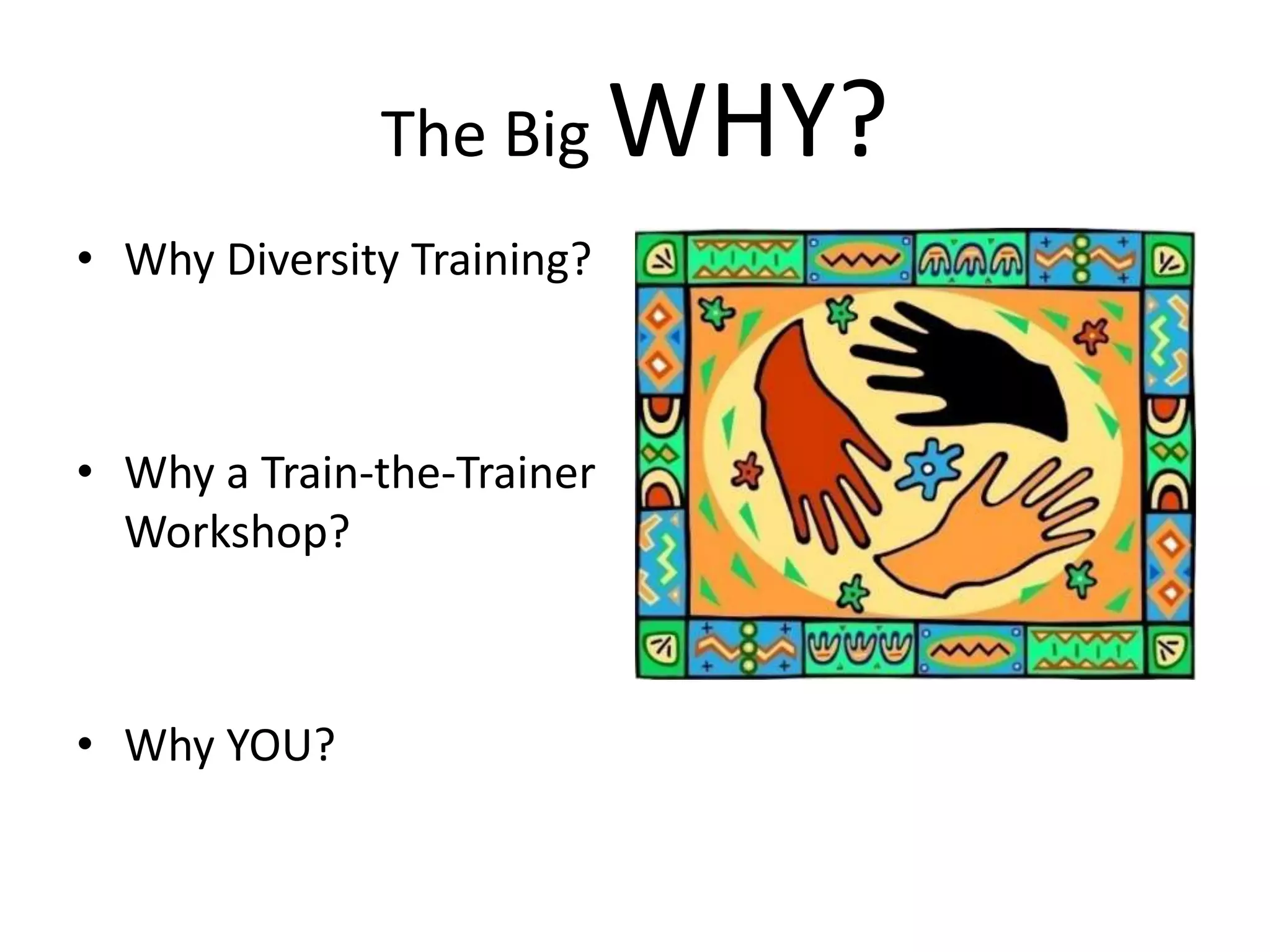
The Big WHY?Why Diversity Training?Why a Train-the-Trainer Workshop?Why YOU?
PRINCIPLES OF ADULT EDUCATIONWhat makes Adults WANT to learn?How can we achieve “transfer of training” – how do we make it stick?What do Adults HATE?
NEED TO KNOW PRINCICPLEAdults want to know WHY and HOWWhy they should learn this informationHow the information will help them
Strategies?  This principle addresses participant motivation.  How can the Instructor help students understand the purpose and value of the instruction?
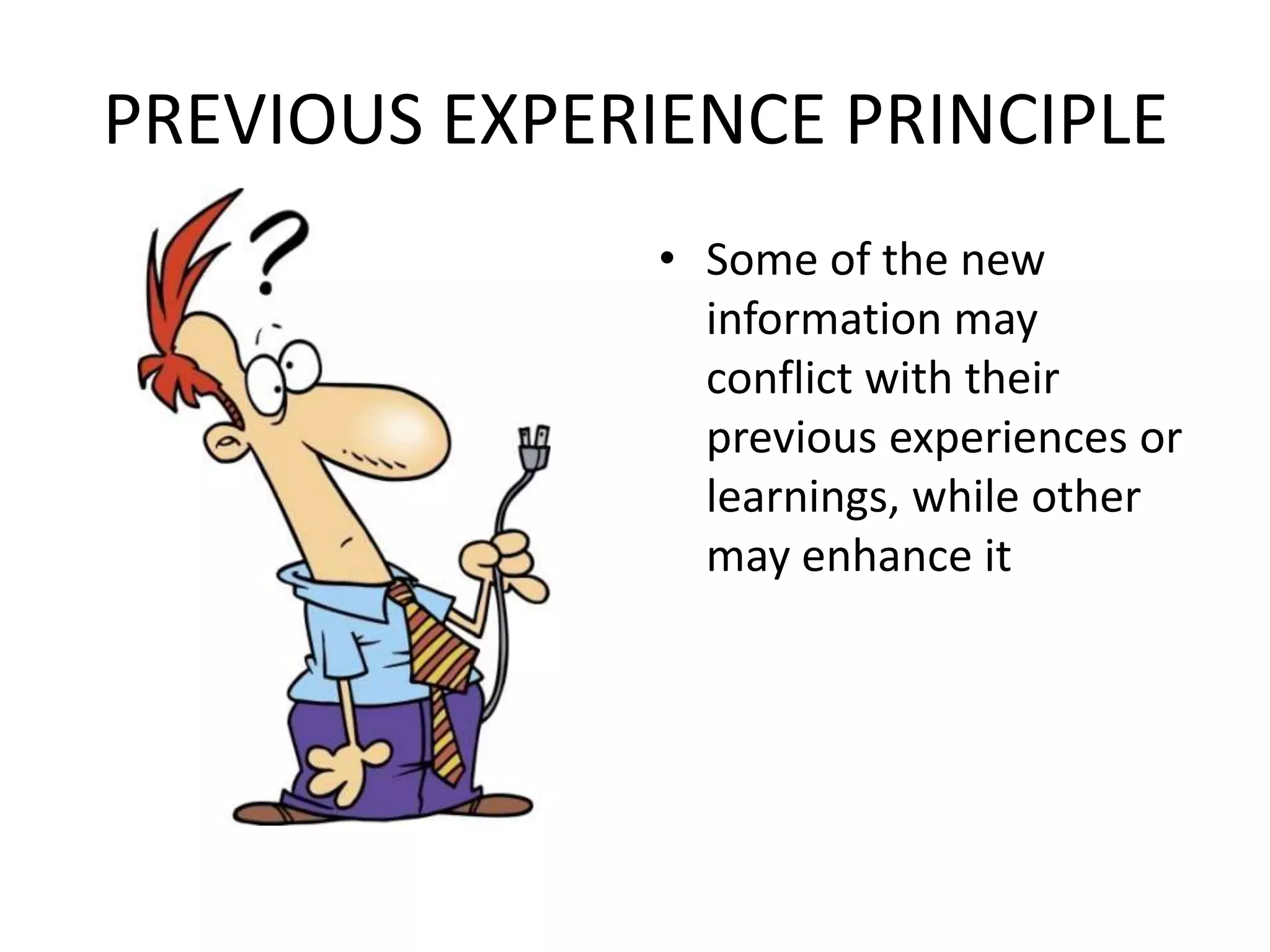
PREVIOUS EXPERIENCE PRINCIPLE Some of the new information may conflict with their previous experiences or learnings, while other may enhance it
StrategiesHow can you build on participants’ previous experiences?
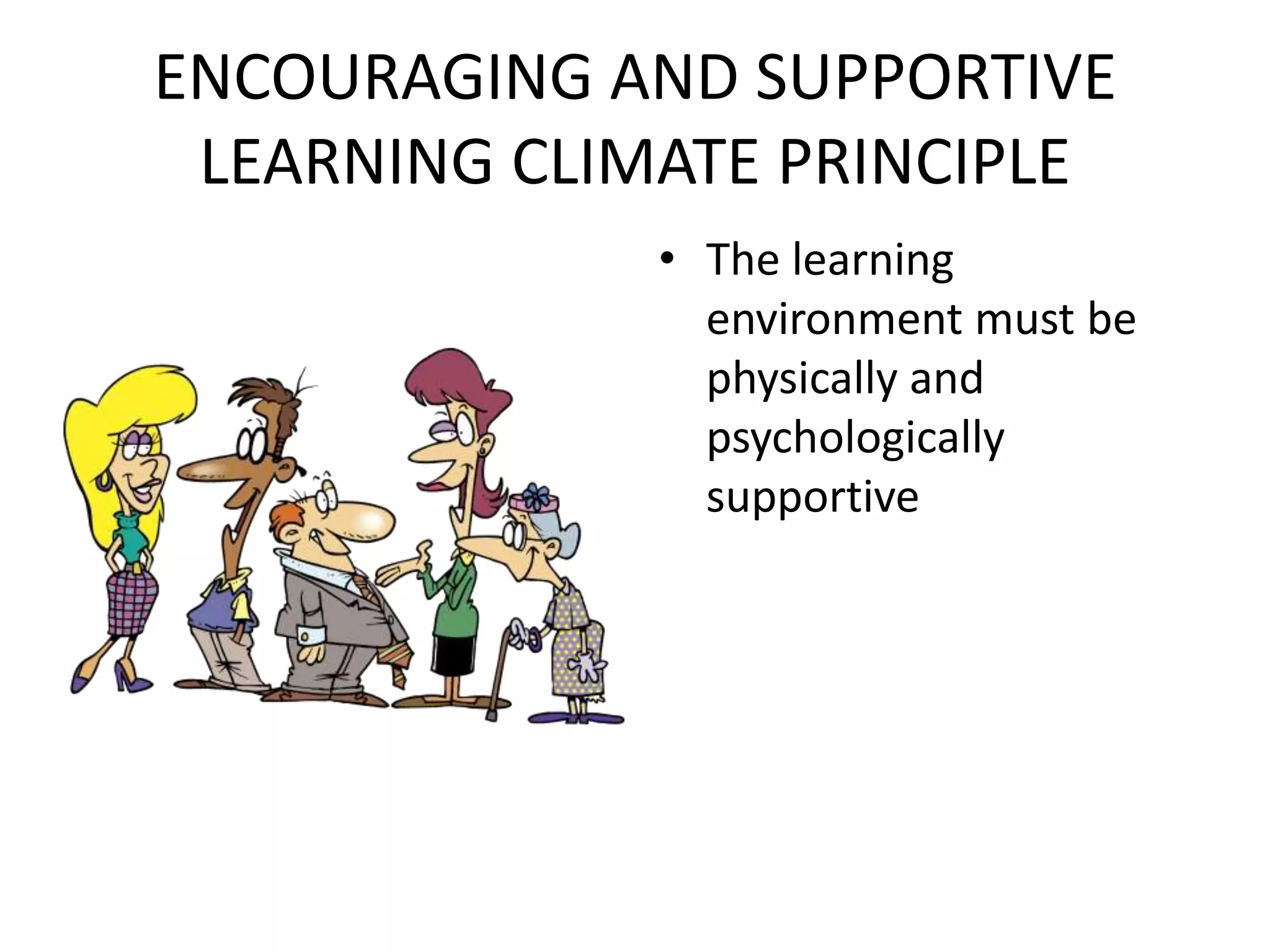
ENCOURAGING AND SUPPORTIVE LEARNING CLIMATE PRINCIPLEThe learning environment must be physically and psychologically supportive
Strategies How can you make the classroom environment warm and supportive?What kinds of things do Adults dislike about classroom instruction and how can these be avoided?
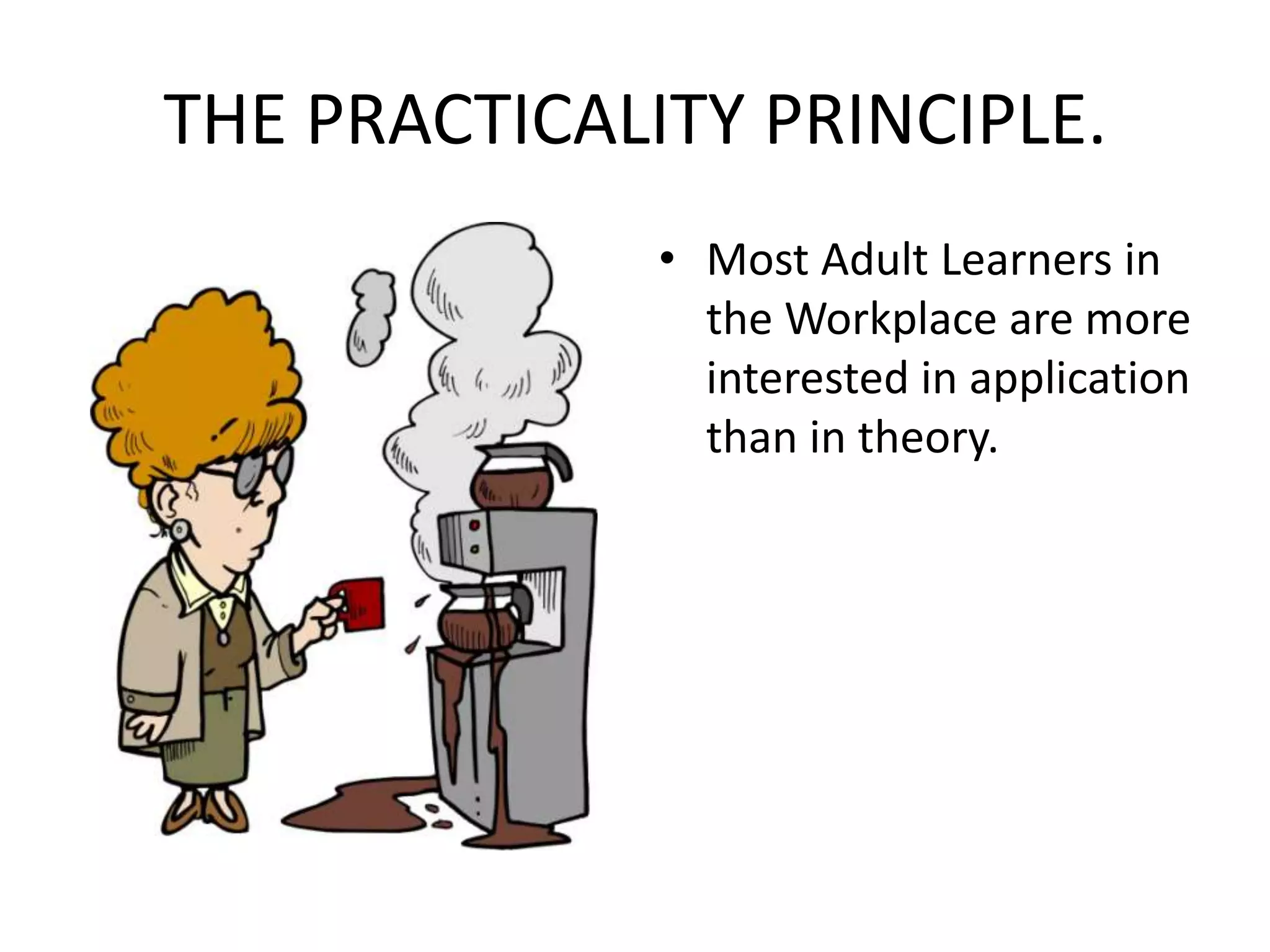
THE PRACTICALITY PRINCIPLE. Most Adult Learners in the Workplace are more interested in application than in theory.
Strategies If you do not have any practice exercises for participants to try, how else might you make the transition from theory to practical application?
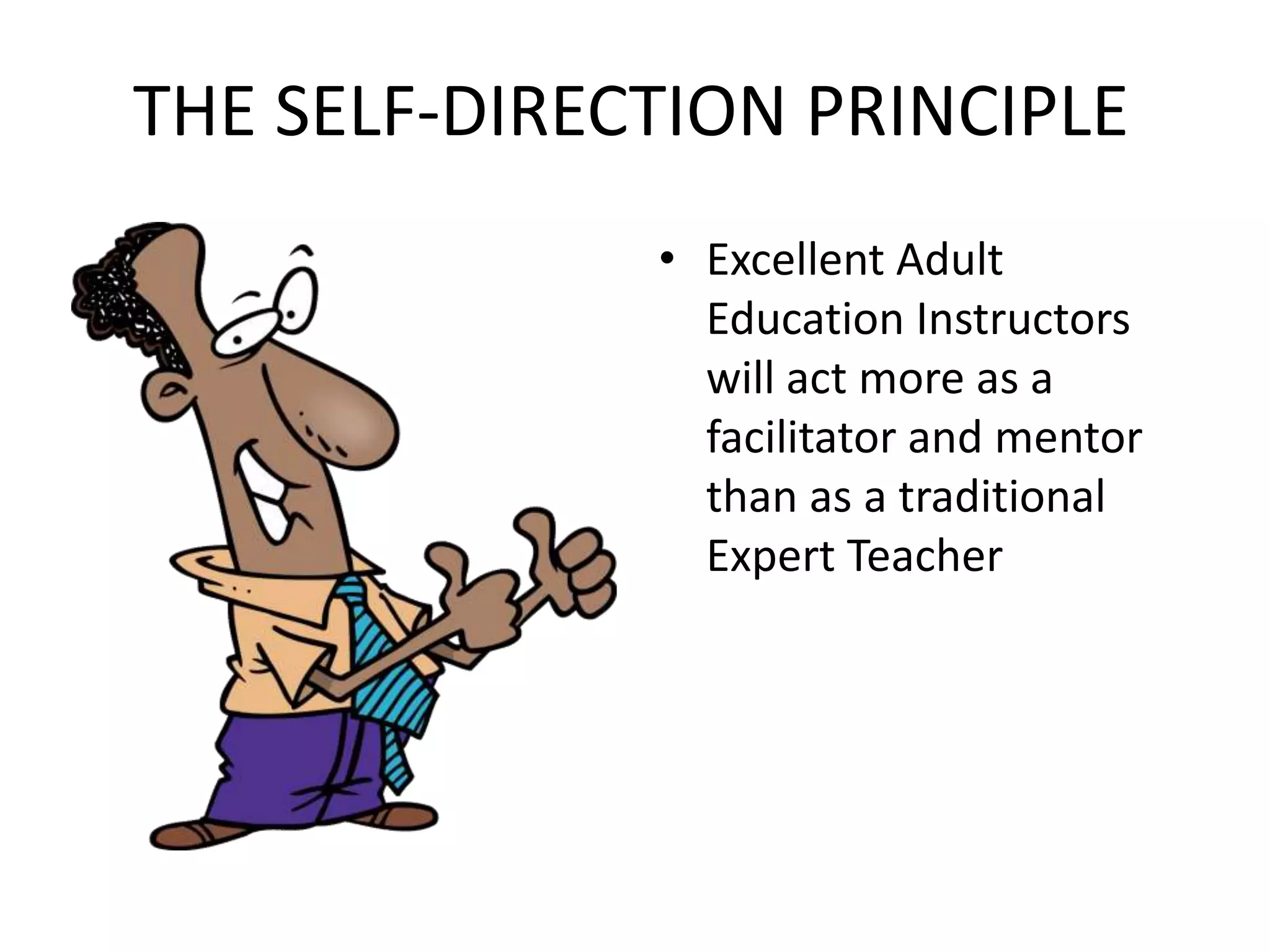
THE SELF-DIRECTION PRINCIPLEExcellent Adult Education Instructors will act more as a facilitator and mentor than as a traditional Expert Teacher
Strategies How can you tell the difference between those who are highly self-directed and those who may be other directed?How can you best accommodate both Self-directed and other directed learns in one class?
KNOWLEDGE OF SUBJECT CONTENTYou don’t have to know EVERYTHINGNot knowing something does not ruin your credibilityExperts are frequently wrong
SESSION PACEParticipants won’t show any more energy than the InstructorStart on time – end on time
A Special ChallengeHow can you get people back from breaks on time?
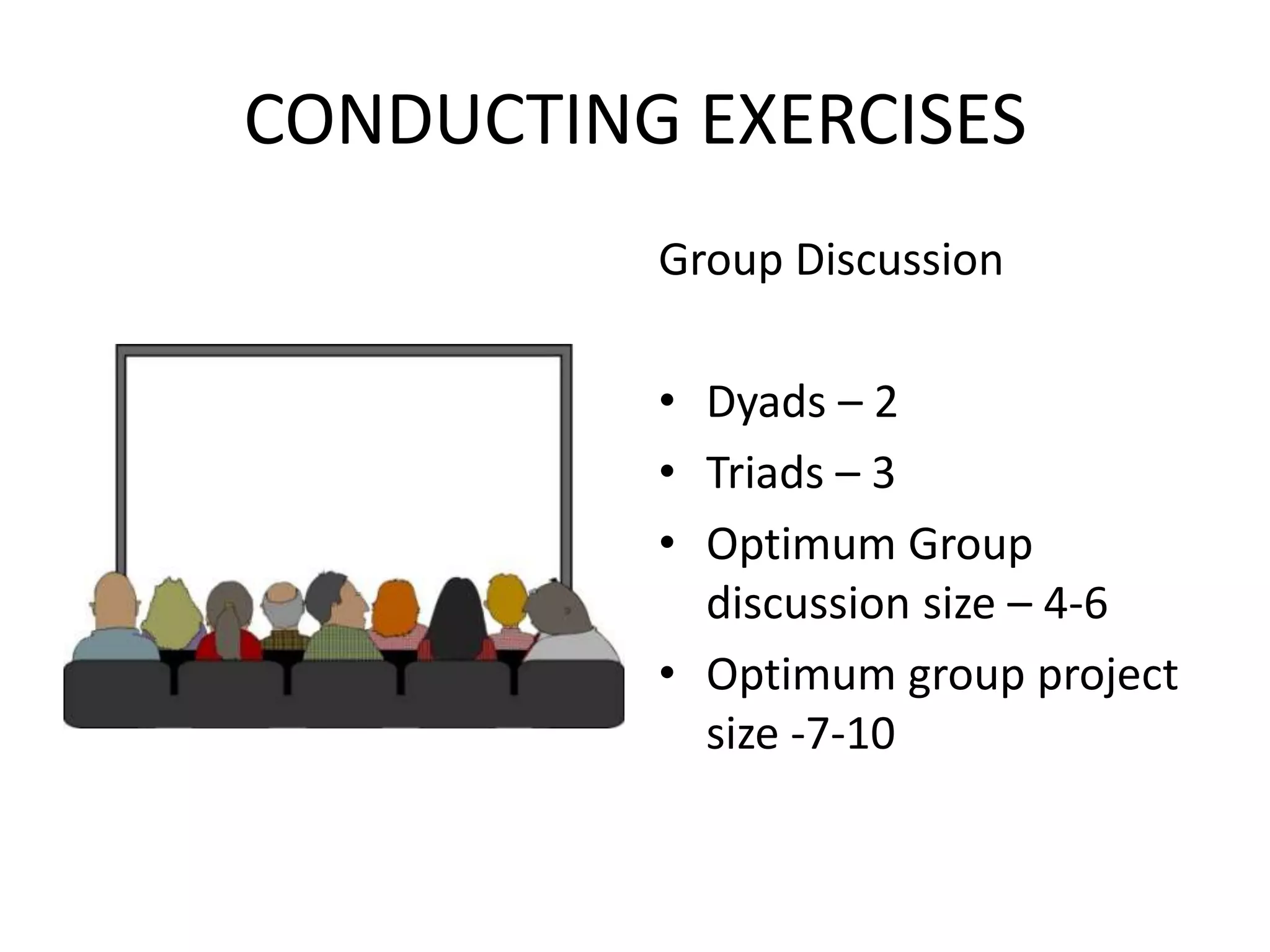
CONDUCTING EXERCISESGroup DiscussionDyads – 2Triads – 3Optimum Group discussion size – 4-6Optimum group project size -7-10
MANAGING RELATIONSHIPS IN THE GROUPTo manage group relationships, set the tone early
Set Group NormsHave participants draw up a list of “rules” they would all like to follow in the class and post them.
POSSIBLE PITFALLSfor instructors in diversity trainingWhat are some of the things that you have previously found annoying in courses that you have taken?
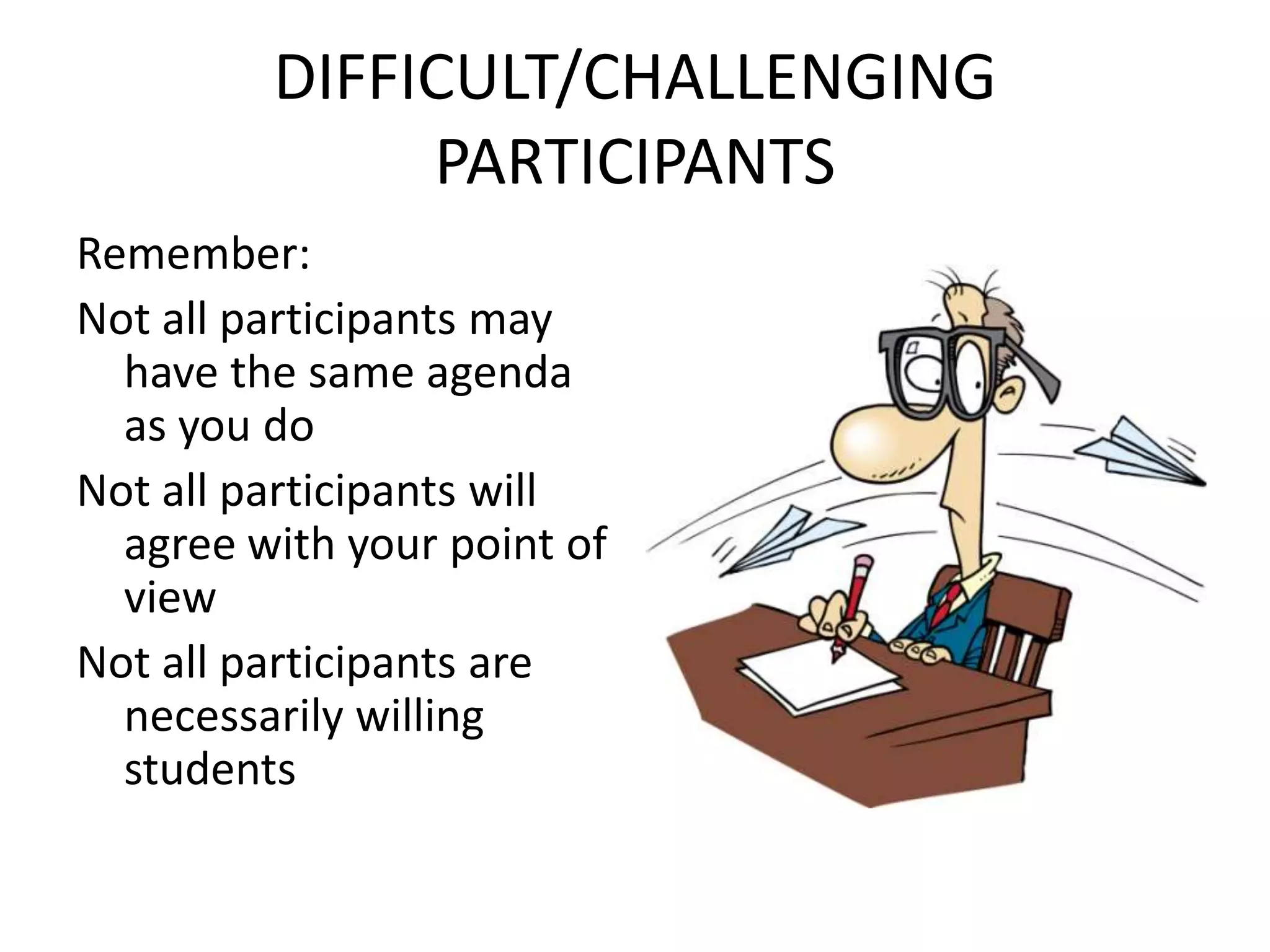
DIFFICULT/CHALLENGING PARTICIPANTSRemember:Not all participants may have the same agenda as you doNot all participants will agree with your point of viewNot all participants are necessarily willing students
IN GENERAL . . . Be organized – Be on time – Be professionalDon’t take things too personally – the most gifted of Instructors run into difficult participants from time to timeDon’t argue with any one – take that type of discussion off line
SPECIFIC DIFFICULT TYPES
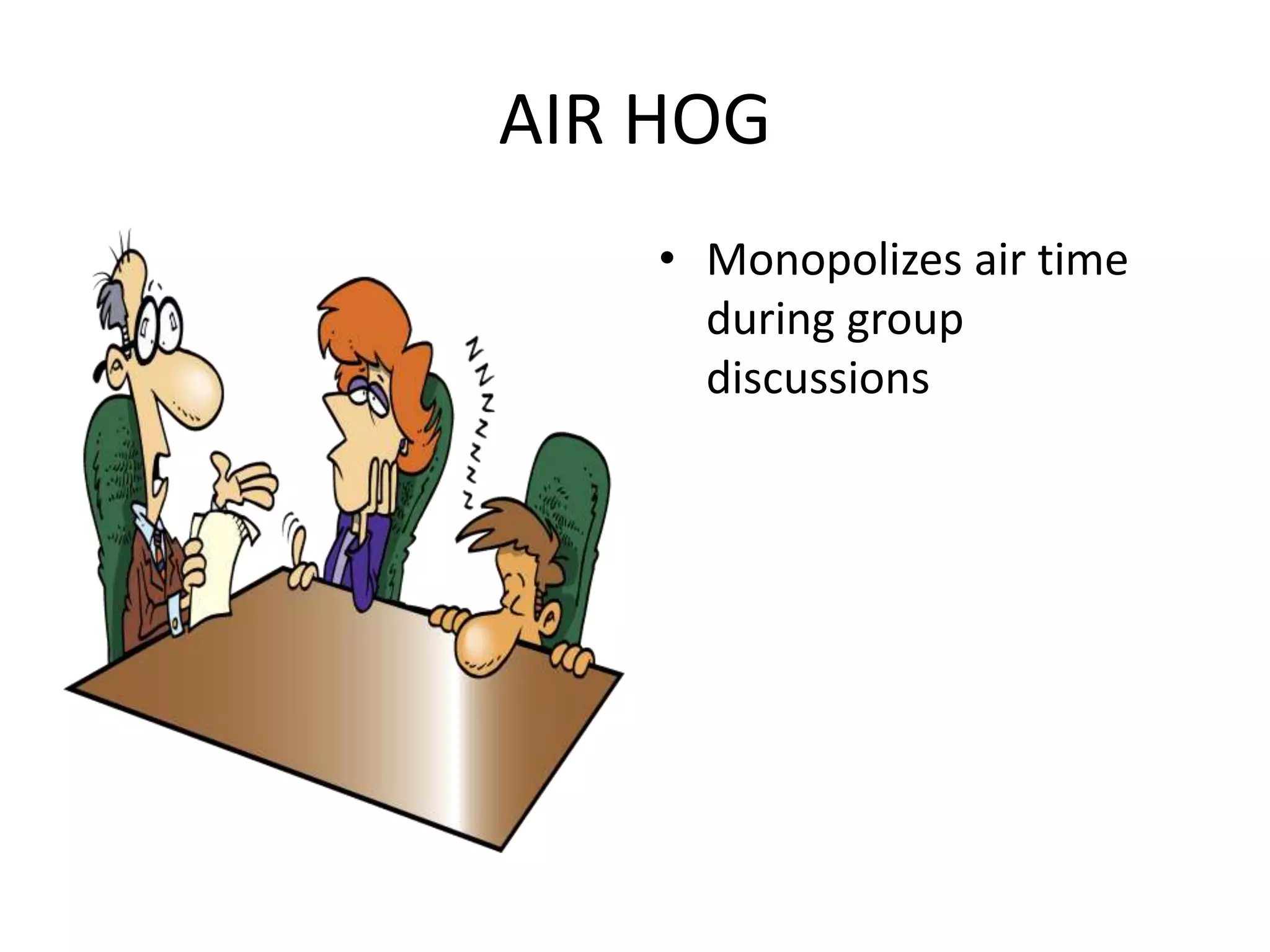
AIR HOGMonopolizes air time during group discussions
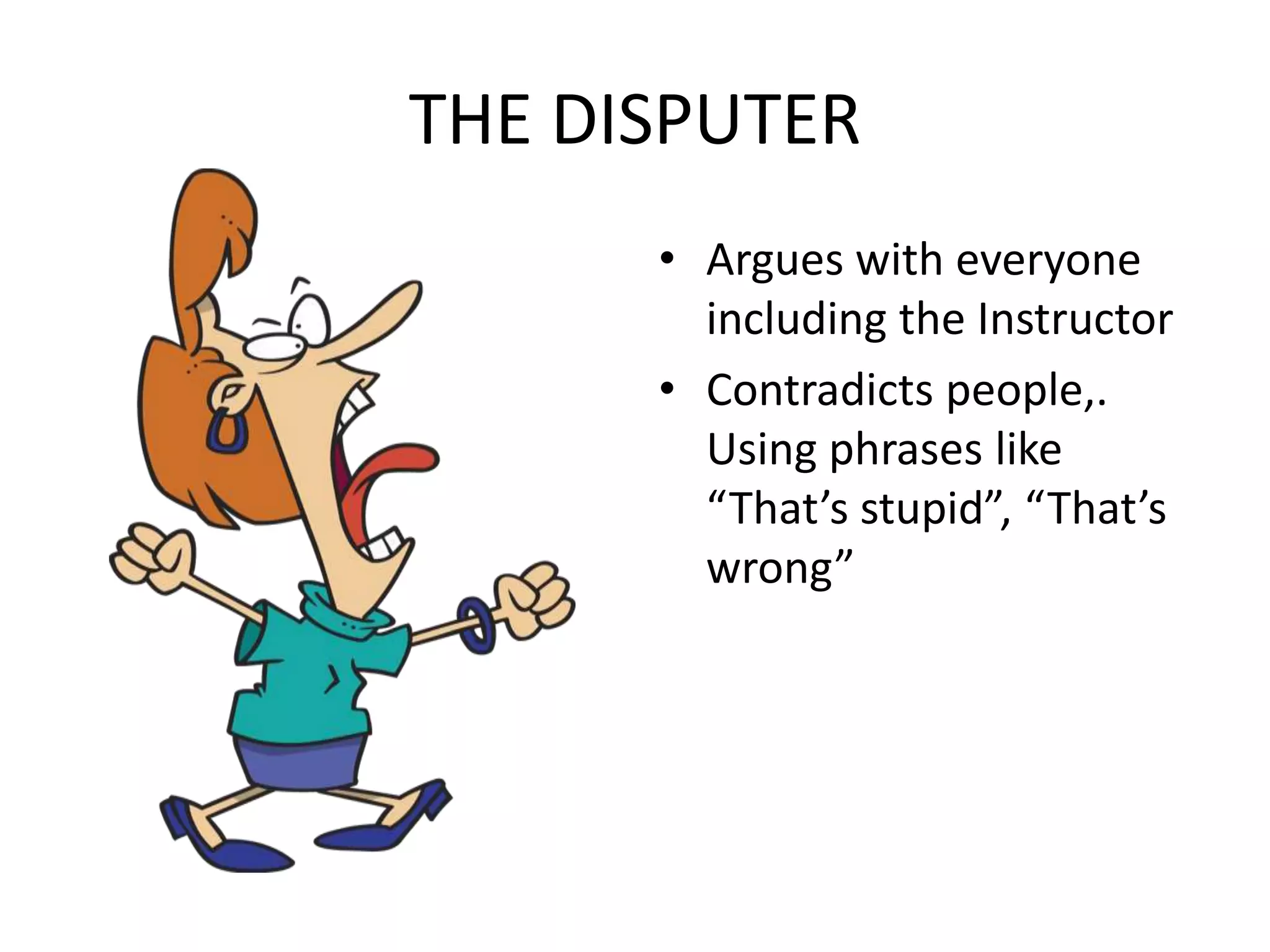
THE DISPUTERArgues with everyone including the InstructorContradicts people,. Using phrases like “That’s stupid”, “That’s wrong”
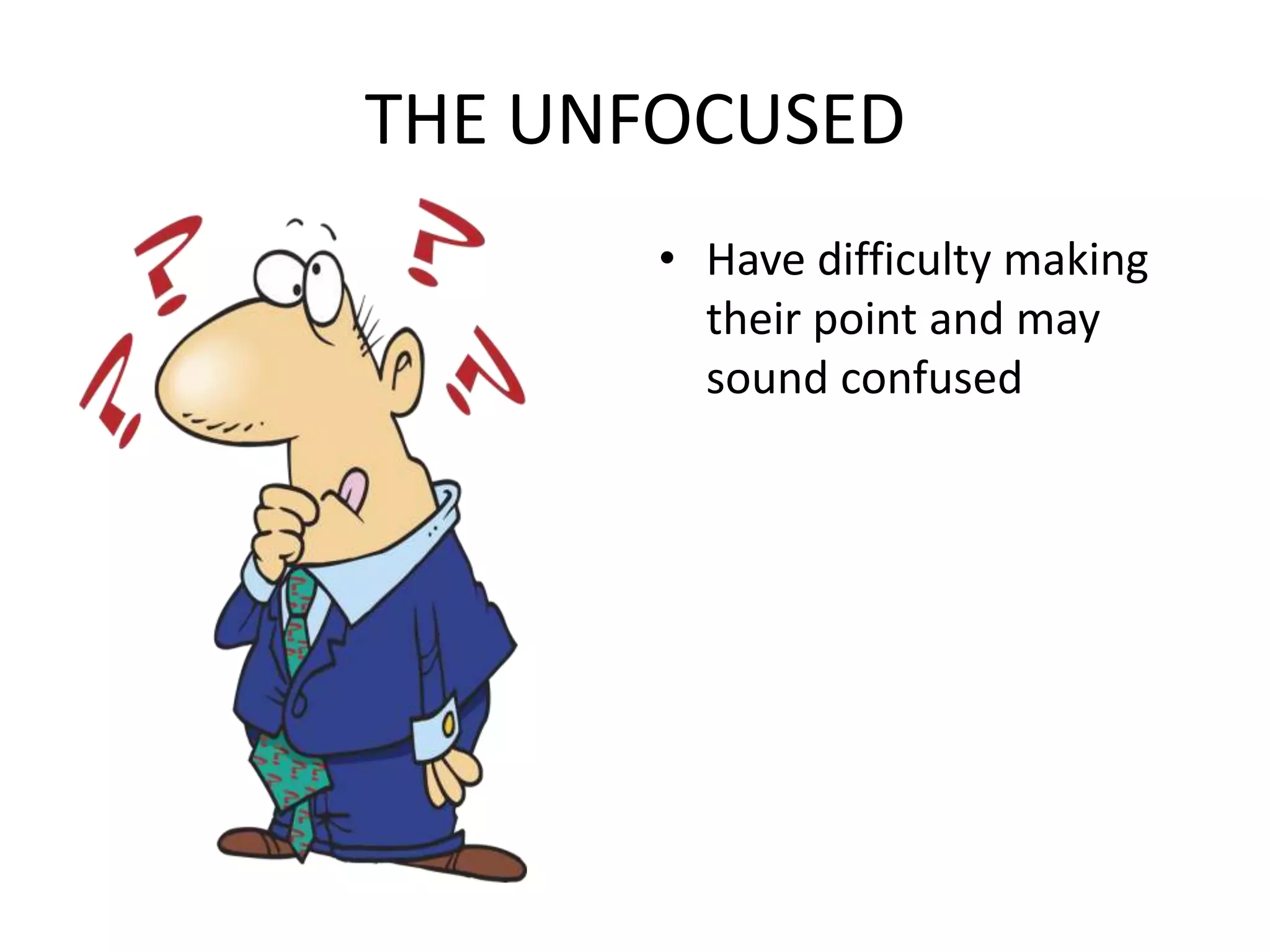
THE UNFOCUSEDHave difficulty making their point and may sound confused
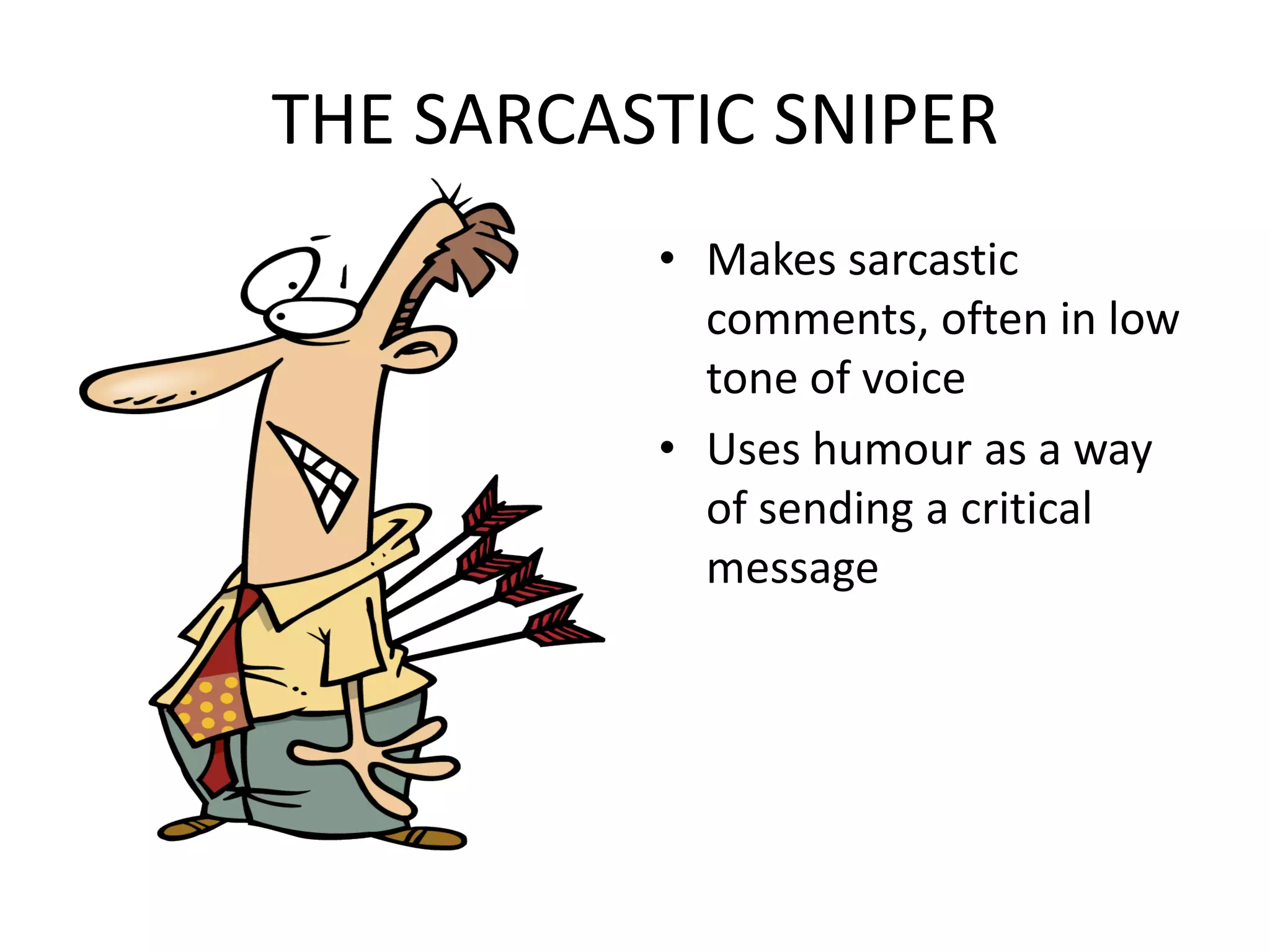
THE SARCASTIC SNIPERMakes sarcastic comments, often in low tone of voiceUses humour as a way of sending a critical message
THE SEXIST/RACISTMakes sexist or racist comments in a joking manner
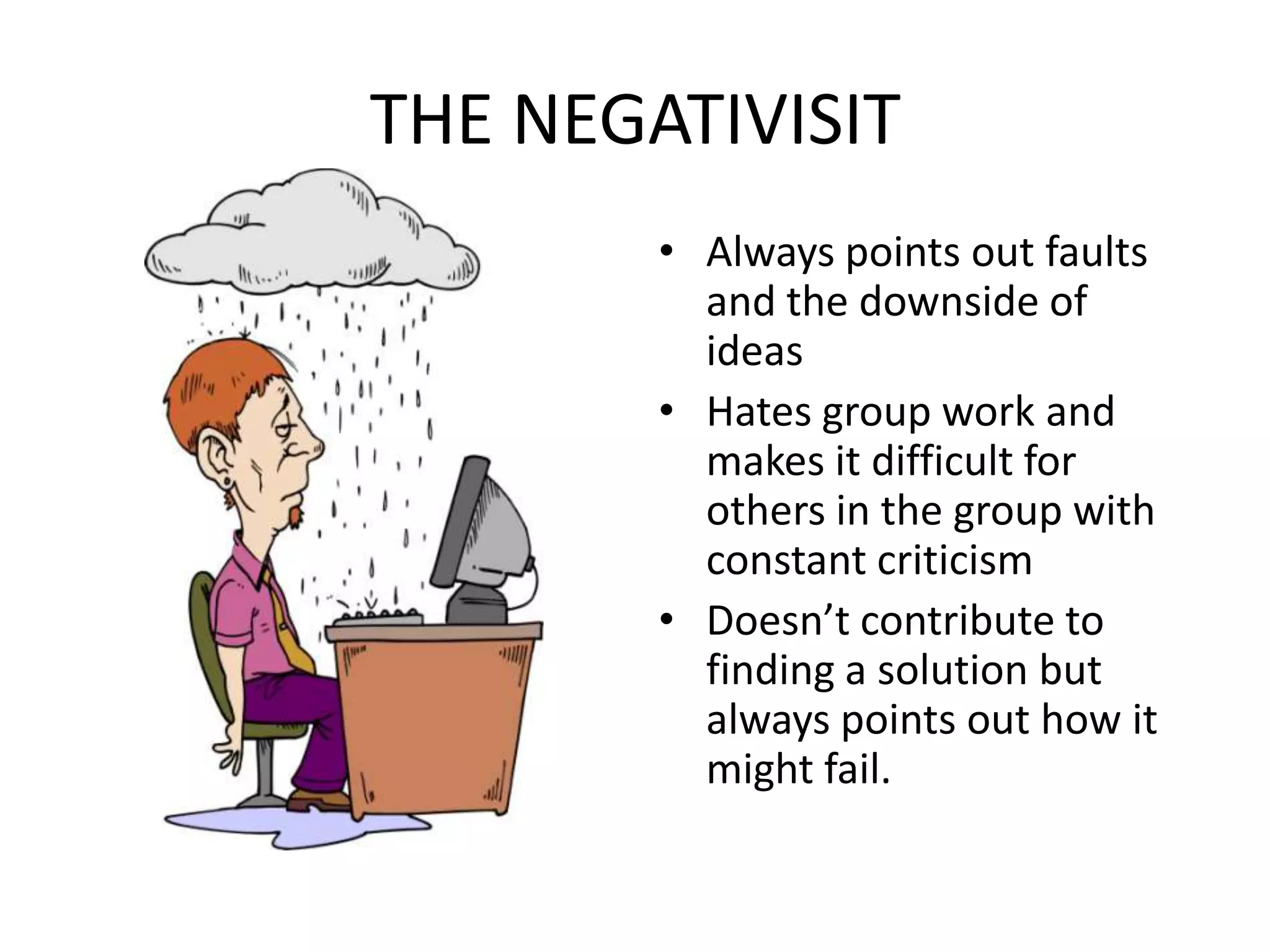
THE NEGATIVISITAlways points out faults and the downside of ideasHates group work and makes it difficult for others in the group with constant criticismDoesn’t contribute to finding a solution but always points out how it might fail.
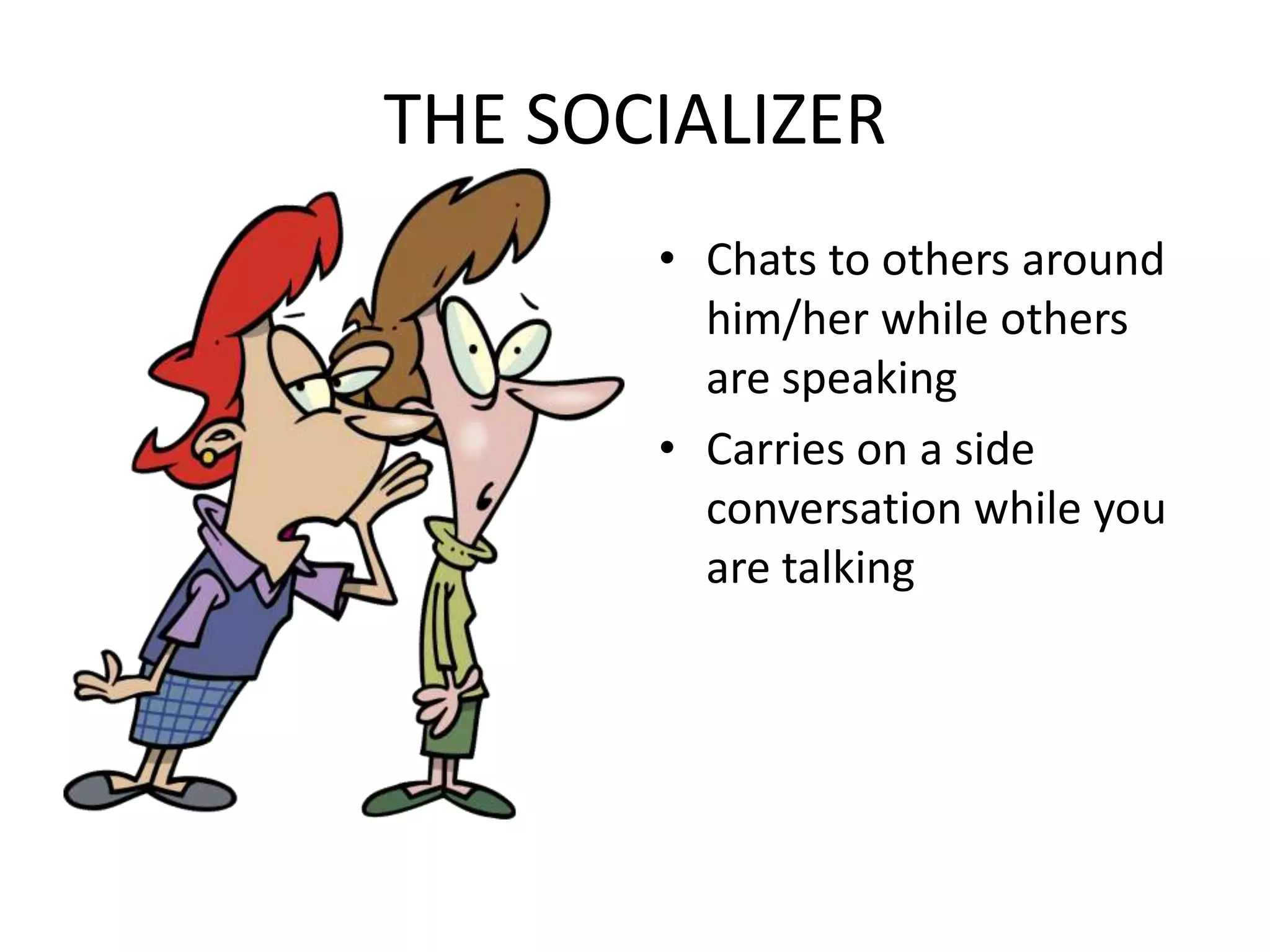
THE SOCIALIZERChats to others around him/her while others are speakingCarries on a side conversation while you are talking
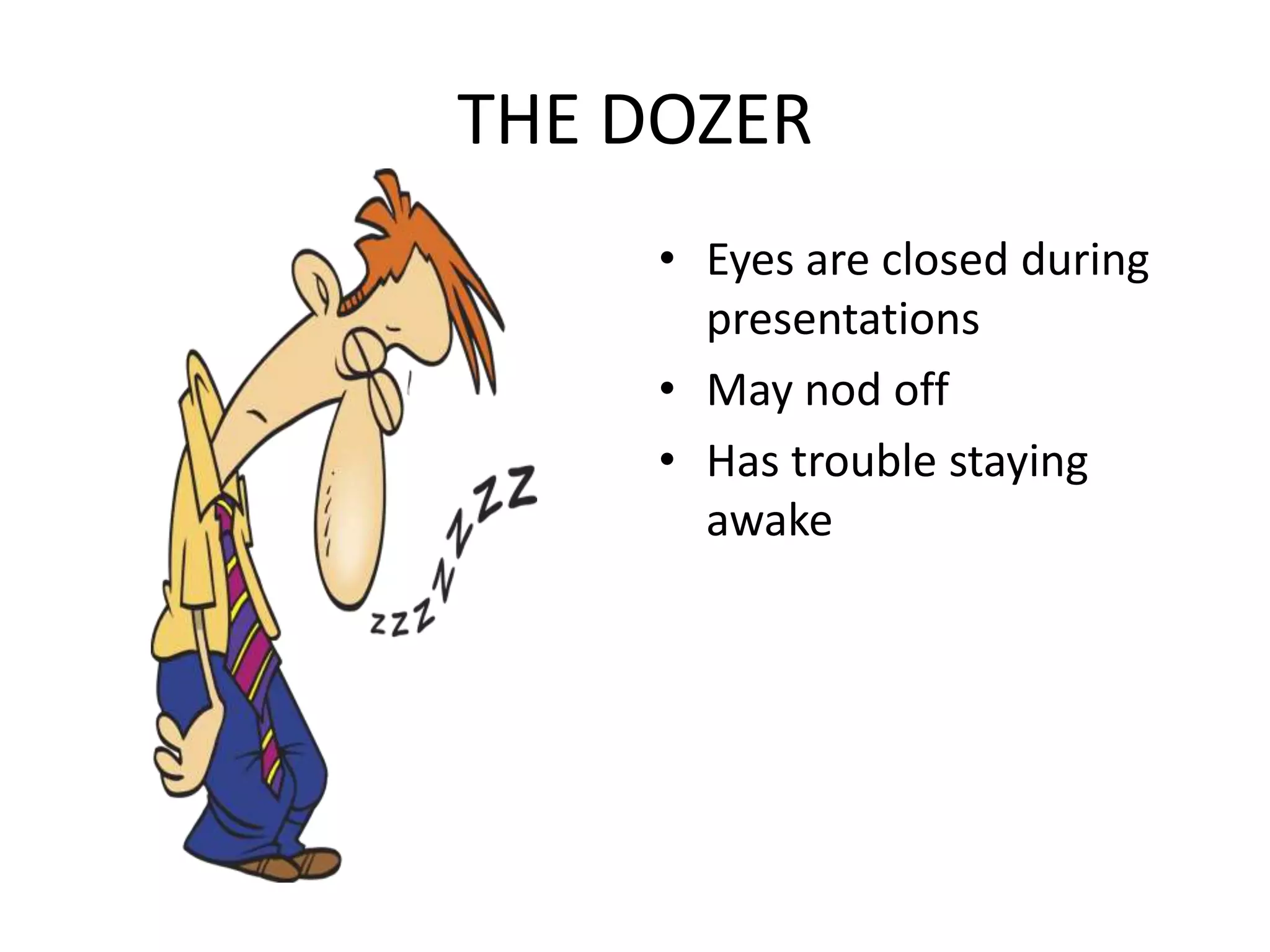
THE DOZEREyes are closed during presentationsMay nod offHas trouble staying awake

Train The Trainer

  • 1.
    TRAIN THE TRAINERAskills overview for Trainers
  • 2.
    The Big WHY?WhyDiversity Training?Why a Train-the-Trainer Workshop?Why YOU?
  • 3.
    PRINCIPLES OF ADULTEDUCATIONWhat makes Adults WANT to learn?How can we achieve “transfer of training” – how do we make it stick?What do Adults HATE?
  • 4.
    NEED TO KNOWPRINCICPLEAdults want to know WHY and HOWWhy they should learn this informationHow the information will help them
  • 5.
    Strategies? Thisprinciple addresses participant motivation. How can the Instructor help students understand the purpose and value of the instruction?
  • 6.
    PREVIOUS EXPERIENCE PRINCIPLESome of the new information may conflict with their previous experiences or learnings, while other may enhance it
  • 7.
    StrategiesHow can youbuild on participants’ previous experiences?
  • 8.
    ENCOURAGING AND SUPPORTIVELEARNING CLIMATE PRINCIPLEThe learning environment must be physically and psychologically supportive
  • 9.
    Strategies How canyou make the classroom environment warm and supportive?What kinds of things do Adults dislike about classroom instruction and how can these be avoided?
  • 10.
    THE PRACTICALITY PRINCIPLE.Most Adult Learners in the Workplace are more interested in application than in theory.
  • 11.
    Strategies If youdo not have any practice exercises for participants to try, how else might you make the transition from theory to practical application?
  • 12.
    THE SELF-DIRECTION PRINCIPLEExcellentAdult Education Instructors will act more as a facilitator and mentor than as a traditional Expert Teacher
  • 13.
    Strategies How canyou tell the difference between those who are highly self-directed and those who may be other directed?How can you best accommodate both Self-directed and other directed learns in one class?
  • 14.
    KNOWLEDGE OF SUBJECTCONTENTYou don’t have to know EVERYTHINGNot knowing something does not ruin your credibilityExperts are frequently wrong
  • 15.
    SESSION PACEParticipants won’tshow any more energy than the InstructorStart on time – end on time
  • 16.
    A Special ChallengeHowcan you get people back from breaks on time?
  • 17.
    CONDUCTING EXERCISESGroup DiscussionDyads– 2Triads – 3Optimum Group discussion size – 4-6Optimum group project size -7-10
  • 18.
    MANAGING RELATIONSHIPS INTHE GROUPTo manage group relationships, set the tone early
  • 19.
    Set Group NormsHaveparticipants draw up a list of “rules” they would all like to follow in the class and post them.
  • 20.
    POSSIBLE PITFALLSfor instructorsin diversity trainingWhat are some of the things that you have previously found annoying in courses that you have taken?
  • 21.
    DIFFICULT/CHALLENGING PARTICIPANTSRemember:Not allparticipants may have the same agenda as you doNot all participants will agree with your point of viewNot all participants are necessarily willing students
  • 22.
    IN GENERAL .. . Be organized – Be on time – Be professionalDon’t take things too personally – the most gifted of Instructors run into difficult participants from time to timeDon’t argue with any one – take that type of discussion off line
  • 23.
  • 24.
    AIR HOGMonopolizes airtime during group discussions
  • 25.
    THE DISPUTERArgues witheveryone including the InstructorContradicts people,. Using phrases like “That’s stupid”, “That’s wrong”
  • 26.
    THE UNFOCUSEDHave difficultymaking their point and may sound confused
  • 27.
    THE SARCASTIC SNIPERMakessarcastic comments, often in low tone of voiceUses humour as a way of sending a critical message
  • 28.
    THE SEXIST/RACISTMakes sexistor racist comments in a joking manner
  • 29.
    THE NEGATIVISITAlways pointsout faults and the downside of ideasHates group work and makes it difficult for others in the group with constant criticismDoesn’t contribute to finding a solution but always points out how it might fail.
  • 30.
    THE SOCIALIZERChats toothers around him/her while others are speakingCarries on a side conversation while you are talking
  • 31.
    THE DOZEREyes areclosed during presentationsMay nod offHas trouble staying awake

Editor's Notes

  • #4 Begin with principles that apply to instruction in any type of course rather than just this one on Diversity.Ask for ideas on these three questions, then indicate that there are some generally recognized adult education principles that help to ensure that learning occurs.
  • #5 Ask them why they are in this particular class, and what they hope to learn that will help them. Is there a difference between those classes that people ask to take and those that they are mandated to take?
  • #6 Ask participants for their suggestions and flip chart the answers.
  • #7 In any program that addresses personal values, there will be previous learnings that will interfere with new material. This is true (although perhaps to a lesser degree) with technology as well. For example, when I learned to drive, I was told that when starting the car, press the accelerator a couple of times to get some gas into the carburetor. You don’t want to do this with the new electronically controlled starters.Instructors may want to determine, ahead of time, the “diversity map” that exists within a work group or even a geographic area.
  • #8 Strategies can range from asking for examples, stories, to creating small discussion groups, to conducting surveys to determine current attitudes and beliefs.
  • #9  Many Adult Learners have unpleasant memories of school and learning. They may have experienced ridicule, fear, confusion, or instructor biases. Many Adults fear becoming the object of ridicule or scorn and their self-esteem and ego are often on the line when they are called on in class. It is the job of the Instructor to help create this climate, beginning with chatting to individuals as they come to class prior to the start time, to having people introduce themselves to others in the class, to keeping control of any class behaviour that might intimidate others.In addition, the Instructor will try to avoid, as much as possible, things that generally Adults hate to experience in the class.
  • #10 Have one group brainstorm the first question, and a second group brainstorm the second question, and flipchart the results.
  • #11 Instructors can check in at this point to see what the expectations of their students are – what do the students want to be able to do after completing the T-T-T course that they were unsure of prior to taking it?
  • #13 Adults tend to be very self-directed and will learn what they believe to be important for them to learn – regardless of what the Instructor thinks is most important. Authoritarian teaching styles will create a great deal of resistance and dissatisfaction. This means that the Instructor will be required to pay attention to non-content things such as group process, cultural, social, and other differences that exist among participants, and participant interaction.
  • #14 Other-directed learners tend to be passive, follow orders, and do only what they are required to do.Self directed learners are more likely to ask questions, challenge the Instructor, creatively diverge from the main path, and leave if their needs are not being met.
  • #16 Session pace also includes hints on managing the timing of the session, including starting on time, getting people back from breaks, and keeping the session flowing without either dragging or moving through too quickly.
  • #18 Use dyads for more in-depth discussions, and to draw out more silent membersUse triads when you want to practice a skill, and want an observer to provide feedback
  • #19 Introductions – your self and all the participants unless they already know one another. If they do know one another you might start with a quick ice-breaker – for example, if the topic is diversity, ask them for the first word that pops into their head – then give them a key word that has some tie-in with diversity e.g. diversity, wheel chair, immigrant, Canadian, foreigner, baby-boomer, culture, etc.
  • #20 Kick start the list with – Start and End on time; ask others to suggest rules that willmake the learning environment better for everyone.
  • #21 These are traps that new instructors can “fall into” – often because that is the training behaviour they have seen when they attended courses.Because Diversity involves so much value oriented discussion, the Instructor will want to be wary of some of the common pitfalls that can occur with this topic. Ask the participants things that Instructors did that they didn’t like when they were in a course – flip chart these, and then Add to the list with any of the following if not already mentioned:LecturingTelling people how they should feelPicking on one or two people for answersProfanityIgnoring some peopleRidiculing answersInappropriate humourWandering off topicPeople answering cell phones or blackberriesA participant taking up too much air time and the Instructor getting into long discussions with only one person
  • #22 Participants can present challenges for a variety of reasons. Some people have difficult personalities; others find the topic unpleasant; some always challenge authority; some are difficult to understand because English is not their first language; some think they know more than you do; etc.
  • #24 The following slides present a short catalogue of specific types of more challenging types of participants, and a brief description of the behaviour.As you go through the slides, ask people to devise strategies that they think would work or have seen Instructors e to manage the situation.