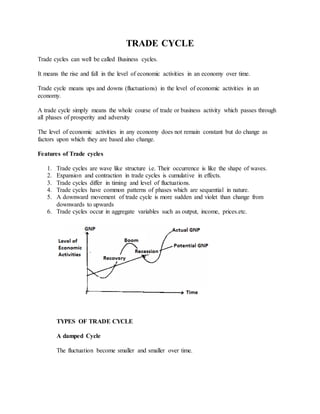
Trade cycles refer to the rise and fall in the level of economic activity over time. They typically involve four phases: depression, recovery, boom, and recession. Trade cycles are caused by factors such as changes in climate, technology, government policy, and business optimism/pessimism. The rise and fall can be amplified by monetary factors like changes in the money supply or demand for money. Governments try to control business cycles through expansionary fiscal and monetary policies during recessions to stimulate aggregate demand, and price/wage controls to stabilize the economy.