Dr. Prahlada N.B
MS (PGIMER), MBA, MHA
Tracheostomy care
 Security of the tracheostomy tube
 The inner cannula hygiene
 Cuff pressures should be maintained at 20–25 cm H2O
 Regular tube changes
Tracheostomy care
 Secretion management
 Hydration
 Humidity
 Suctioning, and
 Physical mobility
 Respiratory Physiotherapy
 Prepare for Decanulation
Decanulation
 As soon as the patient’s condition permits.
Who should do it?
 Team
Who should do it?
 Ear, Nose and Throat (ENT) Surgeon
 Ward Nurse
 Tracheostomy Nurse Specialist
 Respiratory therapist
 Speech and Language Therapist (SLT)
 Physiotherapist.
 Dietician.
Prior work-up
 Chest X-Ray
 Naso-laryngo-bronchoscopy
 The upper airway
 Vocal cord movement and
 The tracheal mucosa.
 Swallowing assessment.
Evaluate bedside swallow
 Patients not alert enough to follow commands.
 Patients unable to swallow their own saliva.
 Patients with significant central neurological deficits.
Indications - Decanulation
 Reason for the tracheostomy resolved.
 Patient alert, responsive and consenting.
 Patient tolerating cuff deflation for a minimum of 12
hours.
 Patient managing to protect their airway and have a
clear chest.
 Patient maintaining oxygen saturations.
Indications - Decanulation
 Patient tolerating the use of a speaking valve and/or
digital occlusion.
 Patient able to expectorate around the tube into their
mouth.
 Tracheostomy tube type and size is appropriate.
Type and size of tube for weaning
 The ideal tube to use for the weaning process is one
that allows adequate airflow around the tube while the
tube is occluded.
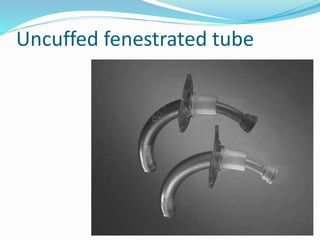
 An uncuffed fenestrated tube will offer the least
resistance.
 The patient should be able to maintain SaO2 above
90%.
Uncuffed fenestrated tube
Patient preparation and
involvement
 Consent
 Explanation.
 Involvement.
Practical issues
 Explanation to the patient.
 Start on first days of the week.
 Start early morning.
 Closely monitor the patient.
 Document the progress.
Downsizing Algorithm
The weaning process
 Day 1-
 Ensure the cuff, if present, is deflated.
 Insert fenestrated inner tube if appropriate.
 Place an occlusion cap over the end of the
tracheostomy tube .
 Observe for signs of respiratory distress and
 Stay with the patient for at least the first 10 min.
 The patient’s oxygen saturation and vital signs should
be recorded after 15 min.
The weaning process
 Continue to occlude tube for 12 hour.
 Day 2 - Occlusion cap in situ for 24 h.
 Day 3 – Decanulation.
Difficulty with
weaning/troubleshooting
 Respiratory insufficiency
 Airway Obstructions
 Retention of Secretions
 Blood in secretions
 Patient anxiety
Summary
 The ability to decannulate the patient will be affected by
various factors:
 Selection of patients for the weaning procedure.
 Reason why the tracheostomy was formed.
 Type and size of the tracheostomy tube.
 Support from the TEAM.
 A systematic, standardised approach to the weaning
procedure by all members of the multi-disciplinary team.
 Accurate and appropriate documentation of the procedure.
 Patient and family involvement.

Tracheostomy decanulation

  • 1.
    Dr. Prahlada N.B MS(PGIMER), MBA, MHA
  • 2.
    Tracheostomy care  Securityof the tracheostomy tube  The inner cannula hygiene  Cuff pressures should be maintained at 20–25 cm H2O  Regular tube changes
  • 3.
    Tracheostomy care  Secretionmanagement  Hydration  Humidity  Suctioning, and  Physical mobility  Respiratory Physiotherapy  Prepare for Decanulation
  • 4.
    Decanulation  As soonas the patient’s condition permits.
  • 5.
    Who should doit?  Team
  • 6.
    Who should doit?  Ear, Nose and Throat (ENT) Surgeon  Ward Nurse  Tracheostomy Nurse Specialist  Respiratory therapist  Speech and Language Therapist (SLT)  Physiotherapist.  Dietician.
  • 7.
    Prior work-up  ChestX-Ray  Naso-laryngo-bronchoscopy  The upper airway  Vocal cord movement and  The tracheal mucosa.  Swallowing assessment.
  • 8.
    Evaluate bedside swallow Patients not alert enough to follow commands.  Patients unable to swallow their own saliva.  Patients with significant central neurological deficits.
  • 9.
    Indications - Decanulation Reason for the tracheostomy resolved.  Patient alert, responsive and consenting.  Patient tolerating cuff deflation for a minimum of 12 hours.  Patient managing to protect their airway and have a clear chest.  Patient maintaining oxygen saturations.
  • 10.
    Indications - Decanulation Patient tolerating the use of a speaking valve and/or digital occlusion.  Patient able to expectorate around the tube into their mouth.  Tracheostomy tube type and size is appropriate.
  • 11.
    Type and sizeof tube for weaning  The ideal tube to use for the weaning process is one that allows adequate airflow around the tube while the tube is occluded.  An uncuffed fenestrated tube will offer the least resistance.  The patient should be able to maintain SaO2 above 90%.
  • 12.
  • 13.
    Patient preparation and involvement Consent  Explanation.  Involvement.
  • 14.
    Practical issues  Explanationto the patient.  Start on first days of the week.  Start early morning.  Closely monitor the patient.  Document the progress.
  • 15.
  • 16.
    The weaning process Day 1-  Ensure the cuff, if present, is deflated.  Insert fenestrated inner tube if appropriate.  Place an occlusion cap over the end of the tracheostomy tube .  Observe for signs of respiratory distress and  Stay with the patient for at least the first 10 min.  The patient’s oxygen saturation and vital signs should be recorded after 15 min.
  • 17.
    The weaning process Continue to occlude tube for 12 hour.  Day 2 - Occlusion cap in situ for 24 h.  Day 3 – Decanulation.
  • 18.
    Difficulty with weaning/troubleshooting  Respiratoryinsufficiency  Airway Obstructions  Retention of Secretions  Blood in secretions  Patient anxiety
  • 19.
    Summary  The abilityto decannulate the patient will be affected by various factors:  Selection of patients for the weaning procedure.  Reason why the tracheostomy was formed.  Type and size of the tracheostomy tube.  Support from the TEAM.  A systematic, standardised approach to the weaning procedure by all members of the multi-disciplinary team.  Accurate and appropriate documentation of the procedure.  Patient and family involvement.