

TOXIDROMES
DR KTD PRIYADARSHANI
REGISTRAR IN EMERGENCY MEDICINE
TEACHING HOSPITAL- PERADENIYA
2023/04/17
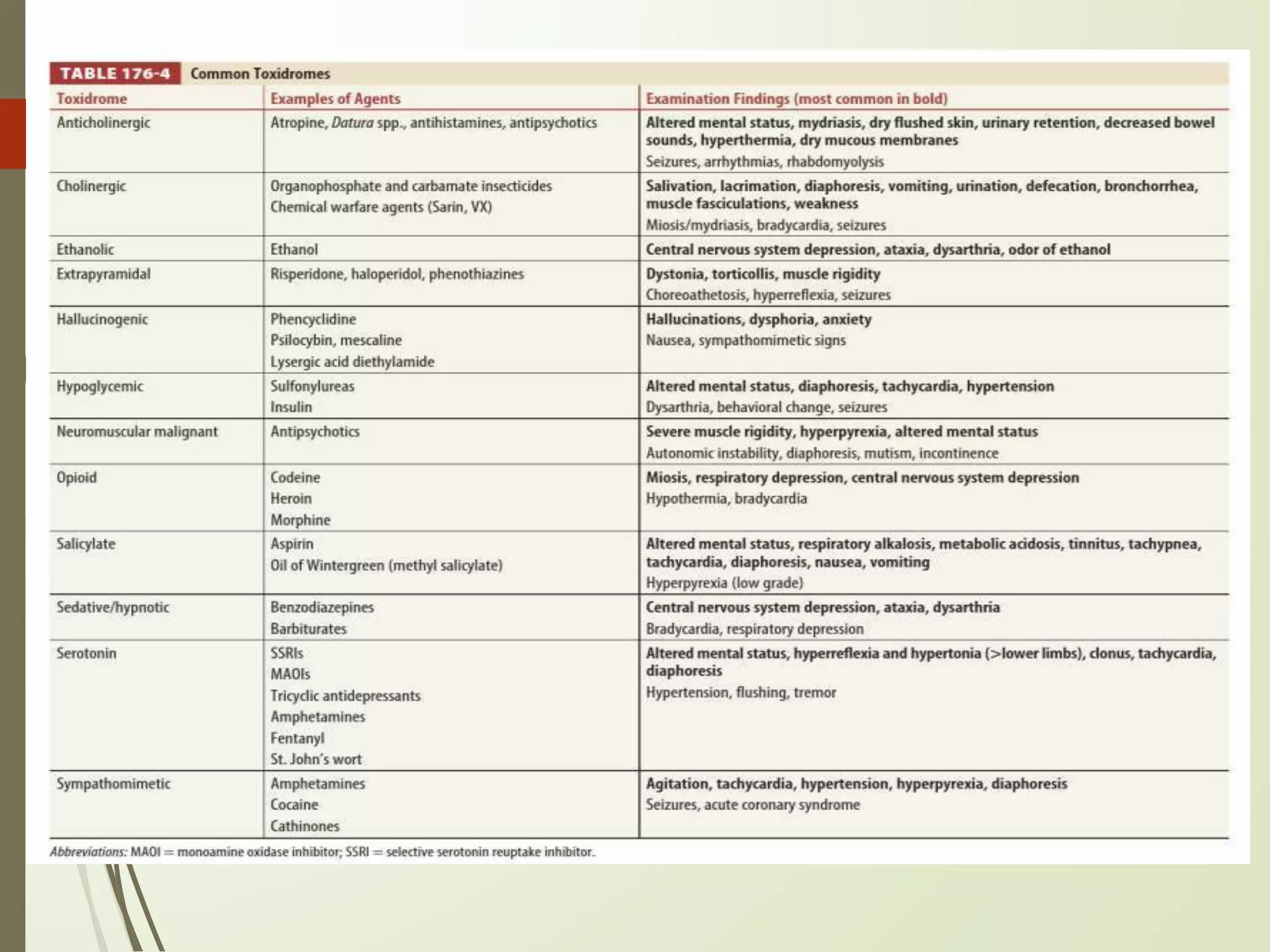
Toxidromes
• Toxic syndromes
• Group drugs together according to the signs
and symptoms they generally produce in
patients
• (so when encounter a patient presenting a
certain way, easy to recognize the toxidrome)
• Help to move toward final diagnosis
�What are the major Toxidromes?
� Anticholinergics
� Cholinergic / Anticholinesterase
� Sympathomimetics / Withdrawal
� Opiate
� Sedative/ hypnotic (Hypnosedative)
� Serotonin syndrome/ neuroleptic
malignant syndrome
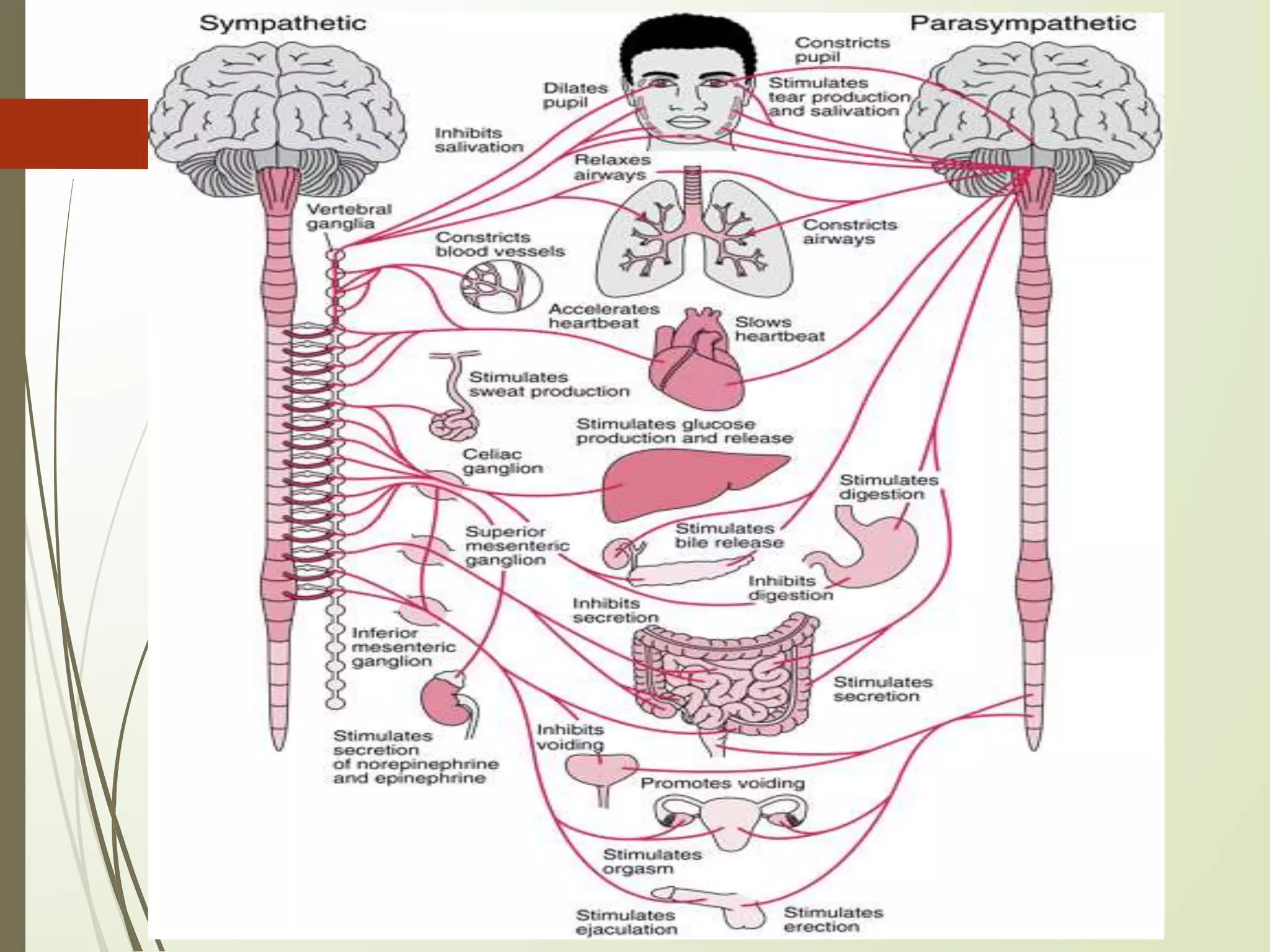
Anti-cholinergic
toxidrome
Anti-cholinergic toxidrome
• Antagonize Ach receptors
(muscarinic / nicotinic)
• Major blockage – muscarinic
• High doses – nicotinic at NMJ &
autonomic ganglia
Anti-cholinergics
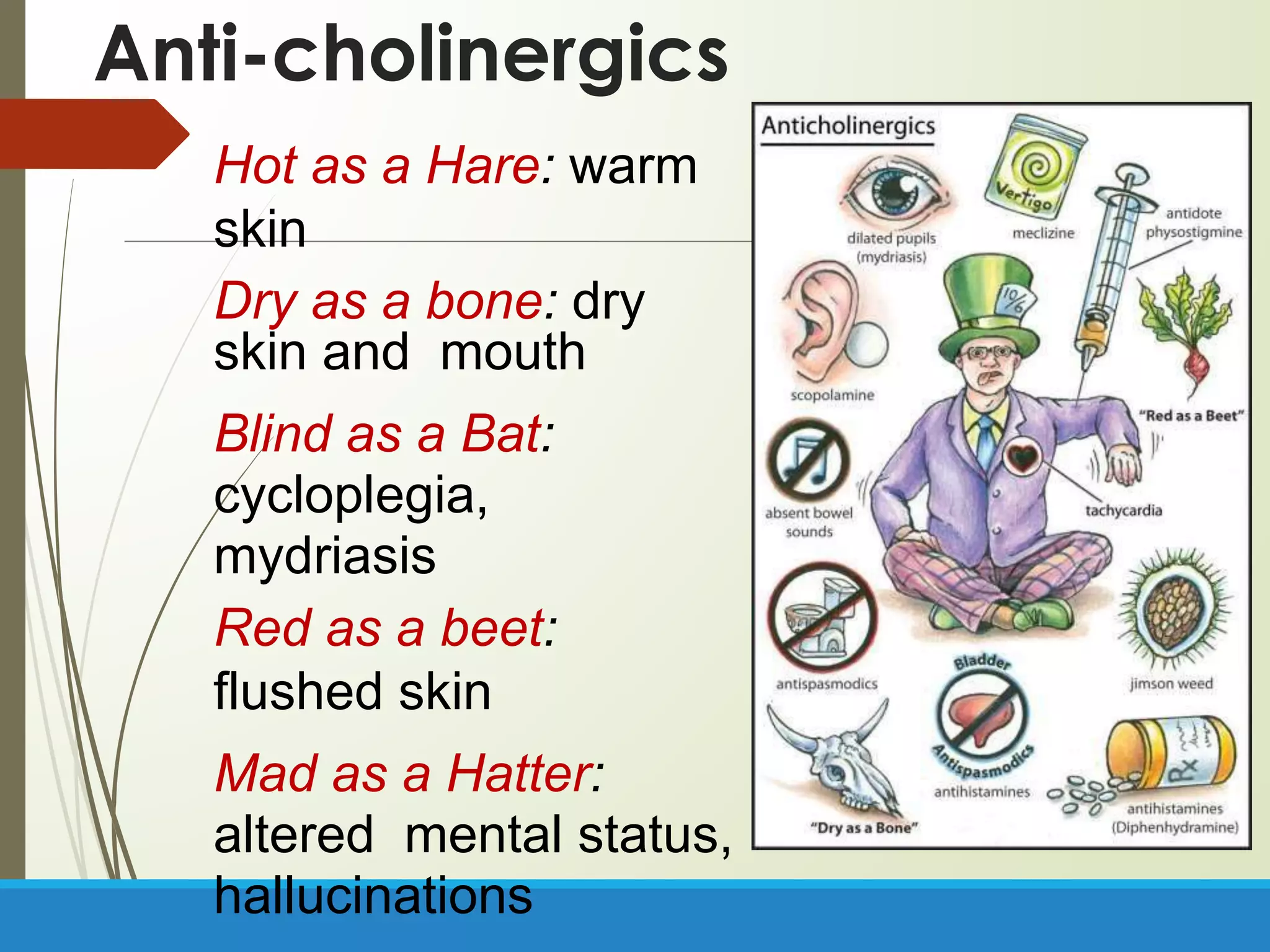
Hot as a Hare: warm
skin
Dry as a bone: dry
skin and mouth
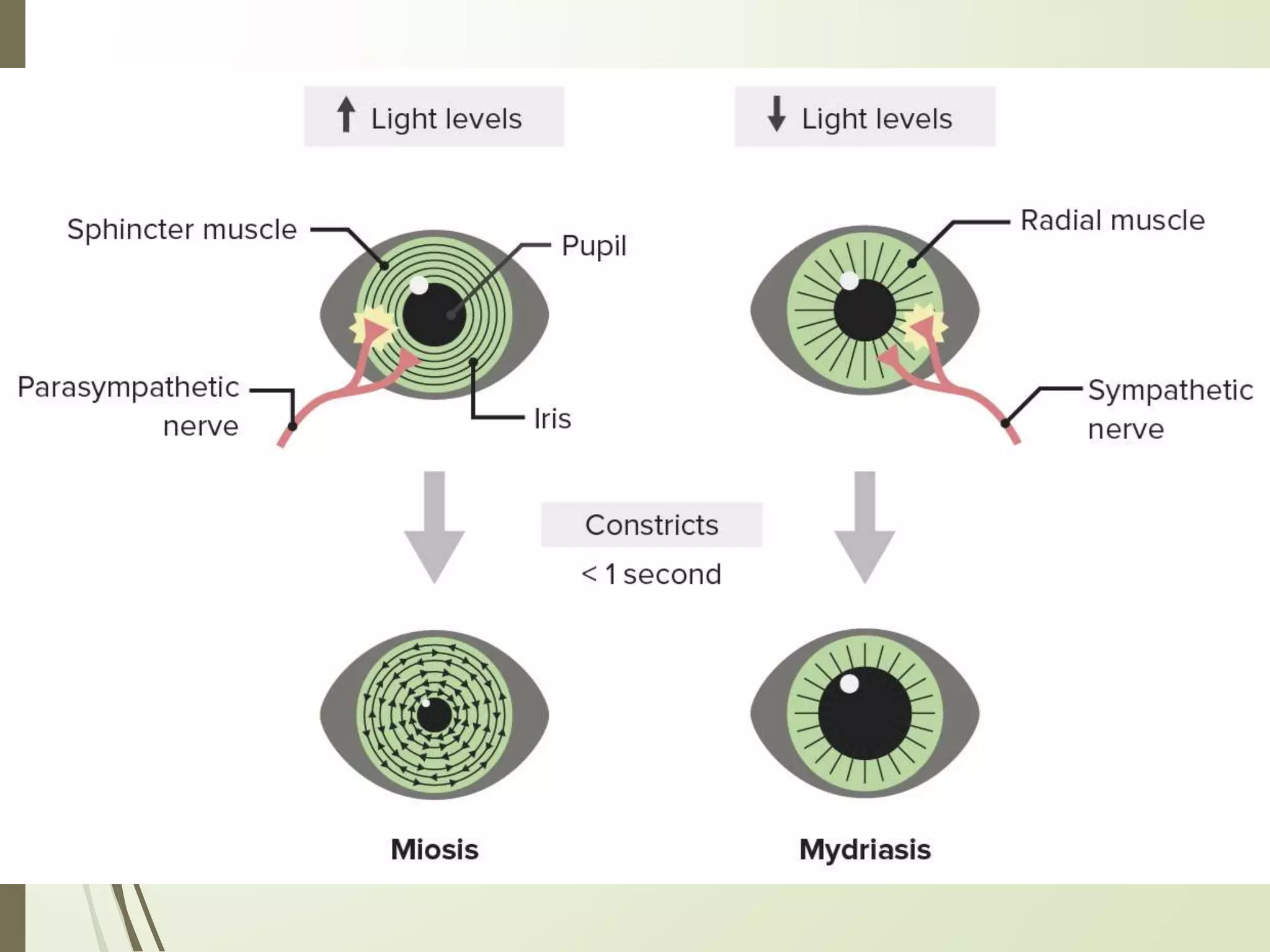
Blind as a Bat:
cycloplegia,
mydriasis
Red as a beet:
flushed skin
Mad as a Hatter:
altered mental status,
hallucinations
Anticholinergic
• TCA, SSRI
• Antihistamines
• Carbamazepine
• antipsychotics,
• Antispasmodics
• atropine
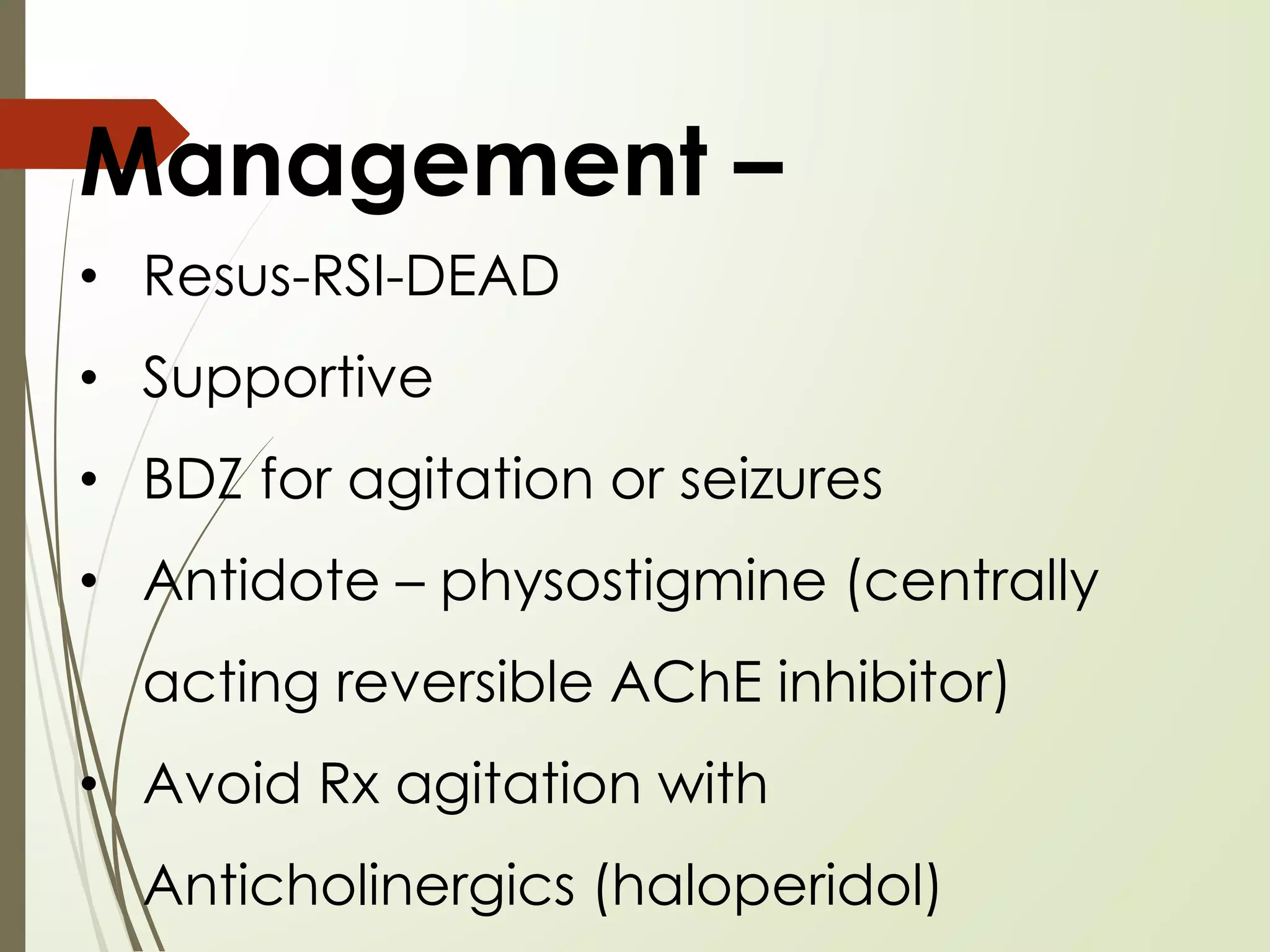
Management –
• Resus-RSI-DEAD
• Supportive
• BDZ for agitation or seizures
• Antidote – physostigmine (centrally
acting reversible AChE inhibitor)
• Avoid Rx agitation with
Anticholinergics (haloperidol)
Cholinergic
toxidrome
Cholinergic toxidrome
• Increased Ach activity
• Both central and peripheral
• Both nicotinic and muscarinic
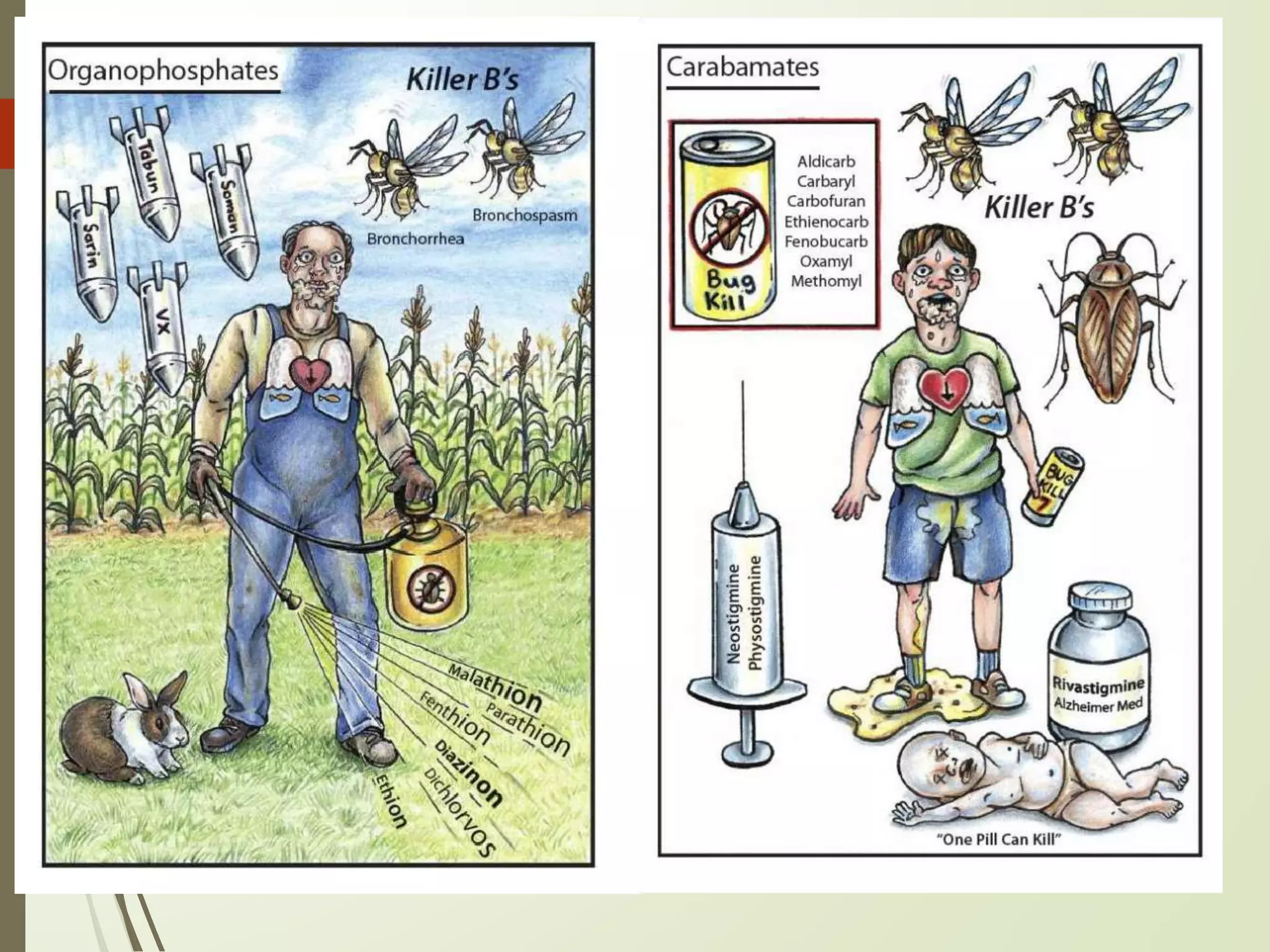
Anticholinesterases
❖ Organophosphate
& carbamate
insecticides
❖ Nerve gas (sarin)
Cholinergic
(Cholinomymetics)
❖ Nicotine
❖ Mushrooms
❖ Pilocarpine
DUMBELS
• Diaphoresis, Diarrhea,
Decreased blood pressure
• Urination
• Miosis
• Bronchorrhea, Bronchospasm,
Bradycardia
• Emesis, Excitation of skeletal
muscles
• Lacrimation (tearing)
• Salivation, Seizures
SLUDGE
• Salivation
• Lacrimation
• Urination
• Defecation
• GI Stress
• Emesis
Management -
• Resus-RSI-DEAD
• Decontamination
• Atropine – until dry secretions
• Pralidoxime
Opioid toxidrome
Opioid toxidrome
• Due to narcotics & narcotic derivatives
• Bind to opioid receptors in CNS & bowel
� Classic presentation
� CNS depression
� Respiratory depression
� Miosis
Commonly used opioids
� Heroin,
� Morphine,
� Hydromorphone,
� Codeine,
� Hydrocodone,
� Oxycodone,
� Fentanyl
Treatment -
� RSI- DEAD
� Naloxone
� Competitive opioid antagonist (mu,
kappa & delta)
� Bolus 400 mcg IV/IM
� Rpt 100mcg every 30-60 seconds
until spontaneous respiration
� 2/3 of initial dose per hour
infusion if patient not conscious
Sympathomimetic
toxidrome
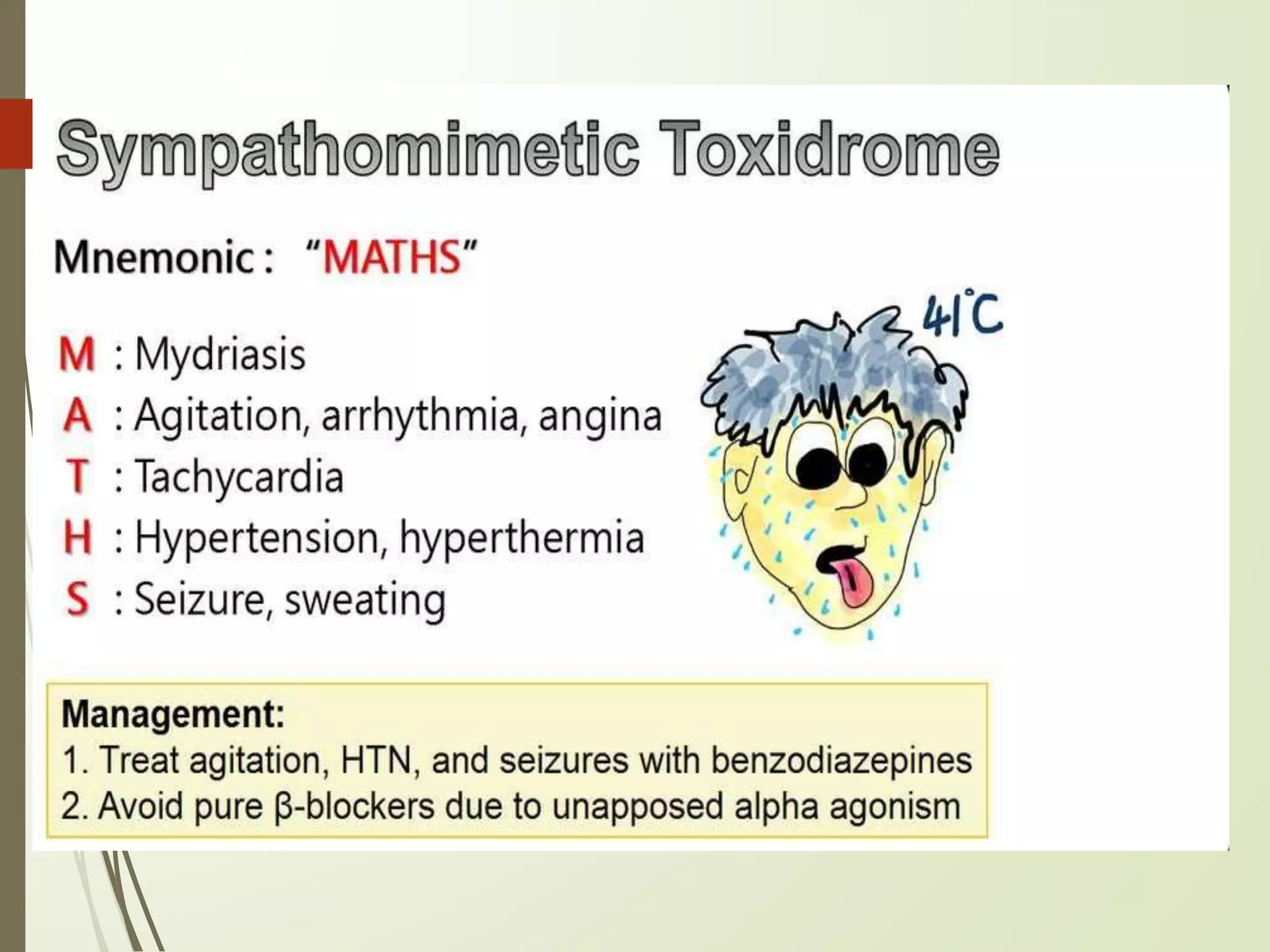
Sympathomimetic toxidrome
• Act on sympathetic nervous system
• Direct or indirect effect on catecholamines
• Direct act – alpha agonists, dopaminergic
agents
• Indirect – increase catecholamine release,
inhibit breakdown/delay reuptake
(amphetamines, cocaine)
Clinical Features
• Tachycardia
• Hypertension
• Hyperthermia
• Hyperreflexia
• Mydriasis
• Diaphoresis
• Normal bowel sounds
• Tremors
• Chest pain
• Rhabdomyolysis
Treatment
• Supportive
• IV Fluids
• CVS (HT/Tachycardia)
• BDZ
• phentolamine
• Vasodilator infusion (GTN)
• No β blockers
• Seizures/Agitation
• BDZ
• Cooling- Dantrolene
Hypno-sedative
toxidrome
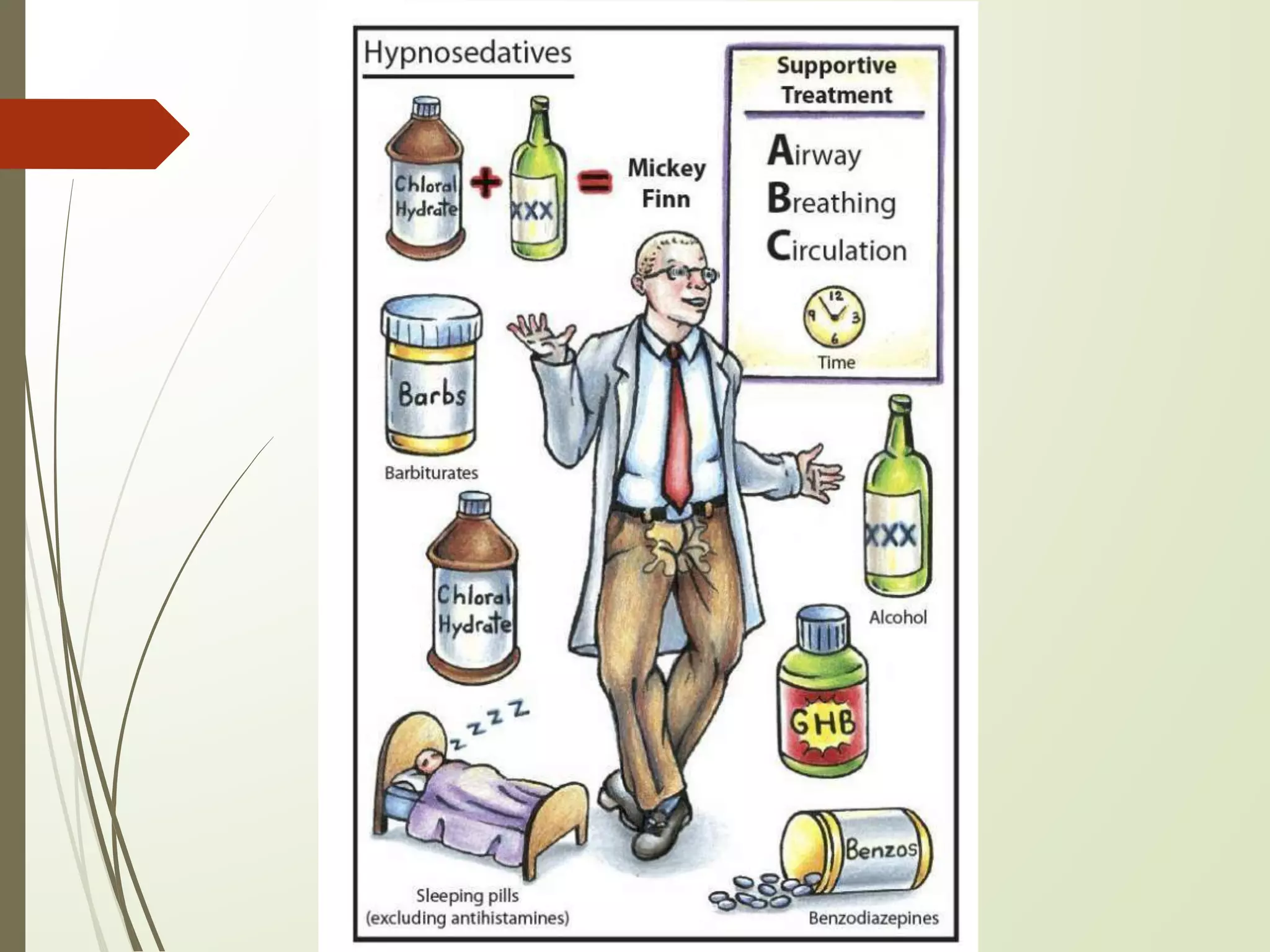
Hypno-sedative toxidrome
❖Modulate activity of GABA
neurotransmitter complex
❖ Include in
❖ Benzodiazepines
❖ Barbiturates
❖ Zolpidem, zopliclone
❖ Baclofen
❖ Gamma-hydroxybutyrate
❖ Chloral hydrate
❖ paraldehyde
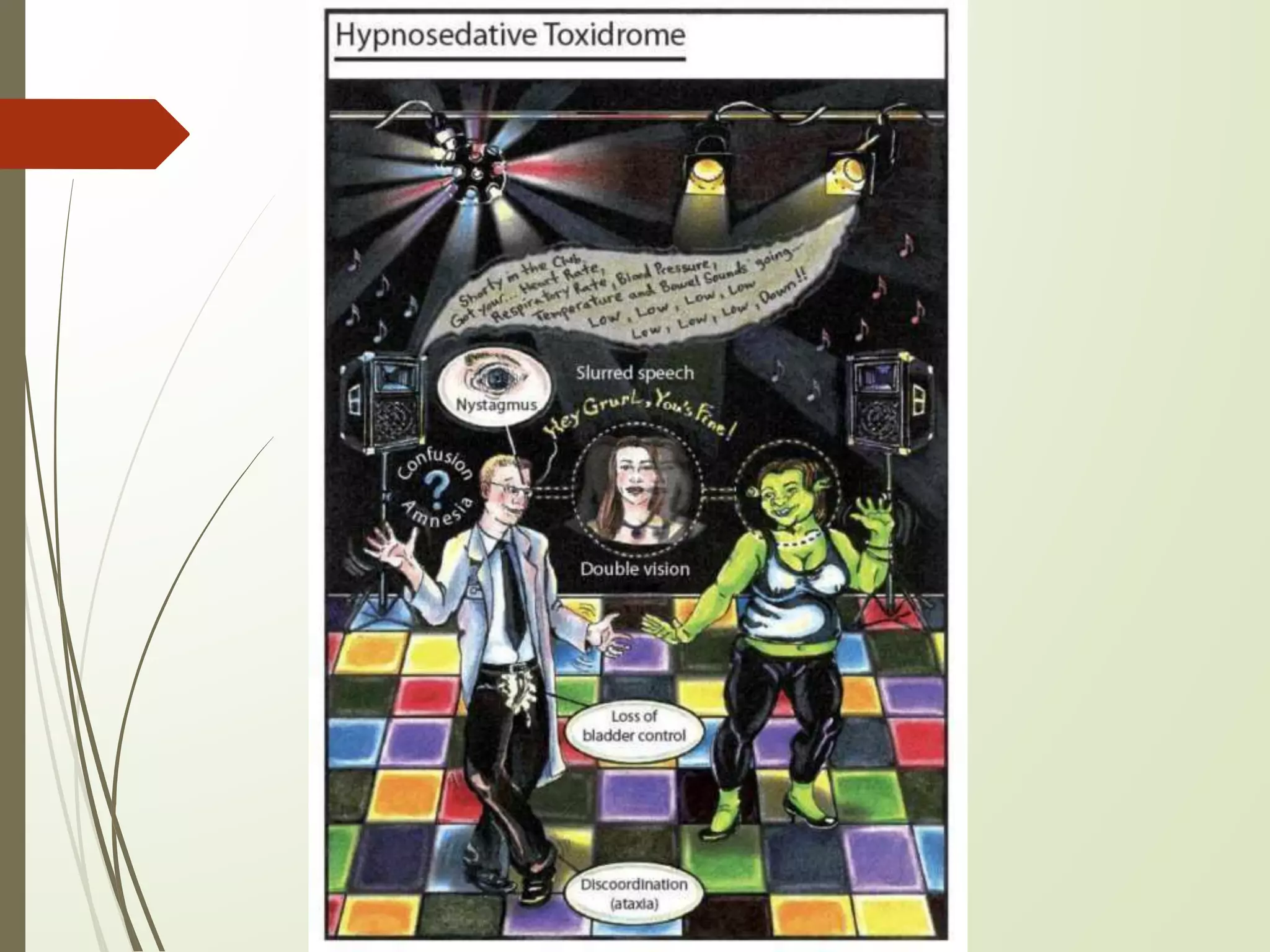
Clinical Features
• CNS depression
• sedation, confusion, amnesia
• Respiratory depression
• CVS depression
• Nystagmus
• Ataxia/ loss of coordination
• Loss of bladder control
Treatment
�Largely supportive
�Extreme caution with antidotes
�Flumazenil can reverse
benzodiazepines, but can also
cause intractable seizures and
so is not used routinely.
Contraindications to
Flumazenil
� Overdose of unknown agents.
� Suspected or known physical
dependence on benzodiazepines.
� Suspected cyclic antidepressant
overdose.
� Co-ingestion of seizure-inducing
agents.
� Known seizure disorder
� Suspected increased intracranial
pressure.
SS & NMS
Serotonin syndrome
� MAOI: phenelzine, tranylcypromine,
isocarboxazid, pargyline, rasagiline, and
selegiline
� SSRI: fluoxetine, sertraline, paroxetine,
fluvoxamine, citalopram, and escitalopram
� SNRI: venlafaxine, desvenlafaxine,
levomilnacipran, and duloxetine
� TCA: amitriptyline, clomipramine,
desipramine, doxepin, imipramine,
nortriptyline, protriptyline, and trimipramine
� Miscellaneous: trazodone (moderate
potency), bupropion (low
potency),tramadol , Lithium, meperidine
Severity Pattern
Category Clinical features
Mild Mild agitation, mild fever (<40°C), tremor,
myoclonus, hyperreflexia,
diaphoresis, mydriasis, elevated blood
pressure and heart rate
Moderate Marked agitation, hyperthermia (>40°C),
myoclonus, hyperreflexia, ocular clonus,
increased bowel sounds
Severe Hyperthermia (>41.1°C), delirium, marked
muscle rigidity, marked swings in blood
pressure and heart rate
Treatment
� Stop all serotonergic therapy
� Initiate cardiopulmonary monitoring, establish peripheral IV
access, and obtain ECG
� IV fluid rehydration
� External cooling measures for hyperthermia
� Benzodiazepines for agitation
� Use short-acting IV antihypertensives (nitroprusside or
esmolol) for severe hypertension
� Use direct-acting IV vasopressors (norepinephrine,
epinephrine, or phenylephrine) for hypotension resistant to IV
fluid resuscitation
� Consider cyproheptadine for moderate to severe clinical
features refractory to supportive care.
Neuroleptic Malignant
Syndrome
� An idiosyncratic drug reaction to antipsychotics
� Occurs with in 3-9 days of starting drug
� Due to central dopaminergic blockade
Clinical Features
▪ Major criteria –
▪ fever, muscle rigidity, psychomotor slowing and altered
mental status, sympathetic nervous system liability,
recent dopaminergic antagonist exposure or dopamine
agonist withdrawal
▪ Minor criteria-
▪ Increased CK levels or myoglobinuria, tachycardia,
tachypnea, hypersalivation, tremor, muscle cramps
▪ Exclude
▪ No other infection, toxic, metabolic or neurologic cause
identified
▪ both major and at least 5 minor criteria must be present
Treatment
� Supportive.
� Withdraw any potentiating drugs
� Exclude DD
� Airway and breathing difficulties
� nondepolarizing agents (e.g., rocuronium)
are preferred over depolarizing agents (e.g.,
succinylcholine).
� Temperature
� external cooling measures;
� pharmacologic antipyretics are not beneficial
� Sedation - to decrease agitation and
sympathetic activity; a
benzodiazepine, such as lorazepam.
� Hypertension- GTN or Nitroprusside
� Antidote-Dantrolene and
Bromocriptine in severe cases.
Summary
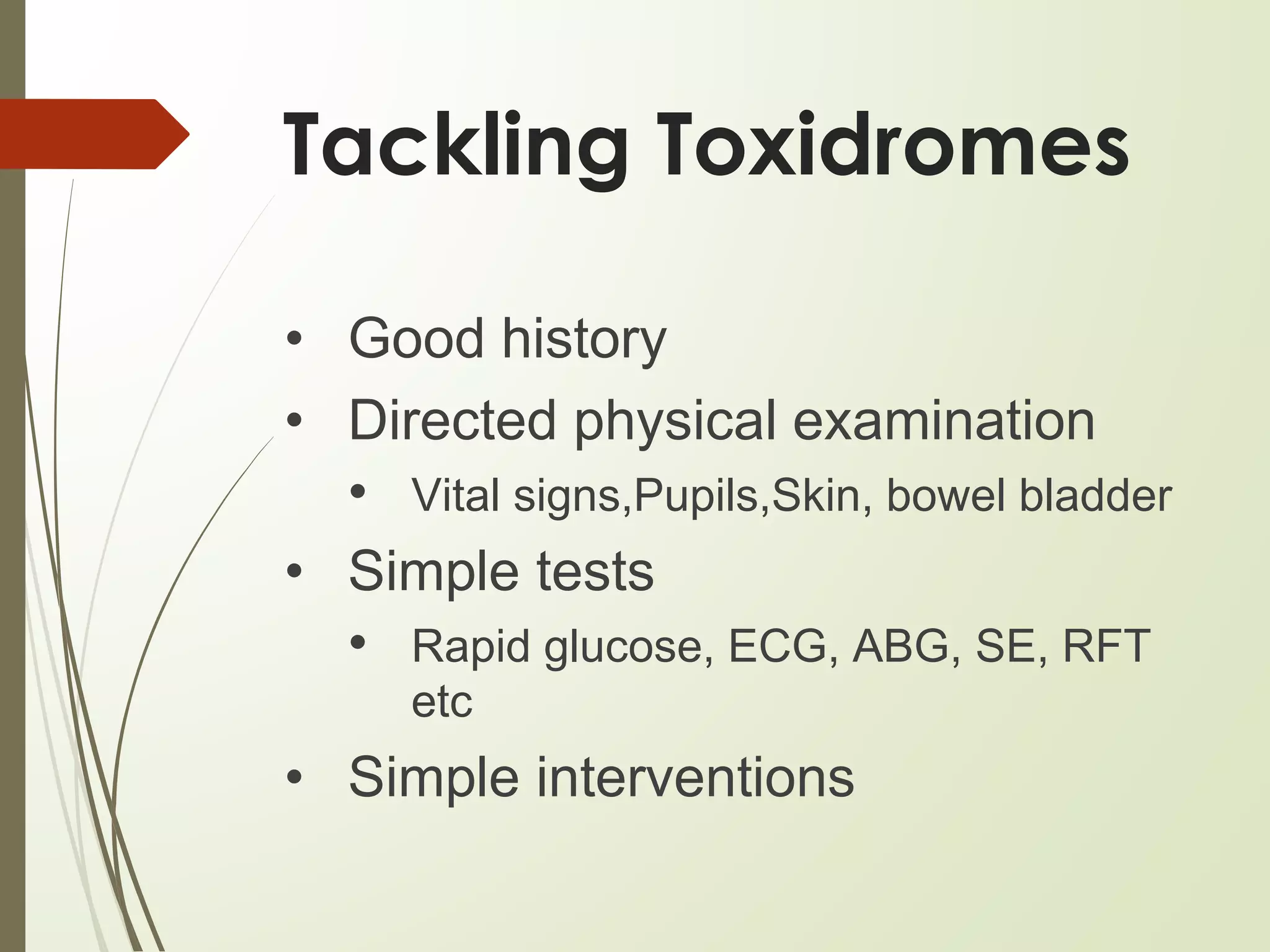
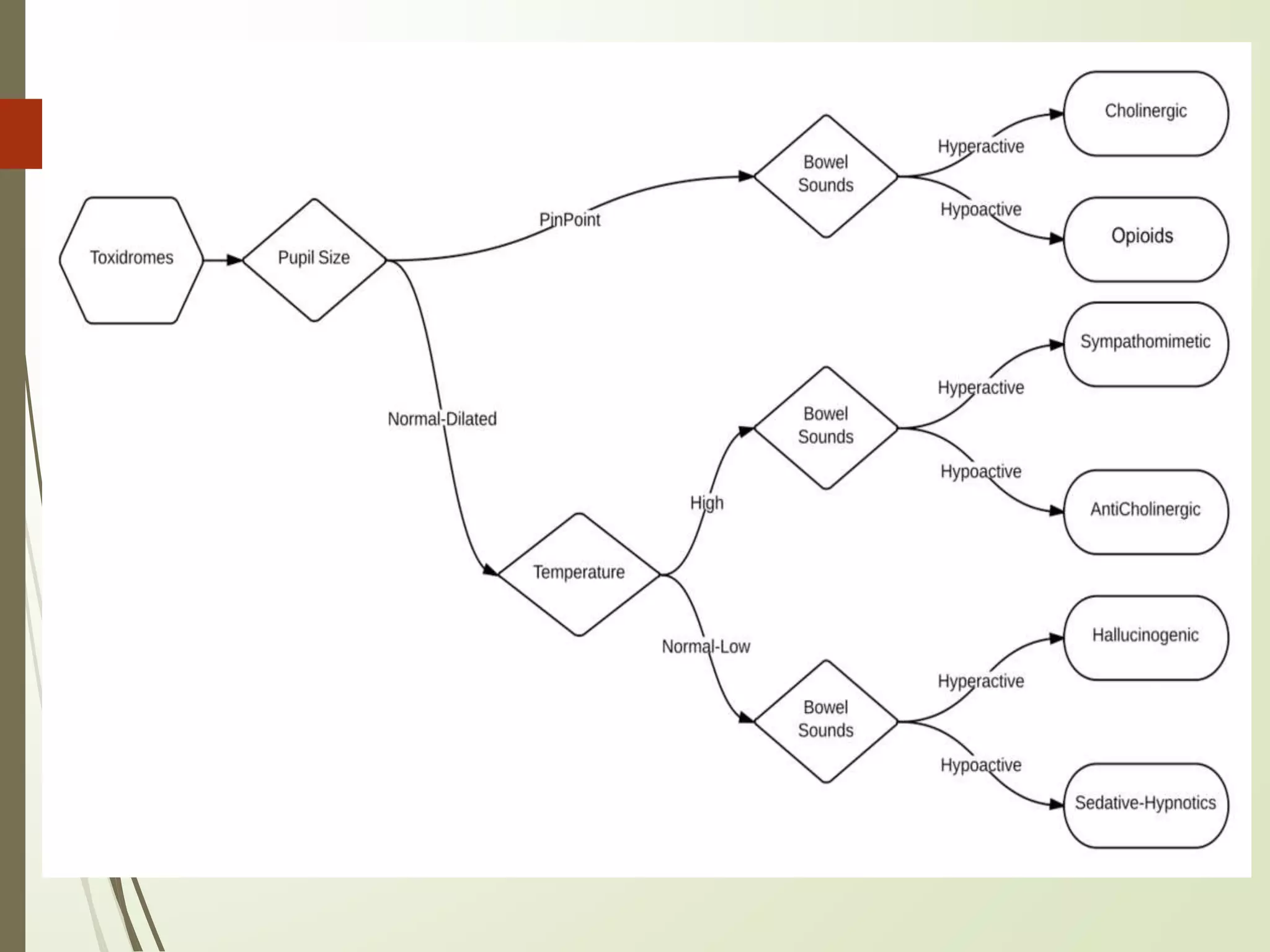
Tackling Toxidromes
• Good history
• Directed physical examination
• Vital signs,Pupils,Skin, bowel bladder
• Simple tests
• Rapid glucose, ECG, ABG, SE, RFT
etc
• Simple interventions
References
� Tintinali EM 9Edition
� Life in the fast lane
� FRCEM Intermediate- text books
Thank you

Toxidromes.pptx

  • 1.
    TOXIDROMES DR KTD PRIYADARSHANI REGISTRARIN EMERGENCY MEDICINE TEACHING HOSPITAL- PERADENIYA 2023/04/17
  • 2.
    Toxidromes • Toxic syndromes •Group drugs together according to the signs and symptoms they generally produce in patients • (so when encounter a patient presenting a certain way, easy to recognize the toxidrome) • Help to move toward final diagnosis
  • 3.
    �What are themajor Toxidromes? � Anticholinergics � Cholinergic / Anticholinesterase � Sympathomimetics / Withdrawal � Opiate � Sedative/ hypnotic (Hypnosedative) � Serotonin syndrome/ neuroleptic malignant syndrome
  • 14.
  • 15.
    Anti-cholinergic toxidrome • AntagonizeAch receptors (muscarinic / nicotinic) • Major blockage – muscarinic • High doses – nicotinic at NMJ & autonomic ganglia
  • 17.
    Anti-cholinergics Hot as aHare: warm skin Dry as a bone: dry skin and mouth Blind as a Bat: cycloplegia, mydriasis Red as a beet: flushed skin Mad as a Hatter: altered mental status, hallucinations
  • 19.
    Anticholinergic • TCA, SSRI •Antihistamines • Carbamazepine • antipsychotics, • Antispasmodics • atropine
  • 21.
    Management – • Resus-RSI-DEAD •Supportive • BDZ for agitation or seizures • Antidote – physostigmine (centrally acting reversible AChE inhibitor) • Avoid Rx agitation with Anticholinergics (haloperidol)
  • 22.
  • 23.
    Cholinergic toxidrome • IncreasedAch activity • Both central and peripheral • Both nicotinic and muscarinic
  • 24.
    Anticholinesterases ❖ Organophosphate & carbamate insecticides ❖Nerve gas (sarin) Cholinergic (Cholinomymetics) ❖ Nicotine ❖ Mushrooms ❖ Pilocarpine
  • 27.
    DUMBELS • Diaphoresis, Diarrhea, Decreasedblood pressure • Urination • Miosis • Bronchorrhea, Bronchospasm, Bradycardia • Emesis, Excitation of skeletal muscles • Lacrimation (tearing) • Salivation, Seizures SLUDGE • Salivation • Lacrimation • Urination • Defecation • GI Stress • Emesis
  • 28.
    Management - • Resus-RSI-DEAD •Decontamination • Atropine – until dry secretions • Pralidoxime
  • 29.
  • 30.
    Opioid toxidrome • Dueto narcotics & narcotic derivatives • Bind to opioid receptors in CNS & bowel � Classic presentation � CNS depression � Respiratory depression � Miosis
  • 31.
    Commonly used opioids �Heroin, � Morphine, � Hydromorphone, � Codeine, � Hydrocodone, � Oxycodone, � Fentanyl
  • 34.
    Treatment - � RSI-DEAD � Naloxone � Competitive opioid antagonist (mu, kappa & delta) � Bolus 400 mcg IV/IM � Rpt 100mcg every 30-60 seconds until spontaneous respiration � 2/3 of initial dose per hour infusion if patient not conscious
  • 35.
  • 36.
    Sympathomimetic toxidrome • Acton sympathetic nervous system • Direct or indirect effect on catecholamines • Direct act – alpha agonists, dopaminergic agents • Indirect – increase catecholamine release, inhibit breakdown/delay reuptake (amphetamines, cocaine)
  • 37.
    Clinical Features • Tachycardia •Hypertension • Hyperthermia • Hyperreflexia • Mydriasis • Diaphoresis • Normal bowel sounds • Tremors • Chest pain • Rhabdomyolysis
  • 39.
    Treatment • Supportive • IVFluids • CVS (HT/Tachycardia) • BDZ • phentolamine • Vasodilator infusion (GTN) • No β blockers • Seizures/Agitation • BDZ • Cooling- Dantrolene
  • 40.
  • 41.
    Hypno-sedative toxidrome ❖Modulate activityof GABA neurotransmitter complex ❖ Include in ❖ Benzodiazepines ❖ Barbiturates ❖ Zolpidem, zopliclone ❖ Baclofen ❖ Gamma-hydroxybutyrate ❖ Chloral hydrate ❖ paraldehyde
  • 43.
    Clinical Features • CNSdepression • sedation, confusion, amnesia • Respiratory depression • CVS depression • Nystagmus • Ataxia/ loss of coordination • Loss of bladder control
  • 45.
    Treatment �Largely supportive �Extreme cautionwith antidotes �Flumazenil can reverse benzodiazepines, but can also cause intractable seizures and so is not used routinely.
  • 46.
    Contraindications to Flumazenil � Overdoseof unknown agents. � Suspected or known physical dependence on benzodiazepines. � Suspected cyclic antidepressant overdose. � Co-ingestion of seizure-inducing agents. � Known seizure disorder � Suspected increased intracranial pressure.
  • 47.
  • 48.
    Serotonin syndrome � MAOI:phenelzine, tranylcypromine, isocarboxazid, pargyline, rasagiline, and selegiline � SSRI: fluoxetine, sertraline, paroxetine, fluvoxamine, citalopram, and escitalopram � SNRI: venlafaxine, desvenlafaxine, levomilnacipran, and duloxetine � TCA: amitriptyline, clomipramine, desipramine, doxepin, imipramine, nortriptyline, protriptyline, and trimipramine � Miscellaneous: trazodone (moderate potency), bupropion (low potency),tramadol , Lithium, meperidine
  • 51.
    Severity Pattern Category Clinicalfeatures Mild Mild agitation, mild fever (<40°C), tremor, myoclonus, hyperreflexia, diaphoresis, mydriasis, elevated blood pressure and heart rate Moderate Marked agitation, hyperthermia (>40°C), myoclonus, hyperreflexia, ocular clonus, increased bowel sounds Severe Hyperthermia (>41.1°C), delirium, marked muscle rigidity, marked swings in blood pressure and heart rate
  • 52.
    Treatment � Stop allserotonergic therapy � Initiate cardiopulmonary monitoring, establish peripheral IV access, and obtain ECG � IV fluid rehydration � External cooling measures for hyperthermia � Benzodiazepines for agitation � Use short-acting IV antihypertensives (nitroprusside or esmolol) for severe hypertension � Use direct-acting IV vasopressors (norepinephrine, epinephrine, or phenylephrine) for hypotension resistant to IV fluid resuscitation � Consider cyproheptadine for moderate to severe clinical features refractory to supportive care.
  • 53.
    Neuroleptic Malignant Syndrome � Anidiosyncratic drug reaction to antipsychotics � Occurs with in 3-9 days of starting drug � Due to central dopaminergic blockade
  • 54.
    Clinical Features ▪ Majorcriteria – ▪ fever, muscle rigidity, psychomotor slowing and altered mental status, sympathetic nervous system liability, recent dopaminergic antagonist exposure or dopamine agonist withdrawal ▪ Minor criteria- ▪ Increased CK levels or myoglobinuria, tachycardia, tachypnea, hypersalivation, tremor, muscle cramps ▪ Exclude ▪ No other infection, toxic, metabolic or neurologic cause identified ▪ both major and at least 5 minor criteria must be present
  • 55.
    Treatment � Supportive. � Withdrawany potentiating drugs � Exclude DD � Airway and breathing difficulties � nondepolarizing agents (e.g., rocuronium) are preferred over depolarizing agents (e.g., succinylcholine).
  • 56.
    � Temperature � externalcooling measures; � pharmacologic antipyretics are not beneficial � Sedation - to decrease agitation and sympathetic activity; a benzodiazepine, such as lorazepam. � Hypertension- GTN or Nitroprusside � Antidote-Dantrolene and Bromocriptine in severe cases.
  • 57.
  • 58.
    Tackling Toxidromes • Goodhistory • Directed physical examination • Vital signs,Pupils,Skin, bowel bladder • Simple tests • Rapid glucose, ECG, ABG, SE, RFT etc • Simple interventions
  • 62.
    References � Tintinali EM9Edition � Life in the fast lane � FRCEM Intermediate- text books
  • 63.