CARBON
MONOXIDE
POISONING
What IS Carbon Monoxide?
 It is a byproduct of combustion reactions, or
the burning of certain fuels. CO can be emitted
from gasoline-powered engines, natural gas
heating systems, oil, coal, propane, wood and
other materials which may also release carbon
monoxide when burned.
Half-life of Carbon Monoxide
 Half-life – time required for half the quantity of a
drug or other substance to be metabolized or
eliminated
 CO half-life on 21% room air O2 – 4 - 6 hours
 CO half-life on 100% O2 – 80 minutes
 CO half-life with hyperbaric O2 – 22 minutes
Expected Carboxyhemoglobin Levels
 Non-smokers – 5%
 Smokers – up to 10%
5 – 6% for a 1 pack per day smoker
7 - 9% for a 2-3 pack per day smoker
Up to 20% reported for cigar smokers
 Urban commuter – 5%
Carbon Monoxide Absorption
 Minute ventilation
• Amount of air exchanged in the lungs within one minute
 Duration of exposure
• The longer the exposure, the more the absorption
 Concentration of CO in the environment
• The higher the concentration, the greater the toxicity
 Concentration of O2 in the environment
• The lower the O2 concentration to begin with, the faster the symptoms
will develop
o higher altitudes
o closed spaces
Increased Risks
Infants
Women who are pregnant
 Fetus at greatest risk because fetal hemoglobin has a greater affinity for
oxygen and CO compared to adult hemoglobin
Elderly
Physical conditions that limit the body’s ability to use
oxygen
 Emphysema, asthma
 Heart disease
Physical conditions with decreased O2 carrying capacity
 Anemia – iron-deficiency & sickle cell
Toxicokinetics
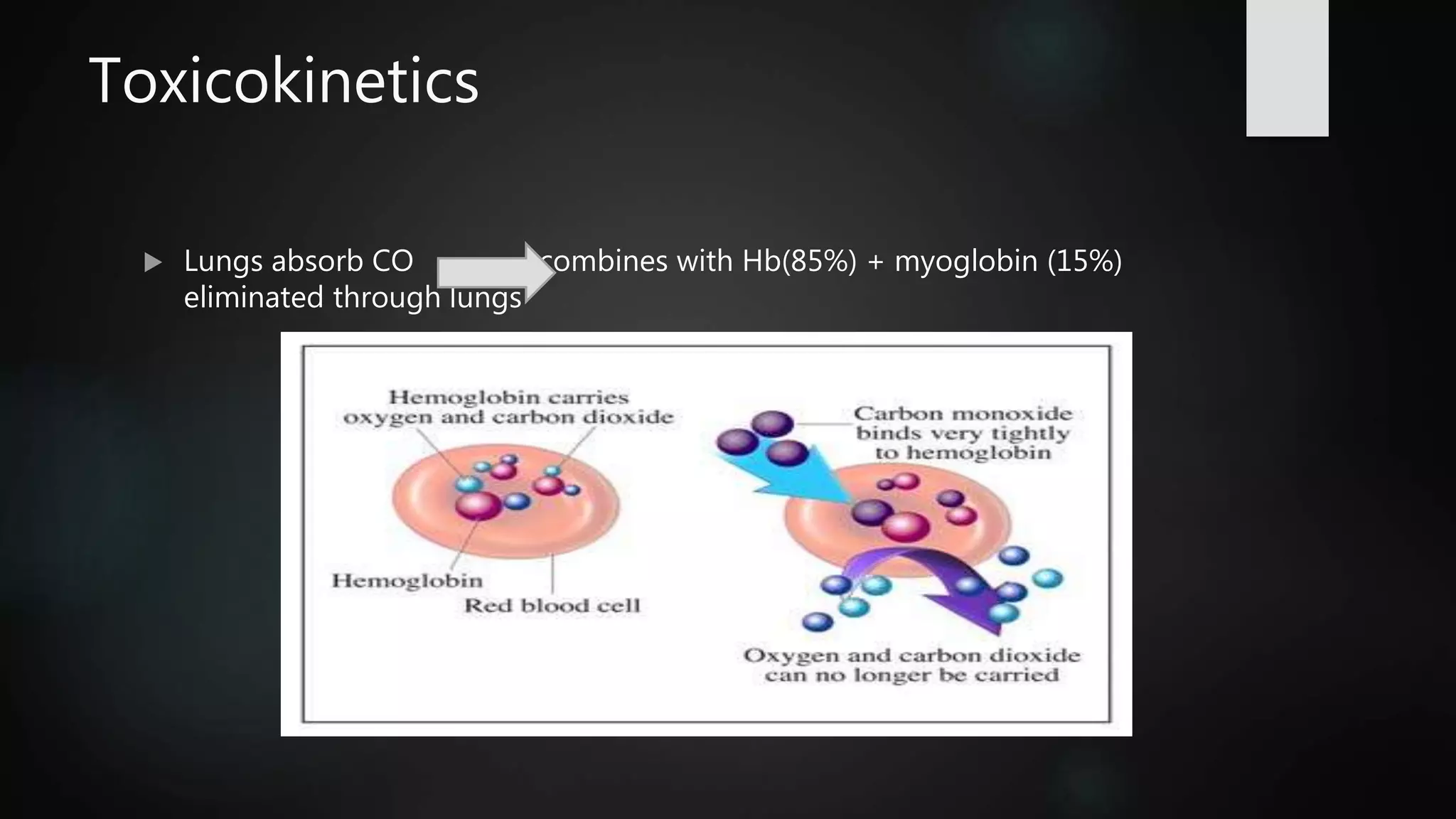
 Lungs absorb CO combines with Hb(85%) + myoglobin (15%)
eliminated through lungs
Effects of Carbon Monoxide
 CO binds more readily to hemoglobin (Hgb) displacing oxygen and
forming carboxyhemoglobin
 Premature release of O2 prior to reaching distal tissue leads to hypoxia at
the cellular level
 Inflammatory response is initiated due to poor and inadequate tissue
perfusion
 Myocardial depression from CO exposure
 Dysrhythmias, myocardial ischemia, MI
 Vasodilation – from increased release of nitric oxide; worsening tissue
perfusion and leading to syncope
Clinical Features
 Acute Poisoning
 Early: Non-specific
 2 classical features (rare):
Cherry red colour – blood + tissues
Cutaneous bullae/blisters
 Based on severity:
Mild (COHb <30%)
Moderate (30-40%)
Severe (>40%)
Acute Poisoning
 Mild Severity
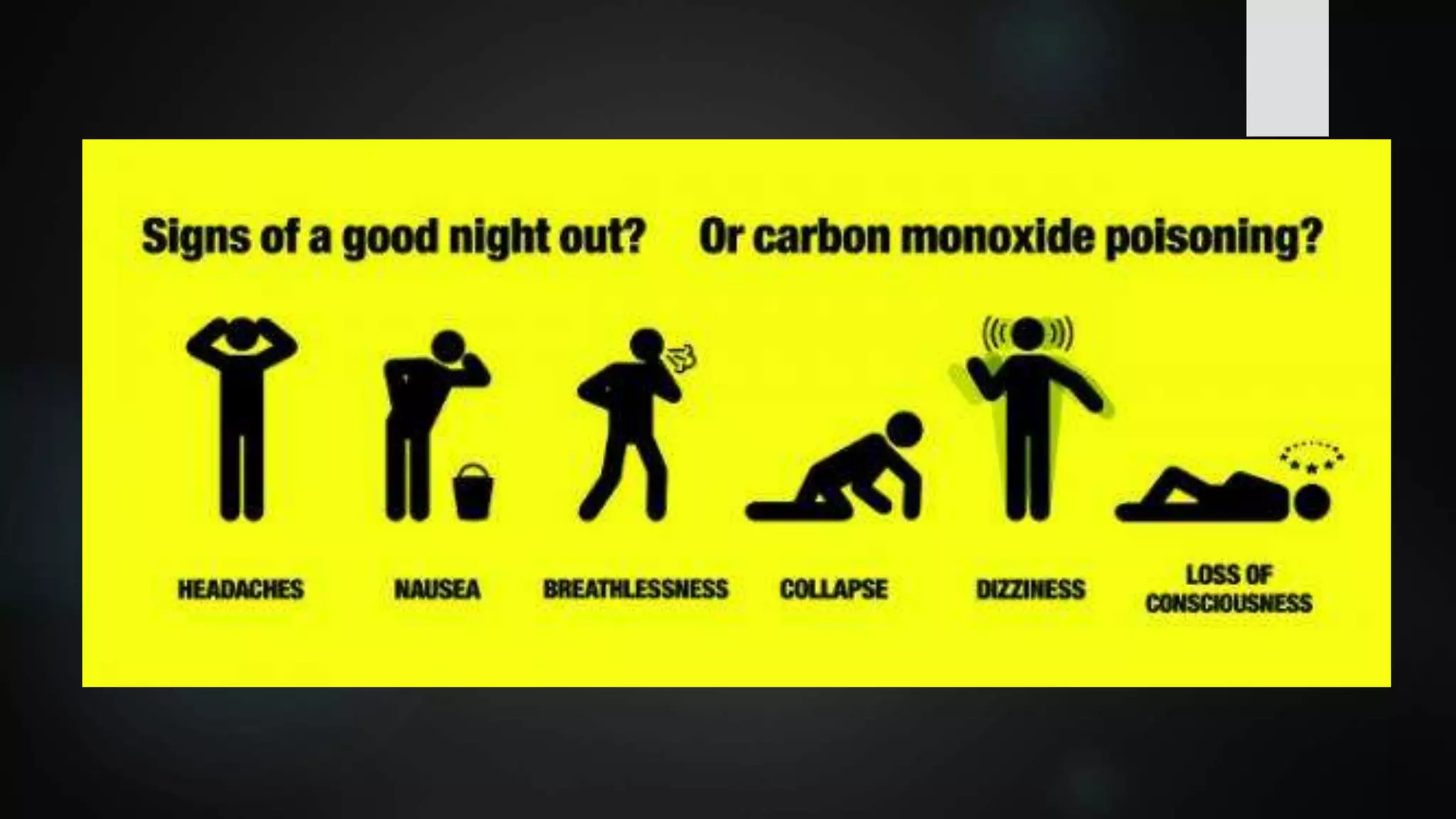
 Headache
 Nausea
 Vomiting
 Dizziness
 Exertional Dyspnea
Acute Poisoning
 Moderate
 Chest pain
 Blurred vision
 Confusion
 Weakness
 Increasing dyspnea
 Tachycardia
 Tachypnea
 Ataxia
Acute Poisoning
 Severe
 Trismus
 Muscle Spasms
 Convulsions
 Palpitations
 Disorientation
 Vent arrhythmias
 Hypotension
 MI
 Respiratory failure
 Coma
Chronic Poisoning
 Headache, dizziness, confusion
 Weakness, nausea, vomiting, abdominal pain
 Paraesthesia
 Visual disturbances
 Hypertension
 Hyperthermia
 Cherry red skin
 Palpitations
 Aggravation of Angina
CO Levels with Related Signs and
Symptoms
 >5% - mild headache
 6-10% - mild headache, SOB with exertion
 11-20% - moderate headache, SOB
 21-30% - worsening headache, nausea, dizziness, fatigue
 31-40% - severe headache, vomiting, vertigo, altered
judgment
 41-50% - confusion, syncope, tachycardia
 51 – 60% - seizures, shock, apnea, coma
Carboxyhemoglobin levels of <15 – 20%
Mild severity
Headache – mild to moderate
Shortness of breath
Nausea and vomiting
Dizziness
Blurred vision
Carboxyhemoglobin levels of 21 – 40%
Moderate severity
Worsening headache
Confusion
Syncope
Chest pain
Dyspnea
Tachycardia
Tachypnea
Weakness
Carboxyhemoglobin levels of 41 - 59%
Severe
Dysrhythmias, palpitations
Hypotension
Cardiac ischemia
Confusion
Respiratory arrest
Pulmonary edema
Seizures
Coma
Carboxyhemoglobin levels of >60%
 Fatal
Death
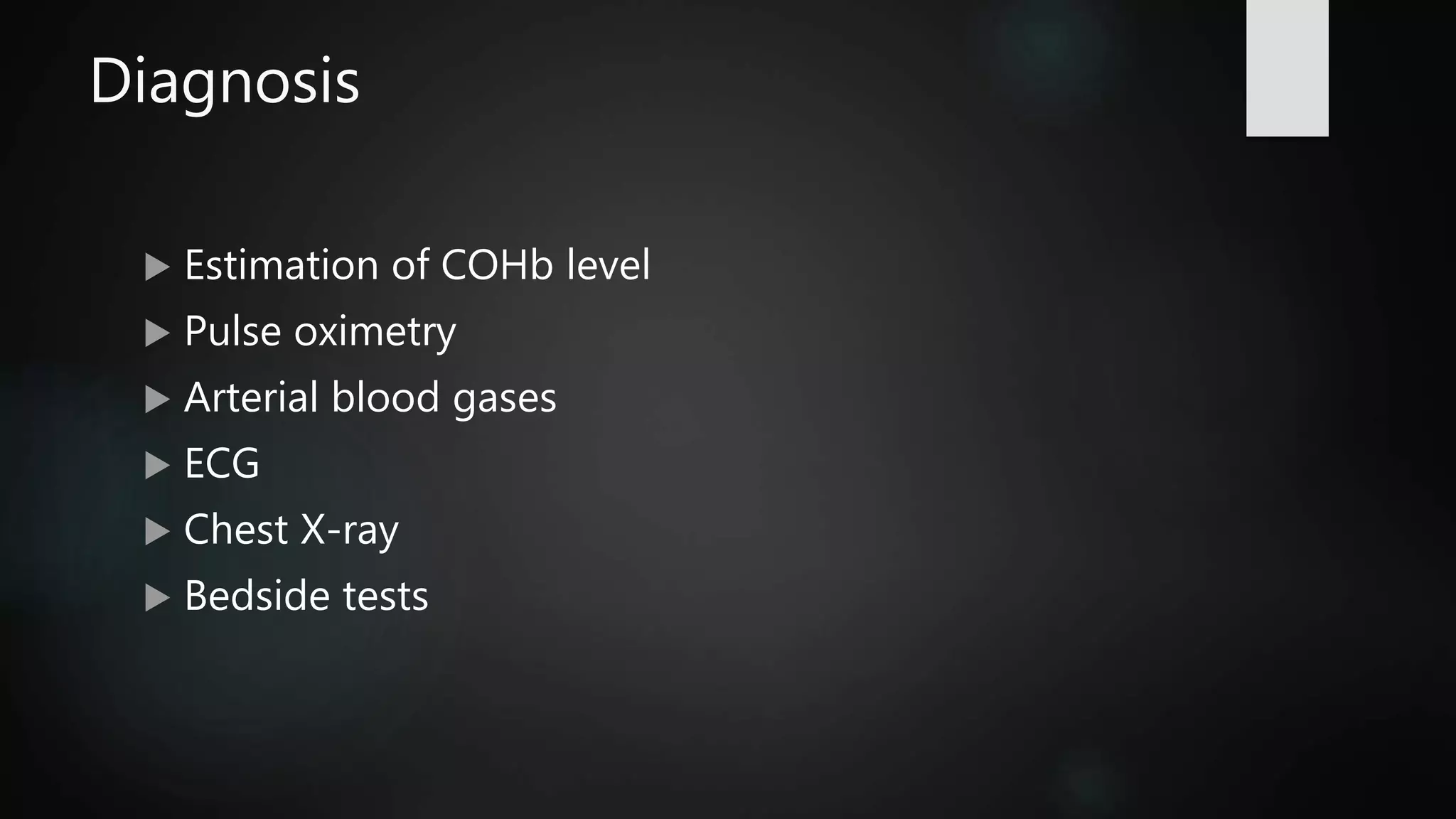
Diagnosis
 Estimation of COHb level
 Pulse oximetry
 Arterial blood gases
 ECG
 Chest X-ray
 Bedside tests
DDX
 Alcoholic intoxication
 Hyperventilation syndrome
 Cerebrovascular accident
 Meningitis/encephalitis
 Migraine
 Epilepsy
 Food poisoning
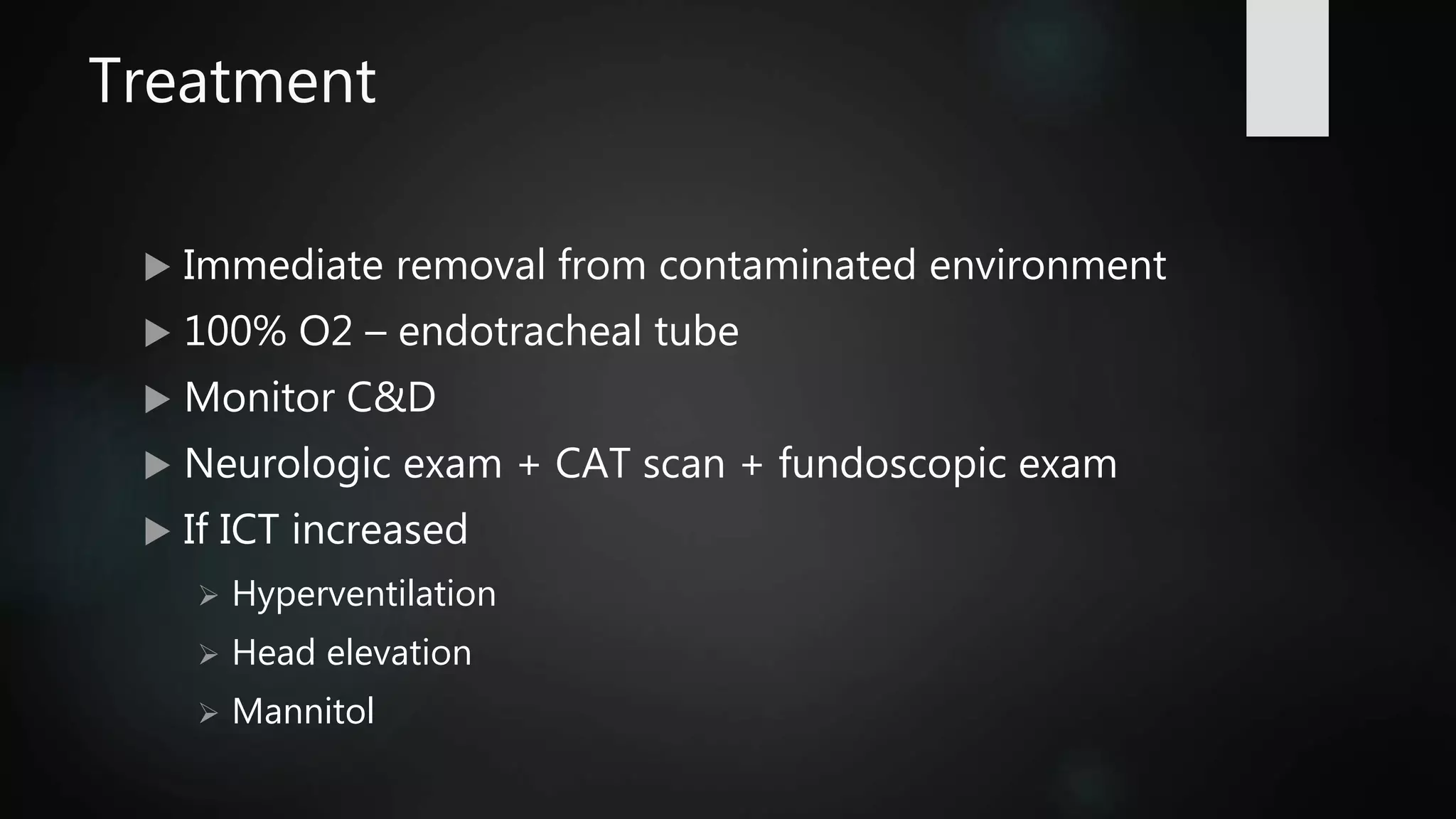
Treatment
 Immediate removal from contaminated environment
 100% O2 – endotracheal tube
 Monitor C&D
 Neurologic exam + CAT scan + fundoscopic exam
 If ICT increased
 Hyperventilation
 Head elevation
 Mannitol
THANK YOU

Carbon monoxide poisoning

  • 1.
  • 2.
    What IS CarbonMonoxide?  It is a byproduct of combustion reactions, or the burning of certain fuels. CO can be emitted from gasoline-powered engines, natural gas heating systems, oil, coal, propane, wood and other materials which may also release carbon monoxide when burned.
  • 4.
    Half-life of CarbonMonoxide  Half-life – time required for half the quantity of a drug or other substance to be metabolized or eliminated  CO half-life on 21% room air O2 – 4 - 6 hours  CO half-life on 100% O2 – 80 minutes  CO half-life with hyperbaric O2 – 22 minutes
  • 5.
    Expected Carboxyhemoglobin Levels Non-smokers – 5%  Smokers – up to 10% 5 – 6% for a 1 pack per day smoker 7 - 9% for a 2-3 pack per day smoker Up to 20% reported for cigar smokers  Urban commuter – 5%
  • 6.
    Carbon Monoxide Absorption Minute ventilation • Amount of air exchanged in the lungs within one minute  Duration of exposure • The longer the exposure, the more the absorption  Concentration of CO in the environment • The higher the concentration, the greater the toxicity  Concentration of O2 in the environment • The lower the O2 concentration to begin with, the faster the symptoms will develop o higher altitudes o closed spaces
  • 7.
    Increased Risks Infants Women whoare pregnant  Fetus at greatest risk because fetal hemoglobin has a greater affinity for oxygen and CO compared to adult hemoglobin Elderly Physical conditions that limit the body’s ability to use oxygen  Emphysema, asthma  Heart disease Physical conditions with decreased O2 carrying capacity  Anemia – iron-deficiency & sickle cell
  • 8.
    Toxicokinetics  Lungs absorbCO combines with Hb(85%) + myoglobin (15%) eliminated through lungs
  • 9.
    Effects of CarbonMonoxide  CO binds more readily to hemoglobin (Hgb) displacing oxygen and forming carboxyhemoglobin  Premature release of O2 prior to reaching distal tissue leads to hypoxia at the cellular level  Inflammatory response is initiated due to poor and inadequate tissue perfusion  Myocardial depression from CO exposure  Dysrhythmias, myocardial ischemia, MI  Vasodilation – from increased release of nitric oxide; worsening tissue perfusion and leading to syncope
  • 10.
    Clinical Features  AcutePoisoning  Early: Non-specific  2 classical features (rare): Cherry red colour – blood + tissues Cutaneous bullae/blisters  Based on severity: Mild (COHb <30%) Moderate (30-40%) Severe (>40%)
  • 12.
    Acute Poisoning  MildSeverity  Headache  Nausea  Vomiting  Dizziness  Exertional Dyspnea
  • 13.
    Acute Poisoning  Moderate Chest pain  Blurred vision  Confusion  Weakness  Increasing dyspnea  Tachycardia  Tachypnea  Ataxia
  • 14.
    Acute Poisoning  Severe Trismus  Muscle Spasms  Convulsions  Palpitations  Disorientation  Vent arrhythmias  Hypotension  MI  Respiratory failure  Coma
  • 15.
    Chronic Poisoning  Headache,dizziness, confusion  Weakness, nausea, vomiting, abdominal pain  Paraesthesia  Visual disturbances  Hypertension  Hyperthermia  Cherry red skin  Palpitations  Aggravation of Angina
  • 16.
    CO Levels withRelated Signs and Symptoms  >5% - mild headache  6-10% - mild headache, SOB with exertion  11-20% - moderate headache, SOB  21-30% - worsening headache, nausea, dizziness, fatigue  31-40% - severe headache, vomiting, vertigo, altered judgment  41-50% - confusion, syncope, tachycardia  51 – 60% - seizures, shock, apnea, coma
  • 17.
    Carboxyhemoglobin levels of<15 – 20% Mild severity Headache – mild to moderate Shortness of breath Nausea and vomiting Dizziness Blurred vision
  • 18.
    Carboxyhemoglobin levels of21 – 40% Moderate severity Worsening headache Confusion Syncope Chest pain Dyspnea Tachycardia Tachypnea Weakness
  • 19.
    Carboxyhemoglobin levels of41 - 59% Severe Dysrhythmias, palpitations Hypotension Cardiac ischemia Confusion Respiratory arrest Pulmonary edema Seizures Coma
  • 20.
    Carboxyhemoglobin levels of>60%  Fatal Death
  • 21.
    Diagnosis  Estimation ofCOHb level  Pulse oximetry  Arterial blood gases  ECG  Chest X-ray  Bedside tests
  • 22.
    DDX  Alcoholic intoxication Hyperventilation syndrome  Cerebrovascular accident  Meningitis/encephalitis  Migraine  Epilepsy  Food poisoning
  • 23.
    Treatment  Immediate removalfrom contaminated environment  100% O2 – endotracheal tube  Monitor C&D  Neurologic exam + CAT scan + fundoscopic exam  If ICT increased  Hyperventilation  Head elevation  Mannitol
  • 25.