METHANOL POISONING
Aadarsh Bhadel
MBBS 7th semester
DMCRI
Contents
ļ‚— Introduction
ļ‚— Signs and symptoms
ļ‚— Postmortem changes
ļ‚— Management
Introduction
Features
ļ‚— Colourless
ļ‚— Volatile liquid
ļ‚— Odour similar to ethyl
alcohol
ļ‚— Burning taste
Present in,
ļ‚— Certain Home-made
beverages
ļ‚— Antifreeze
ļ‚— Paint removers
ļ‚— Dyes
ļ‚— Resins
ļ‚— adhesives
Absorption
ļ‚— Stomach
ļ‚— Intestine
ļ‚— Lungs
ļ‚— Skin
Fatal dose:- 60 to 200 ml
Fatal period:- 24 to 36
hours
Cause of death:- Acidosis
Signs and Symptoms
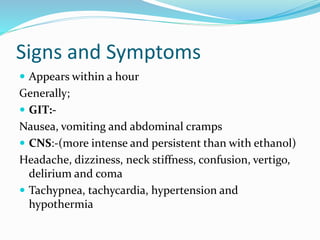
ļ‚— Appears within a hour
Generally;
ļ‚— GIT:-
Nausea, vomiting and abdominal cramps
ļ‚— CNS:-(more intense and persistent than with ethanol)
Headache, dizziness, neck stiffness, confusion, vertigo,
delirium and coma
ļ‚— Tachypnea, tachycardia, hypertension and
hypothermia
Contd..
ļ‚— Liver and kidney(acute tubular necrosis) toxicity
ļ‚— Severe non diabetic anion metabolic acidosis
Visual disturbances:-
ļ‚— Photophobia, blurred or misty vision(snowfield
vision), central or peripheral scotoma, floaters,
decreased light perception, sudden vision loss.
ļ‚— The funduscopy shows hyperemia of optic disc
followed by retinal oedema
Post Mortem Appearances
Marked cyanosis
GI mucosa
Congested and inflamed with small hemorrhages
Intestine resembling thick pipe of a very narrow
lumen
Lungs:- congested and edematous
Liver:- fatty changes
Kidney:- tubular degeneration
Brain:- edematous and local hemorrhages
Management
ļ‚— Patient is kept in a dark room to protect the eyes from
sunlight
ļ‚— Maintain airway, breathing and circulation
ļ‚— Place patient in a left lateral decubitus position with
the head down to avoid aspiration
ļ‚— Gastric lavage using 5% bicarbonate
ļ‚— Activated charcoal to reduce absorption of alcohol
CONTD..
ļ‚— Administration of ethanol as a competitive antagonist:
Loading dose 7.6-10 ml/ kg i.v. of 10% ethanol in dextrose
5% water(D5W) over 30 min or 0.8-1 ml/kg orally ethanol
in 200ml of fruit juice
Maintenance dose 0.15 ml/kg/hr orally or 1.4 ml/kg/hr i.v.
Desired serum ethanol concentration is 100-150 mg/dl
ļ‚— Fomipizole
Loading dose 15mg/kg over 30 min, followed by 10 mg/kg
every 12h for 4 doses, then 15mg/kg every 12h
Contd..
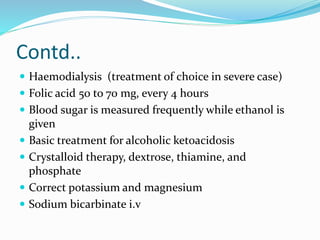
ļ‚— Haemodialysis (treatment of choice in severe case)
ļ‚— Folic acid 50 to 70 mg, every 4 hours
ļ‚— Blood sugar is measured frequently while ethanol is
given
ļ‚— Basic treatment for alcoholic ketoacidosis
ļ‚— Crystalloid therapy, dextrose, thiamine, and
phosphate
ļ‚— Correct potassium and magnesium
ļ‚— Sodium bicarbinate i.v
Case Presentation
1. A 48-year-old male patient stated that he had been
rubbing his legs with alcohol soaked cotton during
the last 3 days due to pain in both of his legs. The
patient presented to the emergency unit on the 3rd
day of his symptoms with abrupt vision loss. No
organic pathology could explain the vision loss.
Blood gas analysis showed high anion gap metabolic
acidosis. Hemodialysis was performed for severe
acidosis and the patient was admitted to the ICU.
MCQs
1. In methyl alcohol poisoning, there is central nervous
system depression, cardiac depression and optic nerve
atrophy. These effects are produced due to:
a) Formaldehyde and formic acid
b) Acetaldehyde
c) Pyridine
d) Acetic acid
2. A 39-year-old carpenter has taken two bottles of
liquor from the local shop. After about an hour, he
develops confusion, vomiting and blurring of vision.
He has been brought to the emergency department.
He should be given
a) Naloxone
b) Diazepam
c) Flumazelnil
d) Ethyl alcohol
3. Optic atrophy can be caused by:
a) Phosphorous
b) Ethyl alcohol
c) Methyl alcohol
d) All of the above
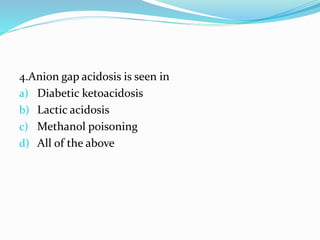
4.Anion gap acidosis is seen in
a) Diabetic ketoacidosis
b) Lactic acidosis
c) Methanol poisoning
d) All of the above
THANKYOU

Methanol posioning

  • 1.
  • 2.
    Contents ļ‚— Introduction ļ‚— Signsand symptoms ļ‚— Postmortem changes ļ‚— Management
  • 3.
    Introduction Features ļ‚— Colourless ļ‚— Volatileliquid ļ‚— Odour similar to ethyl alcohol ļ‚— Burning taste Present in, ļ‚— Certain Home-made beverages ļ‚— Antifreeze ļ‚— Paint removers ļ‚— Dyes ļ‚— Resins ļ‚— adhesives
  • 4.
    Absorption ļ‚— Stomach ļ‚— Intestine ļ‚—Lungs ļ‚— Skin Fatal dose:- 60 to 200 ml Fatal period:- 24 to 36 hours Cause of death:- Acidosis
  • 5.
    Signs and Symptoms ļ‚—Appears within a hour Generally; ļ‚— GIT:- Nausea, vomiting and abdominal cramps ļ‚— CNS:-(more intense and persistent than with ethanol) Headache, dizziness, neck stiffness, confusion, vertigo, delirium and coma ļ‚— Tachypnea, tachycardia, hypertension and hypothermia
  • 6.
    Contd.. ļ‚— Liver andkidney(acute tubular necrosis) toxicity ļ‚— Severe non diabetic anion metabolic acidosis Visual disturbances:- ļ‚— Photophobia, blurred or misty vision(snowfield vision), central or peripheral scotoma, floaters, decreased light perception, sudden vision loss. ļ‚— The funduscopy shows hyperemia of optic disc followed by retinal oedema
  • 7.
    Post Mortem Appearances Markedcyanosis GI mucosa Congested and inflamed with small hemorrhages Intestine resembling thick pipe of a very narrow lumen Lungs:- congested and edematous Liver:- fatty changes Kidney:- tubular degeneration Brain:- edematous and local hemorrhages
  • 8.
    Management ļ‚— Patient iskept in a dark room to protect the eyes from sunlight ļ‚— Maintain airway, breathing and circulation ļ‚— Place patient in a left lateral decubitus position with the head down to avoid aspiration ļ‚— Gastric lavage using 5% bicarbonate ļ‚— Activated charcoal to reduce absorption of alcohol
  • 9.
    CONTD.. ļ‚— Administration ofethanol as a competitive antagonist: Loading dose 7.6-10 ml/ kg i.v. of 10% ethanol in dextrose 5% water(D5W) over 30 min or 0.8-1 ml/kg orally ethanol in 200ml of fruit juice Maintenance dose 0.15 ml/kg/hr orally or 1.4 ml/kg/hr i.v. Desired serum ethanol concentration is 100-150 mg/dl ļ‚— Fomipizole Loading dose 15mg/kg over 30 min, followed by 10 mg/kg every 12h for 4 doses, then 15mg/kg every 12h
  • 10.
    Contd.. ļ‚— Haemodialysis (treatmentof choice in severe case) ļ‚— Folic acid 50 to 70 mg, every 4 hours ļ‚— Blood sugar is measured frequently while ethanol is given ļ‚— Basic treatment for alcoholic ketoacidosis ļ‚— Crystalloid therapy, dextrose, thiamine, and phosphate ļ‚— Correct potassium and magnesium ļ‚— Sodium bicarbinate i.v
  • 11.
    Case Presentation 1. A48-year-old male patient stated that he had been rubbing his legs with alcohol soaked cotton during the last 3 days due to pain in both of his legs. The patient presented to the emergency unit on the 3rd day of his symptoms with abrupt vision loss. No organic pathology could explain the vision loss. Blood gas analysis showed high anion gap metabolic acidosis. Hemodialysis was performed for severe acidosis and the patient was admitted to the ICU.
  • 12.
    MCQs 1. In methylalcohol poisoning, there is central nervous system depression, cardiac depression and optic nerve atrophy. These effects are produced due to: a) Formaldehyde and formic acid b) Acetaldehyde c) Pyridine d) Acetic acid
  • 13.
    2. A 39-year-oldcarpenter has taken two bottles of liquor from the local shop. After about an hour, he develops confusion, vomiting and blurring of vision. He has been brought to the emergency department. He should be given a) Naloxone b) Diazepam c) Flumazelnil d) Ethyl alcohol
  • 14.
    3. Optic atrophycan be caused by: a) Phosphorous b) Ethyl alcohol c) Methyl alcohol d) All of the above
  • 15.
    4.Anion gap acidosisis seen in a) Diabetic ketoacidosis b) Lactic acidosis c) Methanol poisoning d) All of the above
  • 16.