TOXIC SHOCK SYNDROME
DEFINITION:
 Toxic shock syndrome is a toxin mediated acute life
threatening illness, usually precipitated by the
infection either by staphylococcus aureus and
streptococcus pyogens.
 It is a disease caused by toxin produced by common
strain of bacteria that spreads to the bloodstream.
INCIDENCE:
 Most cases reported in western countries still
involve mensurating women under the age 30.
 TSS still occurs in about 17 out of 1,00,000
mensurating girls and women each year.
 Between 5% and 10% of patients with TSS die.
 In developing countries TSS often affects children.
 It can affect Children, postmenopausal women and
also men.
CAUSES:
 In most common form of toxic shock syndrome,
the bacteria live in the vagina of women who
are infected and the bacterial growth is
encouraged by the presence of a tampon.
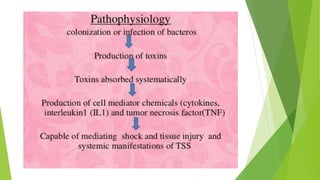
 However, these toxins can be produced from
bacteria in other locations in the body as well.
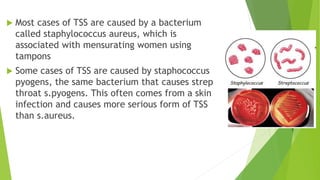
 Most cases of TSS are caused by a bacterium
called staphylococcus aureus, which is
associated with mensurating women using
tampons
 Some cases of TSS are caused by staphococcus
pyogens, the same bacterium that causes strep
throat s.pyogens. This often comes from a skin
infection and causes more serious form of TSS
than s.aureus.
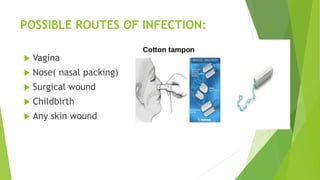
POSSIBLE ROUTES OF INFECTION:
 Vagina
 Nose( nasal packing)
 Surgical wound
 Childbirth
 Any skin wound
CLINICAL MANIFESTATION:
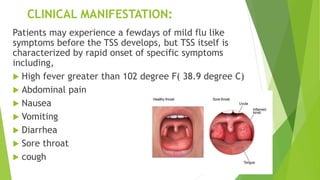
Patients may experience a fewdays of mild flu like
symptoms before the TSS develops, but TSS itself is
characterized by rapid onset of specific symptoms
including,
 High fever greater than 102 degree F( 38.9 degree C)
 Abdominal pain
 Nausea
 Vomiting
 Diarrhea
 Sore throat
 cough
 Low blood pressure
 Myalgia
 Chills and malaise
 Widespread of skin rashes
This will usually progress to,,
 Worsening of low blood pressure
 Dizziness
 Confusion or disorientation
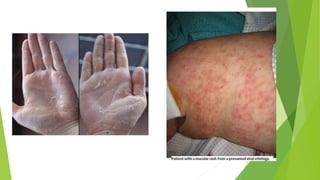
 Desquamation especially of palms and soles after
1-2 weeks of acute illness
 Diffuse macular erythroderma
Toxic shock syndrome can affect most organ in the
body and cause
 Hepatic damage
 Respiratory distress syndrome
 Thromocytopenia
 Coagulopathy
 Renal impairment
 Ultimately multiorgan failure may develop and
this leads to death un approximately 5% of all
those affected.
DIAGNOSTIC EVALUATION :
 No specific test exists to diagnose toxic shock
syndrome
 History
-Difficult to diagnose until the characteristics
symptoms evolves and source of infection is
identified.
 Physical examination ( which includes a pelvic
examination in women)
 Blood test usually ordered and might include
white blood cell count ( to look for signs of
infection)
 Blood cultures ( evaluating for possible bacteria in
the blood stream)
 Evaluation of kidney and liver function
 Specimens for culture should be taken from any
lesions, the nose, throat, vagina and blood.
 An ECG,chest X-ray and or CT sacns of the
abdomen or pelvis can be ordered to evaluate the
internal organs, depending on the results of initial
evaluation
MANAGEMENT :
 People with TSS are admitted to the hospital’s
intensive care unit for treatment.
 MEDICAL MANAGEMENT :
-Administer intravenous fluid (IV) fluids to
stabilize blood pressure .
-IV Medications to increase blood pressure may
include dopamine or epinephrine.
-IV Antibiotics to fight the source of infection are
prescribed. Antibiotics effective against s. Aureus
and s. Pyogens are given.
 Initial antibiotics may include cephalosporins,
nafcillin, oxacillin, penicillin or
vancomycin.The addition of clindamycin or
gentamycin reduces toxin production and
reduces mortality.
 Antipyretics to normalize body temperature
 Oxygen administration and mechanical
ventilation to assist breathing
 Dialysis if kidney failure develops.
 SURGICAL MANAGEMENT :
- a surgical intervention is required to drain
the source of the infection in cases of an abscess.
- If infection is found to be in deeper
tissues,extensive surgery is often necessary to
remove the infected and dead tissue called
debridement.
NURSING MANAGEMENT:
 History collection
-Use of tampons
-Recent surgery
-Past history of toxic shock syndrome
- childbirth
 Physical examination
Head to foot examination
 Monitoring vital signs
NURSING DIAGNOSIS :
 Altered body temperature related to infection
 Impaired skin intergrity related to peeling of
skin
 Risk for septic shock related to presence of
infection
 Risk for fluid volume deficit related to
vomiting and diarrhea
 Anxiety realted to change in health status
 Knowledge deficit related to disease
condition
toxic shock syndrome.pptx

toxic shock syndrome.pptx

  • 1.
  • 2.
    DEFINITION:  Toxic shocksyndrome is a toxin mediated acute life threatening illness, usually precipitated by the infection either by staphylococcus aureus and streptococcus pyogens.  It is a disease caused by toxin produced by common strain of bacteria that spreads to the bloodstream.
  • 3.
    INCIDENCE:  Most casesreported in western countries still involve mensurating women under the age 30.  TSS still occurs in about 17 out of 1,00,000 mensurating girls and women each year.  Between 5% and 10% of patients with TSS die.  In developing countries TSS often affects children.  It can affect Children, postmenopausal women and also men.
  • 4.
    CAUSES:  In mostcommon form of toxic shock syndrome, the bacteria live in the vagina of women who are infected and the bacterial growth is encouraged by the presence of a tampon.  However, these toxins can be produced from bacteria in other locations in the body as well.
  • 5.
     Most casesof TSS are caused by a bacterium called staphylococcus aureus, which is associated with mensurating women using tampons  Some cases of TSS are caused by staphococcus pyogens, the same bacterium that causes strep throat s.pyogens. This often comes from a skin infection and causes more serious form of TSS than s.aureus.
  • 6.
    POSSIBLE ROUTES OFINFECTION:  Vagina  Nose( nasal packing)  Surgical wound  Childbirth  Any skin wound
  • 8.
    CLINICAL MANIFESTATION: Patients mayexperience a fewdays of mild flu like symptoms before the TSS develops, but TSS itself is characterized by rapid onset of specific symptoms including,  High fever greater than 102 degree F( 38.9 degree C)  Abdominal pain  Nausea  Vomiting  Diarrhea  Sore throat  cough
  • 9.
     Low bloodpressure  Myalgia  Chills and malaise  Widespread of skin rashes This will usually progress to,,  Worsening of low blood pressure  Dizziness  Confusion or disorientation  Desquamation especially of palms and soles after 1-2 weeks of acute illness  Diffuse macular erythroderma
  • 11.
    Toxic shock syndromecan affect most organ in the body and cause  Hepatic damage  Respiratory distress syndrome  Thromocytopenia  Coagulopathy  Renal impairment  Ultimately multiorgan failure may develop and this leads to death un approximately 5% of all those affected.
  • 12.
    DIAGNOSTIC EVALUATION : No specific test exists to diagnose toxic shock syndrome  History -Difficult to diagnose until the characteristics symptoms evolves and source of infection is identified.  Physical examination ( which includes a pelvic examination in women)  Blood test usually ordered and might include white blood cell count ( to look for signs of infection)
  • 13.
     Blood cultures( evaluating for possible bacteria in the blood stream)  Evaluation of kidney and liver function  Specimens for culture should be taken from any lesions, the nose, throat, vagina and blood.  An ECG,chest X-ray and or CT sacns of the abdomen or pelvis can be ordered to evaluate the internal organs, depending on the results of initial evaluation
  • 14.
    MANAGEMENT :  Peoplewith TSS are admitted to the hospital’s intensive care unit for treatment.  MEDICAL MANAGEMENT : -Administer intravenous fluid (IV) fluids to stabilize blood pressure . -IV Medications to increase blood pressure may include dopamine or epinephrine. -IV Antibiotics to fight the source of infection are prescribed. Antibiotics effective against s. Aureus and s. Pyogens are given.
  • 15.
     Initial antibioticsmay include cephalosporins, nafcillin, oxacillin, penicillin or vancomycin.The addition of clindamycin or gentamycin reduces toxin production and reduces mortality.  Antipyretics to normalize body temperature  Oxygen administration and mechanical ventilation to assist breathing  Dialysis if kidney failure develops.
  • 16.
     SURGICAL MANAGEMENT: - a surgical intervention is required to drain the source of the infection in cases of an abscess. - If infection is found to be in deeper tissues,extensive surgery is often necessary to remove the infected and dead tissue called debridement.
  • 17.
    NURSING MANAGEMENT:  Historycollection -Use of tampons -Recent surgery -Past history of toxic shock syndrome - childbirth  Physical examination Head to foot examination  Monitoring vital signs
  • 18.
    NURSING DIAGNOSIS : Altered body temperature related to infection  Impaired skin intergrity related to peeling of skin  Risk for septic shock related to presence of infection  Risk for fluid volume deficit related to vomiting and diarrhea  Anxiety realted to change in health status  Knowledge deficit related to disease condition