Toward A Sustainable
       Embedded Librarian
            Program

                  Robin M. Ashford, MSLIS
        George Fox University - Portland, Oregon, USA
Library 2.012 Worldwide Virtual Conference – October 3, 2012
                 https://twitter.com/rashford
Today:
• Definition of Embedded Librarian
• Characteristics of Embedded Librarianship

• History of Embedded Librarianship at my
  university library
• The need for a sustainable model

• How we went about changing the process
• Where we are now and where we plan to
  be in one year
What is an
Embedded Librarian?
“We chose to define an embedded
librarian as „an integral part to the
whole,‟ based on the geological
definition of an embedded element”
- Dede, J. 2011
“Embedded Librarianship is a distinctive
innovation that moves the librarians out
of libraries and creates a new model of
library and information work.”
- Shumaker, D. 2012
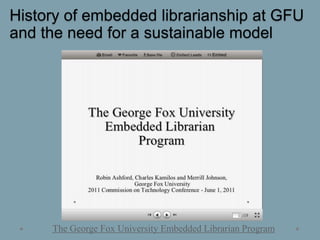
History of embedded librarianship at GFU
and the need for a sustainable model


     The George Fox University Embedded Librarian Program
How the GFU Embedded Librarian
      Program was started
• In 2010 a librarian and hybrid learning director
  began discussing how online student information
  resource and service needs were being met

• It soon became apparent that a link to the library
  website from within our Moodle (FoxTALE) Learning
  Management System (LMS) was not enough
How it evolved
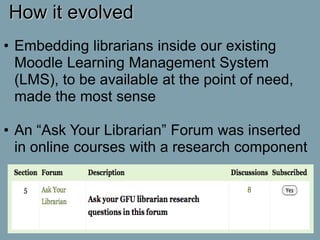
• Embedding librarians inside our existing
  Moodle Learning Management System
  (LMS), to be available at the point of need,
  made the most sense

• An “Ask Your Librarian” Forum was inserted
  in online courses with a research component
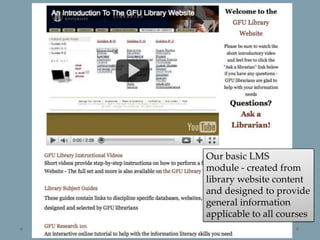
Our basic LMS
module - created from
library website content
and designed to provide
general information
applicable to all courses
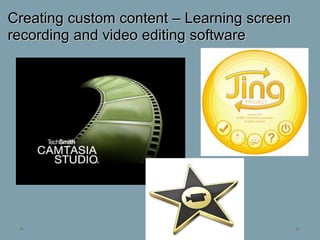
Creating custom content – Learning screen
recording and video editing software
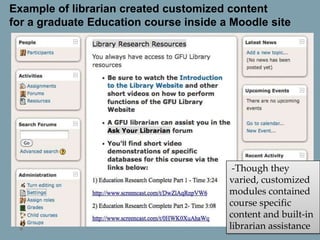
Example of librarian created customized content
for a graduate Education course inside a Moodle site


                                         -Though they
                                        varied, customized
                                        modules contained
                                        course specific
                                        content and built-in
                                        librarian assistance
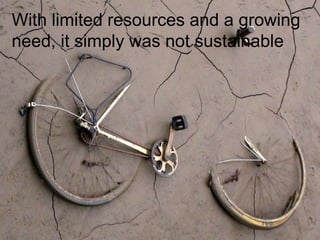
With limited resources and a growing
need, it simply was not sustainable
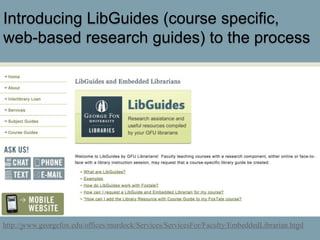
Introducing LibGuides (course specific,
web-based research guides) to the process


http://www.georgefox.edu/offices/murdock/Services/ServicesFor/Faculty/EmbeddedLibrarian.html
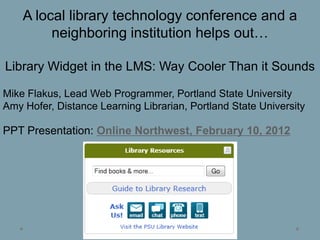
A local library technology conference and a
         neighboring institution helps out…

Library Widget in the LMS: Way Cooler Than it Sounds

Mike Flakus, Lead Web Programmer, Portland State University
Amy Hofer, Distance Learning Librarian, Portland State University

PPT Presentation: Online Northwest, February 10, 2012
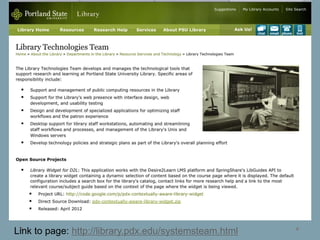
Link to page: http://library.pdx.edu/systemsteam.html
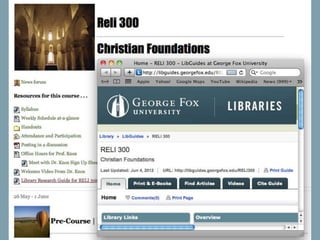
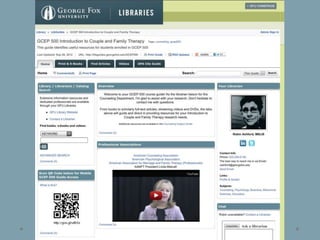
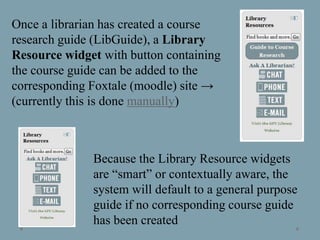
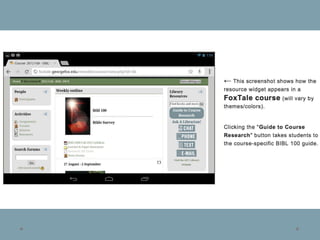
Once a librarian has created a course
research guide (LibGuide), a Library
Resource widget with button containing
the course guide can be added to the
corresponding Foxtale (moodle) site →
(currently this is done manually)


              Because the Library Resource widgets
              are “smart” or contextually aware, the
              system will default to a general purpose
              guide if no corresponding course guide
              has been created
• The plan is for all of the GFU
  Moodle course sites to include a
  Library Resources widget by default
  beginning in Fall 2013. This will
  eliminate the need to add the block
  manually and further increase
  efficiencies.
“Embedded librarianship is a
 powerful way to show the impact
  that librarians can and do have
beyond the traditional functions of
the library, and why librarians are
   needed now more than ever.”
       - Carlson, J and Kneale, R 2011
Thank You
Questions / Comments
Contact Info:

Robin M. Ashford, MSLIS
Associate Librarian | Assistant Professor
George Fox University | Portland Center Library
12753 S.W. 68th Ave.
Portland, OR 97223
503.554.6136 | rashford@georgefox.edu
Online Profile


o Reference links and image credits on following slides
References

Carlson, J and Kneale, R 2011, 'Embedded librarianship in the research context:
navigating new waters', College & Research Libraries News, 72 (3), pp. 167-170.
http://crln.acrl.org/content/72/3/167.full

Dene, J. 2011. Embedded librarianship at the Claremont Colleges. In Embedded
librarians: Moving beyond one-shot instruction, eds. C. Kvenild and K. Calkins,
219–228. Chicago, IL: Association of College and Research Libraries.

Kvenild, C., & Calkins, K. (2011). Embedded librarians: Moving beyond one-shot
instruction. Chicago: Association of College and Research Libraries.

Shumaker, D & Tally, M. 2009. Models of Embedded Librarianship Final Report.
[Online]. Available at
http://www.sla.org/pdfs/EmbeddedLibrarianshipFinalRptRev.pdf

Shumaker, D. (2012). The embedded librarian: Innovative strategies for taking
knowledge where it's needed. Medford, New Jersey: Information Today, Inc.

Shumaker, David. 2011. The embedded librarian [Online]. Available at
http://embeddedlibrarian.com/2011/07/09/another-definition-of-embedded/
Image Credits

Stick person in stone image -
http://www.flickr.com/photos/colemama/3454419619/sizes/l/in/photostream
/

Bike is mud dry dock –
http://www.flickr.com/photos/iangallagher/167688023/sizes/l/

Embedded bike in mud -
http://www.flickr.com/photos/cactusmelba/169623777/sizes/l/

Embedded wheel - http://www.flickr.com/photos/akfoto/6786095303/sizes/l/

Embedded rock -
http://www.flickr.com/photos/zwww/3467635163/sizes/l/in/photostream/

Toward a Sustainable Embedded Librarian Program

  • 1.
    Toward A Sustainable Embedded Librarian Program Robin M. Ashford, MSLIS George Fox University - Portland, Oregon, USA Library 2.012 Worldwide Virtual Conference – October 3, 2012 https://twitter.com/rashford
  • 2.
    Today: • Definition ofEmbedded Librarian • Characteristics of Embedded Librarianship • History of Embedded Librarianship at my university library • The need for a sustainable model • How we went about changing the process • Where we are now and where we plan to be in one year
  • 3.
  • 4.
    “We chose todefine an embedded librarian as „an integral part to the whole,‟ based on the geological definition of an embedded element” - Dede, J. 2011
  • 5.
    “Embedded Librarianship isa distinctive innovation that moves the librarians out of libraries and creates a new model of library and information work.” - Shumaker, D. 2012
  • 6.
    History of embeddedlibrarianship at GFU and the need for a sustainable model The George Fox University Embedded Librarian Program
  • 7.
    How the GFUEmbedded Librarian Program was started • In 2010 a librarian and hybrid learning director began discussing how online student information resource and service needs were being met • It soon became apparent that a link to the library website from within our Moodle (FoxTALE) Learning Management System (LMS) was not enough
  • 8.
    How it evolved •Embedding librarians inside our existing Moodle Learning Management System (LMS), to be available at the point of need, made the most sense • An “Ask Your Librarian” Forum was inserted in online courses with a research component
  • 9.
    Our basic LMS module- created from library website content and designed to provide general information applicable to all courses
  • 10.
    Creating custom content– Learning screen recording and video editing software
  • 11.
    Example of librariancreated customized content for a graduate Education course inside a Moodle site -Though they varied, customized modules contained course specific content and built-in librarian assistance
  • 12.
    With limited resourcesand a growing need, it simply was not sustainable
  • 13.
    Introducing LibGuides (coursespecific, web-based research guides) to the process http://www.georgefox.edu/offices/murdock/Services/ServicesFor/Faculty/EmbeddedLibrarian.html
  • 16.
    A local librarytechnology conference and a neighboring institution helps out… Library Widget in the LMS: Way Cooler Than it Sounds Mike Flakus, Lead Web Programmer, Portland State University Amy Hofer, Distance Learning Librarian, Portland State University PPT Presentation: Online Northwest, February 10, 2012
  • 17.
    Link to page:http://library.pdx.edu/systemsteam.html
  • 18.
    Once a librarianhas created a course research guide (LibGuide), a Library Resource widget with button containing the course guide can be added to the corresponding Foxtale (moodle) site → (currently this is done manually) Because the Library Resource widgets are “smart” or contextually aware, the system will default to a general purpose guide if no corresponding course guide has been created
  • 20.
    • The planis for all of the GFU Moodle course sites to include a Library Resources widget by default beginning in Fall 2013. This will eliminate the need to add the block manually and further increase efficiencies.
  • 21.
    “Embedded librarianship isa powerful way to show the impact that librarians can and do have beyond the traditional functions of the library, and why librarians are needed now more than ever.” - Carlson, J and Kneale, R 2011
  • 22.
    Thank You Questions /Comments Contact Info: Robin M. Ashford, MSLIS Associate Librarian | Assistant Professor George Fox University | Portland Center Library 12753 S.W. 68th Ave. Portland, OR 97223 503.554.6136 | rashford@georgefox.edu Online Profile o Reference links and image credits on following slides
  • 23.
    References Carlson, J andKneale, R 2011, 'Embedded librarianship in the research context: navigating new waters', College & Research Libraries News, 72 (3), pp. 167-170. http://crln.acrl.org/content/72/3/167.full Dene, J. 2011. Embedded librarianship at the Claremont Colleges. In Embedded librarians: Moving beyond one-shot instruction, eds. C. Kvenild and K. Calkins, 219–228. Chicago, IL: Association of College and Research Libraries. Kvenild, C., & Calkins, K. (2011). Embedded librarians: Moving beyond one-shot instruction. Chicago: Association of College and Research Libraries. Shumaker, D & Tally, M. 2009. Models of Embedded Librarianship Final Report. [Online]. Available at http://www.sla.org/pdfs/EmbeddedLibrarianshipFinalRptRev.pdf Shumaker, D. (2012). The embedded librarian: Innovative strategies for taking knowledge where it's needed. Medford, New Jersey: Information Today, Inc. Shumaker, David. 2011. The embedded librarian [Online]. Available at http://embeddedlibrarian.com/2011/07/09/another-definition-of-embedded/
  • 24.
    Image Credits Stick personin stone image - http://www.flickr.com/photos/colemama/3454419619/sizes/l/in/photostream / Bike is mud dry dock – http://www.flickr.com/photos/iangallagher/167688023/sizes/l/ Embedded bike in mud - http://www.flickr.com/photos/cactusmelba/169623777/sizes/l/ Embedded wheel - http://www.flickr.com/photos/akfoto/6786095303/sizes/l/ Embedded rock - http://www.flickr.com/photos/zwww/3467635163/sizes/l/in/photostream/

Editor's Notes

  • #2 Introduction
  • #3 Three main areas to be covered during this presentation
  • #4 There are many definitions for embedded librarians, the concept is still emerging, and depending on how and where one is serving in this role, the embedded librarian can look very different – Therefore, I’ll share a couple of broad definitions that I think hit the mark in a general sense and a few of the characteristics of embedded librarian work as well.
  • #5 This quote captures the essence of the concept - After reading this quote by Dede, in the book titled “Embeddedlibrarians: Moving beyond one-shot instruction” David Shumakerwrote in a blog post “From now on, when I’m asked what embedded librarianship means, I’ll say it means that librarians become integral parts to the units and groups in which they work.” This definition is applicable to librarians embedded in both virtual and physical environments.
  • #6 In this quote from the newly published book by Shumaker titled “The Embedded Librarian: Innovative Strategies for Taking Knowledge Where It’s Needed” Shumaker goes on to state “It emphasizes the importance of forming a strong working relationship between the librarian and a group or team of people who need the librarian’s information expertise.” And, according to Shumaker, Factors that define embedded librarianship and set it apart from traditional reference work include, ongoing working relationships, knowledge of and commitment to information user-group goals and objectives, and highly customized and value-added contributions to the group.
  • #7 Next lets look at the history of the embedded librarian program at GFU. For those who would like more detail than what I’ll be able to provide here today, I’m including a link to a presentation that three of us from my university gave at a conference in June 2011.
  • #13 Long story short, with the level of need, and limited resources, in our case human resources, we simply could not maintain this model. In addition our university was expanding their online and blended course offerings to include more undergraduate courses and the need was growing. We had to find a sustainable way to meet these needs.
  • #14 What you’re seeing here is a screen shot of part of a page on our library website (link below). LibGuides are fairly well known amongst librarians and are often subject specific guides, but they can also be course-specific – how many here are using LibGuides? There are many advantages to moving to using LibGuides to create our course content, one is that they are fairly simple to create, though they can be time consuming. And as librarians create guides for their various courses, some of the content can be reused by other librarians by simply copying a page or box. An example is our APA cite page that’s used in several of our guides. Also, now the work could be more evenly divided amongst all the librarians. Subject liaisons are primarily responsible for guides in their subject areas. In addition, the work that we would put into these guides significantly broadens our reach as we can now use these guides for online and blended students as well as sharing the guides in face-to-face courses with a research component during our one-shot library instruction sessions.
  • #15 This is an example of a course-specific libguide pop-up web page inserted inside a moodle course site –After collaborating with a faculty member, reading over the syllabus and creating the course content, we would publish the guide and send the link to our IT department to request the guide be inserted inside a specific moodle course. This was a step we realized from the start would be far more efficient if automated.We found using libguides to create course content to be easier and more robust than using the Moodle web resources. LibGuides allow us to easily embed different types of content.A chat widget that can’t be seen in this image is also included in the guide along with the librarian liaison’s profile box with contact info and for times when the liaison librarian is not available there is a “contact a librarian” link that takes students to our page with four different ways to reach a librarian. This was a problem within the moodle system as only one librarian was embedded in the Ask Your Librarian Forum.
  • #16 Example of a course-specific LibGuide for a graduate Counseling Course
  • #17 In attending the Online Northwest Conference in Corvallis, Oregon in February 2012, I learned about some exciting work being done by folks at Portland State University, they had created a contextually aware or “Smart” widget for their D2L courses.I wanted to understand more about what it could do so a short while after the conference I contacted PSU Distance Learning Librarian, Amy Hofer to inquire about this widget they were using in their course sites. Amy was glad to help and spoke with Mike Flakus the PSU Programmer, who kindly shared his work in creating the widget for their LMS, D2L. I quickly sent off the link to our IT department and requested they take a look. Could it be tweaked a bit to work inside of our Moodle LMS as well?
  • #18 Before I answer that, the open source project, Library Widget for D2L is documented on the page link on this slide.The paragraph states:Library Widget for D2L: This application works with the Desire2Learn LMS platform and SpringShare'sLibGuides API to create a library widget containing a dynamic selection of content based on the course page where it is displayed. The default configuration includes a search box for the library's catalog, contact links for more research help and a link to the most relevant course/subject guide based on the context of the page where the widget is being viewed.
  • #19 And here is the widget that our Programmer, Ryan Backman, was able to create to use within our Moodle LMS – In a moment I’ll show how it looks inside a moodle course site – Notice that the one widget has a button that reads “Guide to Course Research” – that button only appears if there is a course specific libguide that was created and tagged with the course ID number of the moodle course. If that does not exist, then the second view of the widget will appear. Notice there is no button to Course Research. Instead, using the widget students can search the library catalog or visit the library website. If immediate contact with a librarian is desired, the Chat button can be selected and a chat widget will pop-up inside of the foxtale course site. The Phone, text, and email link takes students to our contact a librarian page where they can choose their favorite method to contact.
  • #20 The widget is "smart" because it knows when a LibGuide exists for a certain course by matching Moodle course names to LibGuides with that tag.  This strategic re-positioning of the librarian left us with an embedded presence, without the entanglement of being personally in the course, allowing for a sustainable program.
  • #21 We currently have over 1000 moodle course sites, any sites without a course guide, the majority of them, will automatically receive the general Library Resources widget. Adding the library resource widget to the moodle template is a big step and one that should help increase efficiencies and help librarians better serve our students. We’re excited to see this progress and thankful to our IT team and Portland State University’s team for their great work.