
PRESENTED BY, 
GROUP NO: 3
• A Tourism Industry may be defined as a 
group or cluster of small firms which 
deals in providing attractive and 
affordable holiday packages to its 
customers, either within a state, country 
or at international level.
Its boom time for India’s tourism and 
hospitality sector. 
A 5,000 year history , culture ,religion 
and alternative medicine fascinate both 
budget and luxury travelers alike. 
The focus of the industries on the “Atithi 
Devo Bhavah”campaign, targeted at the 
inbound foreign tourists in the country. 
Translated literally this means “Guest is 
God”.
 Perishability: the products/services in the 
tourism industry are consumed as they are 
produced. 
 Inconsistency: products of the tourism 
industry always differ. Even the same hotel 
room in the same week with the same 
weather can be perceived differently due to 
the mode of the chef. 
 Investment and immobility: talking about 
hotels and other accommodations there is 
usually a big capital lockup in the assets.
 People oriented: tourism industry entirely 
depends on people. The interaction between the 
staff and customers determines perceived 
product quality. 
 Inseparability: most travel products are first sold 
and produced and consumed at same time. This 
is an aspect which clearly set tourism apart from 
tangible products. 
 Intangibility: tourism products are intangible. 
 Inflexibility: travel products are fairly inflexible 
In terms of fluctuation 
 Imitaility: offers and products by tourism 
industry are easy to copy.
Incredible India – Under this program 
the govt create promotes India through 
various integrated marketing programs. 
Atithie Devo Bhava – Under this 
program the govt create awareness 
among Indian people who come in 
contact with the tourist. 
Various Infrastructure building 
initiatives. 
Encourage religious tourism.
STRENGTHS 
• Pleasant Weather . 
• Ideal Geographical location. 
• Good Image of the Company. 
• Good Hospitality.
• Lack of proper Marketing & 
Advertisement. 
• Dependency on Third Party. 
• Lack of adequate Infrastructural support. 
• Funds constraining the development of 
region.
The concept of holiday is gaining 
popularity in India among various 
classes of people. 
Increased disposable incomes of the 
Indian middle class. 
Adventure sports & trekking. 
Eco-tourism is gaining popularity.
Stiff Competition among various 
Tourism Industry. 
Environmental factors also impose a 
threat. 
Exploration of new tourist spots and 
hubs.
• It lay emphasis on the use of complex 
and sophisticated technology in order to 
promote and market tourism industry. 
• The use of mass media, internet, 
magazines and presentations so as to 
advertise the company. 
• Providing customers with easy payment 
facility via online and use of credit cards 
and wi-fi facility on the go, easy recharge 
of mobile phones etc.
India’s GDP will exceed 
Italy’s in 2020, 
France’s in 2020 
Germany’s in 2025 and 
Japan’s in 2035 
Goldman Sachs Projections (US 2003 $ Billion)
According to World Tourism 
Organization estimates, India will lead in 
South Asia with 8.9 million arrivals by 
2020 
India is poised to emerge as the 2nd 
fastest growing (8.8%) tourism economy 
in the world over 2005-14 according to 
the World Travel & Tourism council.
• It includes those factors which have to be 
followed strictly by law (both; the 
customer & the tourism department). 
• Issues related to conservation of 
Environmental laws and regulations, issue 
of tourist visas to international 
customers, holding of license by the 
tourism company , rules & regulations 
etc.
 Tourism in India is the largest service industry, 
with a contribution of 6.23% to the National 
GDP and 8.78% of the total employment in India. 
 India witnesses more than 17.9 million annual 
foreign tourist arrivals and 740 million domestic 
tourism visits. The tourism industry in India 
generated about 100 US$ billion in 2008 and that 
is expected to increase to US$275.5 billion by 
2018 at a 9.4% annual growth rate. 
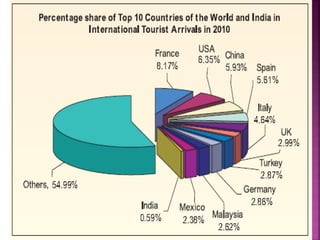
 In the year 2010, 17.9 million foreign tourists 
visited India. Majority of foreign tourists come 
from USA and UK.
Tourism creates jobs for local people. 
 It also increases the income of other businesses 
that supply the tourism industry. 
Tourism is important to the economy of both 
rich and poor countries e.g. tourism in France 
generated 35 million euros In 2006 and 2 
million jobs. 
Poorer countries tend to be more dependant on 
income from tourism than richer ones.
 Health tourism 
 Sports tourism 
 Educational tourism 
 Beach tourism 
 Backwater tourism 
 Leisure tourism 
 Adventure tourism
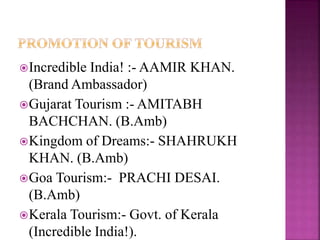
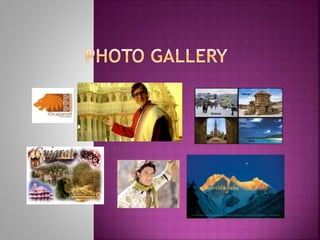
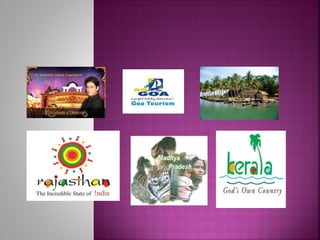
Incredible India! :- AAMIR KHAN. 
(Brand Ambassador) 
Gujarat Tourism :- AMITABH 
BACHCHAN. (B.Amb) 
Kingdom of Dreams:- SHAHRUKH 
KHAN. (B.Amb) 
Goa Tourism:- PRACHI DESAI. 
(B.Amb) 
Kerala Tourism:- Govt. of Kerala 
(Incredible India!).
 Thomas cook india 
 Cox & kings 
 SOTC 
 Yatra.com 
 Makemytrip 
 Travelguru 
 Cleartrip 
 Expedia 
 Akbar travels
 Cox & Kings is the longest established travel 
company in the world. 
 Its distinguished history began in 1758 when 
it was appointed as general agents to the 
regiment of Foot Guards in India under the 
command of Lord Ligonier. 
 Duniya dekho & bharath dekho are important 
Indian works
 Thomas Cook (India) Ltd is the leading 
integrated travel and travel related financial 
services company in the country offering a 
broad spectrum of services that include 
Foreign Exchange, Corporate Travel, MICE, 
Leisure Travel, Insurance, Visa & Passport 
services and E-Business. 
 The company set up its first office in India in 
1881.
 Yatra Online Pvt. Ltd. is a smart travel 
company providing information, pricing, 
availability and booking facility for air travel, 
hotels, buses and car rentals across 5000 
large cities and small rural areas around the 
globe. 
 As an online travel company, Yatra.com acts 
as a complete tour planner for travelers and 
is a one-stop shop for every travel need.
Tourism industry

Tourism industry

  • 1.
  • 2.
    • A TourismIndustry may be defined as a group or cluster of small firms which deals in providing attractive and affordable holiday packages to its customers, either within a state, country or at international level.
  • 3.
    Its boom timefor India’s tourism and hospitality sector. A 5,000 year history , culture ,religion and alternative medicine fascinate both budget and luxury travelers alike. The focus of the industries on the “Atithi Devo Bhavah”campaign, targeted at the inbound foreign tourists in the country. Translated literally this means “Guest is God”.
  • 4.
     Perishability: theproducts/services in the tourism industry are consumed as they are produced.  Inconsistency: products of the tourism industry always differ. Even the same hotel room in the same week with the same weather can be perceived differently due to the mode of the chef.  Investment and immobility: talking about hotels and other accommodations there is usually a big capital lockup in the assets.
  • 5.
     People oriented:tourism industry entirely depends on people. The interaction between the staff and customers determines perceived product quality.  Inseparability: most travel products are first sold and produced and consumed at same time. This is an aspect which clearly set tourism apart from tangible products.  Intangibility: tourism products are intangible.  Inflexibility: travel products are fairly inflexible In terms of fluctuation  Imitaility: offers and products by tourism industry are easy to copy.
  • 7.
    Incredible India –Under this program the govt create promotes India through various integrated marketing programs. Atithie Devo Bhava – Under this program the govt create awareness among Indian people who come in contact with the tourist. Various Infrastructure building initiatives. Encourage religious tourism.
  • 8.
    STRENGTHS • PleasantWeather . • Ideal Geographical location. • Good Image of the Company. • Good Hospitality.
  • 9.
    • Lack ofproper Marketing & Advertisement. • Dependency on Third Party. • Lack of adequate Infrastructural support. • Funds constraining the development of region.
  • 10.
    The concept ofholiday is gaining popularity in India among various classes of people. Increased disposable incomes of the Indian middle class. Adventure sports & trekking. Eco-tourism is gaining popularity.
  • 11.
    Stiff Competition amongvarious Tourism Industry. Environmental factors also impose a threat. Exploration of new tourist spots and hubs.
  • 12.
    • It layemphasis on the use of complex and sophisticated technology in order to promote and market tourism industry. • The use of mass media, internet, magazines and presentations so as to advertise the company. • Providing customers with easy payment facility via online and use of credit cards and wi-fi facility on the go, easy recharge of mobile phones etc.
  • 13.
    India’s GDP willexceed Italy’s in 2020, France’s in 2020 Germany’s in 2025 and Japan’s in 2035 Goldman Sachs Projections (US 2003 $ Billion)
  • 14.
    According to WorldTourism Organization estimates, India will lead in South Asia with 8.9 million arrivals by 2020 India is poised to emerge as the 2nd fastest growing (8.8%) tourism economy in the world over 2005-14 according to the World Travel & Tourism council.
  • 15.
    • It includesthose factors which have to be followed strictly by law (both; the customer & the tourism department). • Issues related to conservation of Environmental laws and regulations, issue of tourist visas to international customers, holding of license by the tourism company , rules & regulations etc.
  • 16.
     Tourism inIndia is the largest service industry, with a contribution of 6.23% to the National GDP and 8.78% of the total employment in India.  India witnesses more than 17.9 million annual foreign tourist arrivals and 740 million domestic tourism visits. The tourism industry in India generated about 100 US$ billion in 2008 and that is expected to increase to US$275.5 billion by 2018 at a 9.4% annual growth rate.  In the year 2010, 17.9 million foreign tourists visited India. Majority of foreign tourists come from USA and UK.
  • 17.
    Tourism creates jobsfor local people.  It also increases the income of other businesses that supply the tourism industry. Tourism is important to the economy of both rich and poor countries e.g. tourism in France generated 35 million euros In 2006 and 2 million jobs. Poorer countries tend to be more dependant on income from tourism than richer ones.
  • 18.
     Health tourism  Sports tourism  Educational tourism  Beach tourism  Backwater tourism  Leisure tourism  Adventure tourism
  • 19.
    Incredible India! :-AAMIR KHAN. (Brand Ambassador) Gujarat Tourism :- AMITABH BACHCHAN. (B.Amb) Kingdom of Dreams:- SHAHRUKH KHAN. (B.Amb) Goa Tourism:- PRACHI DESAI. (B.Amb) Kerala Tourism:- Govt. of Kerala (Incredible India!).
  • 22.
     Thomas cookindia  Cox & kings  SOTC  Yatra.com  Makemytrip  Travelguru  Cleartrip  Expedia  Akbar travels
  • 23.
     Cox &Kings is the longest established travel company in the world.  Its distinguished history began in 1758 when it was appointed as general agents to the regiment of Foot Guards in India under the command of Lord Ligonier.  Duniya dekho & bharath dekho are important Indian works
  • 24.
     Thomas Cook(India) Ltd is the leading integrated travel and travel related financial services company in the country offering a broad spectrum of services that include Foreign Exchange, Corporate Travel, MICE, Leisure Travel, Insurance, Visa & Passport services and E-Business.  The company set up its first office in India in 1881.
  • 25.
     Yatra OnlinePvt. Ltd. is a smart travel company providing information, pricing, availability and booking facility for air travel, hotels, buses and car rentals across 5000 large cities and small rural areas around the globe.  As an online travel company, Yatra.com acts as a complete tour planner for travelers and is a one-stop shop for every travel need.