TOURISM IN TANZANIA


DISPARITIES IN DEVELOPMENT
  TOURIST AND NON TOURIST AREAS
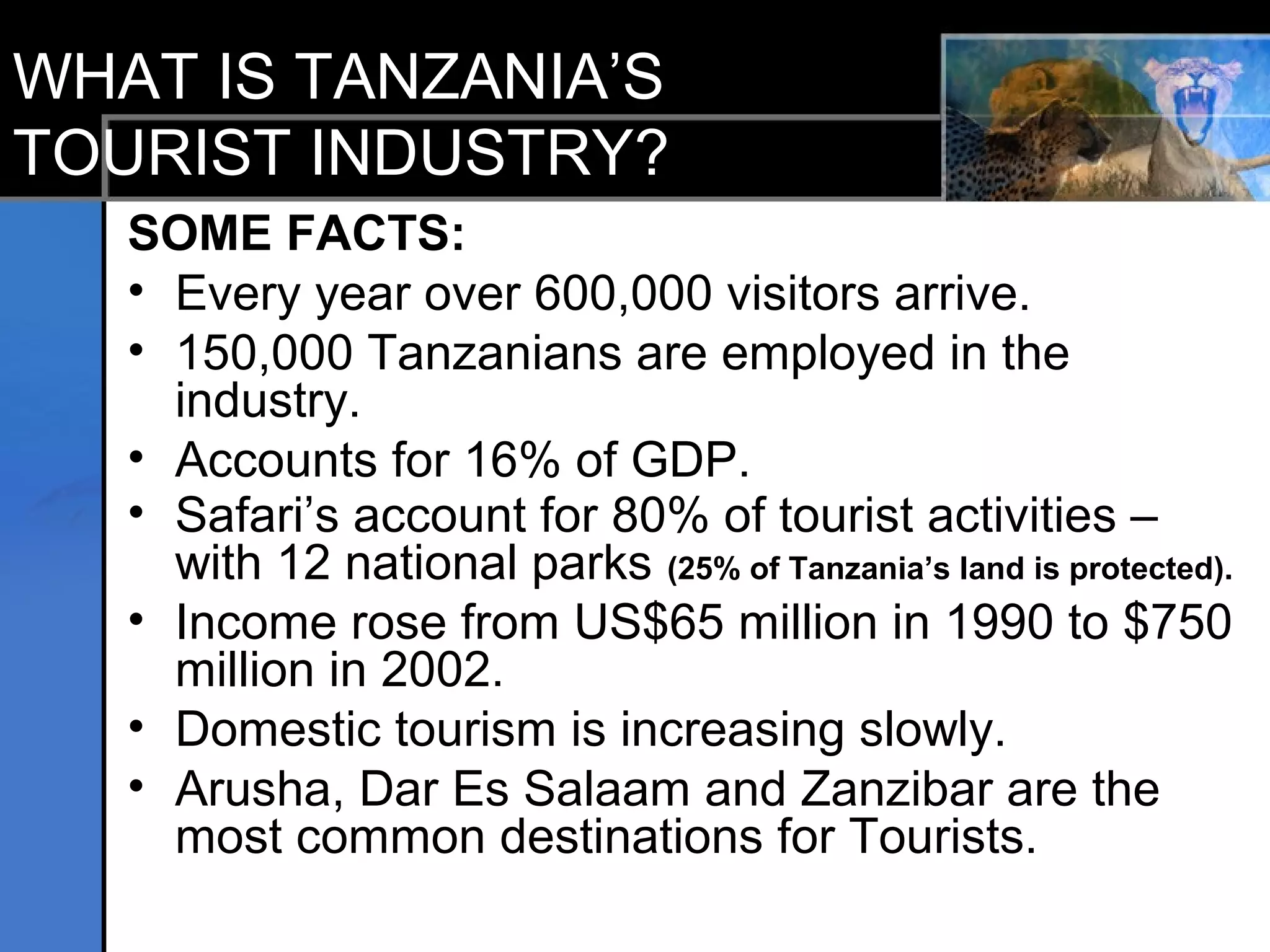
WHAT IS TANZANIA’S
TOURIST INDUSTRY?
   SOME FACTS:
   • Every year over 600,000 visitors arrive.
   • 150,000 Tanzanians are employed in the
     industry.
   • Accounts for 16% of GDP.
   • Safari’s account for 80% of tourist activities –
     with 12 national parks (25% of Tanzania’s land is protected).
   • Income rose from US$65 million in 1990 to $750
     million in 2002.
   • Domestic tourism is increasing slowly.
   • Arusha, Dar Es Salaam and Zanzibar are the
     most common destinations for Tourists.
What are the attractions?

   Both natural ….


    Hot air ballooning over the Serengeti   Wildlife in the national parks.
    National Park.


    Tropical beaches along the coast.
What are the attractions?

   And to a lesser extent
   cultural…
            Architecture is a popular
            attraction in the coastal urban
            centres. Modern and historic
            mosques make great photos.


                                      Maasai are a popular attraction for tourists
Tourism and people…

   There are some disparities found between tourist and non-
     tourist areas. These disparities are not as obvious as
     others… however, as the tourism industry grows, so to
     will the disparities.

   CASE STUDY AREAS ARE:

            TOURIST AREAS =
    Arusha (gateway town to national
       Parks) and Zanzibar Island.
         NON TOURIST AREAS =
          Kigoma and Shinyanga
      (rural, isolated farming areas)   Can you find these
                                        areas on the map?
What disparities can we see?

    LETS COMPARE A VILLAGE IN KIGOMA AND VILLAGE
                    NEAR ARUSHA

   KIGOMA (Chankele)              ARUSHA (Longido)
     1 main dirt road               1 sealed road
     Houses mud and thatch          Houses concrete and iron
     100 students per class         50 students per class
     Dispensary has 1 nurse         Dispensary with 1 doctor
     1 hospital in region           and 2 nurses
     No electricity – use wood      Electricity and Phonelines
                                    in the village
    Tourism is not the only reason for the disparities BUT it
    does increase/widen the differences… tourist areas have
                          advantages!
ADVANTAGES OF TOURISM:

                             •   Tourist’s pay US$30 - $100 per day to
                                 visit parks. A portion of this funding is
                                 used to help nearby communities – to
                                 encourage them to support the
                                 conservation of wildlife.
                             •   Schools, small hospitals are all being
                                 upgraded in the region using money
                                 from tourism.


    Areas without national parks
  do not receive the same support.
ADVANTAGES OF TOURISM:


        ARUSHA HAS MANY
       CULTURAL TOURISM
         PROGRAMMES…

  These programme are found in
    many villages in the Arusha        These classrooms at Londigo village
    area.                              were built with programme funds.
  • Tourists pay a fee ($25 -
    $100) to visit villages and
    learn about their daily life –
    food preparation, medicines,
    crafts, housing, farming, etc.
  • All proceeds go to the
    community and is used to
    build schools, improve
    water/sanitation facilities, run     The guide shows tourists the homes
    the dispensary, etc.                 of the local villagers.
ADVANTAGES OF TOURISM:

  • Villages with the cultural
    tourism programme
    have a higher standard
    of living – access to
    more resources.

  • However, places like
    KIGOMA/SHINYANGA
    do not have tourists as       This is a tourist shop
    too isolated and         near Arusha. This type of shop
    therefore do not benefit  is not found in isolated rural
    from these cultural            areas like Kigoma.
    programmes.
ADVANTAGES OF TOURISM:


                                            INFRASTRUCTURE
                                              Arusha’s roading
                                              network is much more
                                              developed than
                                              Kigoma’s.
    Roads in Arusha are being upgraded.


                                                Higher % of people in
                                                Arusha have access to
                                                power and phone
                                                facilities.
  Power lines are found at even budget lodges
  in and around the national parks. Local
  residents can use the electricity grid.
ADVANTAGES OF TOURISM:

                                               EMPLOYMENT
                                               • Tertiary employment
                                                 opportunities are available
                                                 where tourists are found.
                                                 This shopping centre (The
  This Maasai tourist market sells 100’s
  of handicraft everyday. Artists/carvers
                                                 Slipway) for tourists offers
  benefit from the relatively high prices        retail, restaurant, travel,
  paid by tourists.
                                                 transport jobs for over 300
                                                 people.
                                             Kigoma/Shinyanga don’t have
                                            these employment opportunities.
DISADVANTAGES OF TOURISM:

  Tourists do create some problems in Tanzania –

    Tourists can affect the culture they interact with (e.g.
    Maasai now wanting western material goods such
    children eating sweets, but don’t use toothpaste =
    increased tooth decay).
    Competition for tourist money / jobs in major centres
    can cause conflict and jealously.
    The largest portion of tourism income is focused on
    improving tourism services – not the local community.
    Many of the tourism companies are owned by foreign
    owners, and profits don’t always stay in Tanzania.
    Reliance on industry makes it vulnerable (e.g.
    Terrorism - USA Embassy was bombed in Dar Es
    Salaam).
Ranking Kigoma and Arusha

   In 1999 all 20 regions of Tanzania were ranked from most
   deprived (1) to least deprived (20) by the government.
   Here is where Arusha and Kigoma ranked. * = Infant mortality rate,
                                                     Life expectancy and
                                                     Death rate.

   • KIGOMA REGION                 • ARUSHA REGION
   GDP per Capita = 2              GDP per Capita = 18
   Literacy rate = 4               Literacy rate = 15
   Health status* = 4              Health status* = 17
   Nutrition level = 15            Nutrition level = 14

        What indicator does not fit the picture? Why would
                Kigoma’s nutrition level be high?
FINAL IMAGES –


   A popular Safari attraction –
   the lion kill!                  Interesting signage – on more
                                   than one level!


          Coastal
      villages on
         Zanzibar
       Island are
          popular
               with
           visitors
Only one
                                       Wildebeest on
                                       this Safari!


Wildlife in Tanzania is easy to view
due to the wide open grassland
spaces. This makes it popular with
film crews and wildlife spotters.


                                           Big and
                                           small, rare
                                           and
                                           abundant!

Tourism in Tanzania

  • 1.
    TOURISM IN TANZANIA DISPARITIESIN DEVELOPMENT TOURIST AND NON TOURIST AREAS
  • 2.
    WHAT IS TANZANIA’S TOURISTINDUSTRY? SOME FACTS: • Every year over 600,000 visitors arrive. • 150,000 Tanzanians are employed in the industry. • Accounts for 16% of GDP. • Safari’s account for 80% of tourist activities – with 12 national parks (25% of Tanzania’s land is protected). • Income rose from US$65 million in 1990 to $750 million in 2002. • Domestic tourism is increasing slowly. • Arusha, Dar Es Salaam and Zanzibar are the most common destinations for Tourists.
  • 3.
    What are theattractions? Both natural …. Hot air ballooning over the Serengeti Wildlife in the national parks. National Park. Tropical beaches along the coast.
  • 4.
    What are theattractions? And to a lesser extent cultural… Architecture is a popular attraction in the coastal urban centres. Modern and historic mosques make great photos. Maasai are a popular attraction for tourists
  • 5.
    Tourism and people… There are some disparities found between tourist and non- tourist areas. These disparities are not as obvious as others… however, as the tourism industry grows, so to will the disparities. CASE STUDY AREAS ARE: TOURIST AREAS = Arusha (gateway town to national Parks) and Zanzibar Island. NON TOURIST AREAS = Kigoma and Shinyanga (rural, isolated farming areas) Can you find these areas on the map?
  • 6.
    What disparities canwe see? LETS COMPARE A VILLAGE IN KIGOMA AND VILLAGE NEAR ARUSHA KIGOMA (Chankele) ARUSHA (Longido) 1 main dirt road 1 sealed road Houses mud and thatch Houses concrete and iron 100 students per class 50 students per class Dispensary has 1 nurse Dispensary with 1 doctor 1 hospital in region and 2 nurses No electricity – use wood Electricity and Phonelines in the village Tourism is not the only reason for the disparities BUT it does increase/widen the differences… tourist areas have advantages!
  • 7.
    ADVANTAGES OF TOURISM: • Tourist’s pay US$30 - $100 per day to visit parks. A portion of this funding is used to help nearby communities – to encourage them to support the conservation of wildlife. • Schools, small hospitals are all being upgraded in the region using money from tourism. Areas without national parks do not receive the same support.
  • 8.
    ADVANTAGES OF TOURISM: ARUSHA HAS MANY CULTURAL TOURISM PROGRAMMES… These programme are found in many villages in the Arusha These classrooms at Londigo village area. were built with programme funds. • Tourists pay a fee ($25 - $100) to visit villages and learn about their daily life – food preparation, medicines, crafts, housing, farming, etc. • All proceeds go to the community and is used to build schools, improve water/sanitation facilities, run The guide shows tourists the homes the dispensary, etc. of the local villagers.
  • 9.
    ADVANTAGES OF TOURISM: • Villages with the cultural tourism programme have a higher standard of living – access to more resources. • However, places like KIGOMA/SHINYANGA do not have tourists as This is a tourist shop too isolated and near Arusha. This type of shop therefore do not benefit is not found in isolated rural from these cultural areas like Kigoma. programmes.
  • 10.
    ADVANTAGES OF TOURISM: INFRASTRUCTURE Arusha’s roading network is much more developed than Kigoma’s. Roads in Arusha are being upgraded. Higher % of people in Arusha have access to power and phone facilities. Power lines are found at even budget lodges in and around the national parks. Local residents can use the electricity grid.
  • 11.
    ADVANTAGES OF TOURISM: EMPLOYMENT • Tertiary employment opportunities are available where tourists are found. This shopping centre (The This Maasai tourist market sells 100’s of handicraft everyday. Artists/carvers Slipway) for tourists offers benefit from the relatively high prices retail, restaurant, travel, paid by tourists. transport jobs for over 300 people. Kigoma/Shinyanga don’t have these employment opportunities.
  • 12.
    DISADVANTAGES OF TOURISM: Tourists do create some problems in Tanzania – Tourists can affect the culture they interact with (e.g. Maasai now wanting western material goods such children eating sweets, but don’t use toothpaste = increased tooth decay). Competition for tourist money / jobs in major centres can cause conflict and jealously. The largest portion of tourism income is focused on improving tourism services – not the local community. Many of the tourism companies are owned by foreign owners, and profits don’t always stay in Tanzania. Reliance on industry makes it vulnerable (e.g. Terrorism - USA Embassy was bombed in Dar Es Salaam).
  • 13.
    Ranking Kigoma andArusha In 1999 all 20 regions of Tanzania were ranked from most deprived (1) to least deprived (20) by the government. Here is where Arusha and Kigoma ranked. * = Infant mortality rate, Life expectancy and Death rate. • KIGOMA REGION • ARUSHA REGION GDP per Capita = 2 GDP per Capita = 18 Literacy rate = 4 Literacy rate = 15 Health status* = 4 Health status* = 17 Nutrition level = 15 Nutrition level = 14 What indicator does not fit the picture? Why would Kigoma’s nutrition level be high?
  • 14.
    FINAL IMAGES – A popular Safari attraction – the lion kill! Interesting signage – on more than one level! Coastal villages on Zanzibar Island are popular with visitors
  • 15.
    Only one Wildebeest on this Safari! Wildlife in Tanzania is easy to view due to the wide open grassland spaces. This makes it popular with film crews and wildlife spotters. Big and small, rare and abundant!