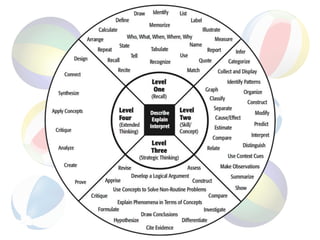
tinyurl.com/wasdtpt
Quick-Writes
1. Based on the cover of the
book, what do you think this
presentation will be about?
2. Take two minutes to collect
your thoughts and jot down a
response.
3. Find someone with whom you
have not yet spoken to today
and share your response.
Feel free to revise your notes
based on your conversation.
4. “Class” discussion
“Train teachers to call only on students
who raise their hands and to build on
correct responses to maintain a brisk
classroom pace. This would enhance the
self-confidence of already proficient
students and minimize class participation
and engagement among those who
enter with lower proficiency.”


– Kim Marshall,“A How-to Plan for
Widening the Gap”
“Think about the typical question-and-
answer session in most classrooms. We
call it ‘the beach ball scenario’
because it reminds us of a scene in
which a teacher is holding a beach
ball. She tosses it to a student, who
quickly catches the ball and tosses it
back. She then tosses it to another
student…”
How can I create more beach balls?
“Total Participation Techniques (TPTs)
are teaching techniques that allow for all
students to demonstrate, at the same time,
active participation and cognitive
engagement in the topic being studied.”
Ranking
1. In grade level groups, analyze the ten On-
the-Spot TPTs. Rank them from most useful to
least useful.
2. For each ranking, justify it with a brief
statement of rationale.
3. “Class” discussion
tinyurl.com/wasdtpt
“Student interaction will only be as
powerful as your prompts… the techniques
are a way to get the content across, not
the activity itself. The TPT is the portal, or
the pathway, not the end in itself.”
“Although implementing TPTs may require
that you actively remind yourself to do so, if
you stick to it, it becomes a way of thinking.”
“I did the same amount of planning

[when implementing TPTs]; I just did it in a

little bit of a different way.”


– Meghan Babcock, sixth grade teacher
Think-Pair-Share
1. How can you easily move to implementing
TPTs on a regular basis? (Reflect on your own
for 30 seconds.)
2. Pair up and discuss.
3. After pair sharing, join your pair with another
pair and continue the discussion.
4. “Class” discussion
3b: Using Questioning and Discussion Techniques
• Quality of questions/prompts
• Discussion techniques
• Student participation
3c: Engaging Students in Learning
• Activities and assignments
• Grouping of students
• Instructional materials and resources
• Structure and pacing
The 3-Sentence Wrap-Up
1. Summarize the presentation and what you
have learned in exactly three sentences.
2. Get together in groups of 4-5 and refine your
summaries.
3. After meeting with your group and refining
your summary, add on a fourth sentence that
describes how your feel about TPTs.
4. “Class” discussion.
One more thing…
Kahoot!
How can I create more beach balls?

Total Participation Techniques

  • 1.
  • 2.
    Quick-Writes 1. Based onthe cover of the book, what do you think this presentation will be about? 2. Take two minutes to collect your thoughts and jot down a response. 3. Find someone with whom you have not yet spoken to today and share your response. Feel free to revise your notes based on your conversation. 4. “Class” discussion
  • 3.
    “Train teachers tocall only on students who raise their hands and to build on correct responses to maintain a brisk classroom pace. This would enhance the self-confidence of already proficient students and minimize class participation and engagement among those who enter with lower proficiency.” 
 – Kim Marshall,“A How-to Plan for Widening the Gap”
  • 4.
    “Think about thetypical question-and- answer session in most classrooms. We call it ‘the beach ball scenario’ because it reminds us of a scene in which a teacher is holding a beach ball. She tosses it to a student, who quickly catches the ball and tosses it back. She then tosses it to another student…”
  • 6.
    How can Icreate more beach balls?
  • 7.
    “Total Participation Techniques(TPTs) are teaching techniques that allow for all students to demonstrate, at the same time, active participation and cognitive engagement in the topic being studied.”
  • 8.
    Ranking 1. In gradelevel groups, analyze the ten On- the-Spot TPTs. Rank them from most useful to least useful. 2. For each ranking, justify it with a brief statement of rationale. 3. “Class” discussion tinyurl.com/wasdtpt
  • 9.
    “Student interaction willonly be as powerful as your prompts… the techniques are a way to get the content across, not the activity itself. The TPT is the portal, or the pathway, not the end in itself.”
  • 11.
    “Although implementing TPTsmay require that you actively remind yourself to do so, if you stick to it, it becomes a way of thinking.”
  • 12.
    “I did thesame amount of planning
 [when implementing TPTs]; I just did it in a
 little bit of a different way.” 
 – Meghan Babcock, sixth grade teacher
  • 13.
    Think-Pair-Share 1. How canyou easily move to implementing TPTs on a regular basis? (Reflect on your own for 30 seconds.) 2. Pair up and discuss. 3. After pair sharing, join your pair with another pair and continue the discussion. 4. “Class” discussion
  • 14.
    3b: Using Questioningand Discussion Techniques • Quality of questions/prompts • Discussion techniques • Student participation 3c: Engaging Students in Learning • Activities and assignments • Grouping of students • Instructional materials and resources • Structure and pacing
  • 15.
    The 3-Sentence Wrap-Up 1.Summarize the presentation and what you have learned in exactly three sentences. 2. Get together in groups of 4-5 and refine your summaries. 3. After meeting with your group and refining your summary, add on a fourth sentence that describes how your feel about TPTs. 4. “Class” discussion.
  • 16.
  • 17.
  • 18.
    How can Icreate more beach balls?