TOTAL PARENTERAL NUTRITION
Presented by Dr. Pawan
Surgery Resident
• Nutrition (Nourishment or Aliment)
– Is the provision,to cells and organisms,of the
materials necessary(in the form of food) to
support life.
NUTRITONAL SUPPORT
• Nutrition support involves the provision of
nutrition beyond that provided by normal food
intake
– using oral supplementation, or
– enteral tube feeding(ETF)
– parenteral nutrition (PN).
• The overall aim of nutrition support is to try to
ensure that total nutrient intake (food + nutrition
support) provides enough energy, protein, fluid
and micronutrients to meet all the patients’
needs.
Rationale for Recommendation
Nutrition support should be considered in
patients when:
• the patient has eaten very little amounts for
the last 5 days or more,or
• the patient is very unlikely to eat more than
very little amounts for the next 5 days or
more (whatever current BMI or history of
weight loss), or
• the patient’s BMI is < 18.5 kg/m2, or the patient
has unintentionally lost > 10% body weight
within the previous 3-6 months, or
• the patient has a BMI < 20 kg/m2, with
unintentional weight loss > 5% within the
previous 3-6 months,or
• the patient has poor absorptive capacity, is
catabolic and/or has high nutrient losses and/or
has a condition that increases their nutritional
needs for example hypermobility
PN-INTRODUCTION
• Until the early 1960s, the use of intravenous nutrition
was restricted to high concentrations of dextrose and
electrolytes.
• In 1962, Wretlind and colleagues developed lipid
infusions as the principle source of calories for
parenteral feeding.
• In 1966, Dudrick and Rhoads developed parenteral
nutrition (PN) for patients who had lost their small
bowel.
• In 1976, Solassol and Joyeux developed the three-in
one mixture by putting sugars, lipids and amino acids
in a single bag.
• In 1978, Shils and colleagues and Jeejeebhoy and
colleagues developed ‘home’ PN to reduce costs.
• Parenteral Nutrition
– Provision of all nutritional requirements by means
of the intravenous route (without the use of
gastrointestinal tract).
• Types
– Total parenteral nutrition
– Peripheral parenteral nutrition
GOALS
• To decrease the adverse effects of catabolism
• Support ongoing metabolism
• To improve immune function, cardiac and
respiratory function
• Maintain glycogen reserve
• Maintain acid, base and electrolyte
metabolism
• The gut should always be the preferred route
for nutrient administration.
• Therefore, parenteral nutrition is indicated
generally when there is severe gastro-
intestinal dysfunction(cannot take sufficient
food or feeding formulas by the enteral route).
Indication
• A) Principal indication
• Seriously ill patient where enteral feeding is
not possible
• Supplementation to inadequate oral intake
B) Pediatric population TPN Indication
1) New born baby with gastrointestinal abnormallity
• Tracheo esophageal fistula massive intestinal Artesia
• Complicated meconium ileus
• Massive diaphragmatic hernia
• Gastroschisis
• Omphalocele
• Cloachal exostrophy
• Neglected pyloric stenosis
2) Failure to thrive in infants secondary to
• Short bowel syndrome
• mal absorption
• Enzyme deficiency
• Inflammatory bowel disease
• Chronic idiopathic diarrhea
3) Other pediatric indication
• Necrotizing enterocolitis
• Intestinal fistula
• Post operative infection
• Severe trauma
• Severe burn
Adult Population TPN INDICATION
1) Short bowel syndrome secondary to
• massive small bowel resection
• External or internal enteric fistula
2 ) High gastro intestinal obstruction secondary to
• Achalasia
• Esophageal stricture
• Pyloric obstruction
• Gastric neoplasm
3) Prolonged Ileus secondary to
• Post operative period
• Abdominal or poly trauma
4) Mal absorption secondary to
• Enzyme deficiency
• Ulcerative colitis
• Granulomatous colitis
• Tuberculos enteritis
5)Functional gastrointestinal disorder
• Idiopathic diarrhea
• Psychogenic vomiting
• Anorexia nervosa
6) Hyper catabolic states secondary to
• Severe sepsis
• Extensive burn
• Poly trauma
• Major fracture
• 7) malignancy patient in whom malnutrition may
jeopardize successful delivery of therapy
( surgery, chemotherapy , radiotherapy)
• 8) paraplegic/quadriplegic patients with pressure
sore in pelvic or perineal region where fecal
soiling is a major problem
• 9) patient with depressed sensorium in whom
feeding is not possible.
CONTRAINDICATIONS
• 1. Where gastrointestinal feeding is possible. Almost
always this is the best route to provide nutrition to the
patient.
• 2. Patients with good nutritional status in whom only
short term TPN support is anticipated.
• 3. Irreversibly decerebrate patients.
• 4. Lack of specific therapeutic goal : TPN should NOT be
used to prolong life if death is inevitable
• 5. Severe cardiovascular instability or
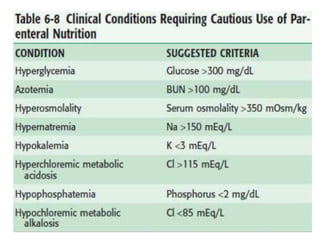
metabolic derangements. These should be
corrected before attempting intravenous
hyperalimentation.
• 6. Infants with less than 8 cm of small bowel
as it has been conclusively proved that they
cannot adapt to enteral feeding despite
prolonged periods of TPN.
Nutritional Content
• Water
– 30 to 40 mL/kg/day
• Energy
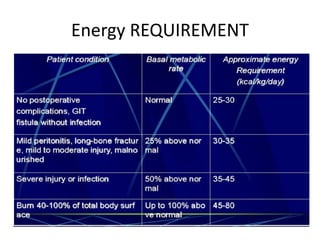
– 30 to 60 kcal/kg/day (depending on energy expenditure)
• Amino acids
– 1 to 2.0 g/kg/day (depending on the degree of
catabolism)
• Essential fatty acids
• Vitamins, and minerals
• Children who need TPN may have different fluid
requirements and need more energy (120 kcal/kg/day) and
amino acids (2.5 to 3.5 g/kg/day).
REQUIREMENTS
ENERGY
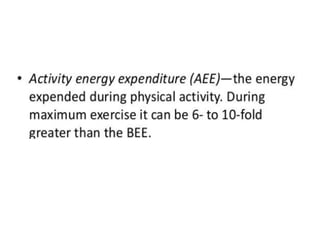
• Basal energy requirement is the function of the
individual's weight, age, gender, activity level and the
disease process
• The major components of energy output are resting
energy expenditure and physical activity;minor sources
include the energy cost of metabolizing food and
shivering thermogenesis.
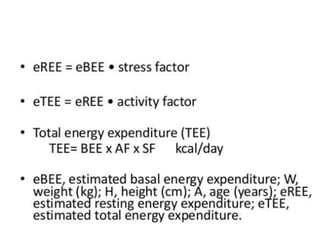
• Total energy expenditure= resting energy expenditure
(70% of TEE) + energy expenditure of physical activity
(20% of TEE) +thermic effect of food(10% of TEE).
Energy REQUIREMENT
REQUIREMENTS
Energy Sources: Glucose
• The most common source of parenteral energy supply
is glucose, being:
– Readily metabolized in most patients,
– provides the obligatory needs of the substrate , thus
reducing gluconeogenesis and sparing endogenous
protein.
• 1 gm of glucose gives 4 Kcals.(3.4Kcal in TPN).
• Most stable patients tolerate rates of 4-5 mg/kg/Min,
but insulin resistance in critically ill patients may lead
to hyperglycemia even at these rates, so insulin should
be incorporated acc. to blood sugar levels.
Energy Sources: Glucose Disadvantages
• Low calorie value
• Requires large volume
• Hyperglycemia
• More CO2 production
• Thrombophlebitis in conc above 10%
• Energy Sources: Lipid
– Fat mobilization is a major response to stress and
infection.
– Triacylglycerols are an important fuel source in
those conditions, even when glucose availability is
adequate.
– Need to be restricted in patients with
hypertriglyceridemia.
• Energy Sources: Lipid
• Lipids are also a source for the essential fatty
acids which are the building blocks for many
of the hormones involved in the inflammatory
process as well as the hormones regulating
other body functions.
• Ideally, energy from fat should not exceed
40% of the total (usually 20-30%).
Energy Sources: Lipid
• Fat emulsions can be safely administered via
peripheral veins
• They are available in 10, 20 and 30%
preparations.
• Though lipids have a calorific value of 9Kcal/g,
the value in lipid emulsions is 10Kcal/g due to
the contents of glycerol and phospholipids.
Advantages
• Energy Sources: Lipid
– high calorie
– Prevents hyperglycemia
– Less co2 production
– Less insulin production
Disadvantages
• Energy Sources: Lipid
– Hypertriglyceridemia
– Sepsis
– Fat embolism
– Fat overload
– Hepatic dysfunction
– pancreatitis
Nitrogen
• Protein (or amino acids) is the functional and
structural component of the body
• So fulfilling patient’s caloric needs with
protein and non-protein calories (fat and
glucose) is essential.
• Protein requirements for most healthy
individuals are 0.8 g/kg/day(range-0.5-1)
Nitrogen
• With disease, poor food intake, and inactivity, body
protein is lost with the resultant weakness and muscle
mass wasting.
• Critically ill patients may need as high as 1.5-2.5 g
protein/kg/day depending on the disease process:(major
trauma or burn)
• The amount should be reduced in patients with kidney or
liver disease.
• Some amino acid solutions have been modified:
– rich in branched chain amino acids for hepatic
encephalopathy
– rich in essential amino acid for renal insufficiency pts
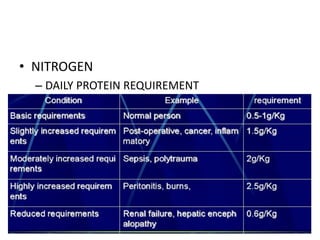
• NITROGEN
– DAILY PROTEIN REQUIREMENT
Protein or nitrogen balance provides a
measure of feeding efficacy of PN or EN
• Parenteral amino acid solutions provide all
known essential amino acids.
• Available a.a. preparations are 3.5 - 15 % (ie
contains 3.5-15 gms of protein or a.a.s/100 mL
solution).
• 1gm of protein = 0.16 gm of N2.
FLUID REQUIREMENTS
ESTIMATING ADULT FLUID REQUIREMENTS
• By caloric intake : 1ml/calorie
• Example: 1800 calorie diet = 1800 calories x1ml=
1800ml
• By body weight and age : average requirement is
30 ml/kg/d
• 16-55 years 35 ml/kg/d
• 56-65 years 30 ml/kg/d
• > 65 years 25 ml/kg/d
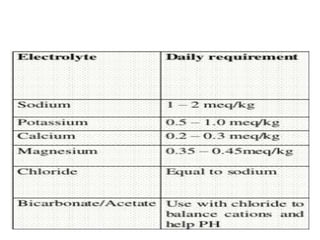
FLUID AND ELECTROLYTES
• Normalization of acid-base balance is a
priority and constant concern in the
management of critically ill patients.
• Most electrolytes can be safely added to the
parenteral amino acid/dextrose solution.
• Sodium bicarbonate in high concentrations
will tend to generate carbon dioxide at the
acidic pH of the amino acid/glucose mix.
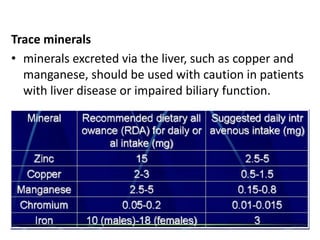
Trace minerals
• minerals excreted via the liver, such as copper and
manganese, should be used with caution in patients
with liver disease or impaired biliary function.
OSMALITY
• PPN: Maximum of 900 milliosmoles / liter
• TPN: as nutrient dense as necessary
(>900m.osmol and up as high as 3000).
• Amino acids (10 m.osmol/gm), dextrose (5
m.osmol/gm) and electrolytes (2 m.osmol
/mEq)contribute most to the osmolarity, while
lipids give 1.5 m.osmol/gm.
ADMINISTRATION OF TPN
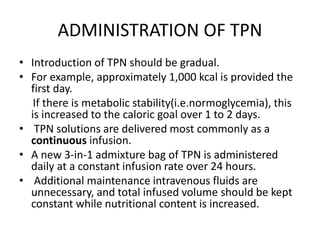
• Introduction of TPN should be gradual.
• For example, approximately 1,000 kcal is provided the
first day.
If there is metabolic stability(i.e.normoglycemia), this
is increased to the caloric goal over 1 to 2 days.
• TPN solutions are delivered most commonly as a
continuous infusion.
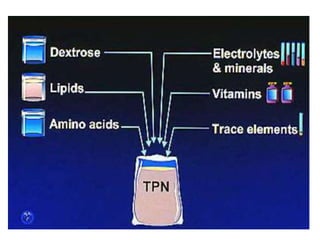
• A new 3-in-1 admixture bag of TPN is administered
daily at a constant infusion rate over 24 hours.
• Additional maintenance intravenous fluids are
unnecessary, and total infused volume should be kept
constant while nutritional content is increased.
• Cyclic administration of TPN solutions may be
useful for
(1) those who will be discharged from the
hospital and subsequently receive home TPN,
(2) those with limited intravenous access who
require administration of other medications,
and
(3) those who are metabolically stable and
desire a period during the day when they can
be free of an infusion pump.
• Cyclic TPN is administered for 8 to 16 hours,
most commonly at night. This should not be done
until metabolic stability has been demonstrated
for patients on standard, continuous TPN
infusions.
• Cyclic TPN helps prevent hepatotoxicity that can
develop with long-term TPN and the fasting
period allows essential fatty acids to be released
from fat stores.
VENOUS ACCESS
• The infusion of hyperosmolar nutrient solution
requires a large bore, high flow vessel to minimize
vessel irritation and damage.
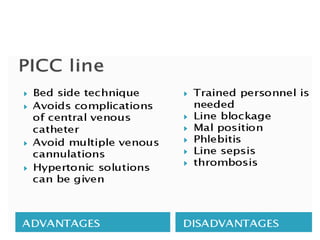
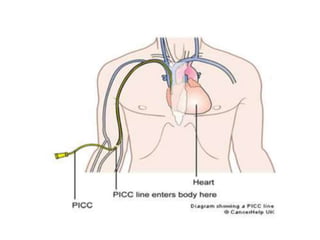
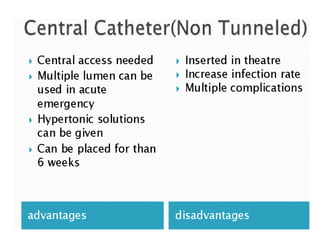
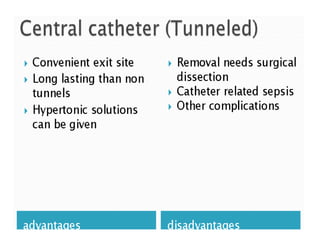
• Catheter can be placed via the subclavian vein,the
jugular vein or a long catheter placed in an arm vein
and threaded into the central venous system (a
peripherally inserted central catheter line)
• Percutaneous subclavian vein catheterization and PICC
are the most commonly used techniques for parenteral
nutrition
• Position of catheter is confirmed by radiograph
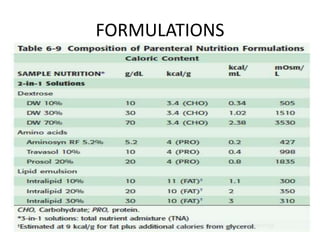
FORMULATIONS
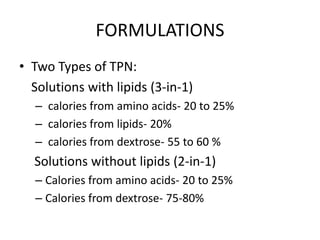
• Two Types of TPN:
Solutions with lipids (3-in-1)
– calories from amino acids- 20 to 25%
– calories from lipids- 20%
– calories from dextrose- 55 to 60 %
Solutions without lipids (2-in-1)
– Calories from amino acids- 20 to 25%
– Calories from dextrose- 75-80%
FORMULATIONS
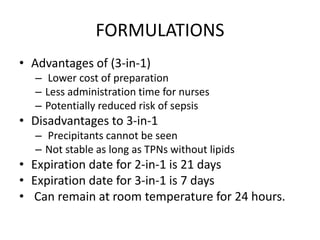
• Advantages of (3-in-1)
– Lower cost of preparation
– Less administration time for nurses
– Potentially reduced risk of sepsis
• Disadvantages to 3-in-1
– Precipitants cannot be seen
– Not stable as long as TPNs without lipids
• Expiration date for 2-in-1 is 21 days
• Expiration date for 3-in-1 is 7 days
• Can remain at room temperature for 24 hours.
FORMULATIONS
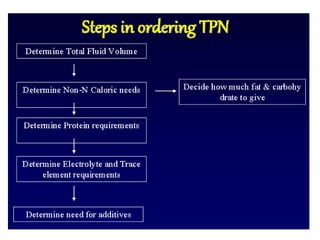
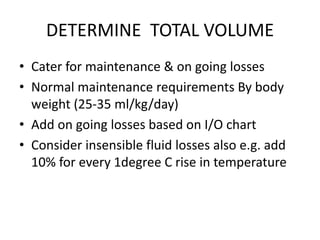
DETERMINE TOTAL VOLUME
• Cater for maintenance & on going losses
• Normal maintenance requirements By body
weight (25-35 ml/kg/day)
• Add on going losses based on I/O chart
• Consider insensible fluid losses also e.g. add
10% for every 1degree C rise in temperature
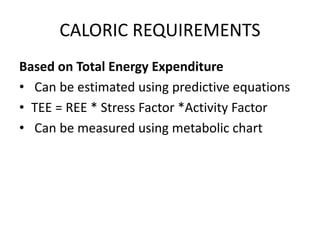
CALORIC REQUIREMENTS
Based on Total Energy Expenditure
• Can be estimated using predictive equations
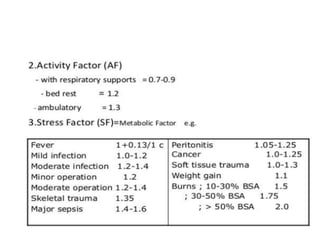
• TEE = REE * Stress Factor *Activity Factor
• Can be measured using metabolic chart
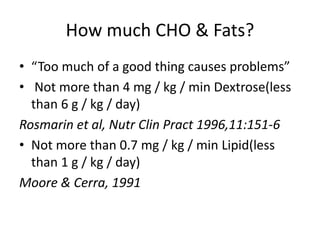
How much CHO & Fats?
• “Too much of a good thing causes problems”
• Not more than 4 mg / kg / min Dextrose(less
than 6 g / kg / day)
Rosmarin et al, Nutr Clin Pract 1996,11:151-6
• Not more than 0.7 mg / kg / min Lipid(less
than 1 g / kg / day)
Moore & Cerra, 1991
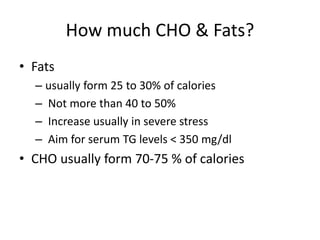
How much CHO & Fats?
• Fats
– usually form 25 to 30% of calories
– Not more than 40 to 50%
– Increase usually in severe stress
– Aim for serum TG levels < 350 mg/dl
• CHO usually form 70-75 % of calories
How much protein to give?
• Based on calorie : nitrogen ratio
• Based on degree of stress & body weight
• Based on Nitrogen Balance
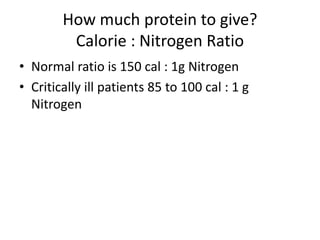
How much protein to give?
Calorie : Nitrogen Ratio
• Normal ratio is 150 cal : 1g Nitrogen
• Critically ill patients 85 to 100 cal : 1 g
Nitrogen
How much protein to give?
Based on Nitrogen Balance
• Aim for positive balance of 1.5 to 2g / kg / day
Additives
• Medications
– Albumin, H2-receptor antagonists, heparin, iron,dextran,
insulin, and metoclopramide can be administered in TPN
solutions. However, not all medications are compatible
with 3-in-1 admixtures.
• Insulin
can give s/c initially based on sliding scale
once stable, give 2/3 total requirements in TPN &
review daily
• alternate regimes
– 0.1 u per g dextrose in TPN
– 10 u per liter TPN initial dose
Commercial Formulation Available
• Climomel N5-800
• Clinimix N9G-20E
• Kabiven
• Vitrimix
• Celemix-G
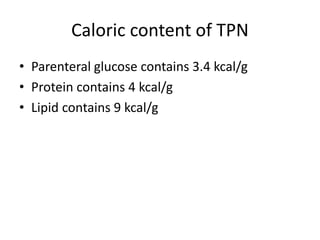
Caloric content of TPN
• Parenteral glucose contains 3.4 kcal/g
• Protein contains 4 kcal/g
• Lipid contains 9 kcal/g
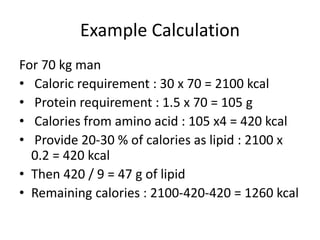
Example Calculation
For 70 kg man
• Caloric requirement : 30 x 70 = 2100 kcal
• Protein requirement : 1.5 x 70 = 105 g
• Calories from amino acid : 105 x4 = 420 kcal
• Provide 20-30 % of calories as lipid : 2100 x
0.2 = 420 kcal
• Then 420 / 9 = 47 g of lipid
• Remaining calories : 2100-420-420 = 1260 kcal
• Make up the difference with dextrose :
1260 / 3.4 = 370 g dextrose
• Final volume :
• Amino acids ( 10% stock solution) :105g =
1050 ml
• Dextrose (70% stock solution) :370g = 528 ml
• Lipids (20% stock solution) : 47g =235ml
• Total volume = 1813ml/day
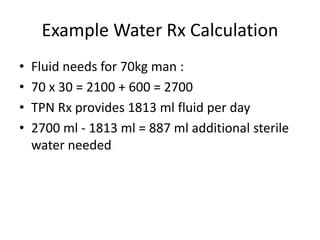
Example Water Rx Calculation
• Fluid needs for 70kg man :
• 70 x 30 = 2100 + 600 = 2700
• TPN Rx provides 1813 ml fluid per day
• 2700 ml - 1813 ml = 887 ml additional sterile
water needed
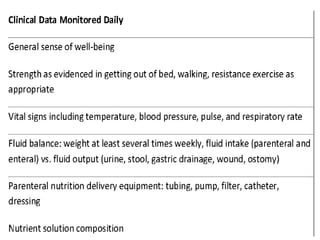
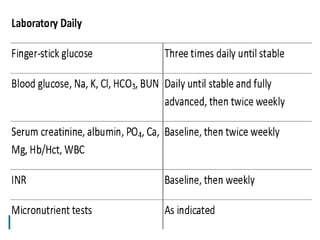
MONITORING OF
PARENTERAL
NUTRITION
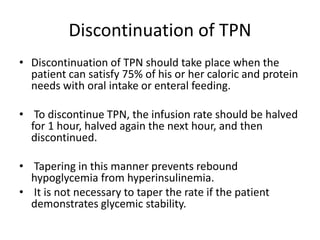
Discontinuation of TPN
• Discontinuation of TPN should take place when the
patient can satisfy 75% of his or her caloric and protein
needs with oral intake or enteral feeding.
• To discontinue TPN, the infusion rate should be halved
for 1 hour, halved again the next hour, and then
discontinued.
• Tapering in this manner prevents rebound
hypoglycemia from hyperinsulinemia.
• It is not necessary to taper the rate if the patient
demonstrates glycemic stability.
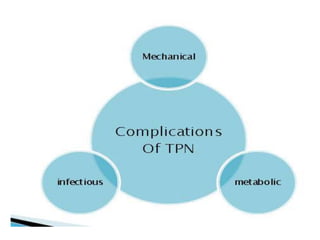
Mechanical complications
• Air embolism
• pneumothorax
• hemothorax
• Cardiac tamponade
• Injuries to arteries and veins
• Injury to thoracic duct
• Brachial plexus injury
Metabolic complications
• Early or nutrient related
– hyperglycemia
– hypoglycemia
– hyperlipidemia
– refeeding syndrome
late or related to long term administration
• Hepatic complications
– liver dysfunction
– painful hepatomegaly
– hyperammonemia.
• Transient liver dysfunction, evidenced by
increased transaminases, bilirubin, and alkaline
phosphatase,is common with the initiation of
TPN.
• Delayed or persistent elevations may result from
excess quantities of amino acids.
Gallbladder complications
– include cholelithiasis, gallbladder sludge, and cholecystitis.
– These complications can be caused or worsened by
prolonged gallbladder stasis.
• Stimulating contraction by providing about 20 to 30%
of calories as fat and stopping glucose infusion several
hours a day is helpful.
• Oral or enteral intake also helps.
• Treatment with metronidazole, ursodeoxycholic acid,
phenobarbital, or cholecystokinin helps some patients
with cholestasis.
Complication-late or related to long
term administration
• Metabolic bone disease: osteomalaacia, osteopenia
• Fluid overload
• Hypo/hypernatremia
• Hypercalcemia
• Hypo/hyperkalemia
• Hyperglycemia can be avoided by monitoring
blood glucose often, adjusting the insulin dose
in the TPN solution and giving subcutaneous
insulin
• Hypoglycemia can be precipitated by
suddenly discontinuing constant concentrated
dextrose infusions.
Abnormalities of serum electrolytes and minerals
• should be corrected by modifying subsequent
infusions or, if correction is urgently required, by
beginning appropriate peripheral vein infusions.
• Vitamin and mineral deficiencies are rare if
solutions are given correctly.
• elevated BUN may reflect dehydration, which can
be corrected by giving free water as 5% dextrose
via a peripheral vein.
• Volume overload (suggested by > 1 kg/day weight
gain)
– may occur when high daily energy requirements
require large fluid volumes.
• Metabolic bone disease, or bone demineralization
(osteoporosis or osteomalacia),
– develops in some patients receiving TPN for > 3 mo.
– Mechanism is unknown.
– Advanced disease can cause severe periarticular, lower
extremity, and back pain.
– Temporarily or permanently discontinuing TPN is the only
known treatment.
Adverse reactions to lipid emulsions
• dyspnea, cutaneous allergic reactions, nausea,
headache, back pain, sweating, dizziness
• uncommon but may occur early, particularly if
lipids are given at > 1.0 kcal/ kg/h.
• Temporary hyperlipidemia may occur,
particularly in patients with kidney or liver
failure
• treatment is usually not required.
• Delayed adverse reactions to lipid emulsions
include
– hepatomegaly, mild elevation of liver enzymes,
splenomegaly, thrombocytopenia, leukopenia,
and, especially in premature infants with
respiratory distress syndrome, pulmonary function
abnormalities.
• Temporarily or permanently slowing or
stopping lipid emulsion infusion may prevent
or minimize these adverse reactions.
Refeeding syndrome
• Patients at risk are malnourished, particularly
marasmic patients
• Can occur with enteral or parenteral nutrition
• Results from intracellular electrolyte shift
Refeeding syndrome
• Reduced serum levels of magnesium,
potassium, and phosphorus
• Hyperglycemia and hyperinsulinemia
• Interstitial fluid retention
• Cardiac decompensation and arrest
Refeeding Syndrome
Prevention/Treatment
• Monitor and supplement electrolytes,
vitamins and minerals prior to and during
infusion of PN until levels remain stable
• Initiate feedings with 15-20 kcal/kg or 1000
kcals/day and 1.2-1.5 g protein/kg/day
• Limit fluid to 800 ml + insensible losses (adjust
per patient fluid tolerance and status)
Infection :
• Catheter related sepsis is most common life
threatening complication
• Causes: staph epidermidis and staph
aureus,enterococcus, candida, E coli,
psuedomonas,klebsiella etc in
immunocompromised pts
CLABSI(central line associated blood
stream Infection)
• defined as a laboratory-confirmed bloodstream
infection not related to an infection at another
site that develops within 48 hours of a central
line placement.
• Etiology
– Gram-positive organisms (coagulase-negative
staphylococci, 34.1%; enterococci, 16%;
and Staphylococcus aureus, 9.9%) are the most
common, followed by gram negatives
(Klebsiella, 5.8%; Enterobacter, 3.9%; Pseudomonas, 3
.1%; E.coli, 2.7%; Acinetobacter, 2.2%),
Candida species (11.8%), and others (10.5%)
• Mechanism
– Within 7 to 10 days of central venous catheter
placement, bacteria on the skin surface migrate
along the external surface of the catheter from
the skin exit site towards the intravascular space.
– Less common mechanisms include hematogenous
seeding of bacteria from another source or from a
contaminated infusion.
– The notion that intravenous calories and glucose
lead to hyperglycemia, which in turn contributes
to BSI risk, is widely held but is unproven.
• Clinical manifestations vary depending on the severity
of illness.
• Fever and chills are the most common manifestations
but may be masked if the patient is
immunocompromised or at extremes of an age
• Exit site examination to look for signs of
inflammation of tunneled catheters with inspection
and palpation of the subcutaneous track is important.
• Patients may report pain, swelling, or discharge from
the exit site and redness surrounding the exit site or
along the subcutaneous track when exit site or tunnel
infections are present.
Evaluation
• In addition to the clinical exam, lab
investigations are important for diagnosis and
management.
• Blood culture is the most important step
towards diagnosis in addition to complete
blood count, serum electrolytes, and renal
and liver function tests, which are necessary
to assess for severity and/or co-morbidities
Treatment
• When CLABSI is suspected, empiric therapy should be
based on the most likely organism, host factors, and
the overall clinical picture.
• In general, a reasonable coverage for common gram-
positive and gram-negative organisms will be
necessary.
• Once antimicrobial susceptibility results are available,
de-escalation to specific and appropriate therapy is
recommended.
• If blood cultures have no growth, the need for further
empiric antibiotic therapy should be reassessed.
• If unexplained fever or sepsis persists in a
patient with a short-term central venous or
arterial catheter and paired peripheral
venipuncture and catheter blood cultures
have failed to identify CLABSI, the catheter
should be removed and its tip sent for culture.
Duration of therapy:
• For uncomplicated bloodstream infection (i.e., no
associated suppurative thrombosis, endocarditis, or
metastatic infection) and resolves within 72 hours of
catheter removal, intravenous antimicrobial therapy is
recommended for the following durations based on the
organism isolated:
– S. aureus - 14 days in the absence of endocarditis
– Coagulase-negative staphylococci - 7 days
– Enterococci and gram-negative bacilli - 10 to 14 days
– Candida - 14 days in the absence of retinitis
Take Home Message
• Select appropriate patients to receive PN
• Aseptic technique for insertion and site care of IV
catheters
• Do not overfeed
• Maintain glycemic control <150-170 mg/dl
• Limit lipids to 1 gm/kg and monitor TG levels
• Adjust protein based on metabolic demand and organ
function
• Monitor fluid/electrolyte/mineral status
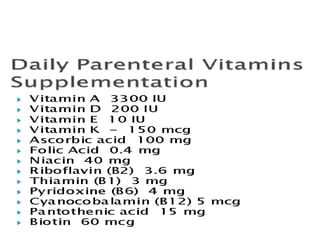
• Provide standard vitamin and trace element preps daily
THANK
YOU

Total parental nutrition

  • 1.
    TOTAL PARENTERAL NUTRITION Presentedby Dr. Pawan Surgery Resident
  • 2.
    • Nutrition (Nourishmentor Aliment) – Is the provision,to cells and organisms,of the materials necessary(in the form of food) to support life.
  • 3.
    NUTRITONAL SUPPORT • Nutritionsupport involves the provision of nutrition beyond that provided by normal food intake – using oral supplementation, or – enteral tube feeding(ETF) – parenteral nutrition (PN). • The overall aim of nutrition support is to try to ensure that total nutrient intake (food + nutrition support) provides enough energy, protein, fluid and micronutrients to meet all the patients’ needs.
  • 4.
    Rationale for Recommendation Nutritionsupport should be considered in patients when: • the patient has eaten very little amounts for the last 5 days or more,or • the patient is very unlikely to eat more than very little amounts for the next 5 days or more (whatever current BMI or history of weight loss), or
  • 5.
    • the patient’sBMI is < 18.5 kg/m2, or the patient has unintentionally lost > 10% body weight within the previous 3-6 months, or • the patient has a BMI < 20 kg/m2, with unintentional weight loss > 5% within the previous 3-6 months,or • the patient has poor absorptive capacity, is catabolic and/or has high nutrient losses and/or has a condition that increases their nutritional needs for example hypermobility
  • 6.
    PN-INTRODUCTION • Until theearly 1960s, the use of intravenous nutrition was restricted to high concentrations of dextrose and electrolytes. • In 1962, Wretlind and colleagues developed lipid infusions as the principle source of calories for parenteral feeding. • In 1966, Dudrick and Rhoads developed parenteral nutrition (PN) for patients who had lost their small bowel. • In 1976, Solassol and Joyeux developed the three-in one mixture by putting sugars, lipids and amino acids in a single bag. • In 1978, Shils and colleagues and Jeejeebhoy and colleagues developed ‘home’ PN to reduce costs.
  • 7.
    • Parenteral Nutrition –Provision of all nutritional requirements by means of the intravenous route (without the use of gastrointestinal tract). • Types – Total parenteral nutrition – Peripheral parenteral nutrition
  • 8.
    GOALS • To decreasethe adverse effects of catabolism • Support ongoing metabolism • To improve immune function, cardiac and respiratory function • Maintain glycogen reserve • Maintain acid, base and electrolyte metabolism
  • 9.
    • The gutshould always be the preferred route for nutrient administration. • Therefore, parenteral nutrition is indicated generally when there is severe gastro- intestinal dysfunction(cannot take sufficient food or feeding formulas by the enteral route).
  • 10.
    Indication • A) Principalindication • Seriously ill patient where enteral feeding is not possible • Supplementation to inadequate oral intake
  • 11.
    B) Pediatric populationTPN Indication 1) New born baby with gastrointestinal abnormallity • Tracheo esophageal fistula massive intestinal Artesia • Complicated meconium ileus • Massive diaphragmatic hernia • Gastroschisis • Omphalocele • Cloachal exostrophy • Neglected pyloric stenosis
  • 12.
    2) Failure tothrive in infants secondary to • Short bowel syndrome • mal absorption • Enzyme deficiency • Inflammatory bowel disease • Chronic idiopathic diarrhea
  • 13.
    3) Other pediatricindication • Necrotizing enterocolitis • Intestinal fistula • Post operative infection • Severe trauma • Severe burn
  • 14.
    Adult Population TPNINDICATION 1) Short bowel syndrome secondary to • massive small bowel resection • External or internal enteric fistula 2 ) High gastro intestinal obstruction secondary to • Achalasia • Esophageal stricture • Pyloric obstruction • Gastric neoplasm
  • 15.
    3) Prolonged Ileussecondary to • Post operative period • Abdominal or poly trauma 4) Mal absorption secondary to • Enzyme deficiency • Ulcerative colitis • Granulomatous colitis • Tuberculos enteritis
  • 16.
    5)Functional gastrointestinal disorder •Idiopathic diarrhea • Psychogenic vomiting • Anorexia nervosa
  • 17.
    6) Hyper catabolicstates secondary to • Severe sepsis • Extensive burn • Poly trauma • Major fracture
  • 18.
    • 7) malignancypatient in whom malnutrition may jeopardize successful delivery of therapy ( surgery, chemotherapy , radiotherapy) • 8) paraplegic/quadriplegic patients with pressure sore in pelvic or perineal region where fecal soiling is a major problem • 9) patient with depressed sensorium in whom feeding is not possible.
  • 19.
    CONTRAINDICATIONS • 1. Wheregastrointestinal feeding is possible. Almost always this is the best route to provide nutrition to the patient. • 2. Patients with good nutritional status in whom only short term TPN support is anticipated. • 3. Irreversibly decerebrate patients. • 4. Lack of specific therapeutic goal : TPN should NOT be used to prolong life if death is inevitable
  • 20.
    • 5. Severecardiovascular instability or metabolic derangements. These should be corrected before attempting intravenous hyperalimentation. • 6. Infants with less than 8 cm of small bowel as it has been conclusively proved that they cannot adapt to enteral feeding despite prolonged periods of TPN.
  • 21.
    Nutritional Content • Water –30 to 40 mL/kg/day • Energy – 30 to 60 kcal/kg/day (depending on energy expenditure) • Amino acids – 1 to 2.0 g/kg/day (depending on the degree of catabolism) • Essential fatty acids • Vitamins, and minerals • Children who need TPN may have different fluid requirements and need more energy (120 kcal/kg/day) and amino acids (2.5 to 3.5 g/kg/day).
  • 22.
    REQUIREMENTS ENERGY • Basal energyrequirement is the function of the individual's weight, age, gender, activity level and the disease process • The major components of energy output are resting energy expenditure and physical activity;minor sources include the energy cost of metabolizing food and shivering thermogenesis. • Total energy expenditure= resting energy expenditure (70% of TEE) + energy expenditure of physical activity (20% of TEE) +thermic effect of food(10% of TEE).
  • 29.
  • 30.
    REQUIREMENTS Energy Sources: Glucose •The most common source of parenteral energy supply is glucose, being: – Readily metabolized in most patients, – provides the obligatory needs of the substrate , thus reducing gluconeogenesis and sparing endogenous protein. • 1 gm of glucose gives 4 Kcals.(3.4Kcal in TPN). • Most stable patients tolerate rates of 4-5 mg/kg/Min, but insulin resistance in critically ill patients may lead to hyperglycemia even at these rates, so insulin should be incorporated acc. to blood sugar levels.
  • 31.
    Energy Sources: GlucoseDisadvantages • Low calorie value • Requires large volume • Hyperglycemia • More CO2 production • Thrombophlebitis in conc above 10%
  • 32.
    • Energy Sources:Lipid – Fat mobilization is a major response to stress and infection. – Triacylglycerols are an important fuel source in those conditions, even when glucose availability is adequate. – Need to be restricted in patients with hypertriglyceridemia.
  • 33.
    • Energy Sources:Lipid • Lipids are also a source for the essential fatty acids which are the building blocks for many of the hormones involved in the inflammatory process as well as the hormones regulating other body functions. • Ideally, energy from fat should not exceed 40% of the total (usually 20-30%).
  • 34.
    Energy Sources: Lipid •Fat emulsions can be safely administered via peripheral veins • They are available in 10, 20 and 30% preparations. • Though lipids have a calorific value of 9Kcal/g, the value in lipid emulsions is 10Kcal/g due to the contents of glycerol and phospholipids.
  • 35.
    Advantages • Energy Sources:Lipid – high calorie – Prevents hyperglycemia – Less co2 production – Less insulin production
  • 36.
    Disadvantages • Energy Sources:Lipid – Hypertriglyceridemia – Sepsis – Fat embolism – Fat overload – Hepatic dysfunction – pancreatitis
  • 37.
    Nitrogen • Protein (oramino acids) is the functional and structural component of the body • So fulfilling patient’s caloric needs with protein and non-protein calories (fat and glucose) is essential. • Protein requirements for most healthy individuals are 0.8 g/kg/day(range-0.5-1)
  • 38.
    Nitrogen • With disease,poor food intake, and inactivity, body protein is lost with the resultant weakness and muscle mass wasting. • Critically ill patients may need as high as 1.5-2.5 g protein/kg/day depending on the disease process:(major trauma or burn) • The amount should be reduced in patients with kidney or liver disease. • Some amino acid solutions have been modified: – rich in branched chain amino acids for hepatic encephalopathy – rich in essential amino acid for renal insufficiency pts
  • 39.
    • NITROGEN – DAILYPROTEIN REQUIREMENT
  • 40.
    Protein or nitrogenbalance provides a measure of feeding efficacy of PN or EN
  • 41.
    • Parenteral aminoacid solutions provide all known essential amino acids. • Available a.a. preparations are 3.5 - 15 % (ie contains 3.5-15 gms of protein or a.a.s/100 mL solution). • 1gm of protein = 0.16 gm of N2.
  • 42.
    FLUID REQUIREMENTS ESTIMATING ADULTFLUID REQUIREMENTS • By caloric intake : 1ml/calorie • Example: 1800 calorie diet = 1800 calories x1ml= 1800ml • By body weight and age : average requirement is 30 ml/kg/d • 16-55 years 35 ml/kg/d • 56-65 years 30 ml/kg/d • > 65 years 25 ml/kg/d
  • 43.
    FLUID AND ELECTROLYTES •Normalization of acid-base balance is a priority and constant concern in the management of critically ill patients. • Most electrolytes can be safely added to the parenteral amino acid/dextrose solution. • Sodium bicarbonate in high concentrations will tend to generate carbon dioxide at the acidic pH of the amino acid/glucose mix.
  • 46.
    Trace minerals • mineralsexcreted via the liver, such as copper and manganese, should be used with caution in patients with liver disease or impaired biliary function.
  • 47.
    OSMALITY • PPN: Maximumof 900 milliosmoles / liter • TPN: as nutrient dense as necessary (>900m.osmol and up as high as 3000). • Amino acids (10 m.osmol/gm), dextrose (5 m.osmol/gm) and electrolytes (2 m.osmol /mEq)contribute most to the osmolarity, while lipids give 1.5 m.osmol/gm.
  • 49.
    ADMINISTRATION OF TPN •Introduction of TPN should be gradual. • For example, approximately 1,000 kcal is provided the first day. If there is metabolic stability(i.e.normoglycemia), this is increased to the caloric goal over 1 to 2 days. • TPN solutions are delivered most commonly as a continuous infusion. • A new 3-in-1 admixture bag of TPN is administered daily at a constant infusion rate over 24 hours. • Additional maintenance intravenous fluids are unnecessary, and total infused volume should be kept constant while nutritional content is increased.
  • 50.
    • Cyclic administrationof TPN solutions may be useful for (1) those who will be discharged from the hospital and subsequently receive home TPN, (2) those with limited intravenous access who require administration of other medications, and (3) those who are metabolically stable and desire a period during the day when they can be free of an infusion pump.
  • 51.
    • Cyclic TPNis administered for 8 to 16 hours, most commonly at night. This should not be done until metabolic stability has been demonstrated for patients on standard, continuous TPN infusions. • Cyclic TPN helps prevent hepatotoxicity that can develop with long-term TPN and the fasting period allows essential fatty acids to be released from fat stores.
  • 52.
    VENOUS ACCESS • Theinfusion of hyperosmolar nutrient solution requires a large bore, high flow vessel to minimize vessel irritation and damage. • Catheter can be placed via the subclavian vein,the jugular vein or a long catheter placed in an arm vein and threaded into the central venous system (a peripherally inserted central catheter line) • Percutaneous subclavian vein catheterization and PICC are the most commonly used techniques for parenteral nutrition • Position of catheter is confirmed by radiograph
  • 57.
    FORMULATIONS • Two Typesof TPN: Solutions with lipids (3-in-1) – calories from amino acids- 20 to 25% – calories from lipids- 20% – calories from dextrose- 55 to 60 % Solutions without lipids (2-in-1) – Calories from amino acids- 20 to 25% – Calories from dextrose- 75-80%
  • 58.
    FORMULATIONS • Advantages of(3-in-1) – Lower cost of preparation – Less administration time for nurses – Potentially reduced risk of sepsis • Disadvantages to 3-in-1 – Precipitants cannot be seen – Not stable as long as TPNs without lipids • Expiration date for 2-in-1 is 21 days • Expiration date for 3-in-1 is 7 days • Can remain at room temperature for 24 hours.
  • 59.
  • 61.
    DETERMINE TOTAL VOLUME •Cater for maintenance & on going losses • Normal maintenance requirements By body weight (25-35 ml/kg/day) • Add on going losses based on I/O chart • Consider insensible fluid losses also e.g. add 10% for every 1degree C rise in temperature
  • 62.
    CALORIC REQUIREMENTS Based onTotal Energy Expenditure • Can be estimated using predictive equations • TEE = REE * Stress Factor *Activity Factor • Can be measured using metabolic chart
  • 63.
    How much CHO& Fats? • “Too much of a good thing causes problems” • Not more than 4 mg / kg / min Dextrose(less than 6 g / kg / day) Rosmarin et al, Nutr Clin Pract 1996,11:151-6 • Not more than 0.7 mg / kg / min Lipid(less than 1 g / kg / day) Moore & Cerra, 1991
  • 64.
    How much CHO& Fats? • Fats – usually form 25 to 30% of calories – Not more than 40 to 50% – Increase usually in severe stress – Aim for serum TG levels < 350 mg/dl • CHO usually form 70-75 % of calories
  • 65.
    How much proteinto give? • Based on calorie : nitrogen ratio • Based on degree of stress & body weight • Based on Nitrogen Balance
  • 66.
    How much proteinto give? Calorie : Nitrogen Ratio • Normal ratio is 150 cal : 1g Nitrogen • Critically ill patients 85 to 100 cal : 1 g Nitrogen
  • 67.
    How much proteinto give? Based on Nitrogen Balance • Aim for positive balance of 1.5 to 2g / kg / day
  • 68.
    Additives • Medications – Albumin,H2-receptor antagonists, heparin, iron,dextran, insulin, and metoclopramide can be administered in TPN solutions. However, not all medications are compatible with 3-in-1 admixtures. • Insulin can give s/c initially based on sliding scale once stable, give 2/3 total requirements in TPN & review daily • alternate regimes – 0.1 u per g dextrose in TPN – 10 u per liter TPN initial dose
  • 70.
    Commercial Formulation Available •Climomel N5-800 • Clinimix N9G-20E • Kabiven • Vitrimix • Celemix-G
  • 71.
    Caloric content ofTPN • Parenteral glucose contains 3.4 kcal/g • Protein contains 4 kcal/g • Lipid contains 9 kcal/g
  • 72.
    Example Calculation For 70kg man • Caloric requirement : 30 x 70 = 2100 kcal • Protein requirement : 1.5 x 70 = 105 g • Calories from amino acid : 105 x4 = 420 kcal • Provide 20-30 % of calories as lipid : 2100 x 0.2 = 420 kcal • Then 420 / 9 = 47 g of lipid • Remaining calories : 2100-420-420 = 1260 kcal
  • 73.
    • Make upthe difference with dextrose : 1260 / 3.4 = 370 g dextrose • Final volume : • Amino acids ( 10% stock solution) :105g = 1050 ml • Dextrose (70% stock solution) :370g = 528 ml • Lipids (20% stock solution) : 47g =235ml • Total volume = 1813ml/day
  • 74.
    Example Water RxCalculation • Fluid needs for 70kg man : • 70 x 30 = 2100 + 600 = 2700 • TPN Rx provides 1813 ml fluid per day • 2700 ml - 1813 ml = 887 ml additional sterile water needed
  • 75.
  • 78.
    Discontinuation of TPN •Discontinuation of TPN should take place when the patient can satisfy 75% of his or her caloric and protein needs with oral intake or enteral feeding. • To discontinue TPN, the infusion rate should be halved for 1 hour, halved again the next hour, and then discontinued. • Tapering in this manner prevents rebound hypoglycemia from hyperinsulinemia. • It is not necessary to taper the rate if the patient demonstrates glycemic stability.
  • 80.
    Mechanical complications • Airembolism • pneumothorax • hemothorax • Cardiac tamponade • Injuries to arteries and veins • Injury to thoracic duct • Brachial plexus injury
  • 81.
    Metabolic complications • Earlyor nutrient related – hyperglycemia – hypoglycemia – hyperlipidemia – refeeding syndrome
  • 82.
    late or relatedto long term administration • Hepatic complications – liver dysfunction – painful hepatomegaly – hyperammonemia. • Transient liver dysfunction, evidenced by increased transaminases, bilirubin, and alkaline phosphatase,is common with the initiation of TPN. • Delayed or persistent elevations may result from excess quantities of amino acids.
  • 83.
    Gallbladder complications – includecholelithiasis, gallbladder sludge, and cholecystitis. – These complications can be caused or worsened by prolonged gallbladder stasis. • Stimulating contraction by providing about 20 to 30% of calories as fat and stopping glucose infusion several hours a day is helpful. • Oral or enteral intake also helps. • Treatment with metronidazole, ursodeoxycholic acid, phenobarbital, or cholecystokinin helps some patients with cholestasis.
  • 84.
    Complication-late or relatedto long term administration • Metabolic bone disease: osteomalaacia, osteopenia • Fluid overload • Hypo/hypernatremia • Hypercalcemia • Hypo/hyperkalemia
  • 85.
    • Hyperglycemia canbe avoided by monitoring blood glucose often, adjusting the insulin dose in the TPN solution and giving subcutaneous insulin • Hypoglycemia can be precipitated by suddenly discontinuing constant concentrated dextrose infusions.
  • 86.
    Abnormalities of serumelectrolytes and minerals • should be corrected by modifying subsequent infusions or, if correction is urgently required, by beginning appropriate peripheral vein infusions. • Vitamin and mineral deficiencies are rare if solutions are given correctly. • elevated BUN may reflect dehydration, which can be corrected by giving free water as 5% dextrose via a peripheral vein.
  • 87.
    • Volume overload(suggested by > 1 kg/day weight gain) – may occur when high daily energy requirements require large fluid volumes. • Metabolic bone disease, or bone demineralization (osteoporosis or osteomalacia), – develops in some patients receiving TPN for > 3 mo. – Mechanism is unknown. – Advanced disease can cause severe periarticular, lower extremity, and back pain. – Temporarily or permanently discontinuing TPN is the only known treatment.
  • 88.
    Adverse reactions tolipid emulsions • dyspnea, cutaneous allergic reactions, nausea, headache, back pain, sweating, dizziness • uncommon but may occur early, particularly if lipids are given at > 1.0 kcal/ kg/h. • Temporary hyperlipidemia may occur, particularly in patients with kidney or liver failure • treatment is usually not required.
  • 89.
    • Delayed adversereactions to lipid emulsions include – hepatomegaly, mild elevation of liver enzymes, splenomegaly, thrombocytopenia, leukopenia, and, especially in premature infants with respiratory distress syndrome, pulmonary function abnormalities. • Temporarily or permanently slowing or stopping lipid emulsion infusion may prevent or minimize these adverse reactions.
  • 90.
    Refeeding syndrome • Patientsat risk are malnourished, particularly marasmic patients • Can occur with enteral or parenteral nutrition • Results from intracellular electrolyte shift
  • 91.
    Refeeding syndrome • Reducedserum levels of magnesium, potassium, and phosphorus • Hyperglycemia and hyperinsulinemia • Interstitial fluid retention • Cardiac decompensation and arrest
  • 92.
    Refeeding Syndrome Prevention/Treatment • Monitorand supplement electrolytes, vitamins and minerals prior to and during infusion of PN until levels remain stable • Initiate feedings with 15-20 kcal/kg or 1000 kcals/day and 1.2-1.5 g protein/kg/day • Limit fluid to 800 ml + insensible losses (adjust per patient fluid tolerance and status)
  • 93.
    Infection : • Catheterrelated sepsis is most common life threatening complication • Causes: staph epidermidis and staph aureus,enterococcus, candida, E coli, psuedomonas,klebsiella etc in immunocompromised pts
  • 94.
    CLABSI(central line associatedblood stream Infection) • defined as a laboratory-confirmed bloodstream infection not related to an infection at another site that develops within 48 hours of a central line placement. • Etiology – Gram-positive organisms (coagulase-negative staphylococci, 34.1%; enterococci, 16%; and Staphylococcus aureus, 9.9%) are the most common, followed by gram negatives (Klebsiella, 5.8%; Enterobacter, 3.9%; Pseudomonas, 3 .1%; E.coli, 2.7%; Acinetobacter, 2.2%), Candida species (11.8%), and others (10.5%)
  • 95.
    • Mechanism – Within7 to 10 days of central venous catheter placement, bacteria on the skin surface migrate along the external surface of the catheter from the skin exit site towards the intravascular space. – Less common mechanisms include hematogenous seeding of bacteria from another source or from a contaminated infusion. – The notion that intravenous calories and glucose lead to hyperglycemia, which in turn contributes to BSI risk, is widely held but is unproven.
  • 96.
    • Clinical manifestationsvary depending on the severity of illness. • Fever and chills are the most common manifestations but may be masked if the patient is immunocompromised or at extremes of an age • Exit site examination to look for signs of inflammation of tunneled catheters with inspection and palpation of the subcutaneous track is important. • Patients may report pain, swelling, or discharge from the exit site and redness surrounding the exit site or along the subcutaneous track when exit site or tunnel infections are present.
  • 97.
    Evaluation • In additionto the clinical exam, lab investigations are important for diagnosis and management. • Blood culture is the most important step towards diagnosis in addition to complete blood count, serum electrolytes, and renal and liver function tests, which are necessary to assess for severity and/or co-morbidities
  • 98.
    Treatment • When CLABSIis suspected, empiric therapy should be based on the most likely organism, host factors, and the overall clinical picture. • In general, a reasonable coverage for common gram- positive and gram-negative organisms will be necessary. • Once antimicrobial susceptibility results are available, de-escalation to specific and appropriate therapy is recommended. • If blood cultures have no growth, the need for further empiric antibiotic therapy should be reassessed.
  • 99.
    • If unexplainedfever or sepsis persists in a patient with a short-term central venous or arterial catheter and paired peripheral venipuncture and catheter blood cultures have failed to identify CLABSI, the catheter should be removed and its tip sent for culture.
  • 100.
    Duration of therapy: •For uncomplicated bloodstream infection (i.e., no associated suppurative thrombosis, endocarditis, or metastatic infection) and resolves within 72 hours of catheter removal, intravenous antimicrobial therapy is recommended for the following durations based on the organism isolated: – S. aureus - 14 days in the absence of endocarditis – Coagulase-negative staphylococci - 7 days – Enterococci and gram-negative bacilli - 10 to 14 days – Candida - 14 days in the absence of retinitis
  • 101.
    Take Home Message •Select appropriate patients to receive PN • Aseptic technique for insertion and site care of IV catheters • Do not overfeed • Maintain glycemic control <150-170 mg/dl • Limit lipids to 1 gm/kg and monitor TG levels • Adjust protein based on metabolic demand and organ function • Monitor fluid/electrolyte/mineral status • Provide standard vitamin and trace element preps daily
  • 102.