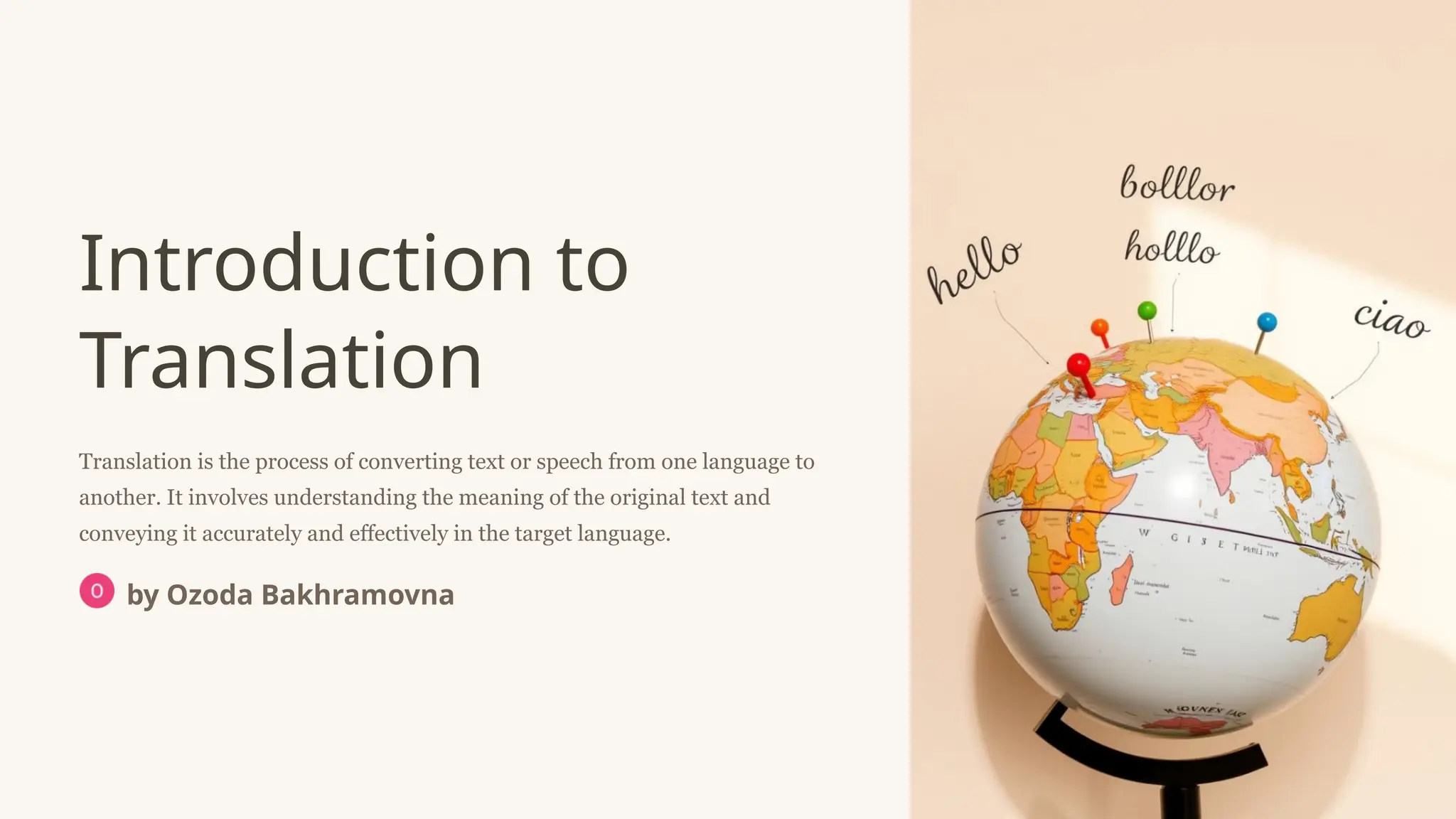
Introduction to
Translation
Translation is the process of converting text or speech from one language to
another. It involves understanding the meaning of the original text and
conveying it accurately and effectively in the target language.
by Ozoda Bakhramovna
What is Translation?
Translation is the process of transferring meaning from one language to
another.
1 Source Language
The original language of the
text being translated.
2 Target Language
The language the text is being
translated into.
3 Translator
A person who translates text from one language to another.
The Importance of Translation
Translation plays a crucial role in facilitating communication and understanding across cultures.
Business
Expanding into new markets and
reaching global audiences.
Education
Making educational materials accessible
to a wider audience.
Healthcare
Ensuring accurate communication
between healthcare providers and
patients.
Types of Translation
Different types of translation cater to specific needs and industries.
Literary Translation Translating literary works, such as novels, poetry, and plays.
Technical Translation Translating technical documents, such as manuals, specifications, and
patents.
Legal Translation Translating legal documents, such as contracts, agreements, and court
proceedings.
Website Translation Translating website content, such as product descriptions, blog posts,
and customer support materials.
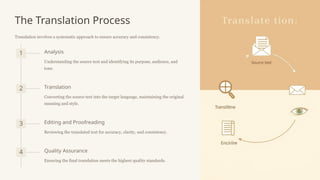
The Translation Process
Translation involves a systematic approach to ensure accuracy and consistency.
1 Analysis
Understanding the source text and identifying its purpose, audience, and
tone.
2 Translation
Converting the source text into the target language, maintaining the original
meaning and style.
3 Editing and Proofreading
Reviewing the translated text for accuracy, clarity, and consistency.
4 Quality Assurance
Ensuring the final translation meets the highest quality standards.
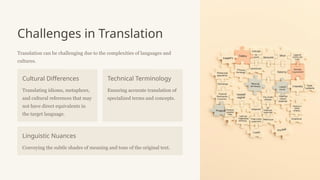
Challenges in Translation
Translation can be challenging due to the complexities of languages and
cultures.
Cultural Differences
Translating idioms, metaphors,
and cultural references that may
not have direct equivalents in
the target language.
Technical Terminology
Ensuring accurate translation of
specialized terms and concepts.
Linguistic Nuances
Conveying the subtle shades of meaning and tone of the original text.
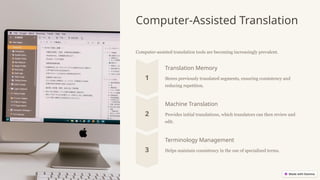
Computer-Assisted Translation
Computer-assisted translation tools are becoming increasingly prevalent.
Translation Memory
Stores previously translated segments, ensuring consistency and
reducing repetition.
Machine Translation
Provides initial translations, which translators can then review and
edit.
Terminology Management
Helps maintain consistency in the use of specialized terms.
The Role of the Translator
Translators play a vital role in bridging language barriers.
Linguistic Expertise
Fluency in both source and
target languages.
Cultural Awareness
Understanding the nuances
and differences between
cultures.
Writing Skills
Producing clear, concise, and
accurate translations.
Communication Skills
Effective communication with
clients and other stakeholders.
Industry Trends in Translation
The translation industry is constantly evolving.
1 Globalization
Increased demand for translation
services as businesses expand
globally.
2 Digitalization
Growing use of online platforms
and technologies for translation.
3 Content Localization
Adapting content to different
languages and cultures for greater
relevance and impact.
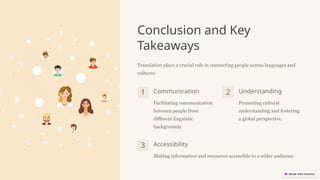
Conclusion and Key
Takeaways
Translation plays a crucial role in connecting people across languages and
cultures.
1 Communication
Facilitating communication
between people from
different linguistic
backgrounds.
2 Understanding
Promoting cultural
understanding and fostering
a global perspective.
3 Accessibility
Making information and resources accessible to a wider audience.

Introduction-to-Translationmmmmmmmmmmmm.pptx

  • 1.
    Introduction to Translation Translation isthe process of converting text or speech from one language to another. It involves understanding the meaning of the original text and conveying it accurately and effectively in the target language. by Ozoda Bakhramovna
  • 2.
    What is Translation? Translationis the process of transferring meaning from one language to another. 1 Source Language The original language of the text being translated. 2 Target Language The language the text is being translated into. 3 Translator A person who translates text from one language to another.
  • 3.
    The Importance ofTranslation Translation plays a crucial role in facilitating communication and understanding across cultures. Business Expanding into new markets and reaching global audiences. Education Making educational materials accessible to a wider audience. Healthcare Ensuring accurate communication between healthcare providers and patients.
  • 4.
    Types of Translation Differenttypes of translation cater to specific needs and industries. Literary Translation Translating literary works, such as novels, poetry, and plays. Technical Translation Translating technical documents, such as manuals, specifications, and patents. Legal Translation Translating legal documents, such as contracts, agreements, and court proceedings. Website Translation Translating website content, such as product descriptions, blog posts, and customer support materials.
  • 5.
    The Translation Process Translationinvolves a systematic approach to ensure accuracy and consistency. 1 Analysis Understanding the source text and identifying its purpose, audience, and tone. 2 Translation Converting the source text into the target language, maintaining the original meaning and style. 3 Editing and Proofreading Reviewing the translated text for accuracy, clarity, and consistency. 4 Quality Assurance Ensuring the final translation meets the highest quality standards.
  • 6.
    Challenges in Translation Translationcan be challenging due to the complexities of languages and cultures. Cultural Differences Translating idioms, metaphors, and cultural references that may not have direct equivalents in the target language. Technical Terminology Ensuring accurate translation of specialized terms and concepts. Linguistic Nuances Conveying the subtle shades of meaning and tone of the original text.
  • 7.
    Computer-Assisted Translation Computer-assisted translationtools are becoming increasingly prevalent. Translation Memory Stores previously translated segments, ensuring consistency and reducing repetition. Machine Translation Provides initial translations, which translators can then review and edit. Terminology Management Helps maintain consistency in the use of specialized terms.
  • 8.
    The Role ofthe Translator Translators play a vital role in bridging language barriers. Linguistic Expertise Fluency in both source and target languages. Cultural Awareness Understanding the nuances and differences between cultures. Writing Skills Producing clear, concise, and accurate translations. Communication Skills Effective communication with clients and other stakeholders.
  • 9.
    Industry Trends inTranslation The translation industry is constantly evolving. 1 Globalization Increased demand for translation services as businesses expand globally. 2 Digitalization Growing use of online platforms and technologies for translation. 3 Content Localization Adapting content to different languages and cultures for greater relevance and impact.
  • 10.
    Conclusion and Key Takeaways Translationplays a crucial role in connecting people across languages and cultures. 1 Communication Facilitating communication between people from different linguistic backgrounds. 2 Understanding Promoting cultural understanding and fostering a global perspective. 3 Accessibility Making information and resources accessible to a wider audience.