LECTURE 7:
SEDIMENTARY MINERAL DEPOSITS
Prof. Dr. Hassan Z. Harraz
Geology Department, Faculty of Science, Tanta University
hharraz2006@yahoo.com
Spring 2020
1
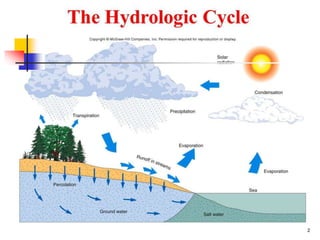
2
3
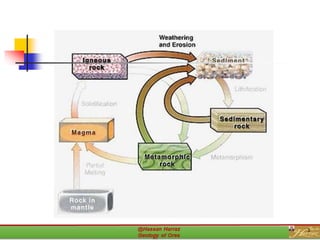
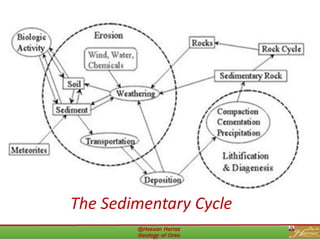
The Sedimentary Cycle
4
“Ore genesis processes”
Formation of Mineral Deposits
5
6
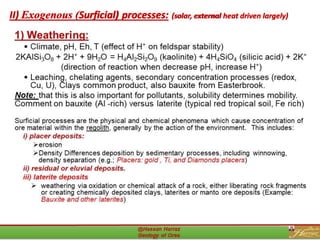
II) Exogenous (Surficial) processes: (solar, external heat driven largely)
7
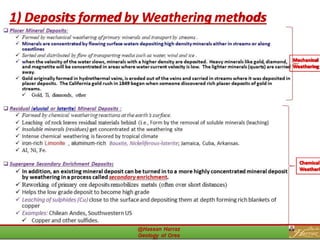
1) Deposits formed by Weathering methods
Mechanical
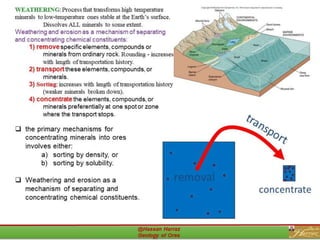
Weathering
Chemical
Weatheri
8
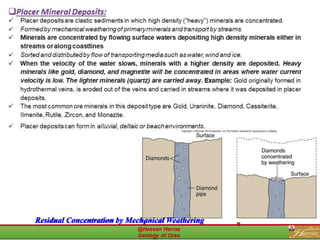
Residual Concentration by Mechanical Weathering
9
Concentration of heavy minerals in placer deposits
Placer deposits occur in any area where current velocity is low, such as;
11
❑Residual (eluvial or laterite) Mineral Deposits :
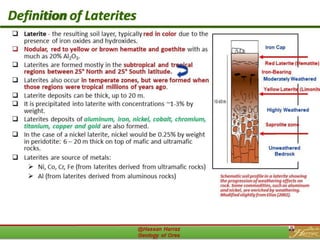
Definition of Laterites
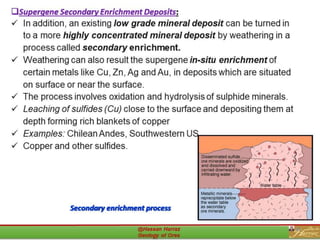
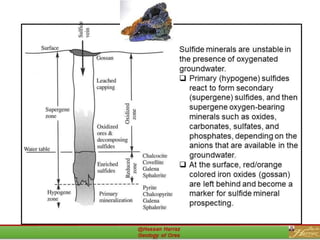
Secondary enrichment process
14
❑Supergene Secondary Enrichment Deposits:
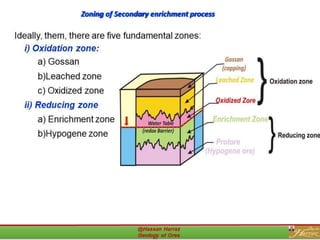
Zoning of Secondary enrichment process
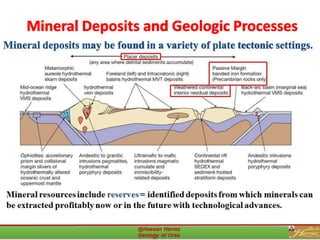
Mineral Deposits and Geologic Processes
Mineral deposits may be found in a variety of plate tectonic settings.
17
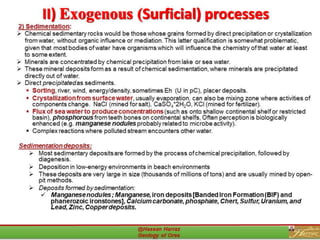
II) Exogenous (Surficial) processes
18
19
Mineral Deposits formed as Depositional (Sedimentation) Methods
20
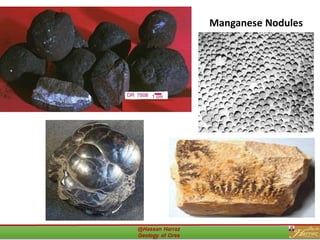
Manganese Nodules
21
22
23
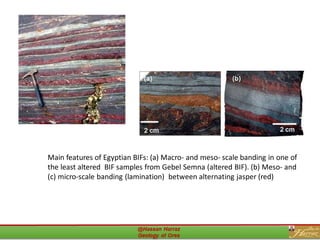
Main features of Egyptian BIFs: (a) Macro- and meso- scale banding in one of
the least altered BIF samples from Gebel Semna (altered BIF). (b) Meso- and
(c) micro-scale banding (lamination) between alternating jasper (red)
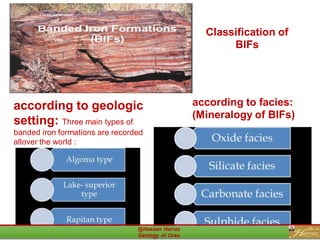
Classification of
BIFs
24
according to facies:
(Mineralogy of BIFs)
according to geologic
setting: Three main types of
banded iron formations are recorded
allover the world :
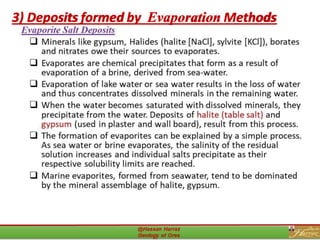
3) Deposits formed by Evaporation Methods
25
Resources from the Sedimentary Environments
26
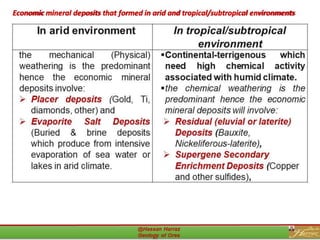
Economic mineral deposits that formed in arid and tropical/subtropical environments
27
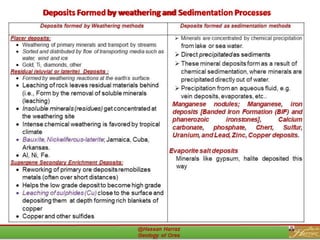
Deposits Formed by weathering and Sedimentation Processes
28
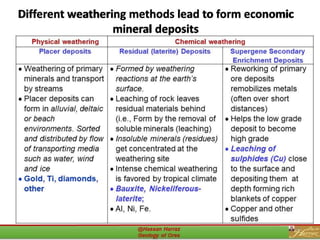
Different weathering methods lead to form economic
mineral deposits
29
Follow me on Social Media
http://facebook.com/hzharraz
http://www.slideshare.net/hzharraz
https://www.linkedin.com/in/hassan-harraz-3172b235
30

Topic 7 sedimentary mineral deposits