DOING PHILOSOPHY
DANILO F. MARIBAO
PALIPARAN III SENIOR HIGH SCHOOL
DASMARINAS CITY, CAVITE
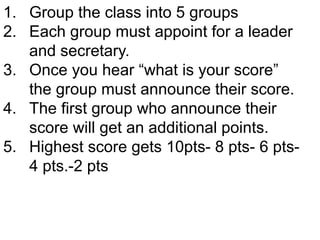
1. Group the class into 5 groups
2. Each group must appoint for a leader
and secretary.
3. Once you hear “what is your score”
the group must announce their score.
4. The first group who announce their
score will get an additional points.
5. Highest score gets 10pts- 8 pts- 6 pts-
4 pts.-2 pts
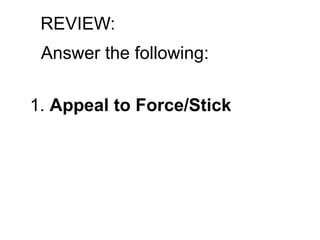
REVIEW:
Answer the following:
REVIEW:
Answer the following:
1. Appeal to Force/Stick
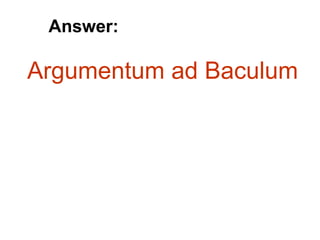
Argumentum ad Baculum
Answer:
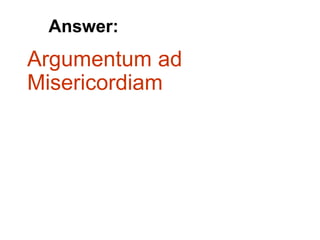
2. “Sir, hindi ako nakapag-aral,
mahirap lang po kami.”
Argumentum ad
Misericordiam
Answer:
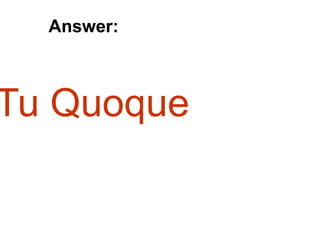
3. “You Too” Argument
Tu Quoque
Answer:
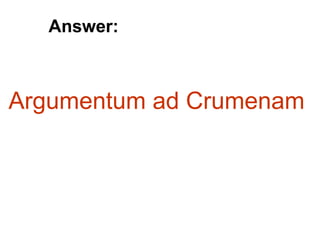
4. Appeal to Money
Argumentum ad Crumenam
Answer:
5. Oprah said that girls will go crazy
for boys if they are intelligent.
Argementum adVerecundiam
(Appeal to Inappropriate People)
Answer:
DOING
PHILOSOPHY
Let’s Ponder
Complete the following statements.
I believe that this world is
_______ because _______.
The ______ kind of life is the
best kind of life.
The most important thing man
must have is _______.
Activity 1: INDIVIDUAL ACTIVITY
Can these statements be considered
Philosophies?
Can Philosophy help you clarify and
defined these statements? How?
Analysis :
Guide Questions:
Group Discussion:
1. What are your personal ideas
about the nature of the world and
the universe?
2. What characteristics distinguish
man from all other things that
exist?
3. Group Reporting.
Activity 2:
Analysis :
* What is real?
* Are we able to perceive and
understand reality and
everything in it?
* How do we know what we
know?
* Are the things that we know
true?
Abstraction :
What are some of the
major questions that
Philosophers ponder
upon?
Are we
able to
perceive
and
understand
reality?
REALITY
Refers to the state of
existence of things
independent of human
consciousness.
(Physical things what we see, feel,
taste, and smell, as well as things
that we cannot easily perceive and
comprehend.)
Things that already
existed, presently exist,
and that we are yet to
exist.
Categories:
1. Concrete
2. Abstract
METAPHYSICS – branch of
Philosophy which addresses
questions regarding reality.
ONTOLOGY – focuses on the
classification of existing things.
CERTAINTY
Refers to perfect knowledge
that is free from error or
doubt.
A central concept in the
question of certainty is truth.
Also related to the
question of certainty is
the concept of knowledge
and the means by which
man is able to know.
RATIONALISM
Is a theory on
knowledge which
believes that
knowledge is a Priori
Priori knowledge
Based on pure reasoning
without the benefit of any
experience.
Empiricism
Is another theory which
considers knowledge to be
posteriori knowledge or
knowledge gained from
experience.
Skepticism
Questions the certainty of
established doctrines or
truths and believes that the
mind has limits in perceiving
and understanding reality.
EPISTEMOLOGY - The
branch of philosophy
which deals with the
nature and extent of
knowledge.
The final significant problem that
Philosophy tackles is the Question
of Ethics
ETHICS - deals with the
standards of right and wrong
which define human
behavior.
Ethics - as a field of study,
discusses and define concepts
and principles which are meant to
govern reasoning and action.
Moral Philosophy – branch that
seeks to apply and analyze these
concepts in various situations,
context, and cultures, and
recommends guidelines that will
govern the decisions and actions of
people.
Methods and Tools do
Philosophers use in the
conduct of their study
Systematic doubt – skeptical
attitude in looking an ideas, events
or things.
Each aspect of the topic in
question is analyzed to determine
its validity or truthfulness.
Argument - Philosophers engage
in discussion and debate on their
ideas.
Dialectic - Varied and differing
ideas and perspectives are
analyzed and from the information
gathered, new ideas and views are
formulated.
DIALECTIC – A method of
examining and discussing
opposing ideas in order to
find the truth.
Socratic Method - analyzing a
topic by formulating a series of
questions designed to analyze
its various aspects, and examine
and clarify a person’s view on it.
Axioms - refers to assumptions
which are taken for granted in a
philosophical discussion.
- Provide a foundation and direction
in philosophical studies.
Occam’s razor - it is a problem
solving device used in analyzing
possible explanations regarding a
phenomenon.
- This principles state that among
possible explanations, the one
which has the least assumptions is
the most acceptable.
Formal Logic - it is a systematic
analysis of the validity of arguments
and statements. Logic often entails
the use of Syllogism or logical
arguments presented as a series of
related statements.
Thought experiment and allegory
- these are imagined scenarios
used to illustrate a certain problem
or describe a theory.
Example:
Avicenna’s “Floating man” –
which discusses the relationship
between perception and the
human mind.
The “ship of Theseus” – which
illustrates problems with the concept of
an object’s identity
“Prisoner’s dilemma” – which explores
how an individual’s objectives and
motivations affects his willingness to
cooperate.
Allegory of the Cave - used
by Plato to describe his
theory of forms and his ideas
on how our perception
affects knowledge.
WHAT ARE THE PRACTICAL
USES OF PHILOSOPHY IN
OUR LIVES?
1. Philosophy requires a person
to engage in analysis and
interpretation of concepts,
definitions, arguments, and
problems.
2. Problem-solving and
decision making are important
aspects in life which can
benefit from a knowledge of
philosophy.
3. A philosopher is also a good
communicator who can clearly
and adequately present his or her
ideas.
4. Knowledge of Philosophy can
contribute to self-development
APPLICATION:
1. In your personal life, what are the
things that you consider “real” “true”
or unchanging?
2. Did you experience a situation
where you had to defend your
beliefs? Share your experience in
class.
3. Have you experienced a
situation where what you
believed to be true turned out
to be untrue? How did this
experience affect you?
ASSESSMENT
Write the correct answer
1. Refers to the state
of existence of things
independent of human
consciousness
2. Branch of
Philosophy which
addresses questions
regarding reality.
3. Focuses on the
classification of existing
things.
4. Refers to perfect
knowledge that is free
from error or doubt.
5. Is a theory on
knowledge which
believes that knowledge
is a Priori
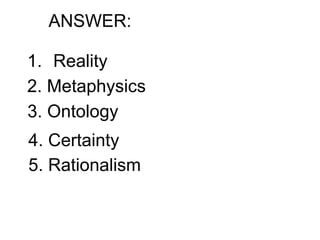
ANSWER:
1. Reality
2. Metaphysics
3. Ontology
4. Certainty
5. Rationalism
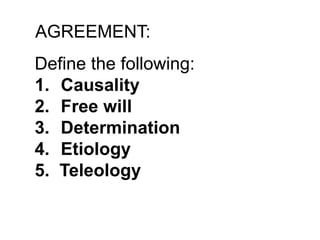
AGREEMENT:
Define the following:
1. Causality
2. Free will
3. Determination
4. Etiology
5. Teleology

Topic 4. doing philosophy

  • 1.
    DOING PHILOSOPHY DANILO F.MARIBAO PALIPARAN III SENIOR HIGH SCHOOL DASMARINAS CITY, CAVITE
  • 2.
    1. Group theclass into 5 groups 2. Each group must appoint for a leader and secretary. 3. Once you hear “what is your score” the group must announce their score. 4. The first group who announce their score will get an additional points. 5. Highest score gets 10pts- 8 pts- 6 pts- 4 pts.-2 pts
  • 4.
  • 5.
    REVIEW: Answer the following: 1.Appeal to Force/Stick
  • 6.
  • 7.
    2. “Sir, hindiako nakapag-aral, mahirap lang po kami.”
  • 8.
  • 9.
  • 10.
  • 11.
  • 12.
  • 13.
    5. Oprah saidthat girls will go crazy for boys if they are intelligent.
  • 14.
    Argementum adVerecundiam (Appeal toInappropriate People) Answer:
  • 15.
  • 16.
    Let’s Ponder Complete thefollowing statements. I believe that this world is _______ because _______. The ______ kind of life is the best kind of life. The most important thing man must have is _______. Activity 1: INDIVIDUAL ACTIVITY
  • 17.
    Can these statementsbe considered Philosophies? Can Philosophy help you clarify and defined these statements? How? Analysis :
  • 18.
    Guide Questions: Group Discussion: 1.What are your personal ideas about the nature of the world and the universe? 2. What characteristics distinguish man from all other things that exist? 3. Group Reporting. Activity 2:
  • 19.
    Analysis : * Whatis real? * Are we able to perceive and understand reality and everything in it? * How do we know what we know? * Are the things that we know true?
  • 20.
    Abstraction : What aresome of the major questions that Philosophers ponder upon?
  • 21.
  • 22.
    REALITY Refers to thestate of existence of things independent of human consciousness. (Physical things what we see, feel, taste, and smell, as well as things that we cannot easily perceive and comprehend.)
  • 23.
    Things that already existed,presently exist, and that we are yet to exist.
  • 24.
    Categories: 1. Concrete 2. Abstract METAPHYSICS– branch of Philosophy which addresses questions regarding reality. ONTOLOGY – focuses on the classification of existing things.
  • 25.
    CERTAINTY Refers to perfectknowledge that is free from error or doubt. A central concept in the question of certainty is truth.
  • 26.
    Also related tothe question of certainty is the concept of knowledge and the means by which man is able to know.
  • 27.
    RATIONALISM Is a theoryon knowledge which believes that knowledge is a Priori
  • 28.
    Priori knowledge Based onpure reasoning without the benefit of any experience.
  • 29.
    Empiricism Is another theorywhich considers knowledge to be posteriori knowledge or knowledge gained from experience.
  • 30.
    Skepticism Questions the certaintyof established doctrines or truths and believes that the mind has limits in perceiving and understanding reality.
  • 31.
    EPISTEMOLOGY - The branchof philosophy which deals with the nature and extent of knowledge.
  • 37.
    The final significantproblem that Philosophy tackles is the Question of Ethics ETHICS - deals with the standards of right and wrong which define human behavior.
  • 38.
    Ethics - asa field of study, discusses and define concepts and principles which are meant to govern reasoning and action. Moral Philosophy – branch that seeks to apply and analyze these concepts in various situations, context, and cultures, and recommends guidelines that will govern the decisions and actions of people.
  • 39.
    Methods and Toolsdo Philosophers use in the conduct of their study Systematic doubt – skeptical attitude in looking an ideas, events or things. Each aspect of the topic in question is analyzed to determine its validity or truthfulness.
  • 40.
    Argument - Philosophersengage in discussion and debate on their ideas. Dialectic - Varied and differing ideas and perspectives are analyzed and from the information gathered, new ideas and views are formulated.
  • 41.
    DIALECTIC – Amethod of examining and discussing opposing ideas in order to find the truth.
  • 42.
    Socratic Method -analyzing a topic by formulating a series of questions designed to analyze its various aspects, and examine and clarify a person’s view on it.
  • 43.
    Axioms - refersto assumptions which are taken for granted in a philosophical discussion. - Provide a foundation and direction in philosophical studies.
  • 44.
    Occam’s razor -it is a problem solving device used in analyzing possible explanations regarding a phenomenon. - This principles state that among possible explanations, the one which has the least assumptions is the most acceptable.
  • 45.
    Formal Logic -it is a systematic analysis of the validity of arguments and statements. Logic often entails the use of Syllogism or logical arguments presented as a series of related statements.
  • 46.
    Thought experiment andallegory - these are imagined scenarios used to illustrate a certain problem or describe a theory.
  • 47.
    Example: Avicenna’s “Floating man”– which discusses the relationship between perception and the human mind.
  • 48.
    The “ship ofTheseus” – which illustrates problems with the concept of an object’s identity “Prisoner’s dilemma” – which explores how an individual’s objectives and motivations affects his willingness to cooperate.
  • 49.
    Allegory of theCave - used by Plato to describe his theory of forms and his ideas on how our perception affects knowledge.
  • 50.
    WHAT ARE THEPRACTICAL USES OF PHILOSOPHY IN OUR LIVES?
  • 51.
    1. Philosophy requiresa person to engage in analysis and interpretation of concepts, definitions, arguments, and problems.
  • 52.
    2. Problem-solving and decisionmaking are important aspects in life which can benefit from a knowledge of philosophy.
  • 53.
    3. A philosopheris also a good communicator who can clearly and adequately present his or her ideas.
  • 54.
    4. Knowledge ofPhilosophy can contribute to self-development
  • 55.
    APPLICATION: 1. In yourpersonal life, what are the things that you consider “real” “true” or unchanging? 2. Did you experience a situation where you had to defend your beliefs? Share your experience in class.
  • 56.
    3. Have youexperienced a situation where what you believed to be true turned out to be untrue? How did this experience affect you?
  • 57.
  • 58.
    1. Refers tothe state of existence of things independent of human consciousness
  • 59.
    2. Branch of Philosophywhich addresses questions regarding reality.
  • 60.
    3. Focuses onthe classification of existing things.
  • 61.
    4. Refers toperfect knowledge that is free from error or doubt.
  • 62.
    5. Is atheory on knowledge which believes that knowledge is a Priori
  • 63.
    ANSWER: 1. Reality 2. Metaphysics 3.Ontology 4. Certainty 5. Rationalism
  • 64.
    AGREEMENT: Define the following: 1.Causality 2. Free will 3. Determination 4. Etiology 5. Teleology