Birth & Growth of
Social Sciences
MR. DANILO F. MARIBAO
Paliparan III Senior High School
Dasmarinas City, Cavite
ACTIVITY
Watch and think the idea in the
video presentation
VIDEO PRESENTATION 1
VIDEO PRESENTATION 2
VIDEO PRESENTATION 3
VIDEO PRESENTATION 4
• Write your idea in ½ crosswise.
1. In the following presentation, which
one implies awareness?
2. What is your basis of knowing that
they gives awareness to others?
ANALYSIS
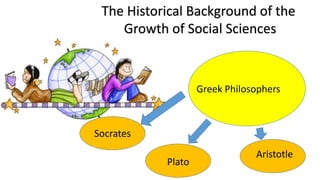
The Historical Background of the
Growth of Social Sciences
Greek Philosophers
Socrates
Plato
Aristotle
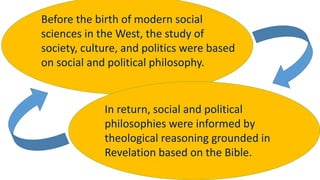
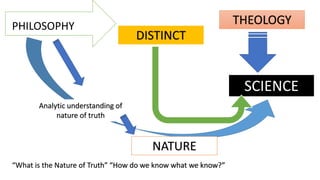
Before the birth of modern social
sciences in the West, the study of
society, culture, and politics were based
on social and political philosophy.
In return, social and political
philosophies were informed by
theological reasoning grounded in
Revelation based on the Bible.
PHILOSOPHY
DISTINCT
SCIENCE
NATURE
Analytic understanding of
nature of truth
THEOLOGY
“What is the Nature of Truth” “How do we know what we know?”
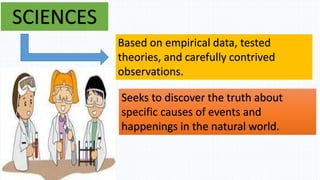
SCIENCES
Based on empirical data, tested
theories, and carefully contrived
observations.
Seeks to discover the truth about
specific causes of events and
happenings in the natural world.
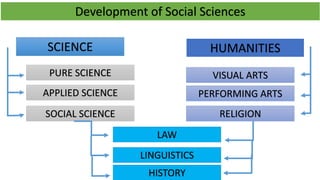
Development of Social Sciences
SCIENCE HUMANITIES
PURE SCIENCE
APPLIED SCIENCE
SOCIAL SCIENCE
VISUAL ARTS
PERFORMING ARTS
RELIGION
LAW
LINGUISTICS
HISTORY
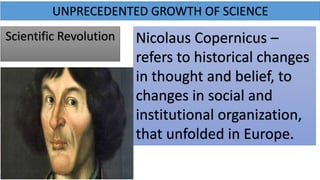
UNPRECEDENTED GROWTH OF SCIENCE
Scientific Revolution Nicolaus Copernicus –
refers to historical changes
in thought and belief, to
changes in social and
institutional organization,
that unfolded in Europe.
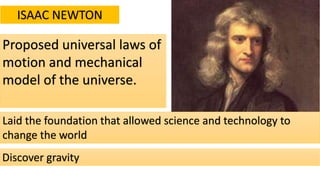
ISAAC NEWTON
Proposed universal laws of
motion and mechanical
model of the universe.
Laid the foundation that allowed science and technology to
change the world
Discover gravity
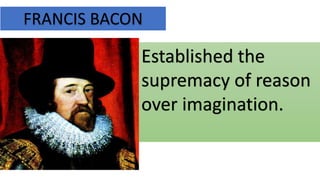
FRANCIS BACON
Established the
supremacy of reason
over imagination.
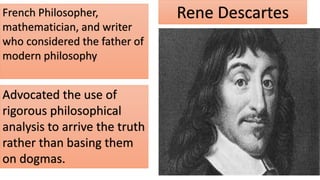
Rene Descartes
French Philosopher,
mathematician, and writer
who considered the father of
modern philosophy
Advocated the use of
rigorous philosophical
analysis to arrive the truth
rather than basing them
on dogmas.
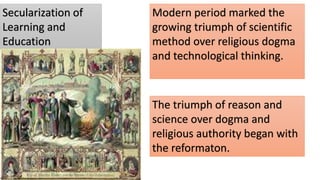
Secularization of
Learning and
Education
Modern period marked the
growing triumph of scientific
method over religious dogma
and technological thinking.
The triumph of reason and
science over dogma and
religious authority began with
the reformaton.
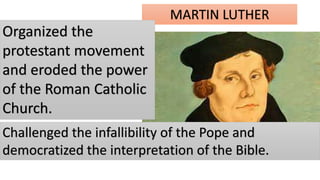
MARTIN LUTHER
Organized the
protestant movement
and eroded the power
of the Roman Catholic
Church.
Challenged the infallibility of the Pope and
democratized the interpretation of the Bible.
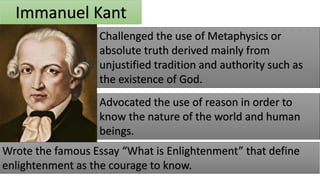
Immanuel Kant
Challenged the use of Metaphysics or
absolute truth derived mainly from
unjustified tradition and authority such as
the existence of God.
Advocated the use of reason in order to
know the nature of the world and human
beings.
Wrote the famous Essay “What is Enlightenment” that define
enlightenment as the courage to know.
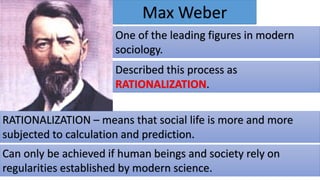
Max Weber
One of the leading figures in modern
sociology.
Described this process as
RATIONALIZATION.
RATIONALIZATION – means that social life is more and more
subjected to calculation and prediction.
Can only be achieved if human beings and society rely on
regularities established by modern science.
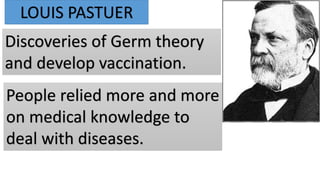
LOUIS PASTUER
Discoveries of Germ theory
and develop vaccination.
People relied more and more
on medical knowledge to
deal with diseases.
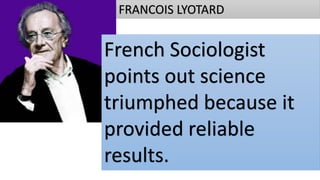
FRANCOIS LYOTARD
French Sociologist
points out science
triumphed because it
provided reliable
results.
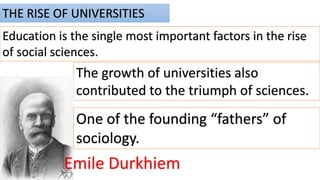
THE RISE OF UNIVERSITIES
Education is the single most important factors in the rise
of social sciences.
The growth of universities also
contributed to the triumph of sciences.
Emile Durkhiem
One of the founding “fathers” of
sociology.
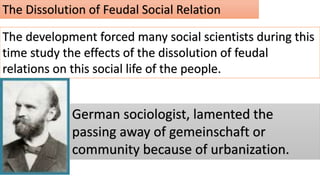
The Dissolution of Feudal Social Relation
The development forced many social scientists during this
time study the effects of the dissolution of feudal
relations on this social life of the people.
German sociologist, lamented the
passing away of gemeinschaft or
community because of urbanization.
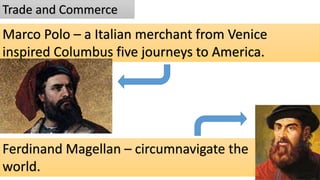
Trade and Commerce
Marco Polo – a Italian merchant from Venice
inspired Columbus five journeys to America.
Ferdinand Magellan – circumnavigate the
world.
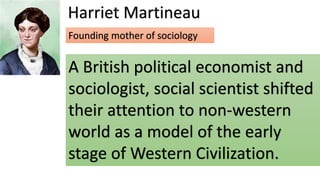
Harriet Martineau
A British political economist and
sociologist, social scientist shifted
their attention to non-western
world as a model of the early
stage of Western Civilization.
Founding mother of sociology
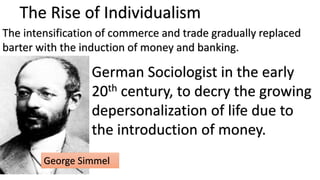
The Rise of Individualism
The intensification of commerce and trade gradually replaced
barter with the induction of money and banking.
German Sociologist in the early
20th century, to decry the growing
depersonalization of life due to
the introduction of money.
George Simmel
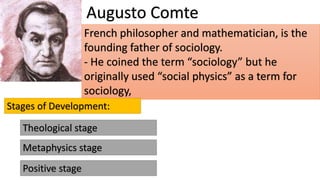
Augusto Comte
French philosopher and mathematician, is the
founding father of sociology.
- He coined the term “sociology” but he
originally used “social physics” as a term for
sociology,
Stages of Development:
Theological stage
Metaphysics stage
Positive stage
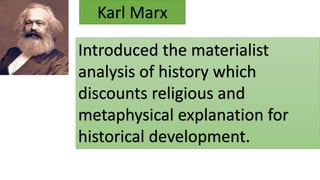
Karl Marx
Introduced the materialist
analysis of history which
discounts religious and
metaphysical explanation for
historical development.
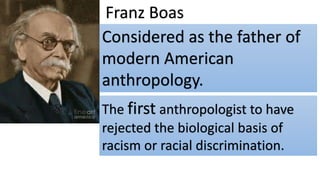
Franz Boas
Considered as the father of
modern American
anthropology.
The first anthropologist to have
rejected the biological basis of
racism or racial discrimination.
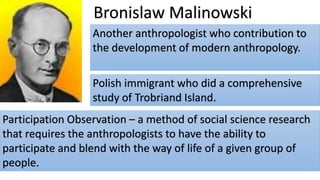
Bronislaw Malinowski
Another anthropologist who contribution to
the development of modern anthropology.
Polish immigrant who did a comprehensive
study of Trobriand Island.
Participation Observation – a method of social science research
that requires the anthropologists to have the ability to
participate and blend with the way of life of a given group of
people.
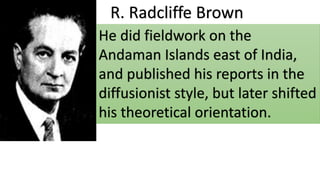
R. Radcliffe Brown
He did fieldwork on the
Andaman Islands east of India,
and published his reports in the
diffusionist style, but later shifted
his theoretical orientation.
ASSESSMENT
1. Proposed universal laws of
motion and mechanical model of
the universe.
QUESTION
2. Means that social life is more and
more subjected to calculation and
prediction.
QUESTION
3. Introduced the materialist analysis
of history which discounts religious
and metaphysical explanation for
historical development.
QUESTION
4. French Sociologist points out
science triumphed because it provided
reliable results.
QUESTION
5. Challenged the use of Metaphysics or
absolute truth derived mainly from
unjustified tradition and authority such as
the existence of God.
QUESTION
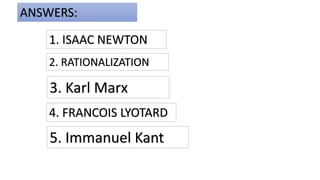
1. ISAAC NEWTON
ANSWERS:
2. RATIONALIZATION
3. Karl Marx
4. FRANCOIS LYOTARD
5. Immanuel Kant
APPLICATION
If given a chance what particular
area of social science you would like
to develop and why?
ASSIGNMENT

Topic 2 birth and growth

  • 1.
    Birth & Growthof Social Sciences MR. DANILO F. MARIBAO Paliparan III Senior High School Dasmarinas City, Cavite
  • 3.
    ACTIVITY Watch and thinkthe idea in the video presentation
  • 4.
    VIDEO PRESENTATION 1 VIDEOPRESENTATION 2 VIDEO PRESENTATION 3 VIDEO PRESENTATION 4
  • 5.
    • Write youridea in ½ crosswise. 1. In the following presentation, which one implies awareness? 2. What is your basis of knowing that they gives awareness to others? ANALYSIS
  • 7.
    The Historical Backgroundof the Growth of Social Sciences Greek Philosophers Socrates Plato Aristotle
  • 8.
    Before the birthof modern social sciences in the West, the study of society, culture, and politics were based on social and political philosophy. In return, social and political philosophies were informed by theological reasoning grounded in Revelation based on the Bible.
  • 9.
    PHILOSOPHY DISTINCT SCIENCE NATURE Analytic understanding of natureof truth THEOLOGY “What is the Nature of Truth” “How do we know what we know?”
  • 10.
    SCIENCES Based on empiricaldata, tested theories, and carefully contrived observations. Seeks to discover the truth about specific causes of events and happenings in the natural world.
  • 11.
    Development of SocialSciences SCIENCE HUMANITIES PURE SCIENCE APPLIED SCIENCE SOCIAL SCIENCE VISUAL ARTS PERFORMING ARTS RELIGION LAW LINGUISTICS HISTORY
  • 12.
    UNPRECEDENTED GROWTH OFSCIENCE Scientific Revolution Nicolaus Copernicus – refers to historical changes in thought and belief, to changes in social and institutional organization, that unfolded in Europe.
  • 13.
    ISAAC NEWTON Proposed universallaws of motion and mechanical model of the universe. Laid the foundation that allowed science and technology to change the world Discover gravity
  • 14.
    FRANCIS BACON Established the supremacyof reason over imagination.
  • 15.
    Rene Descartes French Philosopher, mathematician,and writer who considered the father of modern philosophy Advocated the use of rigorous philosophical analysis to arrive the truth rather than basing them on dogmas.
  • 16.
    Secularization of Learning and Education Modernperiod marked the growing triumph of scientific method over religious dogma and technological thinking. The triumph of reason and science over dogma and religious authority began with the reformaton.
  • 17.
    MARTIN LUTHER Organized the protestantmovement and eroded the power of the Roman Catholic Church. Challenged the infallibility of the Pope and democratized the interpretation of the Bible.
  • 18.
    Immanuel Kant Challenged theuse of Metaphysics or absolute truth derived mainly from unjustified tradition and authority such as the existence of God. Advocated the use of reason in order to know the nature of the world and human beings. Wrote the famous Essay “What is Enlightenment” that define enlightenment as the courage to know.
  • 19.
    Max Weber One ofthe leading figures in modern sociology. Described this process as RATIONALIZATION. RATIONALIZATION – means that social life is more and more subjected to calculation and prediction. Can only be achieved if human beings and society rely on regularities established by modern science.
  • 20.
    LOUIS PASTUER Discoveries ofGerm theory and develop vaccination. People relied more and more on medical knowledge to deal with diseases.
  • 21.
    FRANCOIS LYOTARD French Sociologist pointsout science triumphed because it provided reliable results.
  • 22.
    THE RISE OFUNIVERSITIES Education is the single most important factors in the rise of social sciences. The growth of universities also contributed to the triumph of sciences. Emile Durkhiem One of the founding “fathers” of sociology.
  • 23.
    The Dissolution ofFeudal Social Relation The development forced many social scientists during this time study the effects of the dissolution of feudal relations on this social life of the people. German sociologist, lamented the passing away of gemeinschaft or community because of urbanization.
  • 24.
    Trade and Commerce MarcoPolo – a Italian merchant from Venice inspired Columbus five journeys to America. Ferdinand Magellan – circumnavigate the world.
  • 25.
    Harriet Martineau A Britishpolitical economist and sociologist, social scientist shifted their attention to non-western world as a model of the early stage of Western Civilization. Founding mother of sociology
  • 26.
    The Rise ofIndividualism The intensification of commerce and trade gradually replaced barter with the induction of money and banking. German Sociologist in the early 20th century, to decry the growing depersonalization of life due to the introduction of money. George Simmel
  • 27.
    Augusto Comte French philosopherand mathematician, is the founding father of sociology. - He coined the term “sociology” but he originally used “social physics” as a term for sociology, Stages of Development: Theological stage Metaphysics stage Positive stage
  • 28.
    Karl Marx Introduced thematerialist analysis of history which discounts religious and metaphysical explanation for historical development.
  • 29.
    Franz Boas Considered asthe father of modern American anthropology. The first anthropologist to have rejected the biological basis of racism or racial discrimination.
  • 30.
    Bronislaw Malinowski Another anthropologistwho contribution to the development of modern anthropology. Polish immigrant who did a comprehensive study of Trobriand Island. Participation Observation – a method of social science research that requires the anthropologists to have the ability to participate and blend with the way of life of a given group of people.
  • 31.
    R. Radcliffe Brown Hedid fieldwork on the Andaman Islands east of India, and published his reports in the diffusionist style, but later shifted his theoretical orientation.
  • 32.
  • 33.
    1. Proposed universallaws of motion and mechanical model of the universe. QUESTION
  • 34.
    2. Means thatsocial life is more and more subjected to calculation and prediction. QUESTION
  • 35.
    3. Introduced thematerialist analysis of history which discounts religious and metaphysical explanation for historical development. QUESTION
  • 36.
    4. French Sociologistpoints out science triumphed because it provided reliable results. QUESTION
  • 37.
    5. Challenged theuse of Metaphysics or absolute truth derived mainly from unjustified tradition and authority such as the existence of God. QUESTION
  • 38.
    1. ISAAC NEWTON ANSWERS: 2.RATIONALIZATION 3. Karl Marx 4. FRANCOIS LYOTARD 5. Immanuel Kant
  • 39.
    APPLICATION If given achance what particular area of social science you would like to develop and why?
  • 40.