TOP 10
COMMUNICATION
SKILLS
By: Sana Shaikh
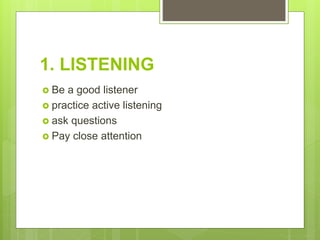
1. LISTENING
 Be a good listener
 practice active listening
 ask questions
 Pay close attention
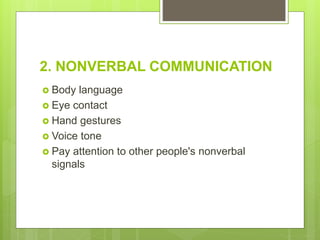
2. NONVERBAL COMMUNICATION
 Body language
 Eye contact
 Hand gestures
 Voice tone
 Pay attention to other people's nonverbal
signals
3.CLARITY AND
CONCISION
 Say few words as possible
4. FRIENDLINESS
 Friendly tone
 A personal question
 Simply a smile
 Make the recipient feel more appreciated
5. CONFIDENCE
 Be confident in all of your interactions
6. EMPATHY
 Understand and respect other point of view
 Use phrases
7. OPEN-MINDEDNESS
 Be open to listening to others
 Understand other person's point of view
8. RESPECT
 Convey respect
 Avoid distractions
 Stay focused on the conversation
9. FEEDBACK
 Provide constructive feedback
 Appropriately give and receive feedback
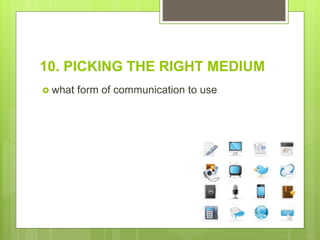
10. PICKING THE RIGHT MEDIUM
 what form of communication to use
1. Listening
Being a good listener is one of the best ways to be a good communicator.
No one likes communicating with someone who only cares about putting in her two
cents, and does not take the time to listen to the other person. Instead, practice active
listening. Active listening involves paying close attention to what the other person is
saying, asking clarifying questions, and rephrasing what the person says to ensure
understanding ("So, what you're saying is…"). Through active listening, you can better
understand what the other person is trying to say, and can respond appropriately.
2. Nonverbal Communication
Your body language, eye contact, hand gestures, and tone all color the message you are
trying to convey. A relaxed, open stance (arms open, legs relaxed), and a friendly tone
will make you appear approachable, and will encourage others to speak openly with you.
Eye contact is also important; you want to look the person in the eye to demonstrate that
you are focused on the person and the conversation (however, be sure not to stare at the
person, which can make him or her uncomfortable).
Also pay attention to other people's nonverbal signals while you are talking. Often,
nonverbal signals convey how a person is really feeling. For example, if the person is not
looking you in the eye, he or she might be uncomfortable or hiding the truth.
3. Clarity and Concision
try to convey your message in as few words as possible.
Say what you want clearly and directly, whether you're speaking to someone in person,
on the phone, or via email. If you ramble on, your listener will either tune you out or will
be unsure of exactly what you want. Think about what you want to say before you say it;
this will help you to avoid talking excessively and/or confusing your audience.
4. Friendliness
Through a friendly tone, a personal question, or simply a smile, you will encourage your
coworkers to engage in open and honest communication with you. This is important in
both face-to-face and written communication. When you can, personalize your emails to
coworkers and/or employees - a quick "I hope you all had a good weekend" at the start
of an email can personalize a message and make the recipient feel more appreciated.
5. Confidence
It is important to be confident in all of your interactions with others. Confidence ensures
your coworkers that you believe in and will follow through with what you are saying.
Exuding confidence can be as simple as making eye contact or using a firm but friendly
tone (avoid making statements sound like questions). Of course, be careful not to sound

Top 10 communication skills

  • 1.
  • 2.
    1. LISTENING  Bea good listener  practice active listening  ask questions  Pay close attention
  • 3.
    2. NONVERBAL COMMUNICATION Body language  Eye contact  Hand gestures  Voice tone  Pay attention to other people's nonverbal signals
  • 4.
    3.CLARITY AND CONCISION  Sayfew words as possible
  • 5.
    4. FRIENDLINESS  Friendlytone  A personal question  Simply a smile  Make the recipient feel more appreciated
  • 6.
    5. CONFIDENCE  Beconfident in all of your interactions
  • 7.
    6. EMPATHY  Understandand respect other point of view  Use phrases
  • 8.
    7. OPEN-MINDEDNESS  Beopen to listening to others  Understand other person's point of view
  • 9.
    8. RESPECT  Conveyrespect  Avoid distractions  Stay focused on the conversation
  • 10.
    9. FEEDBACK  Provideconstructive feedback  Appropriately give and receive feedback
  • 11.
    10. PICKING THERIGHT MEDIUM  what form of communication to use
  • 13.
    1. Listening Being agood listener is one of the best ways to be a good communicator. No one likes communicating with someone who only cares about putting in her two cents, and does not take the time to listen to the other person. Instead, practice active listening. Active listening involves paying close attention to what the other person is saying, asking clarifying questions, and rephrasing what the person says to ensure understanding ("So, what you're saying is…"). Through active listening, you can better understand what the other person is trying to say, and can respond appropriately. 2. Nonverbal Communication Your body language, eye contact, hand gestures, and tone all color the message you are trying to convey. A relaxed, open stance (arms open, legs relaxed), and a friendly tone will make you appear approachable, and will encourage others to speak openly with you. Eye contact is also important; you want to look the person in the eye to demonstrate that you are focused on the person and the conversation (however, be sure not to stare at the person, which can make him or her uncomfortable). Also pay attention to other people's nonverbal signals while you are talking. Often, nonverbal signals convey how a person is really feeling. For example, if the person is not looking you in the eye, he or she might be uncomfortable or hiding the truth. 3. Clarity and Concision try to convey your message in as few words as possible. Say what you want clearly and directly, whether you're speaking to someone in person, on the phone, or via email. If you ramble on, your listener will either tune you out or will be unsure of exactly what you want. Think about what you want to say before you say it; this will help you to avoid talking excessively and/or confusing your audience. 4. Friendliness Through a friendly tone, a personal question, or simply a smile, you will encourage your coworkers to engage in open and honest communication with you. This is important in both face-to-face and written communication. When you can, personalize your emails to coworkers and/or employees - a quick "I hope you all had a good weekend" at the start of an email can personalize a message and make the recipient feel more appreciated. 5. Confidence It is important to be confident in all of your interactions with others. Confidence ensures your coworkers that you believe in and will follow through with what you are saying. Exuding confidence can be as simple as making eye contact or using a firm but friendly tone (avoid making statements sound like questions). Of course, be careful not to sound