Personal PDF Edition . For non-commercial use only


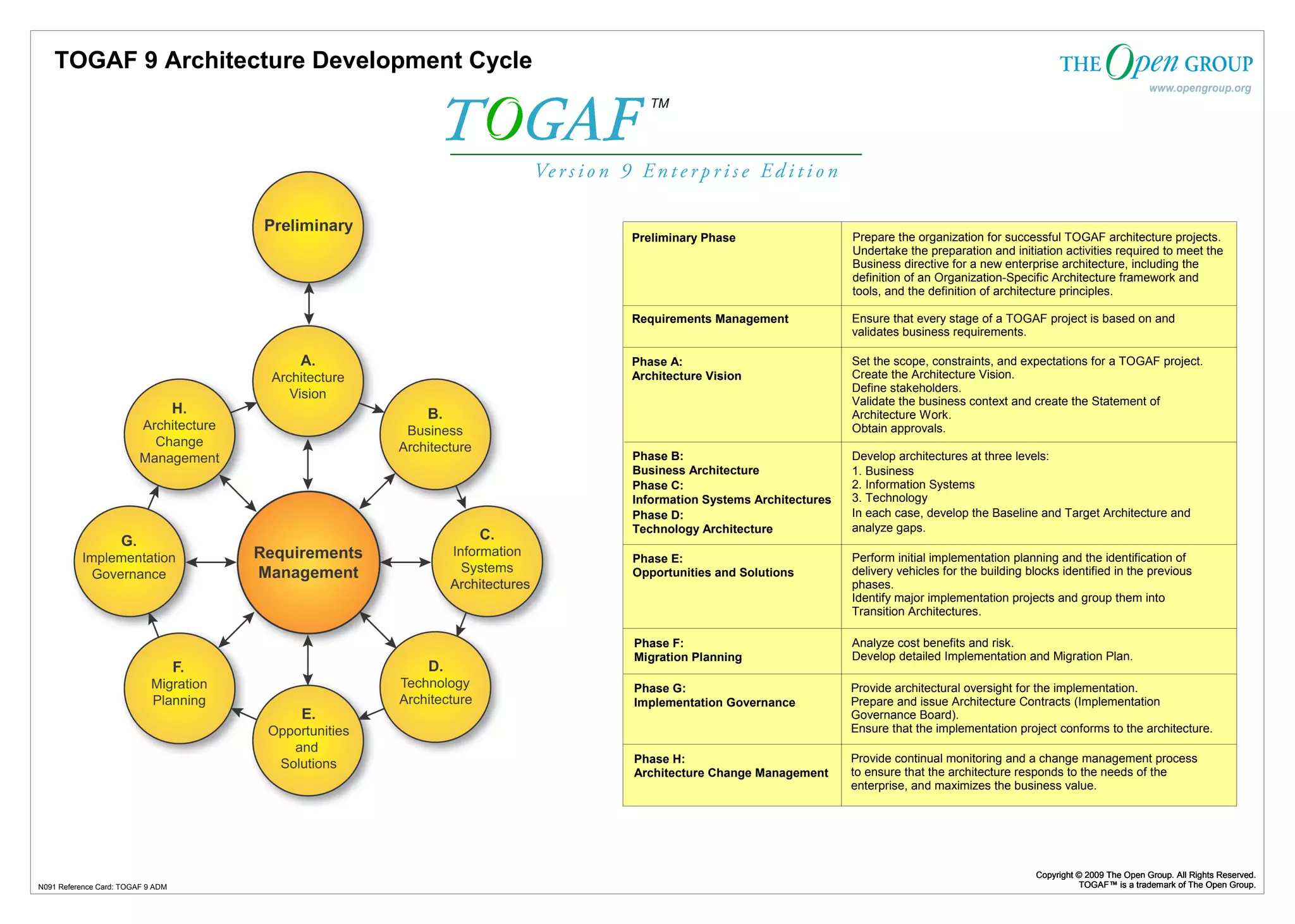
    TOGAF 9 Architecture Development Cycle


                                                               Preliminary Phase                   Prepare the organization for successful TOGAF architecture projects.
                                                                                                   Undertake the preparation and initiation activities required to meet the
                                                                                                   Business directive for a new enterprise architecture, including the
                                                                                                   definition of an Organization-Specific Architecture framework and
                                                                                                   tools, and the definition of architecture principles.

                                                               Requirements Management             Ensure that every stage of a TOGAF project is based on and
                                                                                                   validates business requirements.

                                                               Phase A:                            Set the scope, constraints, and expectations for a TOGAF project.
                                                               Architecture Vision                 Create the Architecture Vision.
                                                                                                   Define stakeholders.
                                                                                                   Validate the business context and create the Statement of
                                                                                                   Architecture Work.
                                                                                                   Obtain approvals.

                                                               Phase B:                            Develop architectures at three levels:
                                                               Business Architecture               1. Business
                                                               Phase C:                            2. Information Systems
                                                               Information Systems Architectures   3. Technology
                                                               Phase D:                            In each case, develop the Baseline and Target Architecture and
                                                               Technology Architecture             analyze gaps.

                                                               Phase E:                            Perform initial implementation planning and the identification of
                                                               Opportunities and Solutions         delivery vehicles for the building blocks identified in the previous
                                                                                                   phases.
                                                                                                   Identify major implementation projects and group them into
                                                                                                   Transition Architectures.

                                                               Phase F:                            Analyze cost benefits and risk.
                                                               Migration Planning                  Develop detailed Implementation and Migration Plan.

                                                               Phase G:                            Provide architectural oversight for the implementation.
                                                               Implementation Governance           Prepare and issue Architecture Contracts (Implementation
                                                                                                   Governance Board).
                                                                                                   Ensure that the implementation project conforms to the architecture.

                                                               Phase H:                            Provide continual monitoring and a change management process
                                                               Architecture Change Management      to ensure that the architecture responds to the needs of the
                                                                                                   enterprise, and maximizes the business value.


                                          © 2009 The Open Group, All Rights Reserved
                                           Personal PDF Edition. Not for redistribution                                                Copyright © 2009 The Open Group. All Rights Reserved.
N091 Reference Card: TOGAF 9 ADM                                                                                                                 TOGAF™ is a trademark of The Open Group.
Personal PDF Edition . For non-commercial use only


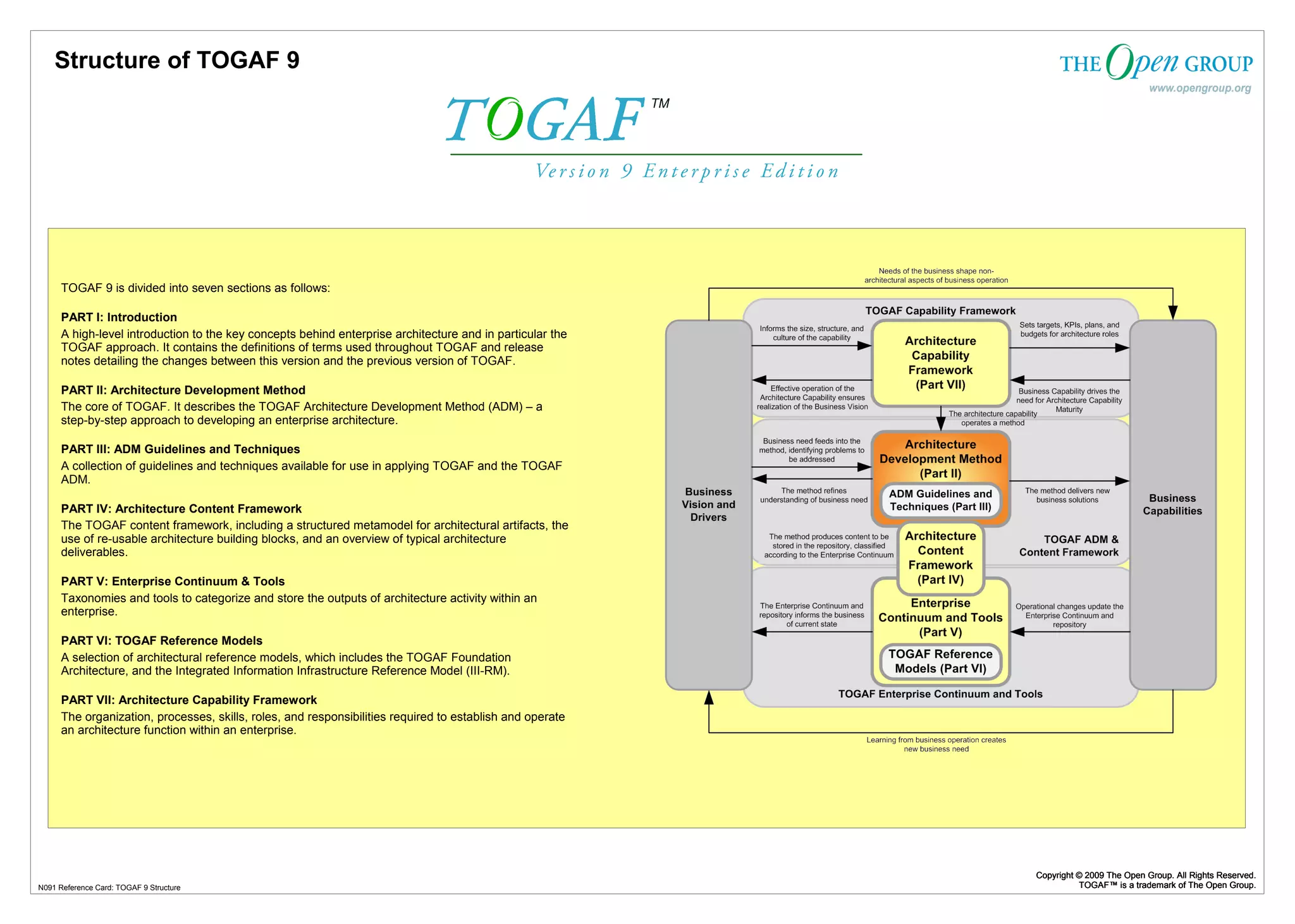
    Structure of TOGAF 9


      TOGAF 9 is divided into seven sections as follows:

      PART I: Introduction
      A high-level introduction to the key concepts behind enterprise architecture and in particular the
      TOGAF approach. It contains the definitions of terms used throughout TOGAF and release
      notes detailing the changes between this version and the previous version of TOGAF.

      PART II: Architecture Development Method
      The core of TOGAF. It describes the TOGAF Architecture Development Method (ADM) – a
      step-by-step approach to developing an enterprise architecture.

      PART III: ADM Guidelines and Techniques
      A collection of guidelines and techniques available for use in applying TOGAF and the TOGAF
      ADM.

      PART IV: Architecture Content Framework
      The TOGAF content framework, including a structured metamodel for architectural artifacts, the
      use of re-usable architecture building blocks, and an overview of typical architecture
      deliverables.

      PART V: Enterprise Continuum & Tools
      Taxonomies and tools to categorize and store the outputs of architecture activity within an
      enterprise.

      PART VI: TOGAF Reference Models
      A selection of architectural reference models, which includes the TOGAF Foundation
      Architecture, and the Integrated Information Infrastructure Reference Model (III-RM).

      PART VII: Architecture Capability Framework
      The organization, processes, skills, roles, and responsibilities required to establish and operate
      an architecture function within an enterprise.


                                                                                               © 2009 The Open Group, All Rights Reserved
                                                                                                Personal PDF Edition. Not for redistribution    Copyright © 2009 The Open Group. All Rights Reserved.
N091 Reference Card: TOGAF 9 Structure                                                                                                                    TOGAF™ is a trademark of The Open Group.

Togaf9 Refcard1

  • 1.
    Personal PDF Edition. For non-commercial use only TOGAF 9 Architecture Development Cycle Preliminary Phase Prepare the organization for successful TOGAF architecture projects. Undertake the preparation and initiation activities required to meet the Business directive for a new enterprise architecture, including the definition of an Organization-Specific Architecture framework and tools, and the definition of architecture principles. Requirements Management Ensure that every stage of a TOGAF project is based on and validates business requirements. Phase A: Set the scope, constraints, and expectations for a TOGAF project. Architecture Vision Create the Architecture Vision. Define stakeholders. Validate the business context and create the Statement of Architecture Work. Obtain approvals. Phase B: Develop architectures at three levels: Business Architecture 1. Business Phase C: 2. Information Systems Information Systems Architectures 3. Technology Phase D: In each case, develop the Baseline and Target Architecture and Technology Architecture analyze gaps. Phase E: Perform initial implementation planning and the identification of Opportunities and Solutions delivery vehicles for the building blocks identified in the previous phases. Identify major implementation projects and group them into Transition Architectures. Phase F: Analyze cost benefits and risk. Migration Planning Develop detailed Implementation and Migration Plan. Phase G: Provide architectural oversight for the implementation. Implementation Governance Prepare and issue Architecture Contracts (Implementation Governance Board). Ensure that the implementation project conforms to the architecture. Phase H: Provide continual monitoring and a change management process Architecture Change Management to ensure that the architecture responds to the needs of the enterprise, and maximizes the business value. © 2009 The Open Group, All Rights Reserved Personal PDF Edition. Not for redistribution Copyright © 2009 The Open Group. All Rights Reserved. N091 Reference Card: TOGAF 9 ADM TOGAF™ is a trademark of The Open Group.
  • 2.
    Personal PDF Edition. For non-commercial use only Structure of TOGAF 9 TOGAF 9 is divided into seven sections as follows: PART I: Introduction A high-level introduction to the key concepts behind enterprise architecture and in particular the TOGAF approach. It contains the definitions of terms used throughout TOGAF and release notes detailing the changes between this version and the previous version of TOGAF. PART II: Architecture Development Method The core of TOGAF. It describes the TOGAF Architecture Development Method (ADM) – a step-by-step approach to developing an enterprise architecture. PART III: ADM Guidelines and Techniques A collection of guidelines and techniques available for use in applying TOGAF and the TOGAF ADM. PART IV: Architecture Content Framework The TOGAF content framework, including a structured metamodel for architectural artifacts, the use of re-usable architecture building blocks, and an overview of typical architecture deliverables. PART V: Enterprise Continuum & Tools Taxonomies and tools to categorize and store the outputs of architecture activity within an enterprise. PART VI: TOGAF Reference Models A selection of architectural reference models, which includes the TOGAF Foundation Architecture, and the Integrated Information Infrastructure Reference Model (III-RM). PART VII: Architecture Capability Framework The organization, processes, skills, roles, and responsibilities required to establish and operate an architecture function within an enterprise. © 2009 The Open Group, All Rights Reserved Personal PDF Edition. Not for redistribution Copyright © 2009 The Open Group. All Rights Reserved. N091 Reference Card: TOGAF 9 Structure TOGAF™ is a trademark of The Open Group.