

Galit ShmuéliGeorgetown UniversityOctober 30, 2009To Explain or To Predict?Explanatory vs. Predictive Modeling in Scientific Research
The path to discovery
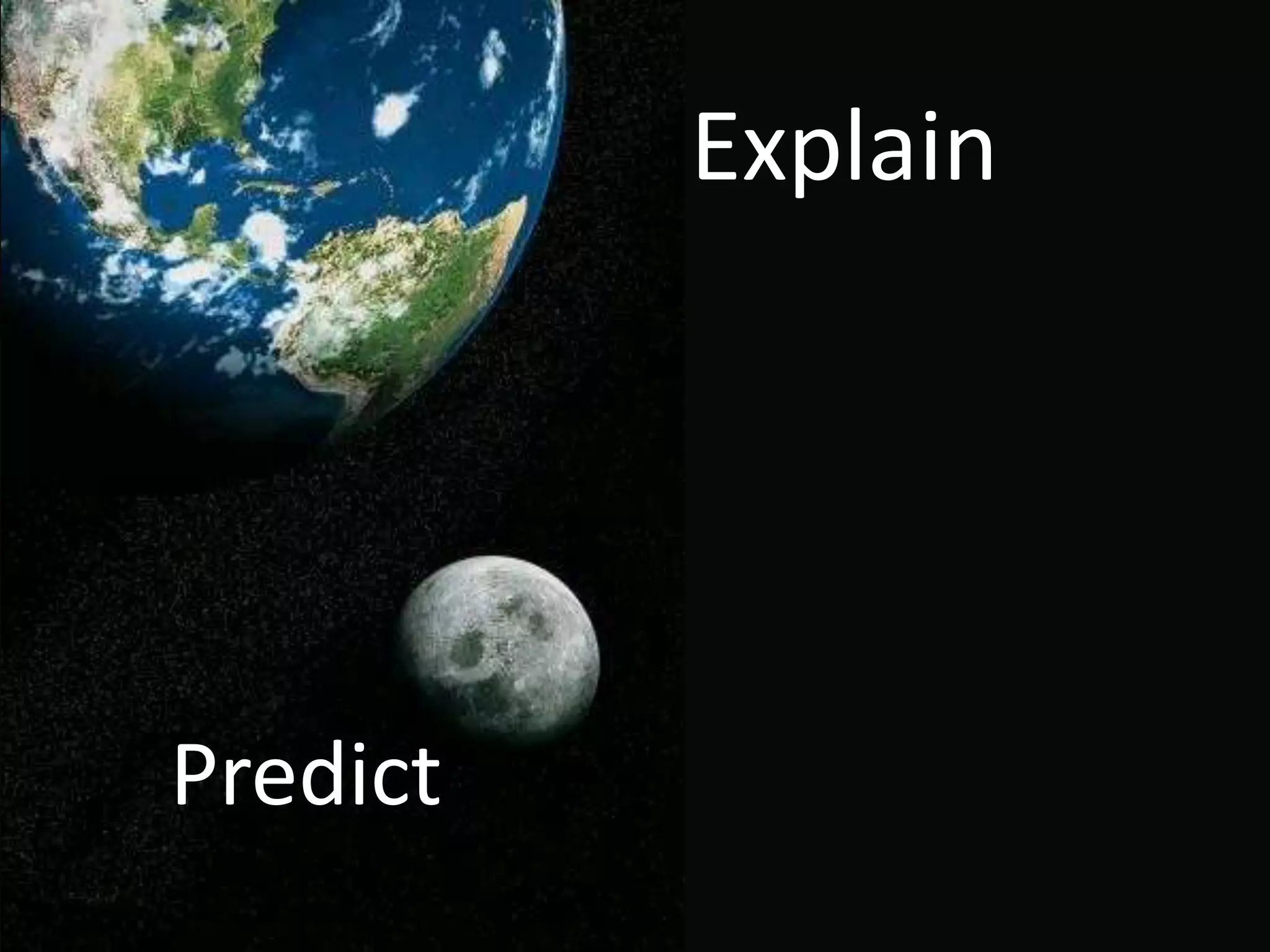
ExplainPredict
What are		“explaining”?				“predicting”?
Statistical modeling in social science researchPurpose: test causal theory (“explain”)Association-based statistical models Prediction nearly absent
Lesson #1:Whether statisticians like it or not,in the social sciences,association-based statistical models are used for testing causal theory.Justification: a strong underlying theoretical model provides the causality.
Definition: Explanatory ModelA statistical model used for testing causal theory(“proper” or not)
Definition: Predictive ModelAn empirical model used for predicting new records/scenarios
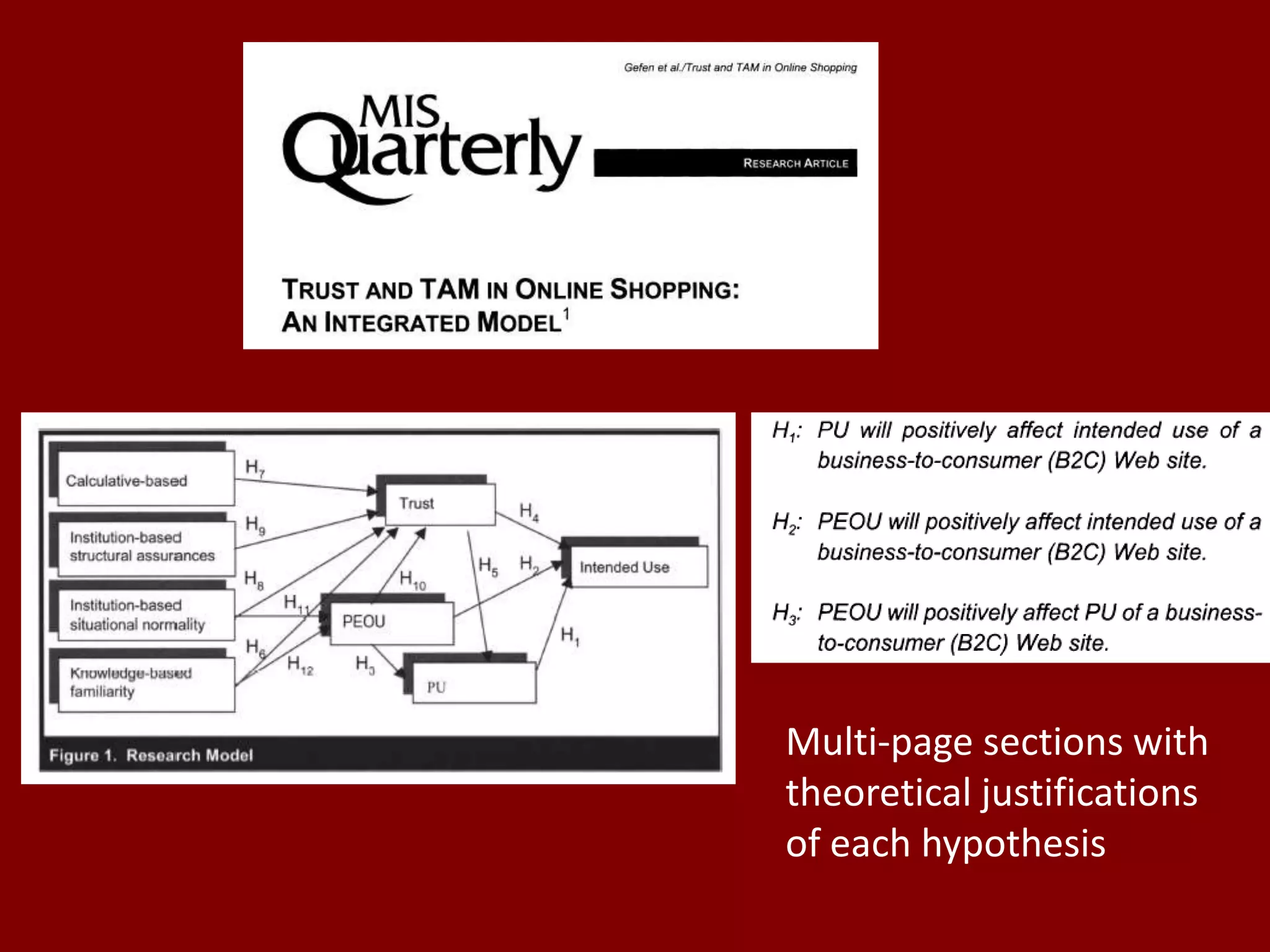
Multi-page sections with theoretical justifications of each hypothesis
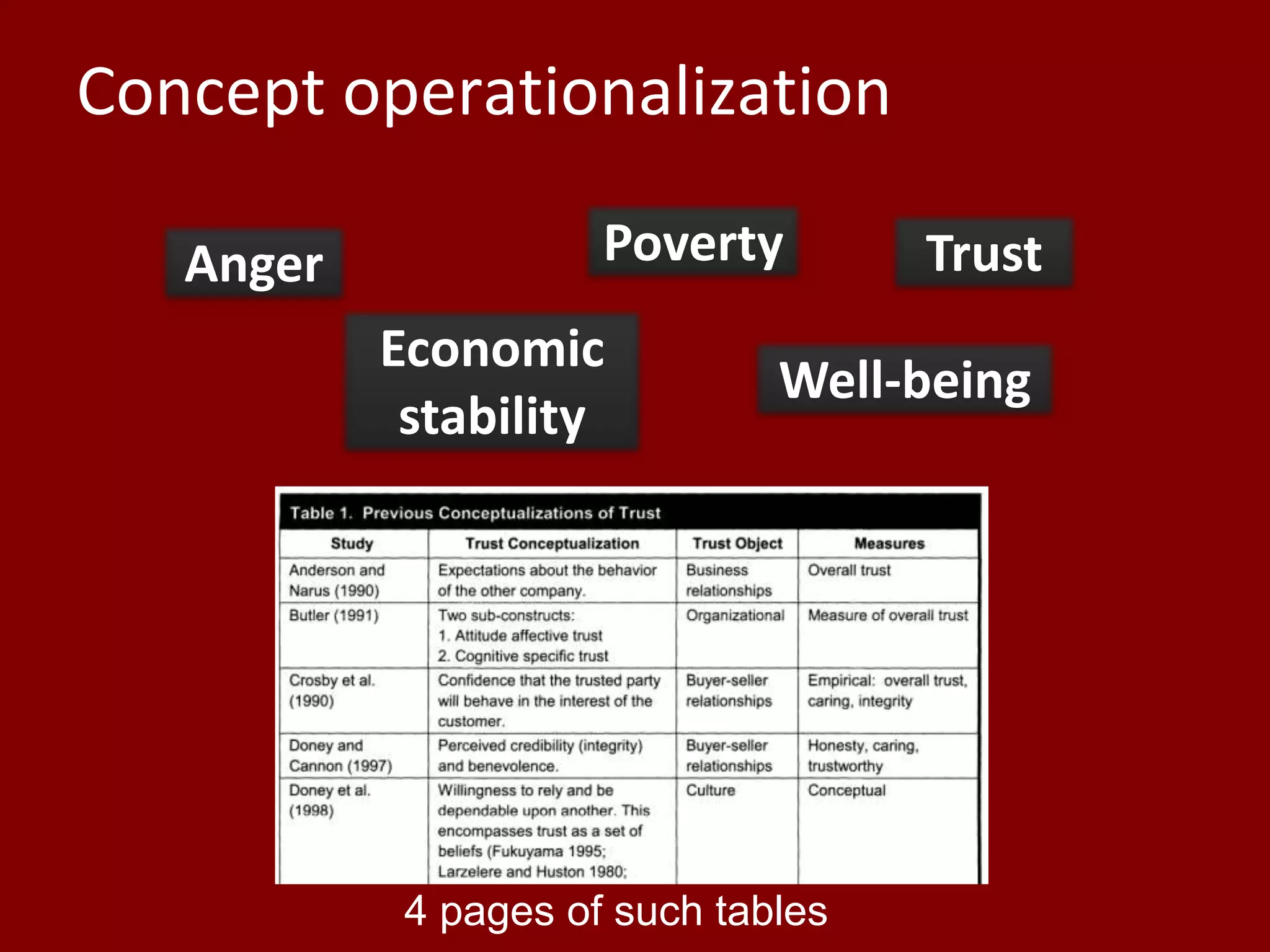
Concept operationalizationPovertyTrustAngerEconomic stabilityWell-being4 pages of such tables
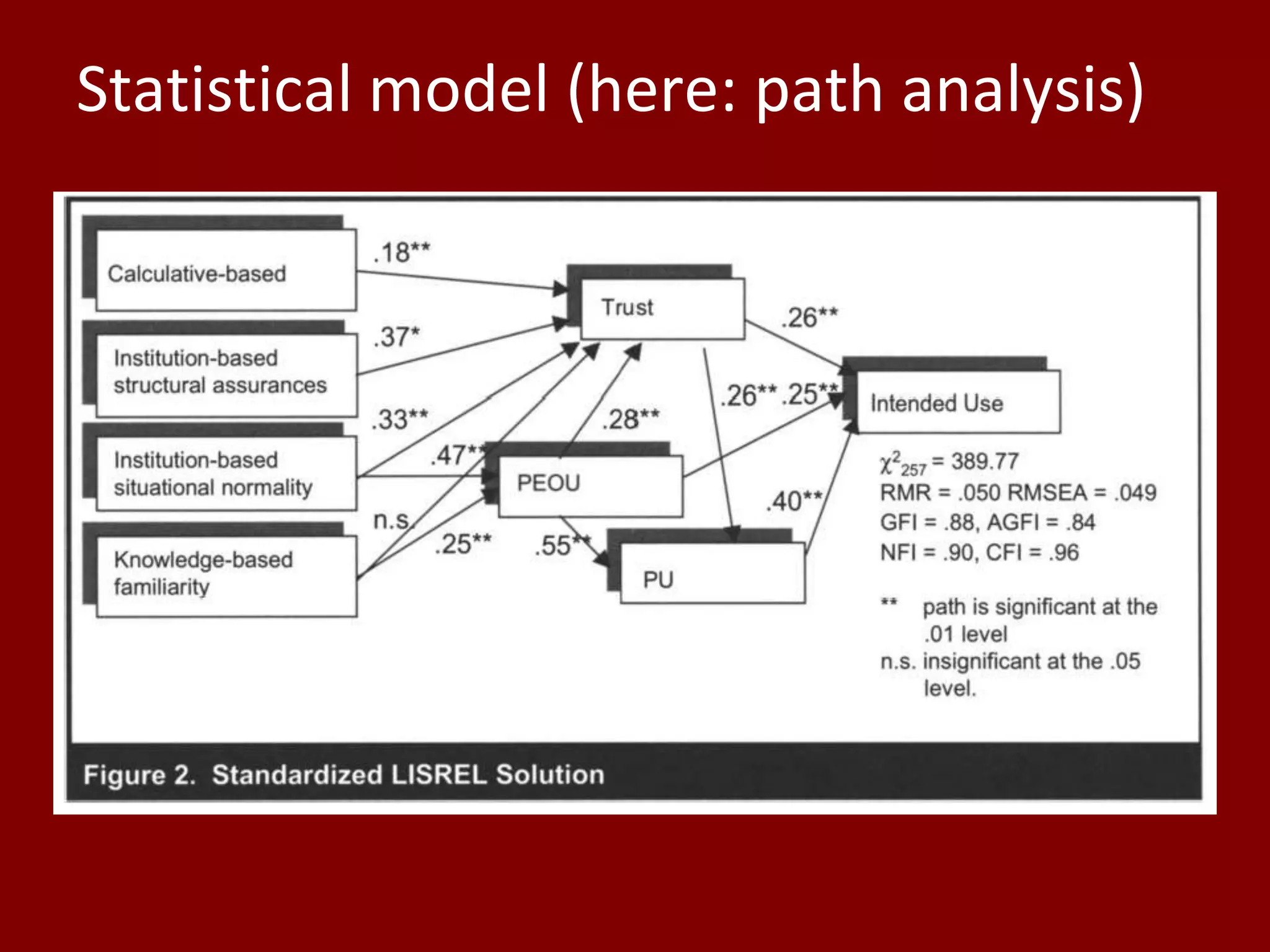
Statistical model (here: path analysis)
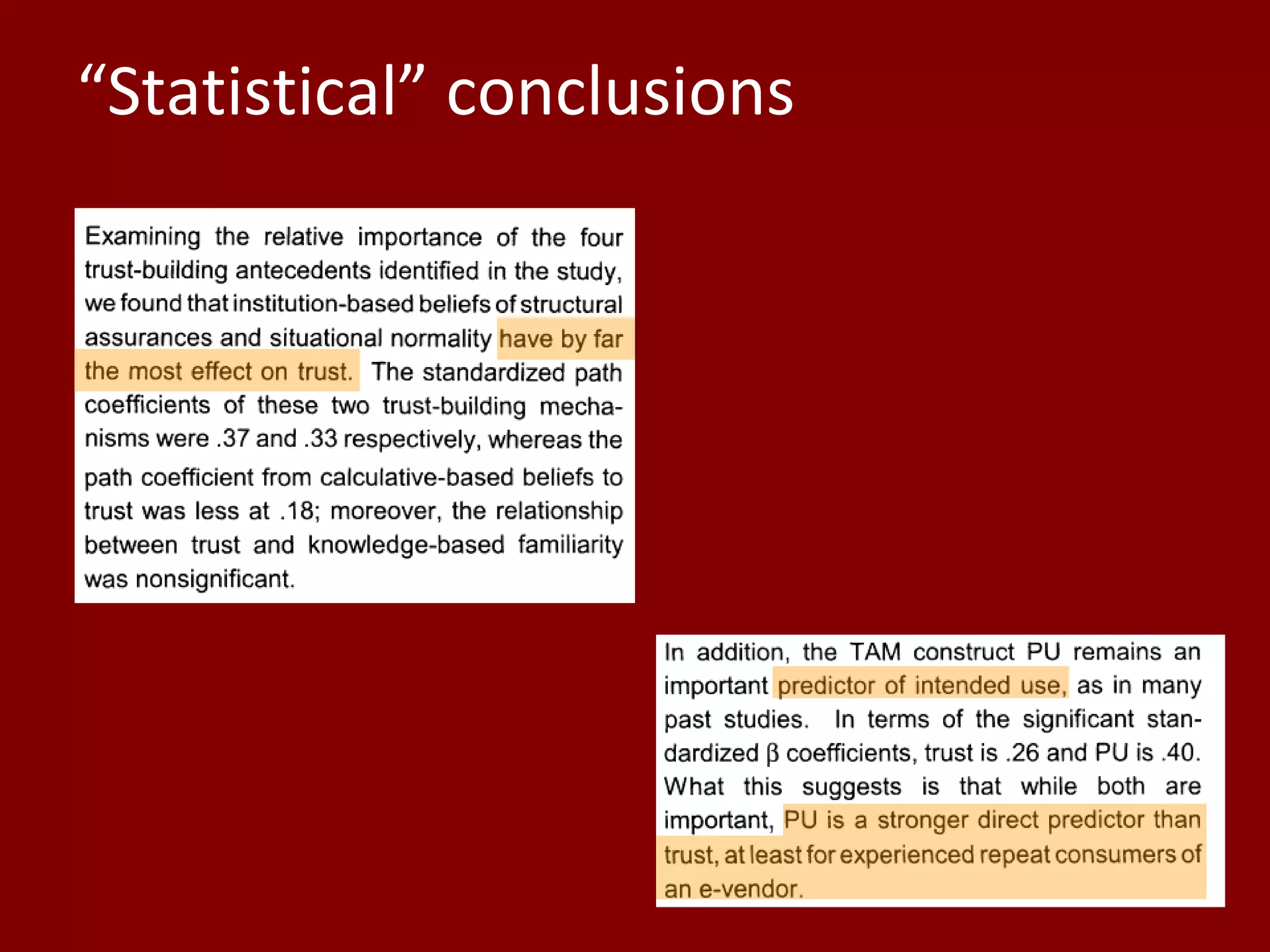
“Statistical” conclusions
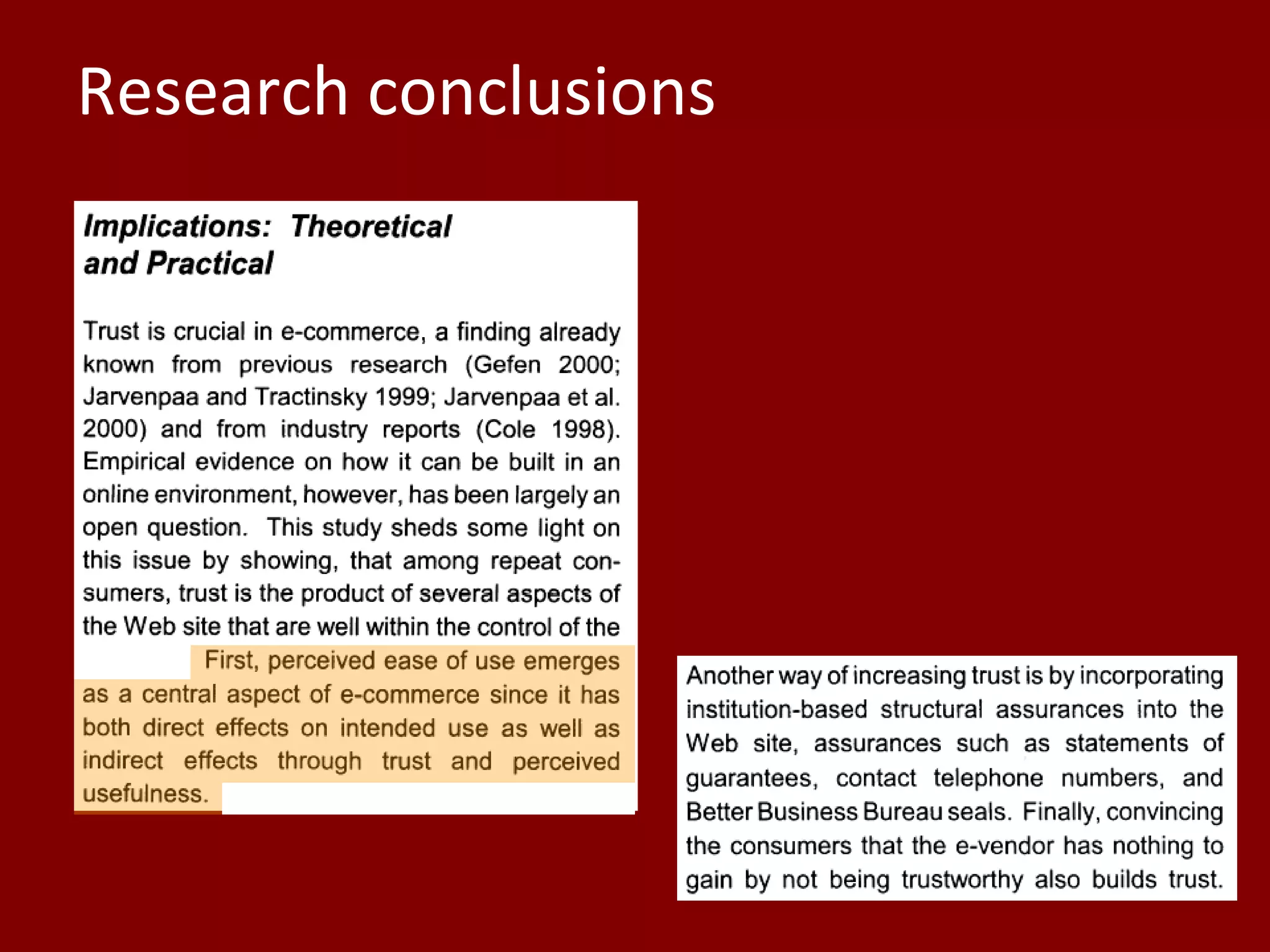
Research conclusions
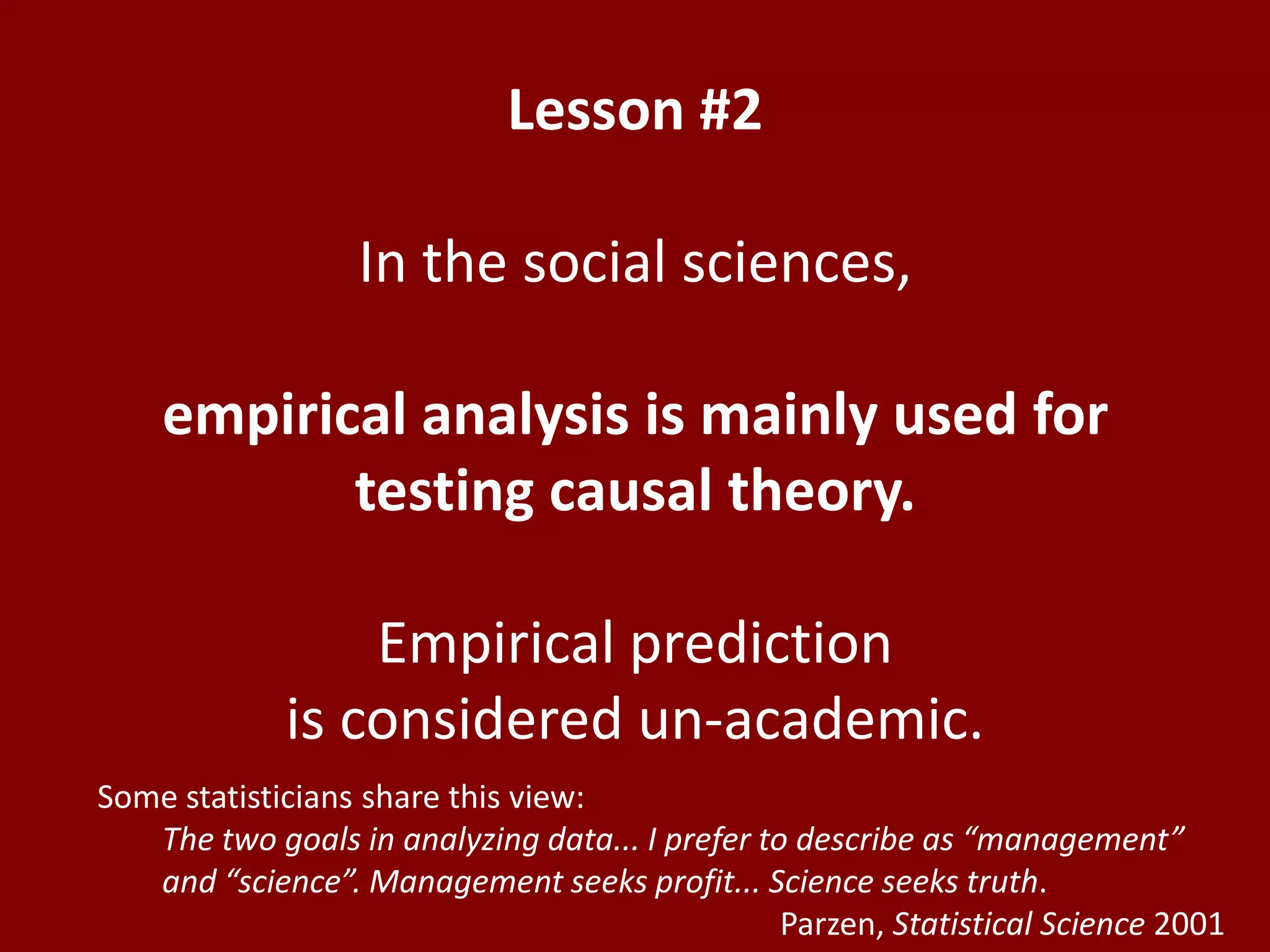
Lesson #2In the social sciences,empirical analysis is mainly used for testing causal theory.Empirical prediction is considered un-academic.Some statisticians share this view: 	The two goals in analyzing data... I prefer to describe as “management” and “science”. Management seeks profit... Science seeks truth.Parzen, Statistical Science 2001
Prediction in the Information Systems literature
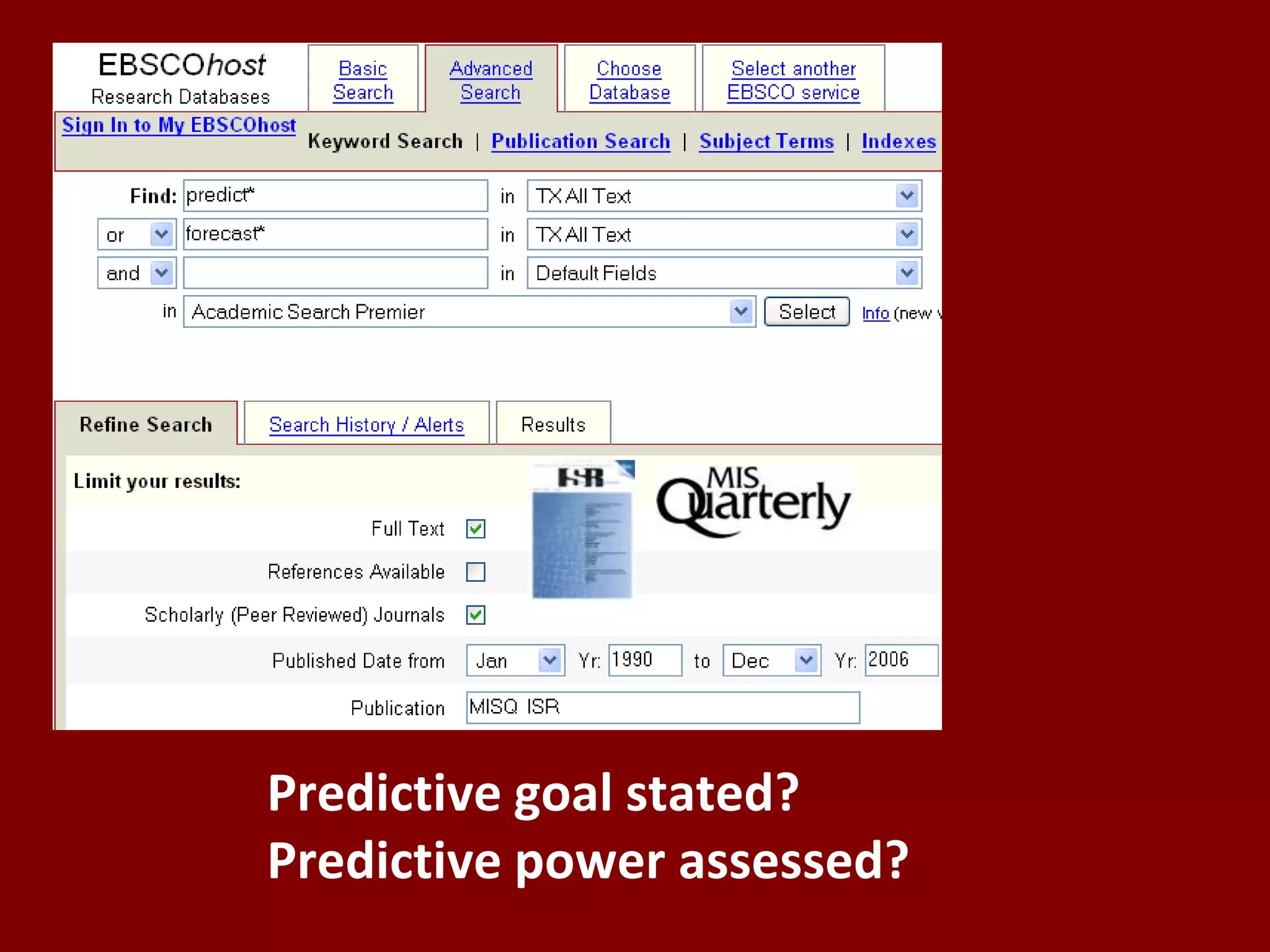
Predictive goal stated?Predictive power assessed?
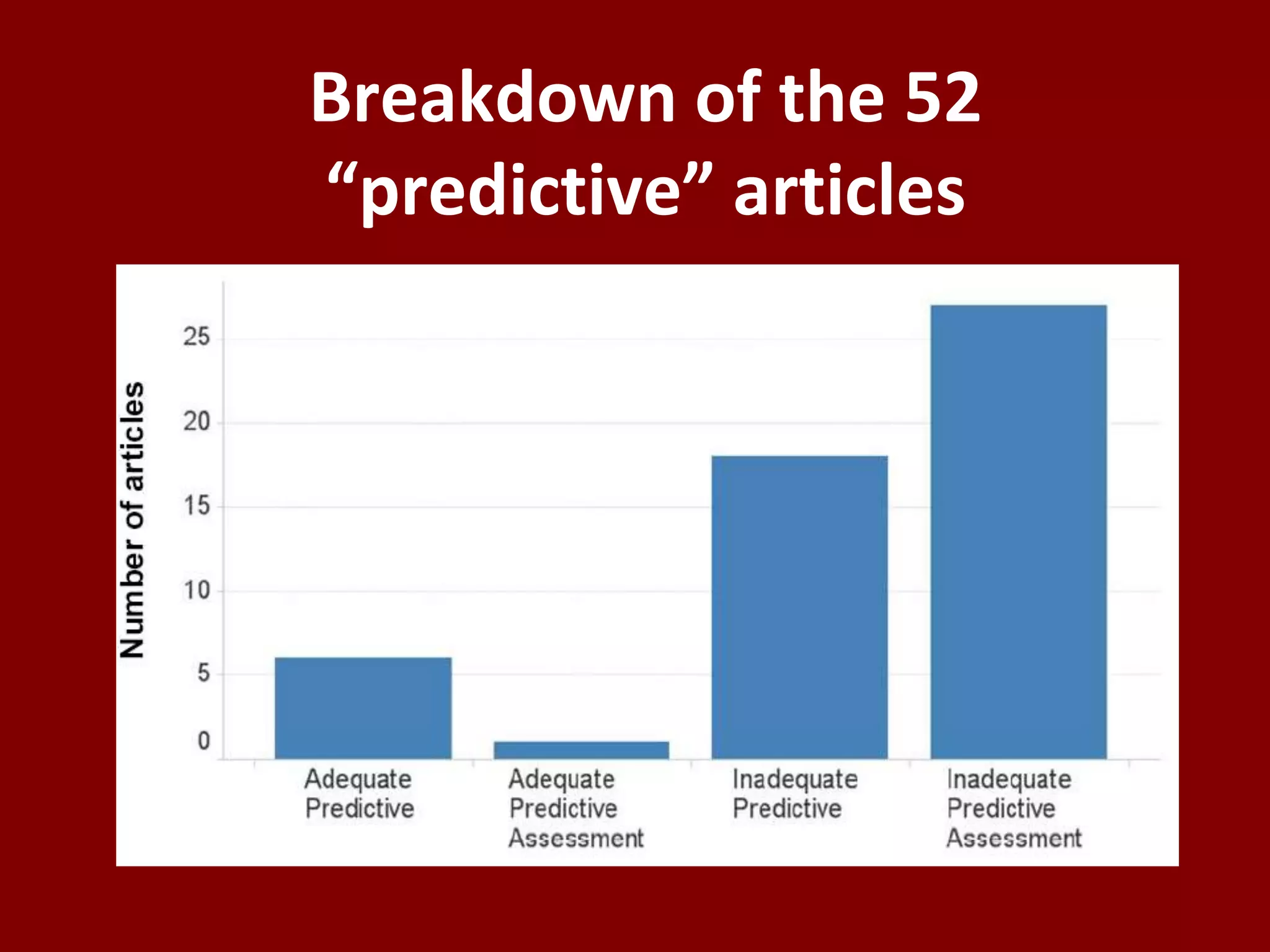
1072 articles of which52 empirical with predictive claims“Examples of [predictive] theory in IS do not come readily to hand, suggesting that they are not common”Gregor, MISQ 2006
Breakdown of the 52 “predictive” articles
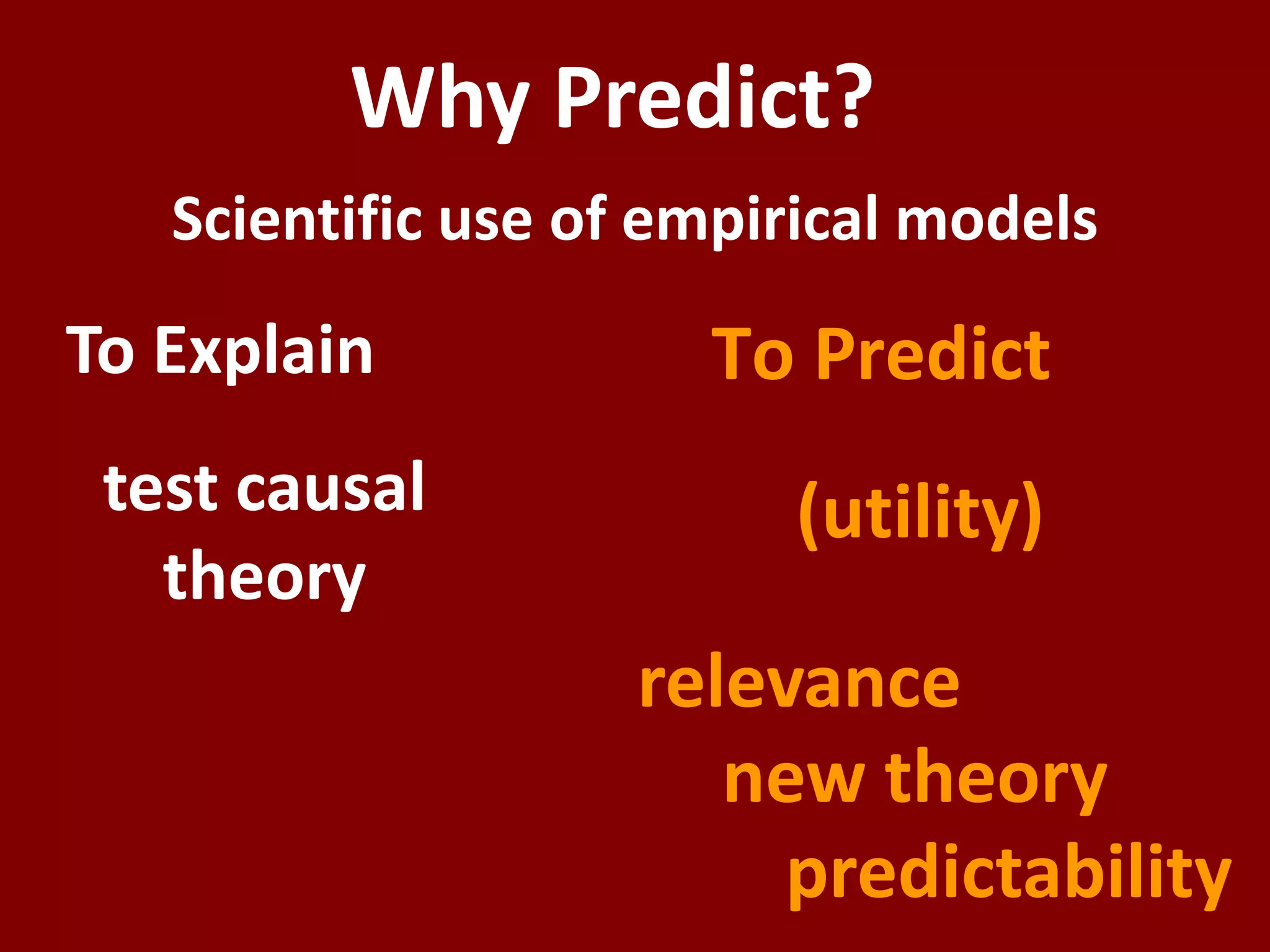
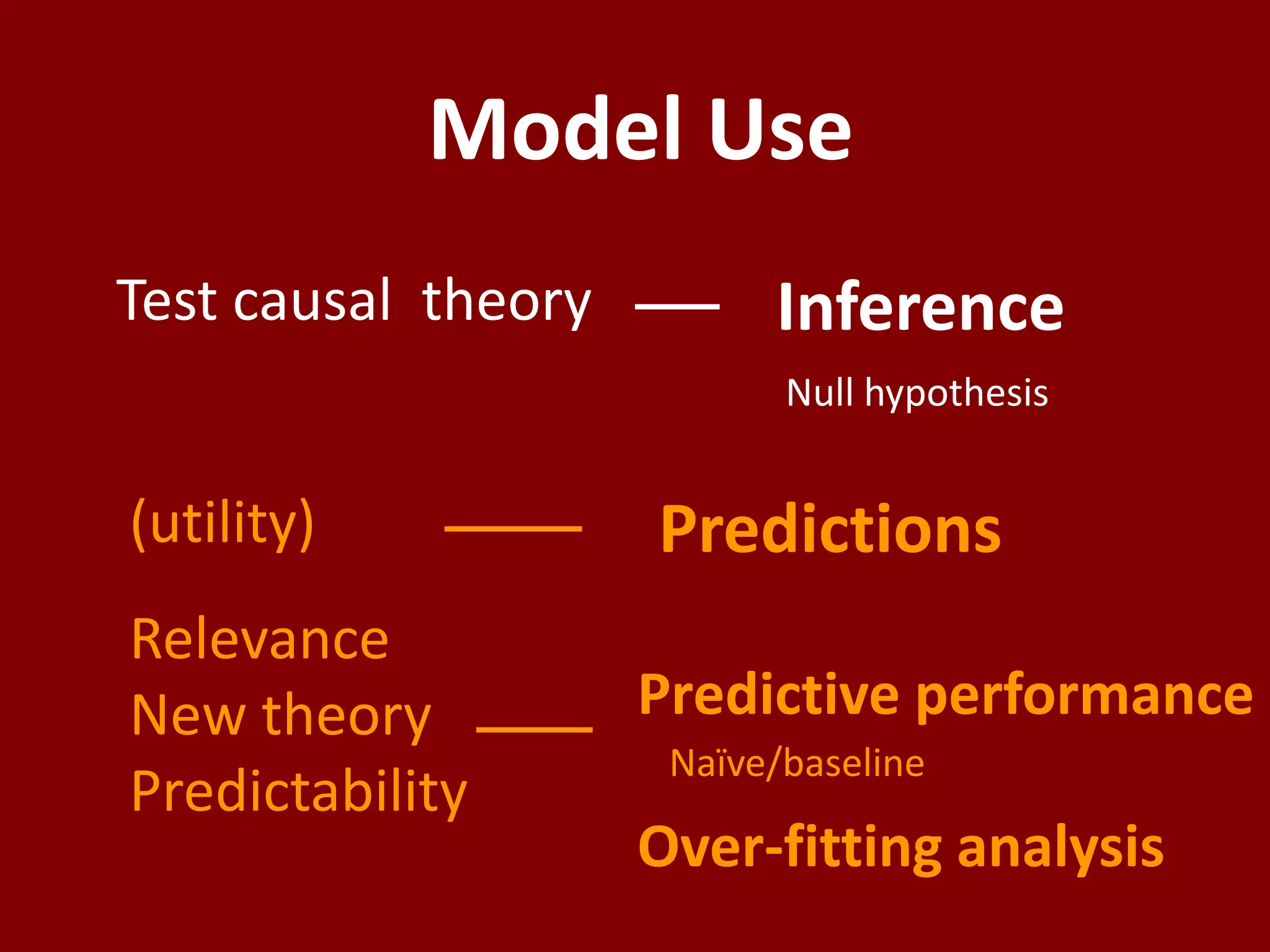
Why Predict?Scientific use of empirical modelsTo PredictTo Explaintest causal  theory(utility)relevancenew theorypredictability
Why are statistical explanatory models different than predictive models?
Theory vs. its manifestation?
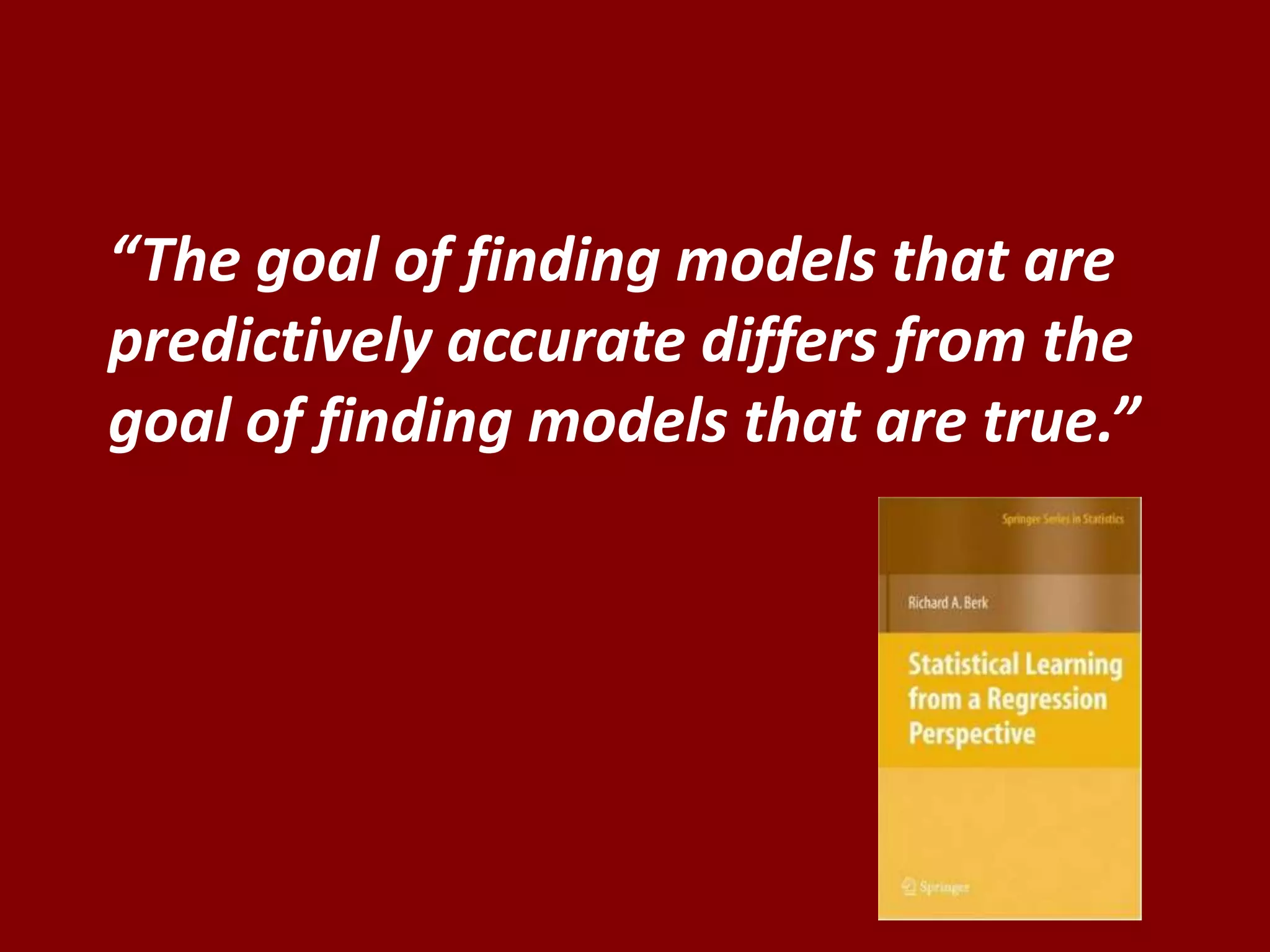
“The goal of finding models that are predictively accurate differs from the goal of finding models that are true.”
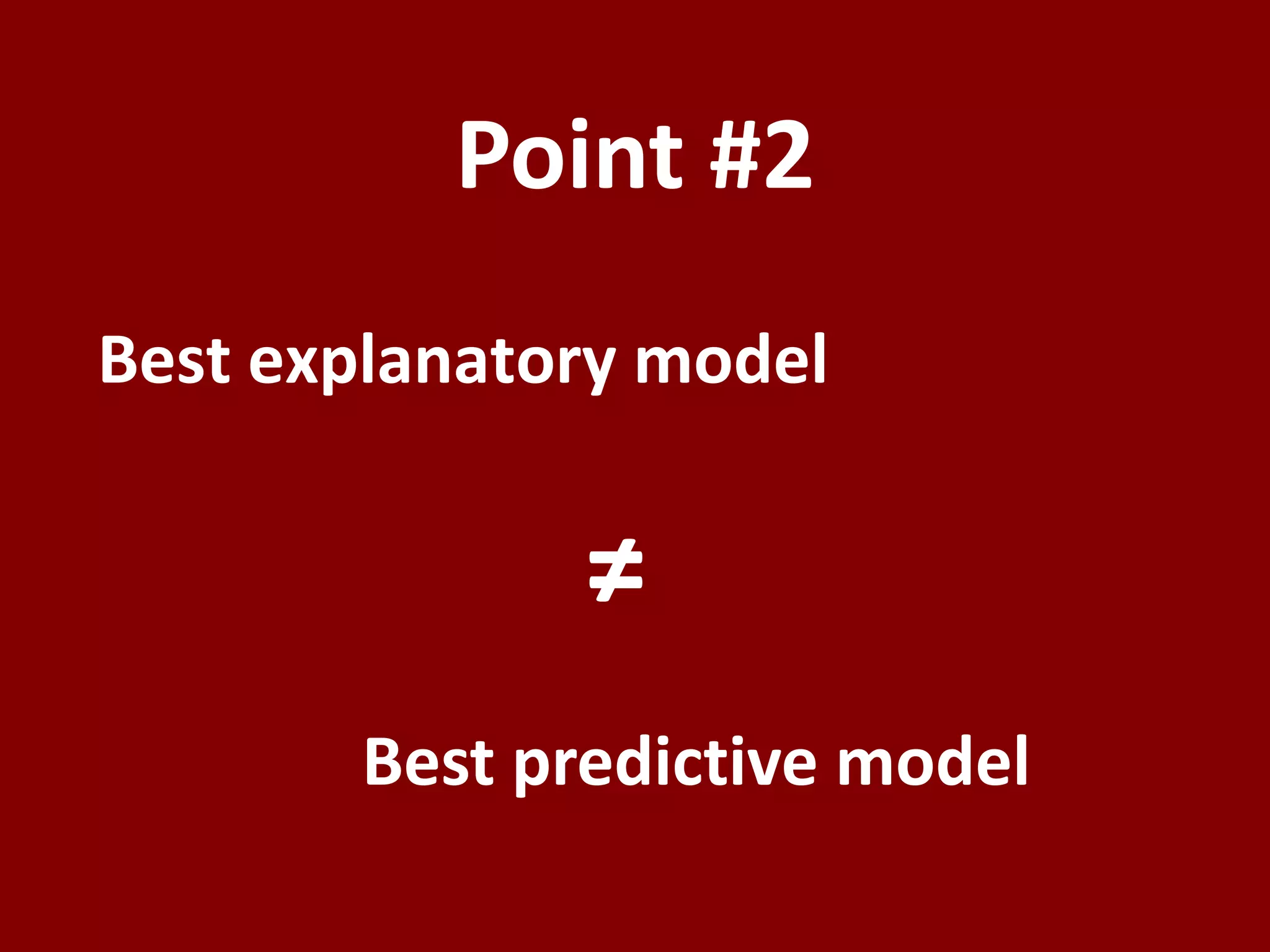
Given the research environment in the social sciences, two critically important points are:Explanatory power and predictive accuracy cannot be inferred from one another.The “best” explanatory model is (nearly) never the “best” predictive model, and vice versa.
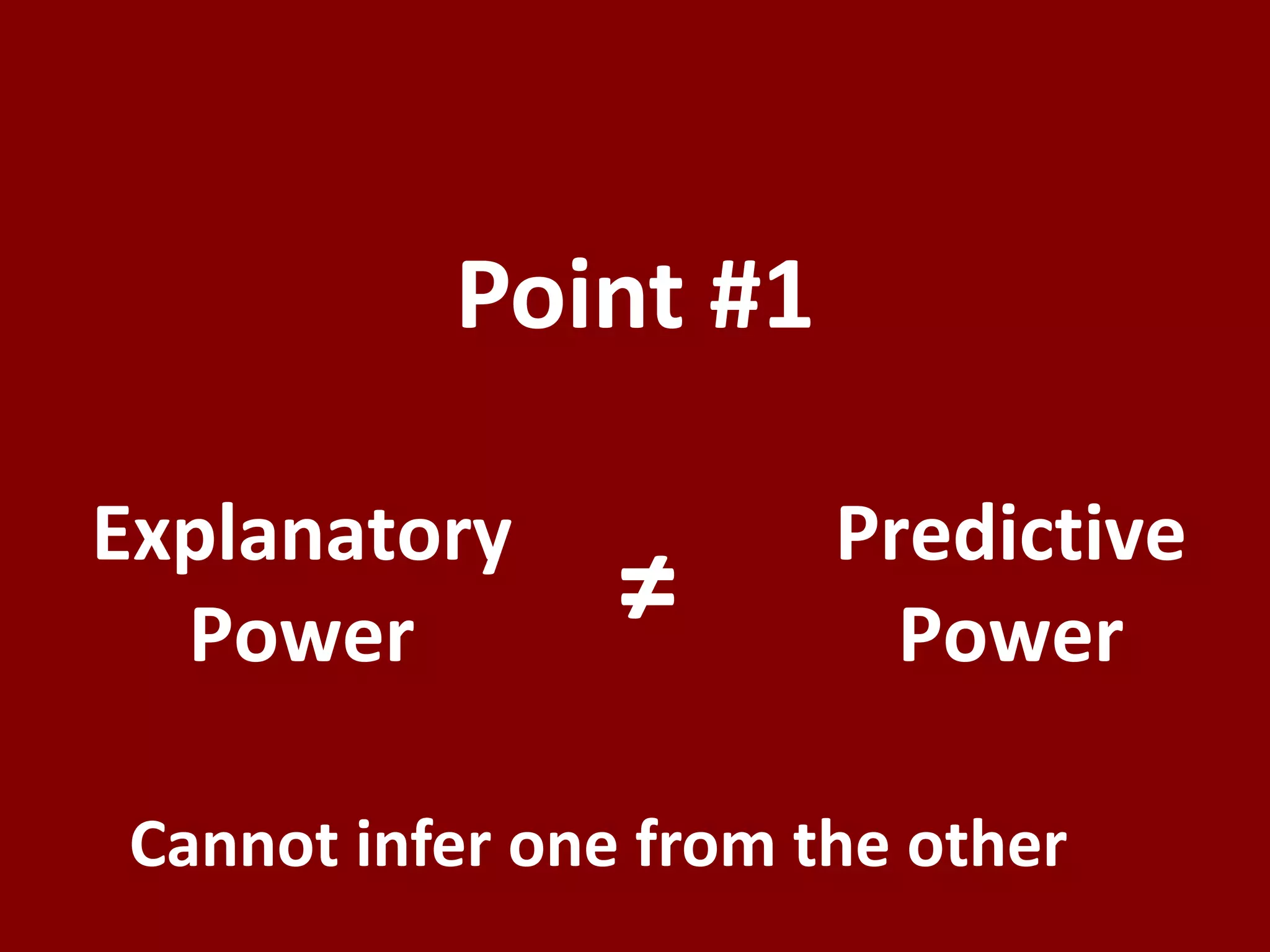
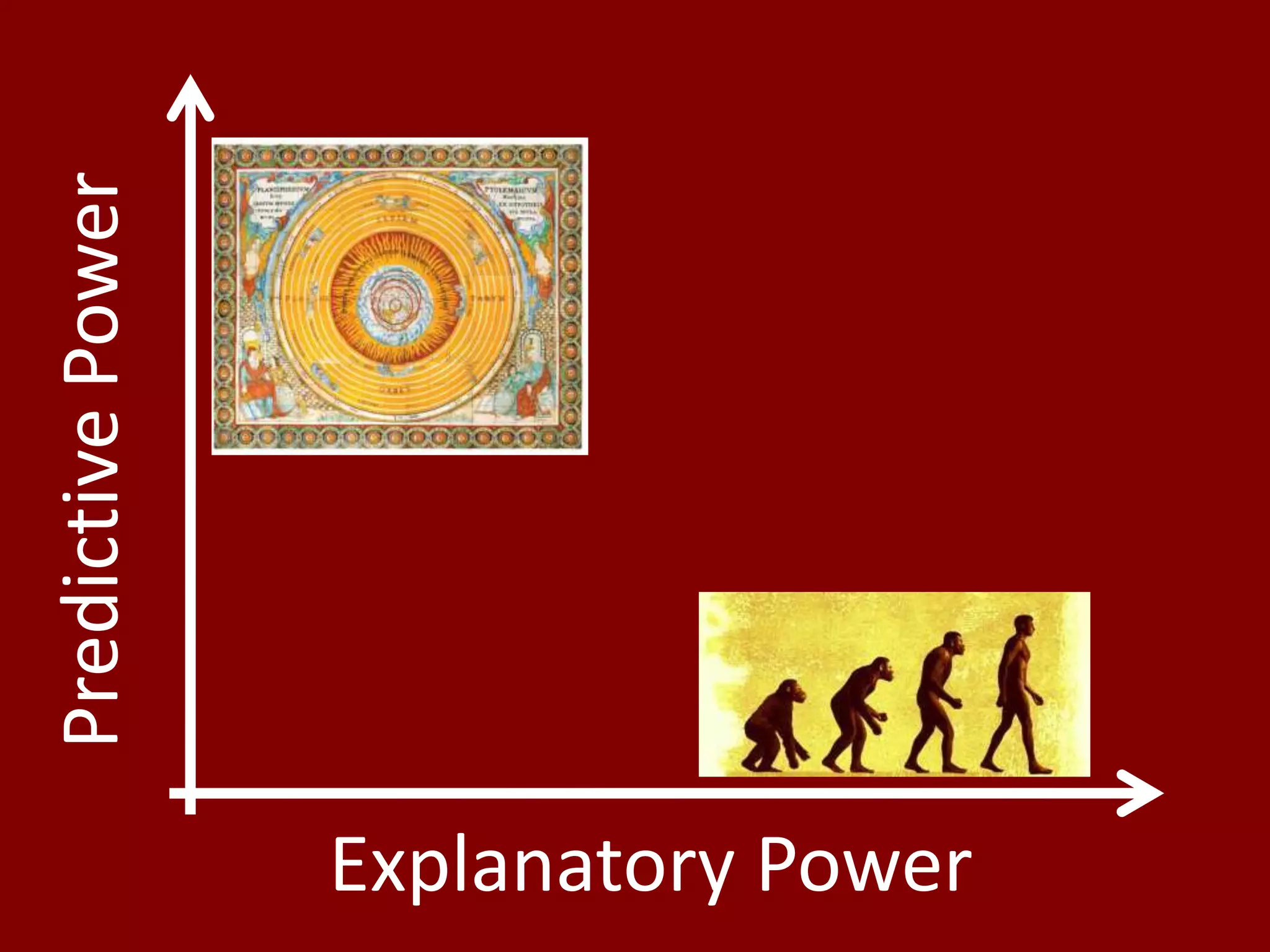
Point #1Explanatory PowerPredictive Power≠Cannot infer one from the other
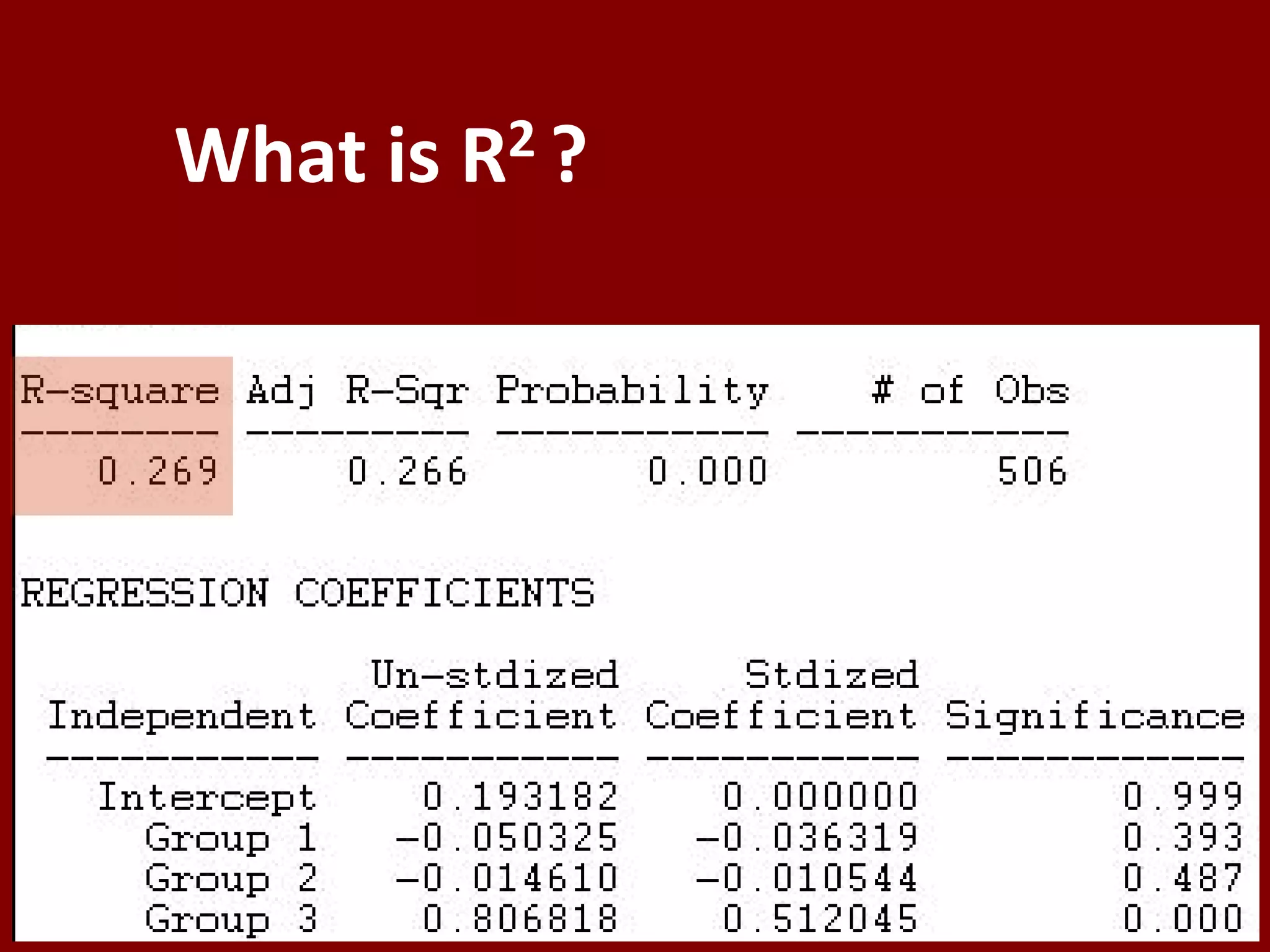
What is R2 ?
In-sample vs. out-of-sample evaluation
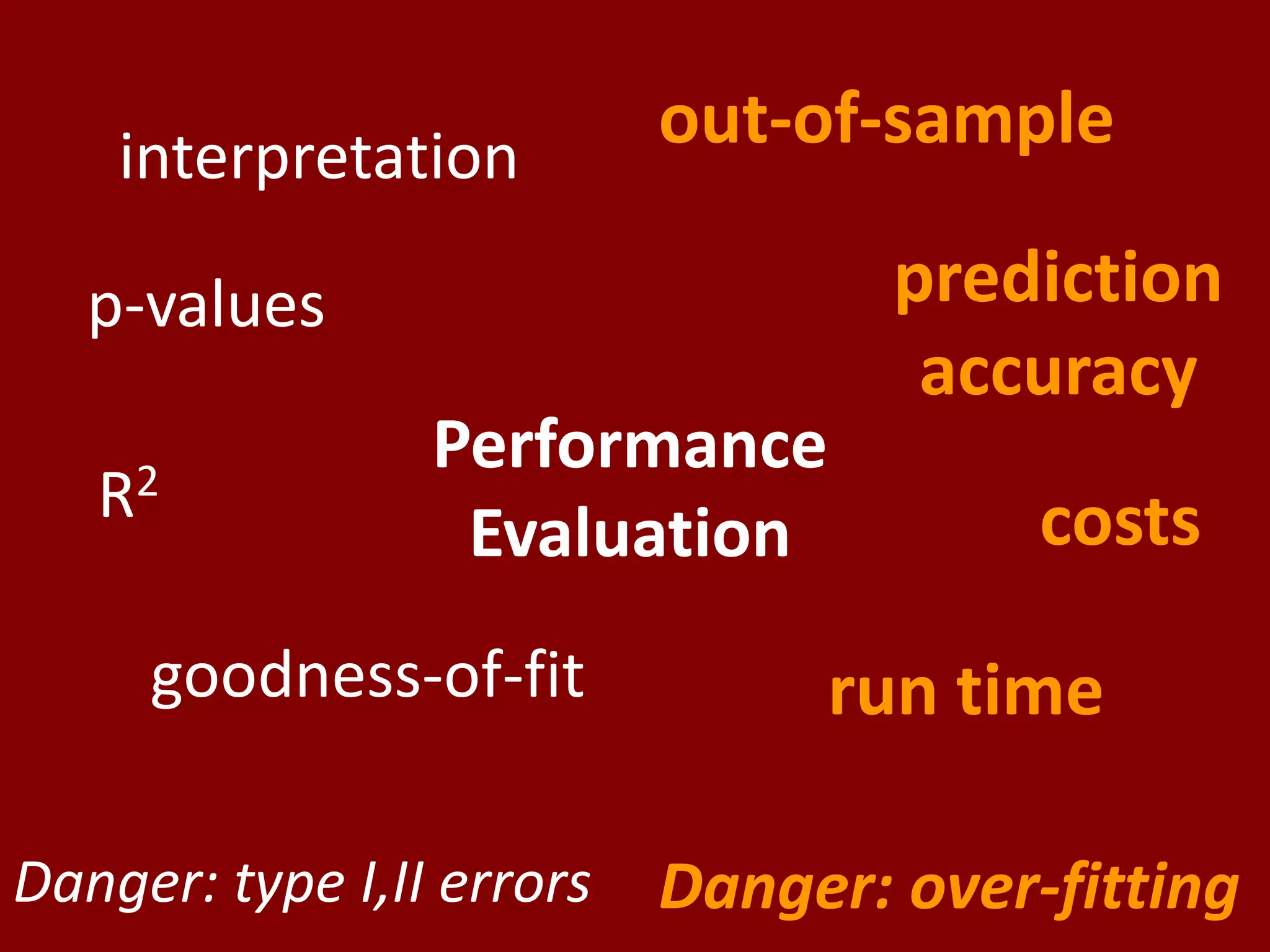
out-of-sampleinterpretationprediction accuracyp-valuesPerformance EvaluationR2costsgoodness-of-fitrun timeDanger: type I,II errorsDanger: over-fitting
Suggestion for social scientists:Report predictive accuracy in addition to explanatory power
Predictive PowerExplanatory Power
Point #2Best explanatory model≠Best predictive model
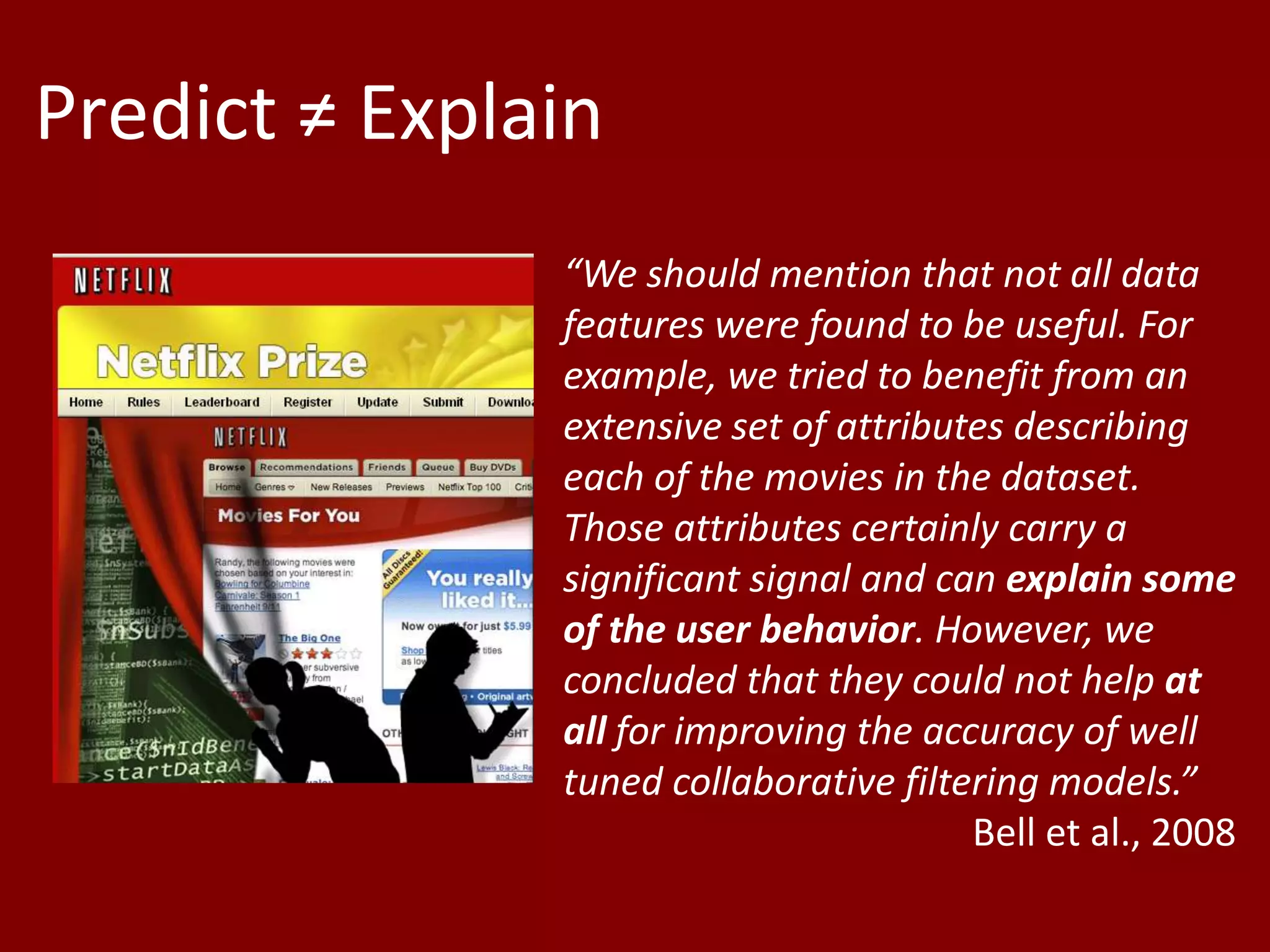
Predict ≠ Explain“We should mention that not all data features were found to be useful. For example, we tried to benefit from an extensive set of attributes describing each of the movies in the dataset. Those attributes certainly carry a significant signal and can explain some of the user behavior. However, we concluded that they could not help at all for improving the accuracy of well tuned collaborative filtering models.” Bell et al., 2008 +?
Predict ≠ ExplainThe FDA considers two products bioequivalent if the 90% CI of the relative mean of the generic to brand formulation is within 80%-125%“We are planning to… develop predictive models for bioavailability and bioequivalence”Lester M. Crawford, 2005Acting Commissioner of Food & Drugs
Let’s dig in
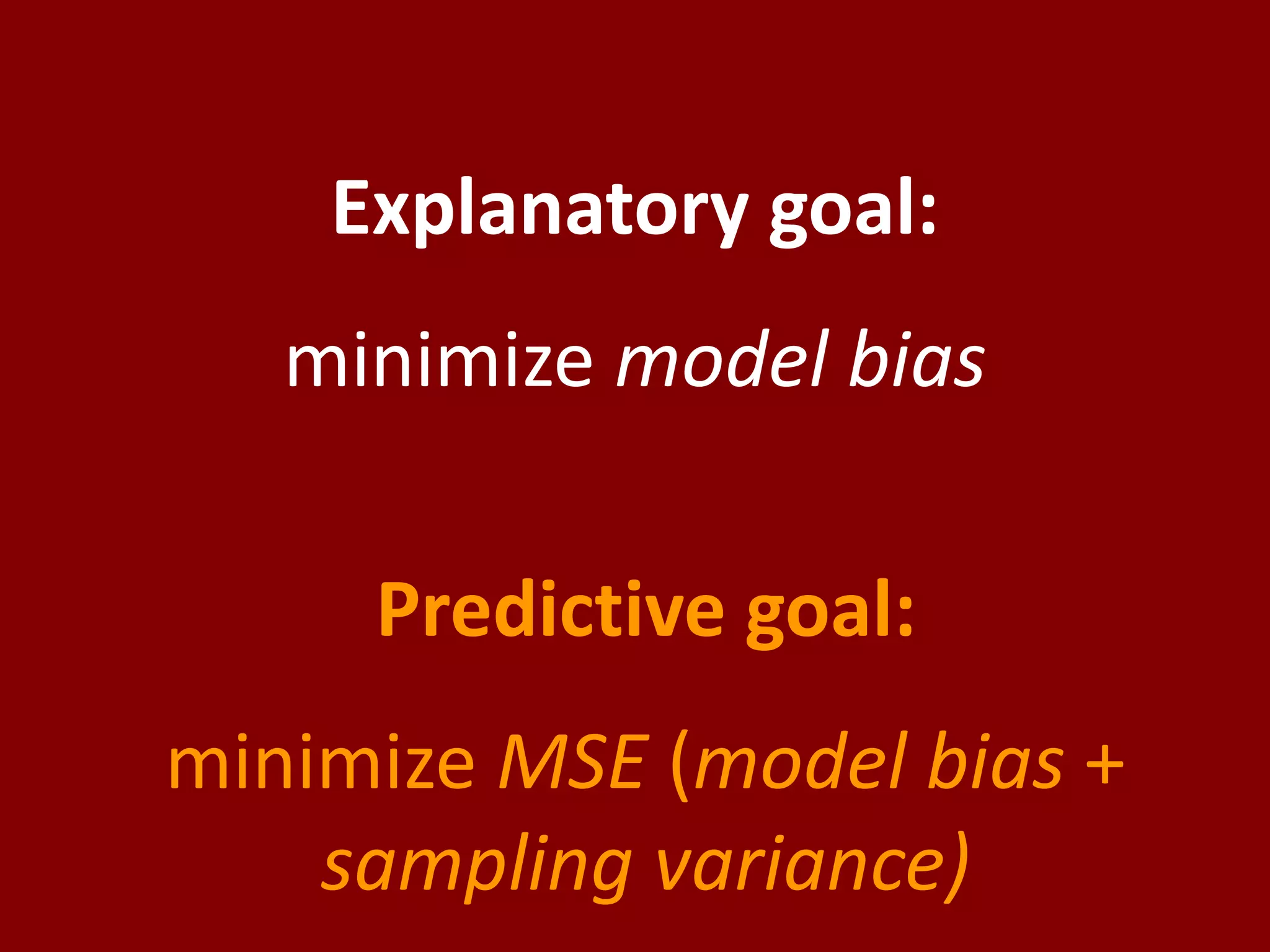
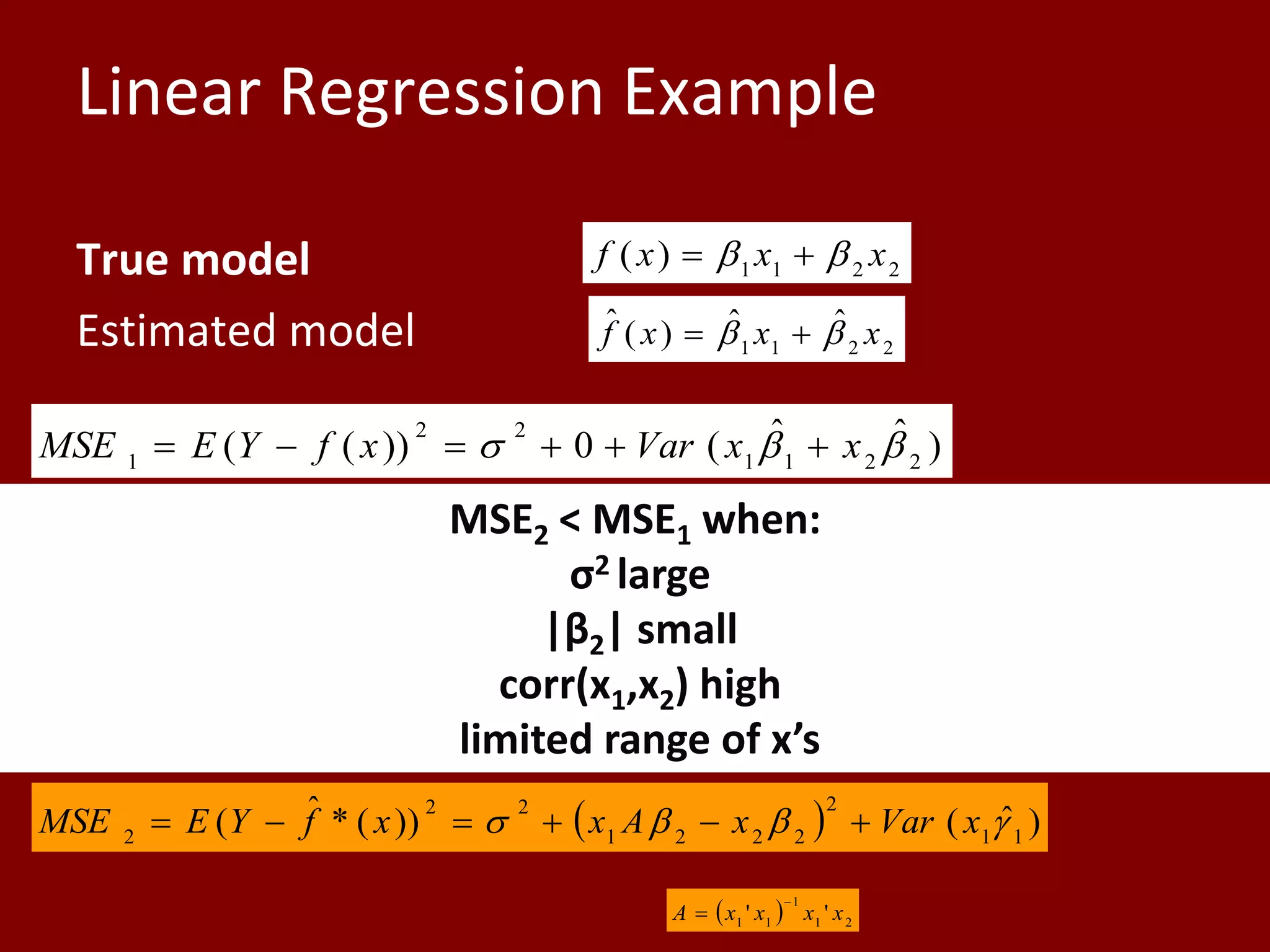
Explanatory goal: minimize model biasPredictive goal: minimize MSE(model bias + sampling variance)
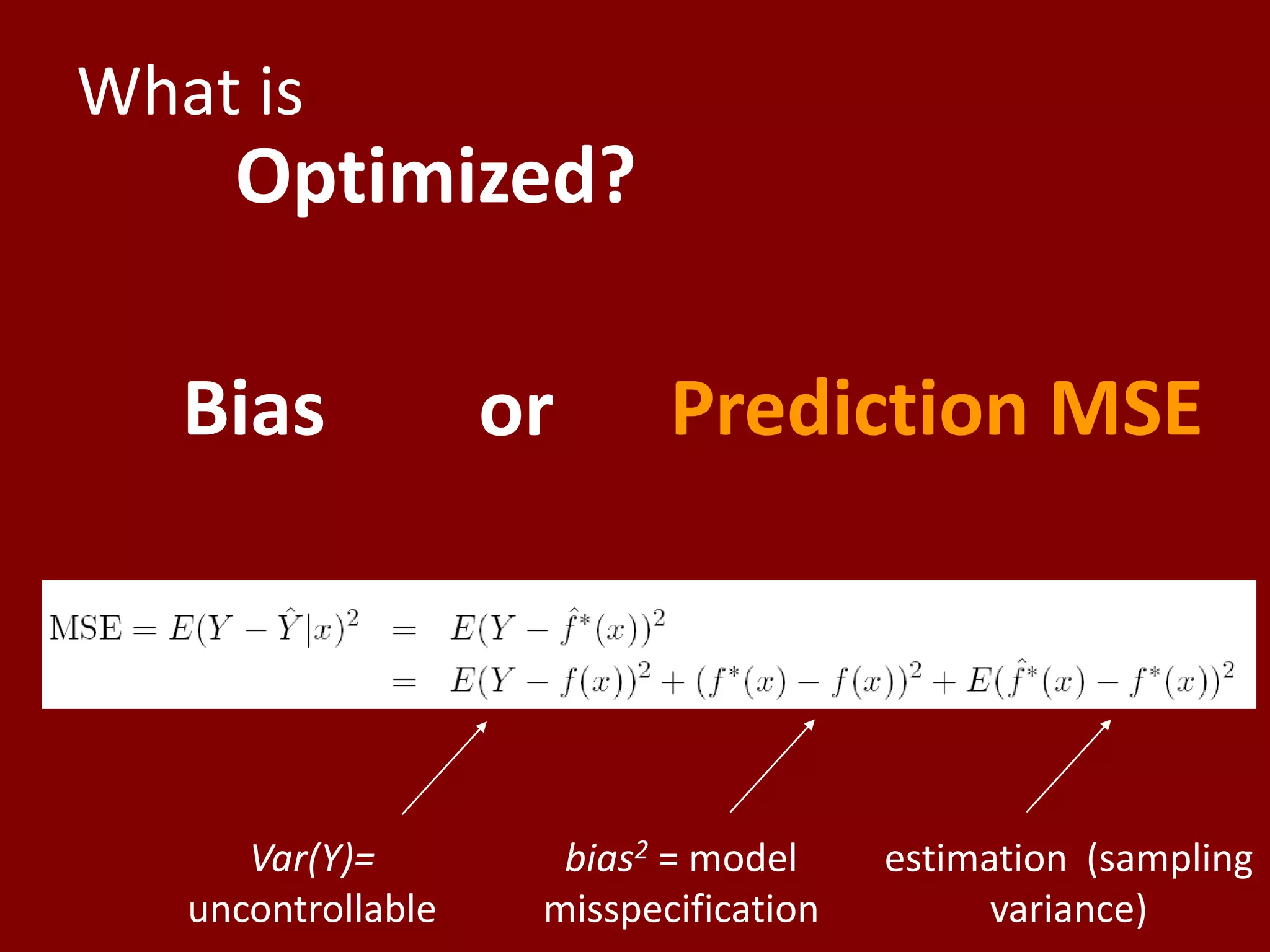
What isOptimized?BiasPrediction MSEorVar(Y)= uncontrollablebias2 = model misspecificationestimation  (sampling variance)
Linear Regression ExampleUnderspecified modelEstimated modelTrue modelEstimated modelMSE2 < MSE1 when: σ2 large |β2| small corr(x1,x2) high limited range of x’s
China's Diverging Paths, photo by Clark SmithTwostatistical modeling paths
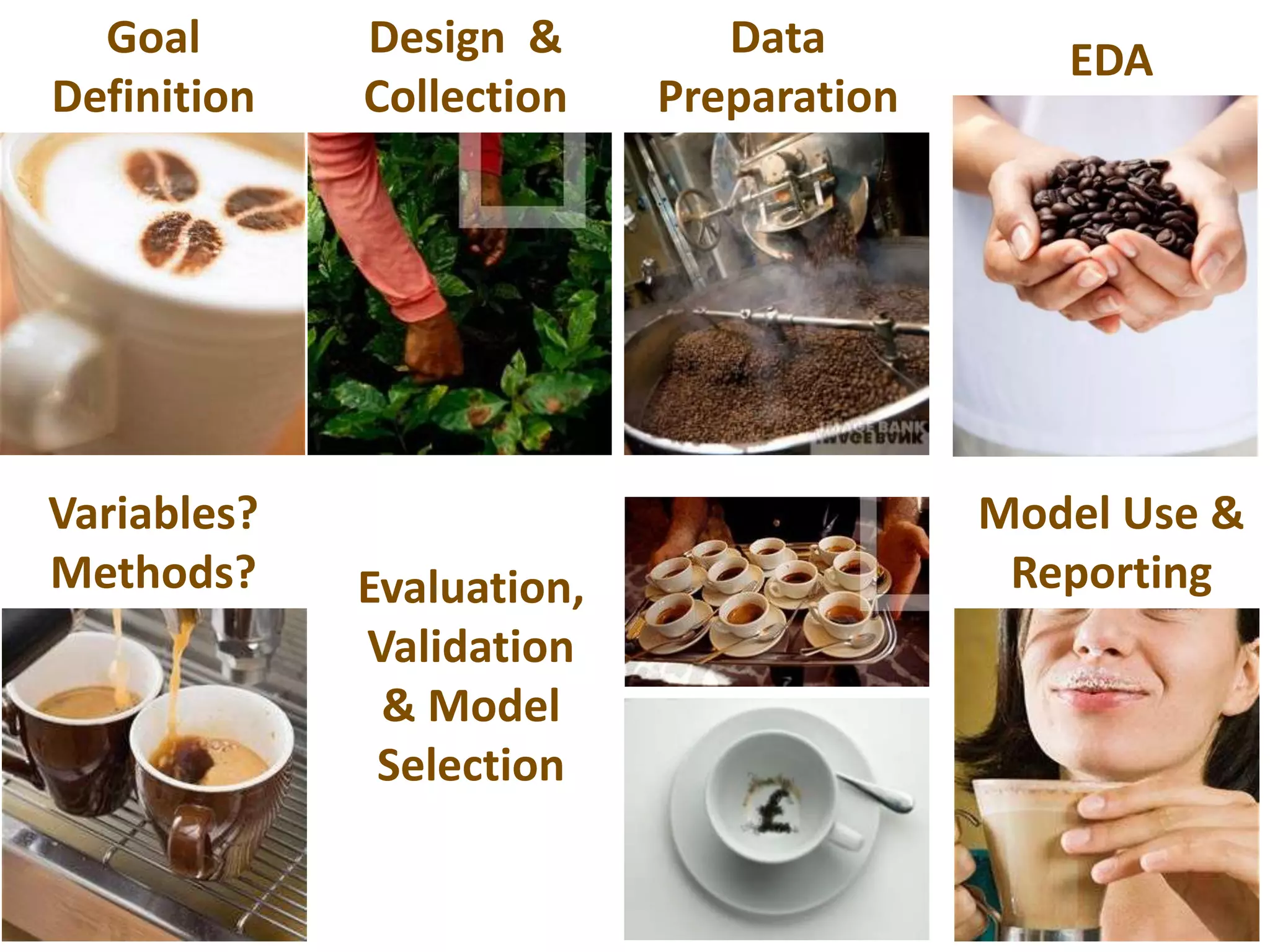
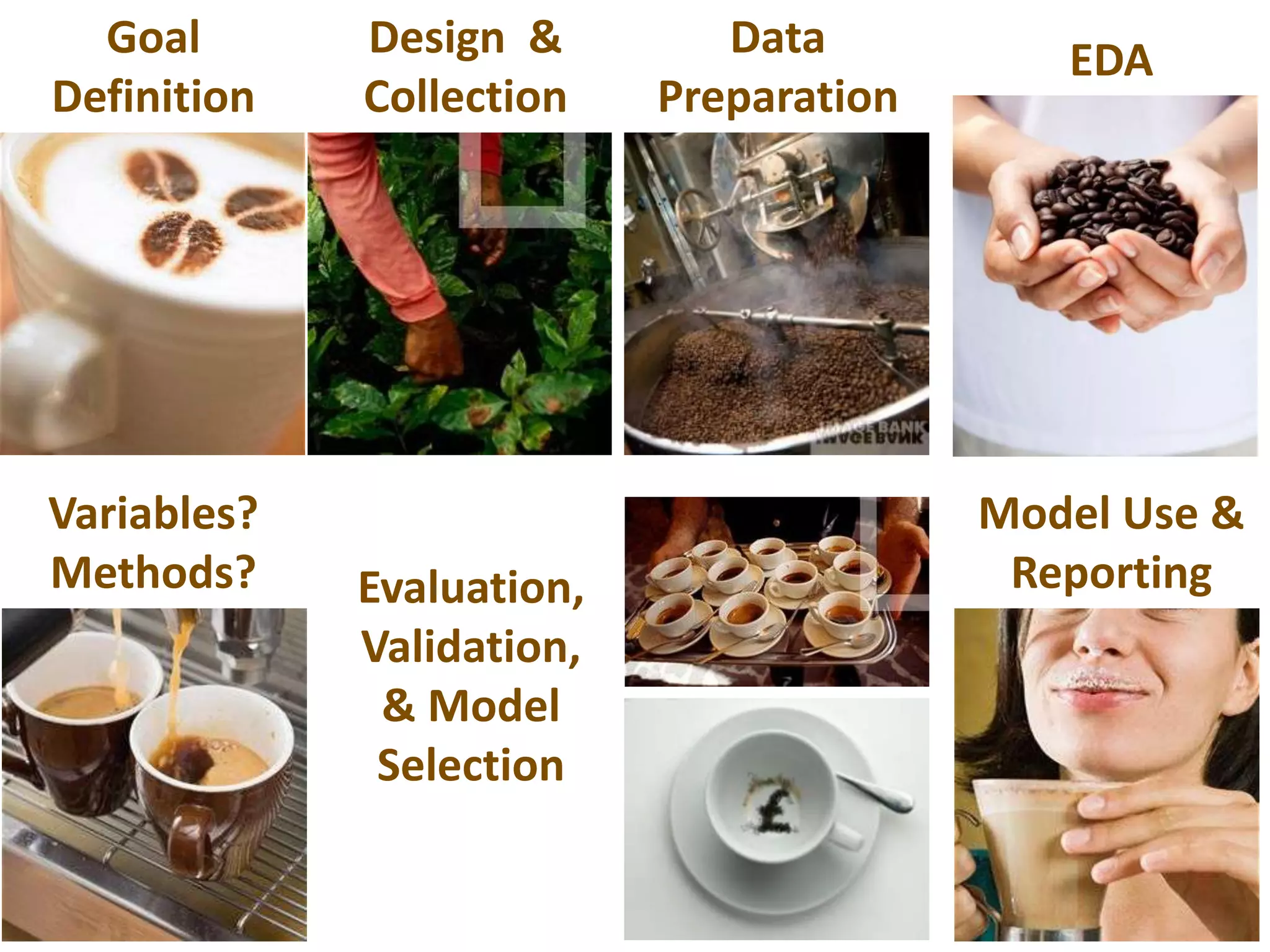
Design  & CollectionData PreparationGoal DefinitionEDAVariables? Methods?Model Use & ReportingEvaluation, Validation    & Model Selection
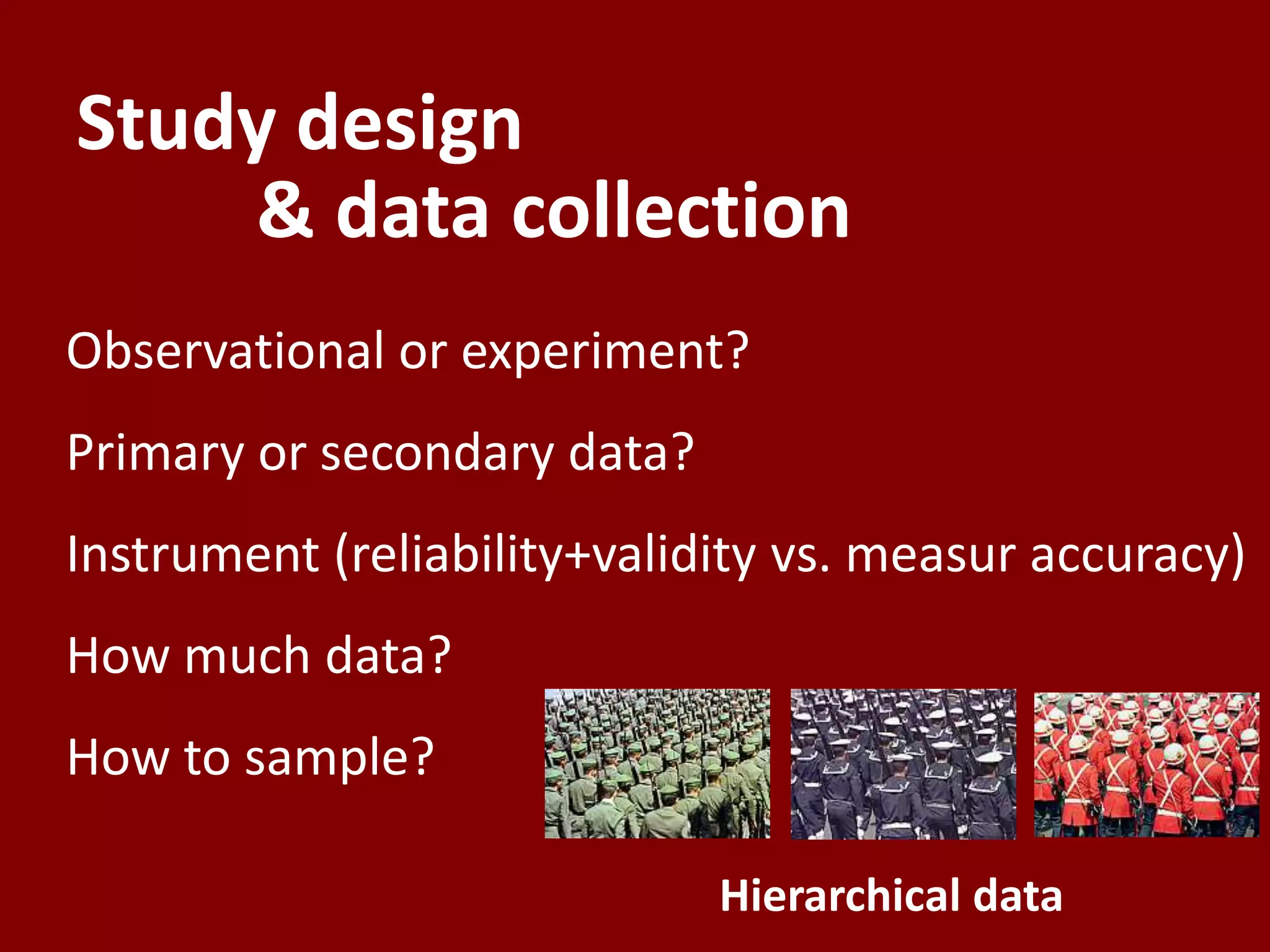
Hierarchical dataStudy design & data collectionObservational or experiment?Primary or secondary data?Instrument (reliability+validity vs. measur accuracy) How much data? How to sample?
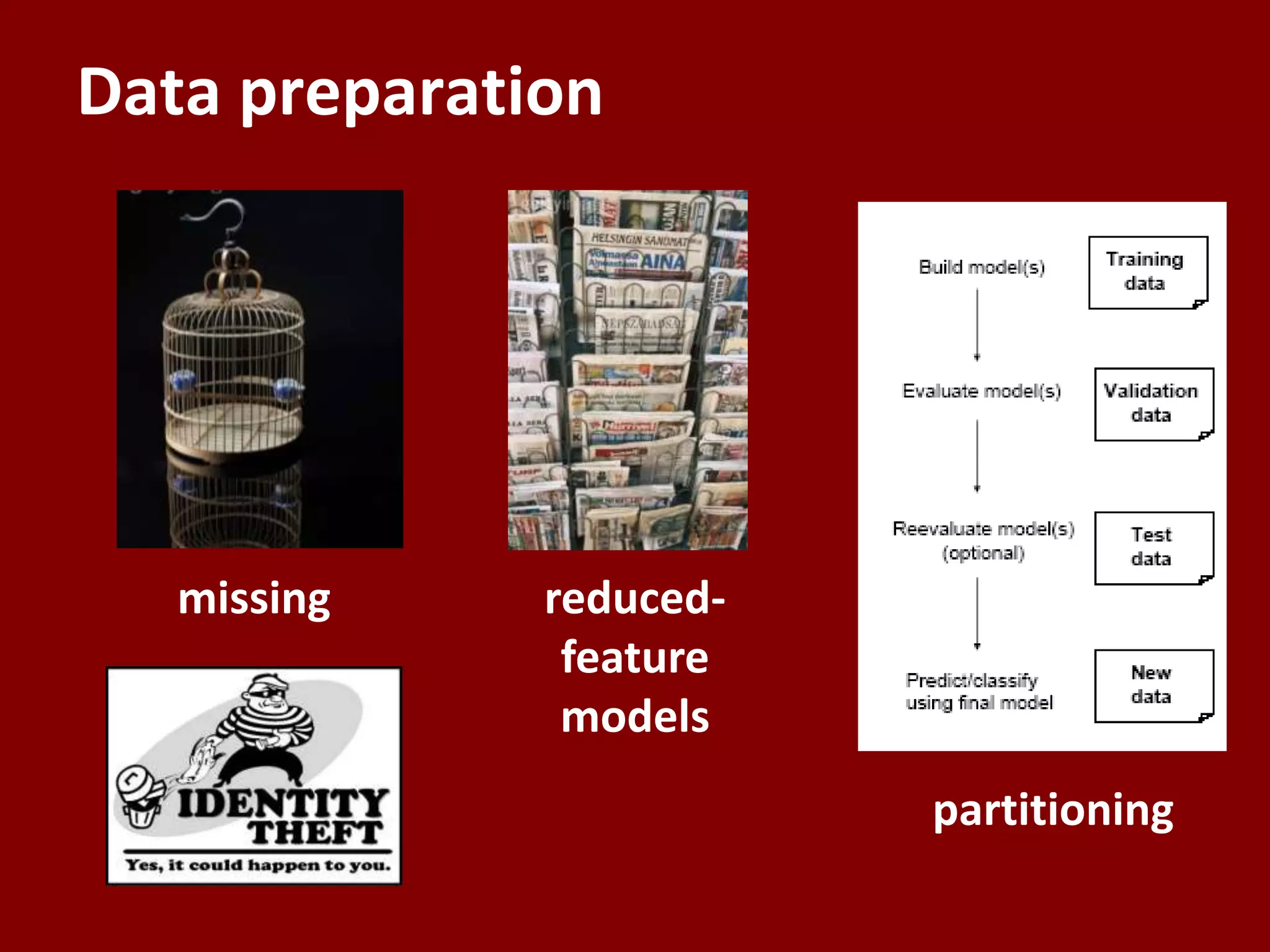
reduced-feature modelspartitioningData preparationmissing
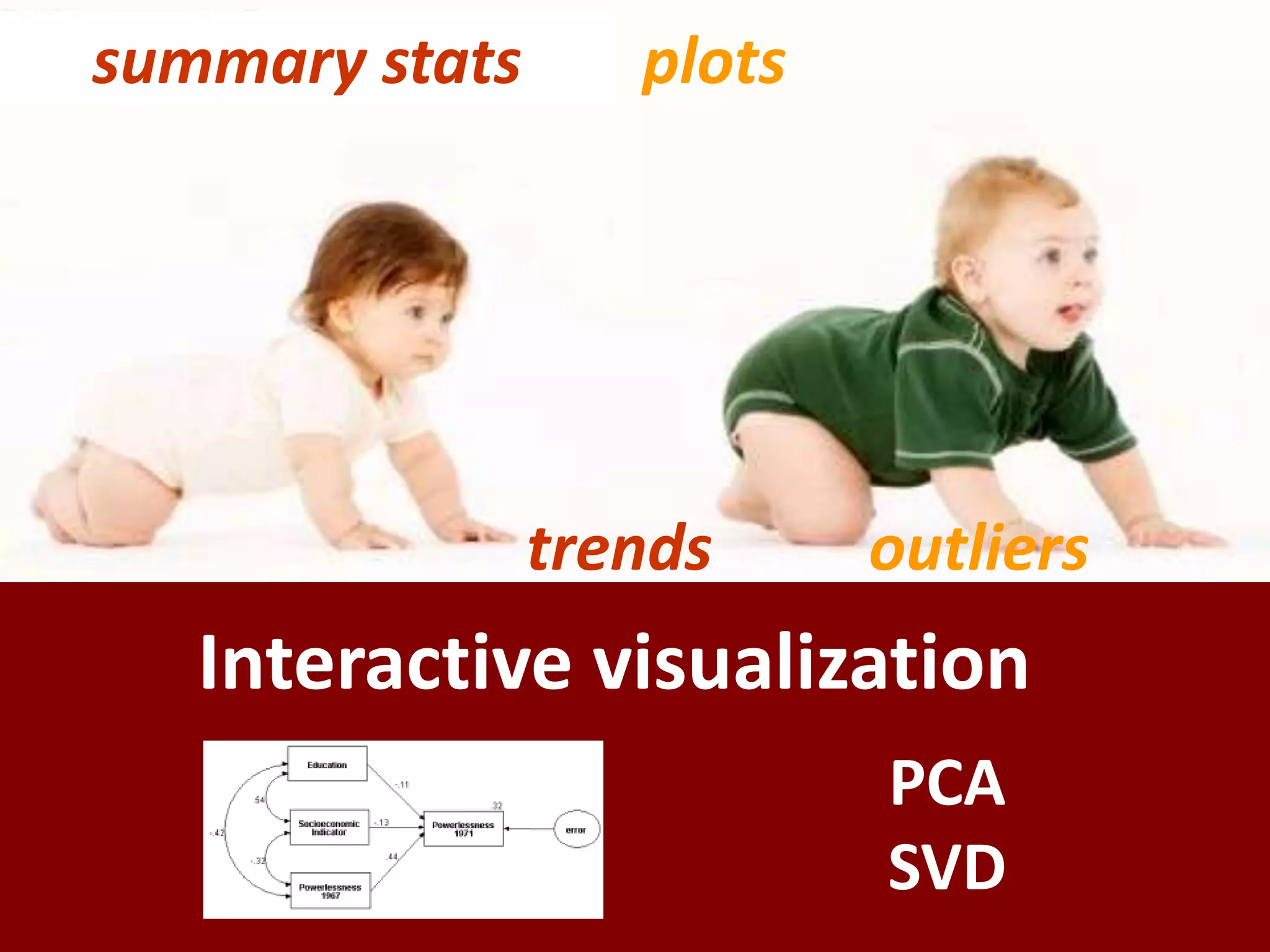
summary statsplotsoutlierstrendsInteractive visualizationPCASVD
Which variables?Multicollinearity?A, B, A*B?theoryassociationsex-post availability
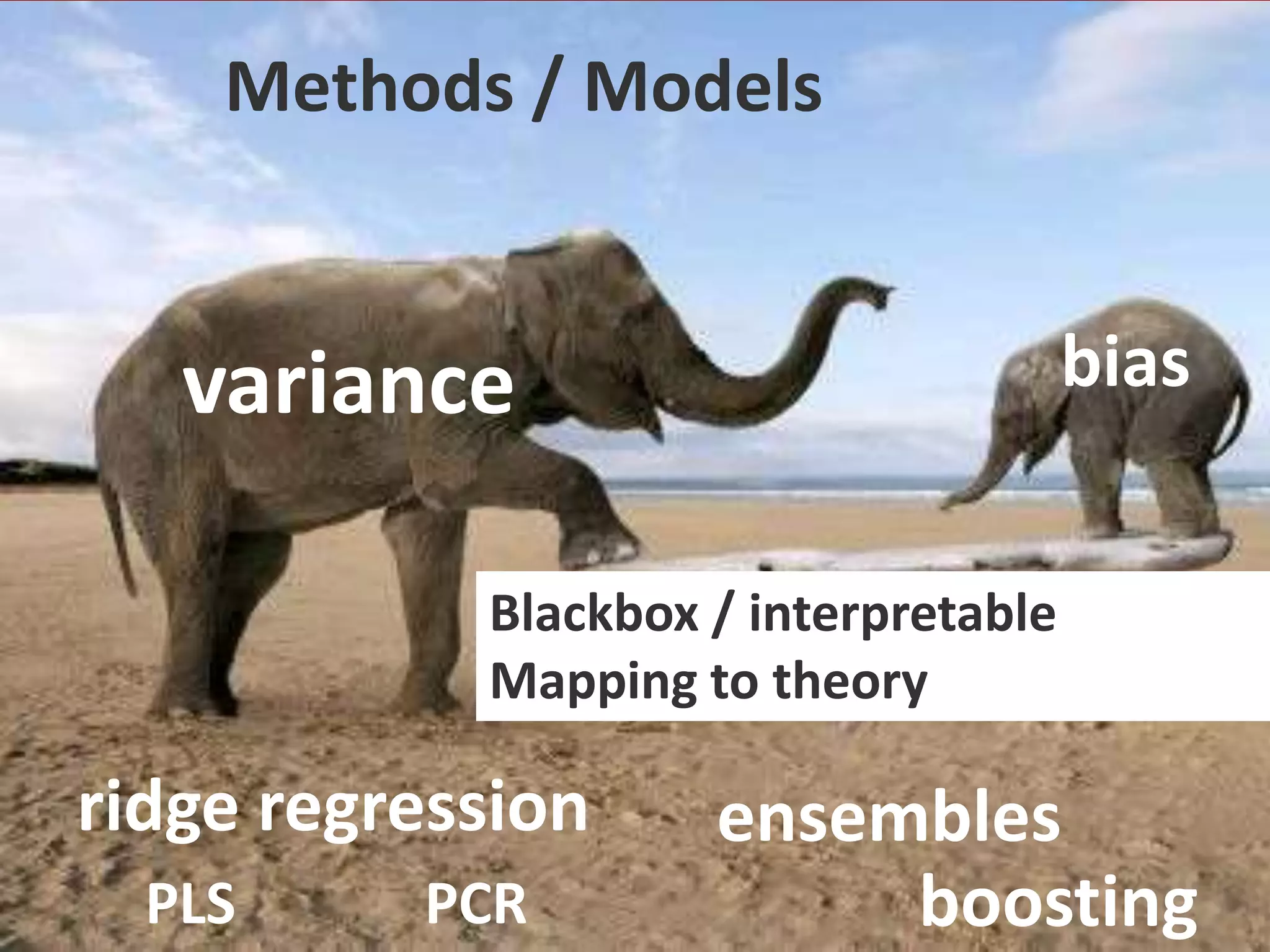
Methods / ModelsbiasvarianceBlackbox / interpretableMapping to theoryridge regressionensemblesboostingPLSPCR
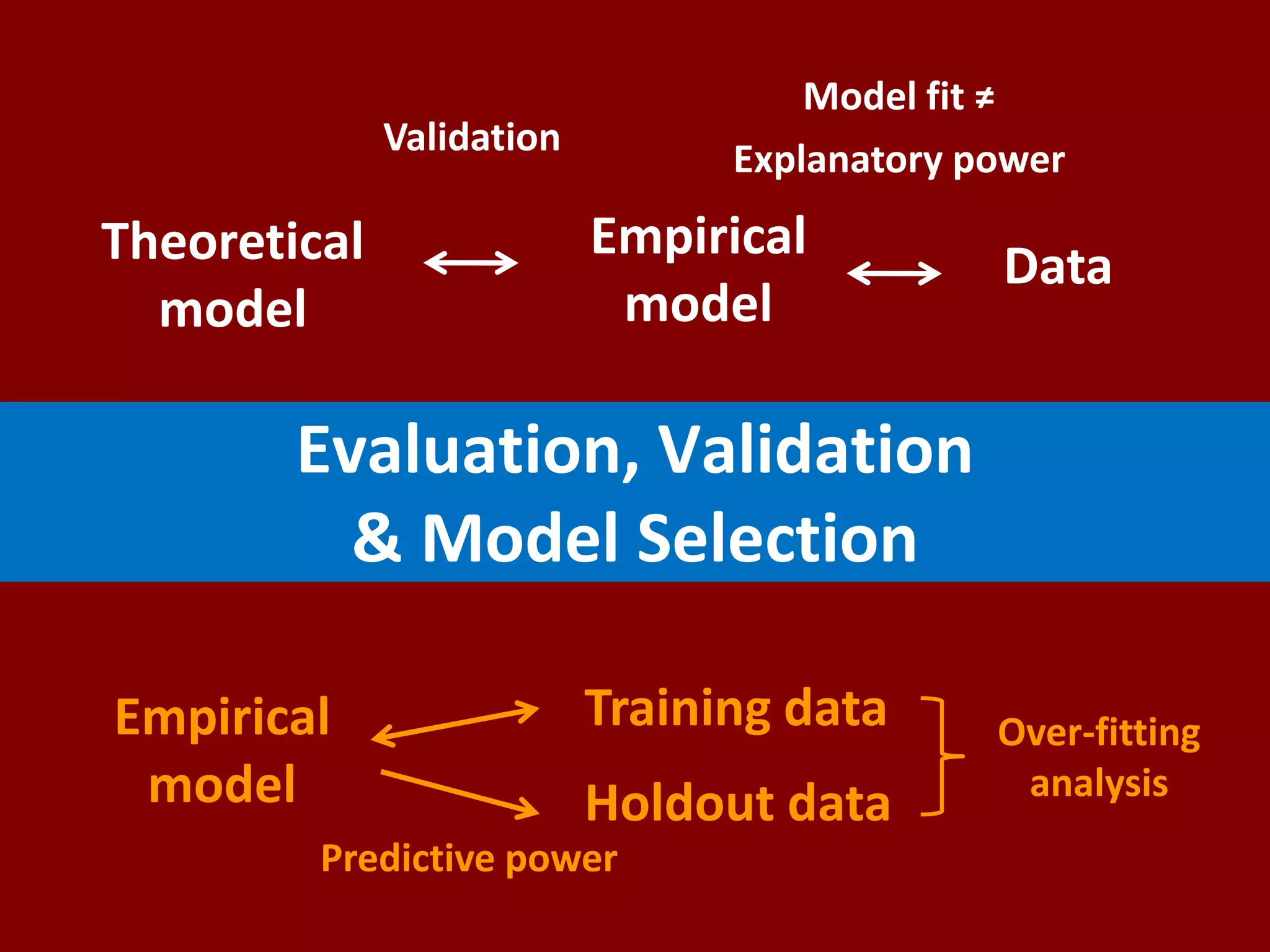
Model fit ≠ValidationExplanatory powerEmpirical modelTheoretical modelDataEvaluation, Validation& Model SelectionTraining dataEmpirical modelOver-fitting analysisHoldout dataPredictive power
Model UseInferenceTest causal  theoryNull hypothesisPredictions(utility)RelevanceNew theoryPredictabilityPredictive performanceOver-fitting analysisNaïve/baseline
Design  & CollectionData PreparationGoal DefinitionEDAVariables? Methods?Model Use & ReportingEvaluation, Validation,     & Model Selection
How does all this impact research in the (social) sciences?
Three Current ProblemsPrediction underappreciatedDistinction blurredInappropriate modeling/assessment“While the value of scientific prediction… is beyond question… the inexact sciences [do not] have…the use of predictive expertise well in hand.”Helmer & Rescher, 1959
Why?What can be done?Statisticians should acknowledge the difference and teach it!
It’s time for ChangeTo PredictTo Explain

To Explain Or To Predict?

Editor's Notes

  • #28 Example: confidence interval vs. prediction intervalLift , costs
  • #30 Relevance; reality check; predictability