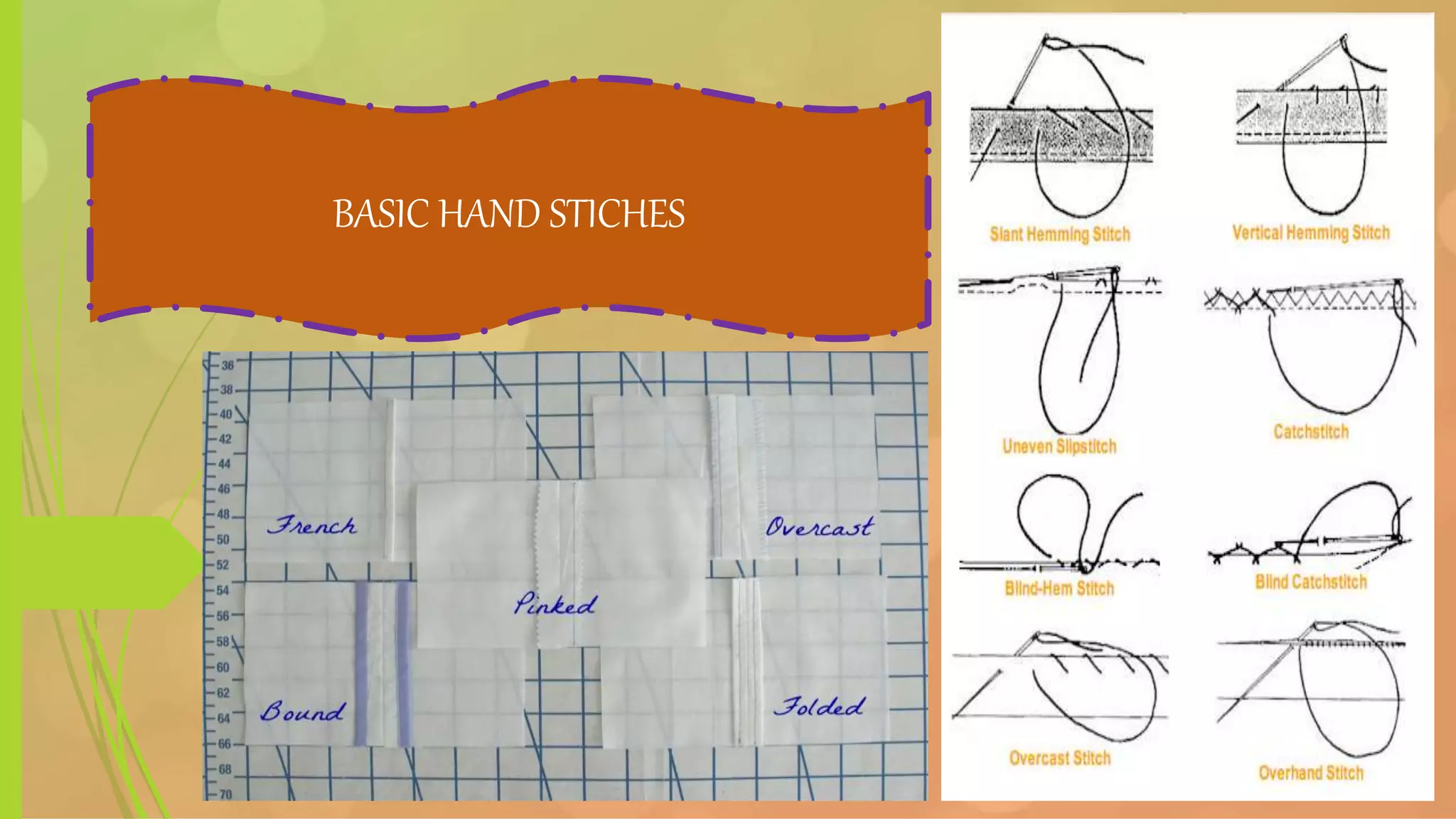
BASIC HAND STICHES
A. TEMPORARY STITCHES – these stitches are used to hold the garment pieces together before
permanent stitches are made.
1. EVEN BASTING – this is used for tacking seams and other details, which must be held securely.
2. UNEVEN BASTING – this is used in fastening together two or more pieces of fabric where is to be
strain on them before the permanent basting is done.
B. PERMANENT STITCHES – are stitches that are left in the garment and form a part of the stitched
garment.
1. RUNNING STITCH – this is the simplest form of hand stitch which is used for permanent sewing
seams such as tucks, gathering, shirring, quilting, and mending.
2. BACKSTITCH – this is strong and is sometimes substituted for machine stitching.
3. OVERCAST STITCH – this is a very strong and tough stitch, sometimes called the “ugly” stitch.
BASIC HAND STITCHES
4. HEMMING STITCH – is used to secure down a folded edge of material like hems.
4.1. SLIP HEMMING – this is used for hems, facings or folds where invisibility is more important
strength.
4.2 KNOTTED HEMMING – this is worked from right to left.
C. SEAM – this is a method of joining two or more pieces of materials together by row of stitching.
1. PLAIN SEAM – this is the most widely used seam which is flexible and inconspicuous.
2. LAPPED SEAM – this seam is commonly used for joining a gathered or an unaltered section to a
straight edge as in a yoke.
3. FRENCH SEAM – this is a ridge seam and is used on transparent and light weight fabrics,
on baby clothes and delicate blouses.
4. FLAT AND FELL SEAM – is a flat durable seam used on men’s sports shirts, work clothes and
clothes and pajamas.
SEAM FINISHES – are made to prevent fraying of the raw edges and thus make the seams more
1. PINKED FINISH – this is quick method done with pinking shears, which are not bulky, but not
appropriate finish for fabrics that ravel badly.
2. EDGE-STITCHED FINISH – this is mostly used on unlined coats and jackets where the seam
is wide.
3. DOUBLE-STITCHED FINISH – this is done for a plain unfinished seam or pinked seam and is not
suitable for bulky fabrics.
4. HAND-OVERCAST FINISH – this is common method used for both thick and thin materials that
easily.
5. HERRINGBONE FINISH – this finish neatens the raw edges of heavy materials like flannel.
6. BOUND SEAM EDGE FINISH – in this method, the seam is pressed open and the bias binding
attached to both the seam edges.
7. CLEAN-FINISH – also called Turned and Edge-stitched Finish. This is used for lightweight fabrics.
STITCHES – to work upon, join mend or fasten with or as if with stitches.
TACKING – to secure by some slight or temporary fastening.
FRYING – to wear into loose, ravelled threads or fibers, as cloth.
STAY STITCHING – a line of stitches made a line in the seam allowance to prevent the edges from stretching.
TECHNICAL TERMS

TLE 8 BASIC HAND STITCHES

  • 1.
  • 2.
    A. TEMPORARY STITCHES– these stitches are used to hold the garment pieces together before permanent stitches are made. 1. EVEN BASTING – this is used for tacking seams and other details, which must be held securely. 2. UNEVEN BASTING – this is used in fastening together two or more pieces of fabric where is to be strain on them before the permanent basting is done. B. PERMANENT STITCHES – are stitches that are left in the garment and form a part of the stitched garment. 1. RUNNING STITCH – this is the simplest form of hand stitch which is used for permanent sewing seams such as tucks, gathering, shirring, quilting, and mending. 2. BACKSTITCH – this is strong and is sometimes substituted for machine stitching. 3. OVERCAST STITCH – this is a very strong and tough stitch, sometimes called the “ugly” stitch. BASIC HAND STITCHES
  • 3.
    4. HEMMING STITCH– is used to secure down a folded edge of material like hems. 4.1. SLIP HEMMING – this is used for hems, facings or folds where invisibility is more important strength. 4.2 KNOTTED HEMMING – this is worked from right to left. C. SEAM – this is a method of joining two or more pieces of materials together by row of stitching. 1. PLAIN SEAM – this is the most widely used seam which is flexible and inconspicuous. 2. LAPPED SEAM – this seam is commonly used for joining a gathered or an unaltered section to a straight edge as in a yoke. 3. FRENCH SEAM – this is a ridge seam and is used on transparent and light weight fabrics, on baby clothes and delicate blouses. 4. FLAT AND FELL SEAM – is a flat durable seam used on men’s sports shirts, work clothes and clothes and pajamas.
  • 4.
    SEAM FINISHES –are made to prevent fraying of the raw edges and thus make the seams more 1. PINKED FINISH – this is quick method done with pinking shears, which are not bulky, but not appropriate finish for fabrics that ravel badly. 2. EDGE-STITCHED FINISH – this is mostly used on unlined coats and jackets where the seam is wide. 3. DOUBLE-STITCHED FINISH – this is done for a plain unfinished seam or pinked seam and is not suitable for bulky fabrics. 4. HAND-OVERCAST FINISH – this is common method used for both thick and thin materials that easily. 5. HERRINGBONE FINISH – this finish neatens the raw edges of heavy materials like flannel. 6. BOUND SEAM EDGE FINISH – in this method, the seam is pressed open and the bias binding attached to both the seam edges. 7. CLEAN-FINISH – also called Turned and Edge-stitched Finish. This is used for lightweight fabrics.
  • 5.
    STITCHES – towork upon, join mend or fasten with or as if with stitches. TACKING – to secure by some slight or temporary fastening. FRYING – to wear into loose, ravelled threads or fibers, as cloth. STAY STITCHING – a line of stitches made a line in the seam allowance to prevent the edges from stretching. TECHNICAL TERMS