GRADE 8 K12 DRESSMAKING/
TAILORING
REMINDERS
1. Choose a needle appropriate to the
thread, fabric, and type of hand sewing
stitch being used.
2. Use a single thread, no longer than 24
inches.
3. Wear a thimble to prevent your finger
from pricking.
4. Keep the stitches loose to avoid
puckering.
5. Begin and end hand sewing tools with a
tailor’s knot.
6. Use a pair of scissors when cutting the
TOOLS &
MATERIALS Needl
e
 Pin cushion
 Fabric
 Thimble
 Thread
Word to Study
-a loop of thread or
yarn resulting from a
single pass or
movement of the
needle in sewing,
knitting, or crocheting.
Seam (Stitch)
Hand Sewing
 Is stitching fabric together
permanently by hand
Basic Hand Sewing Stitches
1. Back Stitch
2. Basting Stitch
3. Running
Stitch
4. Outline Stitch
5. Blanket Stitch
6. Catch Stitch
7. Chain Stitch
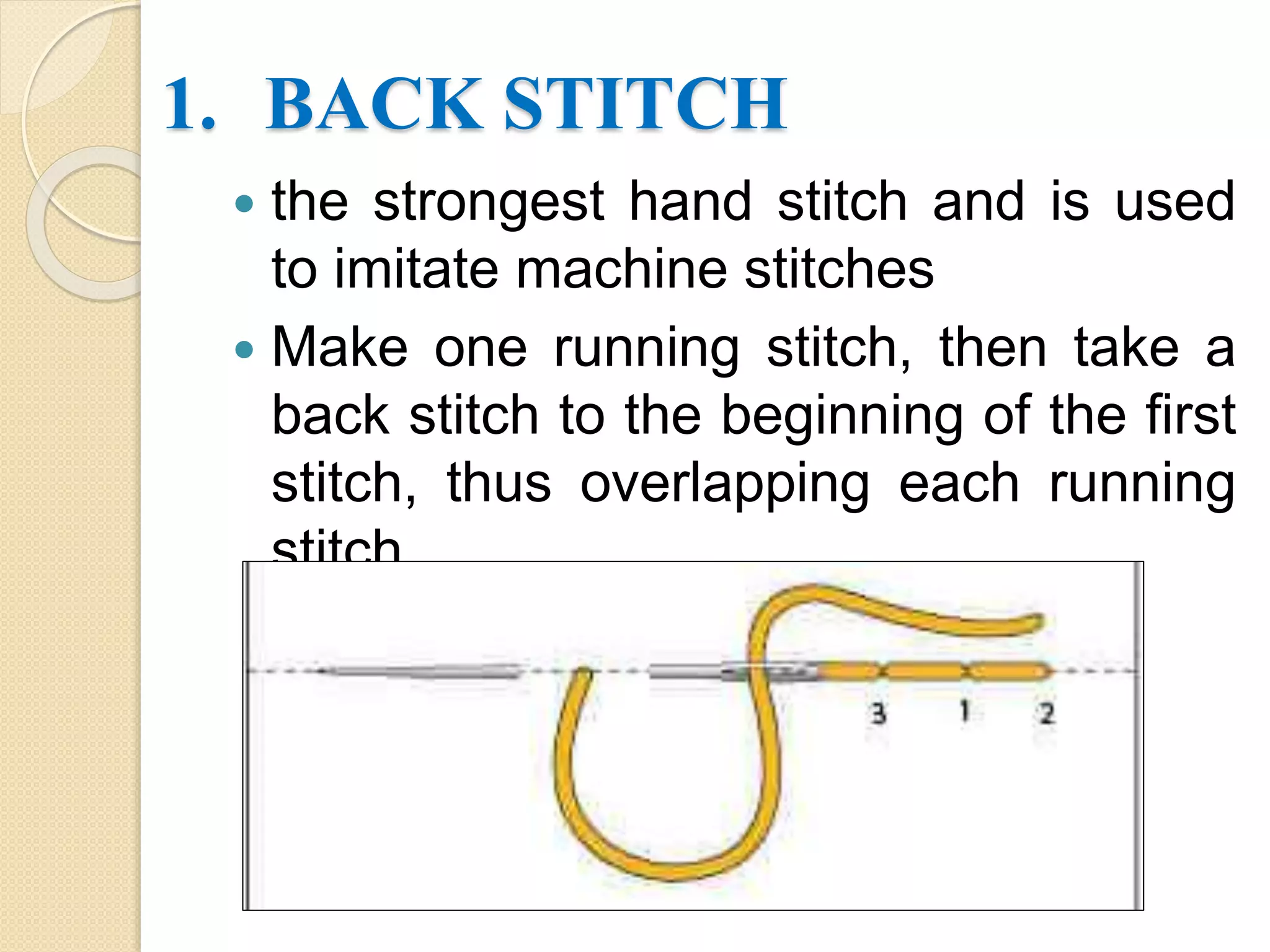
1. BACK STITCH
 the strongest hand stitch and is used
to imitate machine stitches
 Make one running stitch, then take a
back stitch to the beginning of the first
stitch, thus overlapping each running
stitch.
2. Basting stitch
 Basting stitch is quite important in
successful sewing. This is used to
hold fabric temporarily in place, until
permanently stitched. There are four
types of basting: hand basting,
machine basting, pin basting, and
basting edges with an iron.
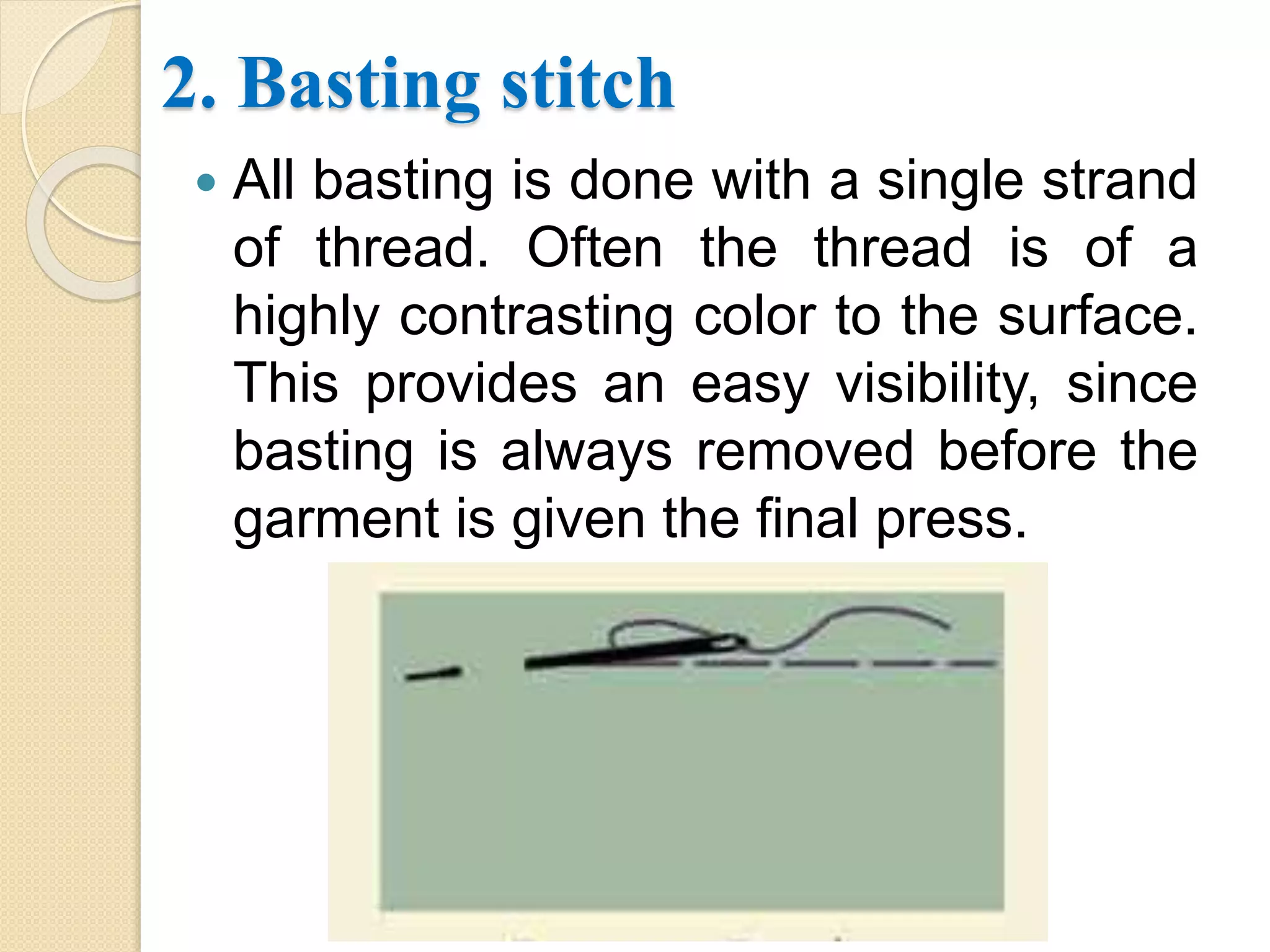
2. Basting stitch
 All basting is done with a single strand
of thread. Often the thread is of a
highly contrasting color to the surface.
This provides an easy visibility, since
basting is always removed before the
garment is given the final press.
3. Running stitch
 a simple needlework stitch consisting
of a line of small even stitches that run
in and out through the cloth without
overlapping.
 To make this stitch, push point of
needle in and out of the fabric until
you have several stitches on the
needle. Hold the fabric taut with left
hand, pull the needle through. Practice
until you make fine stitches.
3. Running stitch
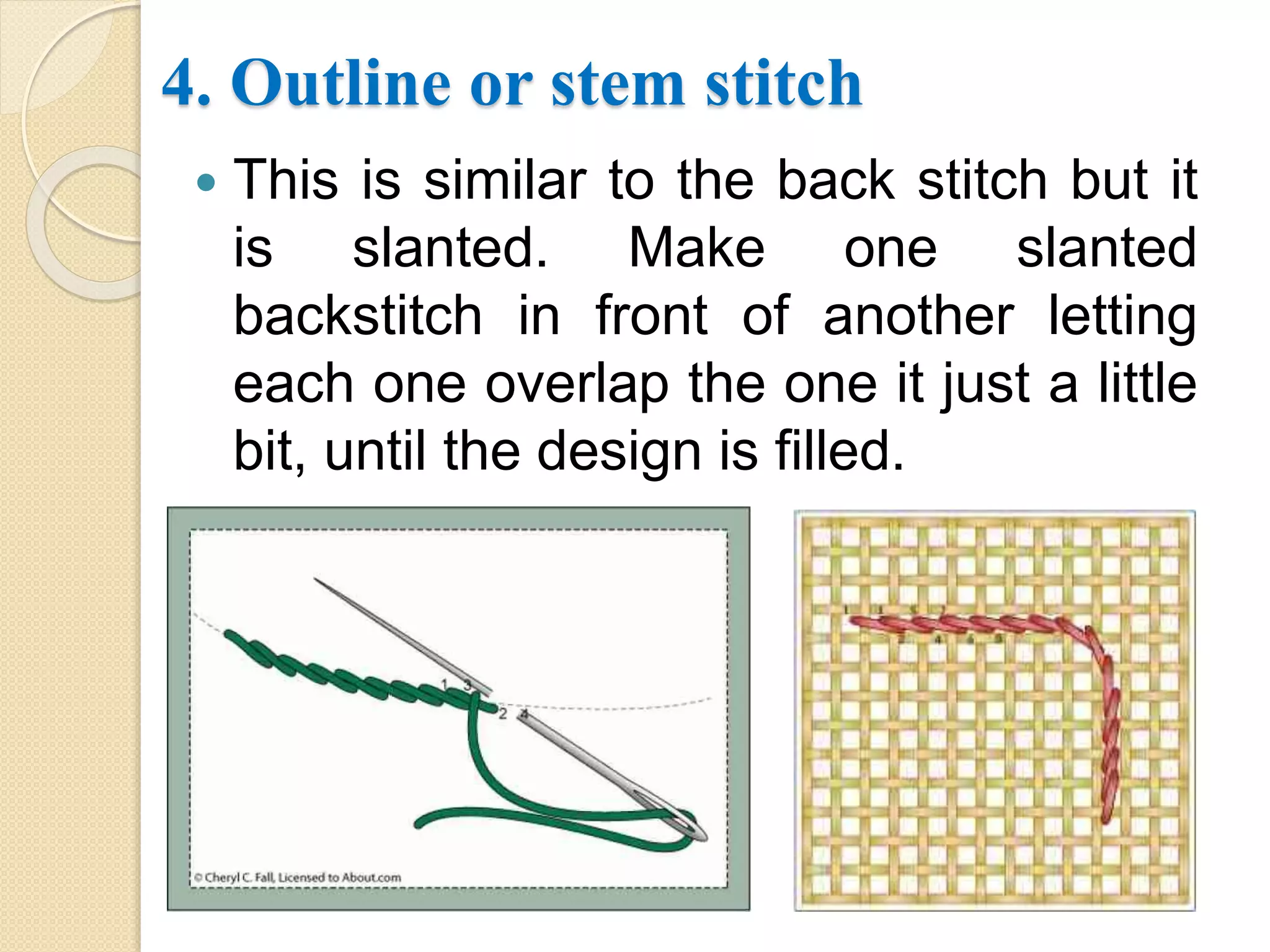
4. Outline or stem stitch
 This is similar to the back stitch but it
is slanted. Make one slanted
backstitch in front of another letting
each one overlap the one it just a little
bit, until the design is filled.
5. Blanket stitch
 a buttonhole stitch used on the edges
of a blanket or other material too thick
to be hemmed.
6. Catch stitch
 Also called herringbone stitch.
 This is used for a flat finish next to fabric,
such as seam binding on a hem. Hold
open hem edge away from you, work
from left to right. Take a stitch in the
hem, then a tiny stitch to the right just
beyond edge of hem with the point of
needle to the left. This makes diagonal
lined that cross each other.
7. Chain stitch
 an ornamental stitch in which loops
are crocheted or embroidered in a
chain.
 Insert the needle in and out of the
fabric (as in running stitch). Bring the
thread under the tip of the needle
while still in the fabric, then pull the
thread through,
Group Activity
Sew the following basic hand stitches
on a scrap of fabric:
1. Back stitch
2. Basting stitch
3. Running stitch
4. Outline stitch
5. Blanket stitch
6. Catch stitch
7. Chain stitch
Group Activity
Rubrics for Rating
Items to be
Evaluated
Points Rating
1. Back Stitch Wow (5 pts)
- Hand sewing is done correctly. Stitches are correct
length and width apart. Closure is invisible.
2. Basting Stitch
3. Running
Stitch
Almost There (4 pts)
- Hand sewing is done correctly. Stitches are correct
length and width apart. Closure is invisible.
4. Outline Stitch
5. Blanket Stitch On the Way (3 pts)
- Hand sewing is done correctly. Stitches are correct
length and width apart. Closure is invisible.
6. Catch Stitch
7. Chain Stitch Needs Improvement (2 pts)
- Hand sewing is done correctly. Stitches are correct
length and width apart. Closure is invisible.
EVALUATION
Identify the following basic hand stitches.
Write your answer in your answer sheet.
1.
4.
2.
3.
EVALUATION
Identify the following basic hand stitches.
Write your answer in your answer sheet.
5..
7- 10. What are the four types of basting
stitch?
6.
Prepare
d by:

Basic Hand Stitches

  • 1.
    GRADE 8 K12DRESSMAKING/ TAILORING
  • 2.
    REMINDERS 1. Choose aneedle appropriate to the thread, fabric, and type of hand sewing stitch being used. 2. Use a single thread, no longer than 24 inches. 3. Wear a thimble to prevent your finger from pricking. 4. Keep the stitches loose to avoid puckering. 5. Begin and end hand sewing tools with a tailor’s knot. 6. Use a pair of scissors when cutting the
  • 3.
    TOOLS & MATERIALS Needl e Pin cushion  Fabric  Thimble  Thread
  • 4.
    Word to Study -aloop of thread or yarn resulting from a single pass or movement of the needle in sewing, knitting, or crocheting. Seam (Stitch)
  • 5.
    Hand Sewing  Isstitching fabric together permanently by hand Basic Hand Sewing Stitches 1. Back Stitch 2. Basting Stitch 3. Running Stitch 4. Outline Stitch 5. Blanket Stitch 6. Catch Stitch 7. Chain Stitch
  • 6.
    1. BACK STITCH the strongest hand stitch and is used to imitate machine stitches  Make one running stitch, then take a back stitch to the beginning of the first stitch, thus overlapping each running stitch.
  • 7.
    2. Basting stitch Basting stitch is quite important in successful sewing. This is used to hold fabric temporarily in place, until permanently stitched. There are four types of basting: hand basting, machine basting, pin basting, and basting edges with an iron.
  • 8.
    2. Basting stitch All basting is done with a single strand of thread. Often the thread is of a highly contrasting color to the surface. This provides an easy visibility, since basting is always removed before the garment is given the final press.
  • 9.
    3. Running stitch a simple needlework stitch consisting of a line of small even stitches that run in and out through the cloth without overlapping.  To make this stitch, push point of needle in and out of the fabric until you have several stitches on the needle. Hold the fabric taut with left hand, pull the needle through. Practice until you make fine stitches.
  • 10.
  • 11.
    4. Outline orstem stitch  This is similar to the back stitch but it is slanted. Make one slanted backstitch in front of another letting each one overlap the one it just a little bit, until the design is filled.
  • 12.
    5. Blanket stitch a buttonhole stitch used on the edges of a blanket or other material too thick to be hemmed.
  • 13.
    6. Catch stitch Also called herringbone stitch.  This is used for a flat finish next to fabric, such as seam binding on a hem. Hold open hem edge away from you, work from left to right. Take a stitch in the hem, then a tiny stitch to the right just beyond edge of hem with the point of needle to the left. This makes diagonal lined that cross each other.
  • 14.
    7. Chain stitch an ornamental stitch in which loops are crocheted or embroidered in a chain.  Insert the needle in and out of the fabric (as in running stitch). Bring the thread under the tip of the needle while still in the fabric, then pull the thread through,
  • 15.
    Group Activity Sew thefollowing basic hand stitches on a scrap of fabric: 1. Back stitch 2. Basting stitch 3. Running stitch 4. Outline stitch 5. Blanket stitch 6. Catch stitch 7. Chain stitch
  • 16.
    Group Activity Rubrics forRating Items to be Evaluated Points Rating 1. Back Stitch Wow (5 pts) - Hand sewing is done correctly. Stitches are correct length and width apart. Closure is invisible. 2. Basting Stitch 3. Running Stitch Almost There (4 pts) - Hand sewing is done correctly. Stitches are correct length and width apart. Closure is invisible. 4. Outline Stitch 5. Blanket Stitch On the Way (3 pts) - Hand sewing is done correctly. Stitches are correct length and width apart. Closure is invisible. 6. Catch Stitch 7. Chain Stitch Needs Improvement (2 pts) - Hand sewing is done correctly. Stitches are correct length and width apart. Closure is invisible.
  • 17.
    EVALUATION Identify the followingbasic hand stitches. Write your answer in your answer sheet. 1. 4. 2. 3.
  • 18.
    EVALUATION Identify the followingbasic hand stitches. Write your answer in your answer sheet. 5.. 7- 10. What are the four types of basting stitch? 6.
  • 19.