PIE 3 Module 3
School as an
Agent of
Change
TIMELINE OF EDUCATION
PRIMITIVE TIME
PRE-HISTORIC (about 4
Million Years ago)
– Proponent and Concept:
– Primitive Man- education of conformity
– Method:
– Demonstration, imitation, trial and error
Ancient Civilization
(About 15,000 B.C.)
– Proponent and Concept:
– Egyptian- Preservation of social stability
– Chinese/Hindu- Religious, domestic life
– Hebrew-Moral training
– Greek- Development of individuality
– Romans- Utilitarianism
– Humanitarianism- Ministry of Jesus Christ
– Moral Regeneration- Early Christian
Ancient Civilization
Teaching-Learning Methodology
– Egyptian- Indoctrination, apprenticeship
– Chinese/Hindu- Confucian, outdoor teaching
– Hebrew- Memorization, exposition, disputation
– Greek- Socratic method, training, rivalry
– Romans- Drill and writing, public speaking
– Humanitarianism- Parables, proverbs, modeling
– Moral Regeneration- Impromptu, exposition, preaching
Medieval Period
(350 A.D. – 1300 A.D.)
Proponent and Concept
Monasticism – spiritual discipline
Scholasticism- intellectual discipline
Chivalric- social discipline
Feudalism- socio-economic political
Guild System- merchant & craft-commerce
Saracens- Islamism, science, practical purpose
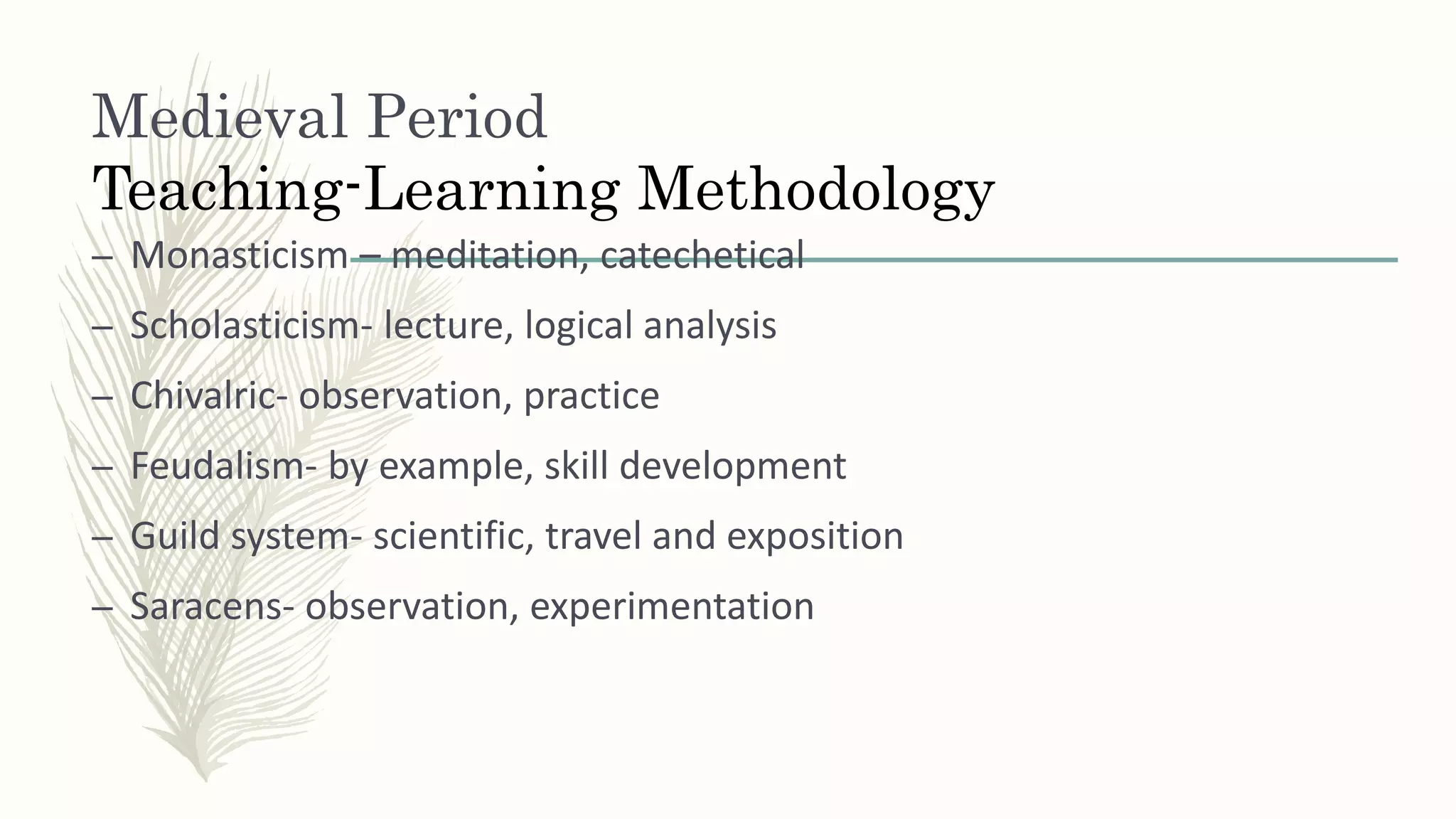
Medieval Period
Teaching-Learning Methodology
– Monasticism – meditation, catechetical
– Scholasticism- lecture, logical analysis
– Chivalric- observation, practice
– Feudalism- by example, skill development
– Guild system- scientific, travel and exposition
– Saracens- observation, experimentation
Renaissance Period
(1400 A.D.- 1800 A.D.)
Proponent and Concept
– Humanistic- abundant living
– Religious conception- moralism of Christians
– Reformation- Protestantism, elegant expression
– Catholic counter-reformation, complete obedience
– Realism- sense or scientific
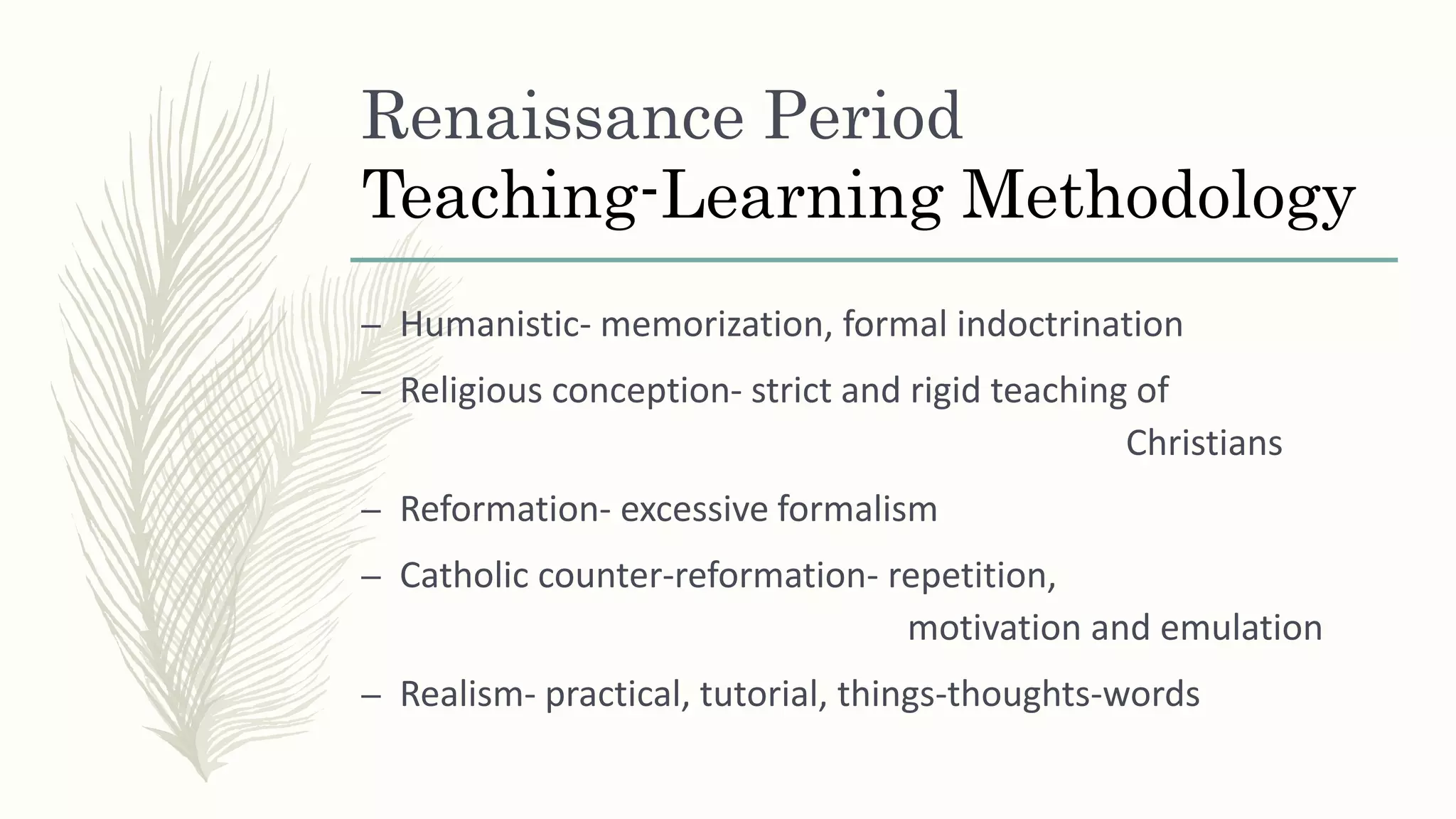
Renaissance Period
Teaching-Learning Methodology
– Humanistic- memorization, formal indoctrination
– Religious conception- strict and rigid teaching of
Christians
– Reformation- excessive formalism
– Catholic counter-reformation- repetition,
motivation and emulation
– Realism- practical, tutorial, things-thoughts-words
Renaissance to 21st Century
(1900A.D. – 2100 A.D.
Proponent and Concept– Disciplinary- formal discipline
– Naturalistic- harmony with nature
– Nationalistic- patriotic citizenship
– Psychological- psychological development
– Scientific- determined process
– Communism- classless society
– Democratic- general, universal
– Globalism- internationalization
Renaissance to 21st Century
Teaching-Learning Methodology
– Disciplinary-emphasis on the process not the
things
– Naturalistic- natural goodness, virtue, democratic
– Nationalistic- ideological, values education
– Psychological- methodologies based on
psychological principles
– Scientific- research-based, flexible
– Communism- cadre or special training
– Democratic- child/learner-centered, progressive
– Globalism- high technology, automation, inter-active

_Timeline-of-Education

  • 1.
    PIE 3 Module3 School as an Agent of Change TIMELINE OF EDUCATION
  • 2.
    PRIMITIVE TIME PRE-HISTORIC (about4 Million Years ago) – Proponent and Concept: – Primitive Man- education of conformity – Method: – Demonstration, imitation, trial and error
  • 3.
    Ancient Civilization (About 15,000B.C.) – Proponent and Concept: – Egyptian- Preservation of social stability – Chinese/Hindu- Religious, domestic life – Hebrew-Moral training – Greek- Development of individuality – Romans- Utilitarianism – Humanitarianism- Ministry of Jesus Christ – Moral Regeneration- Early Christian
  • 4.
    Ancient Civilization Teaching-Learning Methodology –Egyptian- Indoctrination, apprenticeship – Chinese/Hindu- Confucian, outdoor teaching – Hebrew- Memorization, exposition, disputation – Greek- Socratic method, training, rivalry – Romans- Drill and writing, public speaking – Humanitarianism- Parables, proverbs, modeling – Moral Regeneration- Impromptu, exposition, preaching
  • 5.
    Medieval Period (350 A.D.– 1300 A.D.) Proponent and Concept Monasticism – spiritual discipline Scholasticism- intellectual discipline Chivalric- social discipline Feudalism- socio-economic political Guild System- merchant & craft-commerce Saracens- Islamism, science, practical purpose
  • 6.
    Medieval Period Teaching-Learning Methodology –Monasticism – meditation, catechetical – Scholasticism- lecture, logical analysis – Chivalric- observation, practice – Feudalism- by example, skill development – Guild system- scientific, travel and exposition – Saracens- observation, experimentation
  • 7.
    Renaissance Period (1400 A.D.-1800 A.D.) Proponent and Concept – Humanistic- abundant living – Religious conception- moralism of Christians – Reformation- Protestantism, elegant expression – Catholic counter-reformation, complete obedience – Realism- sense or scientific
  • 8.
    Renaissance Period Teaching-Learning Methodology –Humanistic- memorization, formal indoctrination – Religious conception- strict and rigid teaching of Christians – Reformation- excessive formalism – Catholic counter-reformation- repetition, motivation and emulation – Realism- practical, tutorial, things-thoughts-words
  • 9.
    Renaissance to 21stCentury (1900A.D. – 2100 A.D. Proponent and Concept– Disciplinary- formal discipline – Naturalistic- harmony with nature – Nationalistic- patriotic citizenship – Psychological- psychological development – Scientific- determined process – Communism- classless society – Democratic- general, universal – Globalism- internationalization
  • 10.
    Renaissance to 21stCentury Teaching-Learning Methodology – Disciplinary-emphasis on the process not the things – Naturalistic- natural goodness, virtue, democratic – Nationalistic- ideological, values education – Psychological- methodologies based on psychological principles – Scientific- research-based, flexible – Communism- cadre or special training – Democratic- child/learner-centered, progressive – Globalism- high technology, automation, inter-active