The teaching in medieval times

           Education
In the begin of Middle Ages around 
                450 DC
• The main subjects  were Christian ones, and the 
  Aristotle’s rhetoric was important.
• Aristotle’s rhetoric is the use of language with 
  persuasive effect.
• Saint Augustine: 
  –   taught in the Latin grammar school at Tagaste
  –   opened a school of rhetoric at Carthage
  –   taught rhetoric in Rome
  –   accepted a professorship in rhetoric at Milan
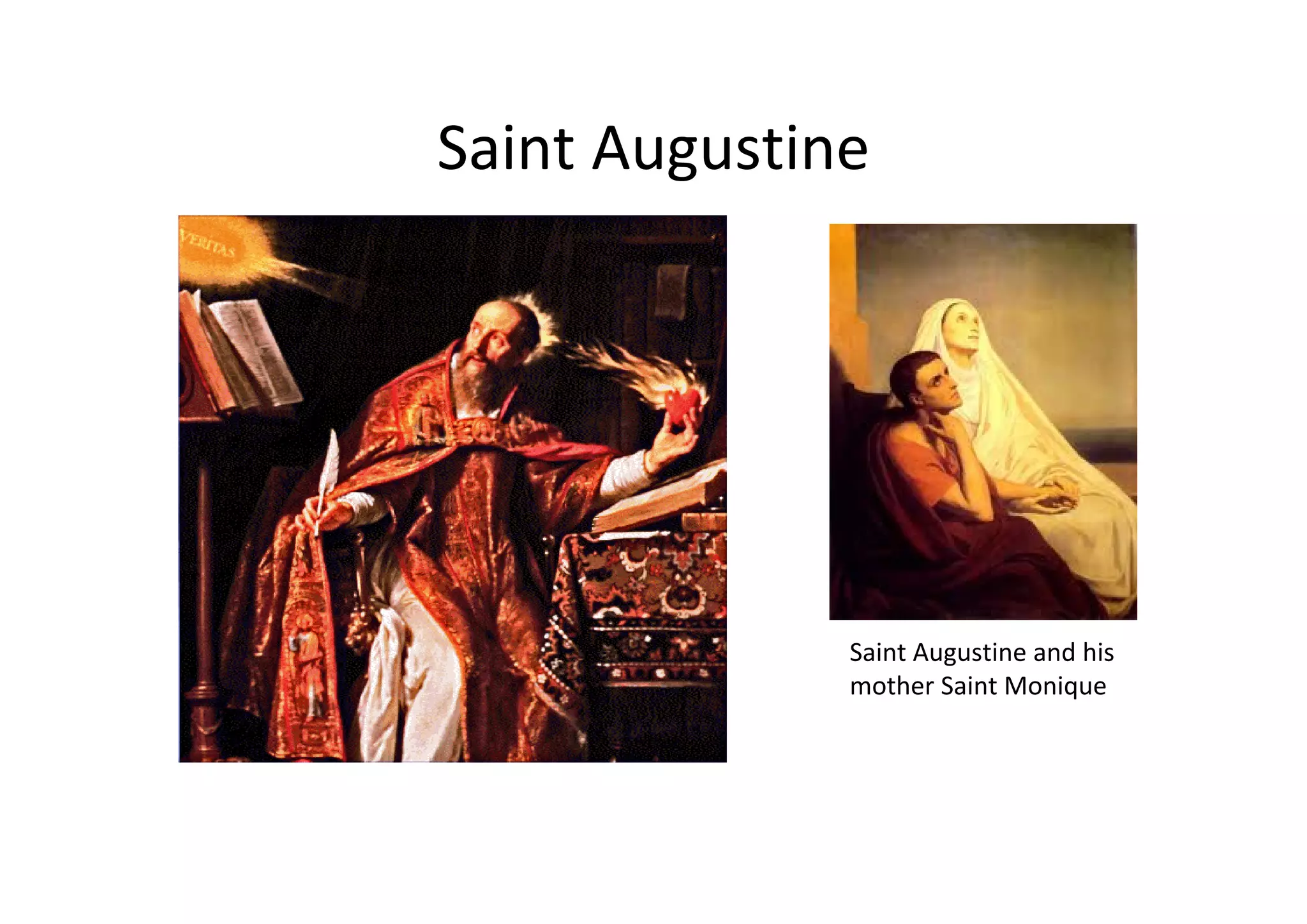
Saint Augustine


              Saint Augustine and his 
              mother Saint Monique
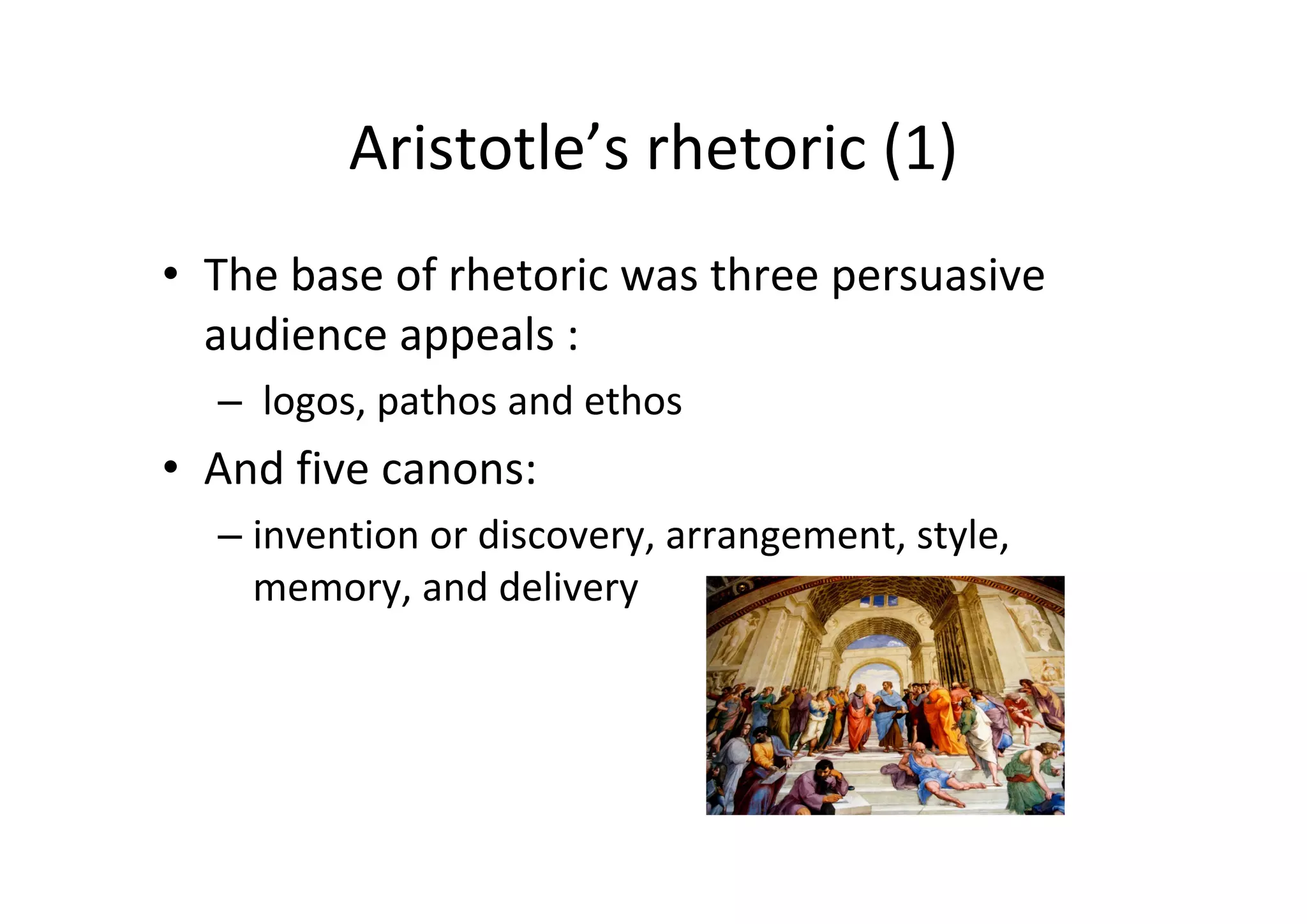
Aristotle’s rhetoric (1)
• The base of rhetoric was three persuasive 
  audience appeals :
  – logos, pathos and ethos
• And five canons:
  – invention or discovery, arrangement, style, 
    memory, and delivery
three persuasive audience appeals
• Logos
   – In the old Greece the word meant word, speech,  
     reason
   – For Aristotle the term to meant reasoned discourse
• Further Jesus saw as the incarnation of the Logos
• Pathos
   – represented an appeal to the audience's emotions
• Ethos
   – involved moral competence only; But Aristotle 
     broadens the concept to include expertise and 
     knowledge
The five canons
• Inventio
   – was the method used for the discovery of arguments
• Dispositio
   – the system were used for the organization of arguments
• Elocutio 
   – the term used for the mastery of stylistic elements concern the 
     crafting and delivery of speeches and writing
   – four ingredients necessary in order to achieve good style included 
     correctness, clearness, appropriateness, and ornament
• Memoria
   – was the same meaning as today
• Pronuntiatio
   – the content, structure, and style of oration .The most important
     elements of oratory enhancing its persuasive power
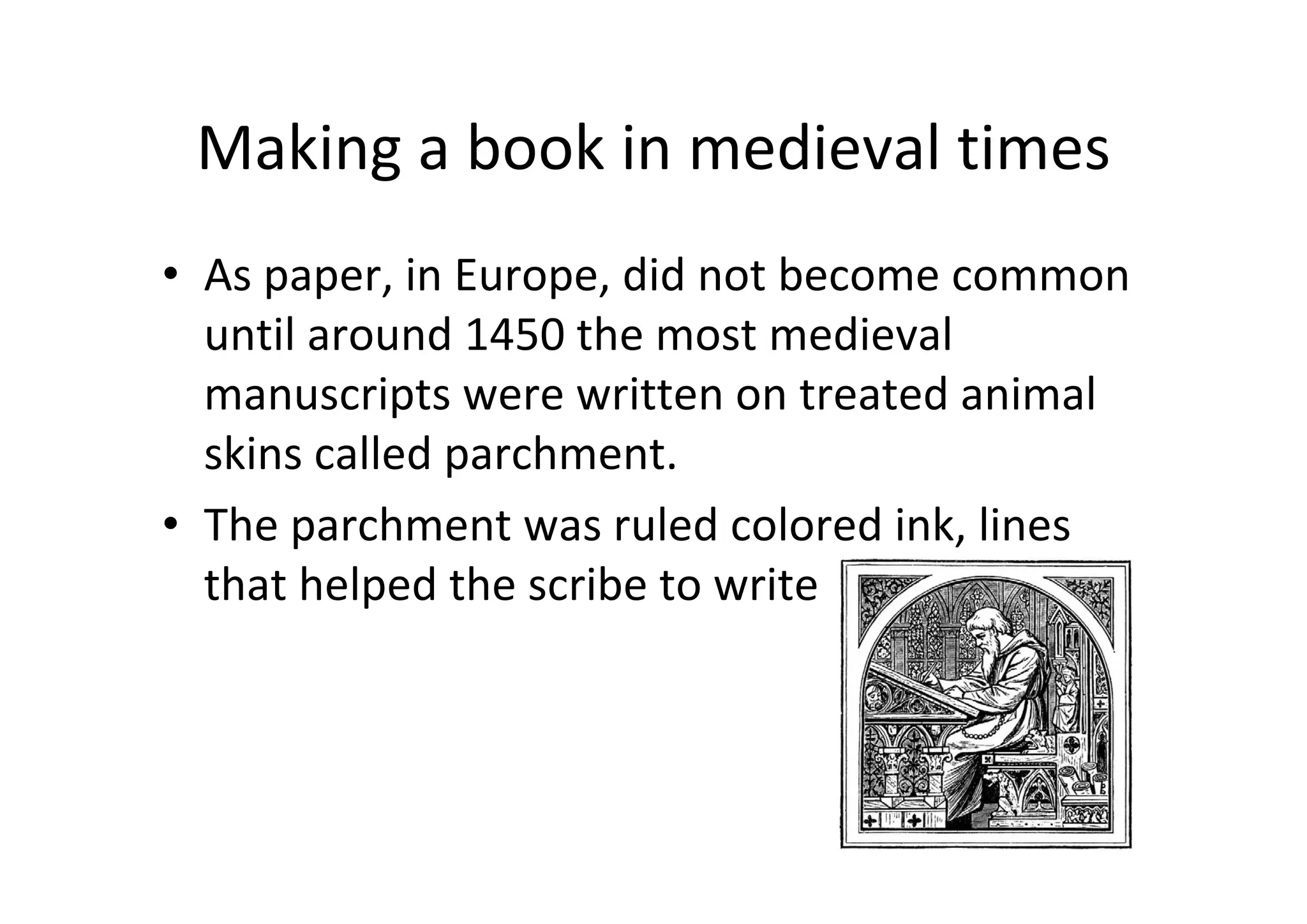
Making a book in medieval times
• As paper, in Europe, did not become common 
  until around 1450 the most medieval 
  manuscripts were written on treated animal 
  skins called parchment.
• The parchment was ruled colored ink, lines 
  that helped the scribe to write
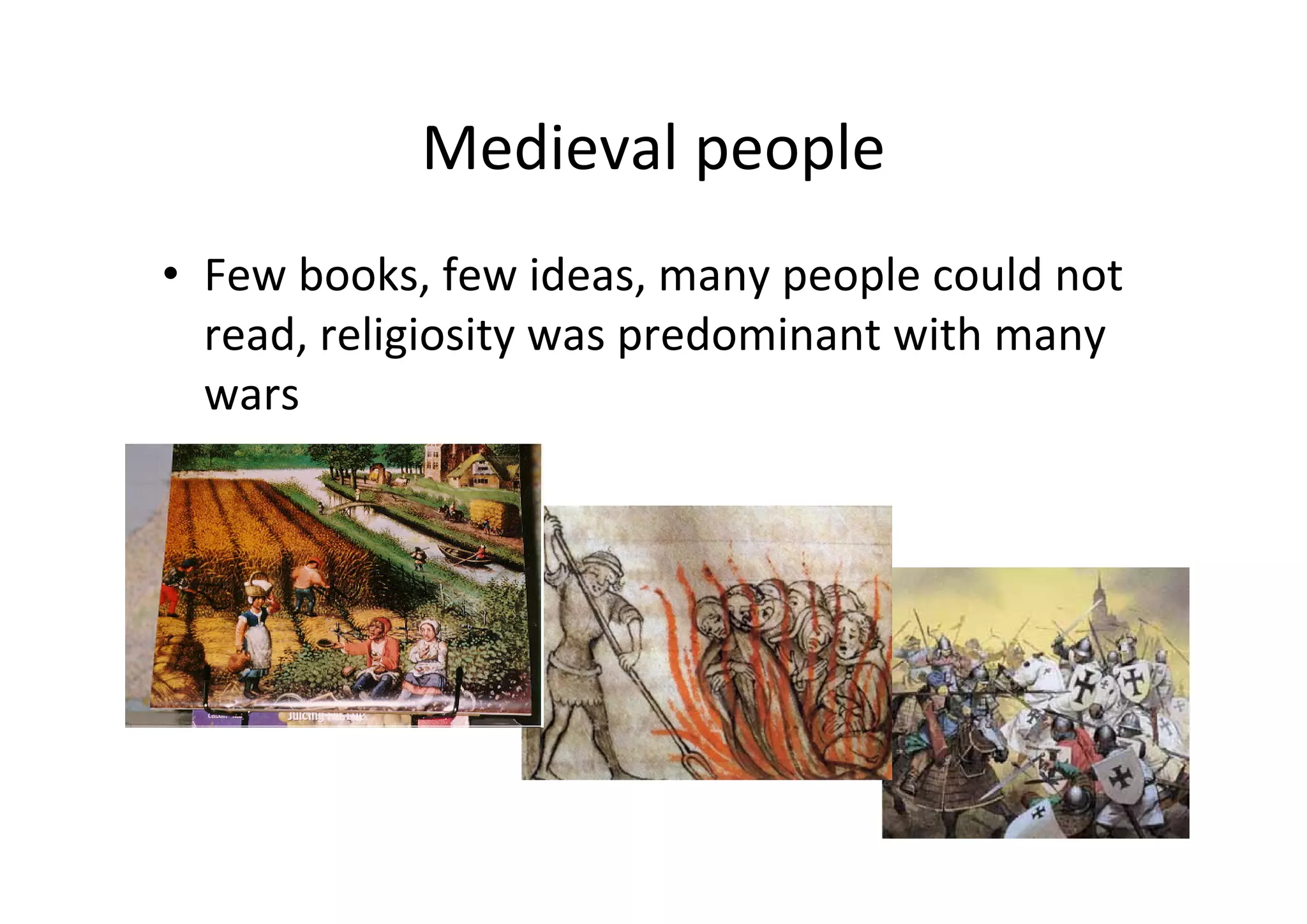
Medieval people
• Few books, few ideas, many people could not 
  read, religiosity was predominant with many 
  wars
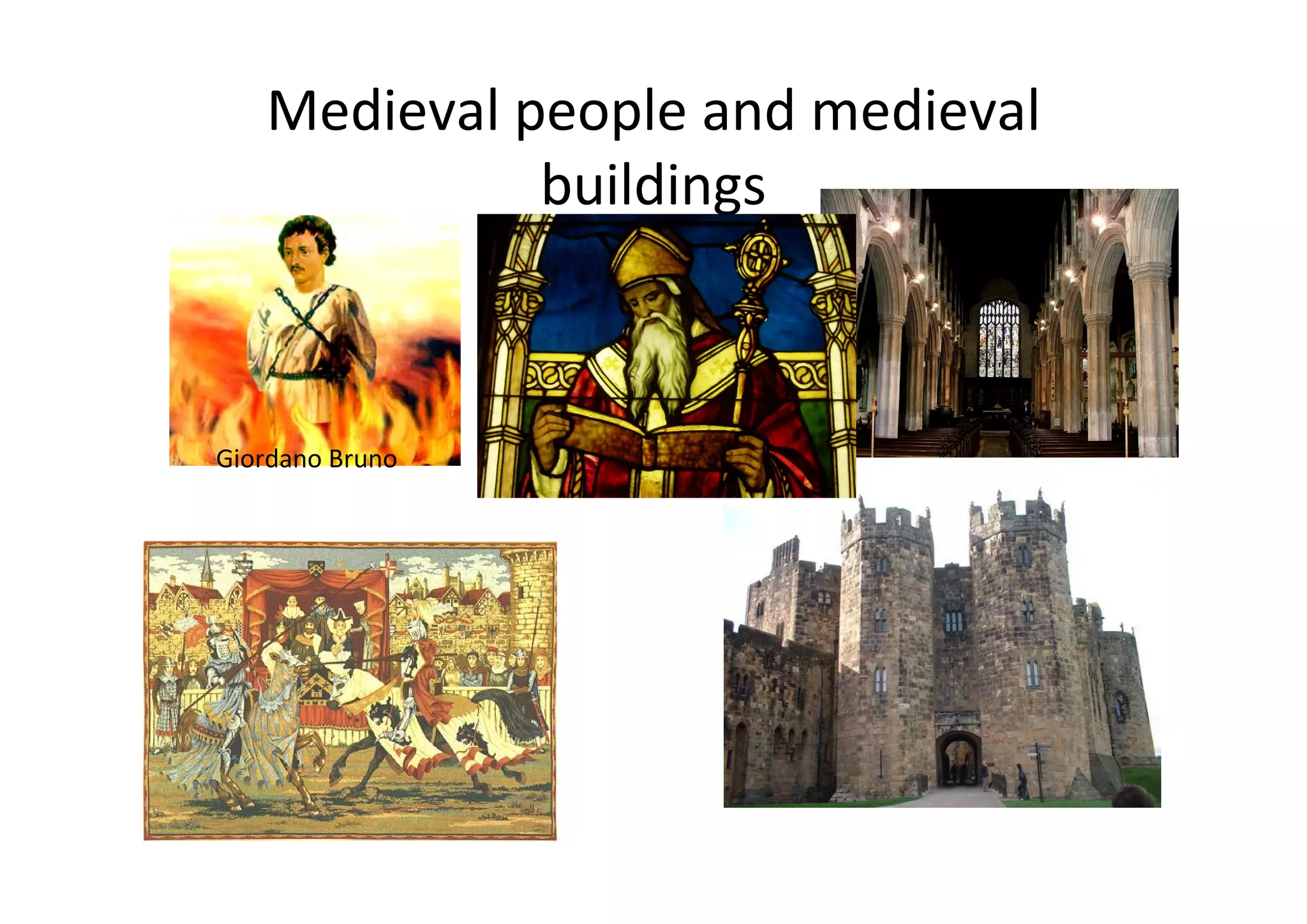
Medieval people and medieval 
             buildings


Giordano Bruno
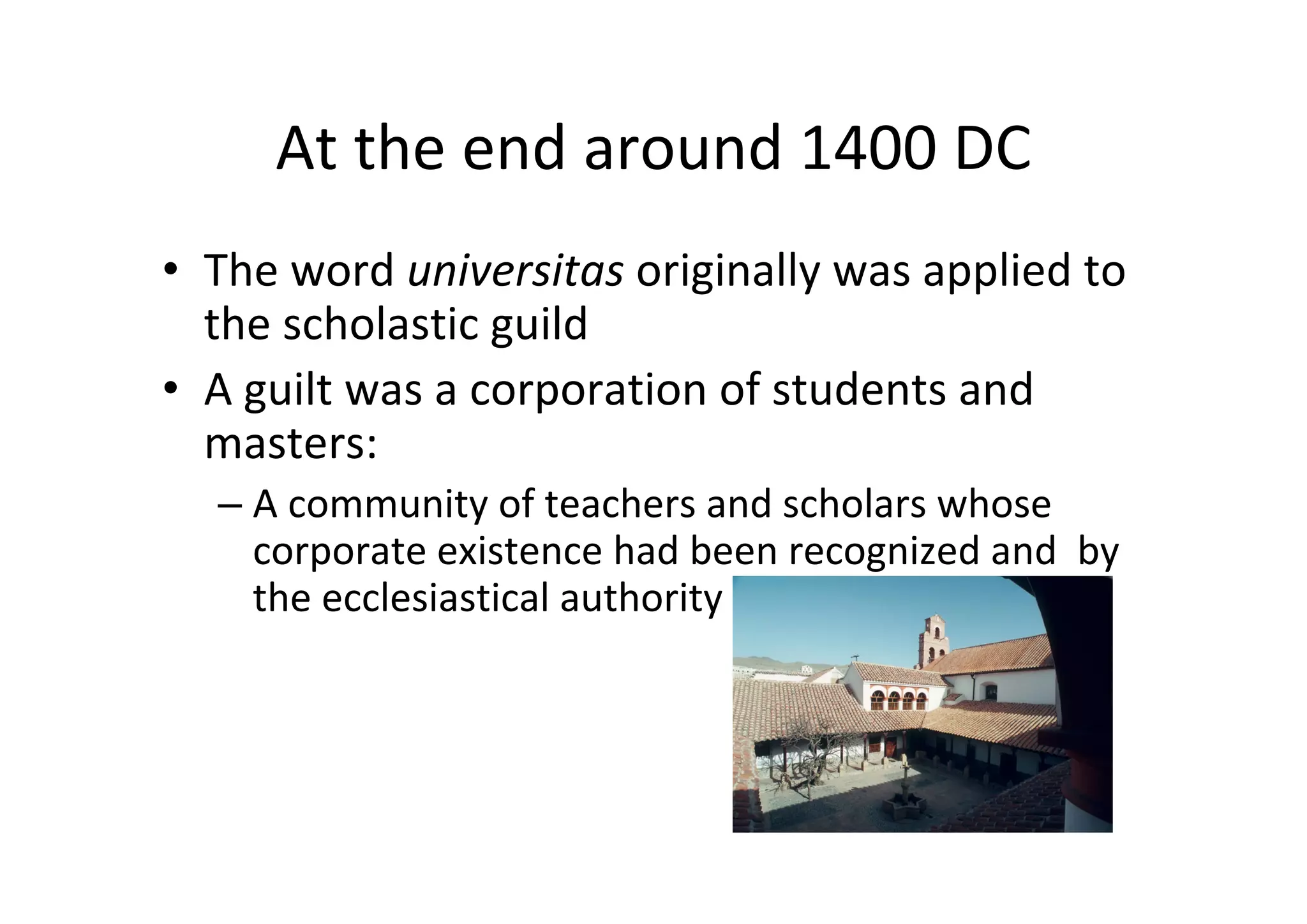
At the end around 1400 DC
• The word universitas originally was applied to 
  the scholastic guild
• A guilt was a corporation of students and 
  masters:
  – A community of teachers and scholars whose 
    corporate existence had been recognized and  by 
    the ecclesiastical authority
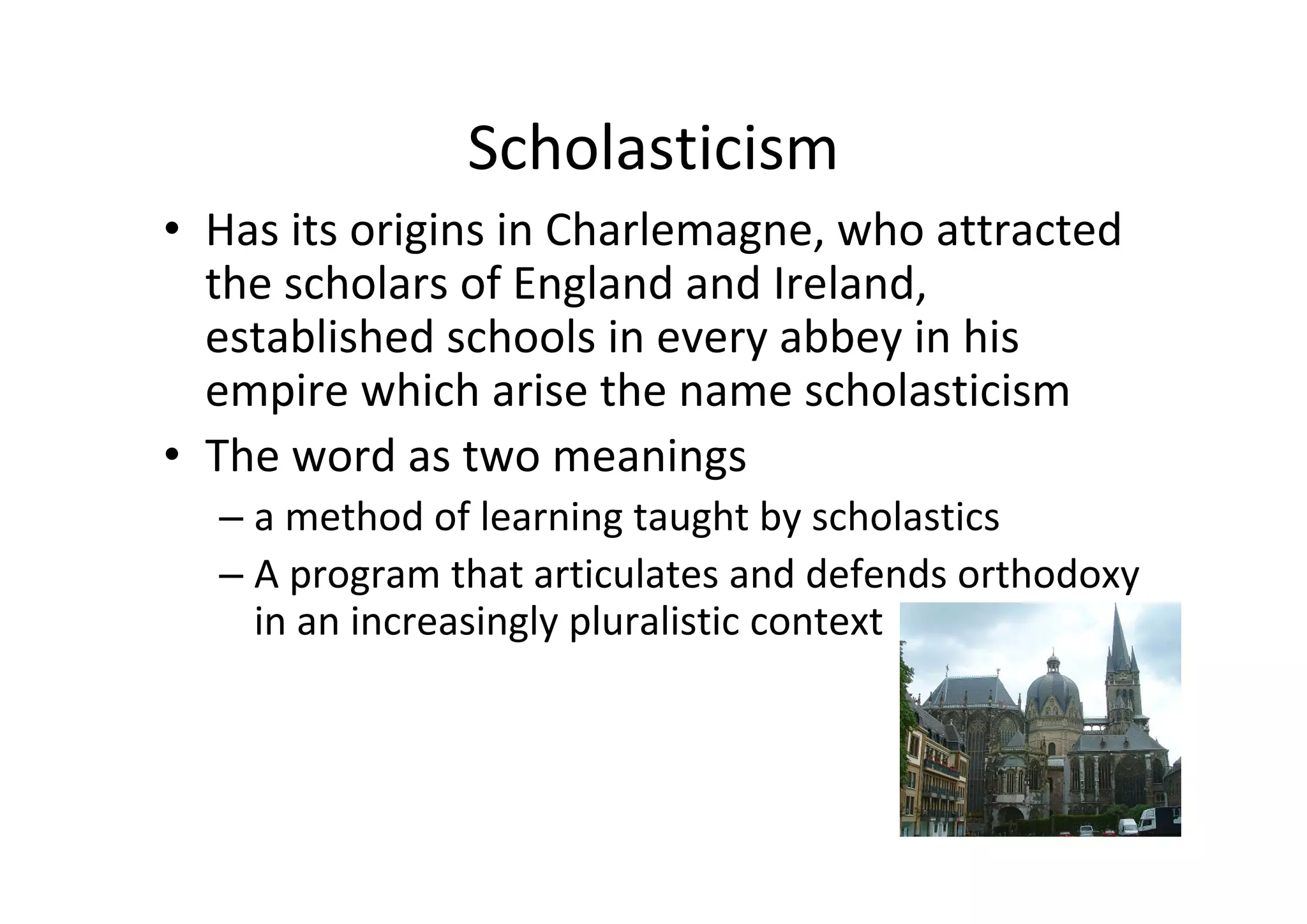
Scholasticism
• Has its origins in Charlemagne, who attracted 
  the scholars of England and Ireland,  
  established schools in every abbey in his 
  empire which arise the name scholasticism
• The word as two meanings
  – a method of learning taught by scholastics
  – A program that articulates and defends orthodoxy 
    in an increasingly pluralistic context
The method of learning
• As a method of learning it has his bases
• Dialectic:
   – a dialogue between two or more people who may hold 
     differing views
   – applying reason the people exchange their viewpoints to 
     seek the truth 
• Inference:
   – achieving a conclusion by deductive reasoning from given 
     facts
• Resolving Contradictions. 
   – a contradiction is a logical incompatibility between two or 
     more propositions
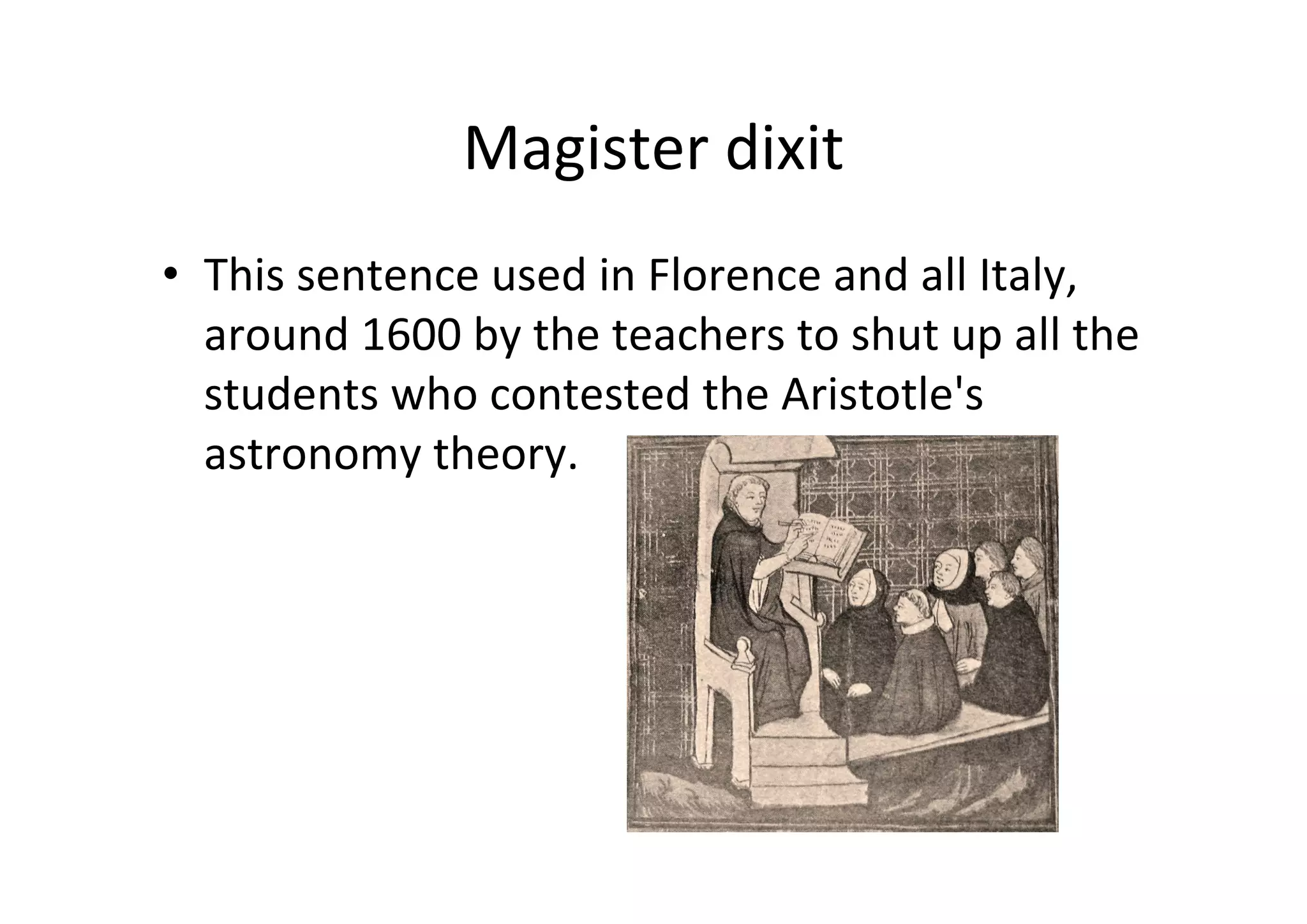
Magister dixit
• This sentence used in Florence and all Italy, 
  around 1600 by the teachers to shut up all the 
  students who contested the Aristotle's 
  astronomy theory.
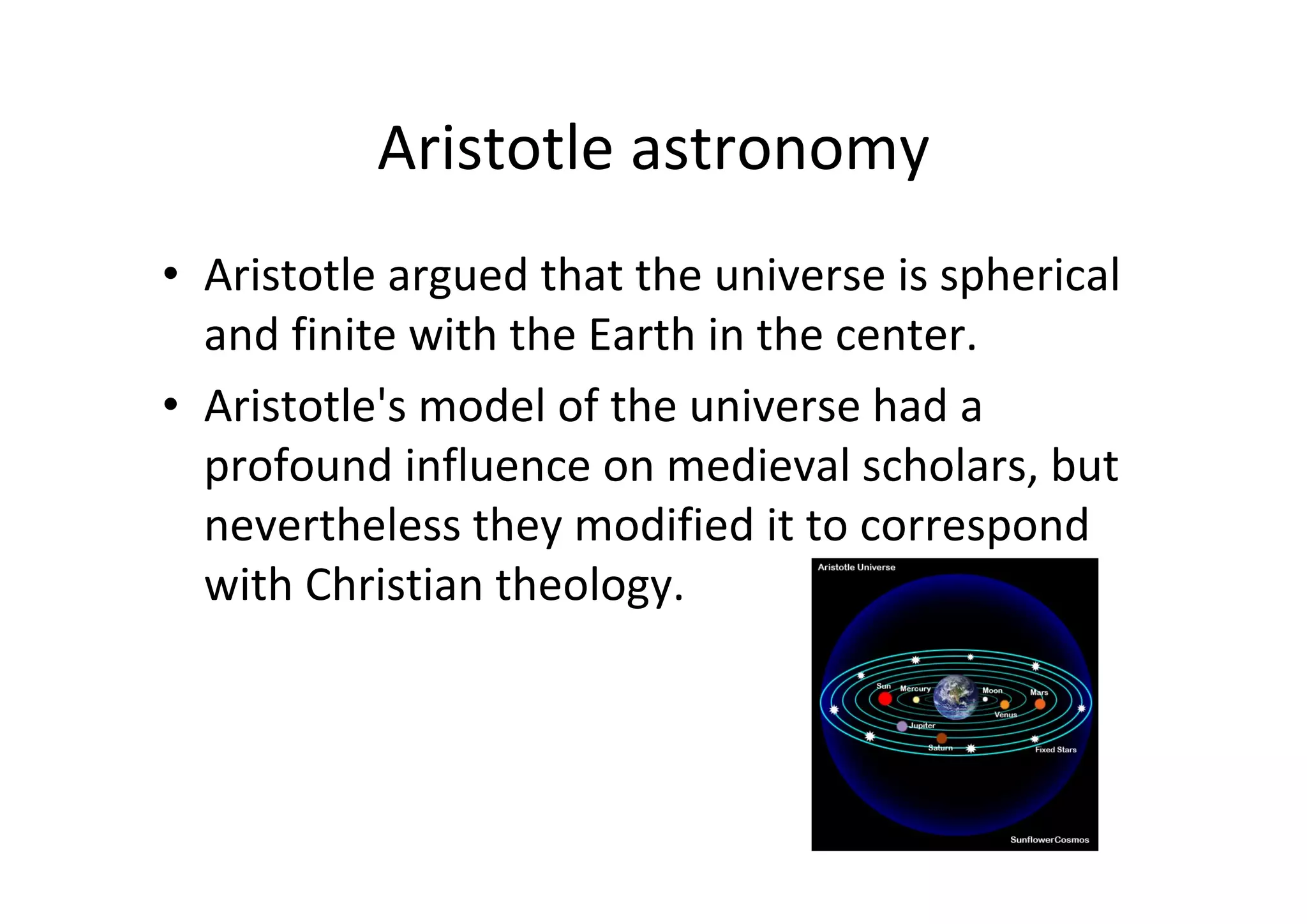
Aristotle astronomy
• Aristotle argued that the universe is spherical 
  and finite with the Earth in the center.
• Aristotle's model of the universe had a 
  profound influence on medieval scholars, but 
  nevertheless they modified it to correspond 
  with Christian theology. 
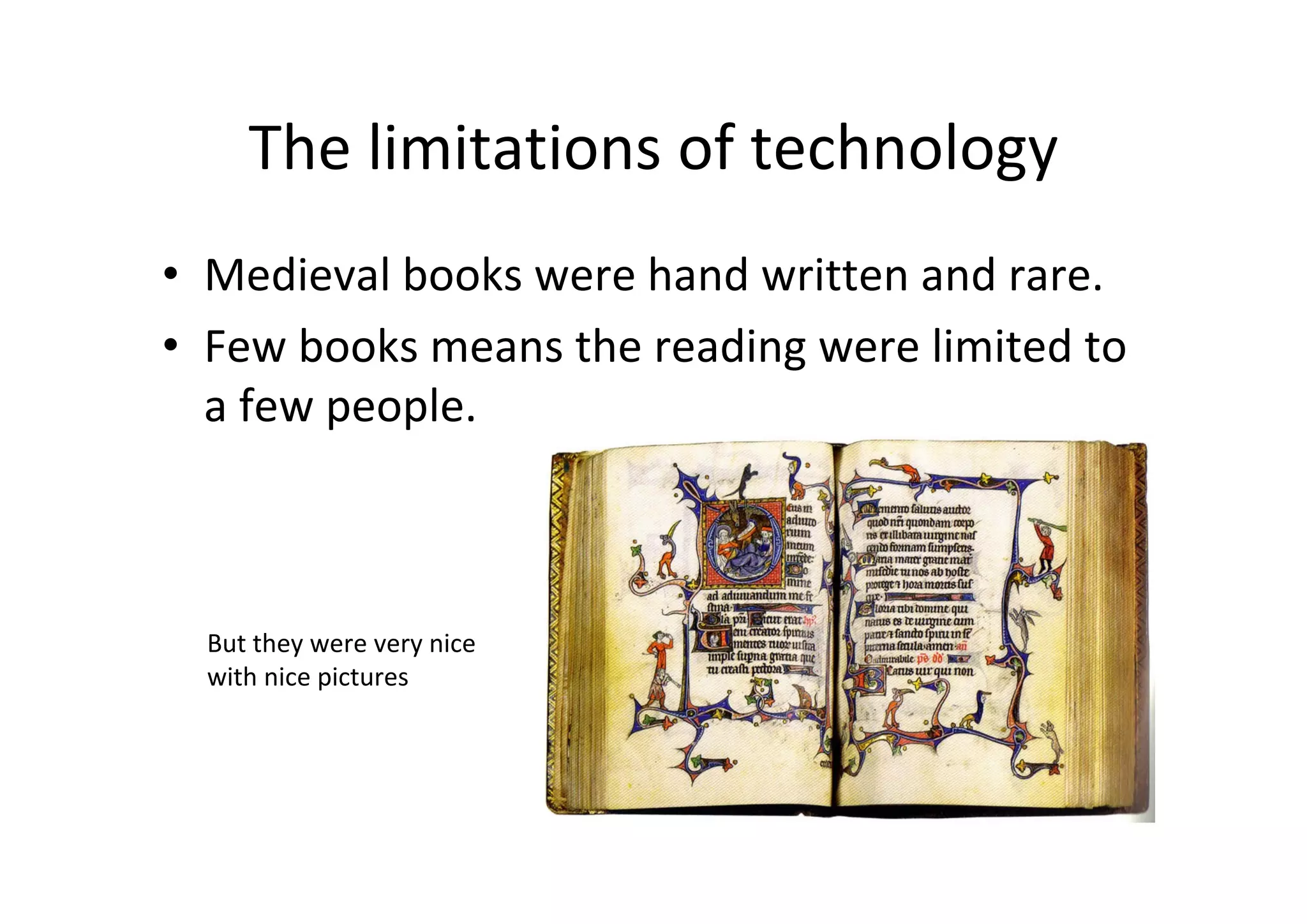
The limitations of technology
• Medieval books were hand written and rare.
• Few books means the reading were limited to 
  a few people.


  But they were very nice 
  with nice pictures
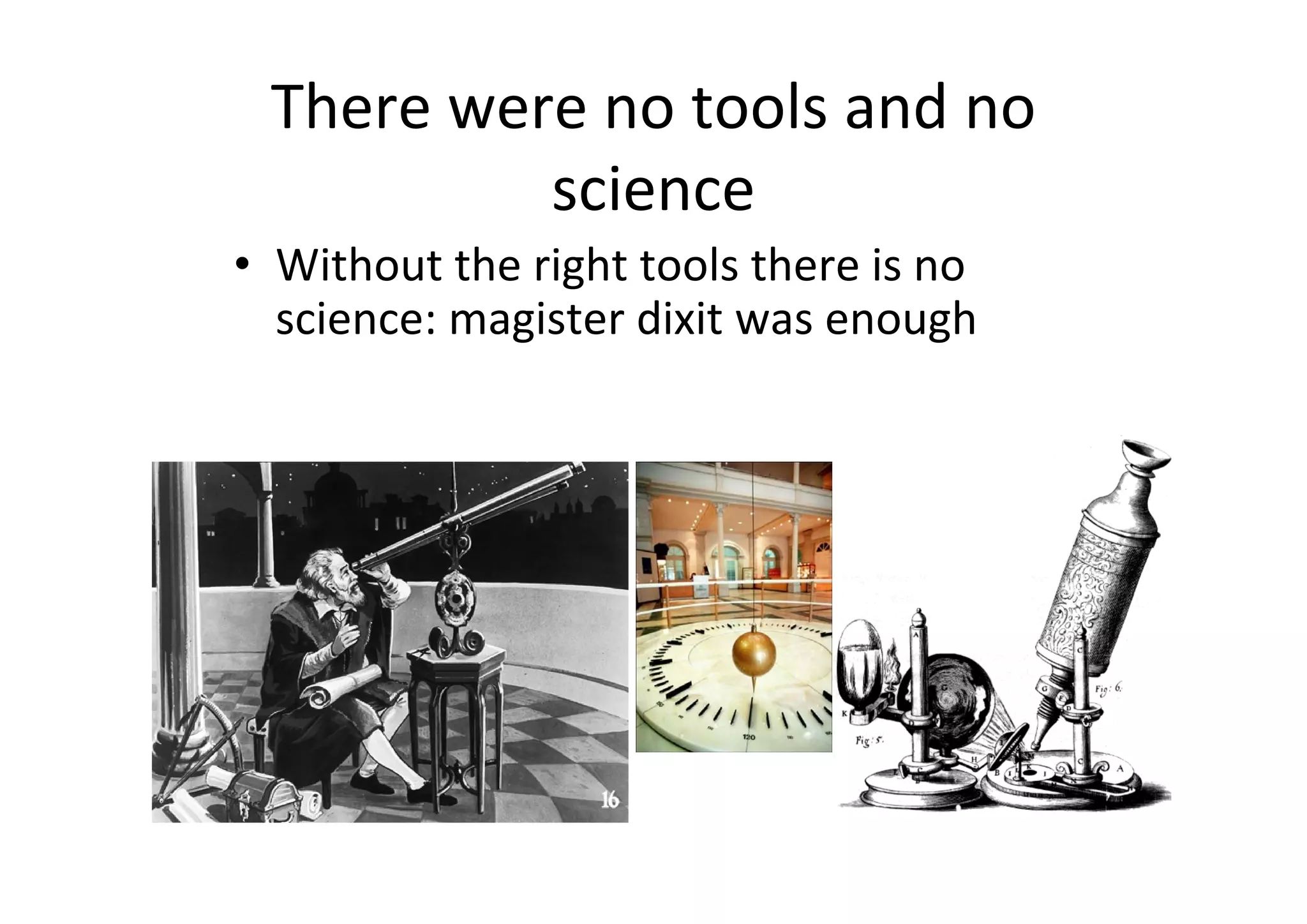
There were no tools and no 
          science
• Without the right tools there is no 
  science: magister dixit was enough
Bibliografia
•   http://www.cals.ncsu.edu/agexed/aee501/augustine.html
•   http://en.wikipedia.org/wiki/Contradictions
•   http://en.wikipedia.org/wiki/Dialectical_reasoning
•   http://en.wikipedia.org/wiki/Dispositio
•   http://en.wikipedia.org/wiki/Elocutio
•   http://en.wikipedia.org/wiki/Ethos
•   http://en.wikipedia.org/wiki/Inference
•   http://en.wikipedia.org/wiki/Inventio
•   http://en.wikipedia.org/wiki/Logos
•   http://en.wikipedia.org/wiki/Memoria
•   http://en.wikipedia.org/wiki/Medieval_university
•   http://en.wikipedia.org/wiki/Pathos
•   http://en.wikipedia.org/wiki/Pronuntiatio
•   http://en.wikipedia.org/wiki/Rhetoric
•   http://en.wikipedia.org/wiki/Scholasticism
•   http://www.getty.edu/art/exhibitions/making/
•   http://perseus.mpiwg‐berlin.mpg.de/GreekScience/Students/Tom/AristotleAstro.html
•   http://pt.wikipedia.org/wiki/Magister_dixit

Teaching in medieval times

  • 1.
  • 2.
    In the begin of Middle Ages around  450 DC • The main subjects  were Christian ones, and the  Aristotle’s rhetoric was important. • Aristotle’s rhetoric is the use of language with  persuasive effect. • Saint Augustine:  – taught in the Latin grammar school at Tagaste – opened a school of rhetoric at Carthage – taught rhetoric in Rome – accepted a professorship in rhetoric at Milan
  • 3.
    Saint Augustine Saint Augustine and his  mother Saint Monique
  • 4.
    Aristotle’s rhetoric (1) • The base of rhetoric was three persuasive  audience appeals : – logos, pathos and ethos • And five canons: – invention or discovery, arrangement, style,  memory, and delivery
  • 5.
    three persuasive audience appeals • Logos – In the old Greece the word meant word, speech,   reason – For Aristotle the term to meant reasoned discourse • Further Jesus saw as the incarnation of the Logos • Pathos – represented an appeal to the audience's emotions • Ethos – involved moral competence only; But Aristotle  broadens the concept to include expertise and  knowledge
  • 6.
    The five canons • Inventio – was the method used for the discovery of arguments • Dispositio – the system were used for the organization of arguments • Elocutio  – the term used for the mastery of stylistic elements concern the  crafting and delivery of speeches and writing – four ingredients necessary in order to achieve good style included  correctness, clearness, appropriateness, and ornament • Memoria – was the same meaning as today • Pronuntiatio – the content, structure, and style of oration .The most important elements of oratory enhancing its persuasive power
  • 7.
    Making a book in medieval times • As paper, in Europe, did not become common  until around 1450 the most medieval  manuscripts were written on treated animal  skins called parchment. • The parchment was ruled colored ink, lines  that helped the scribe to write
  • 8.
    Medieval people • Few books, few ideas, many people could not  read, religiosity was predominant with many  wars
  • 9.
    Medieval people and medieval  buildings Giordano Bruno
  • 10.
    At the end around 1400 DC • The word universitas originally was applied to  the scholastic guild • A guilt was a corporation of students and  masters: – A community of teachers and scholars whose  corporate existence had been recognized and  by  the ecclesiastical authority
  • 11.
    Scholasticism • Has its origins in Charlemagne, who attracted  the scholars of England and Ireland,   established schools in every abbey in his  empire which arise the name scholasticism • The word as two meanings – a method of learning taught by scholastics – A program that articulates and defends orthodoxy  in an increasingly pluralistic context
  • 12.
    The method of learning • As a method of learning it has his bases • Dialectic: – a dialogue between two or more people who may hold  differing views – applying reason the people exchange their viewpoints to  seek the truth  • Inference: – achieving a conclusion by deductive reasoning from given  facts • Resolving Contradictions.  – a contradiction is a logical incompatibility between two or  more propositions
  • 13.
    Magister dixit • This sentence used in Florence and all Italy,  around 1600 by the teachers to shut up all the  students who contested the Aristotle's  astronomy theory.
  • 14.
    Aristotle astronomy • Aristotle argued that the universe is spherical  and finite with the Earth in the center. • Aristotle's model of the universe had a  profound influence on medieval scholars, but  nevertheless they modified it to correspond  with Christian theology. 
  • 15.
  • 16.
    There were no tools and no  science • Without the right tools there is no  science: magister dixit was enough
  • 17.
    Bibliografia • http://www.cals.ncsu.edu/agexed/aee501/augustine.html • http://en.wikipedia.org/wiki/Contradictions • http://en.wikipedia.org/wiki/Dialectical_reasoning • http://en.wikipedia.org/wiki/Dispositio • http://en.wikipedia.org/wiki/Elocutio • http://en.wikipedia.org/wiki/Ethos • http://en.wikipedia.org/wiki/Inference • http://en.wikipedia.org/wiki/Inventio • http://en.wikipedia.org/wiki/Logos • http://en.wikipedia.org/wiki/Memoria • http://en.wikipedia.org/wiki/Medieval_university • http://en.wikipedia.org/wiki/Pathos • http://en.wikipedia.org/wiki/Pronuntiatio • http://en.wikipedia.org/wiki/Rhetoric • http://en.wikipedia.org/wiki/Scholasticism • http://www.getty.edu/art/exhibitions/making/ • http://perseus.mpiwg‐berlin.mpg.de/GreekScience/Students/Tom/AristotleAstro.html • http://pt.wikipedia.org/wiki/Magister_dixit