TIME
MANGEMENT
SKILLS
Name: Keshini Govender
Student Number: 201223531
Annual
Study
Plan
Contents Page
 What is Time Management?
 Why do we use Time Managements skills?
 What skills are required for effective Time
Management?
 The key to good Time Management
 How long should you study for?
 Study Tips
 Study Methods
What is Time Management?
 It may seem counter-intuitive to
dedicate precious time to learning
about time management, instead of
using it to get on with your work,
but the benefits are enormous:
 Greater productivity and efficiency.
 A better professional reputation.
 Less stress.
 Increased opportunities for
advancement.
 Greater opportunities to achieve
important life and career goals.
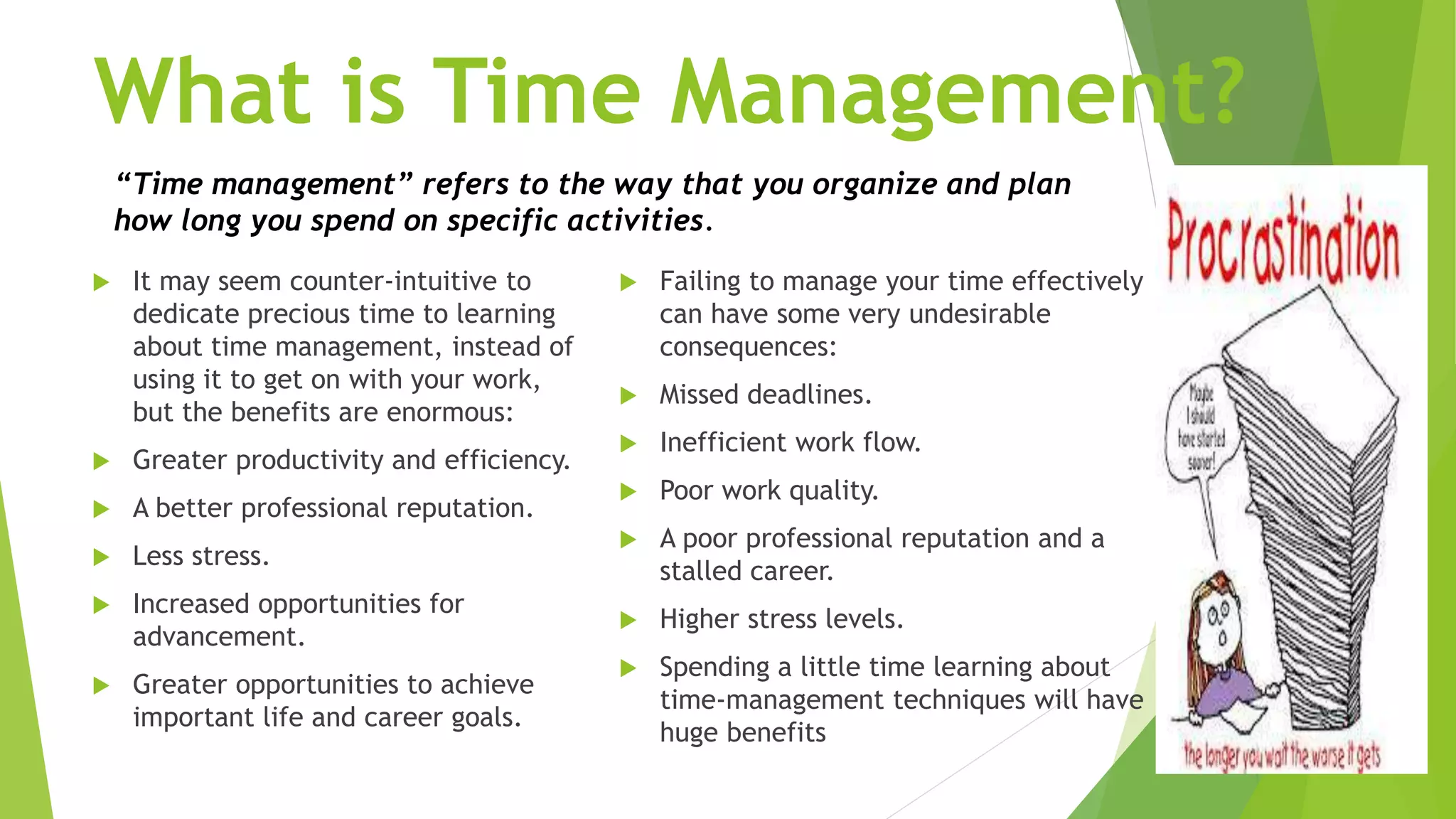
 Failing to manage your time effectively
can have some very undesirable
consequences:
 Missed deadlines.
 Inefficient work flow.
 Poor work quality.
 A poor professional reputation and a
stalled career.
 Higher stress levels.
 Spending a little time learning about
time-management techniques will have
huge benefits
“Time management” refers to the way that you organize and plan
how long you spend on specific activities.
Why use time management
skills?
 It's important that you develop effective strategies for managing your time to balance
the conflicting demands of time for study, leisure, earning money and job hunting.
Time management skills are valuable in job hunting, but also in many other aspects
of life: from revising for examinations to working in a vacation job.
 Sometimes it may seem that there isn't enough time to do everything that you need
to. This can lead to a build up of stress. When revising for examinations, or during
your final year when you have to combine the pressures of intensive study with
finding time to apply for jobs good management of your time can be particularly
important. Once we have identified ways in which we can improve the management
of our time, we can begin to adjust our routines and patterns of behaviour to reduce
any time-related stress in our lives.
What skills are required for
effective time management?
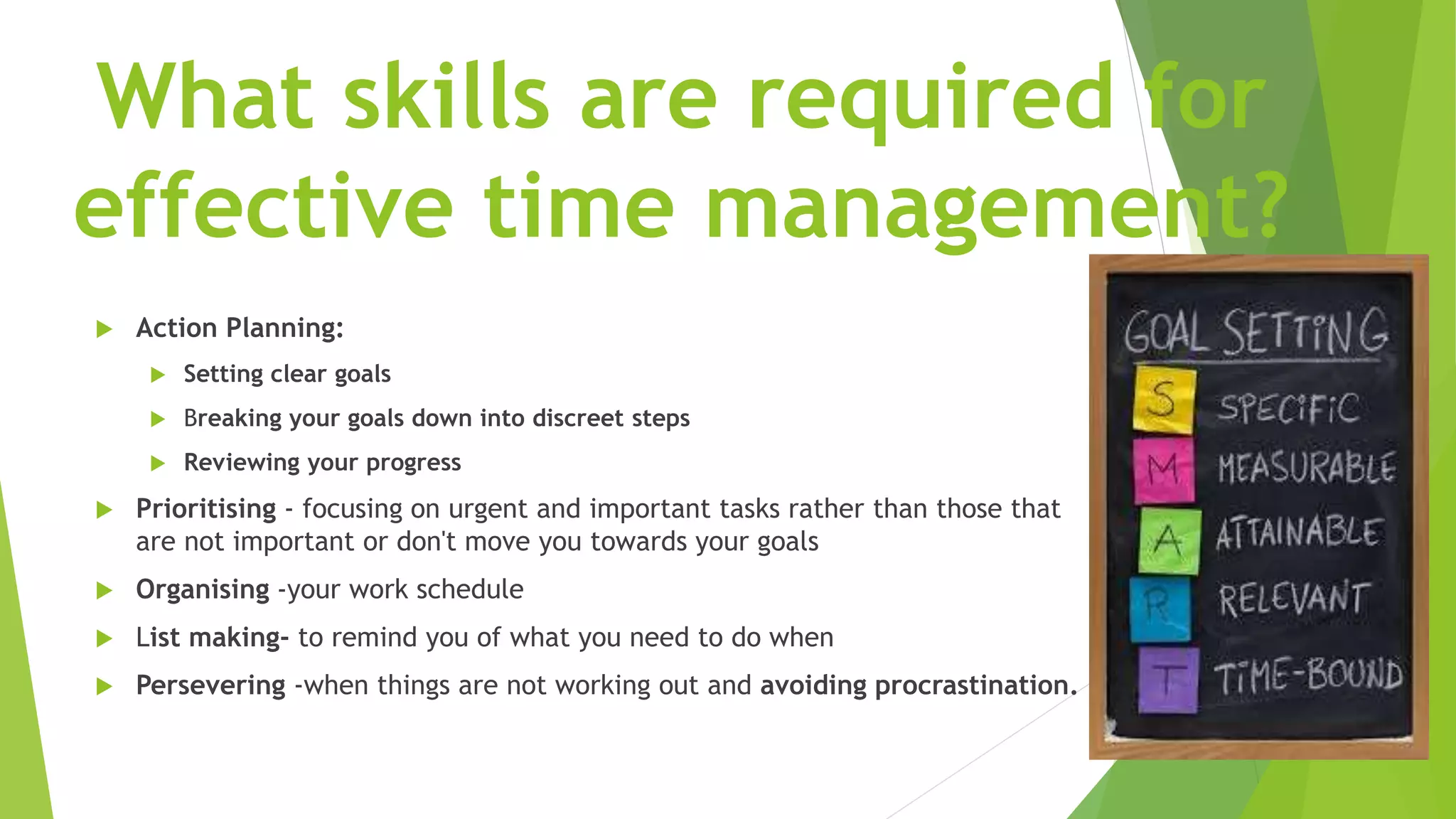
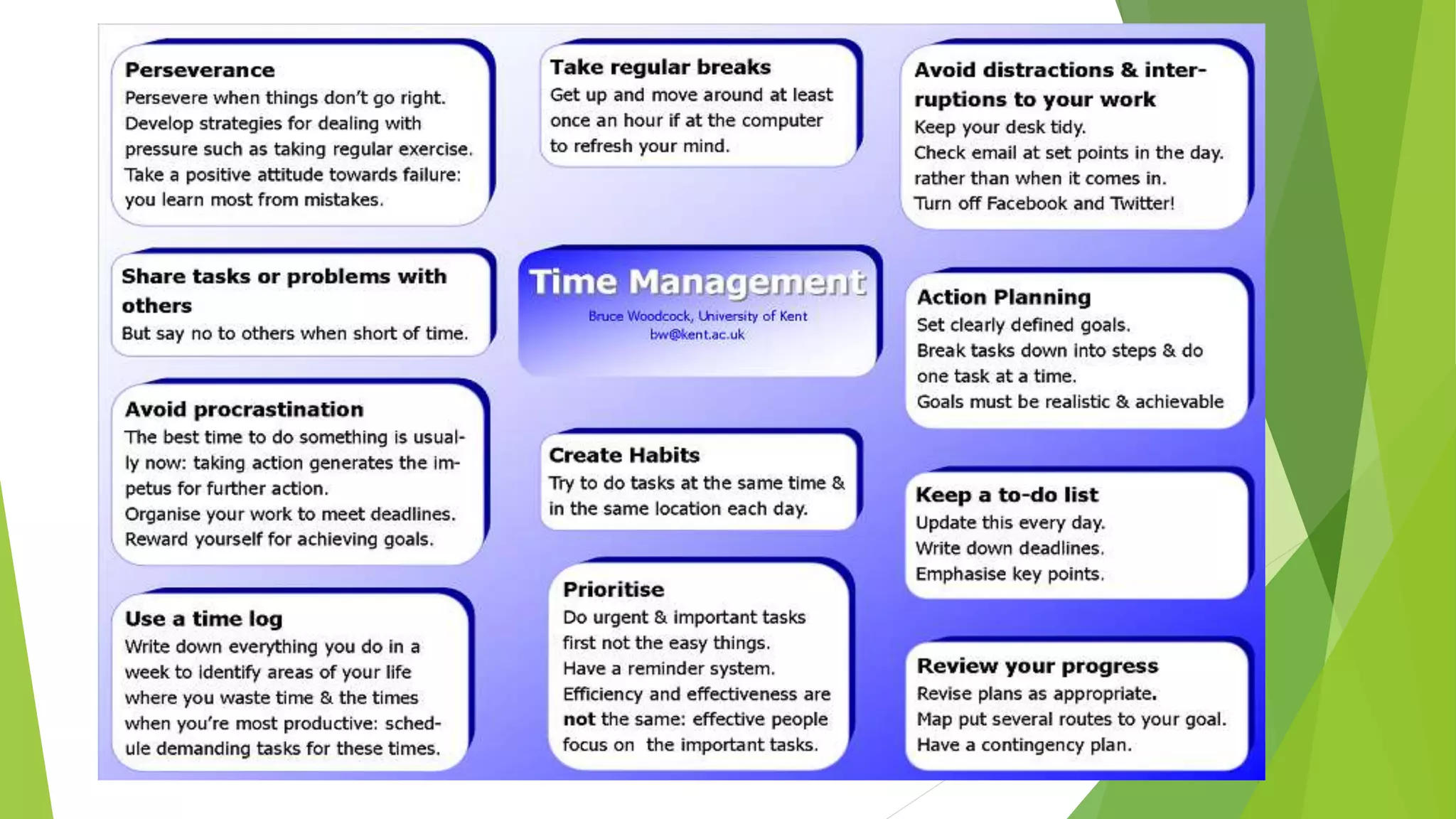
 Action Planning:
 Setting clear goals
 Breaking your goals down into discreet steps
 Reviewing your progress
 Prioritising - focusing on urgent and important tasks rather than those that
are not important or don't move you towards your goals
 Organising -your work schedule
 List making- to remind you of what you need to do when
 Persevering -when things are not working out and avoiding procrastination.
The Key to Good Time
Management
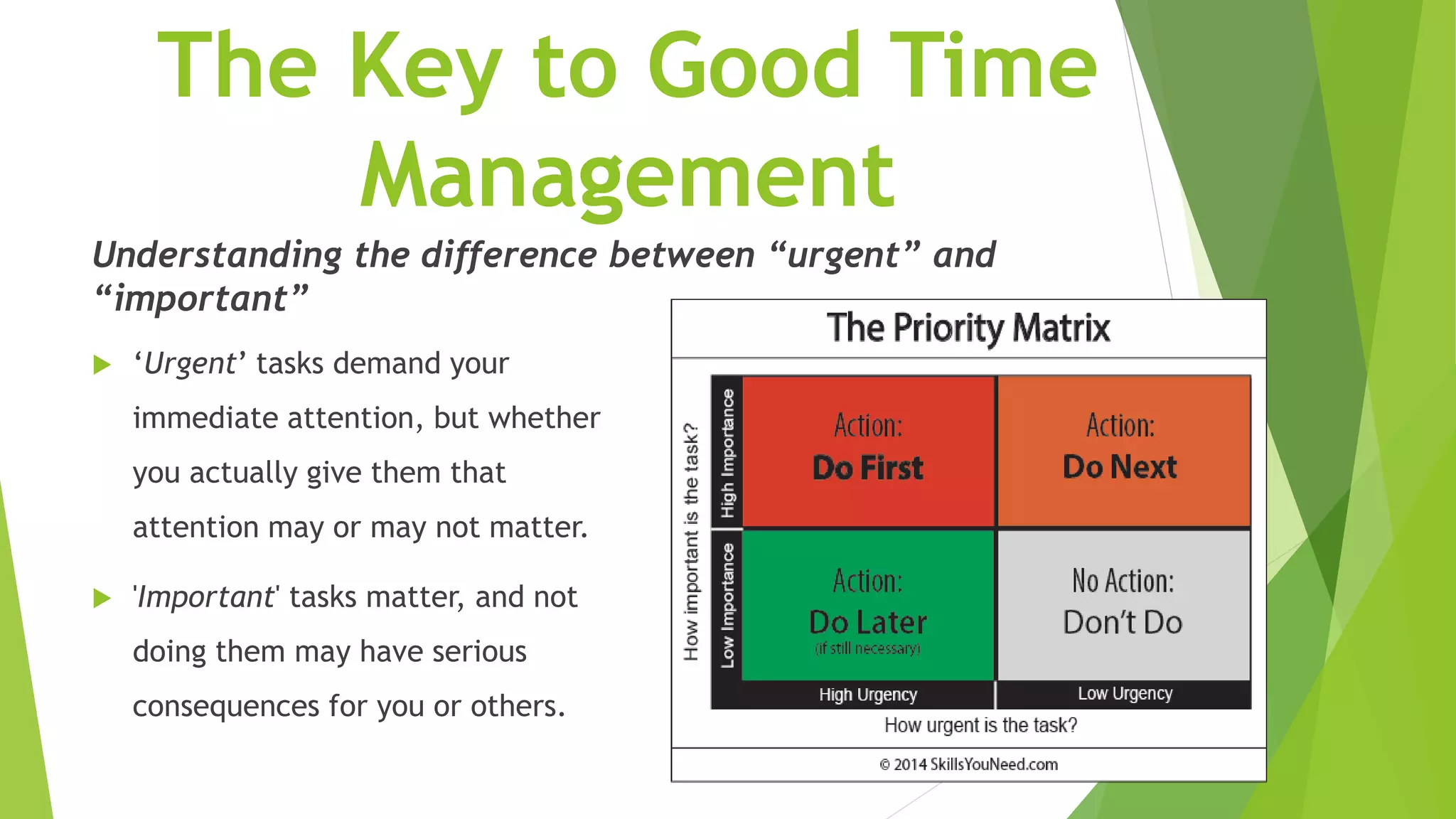
Understanding the difference between “urgent” and
“important”
 ‘Urgent’ tasks demand your
immediate attention, but whether
you actually give them that
attention may or may not matter.
 'Important' tasks matter, and not
doing them may have serious
consequences for you or others.
How long should
you study for?
Study Tips
 Study period lengths
 Study for about 45 minutes.
 Take a 10 minute break where you
can do some kind of exercise.
 Scheduling
 Setting strict times for studying is
a good way to go
 Make sure to do your most difficult
studying when you are most alert.
You can do the slightly easier stuff
at other times when you might not
have quite as much energy or
focus.
 Watch what you eat
 Eating a lot of sugary foods is really
bad for your concentration.
 You need to eat foods with a minimum
of sugar, and also reduce white bread
and other simple carbohydrates.
 Coffee is actually not too bad for your
concentration if you drink it only
occasionally.
 Your study environment
 Make sure that people know not to
interrupt you whilst you're studying.
Put a “Do Not Disturb” sign on the door
if you need one.
 Turn off your phone and internet while
you're studying.
Study Methods
 One of the things that separates great students from those that are average is
the methods they use for studying. Some methods are a lot faster and more
effective than others.
Here are some of the different methods of studying:
 Reading a text book.
 Listening to audio or watching videos .
 Taking notes from your text book .
 Writing questions from your text book, then answering them later.
 Taking past exams or practice exams.
 Mind maps.

Time Management

  • 1.
  • 2.
  • 3.
    Contents Page  Whatis Time Management?  Why do we use Time Managements skills?  What skills are required for effective Time Management?  The key to good Time Management  How long should you study for?  Study Tips  Study Methods
  • 4.
    What is TimeManagement?  It may seem counter-intuitive to dedicate precious time to learning about time management, instead of using it to get on with your work, but the benefits are enormous:  Greater productivity and efficiency.  A better professional reputation.  Less stress.  Increased opportunities for advancement.  Greater opportunities to achieve important life and career goals.  Failing to manage your time effectively can have some very undesirable consequences:  Missed deadlines.  Inefficient work flow.  Poor work quality.  A poor professional reputation and a stalled career.  Higher stress levels.  Spending a little time learning about time-management techniques will have huge benefits “Time management” refers to the way that you organize and plan how long you spend on specific activities.
  • 5.
    Why use timemanagement skills?  It's important that you develop effective strategies for managing your time to balance the conflicting demands of time for study, leisure, earning money and job hunting. Time management skills are valuable in job hunting, but also in many other aspects of life: from revising for examinations to working in a vacation job.  Sometimes it may seem that there isn't enough time to do everything that you need to. This can lead to a build up of stress. When revising for examinations, or during your final year when you have to combine the pressures of intensive study with finding time to apply for jobs good management of your time can be particularly important. Once we have identified ways in which we can improve the management of our time, we can begin to adjust our routines and patterns of behaviour to reduce any time-related stress in our lives.
  • 6.
    What skills arerequired for effective time management?  Action Planning:  Setting clear goals  Breaking your goals down into discreet steps  Reviewing your progress  Prioritising - focusing on urgent and important tasks rather than those that are not important or don't move you towards your goals  Organising -your work schedule  List making- to remind you of what you need to do when  Persevering -when things are not working out and avoiding procrastination.
  • 7.
    The Key toGood Time Management Understanding the difference between “urgent” and “important”  ‘Urgent’ tasks demand your immediate attention, but whether you actually give them that attention may or may not matter.  'Important' tasks matter, and not doing them may have serious consequences for you or others.
  • 9.
  • 10.
    Study Tips  Studyperiod lengths  Study for about 45 minutes.  Take a 10 minute break where you can do some kind of exercise.  Scheduling  Setting strict times for studying is a good way to go  Make sure to do your most difficult studying when you are most alert. You can do the slightly easier stuff at other times when you might not have quite as much energy or focus.  Watch what you eat  Eating a lot of sugary foods is really bad for your concentration.  You need to eat foods with a minimum of sugar, and also reduce white bread and other simple carbohydrates.  Coffee is actually not too bad for your concentration if you drink it only occasionally.  Your study environment  Make sure that people know not to interrupt you whilst you're studying. Put a “Do Not Disturb” sign on the door if you need one.  Turn off your phone and internet while you're studying.
  • 11.
    Study Methods  Oneof the things that separates great students from those that are average is the methods they use for studying. Some methods are a lot faster and more effective than others. Here are some of the different methods of studying:  Reading a text book.  Listening to audio or watching videos .  Taking notes from your text book .  Writing questions from your text book, then answering them later.  Taking past exams or practice exams.  Mind maps.