Time Management for Nurses
Program Objectives Recognize signs of chronic disorganization Recognize common “time wasters” Determine why and where we procrastinate and  how to overcome procrastination Learn how to apply practical time management strategies, techniques and concepts
Why Do We Need Time Management? What can  Time Management  do for you?
Times Flies So Stop Wasting It!
Time Management = Self Management We Don’t Manage Time… Ourselves Others and   Work What Do We Manage?
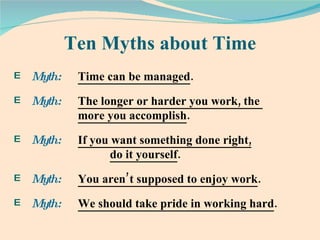
Ten Myths about Time Myth:  Time can be managed .  Myth:  The longer or harder you work, the  more you accomplish .  Myth:  If you want something done right,   do it yourself .  Myth:  You aren’t supposed to enjoy work .  Myth:  We should take pride in working hard .
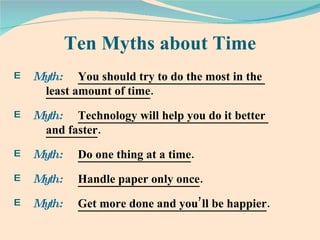
Ten Myths about Time Myth:   You should try to do the most in the  least amount of time .  Myth:   Technology will help you do it better  and faster .  Myth:   Do one thing at a time .  Myth:   Handle paper only once .  Myth:   Get more done and you’ll be happier .
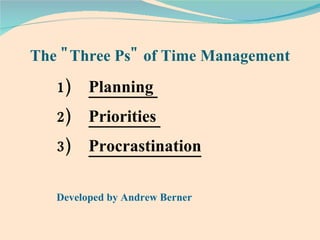
The "Three Ps" of Time Management Planning  Priorities  Procrastination Developed by Andrew Berner
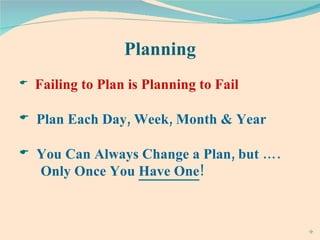
Planning Failing to Plan is Planning to Fail Plan Each Day, Week, Month & Year You Can Always Change a Plan, but …. Only Once You  Have One !
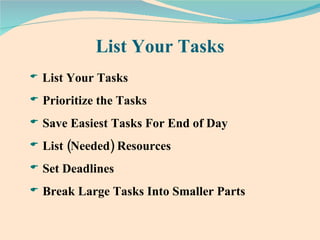
List Your Tasks List Your Tasks  Prioritize the Tasks Save Easiest Tasks For End of Day List (Needed) Resources  Set Deadlines Break Large Tasks Into Smaller Parts
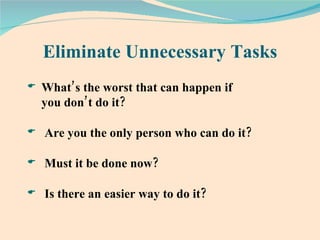
Eliminate Unnecessary Tasks What’s the worst that can happen if  you don’t do it?  Are you the only person who can do it?  Must it be done now?  Is there an easier way to do it?
Control Demands Improve  Effectiveness /   Productivity Spend time on results-producing activities Manage The Work   Plan Your Day Use Time Constructively
Know When to Say “No”   Remember Ann Landers’s words:   People take advantage of you  only with your permission.
Time Wasting Culprits  Telephone Interruptions   Inefficient Delegation Extended Lunches or Breaks   Cluttered Work Space Poorly Organized Meetings Socializing On The Job   Working Without a Plan   Procrastinating
Time Wasters Attempting too much Not saying no Incomplete information Interruptions Working Without a Plan
Priorities Just because you  can  do  something doesn’t mean  you  should
Question Things What is the objective? How will I know if I’m successful? How will I be rewarded? Is this task something I want to do? Do I have the time to do it? What have I got to lose? Is there a better way to do it? Should it even be done at all? Will the world come to an end if?
Prioritization Tips You don’t have to do everything everybody tells you to do You don’t have to do everything yourself You want to please other people but you must please yourself
Procrastination “ Procrastination is the thief of time” Edward Young Night Thoughts, 1742
How to Use Time Effectively  Consolidate Similar Tasks Tackle Tough Jobs First Delegate And Develop Others Learn To Use Idle Time Get Control Of The Paper Flow Stay Calm
How to Use Time Effectively  Get Started Immediately On Important  Tasks Plan Your Day Learn To Say “No” Learn To Delegate Don’t Put Things Off Be Flexible
“ TO Do” Lists Break things down into small steps Like a child cleaning his/her room Do the ugliest thing first
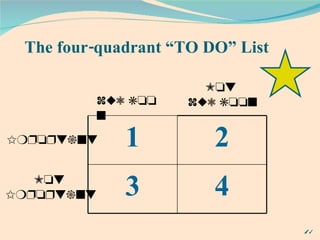
The four-quadrant “TO DO” List       1 2 3 4
Paperwork Clutter is death; it leads to thrashing & trashing Keep notes (or desk) clear: Focus on one thing at a time (stay in the “Now” File Everything Don’t put things off unless you have to Touch each piece of email once; your inbox is  not  your “TO DO” list
Using Resources - Using Advisors They know more than you do They care about you They have experience!
Making the Best Use of Time You don’t  have  to please everyone Don’t be a perfectionist (Go for 90%) Resist the temptation to do small, insignificant tasks too well Outsource what you can
Why do we procrastinate? We don’t know where to start We want to avoid an unpleasant task We’re afraid to fail We’re waiting for more information We think if you put it off someone else will do it  We’re “over-committed”
SWAP Tasks Know That We  Do Not  Work Best Under Pressure List the things you have been avoiding Prioritize them Do at least one of them each day until you catch   up How to overcome procrastination
Taking Care of Yourself Knowing when  not  to work is as important as  knowing when to work Save the easiest tasks for the end of the day Schedule Yourself In Your Life Go For Balance
Scheduling Yourself You Don’t  Find  Time For Important Things: You  Make  Time For Them Schedule Things & They Will Happen  Schedule Everything Learn When To Say “No”
Using A Calendar  (or Report Sheet) Add a meeting (or task) to your calendar (or list) as soon as you know about it Write dates for follow-up on your calendar  Include personal deadlines Have one master calendar  If you use an electronic calendar, back it up regularly
Be Both  Efficient and Effective
Any Questions? Thank You!

Time Management

  • 1.
  • 2.
    Program Objectives Recognizesigns of chronic disorganization Recognize common “time wasters” Determine why and where we procrastinate and how to overcome procrastination Learn how to apply practical time management strategies, techniques and concepts
  • 3.
    Why Do WeNeed Time Management? What can Time Management do for you?
  • 4.
    Times Flies SoStop Wasting It!
  • 5.
    Time Management =Self Management We Don’t Manage Time… Ourselves Others and Work What Do We Manage?
  • 6.
    Ten Myths aboutTime Myth: Time can be managed . Myth: The longer or harder you work, the more you accomplish . Myth: If you want something done right, do it yourself . Myth: You aren’t supposed to enjoy work . Myth: We should take pride in working hard .
  • 7.
    Ten Myths aboutTime Myth: You should try to do the most in the least amount of time . Myth: Technology will help you do it better and faster . Myth: Do one thing at a time . Myth: Handle paper only once . Myth: Get more done and you’ll be happier .
  • 8.
    The "Three Ps"of Time Management Planning Priorities Procrastination Developed by Andrew Berner
  • 9.
    Planning Failing toPlan is Planning to Fail Plan Each Day, Week, Month & Year You Can Always Change a Plan, but …. Only Once You Have One !
  • 10.
    List Your TasksList Your Tasks Prioritize the Tasks Save Easiest Tasks For End of Day List (Needed) Resources Set Deadlines Break Large Tasks Into Smaller Parts
  • 11.
    Eliminate Unnecessary TasksWhat’s the worst that can happen if you don’t do it? Are you the only person who can do it? Must it be done now? Is there an easier way to do it?
  • 12.
    Control Demands Improve Effectiveness / Productivity Spend time on results-producing activities Manage The Work Plan Your Day Use Time Constructively
  • 13.
    Know When toSay “No” Remember Ann Landers’s words: People take advantage of you only with your permission.
  • 14.
    Time Wasting Culprits Telephone Interruptions Inefficient Delegation Extended Lunches or Breaks Cluttered Work Space Poorly Organized Meetings Socializing On The Job Working Without a Plan Procrastinating
  • 15.
    Time Wasters Attemptingtoo much Not saying no Incomplete information Interruptions Working Without a Plan
  • 16.
    Priorities Just becauseyou can do something doesn’t mean you should
  • 17.
    Question Things Whatis the objective? How will I know if I’m successful? How will I be rewarded? Is this task something I want to do? Do I have the time to do it? What have I got to lose? Is there a better way to do it? Should it even be done at all? Will the world come to an end if?
  • 18.
    Prioritization Tips Youdon’t have to do everything everybody tells you to do You don’t have to do everything yourself You want to please other people but you must please yourself
  • 19.
    Procrastination “ Procrastinationis the thief of time” Edward Young Night Thoughts, 1742
  • 20.
    How to UseTime Effectively Consolidate Similar Tasks Tackle Tough Jobs First Delegate And Develop Others Learn To Use Idle Time Get Control Of The Paper Flow Stay Calm
  • 21.
    How to UseTime Effectively Get Started Immediately On Important Tasks Plan Your Day Learn To Say “No” Learn To Delegate Don’t Put Things Off Be Flexible
  • 22.
    “ TO Do”Lists Break things down into small steps Like a child cleaning his/her room Do the ugliest thing first
  • 23.
    The four-quadrant “TODO” List       1 2 3 4
  • 24.
    Paperwork Clutter isdeath; it leads to thrashing & trashing Keep notes (or desk) clear: Focus on one thing at a time (stay in the “Now” File Everything Don’t put things off unless you have to Touch each piece of email once; your inbox is not your “TO DO” list
  • 25.
    Using Resources -Using Advisors They know more than you do They care about you They have experience!
  • 26.
    Making the BestUse of Time You don’t have to please everyone Don’t be a perfectionist (Go for 90%) Resist the temptation to do small, insignificant tasks too well Outsource what you can
  • 27.
    Why do weprocrastinate? We don’t know where to start We want to avoid an unpleasant task We’re afraid to fail We’re waiting for more information We think if you put it off someone else will do it We’re “over-committed”
  • 28.
    SWAP Tasks KnowThat We Do Not Work Best Under Pressure List the things you have been avoiding Prioritize them Do at least one of them each day until you catch up How to overcome procrastination
  • 29.
    Taking Care ofYourself Knowing when not to work is as important as knowing when to work Save the easiest tasks for the end of the day Schedule Yourself In Your Life Go For Balance
  • 30.
    Scheduling Yourself YouDon’t Find Time For Important Things: You Make Time For Them Schedule Things & They Will Happen Schedule Everything Learn When To Say “No”
  • 31.
    Using A Calendar (or Report Sheet) Add a meeting (or task) to your calendar (or list) as soon as you know about it Write dates for follow-up on your calendar Include personal deadlines Have one master calendar If you use an electronic calendar, back it up regularly
  • 32.
    Be Both Efficient and Effective
  • 33.