Anil Kakodkar
Chairman TIFAC
www.tifac.org.in
Technology is the key to comprehensive national
power
Technology empowers citizens, societies and nations
(double edged? Need to ensure stability)
Provides strategic autonomy ( against restrictive
regimes driven by political, economic, military, …
interests)
Robust decision making that avoids vulnerabilities
 Minimum disparity, Accessible quality education
 Food, energy, raw materials*, --- security
 Resilient infrastructure
 Smart Governance
 Strategic mindset -- avoid vendor driven policies
and decision making
 Demand driven research
 Conducive innovation eco-system
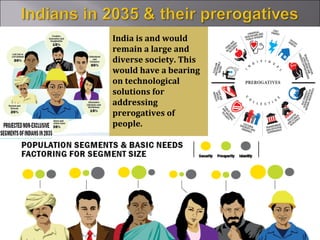
India is and would
remain a large and
diverse society. This
would have a bearing
on technological
solutions for
addressing
prerogatives of
people.
“Technology in the service of
India: ensuring the security,
enhancing the prosperity and
strengthening the identity of
every Indian”
---in 22 Indian languages

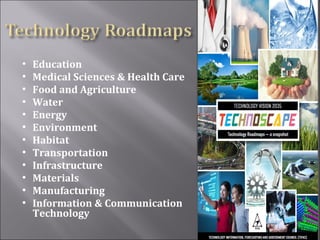
Education

Medical Sciences & Health Care

Food and Agriculture

Water

Energy

Environment

Habitat

Transportation

Infrastructure

Materials

Manufacturing

Information & Communication
Technology
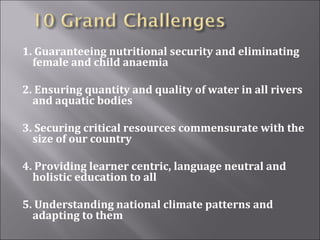
1. Guaranteeing nutritional security and eliminating
female and child anaemia
2. Ensuring quantity and quality of water in all rivers
and aquatic bodies
3. Securing critical resources commensurate with the
size of our country
4. Providing learner centric, language neutral and
holistic education to all
5. Understanding national climate patterns and
adapting to them
6. Making India non-fossil fuel based
7. Taking the railway to Leh and Tawang
8. Ensuring location and ability independent
electoral and financial empowerment
9. Developing commercially viable decentralised
and distributed energy for all
10. Ensuring universal eco-friendly waste
management
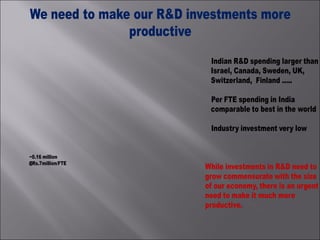
~0.16 million
@Rs.7million/FTE
We need to make our R&D investments more
productive
Indian R&D spending larger than
Israel, Canada, Sweden, UK,
Switzerland, Finland .....
Per FTE spending in India
comparable to best in the world
Industry investment very low
While investments in R&D need to
grow commensurate with the size
of our economy, there is an urgent
need to make it much more
productive.
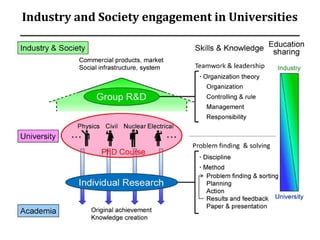
Industry and Society engagement in Universities
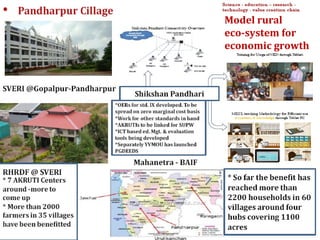
Model rural
eco-system for
economic growth
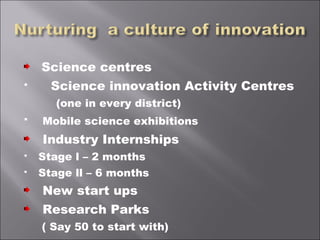
Science centres
 Science innovation Activity Centres
(one in every district)
 Mobile science exhibitions
Industry Internships
 Stage l – 2 months
 Stage ll – 6 months
New start ups
Research Parks
( Say 50 to start with)
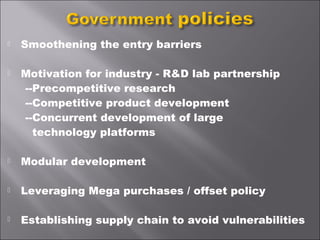
 Smoothening the entry barriers
 Motivation for industry - R&D lab partnership
--Precompetitive research
--Competitive product development
--Concurrent development of large
technology platforms
 Modular development
 Leveraging Mega purchases / offset policy
 Establishing supply chain to avoid vulnerabilities
TIFAC: Technology Vision 2035

TIFAC: Technology Vision 2035

  • 1.
  • 2.
    Technology is thekey to comprehensive national power Technology empowers citizens, societies and nations (double edged? Need to ensure stability) Provides strategic autonomy ( against restrictive regimes driven by political, economic, military, … interests) Robust decision making that avoids vulnerabilities
  • 3.
     Minimum disparity,Accessible quality education  Food, energy, raw materials*, --- security  Resilient infrastructure  Smart Governance  Strategic mindset -- avoid vendor driven policies and decision making  Demand driven research  Conducive innovation eco-system
  • 6.
    India is andwould remain a large and diverse society. This would have a bearing on technological solutions for addressing prerogatives of people.
  • 8.
    “Technology in theservice of India: ensuring the security, enhancing the prosperity and strengthening the identity of every Indian” ---in 22 Indian languages
  • 10.
     Education  Medical Sciences &Health Care  Food and Agriculture  Water  Energy  Environment  Habitat  Transportation  Infrastructure  Materials  Manufacturing  Information & Communication Technology
  • 12.
    1. Guaranteeing nutritionalsecurity and eliminating female and child anaemia 2. Ensuring quantity and quality of water in all rivers and aquatic bodies 3. Securing critical resources commensurate with the size of our country 4. Providing learner centric, language neutral and holistic education to all 5. Understanding national climate patterns and adapting to them
  • 13.
    6. Making Indianon-fossil fuel based 7. Taking the railway to Leh and Tawang 8. Ensuring location and ability independent electoral and financial empowerment 9. Developing commercially viable decentralised and distributed energy for all 10. Ensuring universal eco-friendly waste management
  • 14.
    ~0.16 million @Rs.7million/FTE We needto make our R&D investments more productive Indian R&D spending larger than Israel, Canada, Sweden, UK, Switzerland, Finland ..... Per FTE spending in India comparable to best in the world Industry investment very low While investments in R&D need to grow commensurate with the size of our economy, there is an urgent need to make it much more productive.
  • 15.
    Industry and Societyengagement in Universities
  • 16.
  • 17.
    Science centres  Scienceinnovation Activity Centres (one in every district)  Mobile science exhibitions Industry Internships  Stage l – 2 months  Stage ll – 6 months New start ups Research Parks ( Say 50 to start with)
  • 18.
     Smoothening theentry barriers  Motivation for industry - R&D lab partnership --Precompetitive research --Competitive product development --Concurrent development of large technology platforms  Modular development  Leveraging Mega purchases / offset policy  Establishing supply chain to avoid vulnerabilities