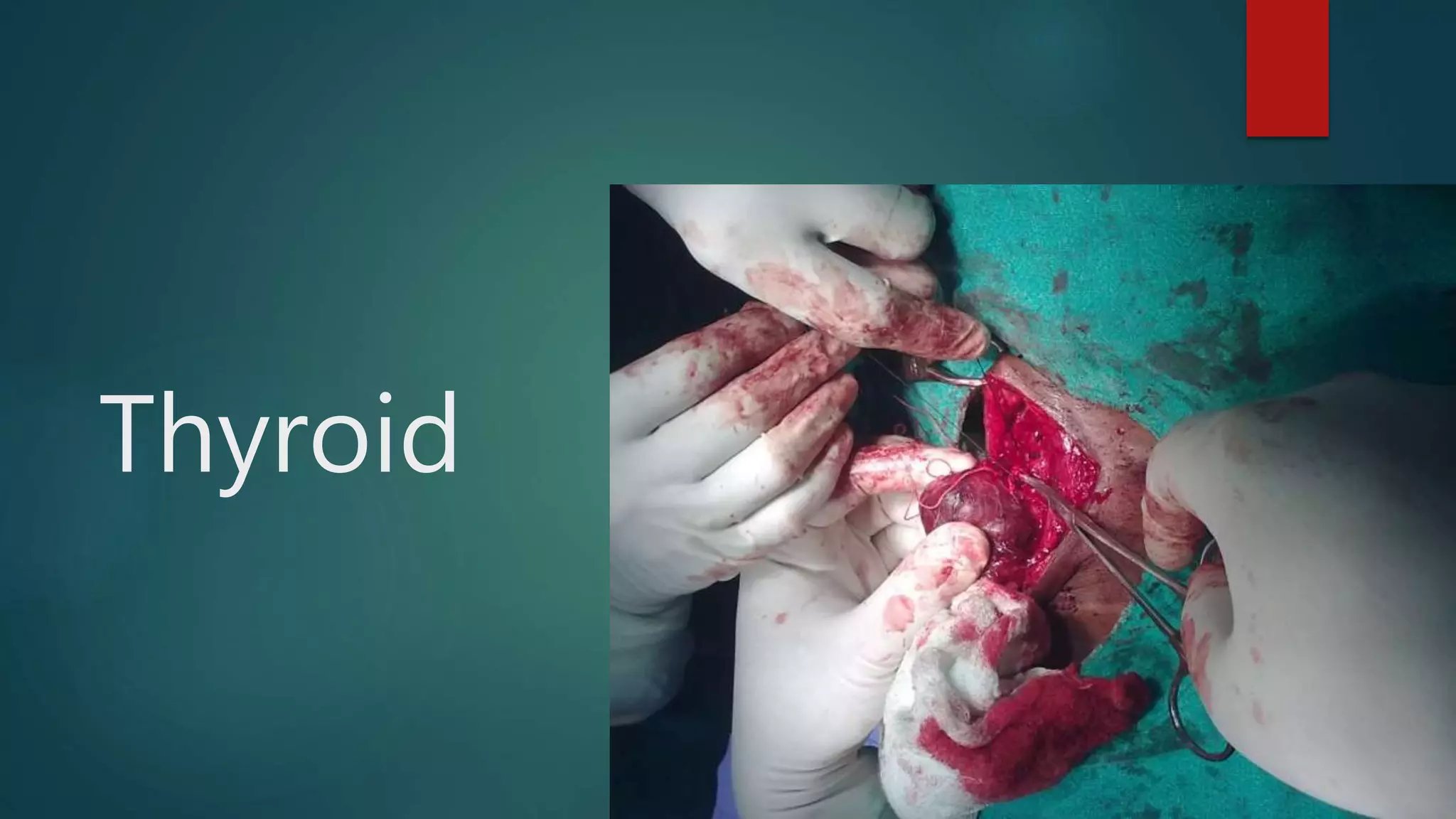
Thyroid
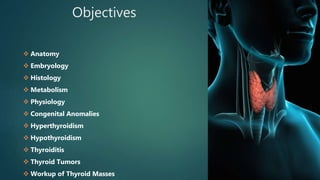
Objectives
 Anatomy
 Embryology
 Histology
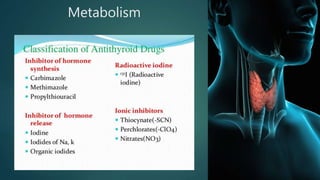
 Metabolism
 Physiology
 Congenital Anomalies
 Hyperthyroidism
 Hypothyroidism
 Thyroiditis
 Thyroid Tumors
 Workup of Thyroid Masses
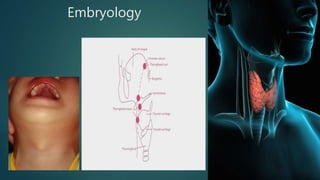
Embryology
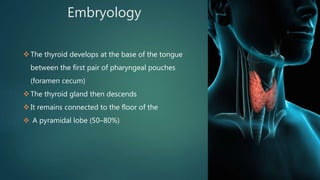
The thyroid develops at the base of the tongue
between the first pair of pharyngeal pouches
(foramen cecum)
The thyroid gland then descends
It remains connected to the floor of the
 A pyramidal lobe (50–80%)
Embryology
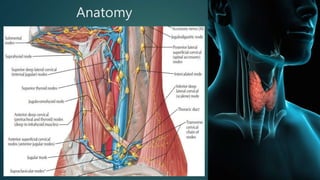
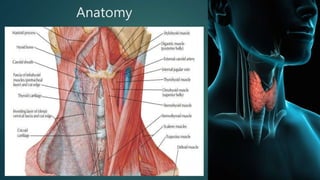
Anatomy
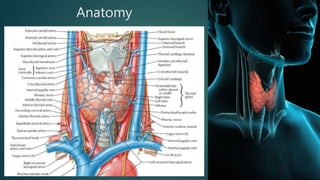
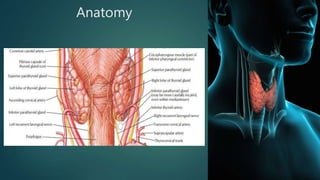
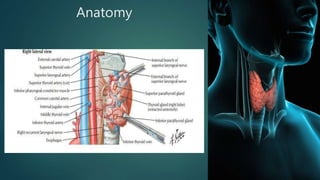
Location and Level (C5-T1)
Blood Supply
Lymphatics
Closely Related Structures
Anatomy
Anatomy
Anatomy
Anatomy
Anatomy
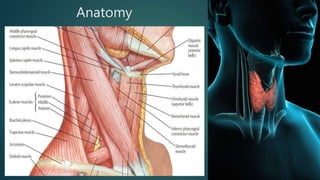
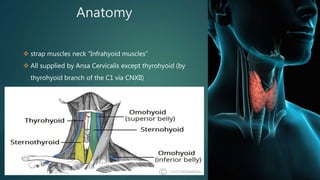
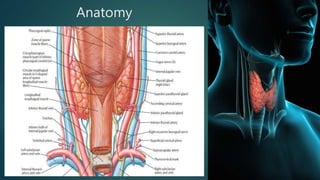
 strap muscles neck “Infrahyoid muscles”
 All supplied by Ansa Cervicalis except thyrohyoid (by
thyrohyoid branch of the C1 via CNXII)
Anatomy
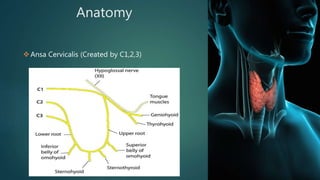
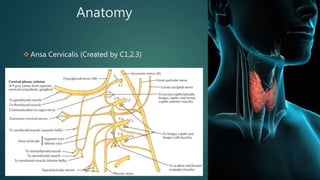
Ansa Cervicalis (Created by C1,2,3)
Anatomy
Ansa Cervicalis (Created by C1,2,3)
Anatomy
Anatomy
Anatomy
Anatomy
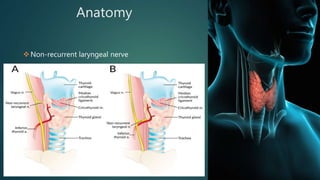
Non-recurrent laryngeal nerve
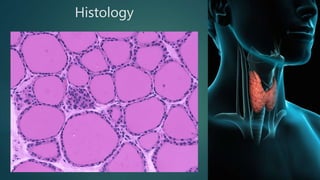
Histology
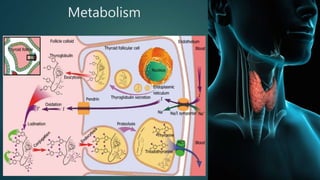
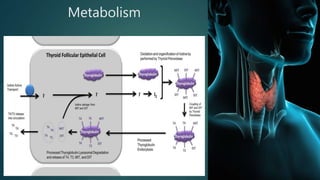
Metabolism
Metabolism
Metabolism
Physiology
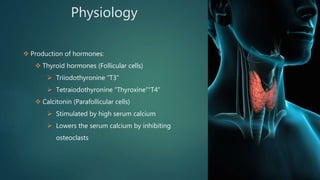
 Production of hormones:
 Thyroid hormones (Follicular cells)
 Triiodothyronine “T3”
 Tetraiodothyronine “Thyroxine”“T4”
 Calcitonin (Parafollicular cells)
 Stimulated by high serum calcium
 Lowers the serum calcium by inhibiting
osteoclasts
Physiology
Physiology
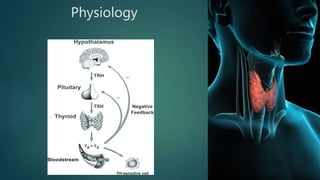
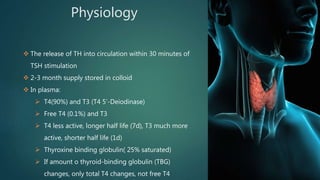
 The release of TH into circulation within 30 minutes of
TSH stimulation
 2-3 month supply stored in colloid
 In plasma:
 T4(90%) and T3 (T4 5’-Deiodinase)
 Free T4 (0.1%) and T3
 T4 less active, longer half life (7d), T3 much more
active, shorter half life (1d)
 Thyroxine binding globulin( 25% saturated)
 If amount o thyroid-binding globulin (TBG)
changes, only total T4 changes, not free T4
Physiology
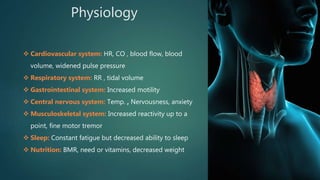
 Cardiovascular system: HR, CO , blood flow, blood
volume, widened pulse pressure
 Respiratory system: RR , tidal volume
 Gastrointestinal system: Increased motility
 Central nervous system: Temp. , Nervousness, anxiety
 Musculoskeletal system: Increased reactivity up to a
point, fine motor tremor
 Sleep: Constant fatigue but decreased ability to sleep
 Nutrition: BMR, need or vitamins, decreased weight
Common Symptoms
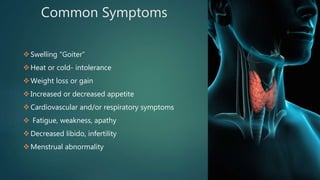
Swelling “Goiter”
Heat or cold- intolerance
Weight loss or gain
Increased or decreased appetite
Cardiovascular and/or respiratory symptoms
 Fatigue, weakness, apathy
Decreased libido, infertility
Menstrual abnormality
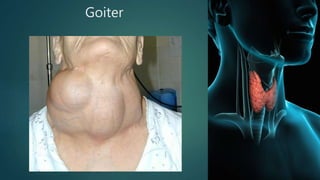
Goiter
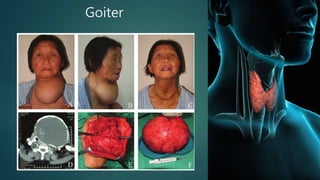
Goiter
Congenital Anomalies
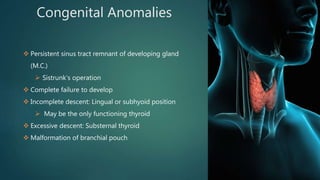
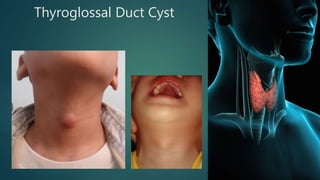
 Persistent sinus tract remnant of developing gland
(M.C.)
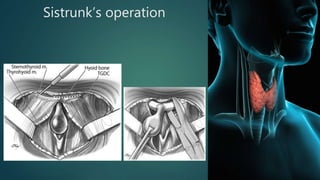
 Sistrunk’s operation
 Complete failure to develop
 Incomplete descent: Lingual or subhyoid position
 May be the only functioning thyroid
 Excessive descent: Substernal thyroid
 Malformation of branchial pouch
Thyroglossal Duct Cyst
Sistrunk’s operation
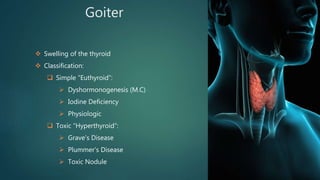
Goiter
 Swelling of the thyroid
 Classification:
 Simple “Euthyroid”:
 Dyshormonogenesis (M.C)
 Iodine Deficiency
 Physiologic
 Toxic “Hyperthyroid”:
 Grave’s Disease
 Plummer’s Disease
 Toxic Nodule
Goiter
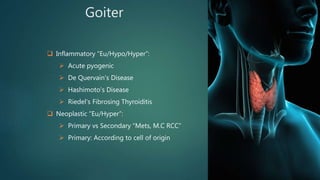
 Inflammatory “Eu/Hypo/Hyper”:
 Acute pyogenic
 De Quervain's Disease
 Hashimoto’s Disease
 Riedel’s Fibrosing Thyroiditis
 Neoplastic “Eu/Hyper”:
 Primary vs Secondary “Mets, M.C RCC”
 Primary: According to cell of origin
Goiter
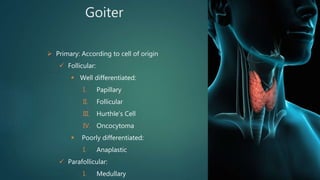
 Primary: According to cell of origin
 Follicular:
 Well differentiated:
I. Papillary
II. Follicular
III. Hurthle’s Cell
IV. Oncocytoma
 Poorly differentiated:
I. Anaplastic
 Parafollicular:
I. Medullary
Goiter
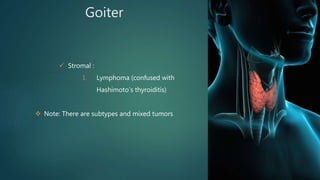
 Stromal :
I. Lymphoma (confused with
Hashimoto’s thyroiditis)
 Note: There are subtypes and mixed tumors
Goiter
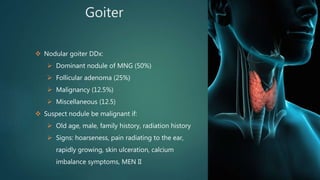
 Nodular goiter DDx:
 Dominant nodule of MNG (50%)
 Follicular adenoma (25%)
 Malignancy (12.5%)
 Miscellaneous (12.5)
 Suspect nodule be malignant if:
 Old age, male, family history, radiation history
 Signs: hoarseness, pain radiating to the ear,
rapidly growing, skin ulceration, calcium
imbalance symptoms, MEN II
Goiter
 Indications of surgery:
 General: suspicion of malignancy, compression,
Follicular lesion on biopsy
 Specific:
 Cosmetic: Simple goiter, Thyroiditis
 Failure of medical treatment: Simple goiter,
Thyroiditis, Toxic goiter
 Retrosternal Thyroid: Any goiter
 Exophthalmos: Toxic goiter
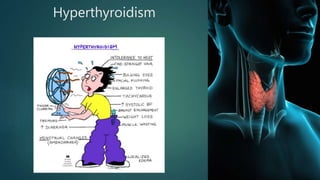
Hyperthyroidism
 Definition:
 Overactive thyroid, elevated level of TH (T4 and T3)
with subsequent signs and symptoms of increased
thyroid function
 Primary: high T4, low TSH
 Secondary: high T4, High TSH
Hyperthyroidism
Hyperthyroidism
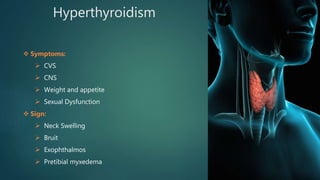
 Symptoms:
 CVS
 CNS
 Weight and appetite
 Sexual Dysfunction
 Sign:
 Neck Swelling
 Bruit
 Exophthalmos
 Pretibial myxedema
Hyperthyroidism
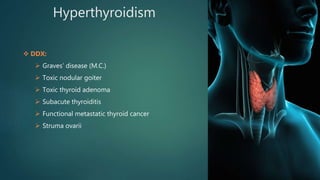
 DDX:
 Graves’ disease (M.C.)
 Toxic nodular goiter
 Toxic thyroid adenoma
 Subacute thyroiditis
 Functional metastatic thyroid cancer
 Struma ovarii
Graves’ disease
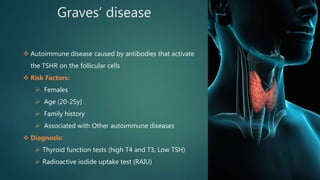
 Autoimmune disease caused by antibodies that activate
the TSHR on the follicular cells
 Risk Factors:
 Females
 Age (20-25y)
 Family history
 Associated with Other autoimmune diseases
 Diagnosis:
 Thyroid function tests (high T4 and T3, Low TSH)
 Radioactive iodide uptake test (RAIU)
Graves’ disease
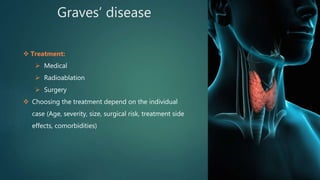
 Treatment:
 Medical
 Radioablation
 Surgery
 Choosing the treatment depend on the individual
case (Age, severity, size, surgical risk, treatment side
effects, comorbidities)
Graves’ disease
 Radioablation:
 Indicated for small or medium-sized goiters, if
medical therapy has failed, or if other options are
contraindicated
 Euthyroid within 2 months
 Most patients ultimately require TH replacement
 Complications include exacerbation of thyroid storm
initially
 Contraindicated in pregnant patients, women of
childbearing age and newborns
Graves’ disease
 Surgical treatment:
 Total, Subtotal, Lobar removal
 Indicated when radioablation is contraindicated or if
medical management cannot be used
 Patients should be euthyroid prior to excision
 Advantage over radioablation is immediate cure
 Complication: RLN injury, Hypoparathyroidism,
persistent hyperthyroidism, transient
hyperparathyroidism (M.C)
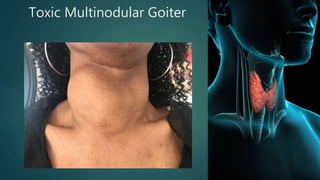
Toxic Multinodular Goiter
 AKA “Plummer’s Disease”
 Etiology:
 Iodine deficiency
 mutation in the TSH receptor
 Diagnosis: Labs, Biopsy
 Treatment: Best is surgical because radioablation has
high rate of failure
Toxic Multinodular Goiter
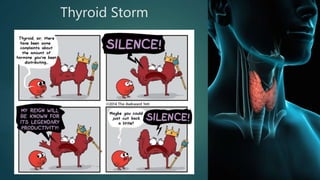
Thyroid Storm
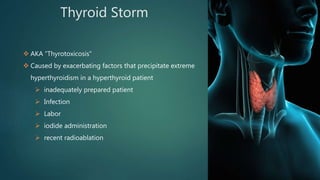
 AKA “Thyrotoxicosis”
 Caused by exacerbating factors that precipitate extreme
hyperthyroidism in a hyperthyroid patient
 inadequately prepared patient
 Infection
 Labor
 iodide administration
 recent radioablation
Thyroid Storm
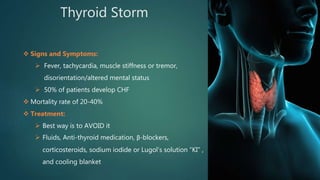
 Signs and Symptoms:
 Fever, tachycardia, muscle stiffness or tremor,
disorientation/altered mental status
 50% of patients develop CHF
 Mortality rate of 20-40%
 Treatment:
 Best way is to AVOID it
 Fluids, Anti-thyroid medication, β-blockers,
corticosteroids, sodium iodide or Lugol’s solution “KI” ,
and cooling blanket
Thyroid Storm
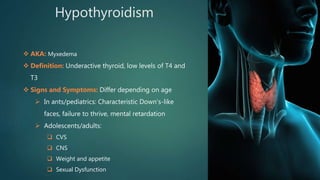
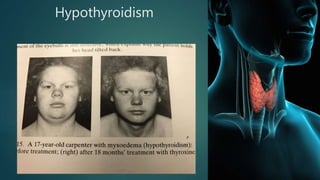
Hypothyroidism
 AKA: Myxedema
 Definition: Underactive thyroid, low levels of T4 and
T3
 Signs and Symptoms: Differ depending on age
 In ants/pediatrics: Characteristic Down’s-like
faces, failure to thrive, mental retardation
 Adolescents/adults:
 CVS
 CNS
 Weight and appetite
 Sexual Dysfunction
Hypothyroidism
 Less common complaints: Yellow-tinged skin, hair loss,
tongue enlargement
 Reduced Reflex Relaxation time is a pathognomonic
 DDX:
 Autoimmune thyroiditis
 Iatrogenic: thyroidectomy, radioablation, secondary to
anti-thyroid medications
 Iodine deficiency
Hypothyroidism
 Diagnosis: by H&E and Labs
 low T4 and T3
 Primary VS Secondary
 TRH challenge
 Thyroid autoantibodies positive in autoimmune
thyroiditis
 Low hematocrit (Hct.)
 Treatment: PO Thyroxine
Hypothyroidism
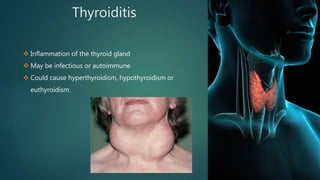
Thyroiditis
 Inflammation of the thyroid gland
 May be infectious or autoimmune
 Could cause hyperthyroidism, hypothyroidism or
euthyroidism.
Thyroiditis
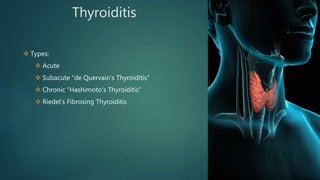
 Types:
 Acute
 Subacute “de Quervain’s Thyroiditis”
 Chronic “Hashimoto’s Thyroiditis”
 Riedel’s Fibrosing Thyroiditis
Acute Thyroiditis
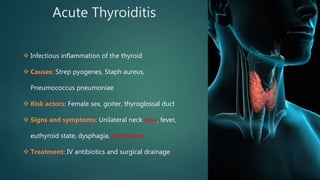
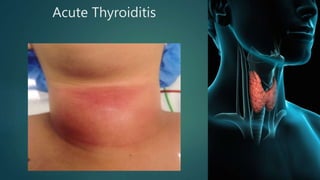
 Infectious inflammation of the thyroid
 Causes: Strep pyogenes, Staph aureus,
Pneumococcus pneumoniae
 Risk actors: Female sex, goiter, thyroglossal duct
 Signs and symptoms: Unilateral neck pain, fever,
euthyroid state, dysphagia, tenderness
 Treatment: IV antibiotics and surgical drainage
Acute Thyroiditis
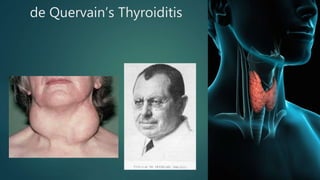
de Quervain’s Thyroiditis
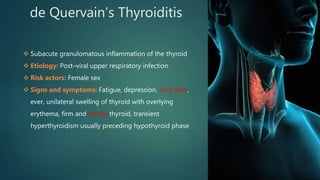
 Subacute granulomatous inflammation of the thyroid
 Etiology: Post–viral upper respiratory infection
 Risk actors: Female sex
 Signs and symptoms: Fatigue, depression, neck pain,
ever, unilateral swelling of thyroid with overlying
erythema, firm and tender thyroid, transient
hyperthyroidism usually preceding hypothyroid phase
de Quervain’s Thyroiditis
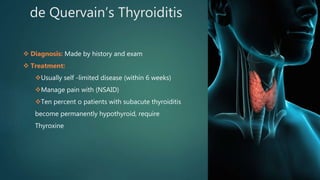
 Diagnosis: Made by history and exam
 Treatment:
Usually self -limited disease (within 6 weeks)
Manage pain with (NSAID)
Ten percent o patients with subacute thyroiditis
become permanently hypothyroid, require
Thyroxine
de Quervain’s Thyroiditis
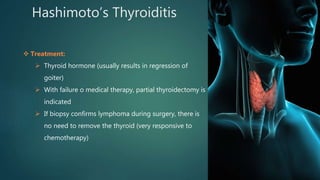
Hashimoto’s Thyroiditis
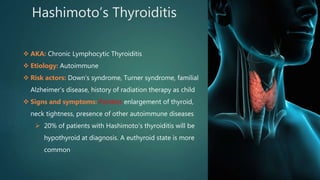
 AKA: Chronic Lymphocytic Thyroiditis
 Etiology: Autoimmune
 Risk actors: Down’s syndrome, Turner syndrome, familial
Alzheimer’s disease, history of radiation therapy as child
 Signs and symptoms: Painless enlargement of thyroid,
neck tightness, presence of other autoimmune diseases
 20% of patients with Hashimoto’s thyroiditis will be
hypothyroid at diagnosis. A euthyroid state is more
common
Hashimoto’s Thyroiditis
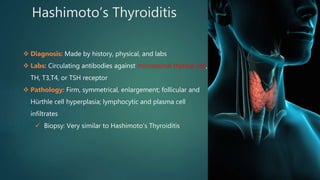
 Diagnosis: Made by history, physical, and labs
 Labs: Circulating antibodies against microsomal thyroid cell,
TH, T3,T4, or TSH receptor
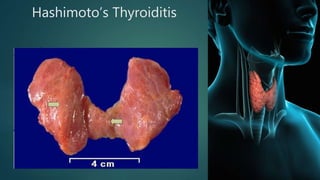
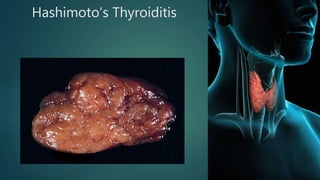
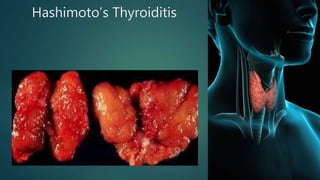
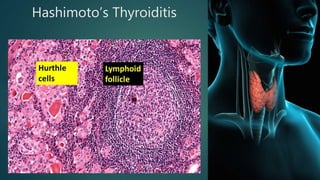
 Pathology: Firm, symmetrical, enlargement; follicular and
Hürthle cell hyperplasia; lymphocytic and plasma cell
infiltrates
 Biopsy: Very similar to Hashimoto’s Thyroiditis
Hashimoto’s Thyroiditis
 Treatment:
 Thyroid hormone (usually results in regression of
goiter)
 With failure o medical therapy, partial thyroidectomy is
indicated
 If biopsy confirms lymphoma during surgery, there is
no need to remove the thyroid (very responsive to
chemotherapy)
Hashimoto’s Thyroiditis
Riedel’s Fibrosing
Thyroiditis
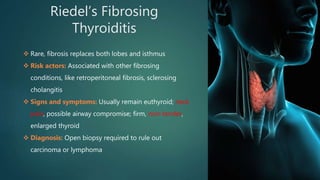
 Rare, fibrosis replaces both lobes and isthmus
 Risk actors: Associated with other fibrosing
conditions, like retroperitoneal fibrosis, sclerosing
cholangitis
 Signs and symptoms: Usually remain euthyroid; neck
pain, possible airway compromise; firm, non-tender,
enlarged thyroid
 Diagnosis: Open biopsy required to rule out
carcinoma or lymphoma
Riedel’s Fibrosing
Thyroiditis
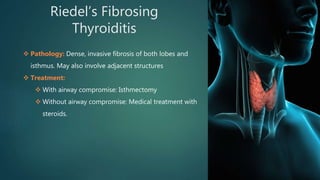
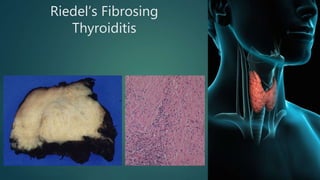
 Pathology: Dense, invasive fibrosis of both lobes and
isthmus. May also involve adjacent structures
 Treatment:
 With airway compromise: Isthmectomy
 Without airway compromise: Medical treatment with
steroids.
Riedel’s Fibrosing
Thyroiditis
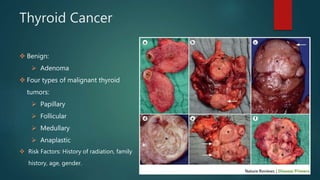
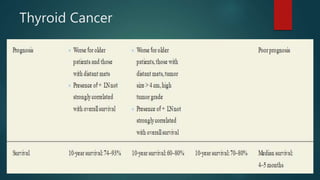
Thyroid Cancer
 Benign:
 Adenoma
 Four types of malignant thyroid
tumors:
 Papillary
 Follicular
 Medullary
 Anaplastic
 Risk Factors: History of radiation, family
history, age, gender.
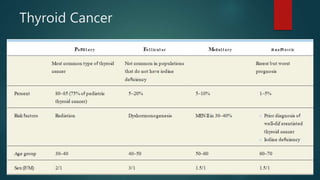
Thyroid Cancer
Thyroid Cancer
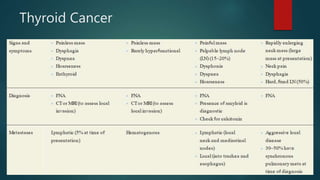
Thyroid Cancer
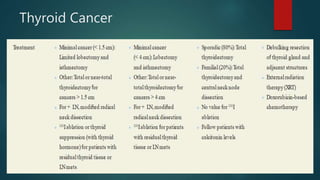
Thyroid Cancer
Thyroid Cancer
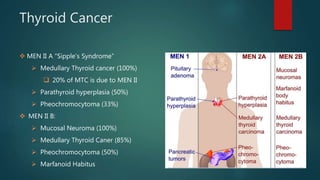
 MEN II A “Sipple’s Syndrome”
 Medullary Thyroid cancer (100%)
 20% of MTC is due to MEN II
 Parathyroid hyperplasia (50%)
 Pheochromocytoma (33%)
 MEN II B:
 Mucosal Neuroma (100%)
 Medullary Thyroid Caner (85%)
 Pheochromocytoma (50%)
 Marfanoid Habitus
Thyroid Cancer
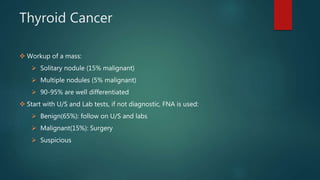
 Workup of a mass:
 Solitary nodule (15% malignant)
 Multiple nodules (5% malignant)
 90-95% are well differentiated
 Start with U/S and Lab tests, if not diagnostic, FNA is used:
 Benign(65%): follow on U/S and labs
 Malignant(15%): Surgery
 Suspicious
Thyroid Cancer
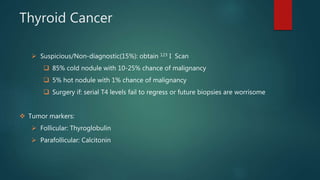
 Suspicious/Non-diagnostic(15%): obtain 123 I Scan
 85% cold nodule with 10-25% chance of malignancy
 5% hot nodule with 1% chance of malignancy
 Surgery if: serial T4 levels fail to regress or future biopsies are worrisome
 Tumor markers:
 Follicular: Thyroglobulin
 Parafollicular: Calcitonin
Thyroid Cancer
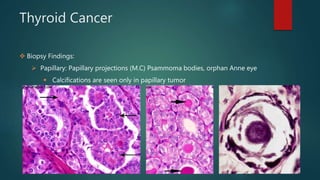
 Biopsy Findings:
 Papillary: Papillary projections (M.C) Psammoma bodies, orphan Anne eye
 Calcifications are seen only in papillary tumor
Thyroid Cancer
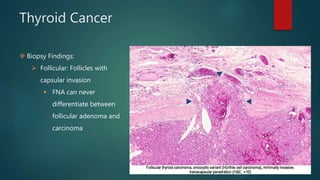
 Biopsy Findings:
 Follicular: Follicles with
capsular invasion
 FNA can never
differentiate between
follicular adenoma and
carcinoma
Thyroid Cancer
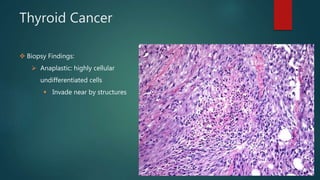
 Biopsy Findings:
 Anaplastic: highly cellular
undifferentiated cells
 Invade near by structures
Thyroid Cancer
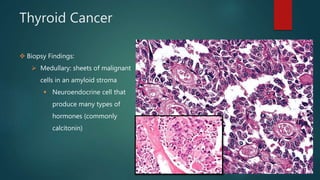
 Biopsy Findings:
 Medullary: sheets of malignant
cells in an amyloid stroma
 Neuroendocrine cell that
produce many types of
hormones (commonly
calcitonin)
Thyroid Cancer
 Cancer surgery:
 Papillary: thyroidectomy with LN dissection, radioablation could be done
 <1.5cm: Hemithyroidectomy
 >1.5cm: Total thyroidectomy
 If LN positive: modified radical dissection
 The other lobe may be removed prophylactically
 Follicular: Thyroidectomy with radioablation of the remnant tissue
 <4cm: Hemithyroidectomy
 >4cm: Total thyroidectomy
 If LN positive: modified radical dissection
Thyroid Cancer
 Medullary: Total thyroidectomy with central neck LN dissection
 Anaplastic: Debulking surgery for relief of compression only “Isthmectomy”
 Lymphoma: Chemotherapy, no surgery
 Hemithyroidectomy: Lobe removal + isthmus removal
 Radioablation: Post operative thyroid hunger (at least 2wks) the diagnostic radioiodine
uptake test with (5mCi), if positive, treat with (125mCi). Repeat diagnostic test, if positive, give
(175mCi)
Thank You

Thyroid

  • 1.
  • 2.
    Objectives  Anatomy  Embryology Histology  Metabolism  Physiology  Congenital Anomalies  Hyperthyroidism  Hypothyroidism  Thyroiditis  Thyroid Tumors  Workup of Thyroid Masses
  • 3.
    Embryology The thyroid developsat the base of the tongue between the first pair of pharyngeal pouches (foramen cecum) The thyroid gland then descends It remains connected to the floor of the  A pyramidal lobe (50–80%)
  • 4.
  • 5.
    Anatomy Location and Level(C5-T1) Blood Supply Lymphatics Closely Related Structures
  • 6.
  • 7.
  • 8.
  • 9.
  • 10.
    Anatomy  strap musclesneck “Infrahyoid muscles”  All supplied by Ansa Cervicalis except thyrohyoid (by thyrohyoid branch of the C1 via CNXII)
  • 11.
  • 12.
  • 13.
  • 14.
  • 15.
  • 16.
  • 17.
  • 18.
  • 19.
  • 20.
  • 21.
    Physiology  Production ofhormones:  Thyroid hormones (Follicular cells)  Triiodothyronine “T3”  Tetraiodothyronine “Thyroxine”“T4”  Calcitonin (Parafollicular cells)  Stimulated by high serum calcium  Lowers the serum calcium by inhibiting osteoclasts
  • 22.
  • 23.
    Physiology  The releaseof TH into circulation within 30 minutes of TSH stimulation  2-3 month supply stored in colloid  In plasma:  T4(90%) and T3 (T4 5’-Deiodinase)  Free T4 (0.1%) and T3  T4 less active, longer half life (7d), T3 much more active, shorter half life (1d)  Thyroxine binding globulin( 25% saturated)  If amount o thyroid-binding globulin (TBG) changes, only total T4 changes, not free T4
  • 24.
    Physiology  Cardiovascular system:HR, CO , blood flow, blood volume, widened pulse pressure  Respiratory system: RR , tidal volume  Gastrointestinal system: Increased motility  Central nervous system: Temp. , Nervousness, anxiety  Musculoskeletal system: Increased reactivity up to a point, fine motor tremor  Sleep: Constant fatigue but decreased ability to sleep  Nutrition: BMR, need or vitamins, decreased weight
  • 25.
    Common Symptoms Swelling “Goiter” Heator cold- intolerance Weight loss or gain Increased or decreased appetite Cardiovascular and/or respiratory symptoms  Fatigue, weakness, apathy Decreased libido, infertility Menstrual abnormality
  • 26.
  • 27.
  • 28.
    Congenital Anomalies  Persistentsinus tract remnant of developing gland (M.C.)  Sistrunk’s operation  Complete failure to develop  Incomplete descent: Lingual or subhyoid position  May be the only functioning thyroid  Excessive descent: Substernal thyroid  Malformation of branchial pouch
  • 29.
  • 30.
  • 31.
    Goiter  Swelling ofthe thyroid  Classification:  Simple “Euthyroid”:  Dyshormonogenesis (M.C)  Iodine Deficiency  Physiologic  Toxic “Hyperthyroid”:  Grave’s Disease  Plummer’s Disease  Toxic Nodule
  • 32.
    Goiter  Inflammatory “Eu/Hypo/Hyper”: Acute pyogenic  De Quervain's Disease  Hashimoto’s Disease  Riedel’s Fibrosing Thyroiditis  Neoplastic “Eu/Hyper”:  Primary vs Secondary “Mets, M.C RCC”  Primary: According to cell of origin
  • 33.
    Goiter  Primary: Accordingto cell of origin  Follicular:  Well differentiated: I. Papillary II. Follicular III. Hurthle’s Cell IV. Oncocytoma  Poorly differentiated: I. Anaplastic  Parafollicular: I. Medullary
  • 34.
    Goiter  Stromal : I.Lymphoma (confused with Hashimoto’s thyroiditis)  Note: There are subtypes and mixed tumors
  • 35.
    Goiter  Nodular goiterDDx:  Dominant nodule of MNG (50%)  Follicular adenoma (25%)  Malignancy (12.5%)  Miscellaneous (12.5)  Suspect nodule be malignant if:  Old age, male, family history, radiation history  Signs: hoarseness, pain radiating to the ear, rapidly growing, skin ulceration, calcium imbalance symptoms, MEN II
  • 36.
    Goiter  Indications ofsurgery:  General: suspicion of malignancy, compression, Follicular lesion on biopsy  Specific:  Cosmetic: Simple goiter, Thyroiditis  Failure of medical treatment: Simple goiter, Thyroiditis, Toxic goiter  Retrosternal Thyroid: Any goiter  Exophthalmos: Toxic goiter
  • 37.
    Hyperthyroidism  Definition:  Overactivethyroid, elevated level of TH (T4 and T3) with subsequent signs and symptoms of increased thyroid function  Primary: high T4, low TSH  Secondary: high T4, High TSH
  • 38.
  • 39.
    Hyperthyroidism  Symptoms:  CVS CNS  Weight and appetite  Sexual Dysfunction  Sign:  Neck Swelling  Bruit  Exophthalmos  Pretibial myxedema
  • 40.
    Hyperthyroidism  DDX:  Graves’disease (M.C.)  Toxic nodular goiter  Toxic thyroid adenoma  Subacute thyroiditis  Functional metastatic thyroid cancer  Struma ovarii
  • 41.
    Graves’ disease  Autoimmunedisease caused by antibodies that activate the TSHR on the follicular cells  Risk Factors:  Females  Age (20-25y)  Family history  Associated with Other autoimmune diseases  Diagnosis:  Thyroid function tests (high T4 and T3, Low TSH)  Radioactive iodide uptake test (RAIU)
  • 42.
    Graves’ disease  Treatment: Medical  Radioablation  Surgery  Choosing the treatment depend on the individual case (Age, severity, size, surgical risk, treatment side effects, comorbidities)
  • 43.
    Graves’ disease  Radioablation: Indicated for small or medium-sized goiters, if medical therapy has failed, or if other options are contraindicated  Euthyroid within 2 months  Most patients ultimately require TH replacement  Complications include exacerbation of thyroid storm initially  Contraindicated in pregnant patients, women of childbearing age and newborns
  • 44.
    Graves’ disease  Surgicaltreatment:  Total, Subtotal, Lobar removal  Indicated when radioablation is contraindicated or if medical management cannot be used  Patients should be euthyroid prior to excision  Advantage over radioablation is immediate cure  Complication: RLN injury, Hypoparathyroidism, persistent hyperthyroidism, transient hyperparathyroidism (M.C)
  • 45.
    Toxic Multinodular Goiter AKA “Plummer’s Disease”  Etiology:  Iodine deficiency  mutation in the TSH receptor  Diagnosis: Labs, Biopsy  Treatment: Best is surgical because radioablation has high rate of failure
  • 46.
  • 47.
    Thyroid Storm  AKA“Thyrotoxicosis”  Caused by exacerbating factors that precipitate extreme hyperthyroidism in a hyperthyroid patient  inadequately prepared patient  Infection  Labor  iodide administration  recent radioablation
  • 48.
    Thyroid Storm  Signsand Symptoms:  Fever, tachycardia, muscle stiffness or tremor, disorientation/altered mental status  50% of patients develop CHF  Mortality rate of 20-40%  Treatment:  Best way is to AVOID it  Fluids, Anti-thyroid medication, β-blockers, corticosteroids, sodium iodide or Lugol’s solution “KI” , and cooling blanket
  • 49.
  • 50.
    Hypothyroidism  AKA: Myxedema Definition: Underactive thyroid, low levels of T4 and T3  Signs and Symptoms: Differ depending on age  In ants/pediatrics: Characteristic Down’s-like faces, failure to thrive, mental retardation  Adolescents/adults:  CVS  CNS  Weight and appetite  Sexual Dysfunction
  • 51.
    Hypothyroidism  Less commoncomplaints: Yellow-tinged skin, hair loss, tongue enlargement  Reduced Reflex Relaxation time is a pathognomonic  DDX:  Autoimmune thyroiditis  Iatrogenic: thyroidectomy, radioablation, secondary to anti-thyroid medications  Iodine deficiency
  • 52.
    Hypothyroidism  Diagnosis: byH&E and Labs  low T4 and T3  Primary VS Secondary  TRH challenge  Thyroid autoantibodies positive in autoimmune thyroiditis  Low hematocrit (Hct.)  Treatment: PO Thyroxine
  • 53.
  • 54.
    Thyroiditis  Inflammation ofthe thyroid gland  May be infectious or autoimmune  Could cause hyperthyroidism, hypothyroidism or euthyroidism.
  • 55.
    Thyroiditis  Types:  Acute Subacute “de Quervain’s Thyroiditis”  Chronic “Hashimoto’s Thyroiditis”  Riedel’s Fibrosing Thyroiditis
  • 56.
    Acute Thyroiditis  Infectiousinflammation of the thyroid  Causes: Strep pyogenes, Staph aureus, Pneumococcus pneumoniae  Risk actors: Female sex, goiter, thyroglossal duct  Signs and symptoms: Unilateral neck pain, fever, euthyroid state, dysphagia, tenderness  Treatment: IV antibiotics and surgical drainage
  • 57.
  • 58.
    de Quervain’s Thyroiditis Subacute granulomatous inflammation of the thyroid  Etiology: Post–viral upper respiratory infection  Risk actors: Female sex  Signs and symptoms: Fatigue, depression, neck pain, ever, unilateral swelling of thyroid with overlying erythema, firm and tender thyroid, transient hyperthyroidism usually preceding hypothyroid phase
  • 59.
    de Quervain’s Thyroiditis Diagnosis: Made by history and exam  Treatment: Usually self -limited disease (within 6 weeks) Manage pain with (NSAID) Ten percent o patients with subacute thyroiditis become permanently hypothyroid, require Thyroxine
  • 60.
  • 61.
    Hashimoto’s Thyroiditis  AKA:Chronic Lymphocytic Thyroiditis  Etiology: Autoimmune  Risk actors: Down’s syndrome, Turner syndrome, familial Alzheimer’s disease, history of radiation therapy as child  Signs and symptoms: Painless enlargement of thyroid, neck tightness, presence of other autoimmune diseases  20% of patients with Hashimoto’s thyroiditis will be hypothyroid at diagnosis. A euthyroid state is more common
  • 62.
    Hashimoto’s Thyroiditis  Diagnosis:Made by history, physical, and labs  Labs: Circulating antibodies against microsomal thyroid cell, TH, T3,T4, or TSH receptor  Pathology: Firm, symmetrical, enlargement; follicular and Hürthle cell hyperplasia; lymphocytic and plasma cell infiltrates  Biopsy: Very similar to Hashimoto’s Thyroiditis
  • 63.
    Hashimoto’s Thyroiditis  Treatment: Thyroid hormone (usually results in regression of goiter)  With failure o medical therapy, partial thyroidectomy is indicated  If biopsy confirms lymphoma during surgery, there is no need to remove the thyroid (very responsive to chemotherapy)
  • 64.
  • 65.
  • 66.
  • 67.
  • 68.
    Riedel’s Fibrosing Thyroiditis  Rare,fibrosis replaces both lobes and isthmus  Risk actors: Associated with other fibrosing conditions, like retroperitoneal fibrosis, sclerosing cholangitis  Signs and symptoms: Usually remain euthyroid; neck pain, possible airway compromise; firm, non-tender, enlarged thyroid  Diagnosis: Open biopsy required to rule out carcinoma or lymphoma
  • 69.
    Riedel’s Fibrosing Thyroiditis  Pathology:Dense, invasive fibrosis of both lobes and isthmus. May also involve adjacent structures  Treatment:  With airway compromise: Isthmectomy  Without airway compromise: Medical treatment with steroids.
  • 70.
  • 71.
    Thyroid Cancer  Benign: Adenoma  Four types of malignant thyroid tumors:  Papillary  Follicular  Medullary  Anaplastic  Risk Factors: History of radiation, family history, age, gender.
  • 72.
  • 73.
  • 74.
  • 75.
  • 76.
    Thyroid Cancer  MENII A “Sipple’s Syndrome”  Medullary Thyroid cancer (100%)  20% of MTC is due to MEN II  Parathyroid hyperplasia (50%)  Pheochromocytoma (33%)  MEN II B:  Mucosal Neuroma (100%)  Medullary Thyroid Caner (85%)  Pheochromocytoma (50%)  Marfanoid Habitus
  • 77.
    Thyroid Cancer  Workupof a mass:  Solitary nodule (15% malignant)  Multiple nodules (5% malignant)  90-95% are well differentiated  Start with U/S and Lab tests, if not diagnostic, FNA is used:  Benign(65%): follow on U/S and labs  Malignant(15%): Surgery  Suspicious
  • 78.
    Thyroid Cancer  Suspicious/Non-diagnostic(15%):obtain 123 I Scan  85% cold nodule with 10-25% chance of malignancy  5% hot nodule with 1% chance of malignancy  Surgery if: serial T4 levels fail to regress or future biopsies are worrisome  Tumor markers:  Follicular: Thyroglobulin  Parafollicular: Calcitonin
  • 79.
    Thyroid Cancer  BiopsyFindings:  Papillary: Papillary projections (M.C) Psammoma bodies, orphan Anne eye  Calcifications are seen only in papillary tumor
  • 80.
    Thyroid Cancer  BiopsyFindings:  Follicular: Follicles with capsular invasion  FNA can never differentiate between follicular adenoma and carcinoma
  • 81.
    Thyroid Cancer  BiopsyFindings:  Anaplastic: highly cellular undifferentiated cells  Invade near by structures
  • 82.
    Thyroid Cancer  BiopsyFindings:  Medullary: sheets of malignant cells in an amyloid stroma  Neuroendocrine cell that produce many types of hormones (commonly calcitonin)
  • 83.
    Thyroid Cancer  Cancersurgery:  Papillary: thyroidectomy with LN dissection, radioablation could be done  <1.5cm: Hemithyroidectomy  >1.5cm: Total thyroidectomy  If LN positive: modified radical dissection  The other lobe may be removed prophylactically  Follicular: Thyroidectomy with radioablation of the remnant tissue  <4cm: Hemithyroidectomy  >4cm: Total thyroidectomy  If LN positive: modified radical dissection
  • 84.
    Thyroid Cancer  Medullary:Total thyroidectomy with central neck LN dissection  Anaplastic: Debulking surgery for relief of compression only “Isthmectomy”  Lymphoma: Chemotherapy, no surgery  Hemithyroidectomy: Lobe removal + isthmus removal  Radioablation: Post operative thyroid hunger (at least 2wks) the diagnostic radioiodine uptake test with (5mCi), if positive, treat with (125mCi). Repeat diagnostic test, if positive, give (175mCi)
  • 85.