HISTORY PROJECT
WORK
ON
THREE ORDERS
 INTRODUCTION
 FEUDALISM
 THETHREE ORDERS: CLERGY, NOBILITY AND
PEASANTS
 MANORIAL ESTATE
 KNIGHTS
 MONKS
 ENVIORNMENT
 CRISIS OF FOURTEENTHCENTURY
 POLITICAL CHANGES
Socio Economic and political changes occurred in
western Europe between ninth and sixteenth century.
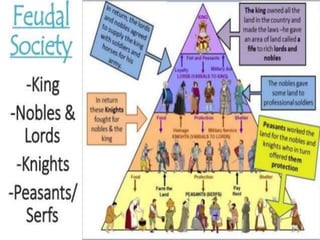
The three orders: focus on three social categories:
Christian priests , land owning nobles and peasants.
Changing relationships between these three groups.
Feudalism
 The term feudalism is been used by historians to
describe the economic , legal , political and social
relationships that existed in Europe in medieval era.
 Feudalism is a German word “feud” means a peace of
land. It refers to a kind of society France then later
England and southern Italy.
 In economic sense it refers to a kind of agricultural
production which is based on relationships between
lords and peasants.
French priests believed in the concept that
people were the members of the three
‘orders’ depending on their work.
The three orders of society were Clergy ,
Nobility and Peasantry.
FIRST ORDER : CLERGY
 Catholic church had its own laws, owned lands
given it to by rulers and could levy taxes.
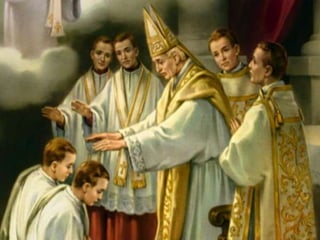
 The Christians in Europe were guided by bishops
and clerics – who constituted the first order.
 Most of the villages had their own church where the
people assembled on Sunday together to listen to
the priest and to pray together.
 Women could not become priests and men who
become priests could not marry.
 The use of term lord for god is taken from the
feudal elite.
 Priests placed themselves in first order and nobles in
the second.
 The big landowners – the nobles –were the vassals of
the king, and peasants were the vassals of landowners.
 The noble was the lord of the people who settled in his
land.
 Noble’s house was called as the manor.
 His private land was cultivated by peasants..
THIRD ORDER: PEASANTS
 Cultivators were of two kinds : free peasants and
serfs.
 Free peasants held their farms as tenants of the lord.
 The men had to render military service [at least forty
days every years].
 The peasants would be required to do any unpaid
labor services like digging ditches, gathering
firewood, building fences and repairing roads and
buildings.
 There was one direct tax called ‘tailed’ that kings
sometimes imposed on peasants.
MANORIAL ESTATE
 A lord his own manor-house he also controlled villages-
some lords controlled hundreds of villages where peasants
lived.
 A small manorial estate could contain a dozen families,
while larger estates might include fifty or sixty.
 Almost everything needed for daily life was found on the
estate: grain was grown in the fields, blacksmiths and
carpenters maintained the lord’s implements and repaired
his weapons, while stonemasons looked after his buildings.
 Women spun and wove fabric, and children worked in the
lord’s wine-presses.
 children worked in the lord’s wine-presses.
KNIGHTS
 From the ninth century, there were frequent localized wars
in Europe. The amateur peasant-soldiers were not
sufficient, and good cavalry was needed.
 . They were linked to the lords, just as the latter were
linked to the king.
 The lord gave the knight a piece of land (called ‘fief’) and
promised to protect it.
 In France, from the twelfth century, minstrels travelled
from manor to manor, singing songs which told stories –
partly historical, partly invented – about brave kings and
knights.
 It extended to anything between 1,000 and 2,000 acres or
more, including a house for the knight and his family, a
church and other establishments to house his dependants,
besides a watermill and a wine-press.
 They lived in religious communities called abbeys or
monasteries, often in places very far from human
habitation.
 Two of the more well-known monasteries were those
established by St Benedict in Italy in 529 and of Cluny
in Burgundy in 910.
 men became monks and women nuns.
 Like priests, monks and nuns did not marry.
 They contributed to the development of the arts
ENVIORNMENT
 From the fifth to the tenth centuries, most of
Europe was covered with vast forests.
 The land available for agriculture was limited.
 From the eleventh century, Europe entered a
warm phase. Average temperatures
increased, which had a profound effect on
agriculture.
CRISIS OF FOURTEENTH
CENTURY
 By the early fourteenth century, Europe's economic
expansion slowed down.
 In 13th century the warm summers of the previous
years had given way to bitterly cold summers.
 Seasons for growing crops were reduced by a month.
 The ships came with rats carrying the deadly bubonic
plague infection(Black death).
 Serious imbalances were created between agriculture
and manufacture.
 Development in the political sphere was parallel
to the social processes. In the 15th and 16th
centuries, emergence of triumphant rulers in
Europe was stimulated by the social changes of
13th and 14th centuries as the feudal system
weakened. Both the powerful new states and the
economic changes that were occurring were
significant for Europe. The historians called
these kings' the new monarchs'. The kings like
Louis XI in France,Maximilian in Austria,Henry-VII
in England and Isabelle and Ferdinand in Spain
were absolute monarchs. They started the
process of organizing standing armies, a
permanent bureaucracy and national taxation
and, in Spain and France began to play a role in
European expansion overseas.
Made my
Rahul
Gaurav
Shobith
Akshay

Three orders class 11

  • 1.
  • 2.
     INTRODUCTION  FEUDALISM THETHREE ORDERS: CLERGY, NOBILITY AND PEASANTS  MANORIAL ESTATE  KNIGHTS  MONKS  ENVIORNMENT  CRISIS OF FOURTEENTHCENTURY  POLITICAL CHANGES
  • 3.
    Socio Economic andpolitical changes occurred in western Europe between ninth and sixteenth century. The three orders: focus on three social categories: Christian priests , land owning nobles and peasants. Changing relationships between these three groups.
  • 4.
    Feudalism  The termfeudalism is been used by historians to describe the economic , legal , political and social relationships that existed in Europe in medieval era.  Feudalism is a German word “feud” means a peace of land. It refers to a kind of society France then later England and southern Italy.  In economic sense it refers to a kind of agricultural production which is based on relationships between lords and peasants.
  • 6.
    French priests believedin the concept that people were the members of the three ‘orders’ depending on their work. The three orders of society were Clergy , Nobility and Peasantry.
  • 7.
    FIRST ORDER :CLERGY  Catholic church had its own laws, owned lands given it to by rulers and could levy taxes.  The Christians in Europe were guided by bishops and clerics – who constituted the first order.  Most of the villages had their own church where the people assembled on Sunday together to listen to the priest and to pray together.  Women could not become priests and men who become priests could not marry.  The use of term lord for god is taken from the feudal elite.
  • 9.
     Priests placedthemselves in first order and nobles in the second.  The big landowners – the nobles –were the vassals of the king, and peasants were the vassals of landowners.  The noble was the lord of the people who settled in his land.  Noble’s house was called as the manor.  His private land was cultivated by peasants..
  • 11.
    THIRD ORDER: PEASANTS Cultivators were of two kinds : free peasants and serfs.  Free peasants held their farms as tenants of the lord.  The men had to render military service [at least forty days every years].  The peasants would be required to do any unpaid labor services like digging ditches, gathering firewood, building fences and repairing roads and buildings.  There was one direct tax called ‘tailed’ that kings sometimes imposed on peasants.
  • 12.
    MANORIAL ESTATE  Alord his own manor-house he also controlled villages- some lords controlled hundreds of villages where peasants lived.  A small manorial estate could contain a dozen families, while larger estates might include fifty or sixty.  Almost everything needed for daily life was found on the estate: grain was grown in the fields, blacksmiths and carpenters maintained the lord’s implements and repaired his weapons, while stonemasons looked after his buildings.  Women spun and wove fabric, and children worked in the lord’s wine-presses.  children worked in the lord’s wine-presses.
  • 13.
    KNIGHTS  From theninth century, there were frequent localized wars in Europe. The amateur peasant-soldiers were not sufficient, and good cavalry was needed.  . They were linked to the lords, just as the latter were linked to the king.  The lord gave the knight a piece of land (called ‘fief’) and promised to protect it.  In France, from the twelfth century, minstrels travelled from manor to manor, singing songs which told stories – partly historical, partly invented – about brave kings and knights.  It extended to anything between 1,000 and 2,000 acres or more, including a house for the knight and his family, a church and other establishments to house his dependants, besides a watermill and a wine-press.
  • 14.
     They livedin religious communities called abbeys or monasteries, often in places very far from human habitation.  Two of the more well-known monasteries were those established by St Benedict in Italy in 529 and of Cluny in Burgundy in 910.  men became monks and women nuns.  Like priests, monks and nuns did not marry.  They contributed to the development of the arts
  • 15.
    ENVIORNMENT  From thefifth to the tenth centuries, most of Europe was covered with vast forests.  The land available for agriculture was limited.  From the eleventh century, Europe entered a warm phase. Average temperatures increased, which had a profound effect on agriculture.
  • 16.
    CRISIS OF FOURTEENTH CENTURY By the early fourteenth century, Europe's economic expansion slowed down.  In 13th century the warm summers of the previous years had given way to bitterly cold summers.  Seasons for growing crops were reduced by a month.  The ships came with rats carrying the deadly bubonic plague infection(Black death).  Serious imbalances were created between agriculture and manufacture.
  • 17.
     Development inthe political sphere was parallel to the social processes. In the 15th and 16th centuries, emergence of triumphant rulers in Europe was stimulated by the social changes of 13th and 14th centuries as the feudal system weakened. Both the powerful new states and the economic changes that were occurring were significant for Europe. The historians called these kings' the new monarchs'. The kings like Louis XI in France,Maximilian in Austria,Henry-VII in England and Isabelle and Ferdinand in Spain were absolute monarchs. They started the process of organizing standing armies, a permanent bureaucracy and national taxation and, in Spain and France began to play a role in European expansion overseas.
  • 18.