THERAPEUTIC MASSAGE
PRESENTED BY:-
MD SAMIULLAH
SHAGUFTA KHATOON
B.PHARM 4TH YEAR
ARYAKUL COLLEGE OF PHARMACY AND RESEARCH
INTRODUCTION
 Massage is an excellent form of passive exercise. It is
systemic rubbing and manipulation of different part of the
body for the therapeutic benefits.
The word massage is derived form the Greek word
‘massein’, or the French word ‘masser’, which both
mean: to kneed.
A male operator is called a masseur, a female operator,
a masseuse.
DEFINITION
Massage is the rubbing and kneading of muscle
and joints of the body with the hand, especially to
relieve tension and pain.
HISTORY OF THE MASSAGE
In the Chinese and Indian history massage can be traced
back as early as 3000 year ago.
In Ayurveda text , in Dinacharya concept it is mentioned
that massage should be done after doing exercise.
The ancient Greeks and Romans used to employ the
massage along with their therapeutic baths.
CONTINUE….
Celsus (Roman Physician) recommended the
manipulation of the head during headache.
Pliny (Roman Naturalist) used to rub own body for the
relief from the chronic asthma.
Sweden- early 19th century, Peter Ling (Founder of
Curative Gymnastic) – appears to be founder of modern
day massage techniques, incorporated with French
massage techniques.
PURPOSE OF THE MASSAGE
 To reduce muscle spasm
 To promote Relaxation
 To improve Blood flow
 To increase Venous drainage
 To prevent injuries
 To promote flexibility
 Prepare the athlete for peak performance
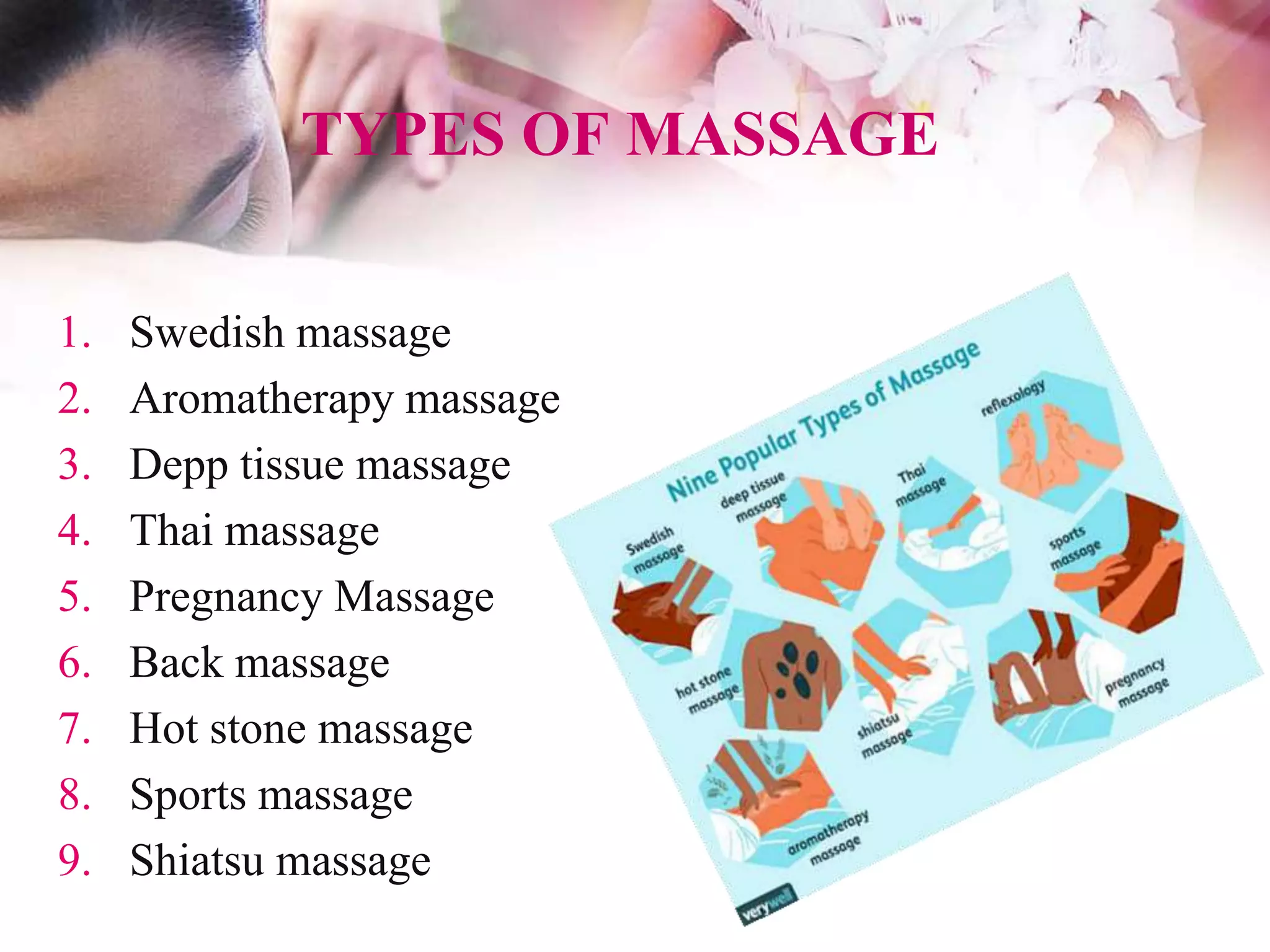
TYPES OF MASSAGE
1. Swedish massage
2. Aromatherapy massage
3. Depp tissue massage
4. Thai massage
5. Pregnancy Massage
6. Back massage
7. Hot stone massage
8. Sports massage
9. Shiatsu massage
SWEDISH MASSAGE
The most common type of massage is Swedish massage
therapy.
It involves soft, long, kneading strokes, as well as light,
rhythmic, tapping strokes, on top most layer of
muscles. This is also combined with movement of the
joints.
By relieving muscle tension, Swedish therapy can be
both relaxing and energizing and it may even help after
injury.
CONTINUE…
The four common strokes of Swedish massage are –
CONTINUE….
 Effleurage: a smooth, gliding stroke used to relax tissue.
 Petrissage: the squeezing, rolling or kneading that follows
effleurage.
 Friction: deep, circular movements that cause layer of
tissue to rub against each other, helping to increase blood
flow and break down scar tissue
 Tapotement: a short alternating tap done with cupped
hand, fingers or the edge of hands.
DEEP TISSUE MASSAGE
Deep tissue massage is best for giving to certain painful
attention to certain painful, stiff “trouble spots” in your
body
The massage therapist use slow deliberate strokes that
focus pressure on layer of muscles, tendons or other tissue
deep under your skin.
SPORTS MASSAGE
Developed to help with muscle system used for a particular
sport, sport uses a variety of approaches to help athletes in
training before, during, or after sports event.
you might use it to promote flexibility and help prevent
injuries or it may help muscle strains aiding healing after a
sport injury.
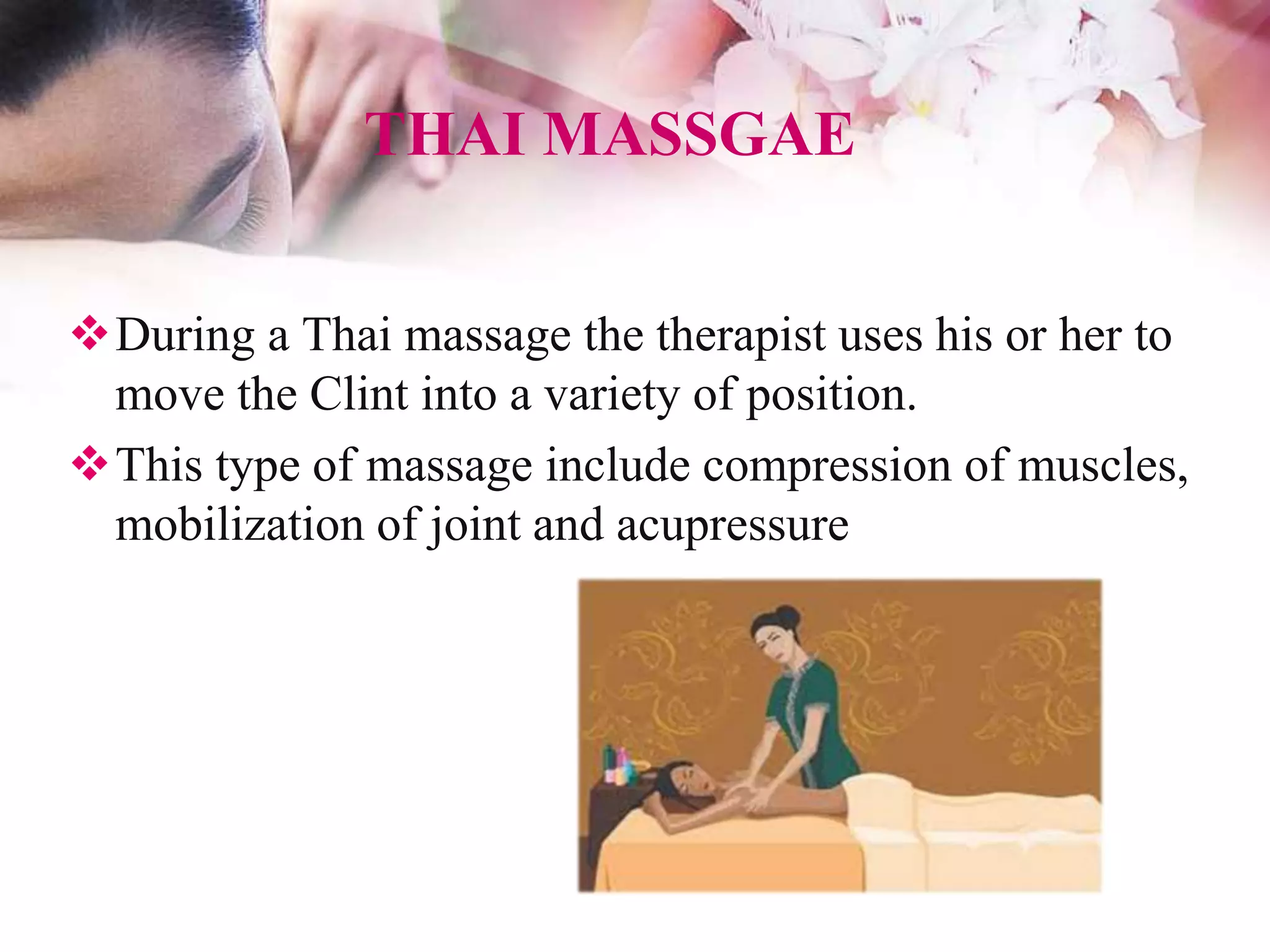
THAI MASSGAE
During a Thai massage the therapist uses his or her to
move the Clint into a variety of position.
This type of massage include compression of muscles,
mobilization of joint and acupressure
HOT STONE MASSAGE
For this kind of massage, the therapist place warmed stone
on certain areas of the body, such as acupressure points.
The stone may be used as massage tools or be temporarily
left in place.
Used along with other massage techniques , hot stone can
be quite soothing and relaxing as the transmit heat deep into
the body
PHYSIOLOGOCAL EFFECTS
Cardio vascular System :-
 Increase blood flow, histamine release and temperature
 Decreased heart rate, respiratory rate and blood pressure
Neuromuscular System :-
 Increase flexibility , decrease neuromuscular excitability,
edema, reduction stretch muscle and scar tissue
Pain :-
 Activate spinal gate and the release of endogenous opiates
CONTINUE…
 Muscular system :-
 Encourage nutrition and development of the muscle.
 Increase the elasticity and electro-excitability of the muscle.
 Digestive system :-
 Improve the appetite.
 Increase secretion of digestive enzyme.
 Increase the absorption.
Metabolic Effect :-
 Manipulation always affect the cellular activities of the local
areas
CONTINUE…
Respiratory system :-
 Increase cellular respiration.
 Increase the depth of respiration.
 Increase the diaphragmatic action.
Bones and Ligaments:-
 It promote the growth of bones and ligaments and blood
circulation to bone.
 Enhance the blood forming process ion red bone marrow.
BENEFITS
Provide relief from postural stress
Reduce muscle pain
Lowers stress and anxiety
Boost immune system
Promotes nervous system functioning
Reduce blood pressure
Improve mood, intellectual reasoning and job
performance
CONTRAINDICATION
Acute Inflammatory condition
Severe varicose veins
Open wounds
Skin Infection
Failed or incomplete fracture healing
Thrombophlebitis
Therapeutic Massage presentation, Massage ppt,

Therapeutic Massage presentation, Massage ppt,

  • 1.
    THERAPEUTIC MASSAGE PRESENTED BY:- MDSAMIULLAH SHAGUFTA KHATOON B.PHARM 4TH YEAR ARYAKUL COLLEGE OF PHARMACY AND RESEARCH
  • 2.
    INTRODUCTION  Massage isan excellent form of passive exercise. It is systemic rubbing and manipulation of different part of the body for the therapeutic benefits. The word massage is derived form the Greek word ‘massein’, or the French word ‘masser’, which both mean: to kneed. A male operator is called a masseur, a female operator, a masseuse.
  • 3.
    DEFINITION Massage is therubbing and kneading of muscle and joints of the body with the hand, especially to relieve tension and pain.
  • 4.
    HISTORY OF THEMASSAGE In the Chinese and Indian history massage can be traced back as early as 3000 year ago. In Ayurveda text , in Dinacharya concept it is mentioned that massage should be done after doing exercise. The ancient Greeks and Romans used to employ the massage along with their therapeutic baths.
  • 5.
    CONTINUE…. Celsus (Roman Physician)recommended the manipulation of the head during headache. Pliny (Roman Naturalist) used to rub own body for the relief from the chronic asthma. Sweden- early 19th century, Peter Ling (Founder of Curative Gymnastic) – appears to be founder of modern day massage techniques, incorporated with French massage techniques.
  • 6.
    PURPOSE OF THEMASSAGE  To reduce muscle spasm  To promote Relaxation  To improve Blood flow  To increase Venous drainage  To prevent injuries  To promote flexibility  Prepare the athlete for peak performance
  • 7.
    TYPES OF MASSAGE 1.Swedish massage 2. Aromatherapy massage 3. Depp tissue massage 4. Thai massage 5. Pregnancy Massage 6. Back massage 7. Hot stone massage 8. Sports massage 9. Shiatsu massage
  • 8.
    SWEDISH MASSAGE The mostcommon type of massage is Swedish massage therapy. It involves soft, long, kneading strokes, as well as light, rhythmic, tapping strokes, on top most layer of muscles. This is also combined with movement of the joints. By relieving muscle tension, Swedish therapy can be both relaxing and energizing and it may even help after injury.
  • 9.
    CONTINUE… The four commonstrokes of Swedish massage are –
  • 10.
    CONTINUE….  Effleurage: asmooth, gliding stroke used to relax tissue.  Petrissage: the squeezing, rolling or kneading that follows effleurage.  Friction: deep, circular movements that cause layer of tissue to rub against each other, helping to increase blood flow and break down scar tissue  Tapotement: a short alternating tap done with cupped hand, fingers or the edge of hands.
  • 11.
    DEEP TISSUE MASSAGE Deeptissue massage is best for giving to certain painful attention to certain painful, stiff “trouble spots” in your body The massage therapist use slow deliberate strokes that focus pressure on layer of muscles, tendons or other tissue deep under your skin.
  • 12.
    SPORTS MASSAGE Developed tohelp with muscle system used for a particular sport, sport uses a variety of approaches to help athletes in training before, during, or after sports event. you might use it to promote flexibility and help prevent injuries or it may help muscle strains aiding healing after a sport injury.
  • 13.
    THAI MASSGAE During aThai massage the therapist uses his or her to move the Clint into a variety of position. This type of massage include compression of muscles, mobilization of joint and acupressure
  • 14.
    HOT STONE MASSAGE Forthis kind of massage, the therapist place warmed stone on certain areas of the body, such as acupressure points. The stone may be used as massage tools or be temporarily left in place. Used along with other massage techniques , hot stone can be quite soothing and relaxing as the transmit heat deep into the body
  • 15.
    PHYSIOLOGOCAL EFFECTS Cardio vascularSystem :-  Increase blood flow, histamine release and temperature  Decreased heart rate, respiratory rate and blood pressure Neuromuscular System :-  Increase flexibility , decrease neuromuscular excitability, edema, reduction stretch muscle and scar tissue Pain :-  Activate spinal gate and the release of endogenous opiates
  • 16.
    CONTINUE…  Muscular system:-  Encourage nutrition and development of the muscle.  Increase the elasticity and electro-excitability of the muscle.  Digestive system :-  Improve the appetite.  Increase secretion of digestive enzyme.  Increase the absorption. Metabolic Effect :-  Manipulation always affect the cellular activities of the local areas
  • 17.
    CONTINUE… Respiratory system :- Increase cellular respiration.  Increase the depth of respiration.  Increase the diaphragmatic action. Bones and Ligaments:-  It promote the growth of bones and ligaments and blood circulation to bone.  Enhance the blood forming process ion red bone marrow.
  • 18.
    BENEFITS Provide relief frompostural stress Reduce muscle pain Lowers stress and anxiety Boost immune system Promotes nervous system functioning Reduce blood pressure Improve mood, intellectual reasoning and job performance
  • 19.
    CONTRAINDICATION Acute Inflammatory condition Severevaricose veins Open wounds Skin Infection Failed or incomplete fracture healing Thrombophlebitis