THE LYMPHORETICULAR SYSTEM
Dr. NDAYISABA CORNEILLE
CEO of CHG
MBChB,DCM,BCSIT,CCNA
Supported BY
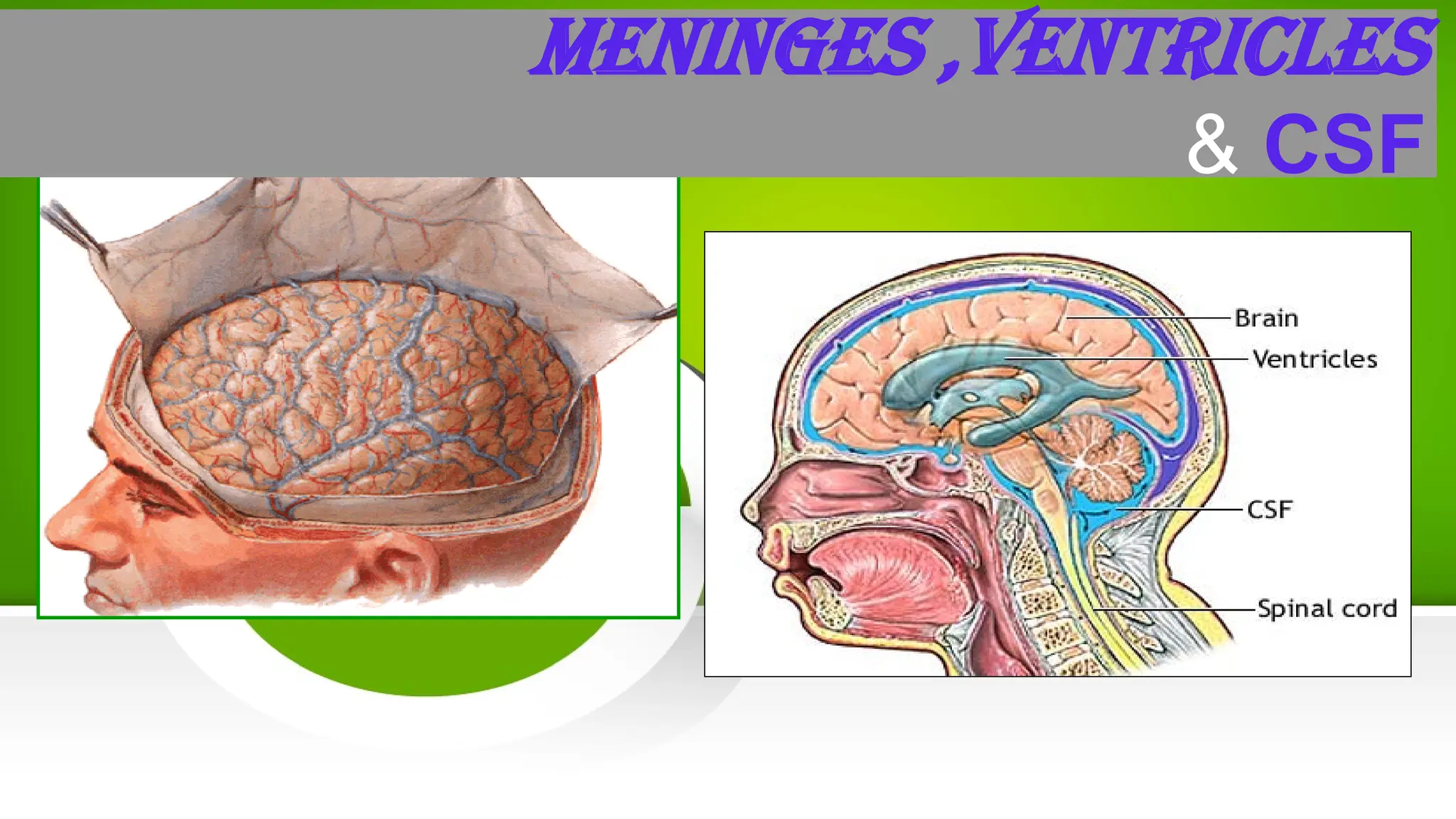
Meninges ,ventricles
& CSF
• The lymphoreticular system consists of the tissues of
• The lymphoid system
• and the mononuclear phagocyte system (reticuloendothelial
system)
• The lymphoid system consists of
• The spleen,
• Lymphnodes,
• Lymphatic vessels,
• Thymus,
• Bone marrow
• The lymphoid tissues associated with the GIT-eg tonsils, Payer
patches
7/20/2023 Dr Ndayisaba Corneille 3
7/20/2023 Dr Ndayisaba Corneille 4
Primary and Secondary lymphoid organs
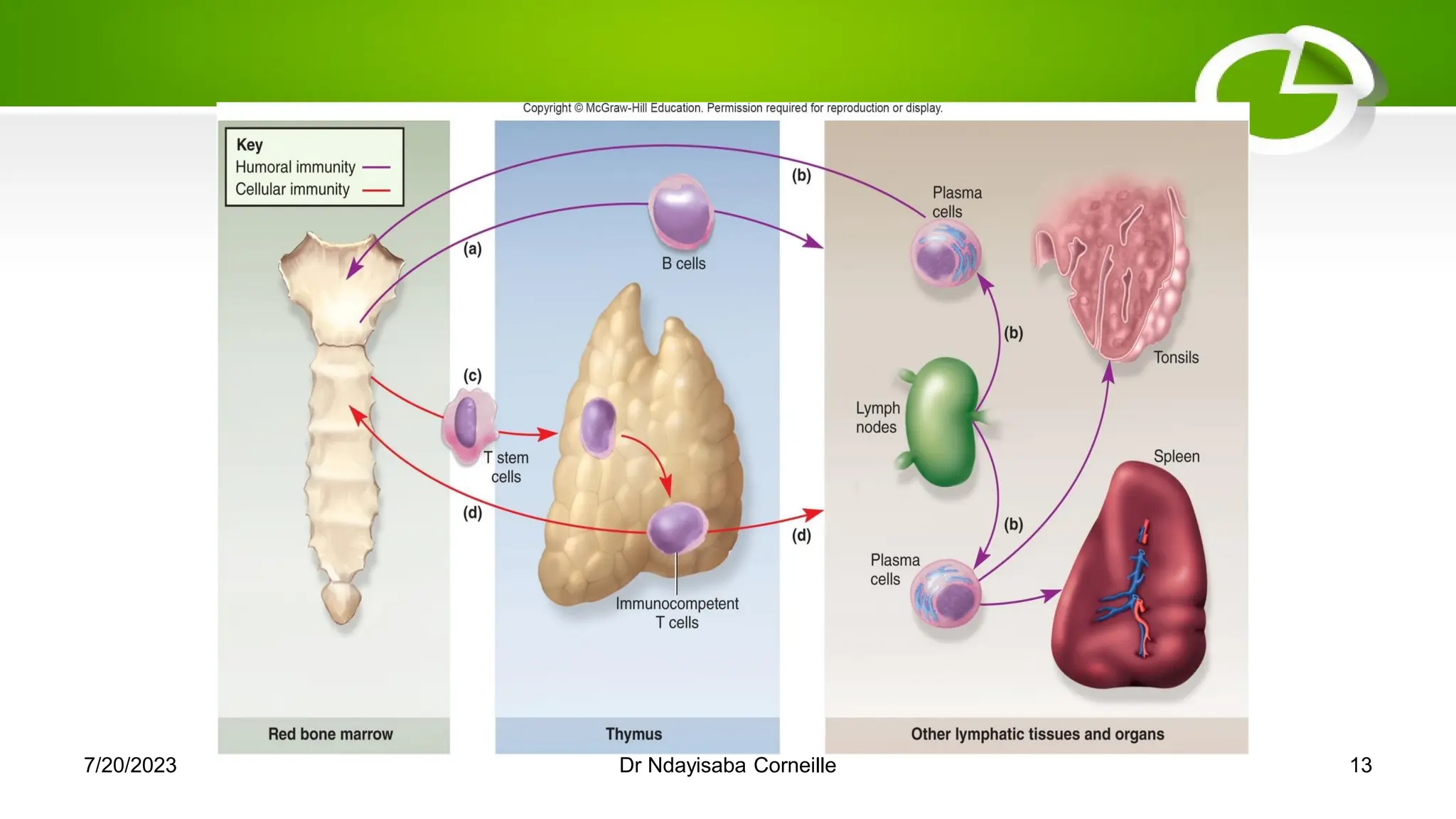
• The bone marrow and the thymus are the primary
lymphoid organs. Site where T and B cells become
immunocompetent:able to recognize and respond to
antigens
• While the spleen and the lymph nodes are the major
secondary lymphoid organs. Immunocompetent cells
populate these tissues
7/20/2023 Dr Ndayisaba Corneille 5
Functions of the LRS
• The functions of these systems include
• Collection and transport of interstitial fluid-Fluid balance
• Fluid continually filters from the blood capillaries into
the tissue spaces
• • Blood capillaries reabsorb 85%
• • 15% (2 to 4 L/day) of the water and about half of the
plasma proteins enter the lymphatic system and then are
returned to the blood
7/20/2023 Dr Ndayisaba Corneille 6
Functions of the LRS
• Transport of fats throughout the body
• Lacteals in small intestine absorb dietary lipids that are
not absorbed by the blood capillaries
7/20/2023 Dr Ndayisaba Corneille 7
Functions of the LRS
• Immunity- defense,
• Excess filtered fluid picks up foreign cells and chemicals
from the tissues
• • Passes through lymph nodes where immune cells stand
guard against foreign matter
• • Activates a protective immune response-cellular and
humoral immunity
7/20/2023 Dr Ndayisaba Corneille 8
Cells of the lymphoreticular system
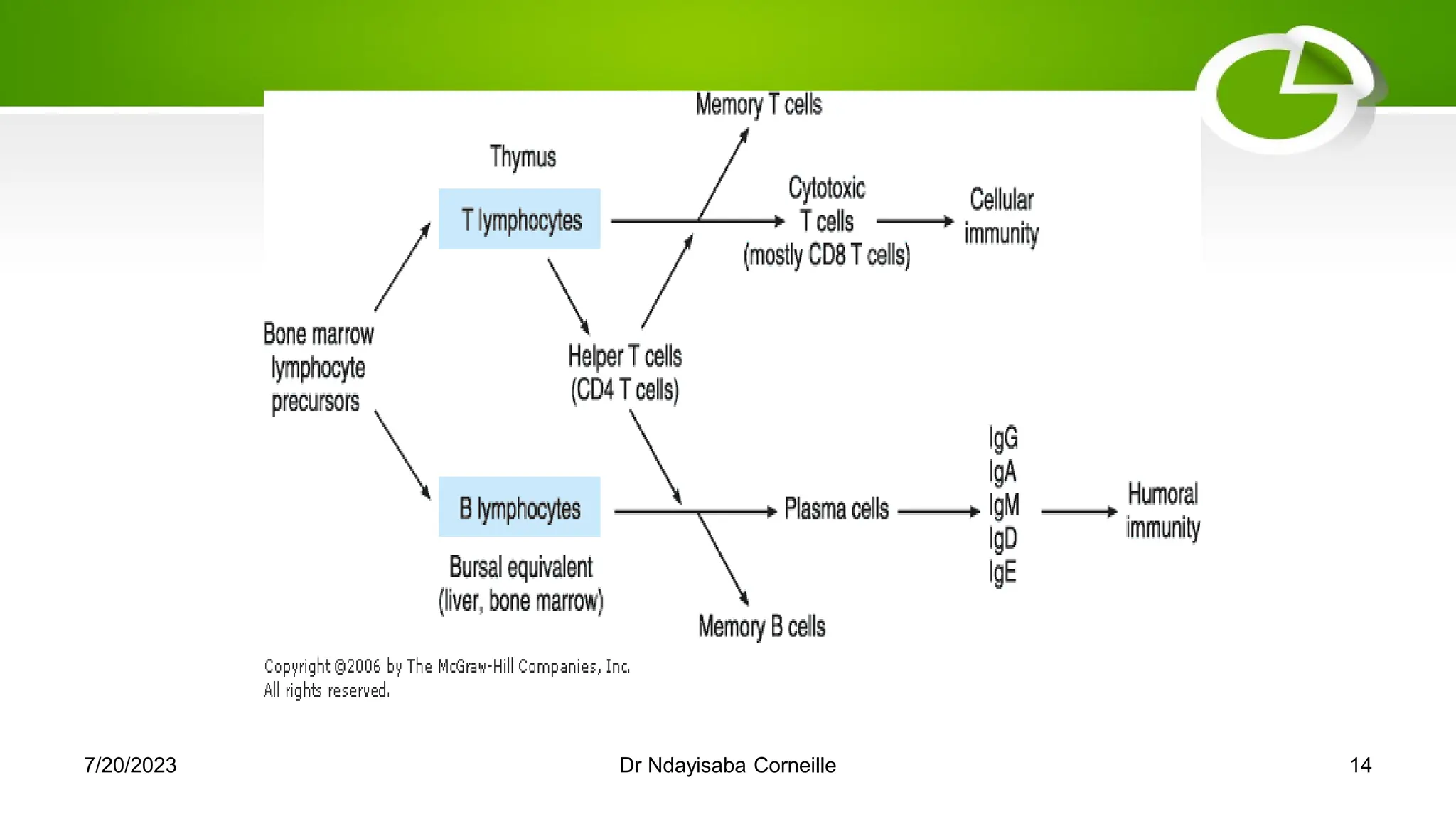
• Lymphocytes
• T-lymphocytes
• T-helper
• T-cytotic
• T-memory
• T-regulator/suppressor
• Natural killer cells-NKC
• B-lymphocytes
• Antigen presenting cells-
APC
• Macrophages
• Dendritic cells
7/20/2023 Dr Ndayisaba Corneille 9
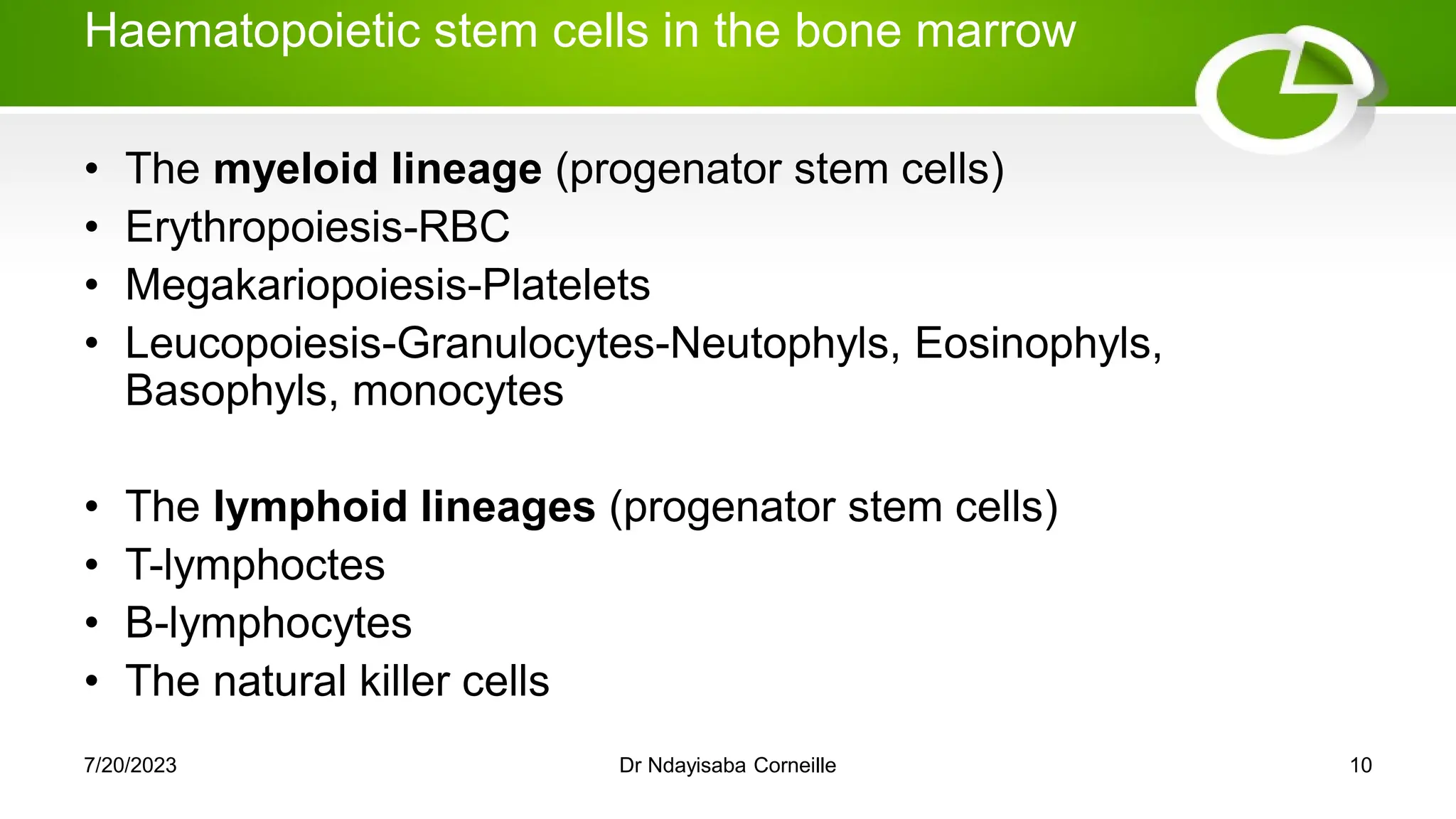
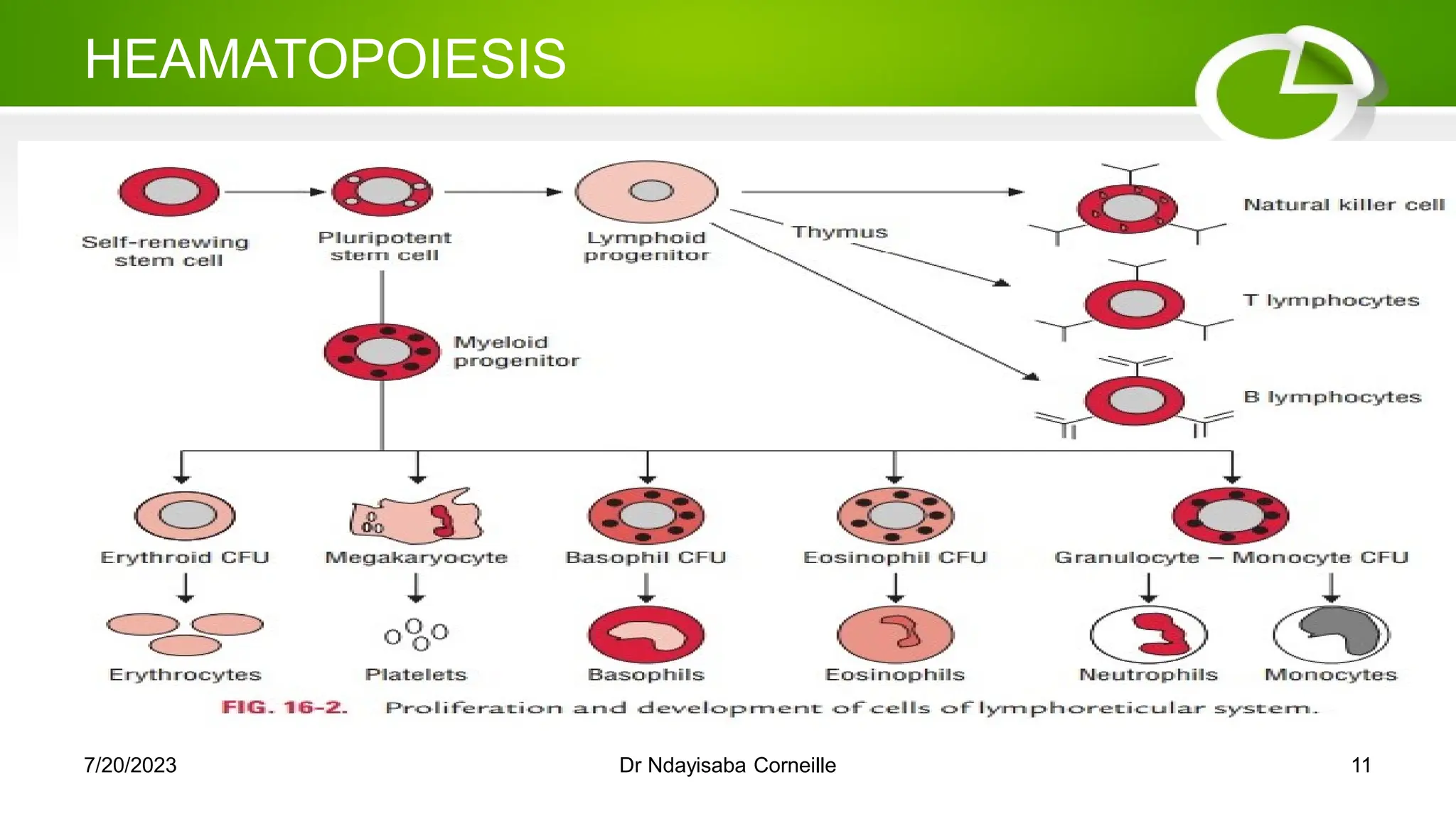
Haematopoietic stem cells in the bone marrow
• The myeloid lineage (progenator stem cells)
• Erythropoiesis-RBC
• Megakariopoiesis-Platelets
• Leucopoiesis-Granulocytes-Neutophyls, Eosinophyls,
Basophyls, monocytes
• The lymphoid lineages (progenator stem cells)
• T-lymphoctes
• B-lymphocytes
• The natural killer cells
7/20/2023 Dr Ndayisaba Corneille 10
HEAMATOPOIESIS
7/20/2023 Dr Ndayisaba Corneille 11
7/20/2023 Dr Ndayisaba Corneille 12
7/20/2023 Dr Ndayisaba Corneille 13
14
7/20/2023 Dr Ndayisaba Corneille
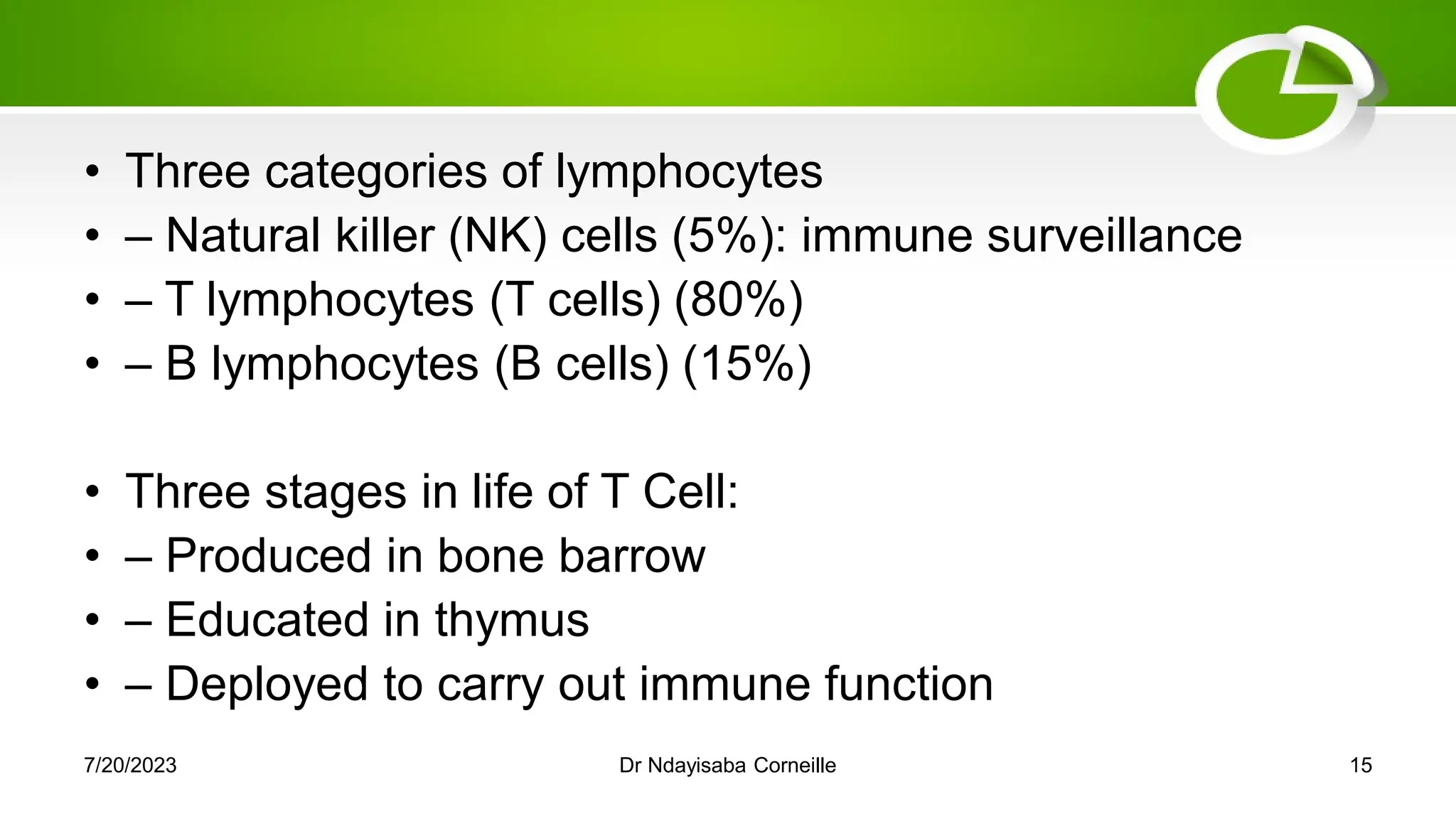
• Three categories of lymphocytes
• – Natural killer (NK) cells (5%): immune surveillance
• – T lymphocytes (T cells) (80%)
• – B lymphocytes (B cells) (15%)
• Three stages in life of T Cell:
• – Produced in bone barrow
• – Educated in thymus
• – Deployed to carry out immune function
7/20/2023 Dr Ndayisaba Corneille 15
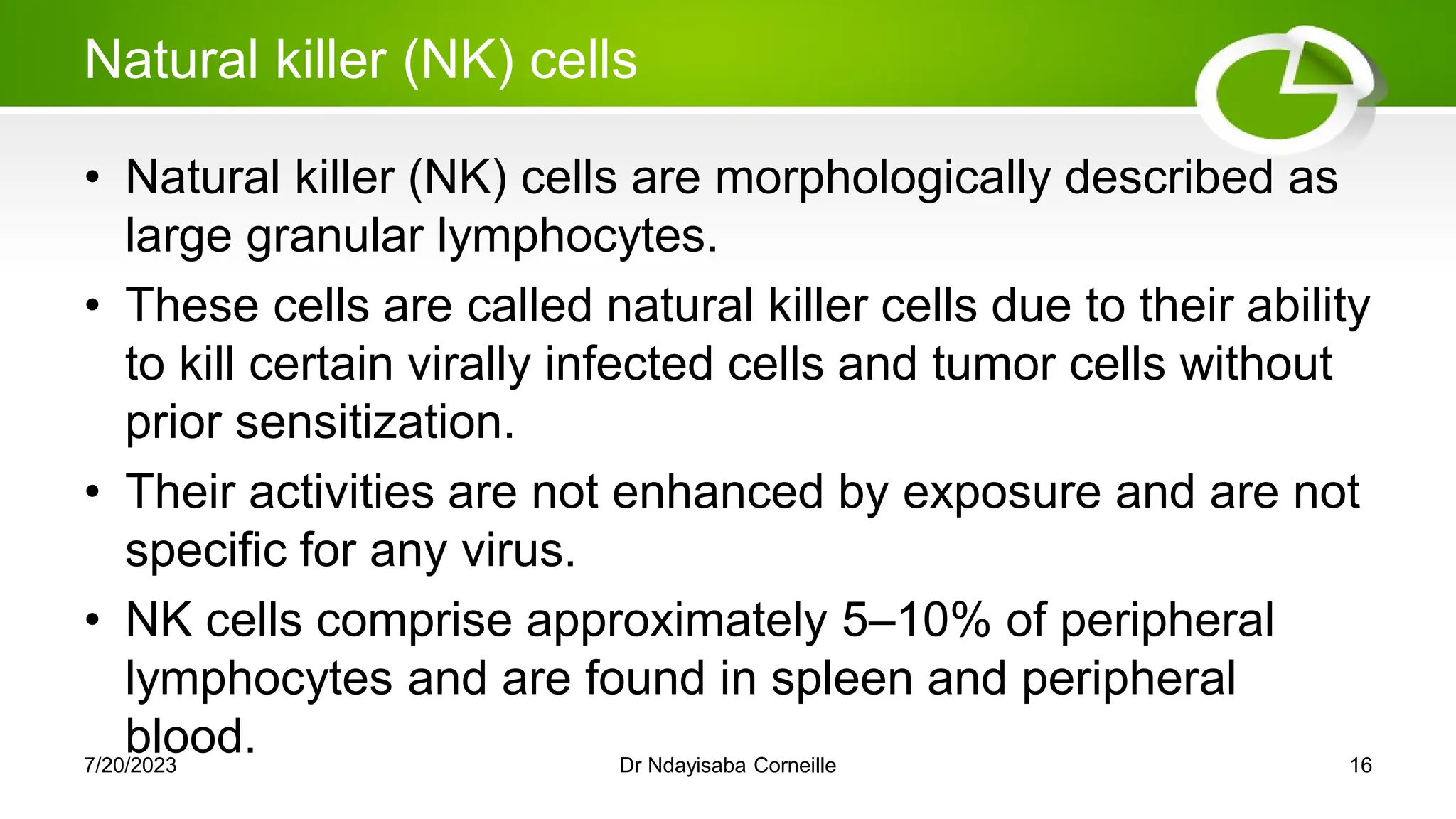
Natural killer (NK) cells
• Natural killer (NK) cells are morphologically described as
large granular lymphocytes.
• These cells are called natural killer cells due to their ability
to kill certain virally infected cells and tumor cells without
prior sensitization.
• Their activities are not enhanced by exposure and are not
specific for any virus.
• NK cells comprise approximately 5–10% of peripheral
lymphocytes and are found in spleen and peripheral
blood.
7/20/2023 Dr Ndayisaba Corneille 16
T lymphocytes (T cells)
• Cytotoxic T (TC) cells: killer T cells (T8, CD8, or CD8+)
– ―Effectors‖ of cellular immunity; carry out attack on
enemy cells;
• Helper T (TH) cells:– Help promote TC cell and B cell
action and nonspecific resistance (T4, CD4, CD4+)
• Regulatory T (TR) cells: Also called T-suppressor cells.
T-regs – Inhibit multiplication and cytokine secretion by
other T cells; limit immune response– Like TH cells, TR
cells can be called T4, CD4, CD4+
• Memory T (TM) cells – Descend from the cytotoxic T
cells: – Responsible for memory in cellular immunity
7/20/2023 Dr Ndayisaba Corneille 17
B-Cells
• B cells develop in bone
• – Some fetal stem cells remain in bone marrow and
differentiate into B cells
• • B cells that react to self-antigens undergo either anergy
or clonal deletion, same as T cell selection
• • Self-tolerant B cells synthesize antigen surface
receptors, divide rapidly, produce immunocompetent
clones
• • Leave bone marrow and colonize same lymphatic
tissues and organs as T cells
7/20/2023 Dr Ndayisaba Corneille 18
Plasma cells
• Plasma cells originate from terminally differentiated B
cells. Activated B cells
• The main function of the plasma cells is to produce and
secrete all the classes of immunoglobulins·
• They secrete thousands of antibody molecules per
second, which are specific for the epitope of the antigen
for a few days and then die.They have a short lifespan of
30 days during which they produce large quantities of
immunoglobulins.
• They divide very poorly, if at all, and are usually found in
the bone marrow and in the perimucosal lymphoid
tissues.
7/20/2023 Dr Ndayisaba Corneille 19
Antigen-Presenting Cells-APC
• T cells cannot recognize antigens on their own.
• Antigen-presenting cells (APCs) are required
• Dendritic cells,
• Macrophages,
• Reticular cells,
• and B cells function as APCs
7/20/2023 Dr Ndayisaba Corneille 20
Dendritic cells
• Dendritic cells are so named because of their many long,
narrow processes that resemble neuronal dendrites,
which make them very efficient at making contacts with
foreign materials.
• They are primarily present in the skin (e.g., Langerhans
cells) and the mucosa, from where they migrate
7/20/2023 Dr Ndayisaba Corneille 21
Dendritic cells
• Four types of dendritic cells are known:
• (i) Langerhans cells,
• (ii) interstitial dendritic cells,
• (iii) myeloid cells, and
• (iv) lymphoid dendritic cells.
• All these cells constitutively express high levels of both
class II MHC molecules
7/20/2023 Dr Ndayisaba Corneille 22
Dendritic cells
• Following microbial invasion or during inflammation,
mature and immature forms of Langerhans cells and
interstitial dendritic cells migrate into draining lymph
nodes, where they make the critical presentation of
antigen to TH cells, which is required for the initiation of
responses by those key cells.
7/20/2023 Dr Ndayisaba Corneille 23
Macrophages
• The mononuclear phagocytic system consists of monocytes
circulating in the blood and macrophages in the tissues.
• The monocyte is considered a leukocyte in transit through the
blood, which becomes a macrophage when fixed in a tissue.
• Monocytes and macrophages as well as granulocytes are able
to ingest particulate matter (microorganisms, cells, inert
particles) and for this reason are said to have phagocytic
functions.
• The phagocytic activity is greater in macrophages
• Macrophages are 5 to 10 times larger than monocytes
7/20/2023 Dr Ndayisaba Corneille 24
• Macrophages perform threemain functions:
• (a) phagocytosis,
• (b) antigen presentation, and
• (c) cytokine production
7/20/2023 Dr Ndayisaba Corneille 25
• Antigen processing
• – APC encounters antigen
• – Internalizes it by endocytosis
• – Digests it into molecular fragments
• – Displays relevant fragments (epitopes) in the grooves of
the MHC protein
7/20/2023 Dr Ndayisaba Corneille 26
• Antigen presenting
• – Wandering T cells inspect APCs for displayed antigens
• – If APC only displays a self-antigen, the T cell disregards it
• – If APC displays a nonself-antigen, the T cell initiates an
immune attack
• – APCs alert the immune system the presence of foreign
antigen
• – Key to successful defense is to quickly mobilize immune cells
against the antigen
• – With so many cell types involved in immunity, they require
chemical messengers to coordinate their activities—interleukins
7/20/2023 Dr Ndayisaba Corneille 27
• Both cellular and humoral immunity occur in three stages
• – Recognition-Recognize
• – Attack– React
• – Memory– Remember
―The three Rs of immunity‖
• – Recognize– React– Remember
7/20/2023 Dr Ndayisaba Corneille 28
7/20/2023 Dr Ndayisaba Corneille 29
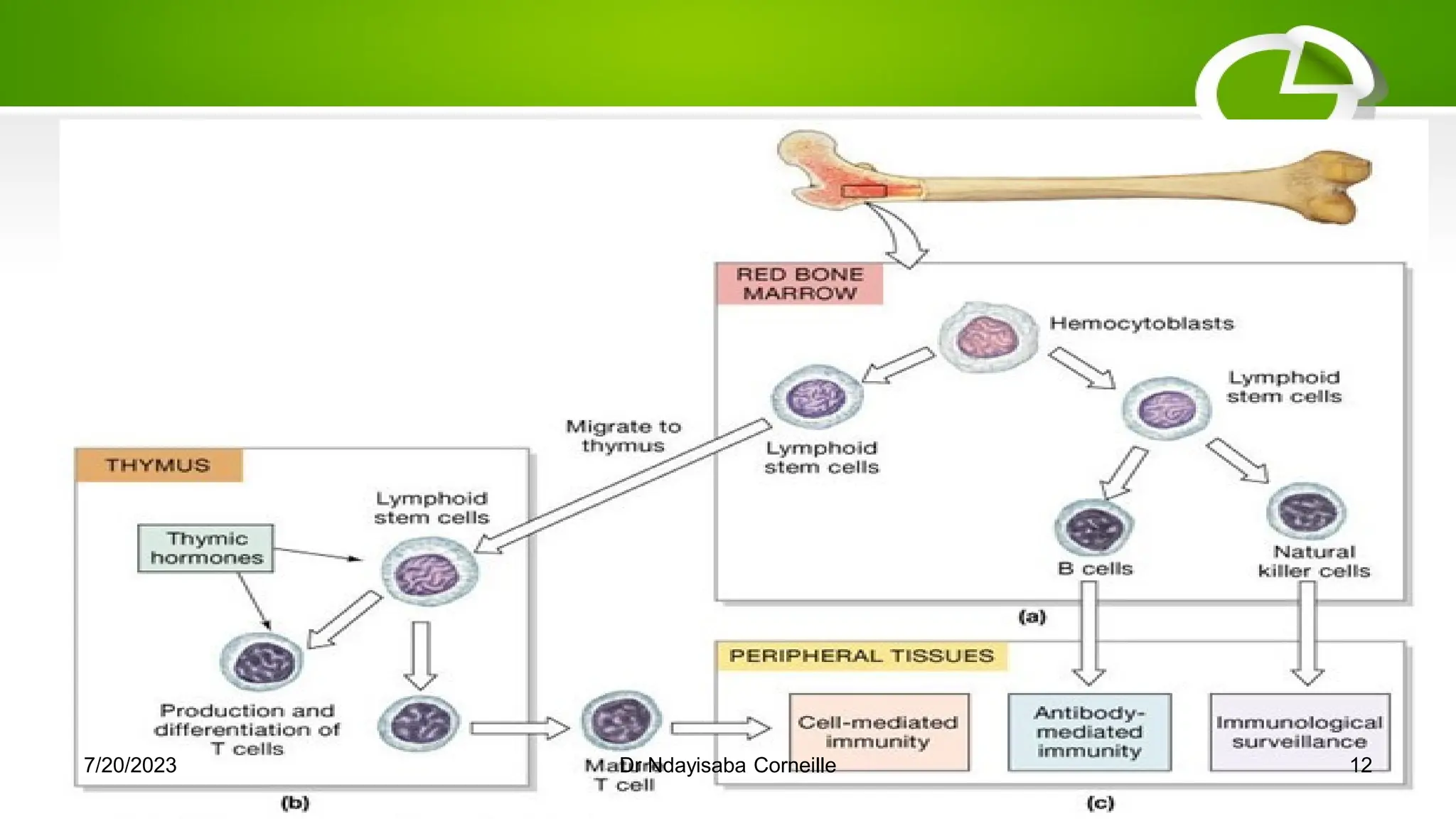
THE BONE MARROW
• Bone marrow is a soft, gelatinous tissue
• Present in the central cavity of long bones such as the
femur and humerus.
• Blood cells and immune cells arise from the bone marrow;
• They develop from immature stem cells
(haemocytoblasts), which follow distinct developmental
pathways to form erythrocytes, leucocytes or platelets-
HEMATOPOIESIS
7/20/2023 Dr Ndayisaba Corneille 30
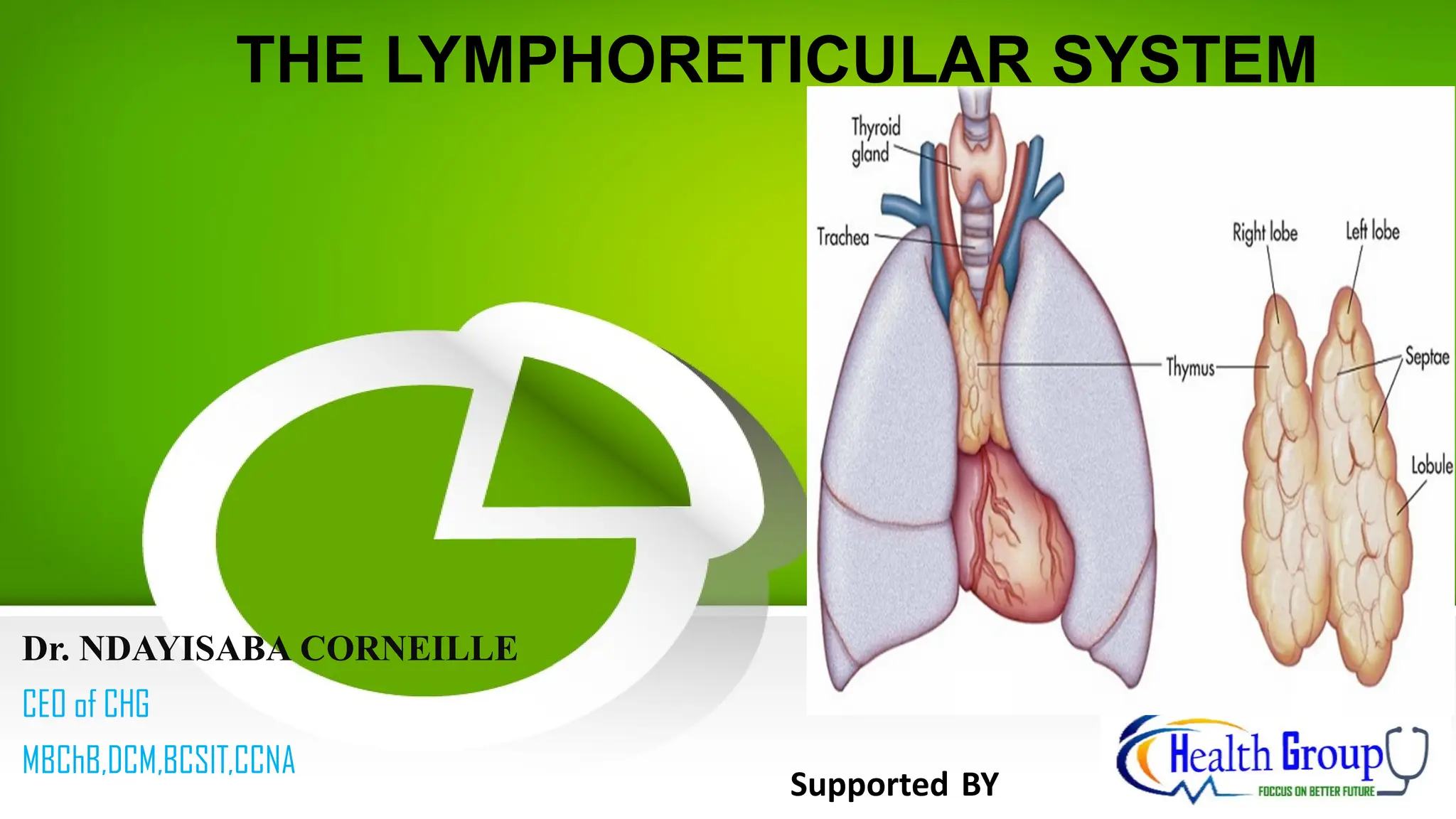
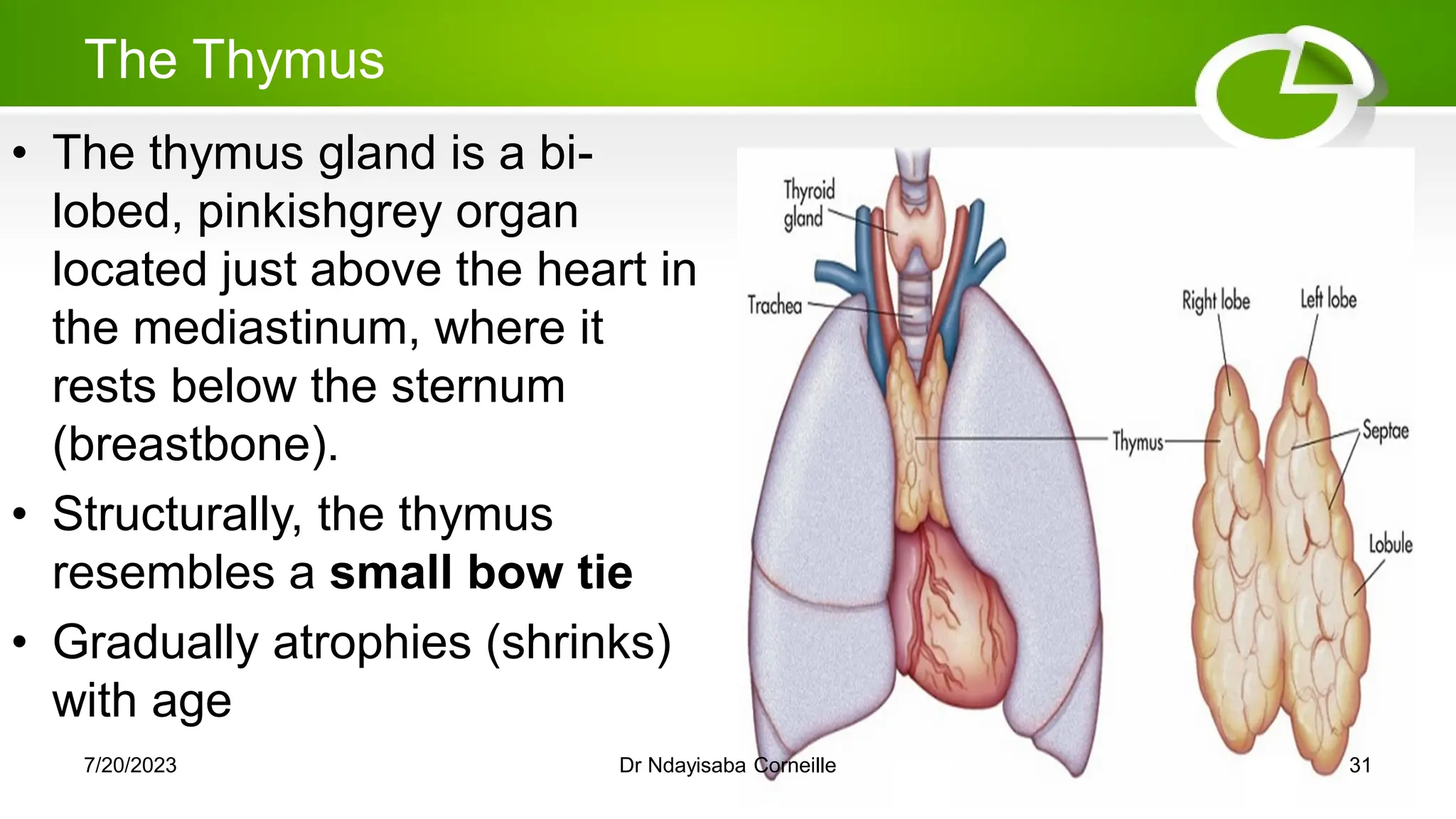
The Thymus
• The thymus gland is a bi-
lobed, pinkishgrey organ
located just above the heart in
the mediastinum, where it
rests below the sternum
(breastbone).
• Structurally, the thymus
resembles a small bow tie
• Gradually atrophies (shrinks)
with age
7/20/2023 Dr Ndayisaba Corneille 31
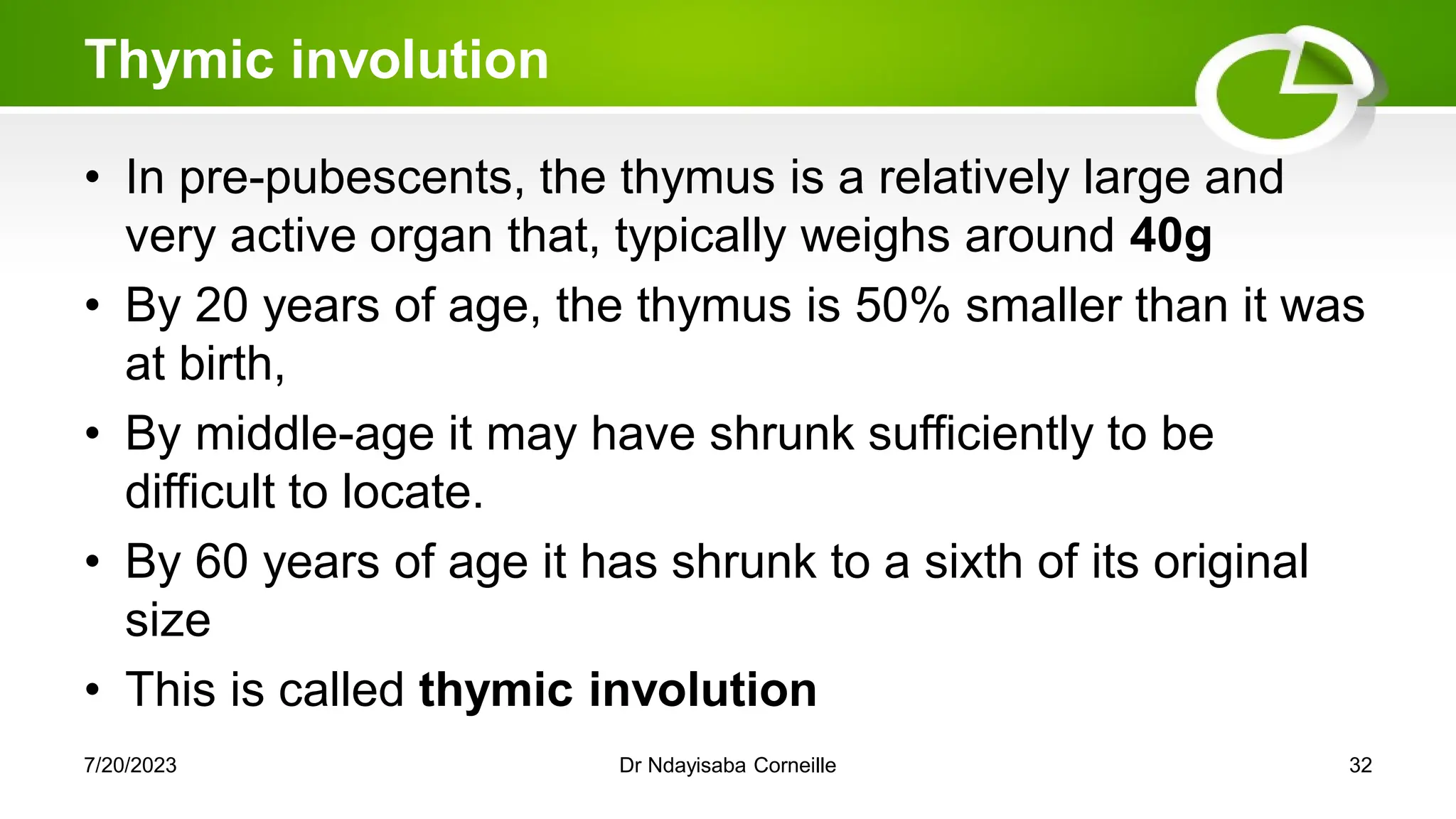
Thymic involution
• In pre-pubescents, the thymus is a relatively large and
very active organ that, typically weighs around 40g
• By 20 years of age, the thymus is 50% smaller than it was
at birth,
• By middle-age it may have shrunk sufficiently to be
difficult to locate.
• By 60 years of age it has shrunk to a sixth of its original
size
• This is called thymic involution
7/20/2023 Dr Ndayisaba Corneille 32
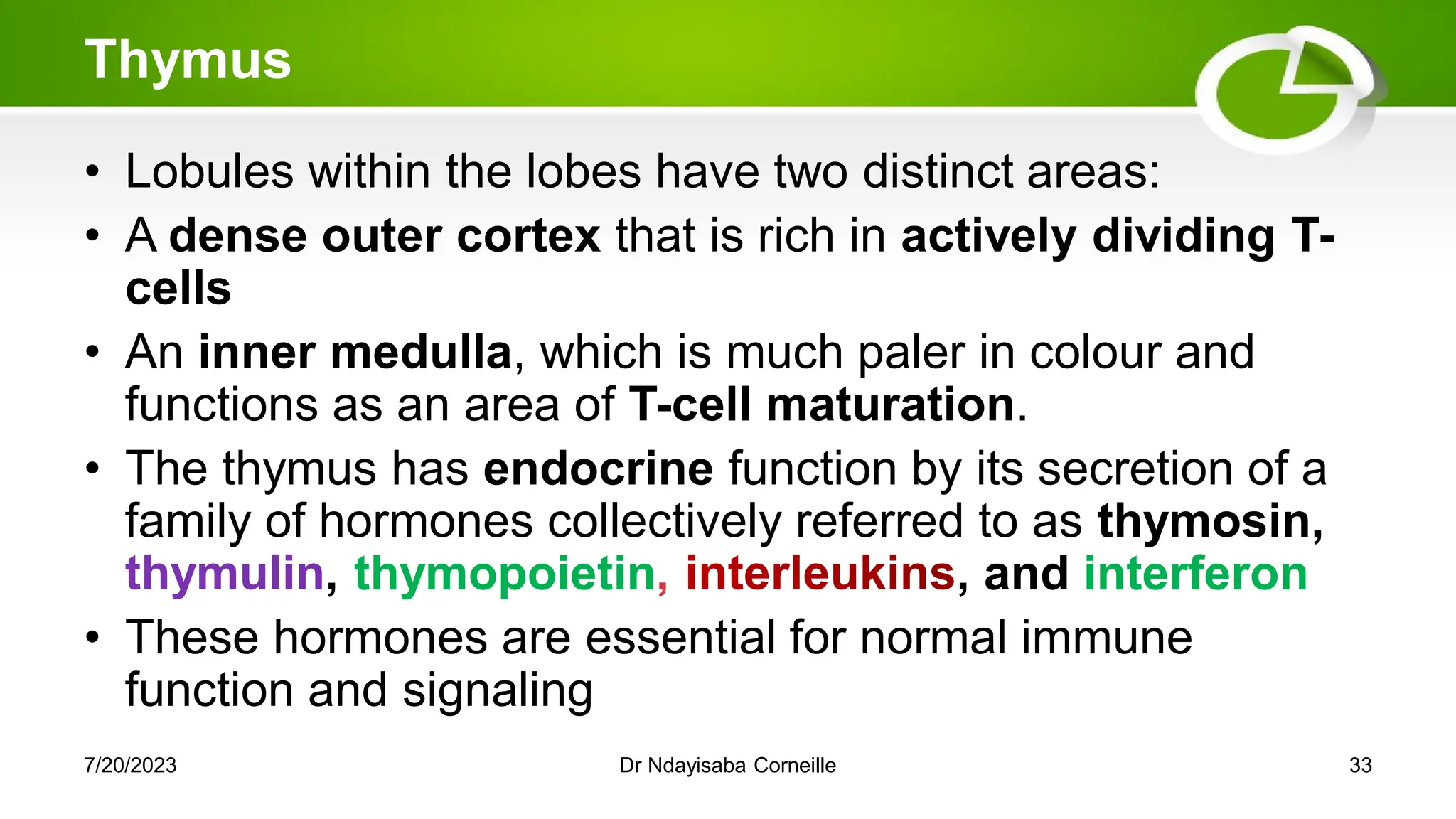
Thymus
• Lobules within the lobes have two distinct areas:
• A dense outer cortex that is rich in actively dividing T-
cells
• An inner medulla, which is much paler in colour and
functions as an area of T-cell maturation.
• The thymus has endocrine function by its secretion of a
family of hormones collectively referred to as thymosin,
, thymopoietin , and interferon
• These hormones are essential for normal immune
function and signaling
7/20/2023 Dr Ndayisaba Corneille 33
Role of THYMUS in T-cell maturation
• T-cells originate as haematopoietic stem cells from the red bone
marrow.
• A population of these haematopoietic stem cells infiltrate the
thymus, dividing further within the cortical regions of the lobules
then migrating into the medullary regions to mature into active T-
cells
• This process of T-cell maturation is controlled by the hormone
.
• A proportion of these mature T-cells continually migrate from the
thymus into the blood and other lymphoid organs (spleen and
lymph nodes), where they play a major role in the body‘s specific
immune responses
7/20/2023 Dr Ndayisaba Corneille 34
T-cells programming-thymic education
• One of the most important functions of the thymus is
programming T-cells to recognise ‗self ‘ antigens
through a process called thymic education
• This process allows mature T-cells to distinguish foreign,
and therefore potentially pathogenic, material from
antigens that belong to the body.
• It has been demonstrated that removal of the thymus may
lead to an increase in autoimmune diseases, as this
ability to recognise self is diminished
7/20/2023 Dr Ndayisaba Corneille 35
Thymic education
• Within the thymus
• – Reticular epithelial (RE) cells release chemicals that
stimulate maturing T cells to develop surface antigen
receptors
• – With receptors, the T cells are now immunocompetent:
• capable of recognizing antigens presented to them
7/20/2023 Dr Ndayisaba Corneille 36
Thymic education
• RE cells test T cells by presenting self-antigens to them;
• T cells can fail by:
• • Being unable to recognize the RE cells at all
• • Would be incapable of recognizing foreign attack
• • Reacting to the self-antigen
• • Would attack one‘s own tissues
• • T cells that fail are eliminated by negative selection
Clonal deletion—self-reactive T cells die and macrophages
phagocytize them
Anergy—self-reactive T cells remain alive but unresponsive
7/20/2023 Dr Ndayisaba Corneille 37
Thymic education
• Negative selection leaves the body in a state of self-tolerance
• The surviving T cells respond only to
• suspicious antigens (ignoring the body‘s own proteins)
• – Only 2% of T cells pass the test
• • In thymus medulla, surviving T cells undergo positive selection:
• they multiply and form clones of identical cells programmed to respond to
a specific antigen
• • Naive lymphocyte pool: immunocompetent T cells that have not yet
encountered foreign antigens
• • Deployment
• – Naive T cells leave thymus and colonize lymphatic tissues and organs
everywhere in the body
7/20/2023 Dr Ndayisaba Corneille 38
THE SPLEEN
• The spleen and lymph nodes are two major secondary
lymphoid organs that play key roles in:
• Filtering out and destroying unwanted pathogens;
• Maintaining the population of mature lymphocytes (which
are white blood cells) to enable the adaptive immune
response to begin
7/20/2023 Dr Ndayisaba Corneille 39
THE SPLEEN
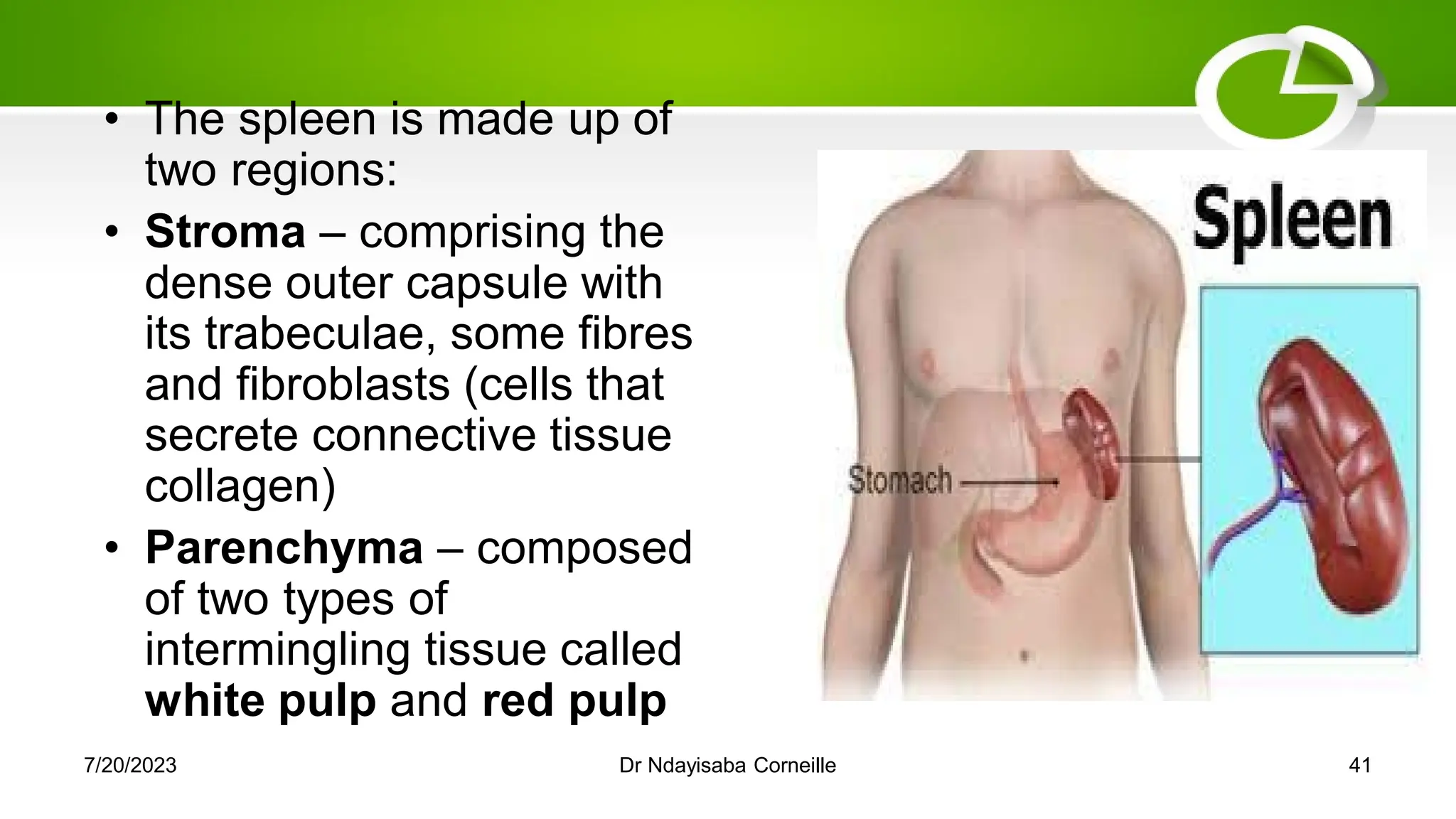
• The spleen is the largest lymphoid organ.
• Situated in the upper left hypochondriac region of the
abdominal cavity,
• Between the diaphragm and the fundus of the stomach
• Primarily functions as a filter for the blood, bringing it into
close contact with scavenging phagocytes (white blood
cells in the spleen that will seek out and ‗eat‘ any
pathogens in the blood) and lymphocytes.
7/20/2023 Dr Ndayisaba Corneille 40
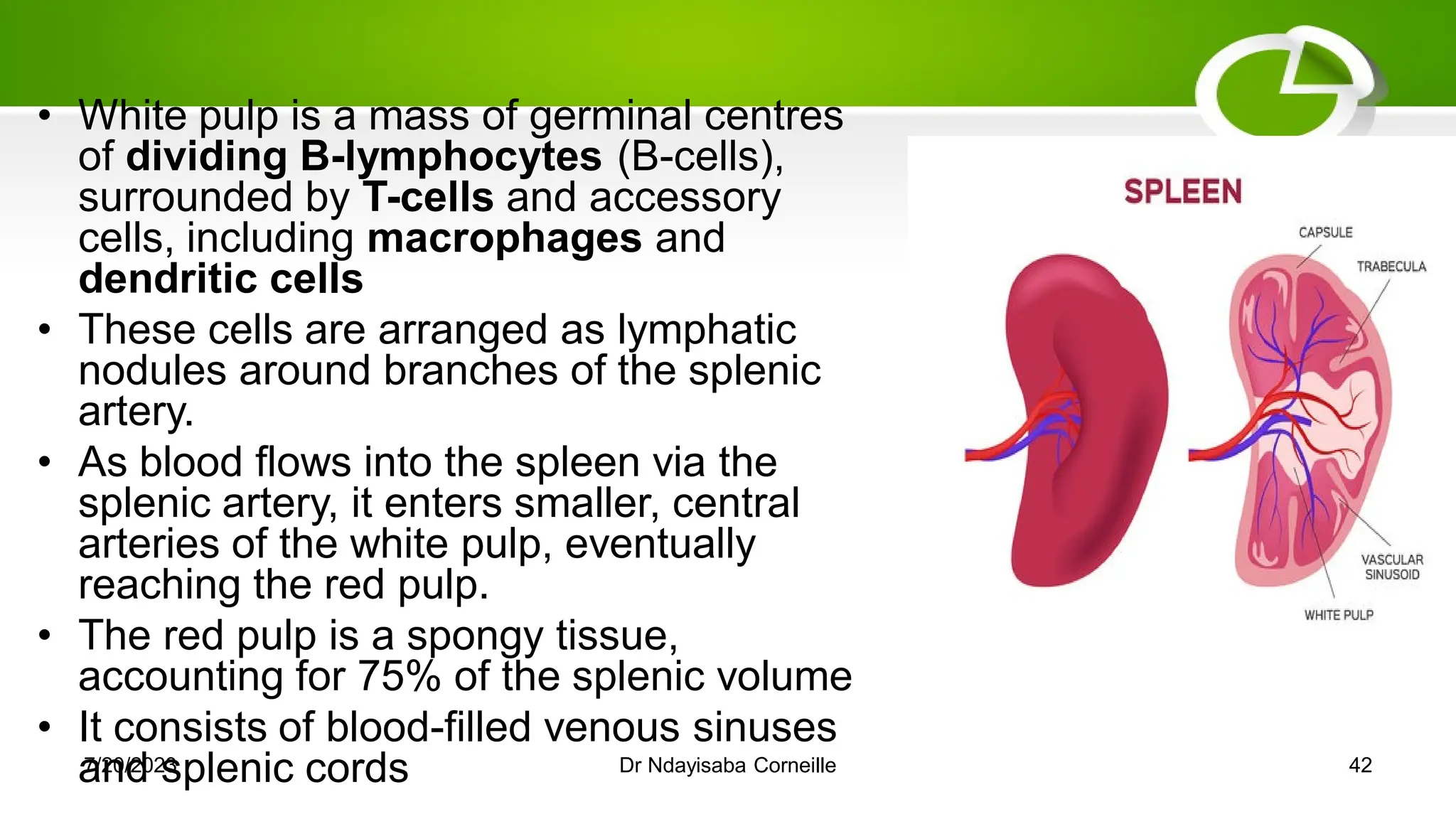
• The spleen is made up of
two regions:
• Stroma – comprising the
dense outer capsule with
its trabeculae, some fibres
and fibroblasts (cells that
secrete connective tissue
collagen)
• Parenchyma – composed
of two types of
intermingling tissue called
white pulp and red pulp
7/20/2023 Dr Ndayisaba Corneille 41
• White pulp is a mass of germinal centres
of dividing B-lymphocytes (B-cells),
surrounded by T-cells and accessory
cells, including macrophages and
dendritic cells
• These cells are arranged as lymphatic
nodules around branches of the splenic
artery.
• As blood flows into the spleen via the
splenic artery, it enters smaller, central
arteries of the white pulp, eventually
reaching the red pulp.
• The red pulp is a spongy tissue,
accounting for 75% of the splenic volume
• It consists of blood-filled venous sinuses
and splenic cords
7/20/2023 Dr Ndayisaba Corneille 42
THE SPLEEN
• When foreign antigens reach these organs, they initiate
lymphocyte activation and subsequent clonal
expansion and maturation of these important white
blood cells.
• Mature lymphocytes can then leave the secondary organs
to enter the circulation, or travel to other areas, and target
foreign antigens
7/20/2023 Dr Ndayisaba Corneille 43
THE SPLEEN
• Due to its extensive vascularisation
• The spleen is a dark-purplish oval-shaped organ
• In adults it is approximately 12cm long, 7cm wide
• Weighs around 150g
7/20/2023 Dr Ndayisaba Corneille 44
Spleen functions
• The spleen has three major functions:
• To mount an immune response and remove micro-
organisms from circulation;
• To destroy damaged and worn-out red blood cells;(RBC
GRAVE YARD)
• To store platelets (and blood).
• The spleen also plays a minor role in haematopoiesis:
usually occuring in foetuses of up to five months‘
gestation
7/20/2023 Dr Ndayisaba Corneille 45
• As the spleen is the largest collection of lymphoid tissue in the
body, infections that cause white blood cell proliferation and
antigenic stimulation may cause germinal centres in the organ
to expand, resulting in its enlargement (splenomegaly).
• This happens in many diseases –
• Malaria, cirrhosis and leukaemia.
• The spleen is not usually palpable,
• But an enlarged spleen is palpable during deep inspiration.
• Enlargement may also be caused by any obstruction in blood
flow, for example in the hepatic portal vein.
7/20/2023 Dr Ndayisaba Corneille 46
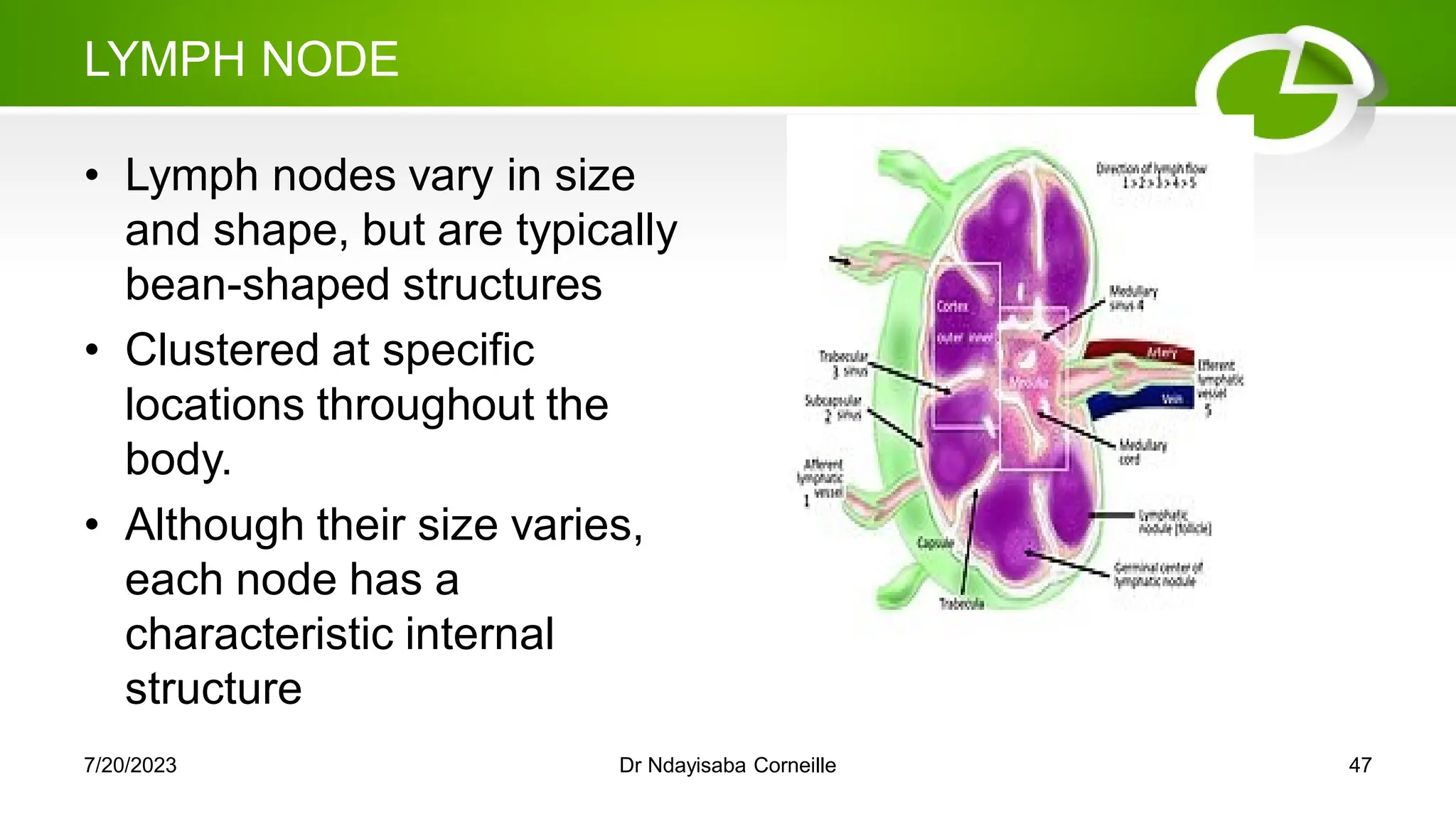
LYMPH NODE
• Lymph nodes vary in size
and shape, but are typically
bean-shaped structures
• Clustered at specific
locations throughout the
body.
• Although their size varies,
each node has a
characteristic internal
structure
7/20/2023 Dr Ndayisaba Corneille 47
LYMPH NODE
• Most numerous lymphatic organs
• – About 450-600 in typical young adult
• – Serve two functions
• • Cleanse the lymph
• • Act as a site of T and B cell activation
7/20/2023 Dr Ndayisaba Corneille 48
LYMPH NODE
• The central portions of the lymph node are essential to its
function; here, there are large numbers of fixed
macrophages
• Phagocytose foreign material such as bacteria on contact,
and populations of B- and T-cells. Lymph nodes are
crucial to most antibody-mediated immune responses
• When the phagocytic macrophages trap pathogenic
material, that material is presented to the lymphocytes so
antibodies can be generated.
7/20/2023 Dr Ndayisaba Corneille 49
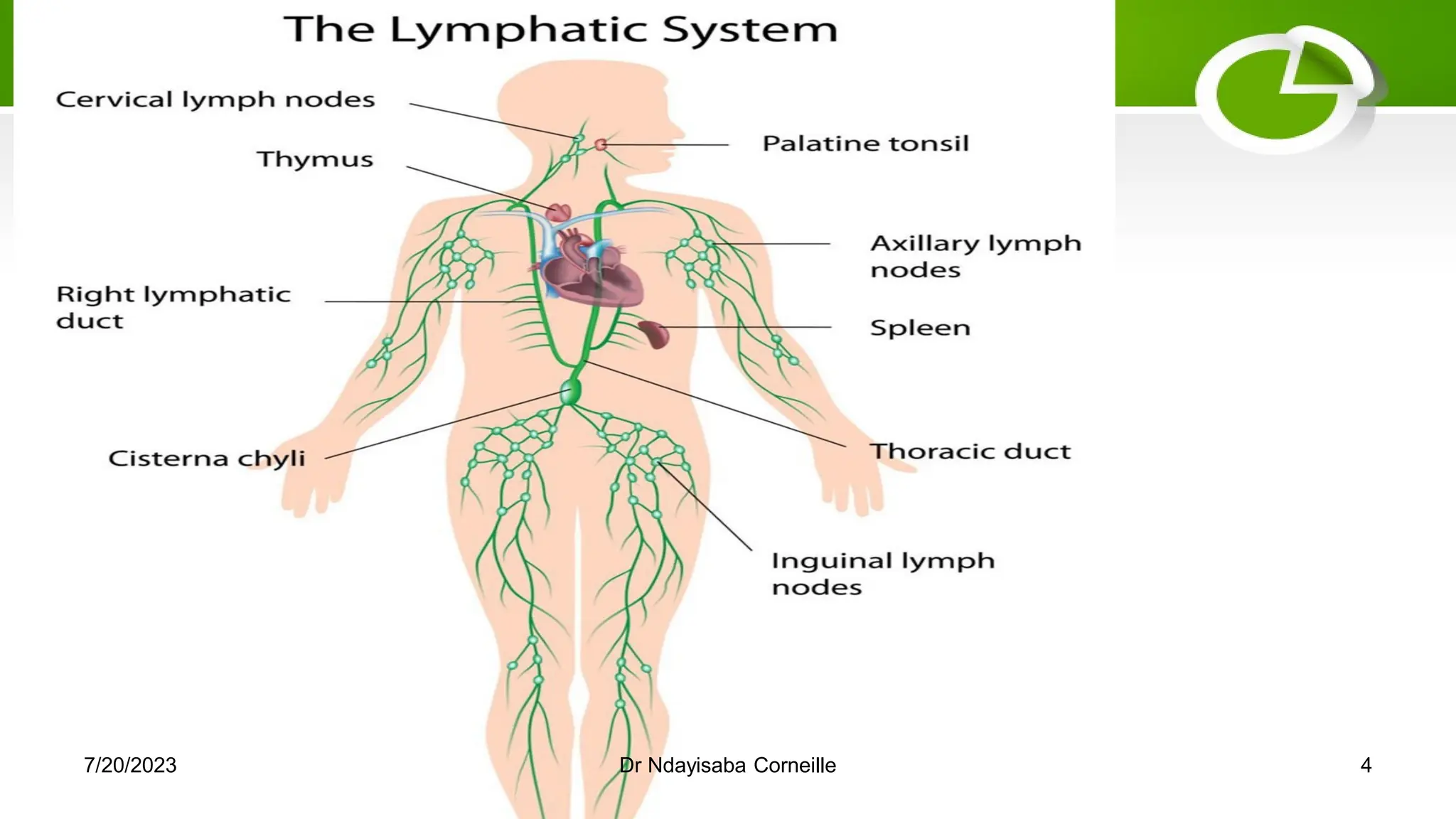
LYMPH NODE
• Cervical lymph nodes
• – Deep and superficial group in the neck
• – Monitor lymph coming from head and neck
• • Axillary lymph nodes
• – Concentrated in armpit
• – Receive lymph from upper limb and female breast
7/20/2023 Dr Ndayisaba Corneille 50
• • Thoracic lymph nodes
• – In thoracic cavity, especially embedded in mediastinum
• – Receive lymph from mediastinum, lungs, and airway
7/20/2023 Dr Ndayisaba Corneille 51
LYMPH NODE
• Abdominal lymph nodes
• – Occur in posterior abdominopelvic wall
• – Monitor lymph from the urinary and reproductive
systems
• • Intestinal and mesenteric lymph nodes
• – Found in the mesenteries, adjacent to the appendix and
intestines
• – Monitor lymph from the digestive tract
7/20/2023 Dr Ndayisaba Corneille 52
LYMPH NODE
• • Inguinal lymph nodes
• – In the groin and receive lymph from the entire lower limb
• • Popliteal lymph nodes
• – Occur on the back of the knee
• – Receive lymph from the leg proper
7/20/2023 Dr Ndayisaba Corneille 53
LYMPH NODE
• A healthy, fully functioning node removes the majority of
pathogens from the lymph before the fluid leaves via one
or more efferent lymphatic vessels.
• In addition to its lymphatic supply, each lymph node is
supplied with blood via a small artery
• The artery delivers a variety of leucocytes, which populate
the inner regions of the node.
7/20/2023 Dr Ndayisaba Corneille 54
LYMPH NODE
• When infection is present, the lymph nodes become
increasingly metabolically active and their oxygen
requirements increase.
• A small vein carries deoxygenated blood away from each
node and returns it to the major veins.
• In times of infection, this venous blood may carry a variety of
chemical messengers (cytokines) that are produced by the
resident leucocytes in the nodes.
• These cytokines act as general warning signals, alerting the
body to the potential threat and activating a variety of specific
immune reactions
7/20/2023 Dr Ndayisaba Corneille 55
• Swollen lymph nodes and a fever are sure signs that the
body is mounting an effective immune response against
an offending pathogen
7/20/2023 Dr Ndayisaba Corneille 56
• When a lymph node is under challenge by an antigen
• – Lymphadenitis: swollen, painful node responding to
foreign antigen
• – Lymphadenopathy: collective term for all lymph node
diseases
7/20/2023 Dr Ndayisaba Corneille 57
• During infection, antibody-producing B-cells begin to
proliferate in the germinal centres, causing the affected
lymph nodes to enlarge and become palpable and tender.
• Some of the cytokines released are pyrogenic (meaning
they cause fever) and act directly on the thermoregulatory
centre in the hypothalamus to increase body temperature
7/20/2023 Dr Ndayisaba Corneille 58
Lymph nodes and metastasis
• • Metastasis—cancerous cells break free from original tumor,
travel to other sites in the body, and establish new tumors
• – Metastasizing cells easily enter lymphatic vessels– Tend to
lodge in the first lymph node they encounter
• – Multiply there and eventually destroy the node
• • Swollen, firm, and usually painless
• – Tend to spread to the next node downstream
• – Treatment of breast cancer is lumpectomy, mastectomy,
along with removal of nearby axillary nodes
7/20/2023 Dr Ndayisaba Corneille 59
Other lymphatic tissues
• Other types of lymphatic tissue also exist.
• Mucosa-associated lymphoid tissue (MALT) positioned to
protect the respiratory and gastrointestinal tracts from
invasion by microbes.
• The following are made up of MALT:
• Gut-associated lymphoid tissue;
• Bronchus-associated lymphoid tissue;
• The palatine, lingual and pharyngeal(adenoids) tonsils
7/20/2023 Dr Ndayisaba Corneille 60
TONSILS
• Three main sets of tonsils
• – Palatine tonsils
• • Pair at posterior margin of oral cavity
• • Most often infected
• – Lingual tonsils
• • Pair at root of tongue
• – Pharyngeal tonsil (adenoids)
• • Single tonsil on wall of nasopharynx
7/20/2023 Dr Ndayisaba Corneille 61
TONSILS
• The tonsils are aggregates of lymphatic tissue strategically
located to prevent foreign material and pathogens from
entering the body.
• The palatine tonsils are in the pharynx, the lingual tonsils in
the oral
• Cavity and the pharyngeal tonsils (adenoids) are at the
back of the nasal cavity
• As a result of this, the tonsils themselves are at high risk of
infection and inflammation (tonsillitis)
7/20/2023 Dr Ndayisaba Corneille 62
LYMPHADENOPATHY
• There are several potential causes of lymphadenopathy,
• MALIGNANCY
• AUTOIMMUNITY
• INFECTION
• MEDICATION
7/20/2023 Dr Ndayisaba Corneille 63
• Malignancy:,
• Metastatic breast cancer,
• Kaposi sarcoma,
• Leukemias,
• Lymphomas-Hodgkin‘s and non-Hodgkin‘s lymphomas
• Metastatic disease (i.e., gastric cancer),
• Malignant disorders of the skin.
7/20/2023 Dr Ndayisaba Corneille 64
• Autoimmunity
• Several conditions that are characterized by a highly
active immune system may result in lymph node
abnormalities
• Dermatomyositis,
• Kawasaki disease,
• Rheumatoid arthritis,
• Sarcoidosis,
• Sjogren syndrome,
• Still disease,
• Systemic lupus erythematosus
7/20/2023 Dr Ndayisaba Corneille 65
LYMPHADENOPATHY
• Infection
• There is a wide range of infectious etiologies, including
bacterial, fungal, viral, mycobacterial, spirochetal, and
protozoal organisms.
• Bacterial: brucellosis, cat-scratch disease, bacterial
pharyngitis, syphilis, tuberculosis, tularemia, typhoid fever
• Viral: cytomegalovirus, hepatitis, herpes simplex, HIV,
mononucleosis, rubella, viral pharyngitis.
• Other: bubonic plague, blastomycosis, occidioidomycosis,
cryptococcosis, histoplasmosis, toxoplasmosis
7/20/2023 Dr Ndayisaba Corneille 66
• Medications: Often, medical therapies may incite the
benign growths of lymph nodes.
• allopurinol, atenolol,
• captopril, carbamazepine,
• cephalosporins, gold,
• hydralazine, penicillin,
• phenytoin, primidone,
• pyrimethamine, quinidine,
• sulfonamides, and sulindac
7/20/2023 Dr Ndayisaba Corneille 67
CLASSIFICATION OF LYMPADENOPATHY
• Depending upon the involvement of the lymph nodes,
lymphadenopathy is classified into 2 groups,
• Generalized and
• Localized:
7/20/2023 Dr Ndayisaba Corneille 68
CLASSIFICATION OF LYMPADENOPATHY
• Localized lymphadenopathy:Localized lymphadenopathy:
due to localized spot of asault
• Occurs in contiguous groupings of lymph nodes.
• In discrete anatomical regions, lymph nodes are
distributed, and their enlargement represents their
location's lymphatic drainage.
• 75% of all lymphadenopathies are localized
• Over 50% seen in the region of the head and neck.
7/20/2023 Dr Ndayisaba Corneille 69
• Generalized lymphadenopathy:
• Involves lymphadenopathy in 2 or more non-contiguous
sites
• Due to generalized infection all over the body e.g.
influenza : due to systemic infection.
• In some cases, it may persist for prolonged periods
possibly without an apparent cause- Persistent
generalized lymphadenopathy (PGL)
•
7/20/2023 Dr Ndayisaba Corneille 70
• Malignant or Benign lymphadenopathy
• Malignant types which mainly refer to lymphomas
• Metastatic or non- metastatic.
• Size, where lymphadenopathy in adults is often defined
as a short axis of one or more lymph nodes is greater
than 10mm.
7/20/2023 Dr Ndayisaba Corneille 71
• Location:
• Tracheobronchial lymph nodes.
• Mediastinal lymphadenopathy
• Bilateral hilar lymphadenopathy
• Dermatopathic lymphadenopathy: lymphadenopathy
associated with skin disease. Tangier disease (ABCA1
deficiency) may also cause this.
7/20/2023 Dr Ndayisaba Corneille 72
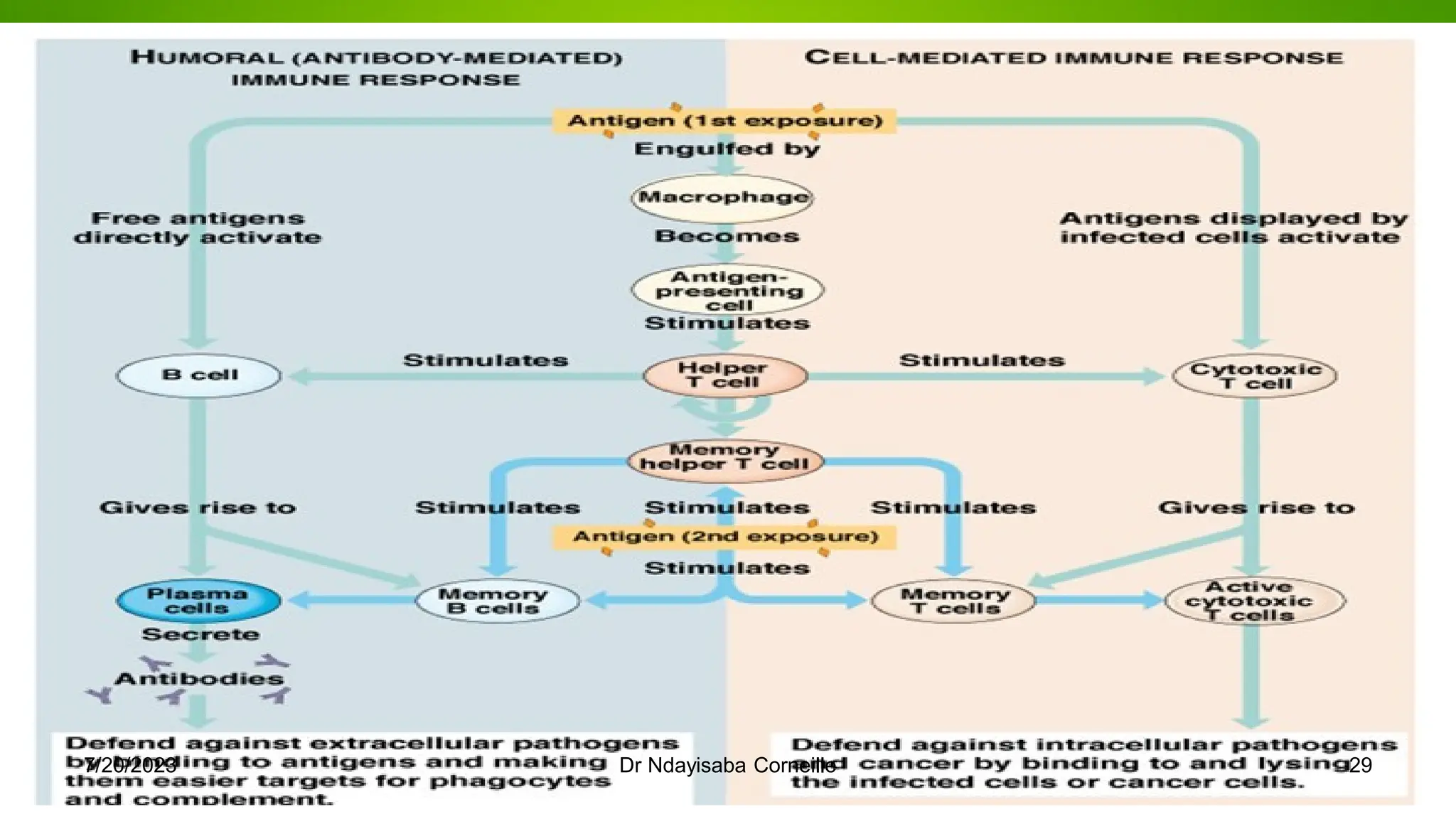
TWO TYPES OF IMMUNITY
• – Cellular (cell-mediated) immunity:
• • Lymphocytes directly attack and destroy foreign cells
• or diseased host cells
• • Rids the body of pathogens that reside inside human
• cells, where they are inaccessible to antibodies
• • Kills cells that harbor them
7/20/2023 Dr Ndayisaba Corneille 73
• Humoral (antibody-mediated) immunity:
• • Mediated by antibodies that do not directly destroy a
pathogen but tag it for destruction
• • Many antibodies are dissolved in body fluids (―humors‖)
• • Can only work against the extracellular stages of
infections by microorganisms
7/20/2023 Dr Ndayisaba Corneille 74
END
END
03/01/1445
Dr Ndayisaba Corneille
75
THANKS FOR LISTENING
By
DR NDAYISABA CORNEILLE
MBChB,DCM,BCSIT,CCNA
Contact us: amentalhealths@gmail.com/
ndayicoll@gmail.com
whatsaps :+256772497591 /+250788958241

THEPHYSIOLOGY: LYMPHORETICULAR SYSTEM.pdf

  • 1.
    THE LYMPHORETICULAR SYSTEM Dr.NDAYISABA CORNEILLE CEO of CHG MBChB,DCM,BCSIT,CCNA Supported BY
  • 2.
  • 3.
    • The lymphoreticularsystem consists of the tissues of • The lymphoid system • and the mononuclear phagocyte system (reticuloendothelial system) • The lymphoid system consists of • The spleen, • Lymphnodes, • Lymphatic vessels, • Thymus, • Bone marrow • The lymphoid tissues associated with the GIT-eg tonsils, Payer patches 7/20/2023 Dr Ndayisaba Corneille 3
  • 4.
  • 5.
    Primary and Secondarylymphoid organs • The bone marrow and the thymus are the primary lymphoid organs. Site where T and B cells become immunocompetent:able to recognize and respond to antigens • While the spleen and the lymph nodes are the major secondary lymphoid organs. Immunocompetent cells populate these tissues 7/20/2023 Dr Ndayisaba Corneille 5
  • 6.
    Functions of theLRS • The functions of these systems include • Collection and transport of interstitial fluid-Fluid balance • Fluid continually filters from the blood capillaries into the tissue spaces • • Blood capillaries reabsorb 85% • • 15% (2 to 4 L/day) of the water and about half of the plasma proteins enter the lymphatic system and then are returned to the blood 7/20/2023 Dr Ndayisaba Corneille 6
  • 7.
    Functions of theLRS • Transport of fats throughout the body • Lacteals in small intestine absorb dietary lipids that are not absorbed by the blood capillaries 7/20/2023 Dr Ndayisaba Corneille 7
  • 8.
    Functions of theLRS • Immunity- defense, • Excess filtered fluid picks up foreign cells and chemicals from the tissues • • Passes through lymph nodes where immune cells stand guard against foreign matter • • Activates a protective immune response-cellular and humoral immunity 7/20/2023 Dr Ndayisaba Corneille 8
  • 9.
    Cells of thelymphoreticular system • Lymphocytes • T-lymphocytes • T-helper • T-cytotic • T-memory • T-regulator/suppressor • Natural killer cells-NKC • B-lymphocytes • Antigen presenting cells- APC • Macrophages • Dendritic cells 7/20/2023 Dr Ndayisaba Corneille 9
  • 10.
    Haematopoietic stem cellsin the bone marrow • The myeloid lineage (progenator stem cells) • Erythropoiesis-RBC • Megakariopoiesis-Platelets • Leucopoiesis-Granulocytes-Neutophyls, Eosinophyls, Basophyls, monocytes • The lymphoid lineages (progenator stem cells) • T-lymphoctes • B-lymphocytes • The natural killer cells 7/20/2023 Dr Ndayisaba Corneille 10
  • 11.
  • 12.
  • 13.
  • 14.
  • 15.
    • Three categoriesof lymphocytes • – Natural killer (NK) cells (5%): immune surveillance • – T lymphocytes (T cells) (80%) • – B lymphocytes (B cells) (15%) • Three stages in life of T Cell: • – Produced in bone barrow • – Educated in thymus • – Deployed to carry out immune function 7/20/2023 Dr Ndayisaba Corneille 15
  • 16.
    Natural killer (NK)cells • Natural killer (NK) cells are morphologically described as large granular lymphocytes. • These cells are called natural killer cells due to their ability to kill certain virally infected cells and tumor cells without prior sensitization. • Their activities are not enhanced by exposure and are not specific for any virus. • NK cells comprise approximately 5–10% of peripheral lymphocytes and are found in spleen and peripheral blood. 7/20/2023 Dr Ndayisaba Corneille 16
  • 17.
    T lymphocytes (Tcells) • Cytotoxic T (TC) cells: killer T cells (T8, CD8, or CD8+) – ―Effectors‖ of cellular immunity; carry out attack on enemy cells; • Helper T (TH) cells:– Help promote TC cell and B cell action and nonspecific resistance (T4, CD4, CD4+) • Regulatory T (TR) cells: Also called T-suppressor cells. T-regs – Inhibit multiplication and cytokine secretion by other T cells; limit immune response– Like TH cells, TR cells can be called T4, CD4, CD4+ • Memory T (TM) cells – Descend from the cytotoxic T cells: – Responsible for memory in cellular immunity 7/20/2023 Dr Ndayisaba Corneille 17
  • 18.
    B-Cells • B cellsdevelop in bone • – Some fetal stem cells remain in bone marrow and differentiate into B cells • • B cells that react to self-antigens undergo either anergy or clonal deletion, same as T cell selection • • Self-tolerant B cells synthesize antigen surface receptors, divide rapidly, produce immunocompetent clones • • Leave bone marrow and colonize same lymphatic tissues and organs as T cells 7/20/2023 Dr Ndayisaba Corneille 18
  • 19.
    Plasma cells • Plasmacells originate from terminally differentiated B cells. Activated B cells • The main function of the plasma cells is to produce and secrete all the classes of immunoglobulins· • They secrete thousands of antibody molecules per second, which are specific for the epitope of the antigen for a few days and then die.They have a short lifespan of 30 days during which they produce large quantities of immunoglobulins. • They divide very poorly, if at all, and are usually found in the bone marrow and in the perimucosal lymphoid tissues. 7/20/2023 Dr Ndayisaba Corneille 19
  • 20.
    Antigen-Presenting Cells-APC • Tcells cannot recognize antigens on their own. • Antigen-presenting cells (APCs) are required • Dendritic cells, • Macrophages, • Reticular cells, • and B cells function as APCs 7/20/2023 Dr Ndayisaba Corneille 20
  • 21.
    Dendritic cells • Dendriticcells are so named because of their many long, narrow processes that resemble neuronal dendrites, which make them very efficient at making contacts with foreign materials. • They are primarily present in the skin (e.g., Langerhans cells) and the mucosa, from where they migrate 7/20/2023 Dr Ndayisaba Corneille 21
  • 22.
    Dendritic cells • Fourtypes of dendritic cells are known: • (i) Langerhans cells, • (ii) interstitial dendritic cells, • (iii) myeloid cells, and • (iv) lymphoid dendritic cells. • All these cells constitutively express high levels of both class II MHC molecules 7/20/2023 Dr Ndayisaba Corneille 22
  • 23.
    Dendritic cells • Followingmicrobial invasion or during inflammation, mature and immature forms of Langerhans cells and interstitial dendritic cells migrate into draining lymph nodes, where they make the critical presentation of antigen to TH cells, which is required for the initiation of responses by those key cells. 7/20/2023 Dr Ndayisaba Corneille 23
  • 24.
    Macrophages • The mononuclearphagocytic system consists of monocytes circulating in the blood and macrophages in the tissues. • The monocyte is considered a leukocyte in transit through the blood, which becomes a macrophage when fixed in a tissue. • Monocytes and macrophages as well as granulocytes are able to ingest particulate matter (microorganisms, cells, inert particles) and for this reason are said to have phagocytic functions. • The phagocytic activity is greater in macrophages • Macrophages are 5 to 10 times larger than monocytes 7/20/2023 Dr Ndayisaba Corneille 24
  • 25.
    • Macrophages performthreemain functions: • (a) phagocytosis, • (b) antigen presentation, and • (c) cytokine production 7/20/2023 Dr Ndayisaba Corneille 25
  • 26.
    • Antigen processing •– APC encounters antigen • – Internalizes it by endocytosis • – Digests it into molecular fragments • – Displays relevant fragments (epitopes) in the grooves of the MHC protein 7/20/2023 Dr Ndayisaba Corneille 26
  • 27.
    • Antigen presenting •– Wandering T cells inspect APCs for displayed antigens • – If APC only displays a self-antigen, the T cell disregards it • – If APC displays a nonself-antigen, the T cell initiates an immune attack • – APCs alert the immune system the presence of foreign antigen • – Key to successful defense is to quickly mobilize immune cells against the antigen • – With so many cell types involved in immunity, they require chemical messengers to coordinate their activities—interleukins 7/20/2023 Dr Ndayisaba Corneille 27
  • 28.
    • Both cellularand humoral immunity occur in three stages • – Recognition-Recognize • – Attack– React • – Memory– Remember ―The three Rs of immunity‖ • – Recognize– React– Remember 7/20/2023 Dr Ndayisaba Corneille 28
  • 29.
  • 30.
    THE BONE MARROW •Bone marrow is a soft, gelatinous tissue • Present in the central cavity of long bones such as the femur and humerus. • Blood cells and immune cells arise from the bone marrow; • They develop from immature stem cells (haemocytoblasts), which follow distinct developmental pathways to form erythrocytes, leucocytes or platelets- HEMATOPOIESIS 7/20/2023 Dr Ndayisaba Corneille 30
  • 31.
    The Thymus • Thethymus gland is a bi- lobed, pinkishgrey organ located just above the heart in the mediastinum, where it rests below the sternum (breastbone). • Structurally, the thymus resembles a small bow tie • Gradually atrophies (shrinks) with age 7/20/2023 Dr Ndayisaba Corneille 31
  • 32.
    Thymic involution • Inpre-pubescents, the thymus is a relatively large and very active organ that, typically weighs around 40g • By 20 years of age, the thymus is 50% smaller than it was at birth, • By middle-age it may have shrunk sufficiently to be difficult to locate. • By 60 years of age it has shrunk to a sixth of its original size • This is called thymic involution 7/20/2023 Dr Ndayisaba Corneille 32
  • 33.
    Thymus • Lobules withinthe lobes have two distinct areas: • A dense outer cortex that is rich in actively dividing T- cells • An inner medulla, which is much paler in colour and functions as an area of T-cell maturation. • The thymus has endocrine function by its secretion of a family of hormones collectively referred to as thymosin, , thymopoietin , and interferon • These hormones are essential for normal immune function and signaling 7/20/2023 Dr Ndayisaba Corneille 33
  • 34.
    Role of THYMUSin T-cell maturation • T-cells originate as haematopoietic stem cells from the red bone marrow. • A population of these haematopoietic stem cells infiltrate the thymus, dividing further within the cortical regions of the lobules then migrating into the medullary regions to mature into active T- cells • This process of T-cell maturation is controlled by the hormone . • A proportion of these mature T-cells continually migrate from the thymus into the blood and other lymphoid organs (spleen and lymph nodes), where they play a major role in the body‘s specific immune responses 7/20/2023 Dr Ndayisaba Corneille 34
  • 35.
    T-cells programming-thymic education •One of the most important functions of the thymus is programming T-cells to recognise ‗self ‘ antigens through a process called thymic education • This process allows mature T-cells to distinguish foreign, and therefore potentially pathogenic, material from antigens that belong to the body. • It has been demonstrated that removal of the thymus may lead to an increase in autoimmune diseases, as this ability to recognise self is diminished 7/20/2023 Dr Ndayisaba Corneille 35
  • 36.
    Thymic education • Withinthe thymus • – Reticular epithelial (RE) cells release chemicals that stimulate maturing T cells to develop surface antigen receptors • – With receptors, the T cells are now immunocompetent: • capable of recognizing antigens presented to them 7/20/2023 Dr Ndayisaba Corneille 36
  • 37.
    Thymic education • REcells test T cells by presenting self-antigens to them; • T cells can fail by: • • Being unable to recognize the RE cells at all • • Would be incapable of recognizing foreign attack • • Reacting to the self-antigen • • Would attack one‘s own tissues • • T cells that fail are eliminated by negative selection Clonal deletion—self-reactive T cells die and macrophages phagocytize them Anergy—self-reactive T cells remain alive but unresponsive 7/20/2023 Dr Ndayisaba Corneille 37
  • 38.
    Thymic education • Negativeselection leaves the body in a state of self-tolerance • The surviving T cells respond only to • suspicious antigens (ignoring the body‘s own proteins) • – Only 2% of T cells pass the test • • In thymus medulla, surviving T cells undergo positive selection: • they multiply and form clones of identical cells programmed to respond to a specific antigen • • Naive lymphocyte pool: immunocompetent T cells that have not yet encountered foreign antigens • • Deployment • – Naive T cells leave thymus and colonize lymphatic tissues and organs everywhere in the body 7/20/2023 Dr Ndayisaba Corneille 38
  • 39.
    THE SPLEEN • Thespleen and lymph nodes are two major secondary lymphoid organs that play key roles in: • Filtering out and destroying unwanted pathogens; • Maintaining the population of mature lymphocytes (which are white blood cells) to enable the adaptive immune response to begin 7/20/2023 Dr Ndayisaba Corneille 39
  • 40.
    THE SPLEEN • Thespleen is the largest lymphoid organ. • Situated in the upper left hypochondriac region of the abdominal cavity, • Between the diaphragm and the fundus of the stomach • Primarily functions as a filter for the blood, bringing it into close contact with scavenging phagocytes (white blood cells in the spleen that will seek out and ‗eat‘ any pathogens in the blood) and lymphocytes. 7/20/2023 Dr Ndayisaba Corneille 40
  • 41.
    • The spleenis made up of two regions: • Stroma – comprising the dense outer capsule with its trabeculae, some fibres and fibroblasts (cells that secrete connective tissue collagen) • Parenchyma – composed of two types of intermingling tissue called white pulp and red pulp 7/20/2023 Dr Ndayisaba Corneille 41
  • 42.
    • White pulpis a mass of germinal centres of dividing B-lymphocytes (B-cells), surrounded by T-cells and accessory cells, including macrophages and dendritic cells • These cells are arranged as lymphatic nodules around branches of the splenic artery. • As blood flows into the spleen via the splenic artery, it enters smaller, central arteries of the white pulp, eventually reaching the red pulp. • The red pulp is a spongy tissue, accounting for 75% of the splenic volume • It consists of blood-filled venous sinuses and splenic cords 7/20/2023 Dr Ndayisaba Corneille 42
  • 43.
    THE SPLEEN • Whenforeign antigens reach these organs, they initiate lymphocyte activation and subsequent clonal expansion and maturation of these important white blood cells. • Mature lymphocytes can then leave the secondary organs to enter the circulation, or travel to other areas, and target foreign antigens 7/20/2023 Dr Ndayisaba Corneille 43
  • 44.
    THE SPLEEN • Dueto its extensive vascularisation • The spleen is a dark-purplish oval-shaped organ • In adults it is approximately 12cm long, 7cm wide • Weighs around 150g 7/20/2023 Dr Ndayisaba Corneille 44
  • 45.
    Spleen functions • Thespleen has three major functions: • To mount an immune response and remove micro- organisms from circulation; • To destroy damaged and worn-out red blood cells;(RBC GRAVE YARD) • To store platelets (and blood). • The spleen also plays a minor role in haematopoiesis: usually occuring in foetuses of up to five months‘ gestation 7/20/2023 Dr Ndayisaba Corneille 45
  • 46.
    • As thespleen is the largest collection of lymphoid tissue in the body, infections that cause white blood cell proliferation and antigenic stimulation may cause germinal centres in the organ to expand, resulting in its enlargement (splenomegaly). • This happens in many diseases – • Malaria, cirrhosis and leukaemia. • The spleen is not usually palpable, • But an enlarged spleen is palpable during deep inspiration. • Enlargement may also be caused by any obstruction in blood flow, for example in the hepatic portal vein. 7/20/2023 Dr Ndayisaba Corneille 46
  • 47.
    LYMPH NODE • Lymphnodes vary in size and shape, but are typically bean-shaped structures • Clustered at specific locations throughout the body. • Although their size varies, each node has a characteristic internal structure 7/20/2023 Dr Ndayisaba Corneille 47
  • 48.
    LYMPH NODE • Mostnumerous lymphatic organs • – About 450-600 in typical young adult • – Serve two functions • • Cleanse the lymph • • Act as a site of T and B cell activation 7/20/2023 Dr Ndayisaba Corneille 48
  • 49.
    LYMPH NODE • Thecentral portions of the lymph node are essential to its function; here, there are large numbers of fixed macrophages • Phagocytose foreign material such as bacteria on contact, and populations of B- and T-cells. Lymph nodes are crucial to most antibody-mediated immune responses • When the phagocytic macrophages trap pathogenic material, that material is presented to the lymphocytes so antibodies can be generated. 7/20/2023 Dr Ndayisaba Corneille 49
  • 50.
    LYMPH NODE • Cervicallymph nodes • – Deep and superficial group in the neck • – Monitor lymph coming from head and neck • • Axillary lymph nodes • – Concentrated in armpit • – Receive lymph from upper limb and female breast 7/20/2023 Dr Ndayisaba Corneille 50
  • 51.
    • • Thoraciclymph nodes • – In thoracic cavity, especially embedded in mediastinum • – Receive lymph from mediastinum, lungs, and airway 7/20/2023 Dr Ndayisaba Corneille 51
  • 52.
    LYMPH NODE • Abdominallymph nodes • – Occur in posterior abdominopelvic wall • – Monitor lymph from the urinary and reproductive systems • • Intestinal and mesenteric lymph nodes • – Found in the mesenteries, adjacent to the appendix and intestines • – Monitor lymph from the digestive tract 7/20/2023 Dr Ndayisaba Corneille 52
  • 53.
    LYMPH NODE • •Inguinal lymph nodes • – In the groin and receive lymph from the entire lower limb • • Popliteal lymph nodes • – Occur on the back of the knee • – Receive lymph from the leg proper 7/20/2023 Dr Ndayisaba Corneille 53
  • 54.
    LYMPH NODE • Ahealthy, fully functioning node removes the majority of pathogens from the lymph before the fluid leaves via one or more efferent lymphatic vessels. • In addition to its lymphatic supply, each lymph node is supplied with blood via a small artery • The artery delivers a variety of leucocytes, which populate the inner regions of the node. 7/20/2023 Dr Ndayisaba Corneille 54
  • 55.
    LYMPH NODE • Wheninfection is present, the lymph nodes become increasingly metabolically active and their oxygen requirements increase. • A small vein carries deoxygenated blood away from each node and returns it to the major veins. • In times of infection, this venous blood may carry a variety of chemical messengers (cytokines) that are produced by the resident leucocytes in the nodes. • These cytokines act as general warning signals, alerting the body to the potential threat and activating a variety of specific immune reactions 7/20/2023 Dr Ndayisaba Corneille 55
  • 56.
    • Swollen lymphnodes and a fever are sure signs that the body is mounting an effective immune response against an offending pathogen 7/20/2023 Dr Ndayisaba Corneille 56
  • 57.
    • When alymph node is under challenge by an antigen • – Lymphadenitis: swollen, painful node responding to foreign antigen • – Lymphadenopathy: collective term for all lymph node diseases 7/20/2023 Dr Ndayisaba Corneille 57
  • 58.
    • During infection,antibody-producing B-cells begin to proliferate in the germinal centres, causing the affected lymph nodes to enlarge and become palpable and tender. • Some of the cytokines released are pyrogenic (meaning they cause fever) and act directly on the thermoregulatory centre in the hypothalamus to increase body temperature 7/20/2023 Dr Ndayisaba Corneille 58
  • 59.
    Lymph nodes andmetastasis • • Metastasis—cancerous cells break free from original tumor, travel to other sites in the body, and establish new tumors • – Metastasizing cells easily enter lymphatic vessels– Tend to lodge in the first lymph node they encounter • – Multiply there and eventually destroy the node • • Swollen, firm, and usually painless • – Tend to spread to the next node downstream • – Treatment of breast cancer is lumpectomy, mastectomy, along with removal of nearby axillary nodes 7/20/2023 Dr Ndayisaba Corneille 59
  • 60.
    Other lymphatic tissues •Other types of lymphatic tissue also exist. • Mucosa-associated lymphoid tissue (MALT) positioned to protect the respiratory and gastrointestinal tracts from invasion by microbes. • The following are made up of MALT: • Gut-associated lymphoid tissue; • Bronchus-associated lymphoid tissue; • The palatine, lingual and pharyngeal(adenoids) tonsils 7/20/2023 Dr Ndayisaba Corneille 60
  • 61.
    TONSILS • Three mainsets of tonsils • – Palatine tonsils • • Pair at posterior margin of oral cavity • • Most often infected • – Lingual tonsils • • Pair at root of tongue • – Pharyngeal tonsil (adenoids) • • Single tonsil on wall of nasopharynx 7/20/2023 Dr Ndayisaba Corneille 61
  • 62.
    TONSILS • The tonsilsare aggregates of lymphatic tissue strategically located to prevent foreign material and pathogens from entering the body. • The palatine tonsils are in the pharynx, the lingual tonsils in the oral • Cavity and the pharyngeal tonsils (adenoids) are at the back of the nasal cavity • As a result of this, the tonsils themselves are at high risk of infection and inflammation (tonsillitis) 7/20/2023 Dr Ndayisaba Corneille 62
  • 63.
    LYMPHADENOPATHY • There areseveral potential causes of lymphadenopathy, • MALIGNANCY • AUTOIMMUNITY • INFECTION • MEDICATION 7/20/2023 Dr Ndayisaba Corneille 63
  • 64.
    • Malignancy:, • Metastaticbreast cancer, • Kaposi sarcoma, • Leukemias, • Lymphomas-Hodgkin‘s and non-Hodgkin‘s lymphomas • Metastatic disease (i.e., gastric cancer), • Malignant disorders of the skin. 7/20/2023 Dr Ndayisaba Corneille 64
  • 65.
    • Autoimmunity • Severalconditions that are characterized by a highly active immune system may result in lymph node abnormalities • Dermatomyositis, • Kawasaki disease, • Rheumatoid arthritis, • Sarcoidosis, • Sjogren syndrome, • Still disease, • Systemic lupus erythematosus 7/20/2023 Dr Ndayisaba Corneille 65
  • 66.
    LYMPHADENOPATHY • Infection • Thereis a wide range of infectious etiologies, including bacterial, fungal, viral, mycobacterial, spirochetal, and protozoal organisms. • Bacterial: brucellosis, cat-scratch disease, bacterial pharyngitis, syphilis, tuberculosis, tularemia, typhoid fever • Viral: cytomegalovirus, hepatitis, herpes simplex, HIV, mononucleosis, rubella, viral pharyngitis. • Other: bubonic plague, blastomycosis, occidioidomycosis, cryptococcosis, histoplasmosis, toxoplasmosis 7/20/2023 Dr Ndayisaba Corneille 66
  • 67.
    • Medications: Often,medical therapies may incite the benign growths of lymph nodes. • allopurinol, atenolol, • captopril, carbamazepine, • cephalosporins, gold, • hydralazine, penicillin, • phenytoin, primidone, • pyrimethamine, quinidine, • sulfonamides, and sulindac 7/20/2023 Dr Ndayisaba Corneille 67
  • 68.
    CLASSIFICATION OF LYMPADENOPATHY •Depending upon the involvement of the lymph nodes, lymphadenopathy is classified into 2 groups, • Generalized and • Localized: 7/20/2023 Dr Ndayisaba Corneille 68
  • 69.
    CLASSIFICATION OF LYMPADENOPATHY •Localized lymphadenopathy:Localized lymphadenopathy: due to localized spot of asault • Occurs in contiguous groupings of lymph nodes. • In discrete anatomical regions, lymph nodes are distributed, and their enlargement represents their location's lymphatic drainage. • 75% of all lymphadenopathies are localized • Over 50% seen in the region of the head and neck. 7/20/2023 Dr Ndayisaba Corneille 69
  • 70.
    • Generalized lymphadenopathy: •Involves lymphadenopathy in 2 or more non-contiguous sites • Due to generalized infection all over the body e.g. influenza : due to systemic infection. • In some cases, it may persist for prolonged periods possibly without an apparent cause- Persistent generalized lymphadenopathy (PGL) • 7/20/2023 Dr Ndayisaba Corneille 70
  • 71.
    • Malignant orBenign lymphadenopathy • Malignant types which mainly refer to lymphomas • Metastatic or non- metastatic. • Size, where lymphadenopathy in adults is often defined as a short axis of one or more lymph nodes is greater than 10mm. 7/20/2023 Dr Ndayisaba Corneille 71
  • 72.
    • Location: • Tracheobronchiallymph nodes. • Mediastinal lymphadenopathy • Bilateral hilar lymphadenopathy • Dermatopathic lymphadenopathy: lymphadenopathy associated with skin disease. Tangier disease (ABCA1 deficiency) may also cause this. 7/20/2023 Dr Ndayisaba Corneille 72
  • 73.
    TWO TYPES OFIMMUNITY • – Cellular (cell-mediated) immunity: • • Lymphocytes directly attack and destroy foreign cells • or diseased host cells • • Rids the body of pathogens that reside inside human • cells, where they are inaccessible to antibodies • • Kills cells that harbor them 7/20/2023 Dr Ndayisaba Corneille 73
  • 74.
    • Humoral (antibody-mediated)immunity: • • Mediated by antibodies that do not directly destroy a pathogen but tag it for destruction • • Many antibodies are dissolved in body fluids (―humors‖) • • Can only work against the extracellular stages of infections by microorganisms 7/20/2023 Dr Ndayisaba Corneille 74
  • 75.
    END END 03/01/1445 Dr Ndayisaba Corneille 75 THANKSFOR LISTENING THANKS FOR LISTENING By DR NDAYISABA CORNEILLE MBChB,DCM,BCSIT,CCNA Contact us: amentalhealths@gmail.com/ ndayicoll@gmail.com whatsaps :+256772497591 /+250788958241